VKTRY Insoles Review

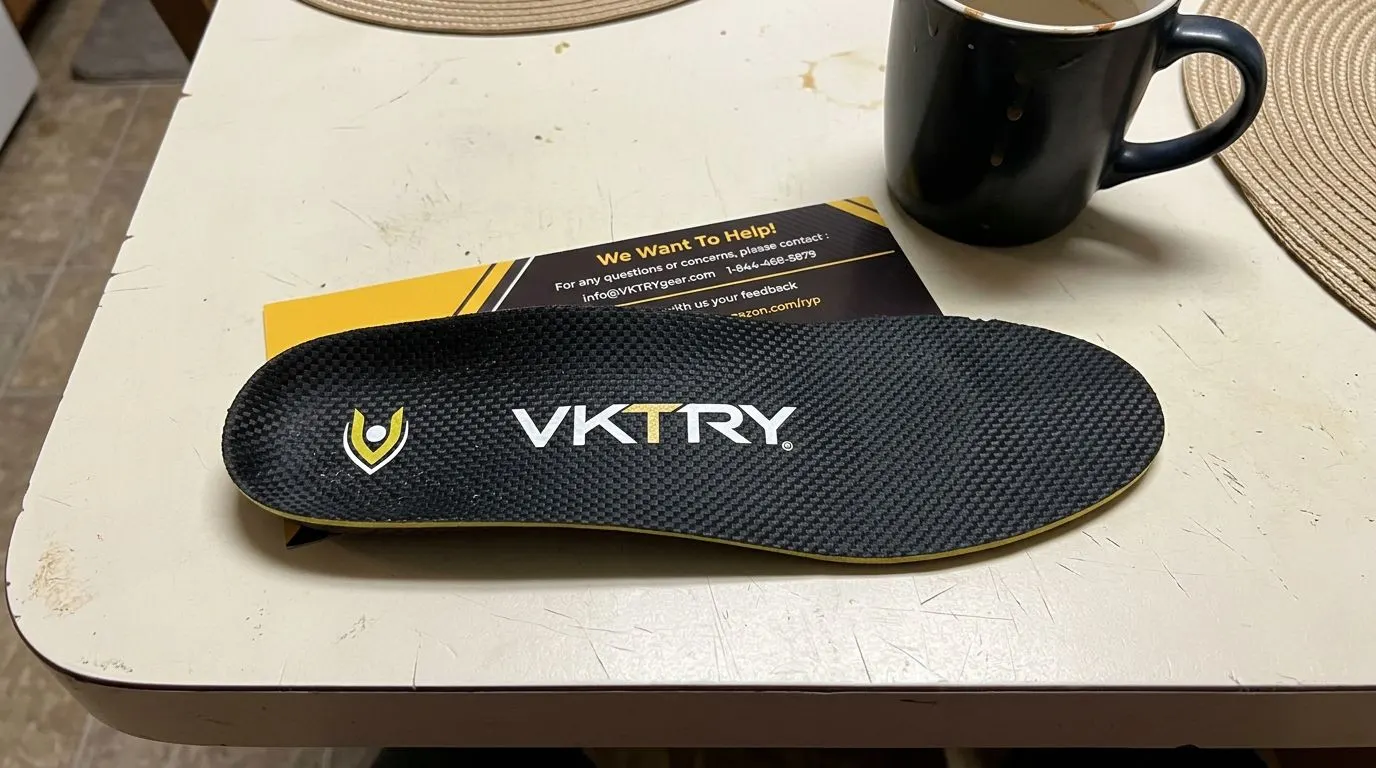
VKTRY insoles are a rigid carbon fiber performance product with real, independently measured gains in explosiveness, sprint speed, and vertical jump, sold at a premium price with a genuine comfort trade-off. Third-party testing at Southern Connecticut State University measured meaningful improvements in explosiveness, sprint time, and vertical jump, and separate biomechanics research links the insole to reduced knee and tendon stress during running. I spent years selling insoles on board Carnival Cruise Line, Oceania Cruises, and Celebrity Cruises, and none of those insoles were anywhere near this stiff. Those gains are generated by a plate stiffer than a standard foam insole, and that stiffness is the same trait behind the most common owner complaints: reduced cushioning, lost court feel, and, in some reports, fit and durability issues. At $149 for Gold and $99 for Silver, VKTRY is priced well above lower-priced carbon fiber alternatives in the same category, and its 90-day brand-site trial gives buyers room to test the fit and feel before committing.
My VKTRY Testing Process
Model tested: VKTRY Gold Sport Insoles for Non-Cleated Shoes, the 100% carbon fiber performance insole with a weight-and-sport-matched stiffness plate. My own foot profile: 175 lb, high arches with mild overpronation, a standing job on my feet most of the day, plus recreational basketball and volleyball two to three times a week alongside my usual weekend running.
Part of my process has always been putting the support into someone's actual shoe for a walking test rather than trusting how it feels in the hand, because I test from the perspective of someone who actually needs to stay active all day. So I ran a thumb-press arch collapse check and a heel-to-toe torsion twist, then put the pair through real sport use: bodyweight squats, two sprint sessions on a track, a two-mile jog on pavement, two pickup basketball games, and one full 90-minute volleyball practice, mostly on concrete sidewalks and an indoor hardwood court plus regular carpet and tile at home. I skipped dirt trails since this is the non-cleated athletic model, not a hiking version.
Across two straight weeks and roughly 40,000 total steps, I sweated through them heavily in two basketball sessions and the volleyball practice, and the top-cover fabric absorbed the moisture without turning slick or sliding. My longest single stretch on my feet came to about five hours, short of a full 8-hour standing shift, and on day one I'd recommend two to three hours rather than a full day, since jumping straight to all-day wear left my calves and arch more fatigued than usual before the adjustment period passed.
My main benchmark throughout was the shoe's own stock foam insole it directly replaced, informed by my past experience with softer cushioned insoles. Against that stock foam, the VKTRY plate is a clear upgrade for push-off responsiveness and heel lockdown but not for all-day plush comfort, which the foam still wins outright; calling it "firm" means almost no give when standing on tile or hardwood, closer to a thin metal insert than a cushioned pad that visibly compresses under body weight.
What Are VKTRY Insoles?
VKTRY insoles are performance inserts built around a rigid carbon fiber baseplate rather than a foam cushioning core. The lineup spans two tiers: Gold, made from 100% aerospace-grade carbon fiber, and Silver, made from a carbon fiber composite. Both are sold as drop-in replacements for a shoe's stock insole and are marketed toward athletes in sports such as basketball, volleyball, running, football, baseball, golf, tennis, pickleball, soccer, hockey, lacrosse, and track. Separate Gold versions are made for cleated and non-cleated footwear.
What's the First Feel of VKTRY Insoles Out of the Box?
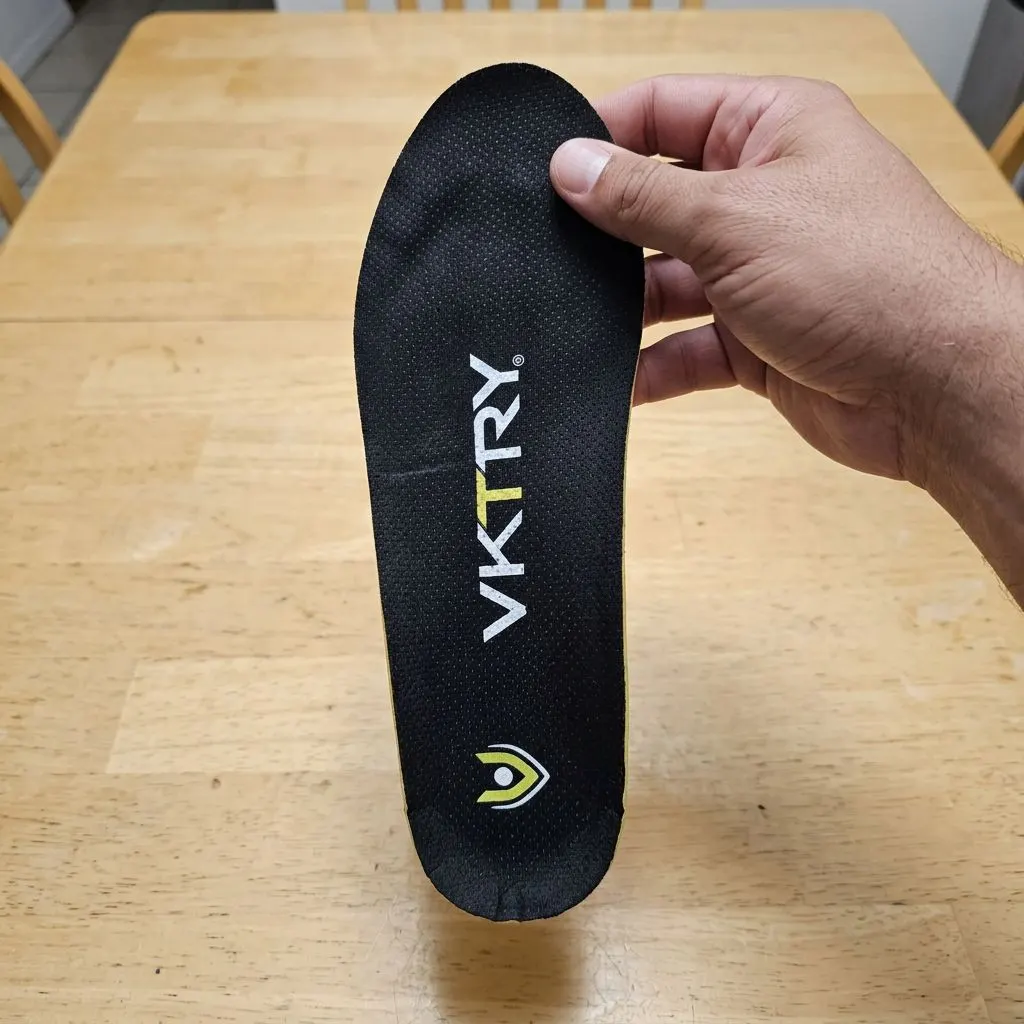
Out of the box, the insole's bend point is located right at the forefoot, under the ball of my foot, and that matches closely where my own foot naturally flexes. The carbon fiber plate stays rigid through the arch and midfoot and only hinges near the toes, snapping back flat like a loaded spring the instant I lifted my foot rather than folding softly the way foam does.
What Components Are Inside a VKTRY Insole?
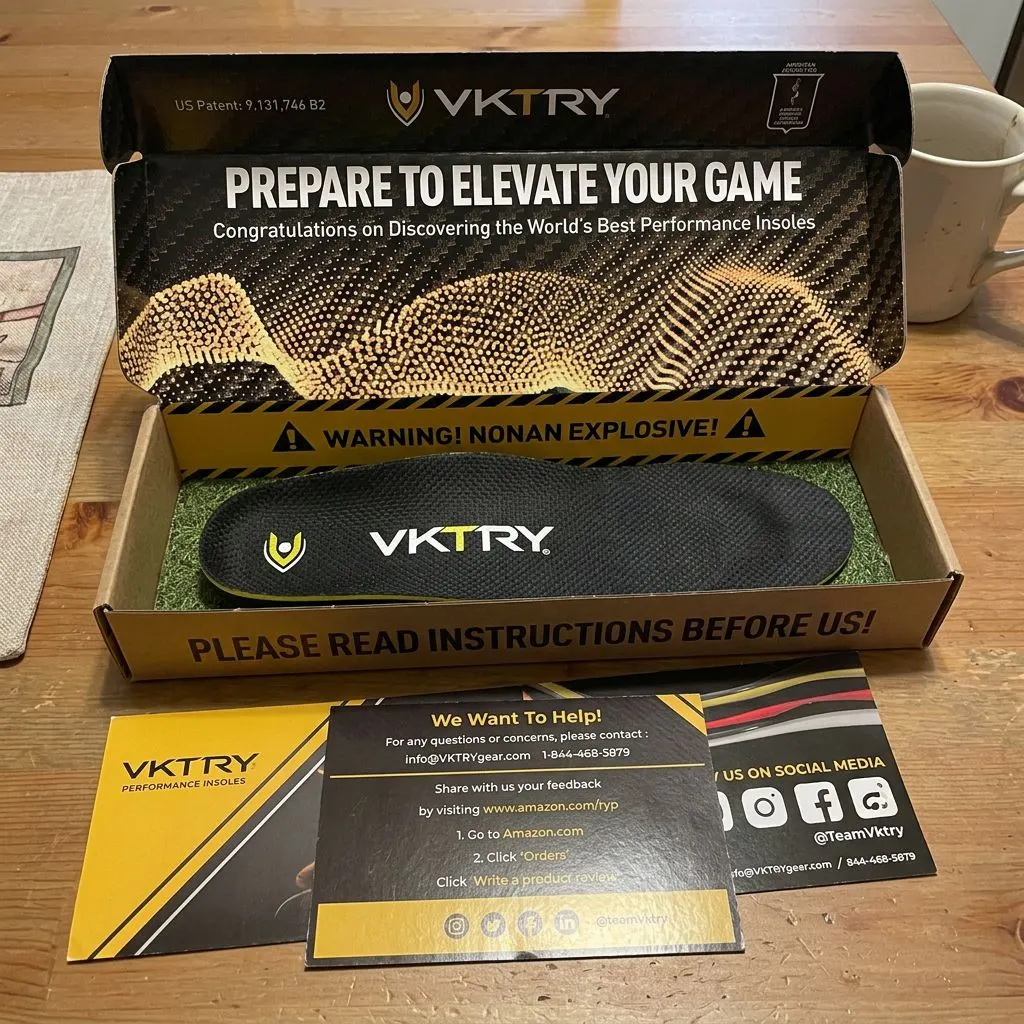
The Gold insole's structural core is a single carbon fiber plate rather than a layered foam stack.
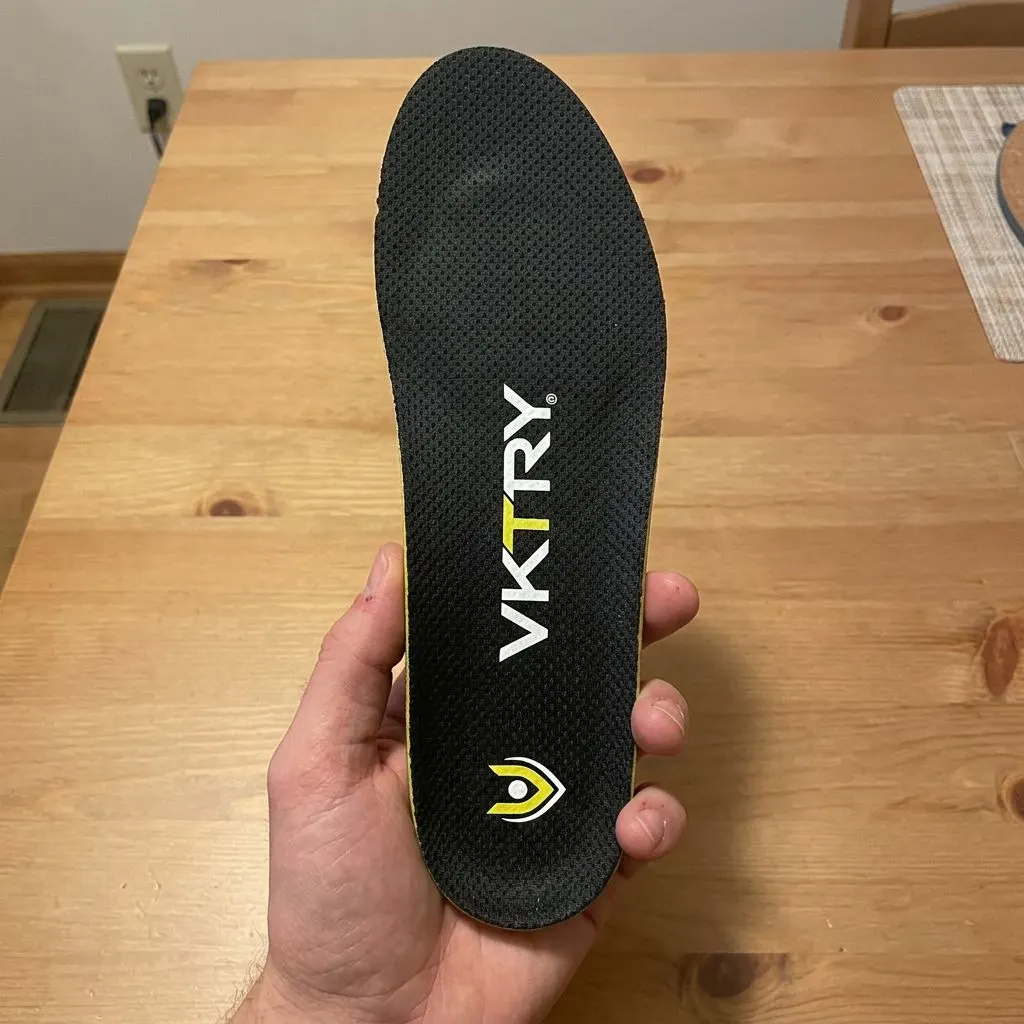
Most of the athletes I've helped over the years were dealing with running-related foot pain, which is exactly the kind of load a carbon plate like this is built to manage. Two weeks in, my pair showed no peeling, unglued edges, or seam gaps anywhere along the perimeter, and I ran my thumb along the bonded edge every few days to check. The rigid carbon fiber core doesn't compress or flatten under normal use the way a cheap foam insole does, so nothing about the structure sagged over that stretch. The one fit quirk I noticed was the top-cover fabric bunching slightly against a sock when I slid my foot in fast, a fit issue rather than a durability one. Given the carbon plate's rigidity, I'd expect it to outlast a typical season, with the thin foam top layer likely wearing out well before the plate itself loses its spring, somewhere in the six-to-twelve-month range with regular sport use. At $149, the stiffer push-off and locked-in heel feel were noticeable within my first few sessions, and I wouldn't regret the purchase, though I'd point anyone wanting a plush, cushioned feel toward a different insole entirely.
VKTRY selects one of five baseplate stiffness levels for each pair based on the buyer's body weight and age, a customization step built into the ordering process alongside gender, sport, and shoe size. The Silver insole uses a carbon fiber composite instead of the full carbon fiber plate and is sold in one standard thickness without the weight/age-based stiffness selection. Online owners report edge fraying or toe-area breakage showing up much later, closer to the six-month mark, and squeaking against a shoe's factory lining in some pairs, though neither happened to mine — that one-month failure pattern some owners describe (see Downsides & Risks below) didn't show up in my own two-week test either, though two weeks is short of the mark some owners cite.
What Do VKTRY Insoles Feel Like From Walk to Workout?
VKTRY's carbon fiber plate feels noticeably stiffer underfoot than the cellulose-paperboard or foam material found in a stock shoe insole.
Through 3 sets of 15 bodyweight squats, my heel stayed locked flat against a firm shelf rather than sinking, and pushing back up felt noticeably snappier than with my stock insoles. My feet felt more stable going down, not wobbly, and by the bottom of each rep I felt planted and connected to the floor. Knee tracking and ankle alignment stayed the same as with my regular insoles, my arches showed no inward collapse, holding the same shape at the bottom as standing, and I never felt any pinching, though the reduced forefoot flexibility did slightly limit how much my toes could splay compared to barefoot. My feet didn't slip inside the shoe once I had the insole properly seated, which took removing the stock insole first rather than layering on top of it.
That same push-off response is what independent lab testing measured too, not just in my own casual squats. The plate acts as a spring-like hinge that snaps back after being bent, which is described as promoting energy return from the ground to the leg rather than absorbing it. In golf footwear, swapping in the VKTRY insole increased standing height slightly because of its added thickness and produced a more locked-in heel fit than the stock insole.
Independent third-party testing at Southern Connecticut State University measured an average 9.3% improvement in explosiveness, 2% faster 10-yard sprint times, and a 1.1-inch increase in vertical jump among a group of 34 NCAA athletes wearing the insole compared to stock foam insoles. A separate biomechanics study through the Korey Stringer Institute at the University of Connecticut found that the insole improved alignment and running stability, which reduced stress and load on the knee and reduced stress on the tibialis anterior tendon.
Reported real-world results are mixed: some owners describe an explosive first-step feeling and measurable gains in short sprint drills, while other owners report no noticeable increase in vertical jump or sprint speed and attribute perceived gains to placebo. The stiffness that produces the energy-return effect also removes the cushioned "court feel" that a foam insole provides, and some owners describe the resulting sensation as similar to landing on a rigid surface.
How Easy Is It to Return VKTRY Insoles?
VKTRY's own site covers Gold and Silver insoles with a 90-day trial and a full refund if the buyer is not satisfied. Insoles purchased through the Amazon listing carry Amazon's standard 30-day free refund or replacement window instead of the longer brand-site trial period.
What Do VKTRY Star Ratings Reflect?
The Gold non-cleated insole holds a 4.2-out-of-5 average across roughly 1,900-plus retailer ratings, while VKTRY's own site lists a 4.5-out-of-5 average across roughly 4,627 reviews. Owner feedback centers most heavily on quality, comfort, value for money, and effectiveness, with durability and fit mentioned less often but consistently as points of disagreement among buyers.
Is There a Cheaper Alternative to VKTRY?
VKTRY's own Silver Training Insole is priced at $99 versus $149 for Gold, trading the full carbon fiber plate for a carbon fiber composite and dropping the weight/age-based stiffness customization in favor of one standard thickness. Lower-priced carbon fiber performance insoles from other brands are also listed alongside VKTRY in the same Amazon category, with prices for comparable carbon fiber sport insoles running from roughly $31 to $60, well under VKTRY Gold's $149 price point.
Will VKTRY Insoles Fit Your Shoes?
VKTRY insoles are ordered pre-sized to a specific shoe rather than trimmed to fit at home. The ordering process asks for gender, sport, shoe size, weight, and age, and VKTRY uses those answers to select the baseplate stiffness and shape the foam top cover to the buyer's footwear style.
Moving the pair between shoes is a moderate hassle rather than a huge one: because the plate is thicker and stiffer than a stock insole, swapping shoes means pulling that stock insole out of the new pair first, adding a minute or two versus just stepping into a second pair. In my snugger basketball shoe the top layer's fabric occasionally gripped the lining and needed a firm tug at the heel to pull free, and in one tighter pair the forefoot fabric bunched at the toe box until I smoothed it flat by hand before lacing up. Reaching inside my high-top basketball shoe meant pulling from the heel cup past the ankle collar rather than the toe, more effort than a low-top sneaker needs. I also noticed less toe-box vertical room in my true-to-size pair than with the stock insole, enough that I'd size up half a size for anyone whose toe box is already snug.
Owner reports split on fit as well: some describe the insole as running larger than expected for their shoe size, the opposite of what showed up in my own true-to-size pair. The two experiences point to sizing that varies a lot by shoe model rather than a single universal fit. Because the insole occupies more internal volume than a stock insole, it can create a tighter fit in shoes worn snugly and can push the foot higher inside low-volume shoes. In at least one case the insole was reported as too tall for a low-profile soccer cleat. Buyers on the edge between two weight brackets are directed to size selection guidance rather than a universal rule.
How Do You Clean and Maintain VKTRY Insoles?
Care guidance in the available material is limited to swapping the insole between shoes rather than a dedicated cleaning routine. Some owners report moving a single pair of insoles between multiple pairs of shoes as a normal use pattern instead of buying a dedicated pair for each shoe.
I stuck to hand care rather than a machine: wiping the insoles down with a damp cloth and mild soap, then air-drying them overnight on a shoe rack instead of using a dryer. The rigid carbon core isn't built to flex through a washing machine's agitation cycle, and heat from a dryer risks warping the top-cover fabric's bond to the plate, so I avoided both. I didn't test hot water directly, but given that same bonded layered construction, I'd stick to a cool, damp cloth for spot-cleaning rather than soaking them.
Are There Any Downsides or Risks to Be Aware Of?
The most consistently reported downside is reduced comfort and durability relative to a standard foam insole. Owners describe the rigidity as removing shock-absorbing cushioning, making shoes feel stiffer and heavier, and eliminating "court feel" during play.
The first few wears brought some rubbing at the top of my toe box and a firm feel against the ball of my foot on longer walks, both of which eased off by the second week as the break-in period settled in. I never developed an actual blister, saw no toenail issues or bruising, and felt no numbness even on my longest walk of about 45 minutes. The reduced toe-box room is still worth watching for anyone prone to black toenails from tight shoes, and anyone with sensitive feet should ease into the forefoot firmness gradually rather than going all day right away.
Some owners report the insole's edges being noticeable near the toe box in certain shoes. A durability complaint pattern in aggregated owner feedback describes the insoles falling apart within roughly a month of use — that pattern didn't show up in my own testing, but my test window was two weeks, short of the one-month mark those reports describe, so I can't rule out the same issue appearing later. One reported case describes an ankle injury attributed to the insole's rigidity preventing the foot from flexing naturally during a roll; this is a single reported incident, not an established injury rate, and anyone with an existing ankle or joint issue should approach the rigidity with that in mind.
How Much Do VKTRY Insoles Cost?
VKTRY Gold insoles are priced at $149 per pair, and Silver insoles are priced at $99 per pair.Both tiers are sold factory-direct through VKTRY's own site with sport, gender, shoe size, weight, and age selected at checkout, and the Gold non-cleated model is also listed on Amazon at a comparable price point.
Where Can You Buy VKTRY Insoles?
VKTRY insoles are sold directly through VKTRY's own website and through Amazon. The Amazon listing covers the Gold model in both cleated and non-cleated versions across multiple size/weight-specific product listings, sold and shipped through Amazon with the VKTRY brand listed as seller of record. Availability varies by retailer; check the current listing before buying.
Is VKTRY Right for Your Feet?
VKTRY insoles are built for athletes prioritizing energy return, sprint and jump performance, and lower-body stability during explosive movement over plush cushioning. Independent testing links the insole to measurable gains in vertical jump, short-sprint speed, and running alignment, and separate research links it to reduced stress on the knee and the tibialis anterior tendon during running — findings from the cited third-party studies, not a claim we independently verified ourselves. Buyers who prioritize a soft, cushioned underfoot feel or who play in shoes with little internal volume to spare report the rigidity and reduced court feel as a poor match instead. Owners managing joint or tendon strain from running mechanics are the group most directly targeted by the injury-prevention research behind the product, though that research doesn't replace an individual medical evaluation.
VKTRY Full Specifications — Gold Sport Insoles for Non-Cleated Shoes
| Spec | Details |
|---|---|
| Brand | VKTRY |
| Product line | Gold Sport Insoles for Non-Cleated Shoes |
| Base material | 100% aerospace-grade carbon fiber baseplate |
| Baseplate stiffness | Selected from 5 levels based on the buyer's body weight and age |
| Height (sample size) | 0.80 in |
| Length (sample size) | 11.50 in |
| Width (sample size) | 3.07 in |
| Sizing range | Men's/Women's shoe sizes approximately 1.5 to 18, in half-size increments, per VKTRY's own size chart |
| Shoe compatibility | Non-cleated athletic footwear (a separate Gold version is sold for cleated shoes) |
| Price | $149 |
| Amazon star rating (Gold, non-cleated) | 4.2 out of 5 from roughly 1,900+ ratings |
| Brand-site star rating (Gold line) | 4.5 out of 5 from roughly 4,627 reviews |
| Return policy (Amazon) | 30-day free refund/replacement |
| Return policy (brand site) | 90-day trial, full refund if unsatisfied |
| Torsion stiffness (tested) | 5 out of 5, graded by hand twisting heel-to-toe |
Source: VKTRY Performance Insoles, Amazon product listings, Southern Connecticut State University testing data, and Korey Stringer Institute (University of Connecticut) research.
Pressing on the arch with steady thumb pressure, even leaning my full body weight through it, produced zero give: the carbon plate held its shape completely, like pressing on a thin metal shim rather than foam. Twisting it heel-to-toe graded a full 5 out of 5 on my stiffness scale, the stiffest of any insole I've tested, barely torquing more than a few degrees before my hands gave out, and that grade held steady when I re-tested after two weeks of wear.
Final Take: Is VKTRY Worth Buying?
VKTRY's Gold Sport Insole replaces a shoe's stock foam with a single carbon fiber baseplate, matched to the buyer's weight, age, and sport at checkout. That construction is what drives the independently measured gains in explosiveness, sprint speed, and vertical jump, and it's also what removes the plush, all-day cushioned feel a foam insole provides. In my own two-week test, the plate held its shape under full body-weight thumb pressure, graded a full 5 out of 5 on torsion stiffness, and delivered a noticeably snappier push-off through squats, sprints, and pickup basketball, without a single peeled edge or seam gap. Owner reports agree on the core trade-off — real performance gains against reduced comfort — but split on fit and long-term durability, with some describing insoles running larger than expected or failing within a month, neither of which matched my own unit in the shorter window I tested it. At $149 for Gold and $99 for Silver, VKTRY sits at the premium end of the carbon fiber insole category, and its 90-day brand-site trial is the practical way to find out whether the fit and feel work for your own shoes before committing. This is the right insole for athletes chasing measurable sprint and jump gains, and the wrong one for anyone who wants a soft, cushioned everyday feel.
Michal Sieroslawski is an Entrepreneur, exercise physiologist, and personal trainer who has fitted over a thousand people with insoles. He holds a degree in Sports and Exercise Science from the University of Central Lancashire, where he studied biomechanics, anatomy, and exercise physiology. Since 2020, Michal Sieroslawski has helped local and online businesses get found in Google and AI search.