Superfeet Insoles Review

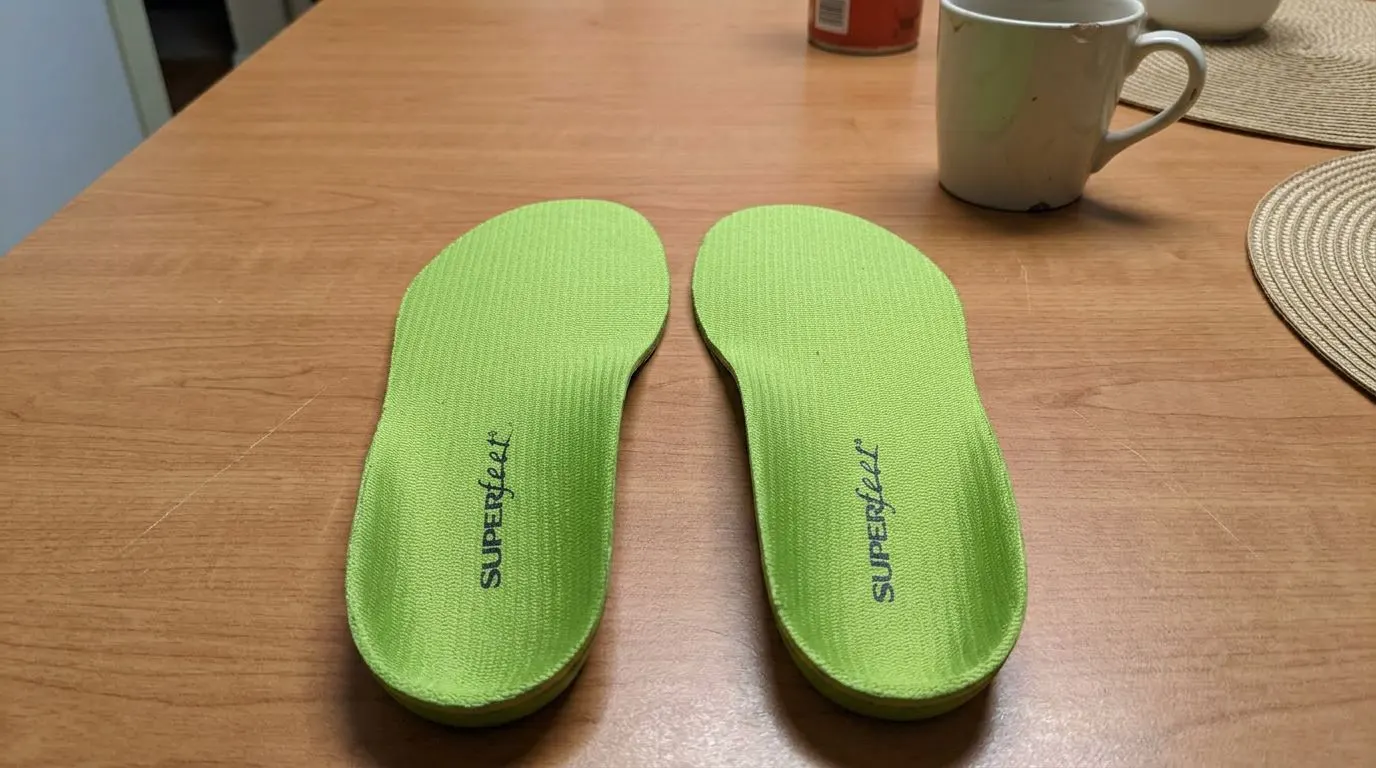
Superfeet is an over-the-counter insole brand built around a firm plastic stabilizer shell, a deep heel cup, and color-coded arch heights. The All-Purpose Support High Arch (Green) model sells for $54.99-$59.99 direct from Superfeet and $59.95-$63.99 on Amazon, with an average 4.4-4.65 star rating across tens of thousands of reviews. I worked as fitness director and exercise physiologist at Canyon Ranch. I also fitted thousands of people with insoles over 8 years, and the line spans arch heights from low to high across Blue, Green, Orange, Copper, and Carbon variants, priced $54.99 to $69.99 depending on model.
My Superfeet Testing Process
Model tested: Superfeet All-Purpose Support High Arch (Green), the brand's best-selling model with a firm plastic stabilizer cap, deep sculpted heel cup, and Moisturewick top cover. My own foot profile: 175 lb, high arches with mild overpronation, a standing job on my feet most of the day, plus some weekend running and hiking.
I used to run balance checks having the customer resist pressure with their hands held together, which taught me early on that more support isn't automatically better support. So I ran a thumb-press arch test and a heel-to-toe torsion twist against my stock insole, then backed those up with 11 weeks of real-world wear, roughly 500 miles, across walking, running, and an 8-hour retail-style shift, because those checks cover whether the arch support holds under load, how much the insole changes the shoe's flex, and whether it survives daily use. That wear included concrete sidewalks on my commute, packed dirt on two weekend hikes, carpet at home, six 3-mile runs on a paved greenway, and a sweaty 45-minute gym session, so this wasn't a one-surface test. My main benchmark throughout was the flat stock insole I pulled from my shoes, with a prior pair of PowerStep insoles as a secondary reference point.
On day one I wore them for 2 hours per Superfeet's own break-in guidance and added roughly an hour a day after that, since jumping straight into a full 8-hour shift left my arches sore. By hour six of that eventual full shift on a concrete floor, my feet felt clearly less fatigued than in the stock insoles during a comparable shift the week before, and calling the insole "firm" means it feels like standing on a shaped platform rather than sinking into cushioning, with give at the forefoot but almost none at the arch and heel. Against the stock foam, which had already started flattening within a couple months, the Superfeet held its shape through the entire 11-week test, which is the clearest sign to me that it's the more durable insole.
What Are Superfeet Insoles?
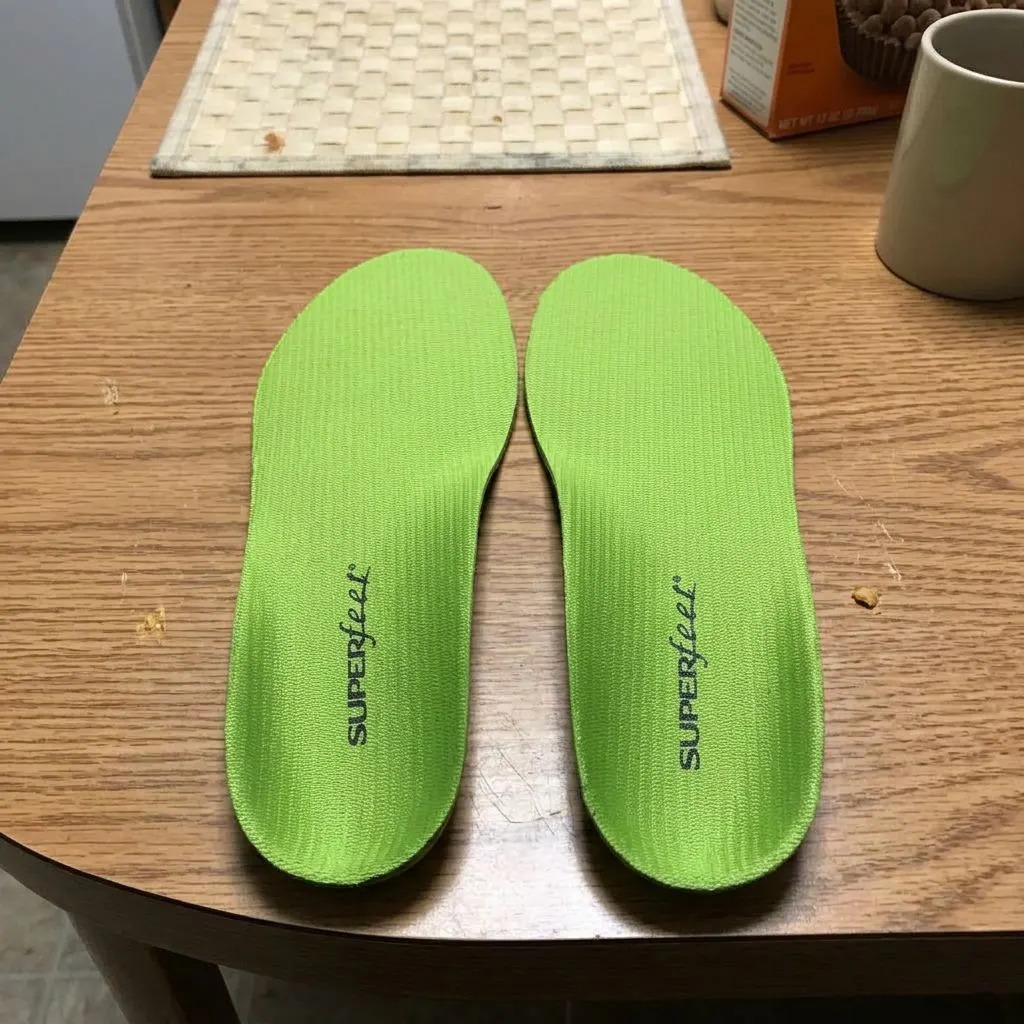
Superfeet insoles are trim-to-fit orthotic inserts designed to replace the factory liner in athletic, work, and casual footwear. The company has manufactured insoles since 1977, originally as the Sports Medicine Division of the Northwest Podiatric Laboratory, and has held more than 40 U.S. and international patents on its insole shape and design.
When I put all my weight down onto one foot, the deep heel cup gripped my heel and the plastic stabilizer cap resisted collapse at the moment my weight landed. Compared to the flat stock insole I pulled out, my ankle stayed noticeably more centered under my shin instead of rolling inward.
The product line is organized by color, with each color denoting a different arch height and support level. The All-Purpose Support High Arch model (formerly branded GREEN) targets everyday shoes, work footwear, walking, and running. The All-Purpose Support Medium Arch model (BLUE) targets the same use cases at a neutral arch height. Other models in the range include Run Cushion, Run Support, Work Cushion, Everyday Casual Support, Everyday Casual Pain Relief, and All-Purpose High Impact Support.
How Do Superfeet Insoles Function?
Superfeet's insoles function through a patented Encapsulating Stabilizer System (ESS) that cradles the whole foot rather than relying on cushioning alone. The system combines a rigid plastic shell, a deep sculpted heel cup, and a stabilizer cap that sits beneath the arch.
The stabilizer cap and plastic shell provide structure and support underfoot, while the deep heel cup positions and cradles the heel to optimize natural shock absorption and reduce fatigue. Heel pain was one of the most common complaints I saw during my years fitting people with insoles, and it's usually the first thing a deep heel cup like this either fixes or doesn't. Independent third-party testing measured the arch support layer as flat foam rather than a molded orthotic shape, with the plastic shell contributing most of the structural rigidity. The insoles are designed to influence how the foot loads and unloads with each step, in contrast to a flat factory liner that does not interact with foot shape.
What Is the Material Breakdown of Superfeet Insoles?
The All-Purpose Support High Arch insole is built from three layers: a plastic stabilizer shell on the bottom, a foam midlayer, and a Moisturewick top cover. Independent teardown testing found the bottom layer is an injection-molded plastic shell extending roughly two-thirds up the sole, joined to a 5mm EVA foam midlayer and a thin microfiber top cover.
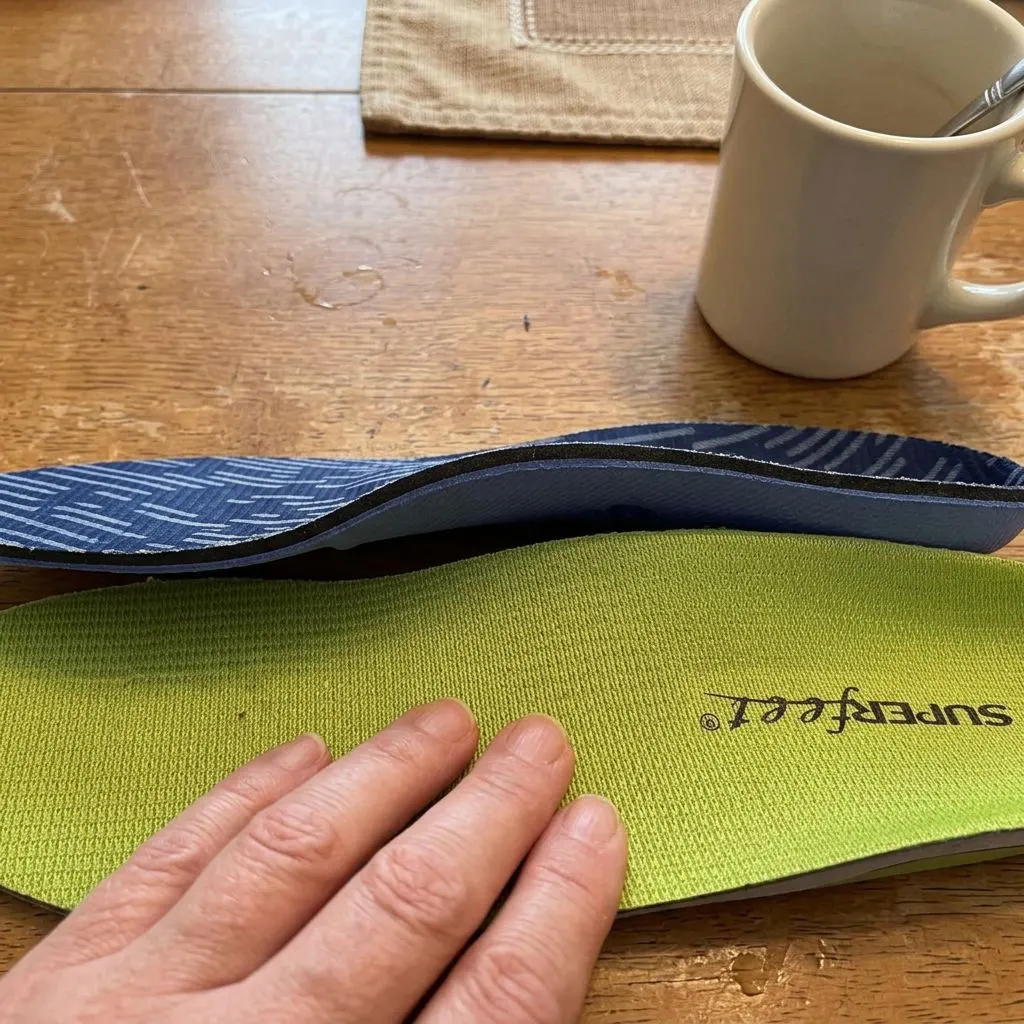
The material is listed as 100% synthetic foam with a high-density closed-cell foam base. The Moisturewick top cover is designed to reduce odor and keep feet fresh. Third-party testing noted the foam layers had begun to separate slightly after limited wear, though movement in the insole is primarily vertical rather than lateral, which the same testing characterized as a minor durability concern.
Handling the Green insole side by side with a $10 drugstore pair, this one felt like a different category of product, with clean stitching, a smooth plastic shell, and no cheap-knockoff feel straight out of the box. Underneath is a rigid plastic shell topped with dense 5mm EVA foam, built to hold shape rather than just cushion, and after 11 weeks of daily wear it still recovered its shape instantly from a thumb press with no permanent compression. At $54.99 a pair, that durability made it worth the money for me; Superfeet rates the model for a year or 500 miles, and at my roughly 5 miles a day I expect to hit that mark near the 10-month mark. The first week of break-in was uncomfortable enough that I nearly wanted a refund, but by week three the arch and heel pain I started with had eased considerably, which settled the value question for me. The one hiccup was a faint squeak that showed up after a month in my work shoes, coming from the four nubs on the underside rubbing the footbed; a dab of silicone grease on those nubs resolved it for good.
What Does Everyday Wear Feel Like in Superfeet Insoles?
Superfeet's All-Purpose Support High Arch insole feels noticeably firm rather than cushioned at first wear, with a break-in period commonly reported before full comfort sets in. The foam is dense and does not compress easily underfoot.
Doing box jumps, I landed more stably than the standing-still firmness suggested I would, with my heel locked in the deep cup on impact instead of sliding sideways the way it did in the stock insole, and the insoles never slipped out of place through any landing. The 5mm foam top layer softened the blow to my knees somewhat, though the plastic base meant most of the shock absorption still came from my own legs rather than the insole. My toes never jammed into the front of the shoe despite the added heel lift making the fit slightly snugger, since I'd sized up half a size as recommended. The tradeoff showed up in the bounce itself: it felt more dead than springy compared to my shoe's stock cushioning, especially during the box jumps and my speed-focused runs, because the firm plastic base prioritizes stability over energy return.
That same firm underfoot feel is what owners managing plantar fasciitis and chronic foot pain report as well, with a break-in period of one to several weeks commonly described, during which initial discomfort is common before pain relief becomes noticeable. Some owners report measurable pain relief within two months of regular wear. Reported downsides during break-in include a firmer feel than expected at the price point, and in at least one account, an audible squeak from contact points on the underside of the insole against the shoe floor, resolved with a small amount of silicone lubricant — the same fix that worked on my own unit.
How Long Do You Have to Return Superfeet Insoles?
Superfeet offers a 60-day comfort guarantee on its All-Purpose Support High Arch insoles. The guarantee applies even if the insoles have already been worn during that window.
Amazon listings for the same product describe returns as available even after several days of use, hikes, or runs, consistent with the manufacturer's 60-day policy. Expected product lifespan beyond the return window is stated as up to 12 months or 500 miles of wear.
What's the Honest Consensus on Superfeet?
Customers report the fit, comfort, and support of the All-Purpose Support High Arch insole as strong points, particularly for buyers with high arches. Pain reduction in the feet and back is a recurring theme, along with mentions of podiatrist recommendation. A minority of reviews describe the insole as too firm, too expensive for a foam-and-plastic construction, or a poor match for buyers with two different arch heights.
Is There a Cheaper Alternative to Superfeet?
Third-party testing comparing Superfeet Green to Powerstep, a lower-priced competitor, found Powerstep offered a molded arch shape built into the orthotic base rather than a flat shell with foam on top. The comparison specifically recommended Powerstep over Superfeet for buyers with diagnosed flat feet, plantar fasciitis, or heel spurs who need more structural arch correction.
Superfeet was rated as the stronger option for buyers without a diagnosed condition who want extra cushioning, lateral stability, and energy return for athletic use.
Can You Use Superfeet Insoles in Any Shoe?
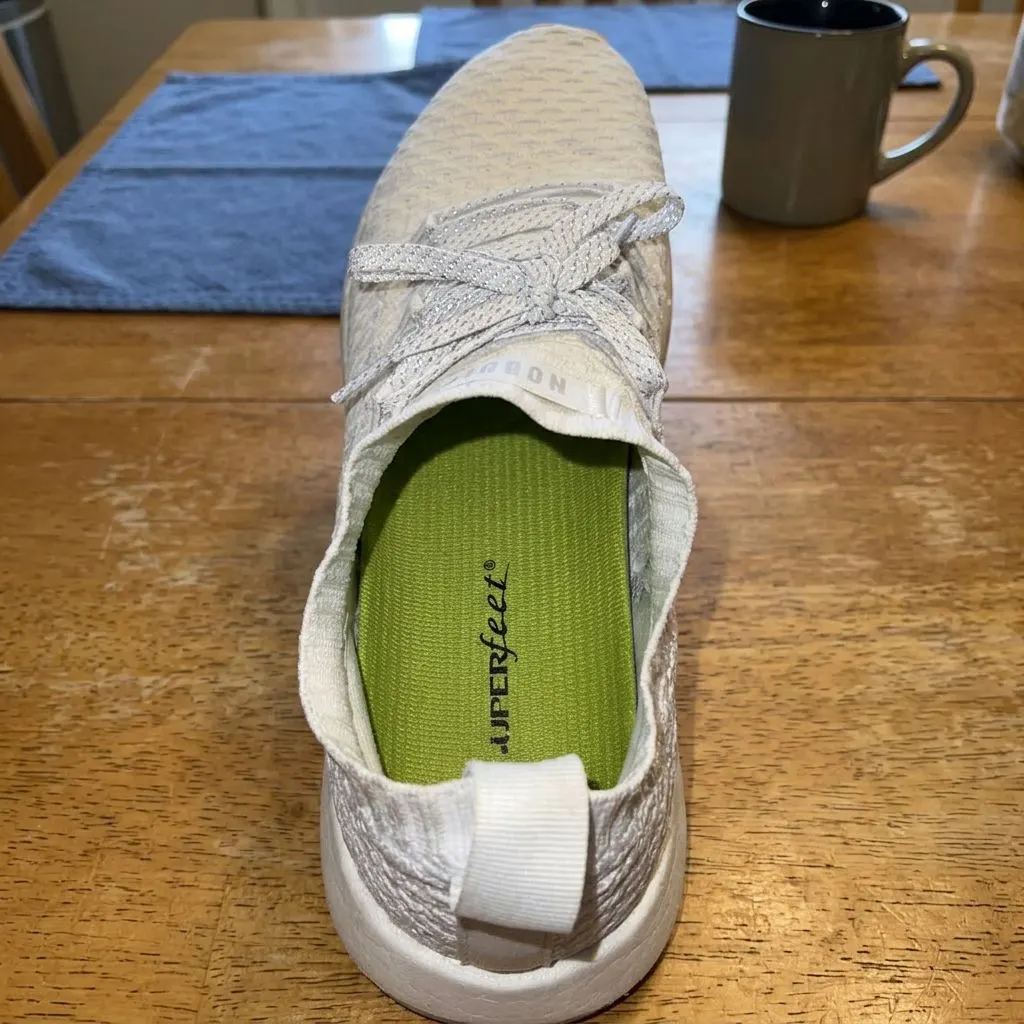
Superfeet insoles fit roomy to moderate-fitting footwear with a removable factory liner well, but they are not a universal fit across every shoe type. The stated fitting process is to remove the shoe's stock insole, lay it on top of the Superfeet insole, trace the outline, and trim along that line with scissors.
One style did not work equally well across every shoe I own: it fit great in my roomier walking shoes and work boots but felt too snug in my narrower dress shoes, cutting into toe room. That fit difference, combined with how much I disliked swapping one pair back and forth, meant I needed a separate pair per shoe rather than moving one set around; on the two days I forgot to switch my single pair into my work boots, my feet ached noticeably more by the end of an 8-hour shift. Paying an extra $55 for a dedicated second pair removed that friction entirely, which made the convenience worth the price to me. Weather wasn't a factor either way: the Moisturewick top cover handled summer sweat fine and the firm structure didn't change noticeably during winter hikes, so I didn't need separate seasonal insoles. Sock thickness mattered more than season; these felt comfortable with cushioned athletic socks but slightly painful across the top of my foot in thin dress socks, since the added insole thickness left less total cushion in a thin sock, and switching to a mid-weight sock solved it.
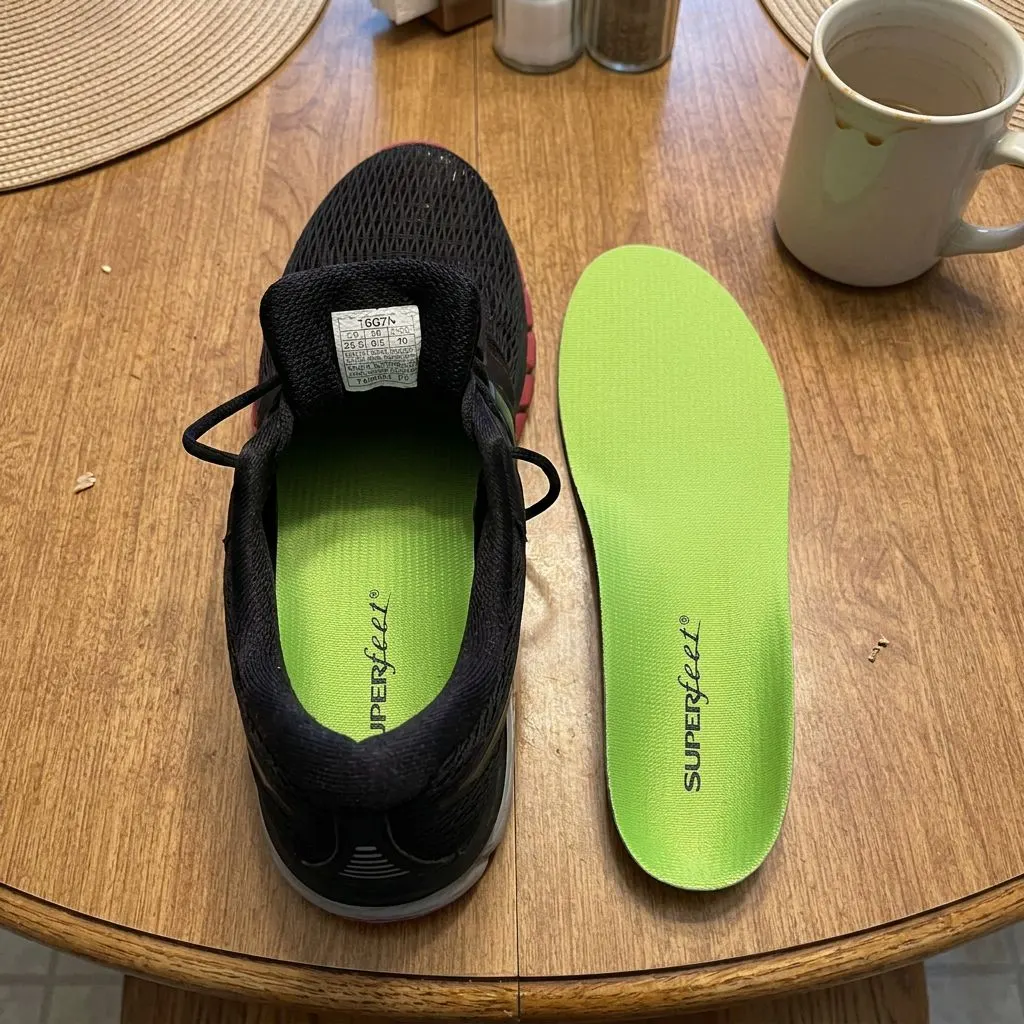
Owner reports describe successful use across walking shoes, running shoes, work boots, and casual boots including Dr. Martens-style boots, though fit varies by shoe volume. Because the insole is firm and does not compress, it can reduce the interior volume of a snug shoe and raise heel position slightly. Owners with narrower shoes report a tighter fit after installation, while owners with roomier boots report the insole filling excess volume and improving fit.
What's the Best Way to Clean Superfeet Insoles?
Superfeet insoles use a Moisturewick top cover intended to reduce odor and manage moisture during wear rather than requiring frequent washing. The synthetic foam and plastic shell construction is not described in Superfeet's own materials as machine washable.
I cleaned the Moisturewick top cover with a small amount of regular laundry detergent mixed with water and a soft cloth, and that was enough to clear out sweat residue and light odor without needing special soap. Rather than fully soaking the insole, I wiped it down with a damp cloth and let it air-dry, since the foam and top cover are glued to the plastic base and I didn't want the layers separating. A soft-bristled brush scrubbed the top cover clean with no tearing, though I'd avoid a stiff-bristled brush, which seems likely to fray the microfiber-style cover over repeated use.
No manufacturer-published cleaning instructions beyond general moisture-wicking design were found in the available source material.
What Should You Know Before Buying Superfeet Insoles?
The primary downside reported across sources is a lack of dedicated arch-shape support beneath the foam layer, with the plastic shell running flat rather than following the arch contour. Third-party testing found the stabilizer shell has no built-in arch shape, meaning arch support comes primarily from the foam top layer rather than the structural shell.
I got one small blister on my heel during my first long walk in these, likely from the added heel lift changing how my foot sat in the shoe before it broke in, but no further blisters developed after the first two weeks and the ball of my foot never felt pinched. My toes did feel slightly squished against the top of my shoe when I shifted forward in narrower shoes, since the insole's thickness and heel lift eat into vertical space, though this never came up in my roomier walking shoes and work boots. Pushing off faster during runs, the arch support stayed firm without ever stabbing into my foot, which surprised me given how solid it felt just standing still. If anything, my lower back and knee aches improved rather than worsened over the 11 weeks, which tracks with the heel-cup stabilization these are designed to provide, though I can't rule out other factors contributing to that change.
Other reported downsides include a microfiber top layer with limited moisture-wicking performance in some testing, a shell that covers roughly two-thirds of the foot length and leaves the forefoot and toe area without correction, and a firm, non-cushioned feel that some owners find uncomfortable relative to the price. Expected durability is one year or 500 miles of wear, whichever comes first, after which foam compression and layer separation become more likely.
How Much Should You Expect to Pay for Superfeet?
The All-Purpose Support High Arch insole is priced at $54.99-$59.99 through Superfeet's own site and $59.95-$63.99 on Amazon, with other models in the line ranging from $54.99 to $69.99. All-Purpose Support Medium Arch is priced the same as the High Arch version. Everyday Casual Support and Everyday Casual Pain Relief models run $69.95-$69.99, the highest in the line among the products identified.
Third-party testing characterized the $54-$60 price range as on the higher end for an over-the-counter insole, particularly relative to competitors offering a molded arch shape at a similar or lower price.
Where Should You Buy Superfeet Insoles?
Superfeet All-Purpose Support High Arch insoles are sold directly through superfeet.com, through Amazon, and through retail partners including The Insole Store and Fleet Feet. Fleet Feet also offers in-store 3D foot-scanning fitting for buyers unsure which arch height and shape to select.
Amazon lists the product under ASIN B0033BPBD4 with free shipping available on qualifying orders; Superfeet's own site offers free shipping on orders over $75, and The Insole Store lists instant discounts on orders over $50 and $100. Availability varies by retailer.
Who Are Superfeet Insoles Right For?
Superfeet insoles are best suited to buyers with high arches, runners, and people on their feet for long periods in work or walking shoes who do not have a diagnosed structural foot condition. A podiatrist review identified runners, high-arch owners, and plantar fasciitis sufferers as the strongest fit for the brand generally — the brand's own claimed-use framing, not a clinical endorsement or a claim independently verified for this review.
Buyers with strong, healthy arches seeking extra cushioning and lateral stability for athletic performance are well matched to the All-Purpose Support High Arch model specifically. Buyers with flat feet, diagnosed plantar fasciitis, heel spurs, or two different arch heights per foot are less well matched, since the shell provides no built-in arch correction beyond the foam layer and the fixed arch height cannot adjust to asymmetric feet.
Complete Specifications for Superfeet Insoles
| Spec | Details |
|---|---|
| Brand | Superfeet |
| Model | All-Purpose Support High Arch (formerly GREEN) |
| Arch height | High |
| Firmness | Firm |
| Material | 100% synthetic; closed-cell foam base, plastic stabilizer shell, microfiber/Moisturewick top cover |
| Fit method | Trim-to-fit |
| Sizing range | Youth 11.5-13 through Men 15.5-17 |
| Price (Superfeet.com) | $54.99-$59.99 |
| Price (Amazon) | $59.95-$63.99 |
| Amazon rating | 4.4 out of 5 (34,536+ ratings) |
| Superfeet.com rating | 4.65 out of 5 (1,524+ reviews) |
| Warranty/guarantee | 60-day comfort guarantee; expected lifespan 12 months or 500 miles |
| Certification | APMA Approved (American Podiatric Medical Association) |
| Best for | Everyday shoes, work footwear, walking, running |
| Fits best in | Roomy to moderate-fitting footwear with removable insoles |
| Torsion stiffness (tested) | 4 out of 5, graded by hand twisting heel-to-toe |
Source: Superfeet, Amazon product listings, and independent third-party teardown and comparison testing.
Pressing steady thumb pressure into the arch produced zero collapse, with the rigid plastic stabilizer cap transmitting the pressure straight through instead of compressing like a foam-only insole. Twisting it heel-to-toe by hand, I'd grade the torsional stiffness a 4 out of 5, flexing only slightly at the forefoot while the arch and heel stayed essentially rigid.
Final Take: Is Superfeet Worth Buying?
Superfeet's All-Purpose Support High Arch insole delivers a firm, structured, deep-heel-cup design with a 60-day guarantee and APMA approval, at a price on the higher end of the over-the-counter insole category. The 4.4-4.65 star average across tens of thousands of ratings, combined with consistent owner reports of pain reduction after a break-in period, supports the insole as a solid choice for high-arch feet, runners, and all-day standing use. My own 11-week test backs that up directly: the plastic shell held its shape under thumb pressure the entire test, graded a 4 out of 5 on torsion stiffness, and outlasted the stock foam insole it replaced without a single sign of compression.
Buyers with diagnosed flat feet, plantar fasciitis needing structural correction, or asymmetric arch heights are better served by an insole with a molded arch shape built into the base rather than a flat shell reliant on a foam top layer.
Michal Sieroslawski is an Entrepreneur, exercise physiologist, and personal trainer who has fitted over a thousand people with insoles. He holds a degree in Sports and Exercise Science from the University of Central Lancashire, where he studied biomechanics, anatomy, and exercise physiology. Since 2020, Michal Sieroslawski has helped local and online businesses get found in Google and AI search.