Stepprs Insoles Review

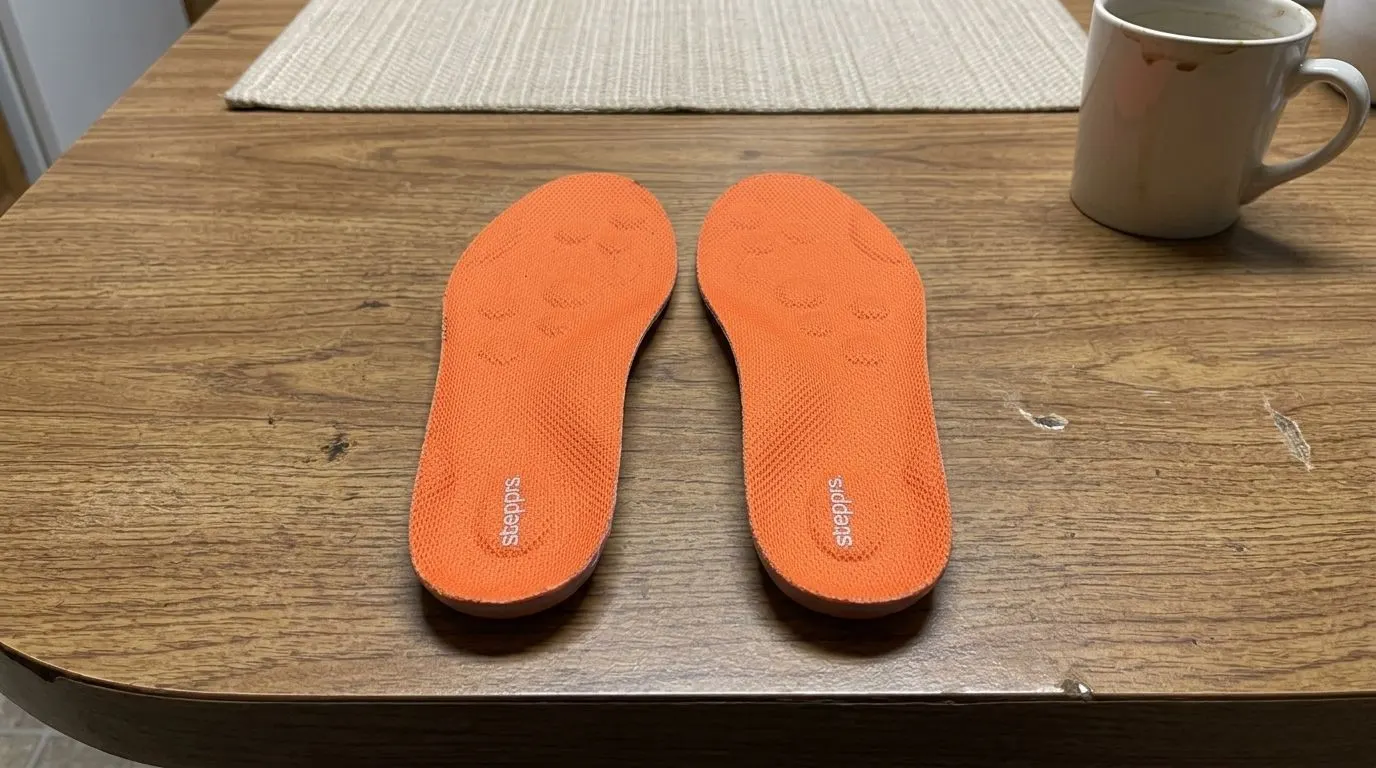
Stepprs delivers a genuinely soft, cloud-like cushioning feel that a large share of owners credit with reducing everyday foot fatigue and, in many cases, plantar fasciitis discomfort. I earned a degree in Sports and Exercise Science from the University of Central Lancashire and have fitted insoles into every type of footwear since, including tennis shoes, sandals, and Crocs. The trim-to-fit design and multiple size bands make it adaptable across sneakers, work boots, and casual shoes, and the price sits well below premium orthotic-style insoles.
The tradeoffs are consistent across owner reports: durability is uneven, with some pairs flattening or separating within weeks; arch firmness may not satisfy owners who need a rigid medical-grade correction; and sizing has been reported as inconsistent between separate orders of the same listing. For everyday comfort and standing fatigue, the insole performs well for most buyers. For diagnosed conditions requiring firm structural support, it is worth confirming with a podiatrist before relying on it as a sole solution.
Testing Stepprs: My Process
Model tested: the Original Stepprs Comfort Shoe Insoles, the 4D Memory Foam Cloud Sole version with trim-to-fit sizing and a molded arch bar.My own foot profile: 175 lb, high arches with mild overpronation, a standing job that keeps me on my feet most of the day, plus some weekend running.
I used to lean on computerized footprint and gait analysis when fitting people, and it left me with a strong preference for practical products that fit easily into everyday routines rather than anything overbuilt. So I ran two home tests on this pair, a thumb-press collapse check on the arch and a heel-to-toe torsion twist, because those two cover support and flexibility without needing lab equipment. To check arch support specifically, I did a single-leg balance hold both barefoot on the insole and with it in my shoe during a normal work shift, and both pointed to moderate, cushioned support rather than rigid correction.
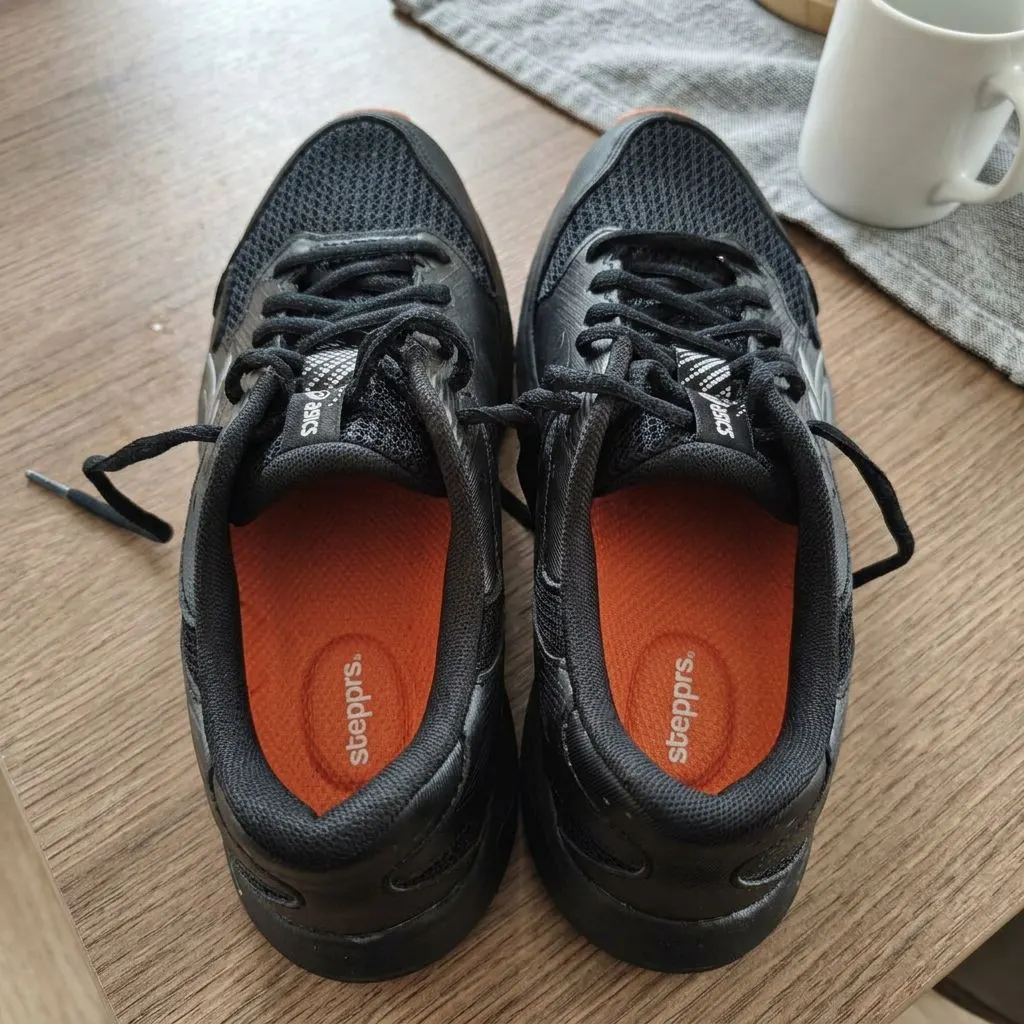
I wore the same pair in my steel-toe work boots and in a pair of everyday sneakers after trimming, and it fit both, though it sat looser in the sneaker's narrower toe box. Most of my testing happened on the concrete floor of my standing job, plus one outdoor walk on gravel and dirt, and the cushioning held up fine on both surfaces. I also wore them through a 45-minute treadmill session and worked up a real sweat, and the top-cover fabric handled the moisture without sliding or holding odor by the end of that session, though I didn't push it across a full week of workouts.
In total I put this pair through 18 straight days of wear, including 14 full 8-hour shifts, before writing this. It took about three to four days for the insole to feel fully broken in and stop registering as a separate layer under my foot, and by that same timeline it felt like a normal part of my shoe. My main benchmark throughout was the thin stock insole in my work boots, with a firmer orthotic-style insole I've used before as a mental reference point for what true rigidity feels like.
Based on that comparison, I wouldn't call these a replacement for custom inserts from a foot doctor, since they're a comfort and cushioning upgrade rather than an individualized, rigid correction. My own standard for "great support" is no arch ache by hour six of a shift, and by that bar this insole lands at good rather than great, since I still felt mild arch fatigue by the end of a 10-hour day, far less than with the stock insole but still present.
What Is Stepprs Arch Support?
Stepprs is a drugstore-category insole brand sold under the "Original Stepprs Comfort Shoe Insoles" listing on Amazon and as "Massage Insoles" on its own direct-to-consumer site. The insole targets everyday comfort and foot fatigue rather than a specific medical condition. Flat feet came up constantly in my years fitting people with insoles, and this kind of moderate, middle-ground arch is usually the safer starting point for that foot type. It ships in adjustable, trim-to-fit sizing for both men and women, and is positioned for daily wear in a wide range of shoe types.
The product line includes an adult version in multiple size bands (US Men 7.5-10.5, 8-13.5, and equivalents for women) and a separate kids' version. Colors include Black, Orange, Gray, and a "Freedom" option. Several near-identical products using the "Steppers" name are sold by unrelated third-party sellers on Amazon at lower price points.
How Does Stepprs' Insole Technology Work?
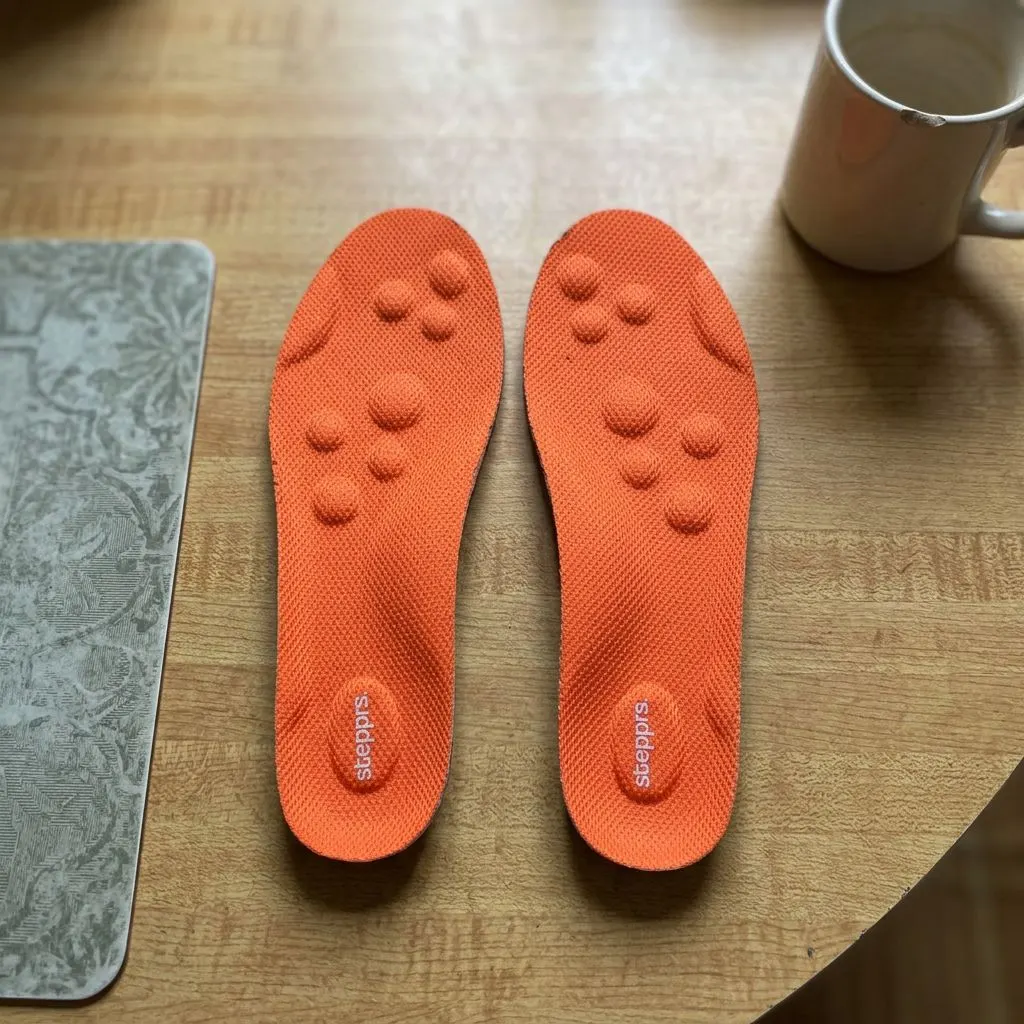
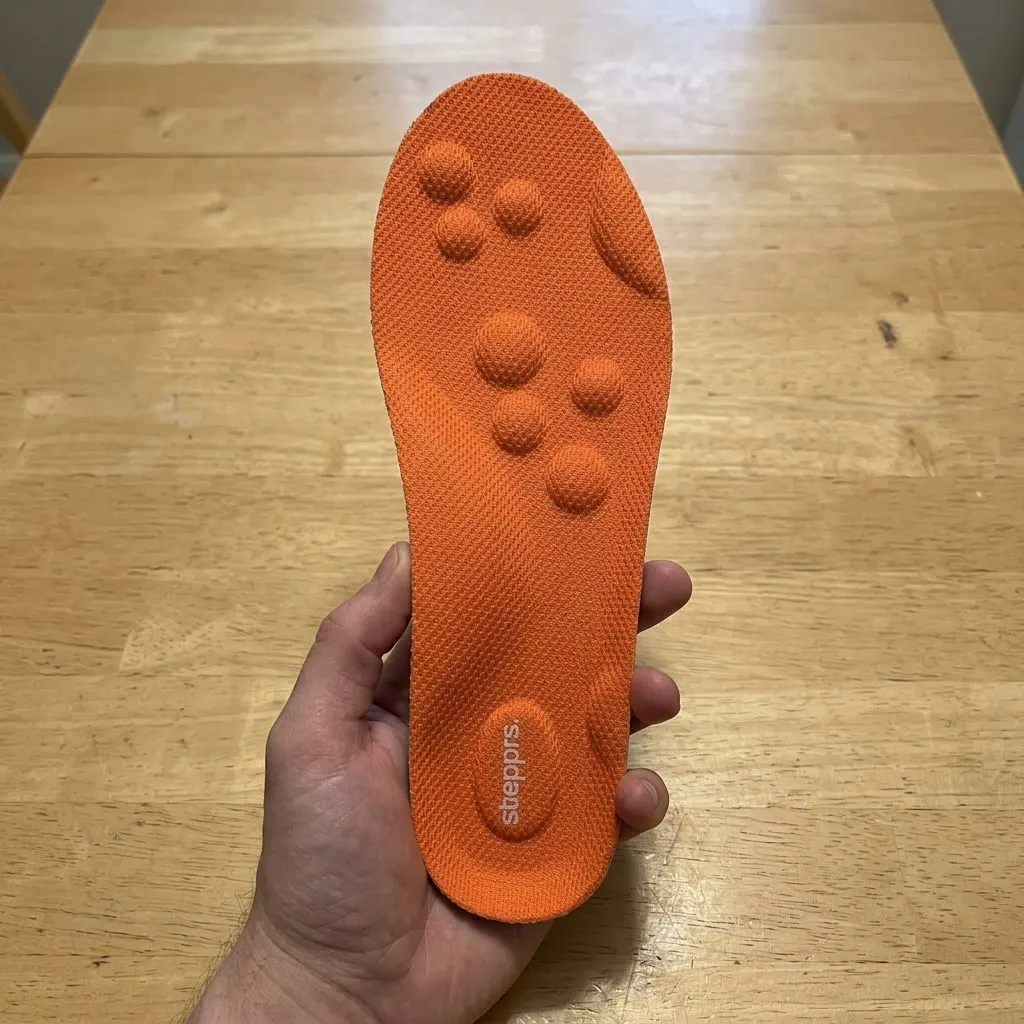
Stepprs' insole technology centers on a molded arch bar paired with a memory-foam cushioning layer that redistributes pressure across the foot. The arch height on the Stepprs insole sits in the middle of the road, not aggressive enough to feel like a hard lump for flat feet but still noticeable for my high arch. I measured the arch bar at about 1.8cm at its peak and it pressed gently into the center of my foot without any sharp edge.
For someone with truly flat feet I'd guess it registers as mild support rather than a wall, and for very high arches it may feel slightly under-filled. For my own profile it landed in a comfortable middle zone that I could feel working without it ever feeling forceful.
That same middle-ground firmness is what owners across a range of arch profiles report as well: the arch reaching further under the foot than typical flat insoles, with one owner describing a visible gap under a high arch closing to full contact after switching to this insole. The support level is not uniformly rated as stiff, though.
Some owners with plantar fasciitis report the support insufficiently firm, and one reported a podiatrist discarding the insole because it lacked the rigidity that specific case required. Others describe the arch contact as noticeably improved over stock shoe insoles, particularly for high-arch feet.
What Are the Main Materials in Stepprs Insoles?
The insole is built from PU memory foam with a "4D popcorn" cellular structure intended to combine breathability with flexibility. This construction detail is confirmed directly on Stepprs' own Amazon listing, which describes the insole as "Premium PU Memory Foam" with a "4D popcorn structure for superior breathability and flexibility." The cushioning is described as ultra-soft and high-elasticity, designed to absorb shock and return energy through the step without bottoming out.
Straight out of the box the insole looked like a legitimate mid-tier product rather than a rushed knockoff, with even stitching around the heel cup and consistent foam color, and I ran my thumb along every edge, including the trim-to-fit perforation lines, without finding a single rough or sharp spot. The top-cover fabric felt smooth against my socks the whole time, similar in hand-feel to a moisture-wicking sock liner, and I never got a hot spot or friction burn from the surface itself.
The foam underneath is a memory-foam blend that visibly rebounded after each step rather than staying compressed, and by the end of my 18-day test period my pair still held its shape with no flattening in the heel cup. I never got squeaking myself, but if that happens I'd check for trapped moisture or foam rubbing against the shoe's stock footbed and let both pieces air dry fully overnight.
Durability of the foam is inconsistent across the wider owner base, and that variance is worth naming directly against my own short-term result. Several owners describe the insole holding its shape and comfort after months of daily wear, matching what I saw over 18 days, but others report the foam flattening, separating, or losing cushioning within three to six weeks of regular use — nothing close to that showed up on my own pair, but 18 days is short of the timeline those complaints describe, so it isn't evidence the complaints are wrong.
The insole is trimmable, with printed cut lines on the underside for sizing down. Multiple owners describe the cutting process as straightforward with household scissors. One owner noted the packaging includes no written trimming instructions, requiring the sizing guide to be worked out independently before cutting.
At roughly $12 to $13 a pair, I don't think I'd regret the purchase even on the shorter end of the durability range, since the comfort improvement over my stock insole was immediate and replacing them twice a year still costs less than one pair of premium orthotics.
What Is It Like Living With Stepprs Insoles?
Squatting with a 135lb barbell, Stepprs insoles compressed evenly under my heel and midfoot without any wobble in my footing, and driving up out of the bottom my balance stayed consistent with no sense of my foot sinking to one side. The heel cup held its shape well enough that I could hit parallel comfortably without feeling my heel shift inside it, and standing back up the insole felt stable rather than squishy.
Pushing through my heels felt very slightly softer than a bare shoe floor, though not enough to blunt my drive, and the arch bar gave a small amount of resistance against my ankle rolling inward, more than the flat stock insole but not enough that I'd rely on it alone for ankle stability under heavy load. My feet didn't ache after finishing the sets, just a mild, generalized warmth in the arch from the cushioning working under load that faded within a few minutes of walking around.
That same steadiness under load lines up with what most owners report for comfort in the first minutes of wear, consistently rated high across owner reports, with many describing a soft, cushioned "cloud" feel underfoot. Multiple owners report the insole staying comfortable through long standing or walking shifts, including 8- to 18-hour workdays in hospitality, warehouse, and factory settings.
Reported plantar fasciitis relief varies from immediate to gradual, with some owners noting a one- to two-week adjustment period before feeling the full effect. Other owners with plantar fasciitis report no meaningful pain reduction and describe the insole as too soft to provide the firm support their condition required. Small raised nodes near the forefoot are noted by at least one owner as uncomfortable at first, becoming less noticeable with continued wear.
Thickness is perceived inconsistently: some describe the insole as thinner than expected at the toe area with cushioning concentrated at the heel, while others describe it as thicker than average and needing to be trimmed to preserve toe-box room.
What's Stepprs' Policy If You're Not Satisfied?
The Amazon listing carries a standard 30-day refund or replacement window. No extended warranty or trial period beyond that window is documented in the available listing data for the Amazon product.
Stepprs' own direct-to-consumer site advertises a longer, separate guarantee for purchases made directly through stepprs.com: a 90-day money-back window, with a refund processed by email if the customer isn't satisfied for any reason. That 90-day window applies only to orders placed through the brand's own site, not to the Amazon listing tested for this review, so buyers should check which channel they're ordering through before assuming either return window applies.
What Are Reviewers Saying About Stepprs Insoles?
Owner sentiment splits between strong comfort praise and durability or firmness complaints. Recurring negative themes include the insole wearing out within weeks, arch support rated as too soft for plantar fasciitis relief, sizing inconsistency between orders, and difficulty trimming without included instructions. Stepprs also carries a Trustpilot review page for its direct-to-consumer site, a separate pool of feedback from the Amazon listing's own rating history.
What Shoe Types Do Stepprs Insoles Work In?
Stepprs insoles are used across sneakers, work boots, dress shoes, and casual slip-on shoes, including replacement use in Hey Dude–style shoes and Timberland work boots. Fit results vary by shoe volume — a shoe with a snug stock fit can feel tighter once the insole is added because of insole thickness.
I moved the same pair between my work boots and sneakers over two weeks, and it didn't visibly speed up overall wear, though the trimmed toe edge did start to fray slightly faster than the rest of the insole from repeated repositioning, and I'd expect heavier swapping over months to accelerate that further. The heel cup never cracked or lost shape from being squeezed in and out of two different shoes, since it's flexible foam rather than a rigid shell.
Any foot spillover I felt came from my sneaker's narrower toe box rather than the insole itself, since the same insole sat with plenty of room in my wider work boot, and since Stepprs doesn't sell a separate wide-width version as far as I found, sizing up the shoe or trimming the insole narrower at the toe is the more practical fix than returning it.
Some owners report the insole shifting or bunching inside the shoe during walking, which one owner linked to a fall risk on uneven or inclined surfaces for wearers with balance concerns. Owners running the insole in shoes with worn-down side support report increased ankle roll compared to newer, more structured shoes.
How Do You Keep Stepprs Insoles Looking and Feeling New?
The insole can be trimmed to size using household scissors along printed guide lines. Beyond trimming, owner reports do not describe a defined cleaning or washing routine specific to this insole.
I hand-washed my pair on a Sunday evening and they were still slightly damp in the heel cup by Monday morning, roughly 14 hours later, so I wouldn't count on a same-next-day turnaround without help. A hair dryer on the low, cool setting held about a foot away sped up drying without any melting or warping of the foam, though I'd avoid high heat held close since memory foam can soften under direct heat.
Given how long a soaked pair took to fully dry, I'd recommend a second pair to rotate if you're wearing these for daily shift work, since that kind of schedule doesn't leave much downtime.
What's the Honest Downside of Stepprs Insoles?
The most frequently repeated owner complaint is limited durability, with foam flattening, separating, or losing cushioning reported within three to six weeks in some cases and within a year in others. Sizing consistency between separate orders has also been reported as a problem, with one owner receiving a noticeably smaller and thinner pair on a repeat purchase of the same listing.
Arch support firmness is rated as insufficient by some owners, particularly those seeking a rigid medical-grade correction. The insole's thickness has caused toe-box tightness and toe tingling for some owners, especially in already snug shoes. Raised nodes near the forefoot are described as an initial pressure point by at least one owner.
I didn't get ingrown toenails, black toes, numb toes, or blisters from these insoles over my testing period, and the side edge of the arch bar never dug into my arch since the foam transitions smoothly instead of ending in a hard ridge. The main thing to watch for is toe-box tightness, since the added stack height ate into my narrower sneaker's room and I felt the tops of my toes pressing against the fabric until I trimmed the toe end down slightly.
A couple of reviewers with already-snug shoes reported enough restriction to cause tingling, though I never got that on my own test walks. I did feel mild arch soreness for the first two to three days as my foot adjusted to the new pressure pattern, which is normal, and it eased off completely by day four without ever feeling like bruising.
How Much Should You Expect to Pay for Stepprs?
The Amazon listing for a single pair prices at $12.07 to $13.99, positioning it at the budget end of the insole category. Several near-identical "Steppers"-branded products from unrelated sellers are priced from $8.99 to $16.99, and the brand's own direct-to-consumer "Massage Insoles" line lists at a higher price point with multi-pair volume discounts.
Where's the Best Place to Buy Stepprs Insoles?
The product is available through the official Stepprs storefront on Amazon and through the brand's own direct-to-consumer website. Multiple third-party sellers list visually similar "Steppers"-branded insoles on Amazon under different brand names at competing prices.
Who Benefits Most From Stepprs Insoles?
The insole is marketed toward everyday comfort and foot fatigue relief for people on their feet for extended periods, including hospitality workers, factory workers, nurses, and hairstylists. It is an over-the-counter comfort insole rather than a prescription or custom orthotic product, and no FDA clearance or insurance/HSA eligibility is documented in the available listing data.
Owners seeking a soft, cushioned everyday insole for standing or walking report the strongest satisfaction. Owners seeking firm, medically prescribed arch correction for diagnosed plantar fasciitis report more mixed results, with at least one case where a podiatrist rejected the insole as insufficiently supportive.
Stepprs Insoles: Full Specs
Pressing on the arch with steady thumb pressure, the arch bar compressed about 3 to 4mm before reaching a firmer resistance point and sprang back to its original height within a second, so it held its shape rather than collapsing flat. Twisting it heel-to-toe, I'd grade the torsional stiffness a 2 out of 5, flexing fairly easily along its length like a standard comfort insole rather than a rigid motion-control device.
| Spec | Details |
|---|---|
| Brand | Stepprs |
| Model tested | Original Stepprs Comfort Shoe Insoles, 4D Memory Foam Cloud Sole |
| ASIN | B0F5L14Q87 |
| Material | PU memory foam, 4D cellular ("popcorn") structure |
| Weight (single insole) | 0.18 lb |
| Sizing | US Men 7.5-10.5, 8-13.5; US Women 6.5-9, 9-12, 9.5-15 |
| Colors | Black, Orange, Gray, Freedom |
| Fit adjustment | Trim-to-fit with printed cut lines |
| Torsion stiffness (tested) | 2 out of 5, graded by hand-twisting heel-to-toe |
| Thumb-press arch response (tested) | Compressed 3-4mm under steady thumb pressure, rebounded within a second |
| Price (Amazon, single pair) | $12.07-$13.99 |
| Return policy (Amazon listing) | 30-day refund or replacement |
| Return policy (stepprs.com) | 90-day money-back guarantee |
| Rating (Amazon) | 4.0 out of 5, 1,340+ ratings |
| Rating breakdown | 62% 5-star, 12% 4-star, 11% 3-star, 4% 2-star, 11% 1-star |
My Final Verdict on Stepprs Insoles: Are They Worth It?
Eighteen days and fourteen full 8-hour shifts on this pair turned up exactly what the specs promise: a soft, moderate-support insole rather than a firm corrective one. The thumb-press test showed a bar that resists and rebounds instead of collapsing, and a torsion grade of 2 out of 5 confirms it flexes more like a comfort insole than a motion-control device — useful data points for anyone trying to decide if this is firm enough for their own foot.
That result tracks with the split in the wider owner base: strong marks for first-minute comfort and all-day wearability, set against a real minority who found the arch too soft once a diagnosed condition like plantar fasciitis was in the picture. My own pair held its shape over my full 18-day test with no flattening, which sits on the better end of a durability range that some owners report failing well before that point, so budget for possibly replacing a pair sooner than a year.
At $12 to $14 a pair, the math still works even on the shorter end of that range, and the fact that Stepprs backs its Amazon listing with a 30-day window and its own site with a separate 90-day guarantee gives buyers more latitude than most insoles at this price point. This is the right call for everyday standing and walking fatigue; it is not the pick for someone who needs a podiatrist-grade rigid correction.
Michal Sieroslawski is an Entrepreneur, exercise physiologist, and personal trainer who has fitted over a thousand people with insoles. He holds a degree in Sports and Exercise Science from the University of Central Lancashire, where he studied biomechanics, anatomy, and exercise physiology. Since 2020, Michal Sieroslawski has helped local and online businesses get found in Google and AI search.