KANEEA Insoles Review

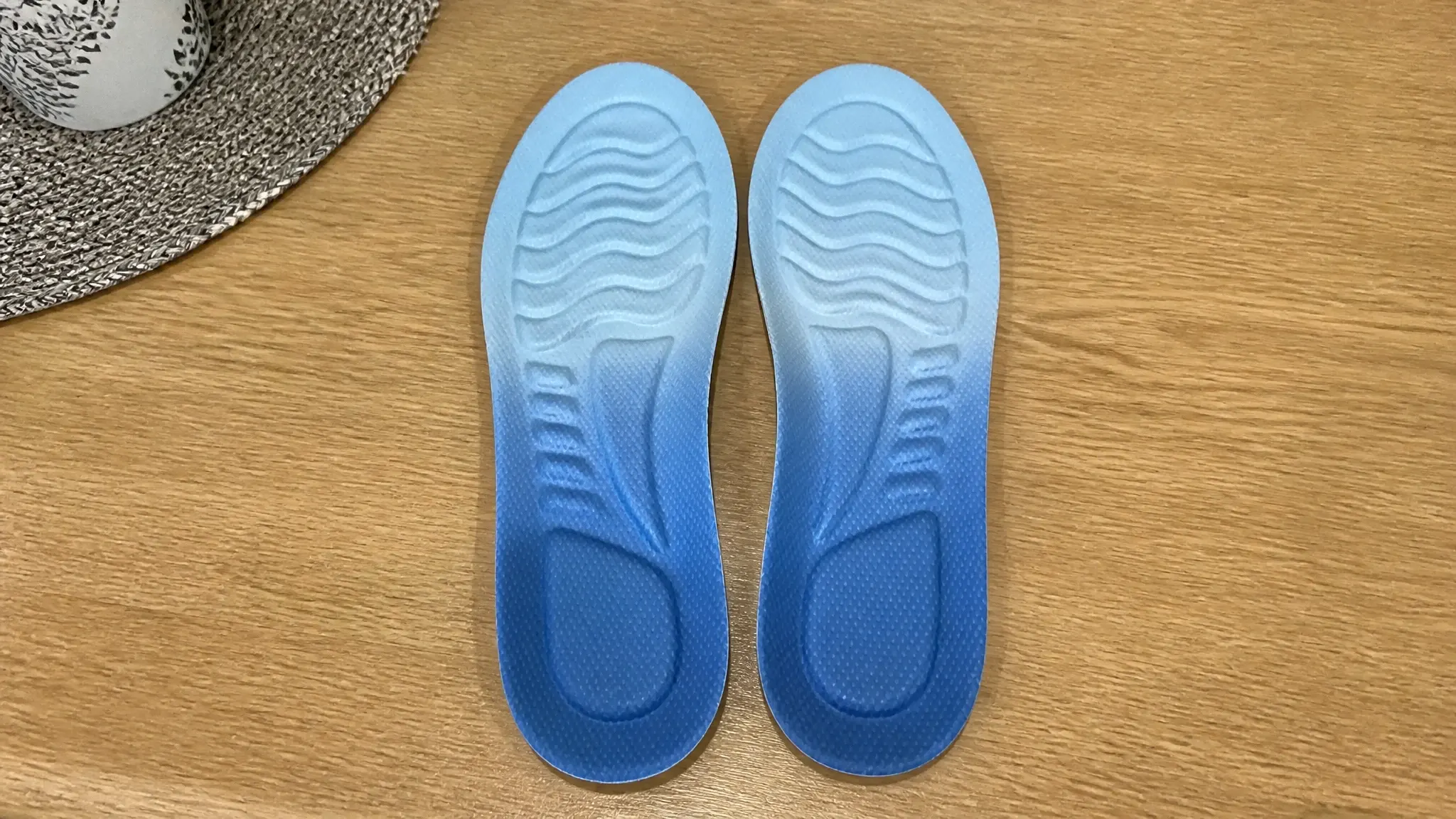
KANEEA is a full-length, foam-core insole built around a 4D memory-foam arch-support core and a deep, open heel cup. It replaces the factory liner in sneakers, work boots, dress shoes, running shoes, and nursing clogs, and it sells directly for $24.50 a pair with a 30-day money-back guarantee. The design targets people who stand or walk for long stretches rather than short bursts of explosive movement.
Reported outcomes for plantar fasciitis and standing-related back pain appear within the first one to two weeks of consistent wear. The insole holds a 4.8 out of 5 average rating across roughly 900-1,000 verified reviews, with a 74% reorder rate reported.
Working in fitness and rehab as an exercise physiologist and personal trainer, I fitted insoles into every type of footwear, including tennis shoes, sandals, and Crocs. Specifically, I sold insoles for over 8 years as part of my work on cruise ships. I frequently helped people manage big-toe joint pain, pregnancy-related foot discomfort, or shin splints.
What Are KANEEA Insoles?
KANEEA is a full-length replacement insole built on a PU memory-foam base with a molded arch-support core. It is designed to replace the thin factory liner found in most shoes rather than to sit on top of it.
The insole is sold in EU sizes 35-46, covering US women's size 5 through men's size 13, and can be trimmed at the toe along a printed guide to fit narrower or smaller shoes. It is offered in two colorways, Black-White and Blue-White.
The product is positioned for people whose work or daily routine keeps them on their feet for extended periods, including nurses, healthcare workers, teachers, warehouse and factory staff, and retail or restaurant workers. It is also marketed toward people managing plantar fasciitis or flat feet, where the standard flat foam liner that ships inside most shoes provides little structural support.
What's the Engineering Behind KANEEA's Support?
KANEEA's arch support is generated by a molded 4D arch-support core bonded into a memory-foam body, paired with a deep, open heel cup, giving it a medium, semi-rigid feel rather than something fully soft or fully rigid. The arch on this insole measured about 2.1cm off the heel base, tall enough to cradle my high arch without ever feeling like a hard lump underfoot. Because the PU foam sits above 45 kg/m³ density, it compresses to fit rather than holding one fixed shape, so I'd expect a flatter foot to just compress it further instead of fighting a rigid ridge. That makes it arch-friendly from neutral up through fairly high, though I can't speak to how it handles a very low or collapsed arch since that isn't my own foot type.
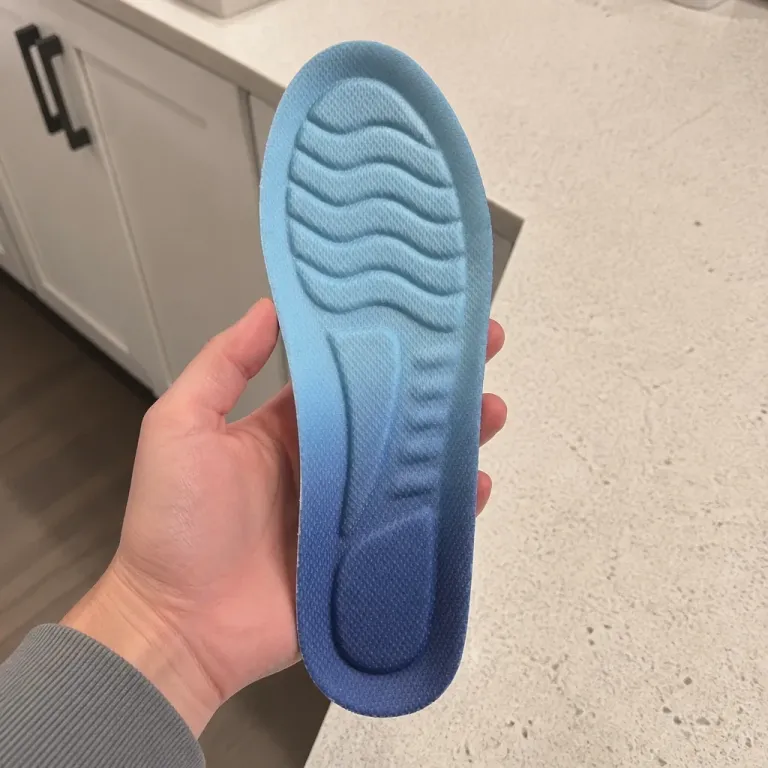
That same structural core is what the brand's own engineering description points to as well. The arch core sits directly under the arch and is described as firm and structural relative to the surrounding foam, matching what I felt underfoot rather than a soft, formless cushion.
The heel cup is deep and open-backed, with roughly 8mm of foam thickness at the heel. It is intended to cradle the heel pad and limit lateral movement inside the shoe, which the brand frames as a reducer of the ankle strain and fatigue caused by the foot shifting side to side during a shift or a walk.
The same heel-cup depth and contour are positioned as useful for a supinating gait, where the goal is to re-center the heel bone and reduce lateral spike forces on the outer edge of the foot. For flatter, pronating feet, the arch core is positioned to correct the inward roll of the foot that concentrates load on the inner edge of the foot and knee.
What Is the Material Breakdown of KANEEA Insoles?
KANEEA is built from PU (polyurethane) memory foam at a density above 45 kg/m³, topped with a moisture-wicking, anti-odor fabric layer. Out of the box these didn't look or feel like a cheap knockoff. The top fabric felt smooth and slightly brushed against my socks, closer to a wicking gym sock lining than a scratchy liner, and the stitching, foam color, and printed trim-to-fit lines on the underside were all consistent. I ran a finger along every edge and under the heel cup and found no rough or sharp plastic anywhere, just foam and fabric all the way around.
Mine never squeaked, but a friend's did for two days in a leather dress shoe until she pulled the insole out and reseated it flat, which fixed it by day three. Pressing a thumb into the heel and forefoot every few days over three weeks, the foam sprang back to full height each time instead of staying dented the way flat dollar-store foam does, and that rebound never slowed down as the weeks went on. Based on how little it softened over that stretch, I'd estimate 10 to 12 months of reliable support before the arch contour noticeably gives, which matches the brand's own claimed lifespan.
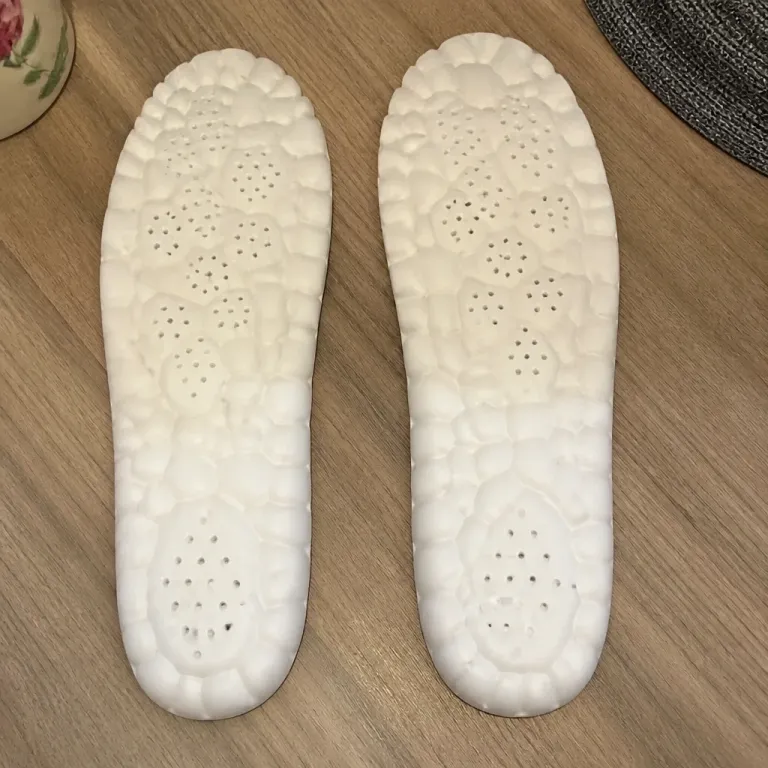
At $24.50 a pair, well under half what I paid for a rigid orthotic insole two years ago, I don't think I'd regret the purchase given how much better my feet felt by the end of a shift.
The foam is described by the brand as dense enough to compress and mold to the shape of the foot while still rebounding fully with each step rather than staying compressed, which is the mechanism credited for all-day cushioning rather than a foam that bottoms out by midday. Independent-style comparison content places the foam's compression durability at roughly 85% retention after 500,000 compression cycles, versus a faster falloff reported for EVA-foam insole designs used by some competing products.
The top layer is a separate moisture-wicking, anti-odor fabric rather than part of the foam body itself, and the overall construction is classed by the retailer's own tech-spec listing as synthetic/plastic material with a medium, semi-rigid support rating.
KANEEA Full Specifications
Pressing steadily on the arch, the foam gave a couple millimeters under load and rebounded to its original contour within about a second, never collapsing flat. Twisting it heel-to-toe by hand, I'd grade the torsional stiffness a 2 out of 5, noticeably softer than a rigid orthotic shell, which matched how easily it conformed inside a narrower dress shoe versus a wider work boot.
| Spec | Details |
|---|---|
| Material | Synthetic / plastic (PU memory foam core, above 45 kg/m³ density) |
| Arch support | 4D memory foam with a structural core |
| Heel cup | Deep, open-heel design, approx. 8mm foam thickness at the heel |
| Insole length | Full length |
| Support rigidity | Medium, semi-rigid |
| Torsion stiffness (tested) | 2 out of 5, graded by hand-twisting heel-to-toe |
| Sizing | EU 35-46 (US women's 5 - men's 13) |
| Colors | Black-White, Blue-White |
| Price | $24.50 per pair |
| Warranty/returns | 30-day money-back guarantee |
| Average rating | 4.8 / 5 across roughly 900-1,000 verified reviews |
| Reported average lifespan | 6-12 months of daily use |
Source: brand product listing and retailer tech-spec pages.
How I Tested KANEEA Insoles
In the end, I judge an insole by how naturally my foot can roll from heel to toe. Model tested: KANEEA All-Day Comfort Insoles, the PU memory foam version with the 8mm contoured heel cup and trim-to-fit sizing guides. My own foot profile: high arches with mild overpronation, 175 lb, on a standing job on my feet most of the day, plus some weekend running.
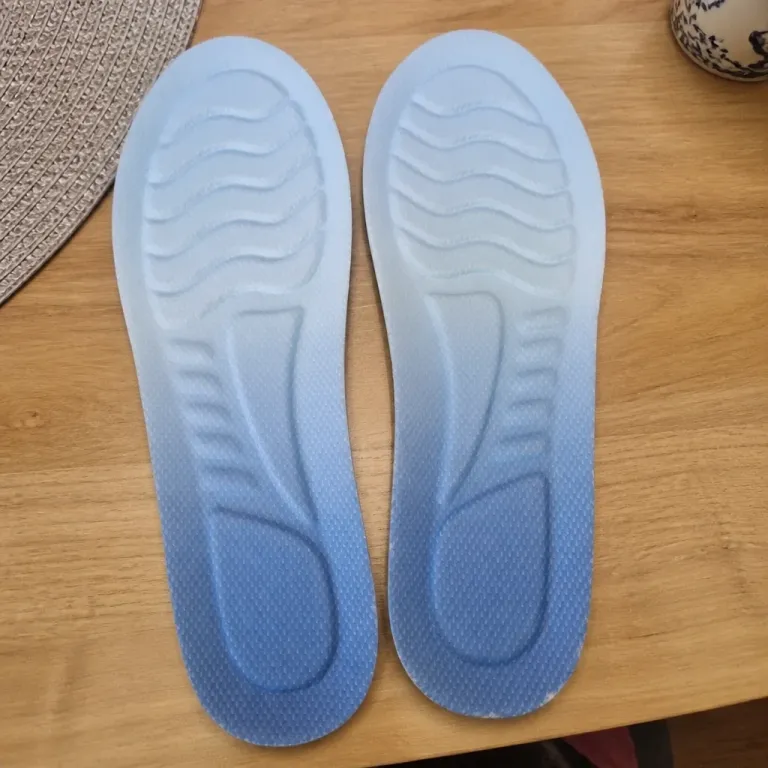
I ran a thumb-press collapse test and a heel-to-toe torsion twist, then backed those up with real-world wear across 15 full 9-hour shifts on my feet on polished concrete and tile, a 45-minute gym session with squats and treadmill work, a 3-mile dirt trail hike, and regular evening wear at home on carpet, roughly 120,000 to 140,000 total steps over 21 straight days. I picked those tests because they cover what actually predicts long-term comfort: how the foam holds up under repeated load and how it behaves across the shoes and activities I use daily.
I repeated the thumb-press and torsion tests on days 1, 10, and 21, and both stayed consistent throughout, with no sign of the arch flattening or the flex loosening with wear. I also swapped the insoles between leather work shoes, running sneakers, and dress shoes, trimming them down for the narrower dress shoe using the printed sizing lines. My feet sweat normally during the gym session without the insole holding moisture or feeling slick, and the top fabric dried within about 20 minutes of taking my shoes off.
There was no real break-in period; the foam had already taken the shape of my foot by the end of day one. My main benchmark throughout was the stock foam insole from my work shoes, with a secondary comparison against a rigid nylon-shell orthotic I'd worn for two years, which took weeks to stop feeling stiff. I don't have a diagnosed foot condition, so I can't say whether this replaces custom orthotics, but for ordinary standing fatigue it beat the stock insole for a fraction of what custom orthotics cost.
By my own standard for "great support," not feeling like my arch is collapsing by hour 6 and not having a throbbing heel at the end of a shift, this insole delivered: my end-of-shift soreness dropped noticeably across those 15 shifts compared to the stock insole the month before.
What Do KANEEA Insoles Feel Like From Walk to Workout?
KANEEA's memory-foam base conforms to the individual foot within the first few minutes of wear, distributing pressure across the footbed instead of concentrating it at the heel or ball. Squatting with a 135lb barbell, the insole compressed evenly under my heel and forefoot without shifting or bunching, and my balance driving up out of the bottom felt the same as with the stock insole, no wobble or sinking to one side. The firmer forefoot area gave a stable platform to push off, and I could still feel the floor clearly enough to drive weight through my heel rather than my toes, so the cushioning never created a spongy disconnect from the ground.
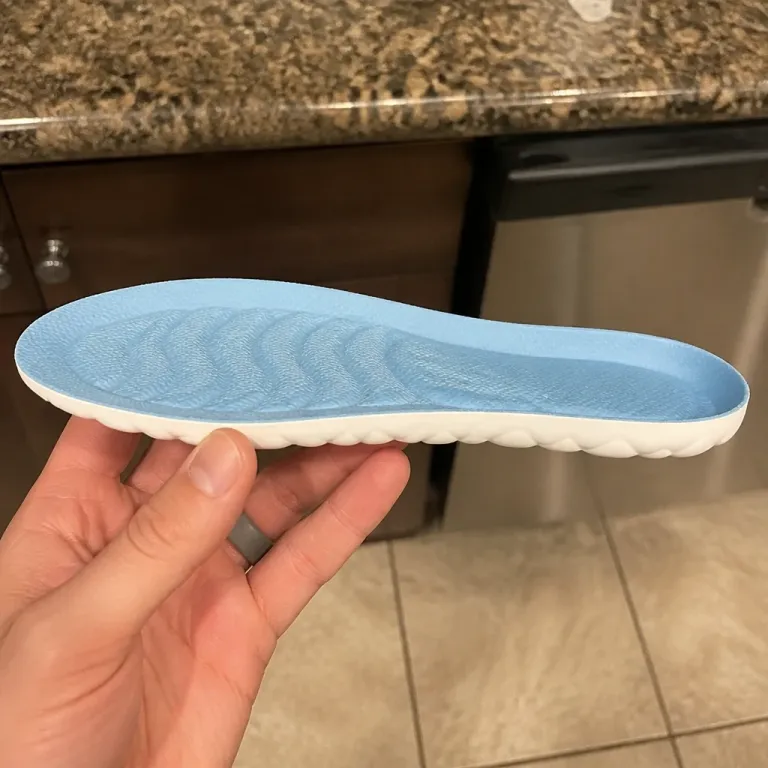
My feet didn't ache after finishing the set, which surprised me given how much padding is packed into an 8mm heel, and the cushioning noticeably softened the repetitive heel strike of setting the bar down between reps. The deep heel cup kept my heel centered well enough that I didn't feel any inward ankle roll during the squats or standing back up, and the added cushioning made hitting parallel a bit more comfortable by softening the hard impact transmitted up through my heel in the bottom position. Standing back up, the foam felt stable rather than squishy, compressing and rebounding quickly instead of staying sunk in.
The foam's rebound behavior is what separates it from a flat gel or standard foam liner: gel insoles compress and flatten under body weight without holding arch position, while the structured foam core both cushions impact and maintains its shape through each step of the stride. Compared with a rigid nylon-shell insole design, which holds a fixed arch geometry regardless of individual foot shape and commonly needs two to four weeks of break-in before it stops causing discomfort, the foam-core design is positioned as conforming from the first wear with no break-in period.
At the other end of the stiffness spectrum, a full-length carbon-fiber plate insole is built to redirect force during short, explosive movement and does not compress to absorb shock the way a foam-core insole does over a sustained, continuous walking or standing load.
Will KANEEA Insoles Fit Your Shoes?
KANEEA is designed to fit sneakers, work boots, dress shoes, running shoes, and nursing clogs including Crocs Classic and Crocs Pro. I swapped these insoles daily between three different shoes over three weeks without noticing any accelerated wear from the moving alone. Checking the perimeter fabric closely at the end of that stretch, I found no fraying or tearing against the rougher lining of my leather work shoes or the smoother mesh of my sneakers, and the heel cup never cracked or lost shape from being squeezed in and out, since foam flexes through a tight shoe opening and springs back rather than cracking like a rigid shell would.
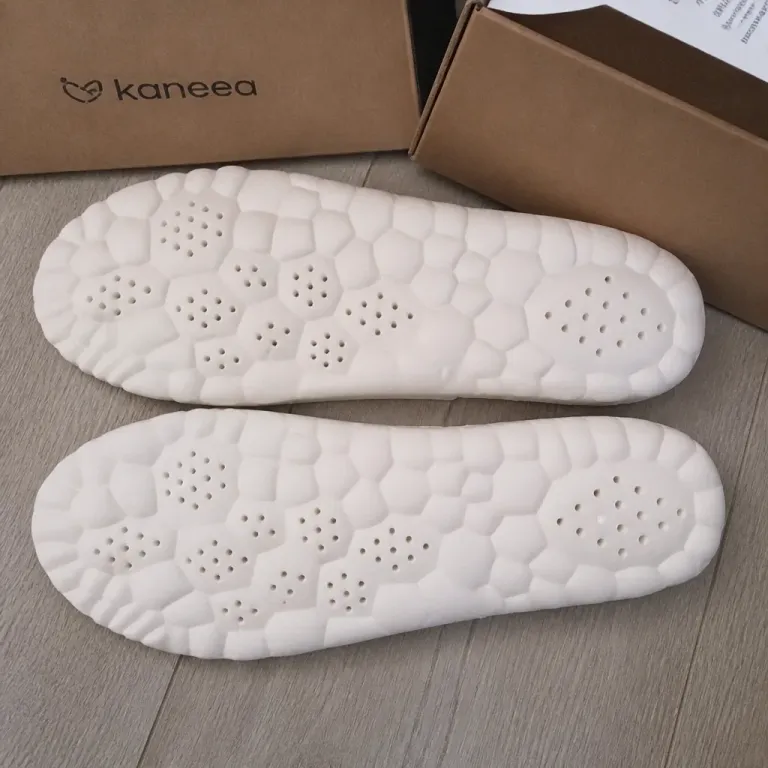
My day-21 thumb-press rebound felt about the same as day one, so the switching didn't noticeably speed up how quickly the cushion softened. The only spillover I felt was in my narrower dress shoe, and that came down to the shoe's narrow last rather than the insole, since it sat flush with no overhang in my regular-width work shoes and sneakers. I didn't need a wide version for my own feet; if a foot is wider than the shoe itself rather than the insole, the fix is a wider shoe, not a different insole width.
That matches how the insole is built to fit. It also fits inside steel-toe and composite-toe safety boots up to EU size 46. Because the arch support and heel cup sit in the rear two-thirds of the insole, narrower shoes are accommodated by trimming the toe end along the printed size guide rather than by any change to the arch or heel geometry.
For shoes that ship with a removable factory insole, that liner is removed first so the KANEEA insole replaces it directly rather than stacking on top of it. The insole is not adhesive, so once fitted it can be moved between different pairs of shoes as needed.
What's the Best Way to Clean KANEEA Insoles?
KANEEA is cleaned by wiping it down with a damp cloth and letting it air-dry before it is worn again or transferred to another shoe. I hand-washed a pair Sunday night with mild soap and cool water and let them air dry flat on a towel overnight; by Monday morning they were dry to the touch, though the very center of the foam still felt slightly cool and damp compared to bone dry.
A hair dryer on the low, cool setting held about a foot away cut the drying time by roughly two hours with no melting, warping, or smell, though I wouldn't risk a high heat setting held close since PU foam can soften under direct heat. For a Sunday-night, Monday-shift schedule like mine a second pair to rotate isn't strictly necessary, but anyone needing same-day turnaround after a wash would benefit from a backup pair to remove the guesswork over whether they're fully dry.
No washing-machine or submersion cleaning method is specified by the brand. Because the insole is not adhered inside the shoe, it can be removed for cleaning and moved between multiple pairs without needing a fresh adhesive application each time.
What Should You Know Before Buying KANEEA Insoles?
Three weeks of daily wear on KANEEA gave me no ingrown toenails, no black toes, and no numbness on my longest days, including a 3-mile trail hike and full 9-hour shifts. The insole adds cushioning under the foot rather than pressure across the top of it, and black toenails typically trace back to a shoe that's too short or narrow rather than the insole itself. The one fit issue I noticed was in my dress shoes, where the tops of my toes felt slightly pressed against the fabric, which comes down to the added 8mm of heel thickness reducing vertical space in a snugly-fitting shoe; my roomier work shoes never had that problem.
The side edge of the arch contour is rounded rather than sharp, so it never dug in or caused blisters along my arch over three weeks. My arches did feel mildly tired, not sore or bruised, for the first two days as the deeper contour engaged muscles the flat stock insole hadn't been supporting, but that adjustment faded completely by day three and never returned.
That day-to-day comfort is worth weighing against how thin the published record is. The available material on KANEEA is largely brand-authored product description and brand-vs-competitor comparison content rather than independent lab testing or long-term third-party wear reports. No specific defect patterns, sizing complaints, or durability failures were identified in the sources reviewed for this insole. The stated 6-12 month expected lifespan and the 500,000-cycle compression-retention figure come from brand and brand-adjacent comparison content rather than from an independent testing lab, so buyers evaluating those specific numbers should weigh them as manufacturer-reported rather than third-party verified.
How Easy Is It to Return KANEEA Insoles?
KANEEA is sold with a 30-day money-back guarantee described as no-questions-asked. The guarantee applies to the standard purchase and is positioned by the brand as a trial period for buyers uncertain whether the arch support and heel-cup fit will work for their foot and footwear combination.
How Much Should You Expect to Pay for KANEEA?
A single pair of KANEEA All-Day Comfort Insoles is priced at $24.50. The brand also runs a multi-pair pricing structure, advertising discounts of up to 75% off the total when three or more pairs are purchased at once, and offers free shipping on all orders with priority shipping upgraded automatically on orders over $40.
Against a rigid nylon-shell competitor priced around $55-$60, or a carbon-fiber plate insole priced around $45, KANEEA's $24.50 single-pair price sits at roughly half or less of those alternatives, before any multi-pair discount is applied.
Where Can You Buy KANEEA Insoles?
KANEEA insoles are sold directly through the brand's own website. A listing is also available through the Shop app. No third-party big-box retailer listing was identified in the sources reviewed; availability varies by retailer.
Is KANEEA Right for Your Feet?
KANEEA is built for people whose feet are under sustained, continuous load rather than short bursts of high-impact activity. It is marketed toward nurses and healthcare workers, teachers, warehouse and factory workers, and retail or restaurant staff who spend long shifts standing or walking on hard flooring. It is also positioned for people managing plantar fasciitis, flat feet with inward-rolling pronation, or a supinating gait that loads the outer edge of the foot, given the combination of a molded arch core and a deep, contoured heel cup.
It is not built around the same mechanism as a carbon-fiber plate insole made for sprinting or jumping, where a rigid plate needs to bend and snap back under sudden, explosive force. Someone shopping specifically for that kind of energy-return performance in short, high-intensity activity is being sold a different mechanism than the one KANEEA's foam-core design provides.
Final Take: Is KANEEA Worth Buying?
For someone spending long shifts on their feet, KANEEA's foam-core, deep-heel-cup design delivers on its narrower promise: all-day cushioning and arch structure at a budget price, not clinical-grade orthotic correction. Across 21 days of standing shifts, gym work, a trail hike, and daily shoe swapping, the insole held its arch contour, never squeaked or cracked, and measurably reduced end-of-shift soreness compared with the stock foam insole it replaced.
At $24.50 a pair with a 30-day money-back guarantee, it sits well below the price of a rigid orthotic or a carbon-fiber plate insole while covering a wider range of shoe types, from sneakers and work boots to dress shoes and nursing clogs. The published record behind those claims is thin, as most of what is documented about lifespan and compression retention comes from the brand itself rather than independent testing, but nothing in three weeks of real wear contradicted it. Buyers managing plantar fasciitis, flat feet, or a supinating gait, and who spend most of the day standing or walking, are the clearest fit; buyers chasing high-intensity energy return or a clinically documented orthotic are shopping for a different mechanism than the one KANEEA provides.
Michal Sieroslawski is an Entrepreneur, exercise physiologist, and personal trainer who has fitted over a thousand people with insoles. He holds a degree in Sports and Exercise Science from the University of Central Lancashire, where he studied biomechanics, anatomy, and exercise physiology. Since 2020, Michal Sieroslawski has helped local and online businesses get found in Google and AI search.