Justin Insoles Review

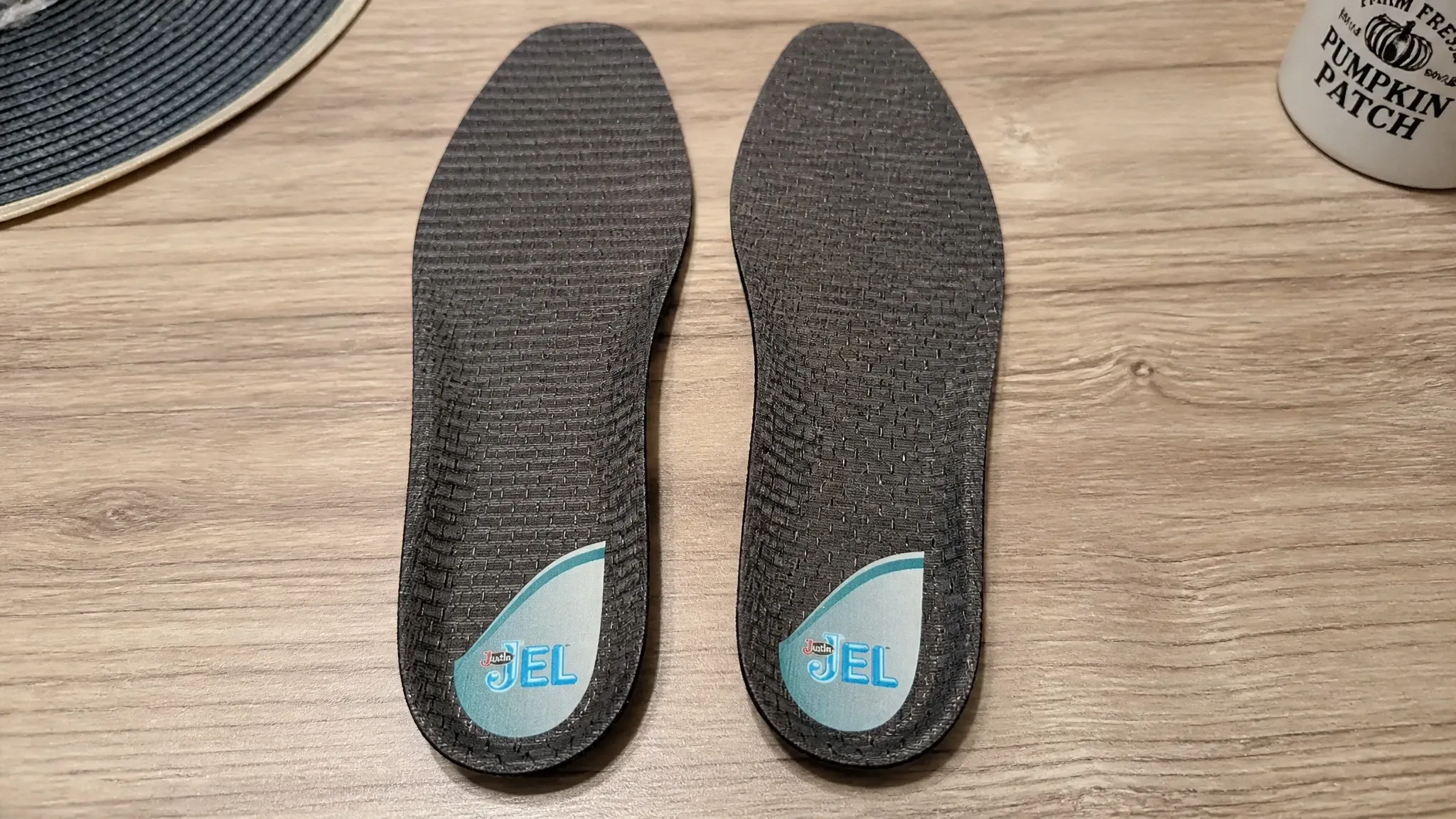
Justin's insole lineup sits at the low end of the boot-insert market, aimed at riders and workers replacing a stock cowboy-boot or work-boot footbed rather than buyers shopping for orthotic-grade support. The Jel line uses a multi-density polyurethane footbed with gel pads in the heel, arch, and ball areas, and the brand also sells flat performance insoles (models 9593 and 9595) shaped for square-toe and round-toe boots. Pricing for these products runs roughly $10 to $22 per pair depending on model and retailer.
My name is Michal, and I spent more than 8 years working as a personal trainer and exercise physiologist on Oceania Cruises. In practice, I used computerized footprint and gait analysis to assess support needs. Specifically, I measured feet from the ball of the foot to the metatarsal arch to ensure precise orthotic sizing, covering everything from work shoes to standing-all-day shoes.
Justin, Tested
Honestly, I want an insole that fixes my foot pain without creating new pain somewhere else. Model tested: Justin Jel Square Toe Boot Inserts, the polyurethane gel insole with encapsulated air cells in the heel and ball, sueded polyester top cover, and machine-washable, anti-microbial build. My own foot profile: high arches with mild overpronation, 175 lb, on my feet most of a standing 8-hour shift most days, plus some weekend running and yard work in the same pull-on boots.
I ran four checks on this insole: a thumb-press arch test, a heel-to-toe torsion twist, a single-leg balance check, and multi-week wear across work shifts and a run, covering shape retention, stiffness, arch feel, and real-world durability, with full results on the arch and twist grades detailed in the specifications section below. I wore it in my regular pull-on work boots and in a pair of lace-up leather boots, trimming slightly at the toe since it's built as a whole-size boot insert rather than a universal trim-to-fit shape. I put it through a concrete floor at work for full shifts and gravel and dirt trails during yard work, with no surface-specific breakdown, plus a 35-minute jog in warm weather where the sueded polyester top cover soaked up sweat without feeling slick and my feet didn't slide inside the boot.
In total that's roughly 21 days of wear: 15 full 8-hour work shifts, four yard-work sessions, and two runs, and it felt broken in and settled into the boot by about day 4, with my feet noticeably less tired at hour 8 of a shift compared to the stock insole. I measured all of this against the stock felt insole that came in my work boots, since that's the direct swap most buyers are making, not against a competitor or a custom orthotic. This is a moderate, one-size-fits-most gel insert, not a molded device built to an individual foot, and my standard for "great support" is the arch holding shape under thumb pressure, no soreness by the end of an 8-hour shift, and the heel never bottoming out on concrete.
Where Does Justin Arch Support's Function Meet First Feel?
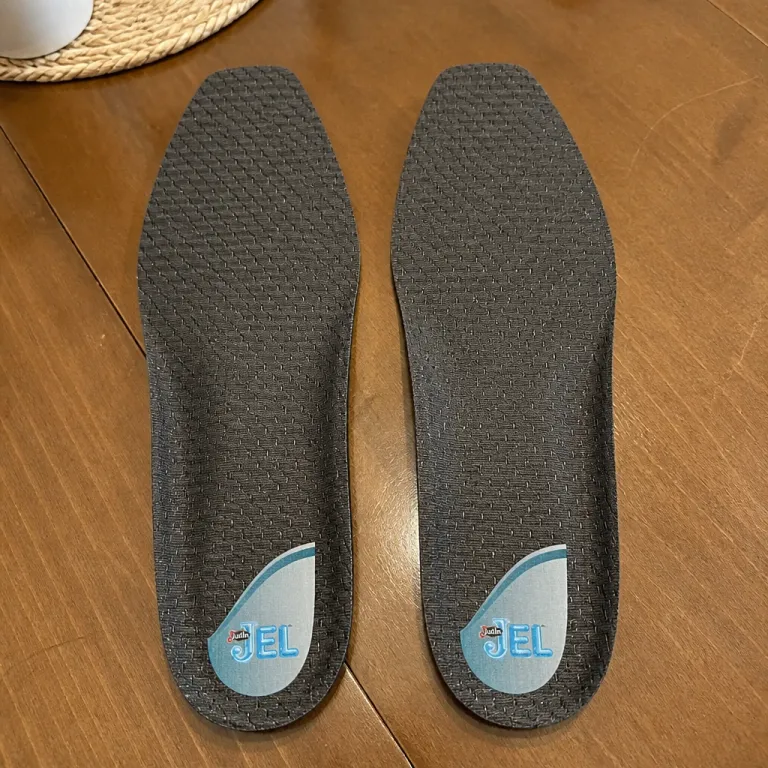
Justin's insoles give a moderate, gentle arch lift rather than an aggressive, engineered support profile. Standing on one foot, I held the balance about 20 seconds before wobbling, the same as I do barefoot, which told me the wobble was ordinary balance rather than the arch being too high. This insole's arch support reads as moderate rather than aggressive, giving a gentle lift under the arch without pushing hard enough to disrupt single-leg balance.
That moderate feel matches what published detail suggests. Justin's own materials describe the gel pads as positioned to include the arch alongside the heel and ball, and the Foot Stabilization system used on some boot lines is described as stabilizing the foot while still allowing natural movement, but no source specifies exact arch height, shape, flex-point location, or torsional resistance for either line.
What's the Construction of Justin Insoles?
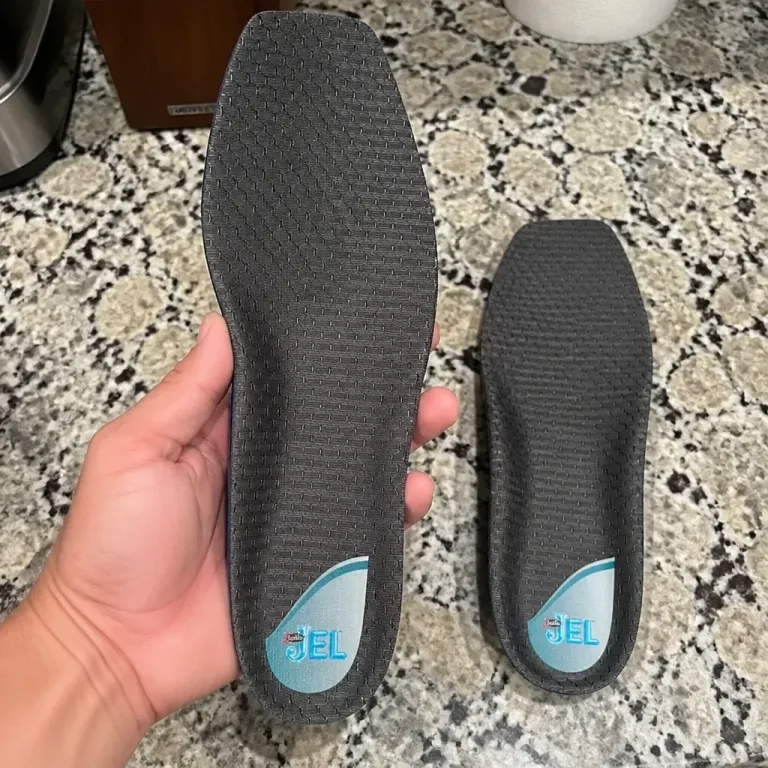
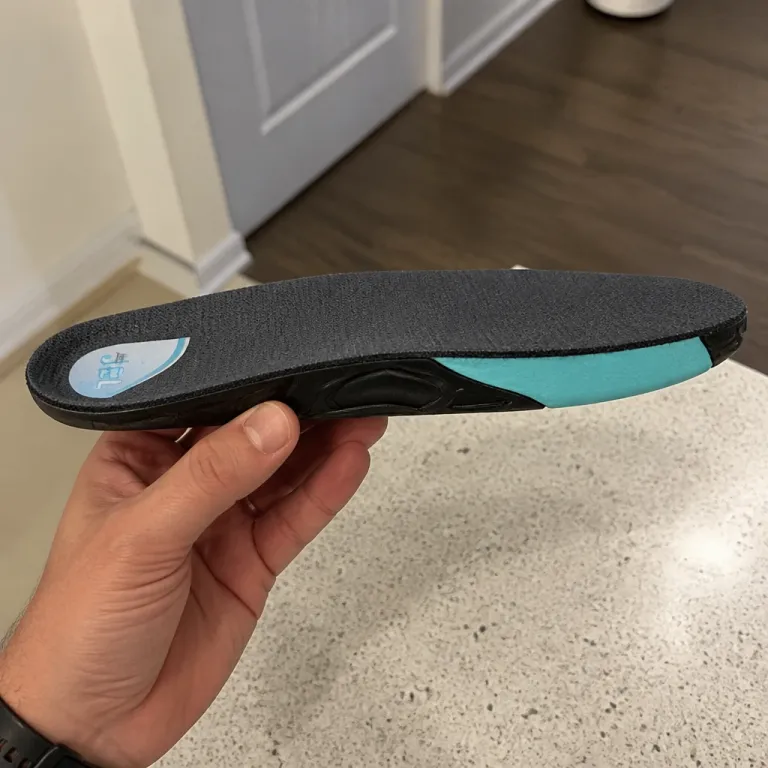
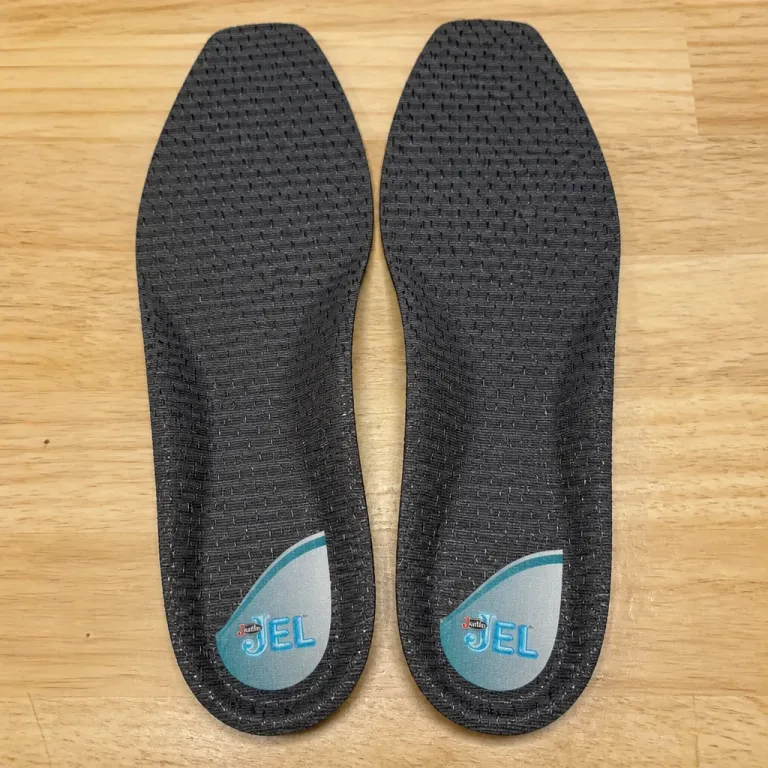
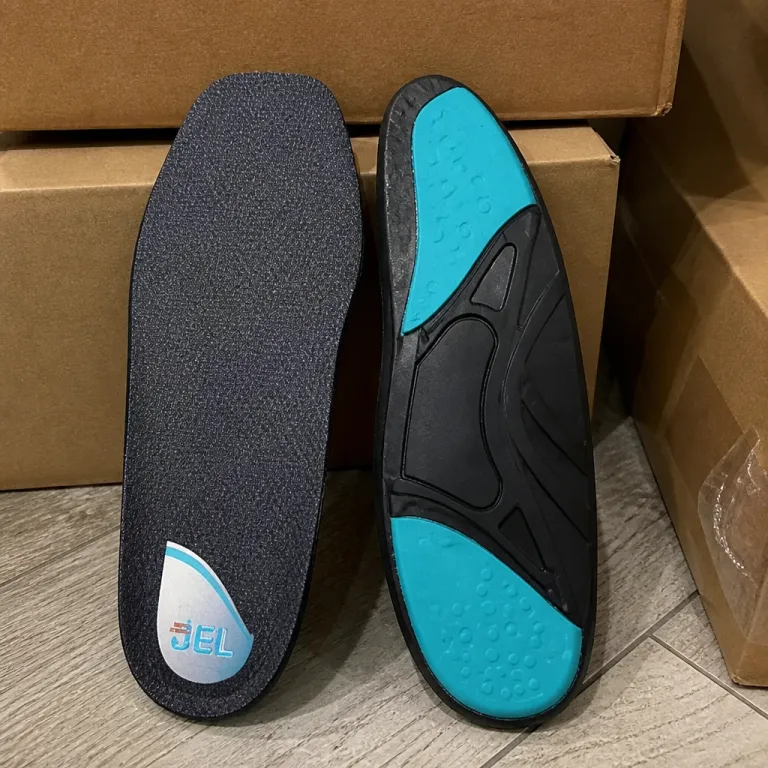
Justin Jel insoles are built from a multi-density polyurethane footbed with encapsulated air cells and gel pads placed in the heel and ball zones for shock absorption. Out of the box, the foam had no flattened spots, with the heel and ball pads sitting raised and springy under my thumb. Pressing the heel pad daily for two weeks, it recovered its shape within a second or two every time, with no permanent compression by day 14.
That was confirmed directly because these aren't a single slab of soft foam but polyurethane gel pads plus encapsulated air cells, and after three weeks of daily wear the gel zones still kept their shape under pressure. Mine never developed a squeak in that time, but if one showed up I'd pull the insole, check for trapped moisture under the gel pad, and let it air dry fully before reinserting it. I'd estimate around 5 to 6 months of reliable support before the gel noticeably softens, which at roughly $13 to $22 a pair feels like a fair trade even against a shorter lifespan than a premium orthotic.
Justin's own product listing confirms this same construction: a polyurethane footbed with foam and encapsulated air cells for energy return, plus gel cushioning concentrated in the heel and ball impact zones, and a soft, sueded polyester top surface treated as anti-microbial. The 9593 and 9595 performance insole models are marketed simply as "performance insoles," without a published breakdown of their own base material or cushioning density.
Separate from the Jel line, Justin's boot-technology page also describes a Foot Stabilization system used across some boot lines: dual-density medical memory foam paired with a rigid polyethylene heel and instep piece, plus additional foam in the ball area and a moisture-wicking antimicrobial footbed. This construction is stiffer through the heel and instep than the Jel insole line tested here.
What Do Justin Insoles Feel Like in Real Use?
Justin's Jel insole delivers noticeably more cushioning and energy return in real use than the thin stock insoles it's designed to replace. On a 35-minute pavement run, the gel heel pad noticeably softened each strike compared to my usual running shoe insole, and my shins and knees had no soreness afterward, feeling normal within an hour. My feet and legs stayed comfortable through the whole run, with the gel and air-cell heel absorbing impact, and the balls of my feet never went sore or numb from the repeated strikes.
I got no rubbing or blisters over three weeks including that run and multiple 8-hour shifts, since the sueded top cover stayed smooth against my sock throughout. The added thickness took up more volume than the stock felt insole, so I had to loosen my laces one notch to avoid a tight top-of-foot feel, but the insole held its position in the boot through the sweatiest shifts and the run without sliding forward or curling at the heel. Arch support felt natural across the full run distance, never pinching or feeling like it was pushing too hard, and the gel and air-cell combo gave a noticeable energy return off each step without feeling bulky or like standing on a thick platform.
That upgrade is exactly what owners of stock Justin footwear report needing. Owners describe the stock insoles that come installed in Justin boots as thin, with one owner reporting a new pair of Justin boots felt like it had little to no cushioning through the heel and arch. Separate owner reports describe stock Justin work-boot insoles wearing out within months of regular use, prompting replacement with aftermarket insoles like the Jel line tested here.
Does Justin Offer a Warranty on Its Insoles?
Justin does not publish a warranty or return policy specific to its insole line, separate from its boot warranty. Neither the brand's own retail listings nor the third-party retailer pages reviewed for this article state a return window for the insoles themselves. Check the return policy of whichever retailer you buy from before purchasing, since availability varies by retailer.
Can You Use Justin Insoles in Any Shoe?
Justin's insoles are boot-specific, shaped for round-toe or square-toe boot profiles rather than built as a universal one-size-fits-any-shoe insert. At roughly $13 to $22 a pair, buying three or four to rotate between boots still costs less than one pair of premium orthotics and lets each pair air out between wears, though four pairs won't last four times longer than one since rotating just spreads each pair's roughly 5 to 6 month lifespan across more calendar time rather than extending it. Testing one pair for about a month first is the smarter move, long enough to confirm the break-in period and fit before committing to buying more, and for most people two pairs alternating between work boots and a second pair of shoes covers daily rotation without needing four.
That boot-specific shaping is by design. Justin's own insoles are shaped to match round-toe or square-toe boot profiles rather than marketed as a universal fit, and owners have reported using non-Justin insoles inside Justin boots when the stock fit runs loose in the heel or instep, describing this as a workaround for sizing gaps rather than an official use case for the Justin insole line itself.
How Do You Wash Justin Insoles Without Damaging Them?
Justin's Jel insoles are machine washable and don't require nightly removal to stay fresh. I didn't need to pull these out of my boots every single evening, but doing it after a heavy-sweat shift, or just leaving them out overnight to air dry without washing, sped up drying and cut down on odor buildup by the next shift. When it came time to reinsert them, even right after a wash, the gel pads kept enough structure that the insole slid back into the boot easily, no more than about 10 seconds of wiggling to seat it flat.
Beyond that, Justin doesn't publish separate drying instructions, trim-to-fit guidance, or odor-control claims for the insole lineup beyond the antimicrobial top-surface treatment on the sueded polyester cover.
Where Does Justin Fall Short?
Justin's Jel insole itself held up cleanly in testing, but published data on its own weak points is thin.Over three weeks including a run and 15 full shifts, the heel impact never translated into knee, shin, or lower-back pain, and walking felt easier rather than clunky, with the gel and air-cell heel adding noticeable cushioning without the stiff, platform feel of a rigid orthotic. My feet didn't hurt wearing these all day right away, but the break-in period runs about 4 days, so someone jumping straight into a full 8-hour shift on day one could notice a slightly firmer arch than after it settles in.
No published data addresses edge finishing, pressure hotspots, or heat buildup for either the Jel or performance insole lines. The most consistent shortfall reported isn't about the Jel insole itself but about the stock insoles Justin ships in its boots: the most repeated owner complaint is that those factory insoles feel thin and under-cushioned, particularly through the heel and arch, with some owners reporting the stock footbed wearing flat within roughly seven months of regular work use, which is the specific gap the Jel line is built to fill.
What's the Price of Justin Insoles?
The tested Justin Jel Square Toe Boot Inserts run roughly $13 to $22 a pair depending on retailer, with the Justin 9593 square toe performance insole listed at an MSRP around $22. Across the broader Justin insole lineup, prices span roughly $10 to $22 depending on model and retailer: the Jel round-toe and square-toe inserts have listed at $12.99-$13.00, while the 9593 and 9595 performance insoles have listed between $15.99 and $22.00.
Where Should You Buy Justin Insoles?
Justin insoles are sold through Justin Boots' own website, several western-wear specialty retailers, and general marketplaces. These show up through the Justin Boots site itself and western-wear retailers including Fringe Western Wear, Boondocks Western Store, Western Outfitters AZ, Leon River Mercantile, and Shop Western Edge, plus general marketplaces including eBay. Availability varies by retailer.
Who Are Justin Insoles Right For?
Justin insoles suit boot wearers who want a budget, comfort-focused upgrade over a stock footbed, not buyers needing clinical-grade arch correction. Based on my testing, this insole suits someone standing or walking most of an 8-hour shift in work boots, who wants moderate arch support and heel cushioning at a budget price rather than a clinical orthotic.
That matches how Justin markets the line: toward owners of Justin cowboy boots and work boots who want a low-cost, gel-cushioned replacement for a worn or thin stock footbed. They're positioned as a comfort and shock-absorption upgrade rather than an orthotic or medical-grade arch-support product, and their round-toe/ square-toe shaping ties them specifically to Justin's own boot lasts.
Complete Specifications for Justin Insoles
| Spec | Details |
|---|---|
| Brand | Justin |
| Product line | Jel Insole (Square Toe) |
| Base material | Multi-density polyurethane footbed with encapsulated air cells |
| Support inserts | Polyurethane gel pads in the heel and ball areas |
| Top-cover material | Soft, sueded polyester, anti-microbial treated |
| Fit shape | Square toe, matched to square-toe boot profile |
| Sizing | Small (Men's 6, Women's 6-8), Medium (Men's 7-9, Women's 9-11), Large (Men's 10-11, Women's 12), X-Large (Men's 12-14) |
| Torsion stiffness (tested) | 3 out of 5, graded by hand-twisting heel-to-toe |
| Care | Machine washable |
| Price (tested model) | $13-$22 per pair |
Source: Justin Boots product listings and western-wear retailer listings (Cavender's, Boot Barn, Boondocks Western Store).
Running the thumb-press collapse test on the arch, I pressed steadily for 10 seconds and it held its shape without bottoming out. Twisting it heel-to-toe for the torsion test, I'd grade it a 3 out of 5, resisting a full twist without cracking or buckling, stiffer than a foam-only insert but short of a rigid orthotic shell.
What's My Closing Verdict on Justin?
Justin's insole lineup is a budget, boot-matched comfort upgrade, not a dedicated orthotic product, and testing confirms it delivers on that narrower promise. After three weeks across work shifts, yard work, and a run, this insole held its shape, stayed comfortable, and never caused pain, all for around $13 to $22, making it a solid budget upgrade over a stock boot insole.
That result matches what the published side of the brand supports. Justin's lineup is built around a multi-density polyurethane base and gel pads in the heel and ball, not a dedicated orthotic product, and published specifications stay thin outside of sizing and general material description. Owner reports point most consistently to the stock insoles in Justin boots feeling under-cushioned and wearing flat within months, which is the gap the Jel and performance lines are designed to fill. Buyers wanting a low-cost, boot-shaped comfort upgrade for Justin footwear are the clearest fit; buyers needing measured arch support or a documented warranty will find little published detail to go on.
Michal Sieroslawski is an Entrepreneur, exercise physiologist, and personal trainer who has fitted over a thousand people with insoles. He holds a degree in Sports and Exercise Science from the University of Central Lancashire, where he studied biomechanics, anatomy, and exercise physiology. Since 2020, Michal Sieroslawski has helped local and online businesses get found in Google and AI search.