Jobsite Insoles: Worth It or Not?

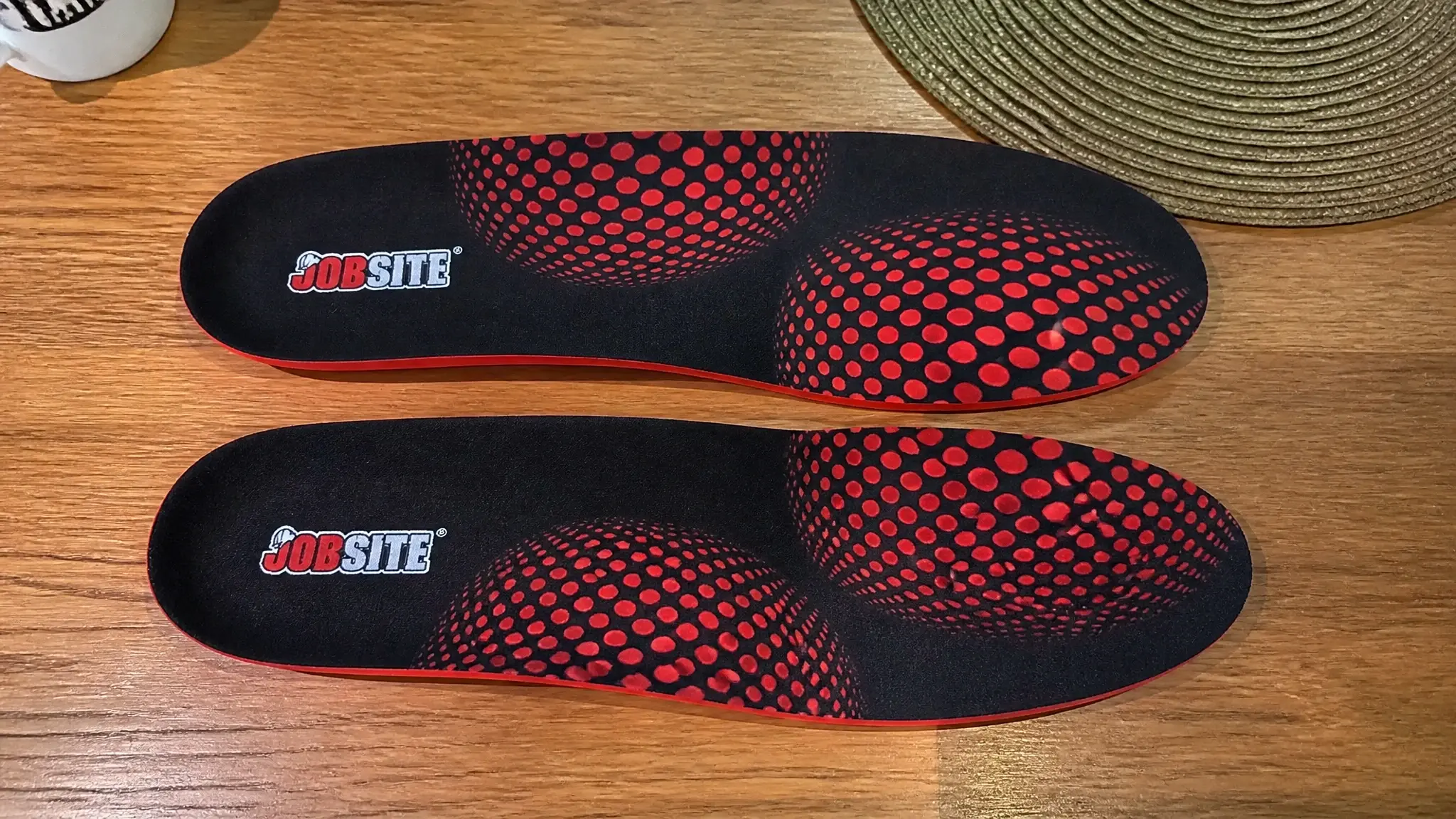
Jobsite's Heavy Duty Boot Support Insole delivers structural arch and heel support at a low price, with the main tradeoffs falling on fit rather than function. The molded arch shell and deep heel cup hold their shape under load and are supported by a 4.2-out-of-5 rating across more than a thousand buyers, with most reviews describing restored comfort in worn-out work boots.
Working in fitness and rehab as a personal trainer, I inserted supports into customers' shoes for immediate walking and balance tests. Specifically, I fitted insoles to reduce pressure points for individuals managing diabetic foot concerns and neuropathy, particularly in standing-all-day shoes and athletic shoes.
The insole runs narrow for wide feet, the arch bump does not suit every arch shape, and a portion of buyers report the materials breaking down faster than expected. No warranty is published for the Heavy Duty model specifically. For buyers with average-width feet who want firm off-the-shelf support in a work boot at under $13, it is a reasonable buy; buyers with wide feet or unusual arch shapes should look elsewhere.
My Jobsite Testing Process
Model tested: JobSite Heavy Duty Boot Support Insole, Medium, with the deep high-walled heel cup, molded arch support, reinforced metatarsal pad, and mylar-backed heat-reflective top cover. My own foot profile: high arches with mild overpronation, 175 lb, and I'm on my feet most of the day at a standing job, plus some weekend running.
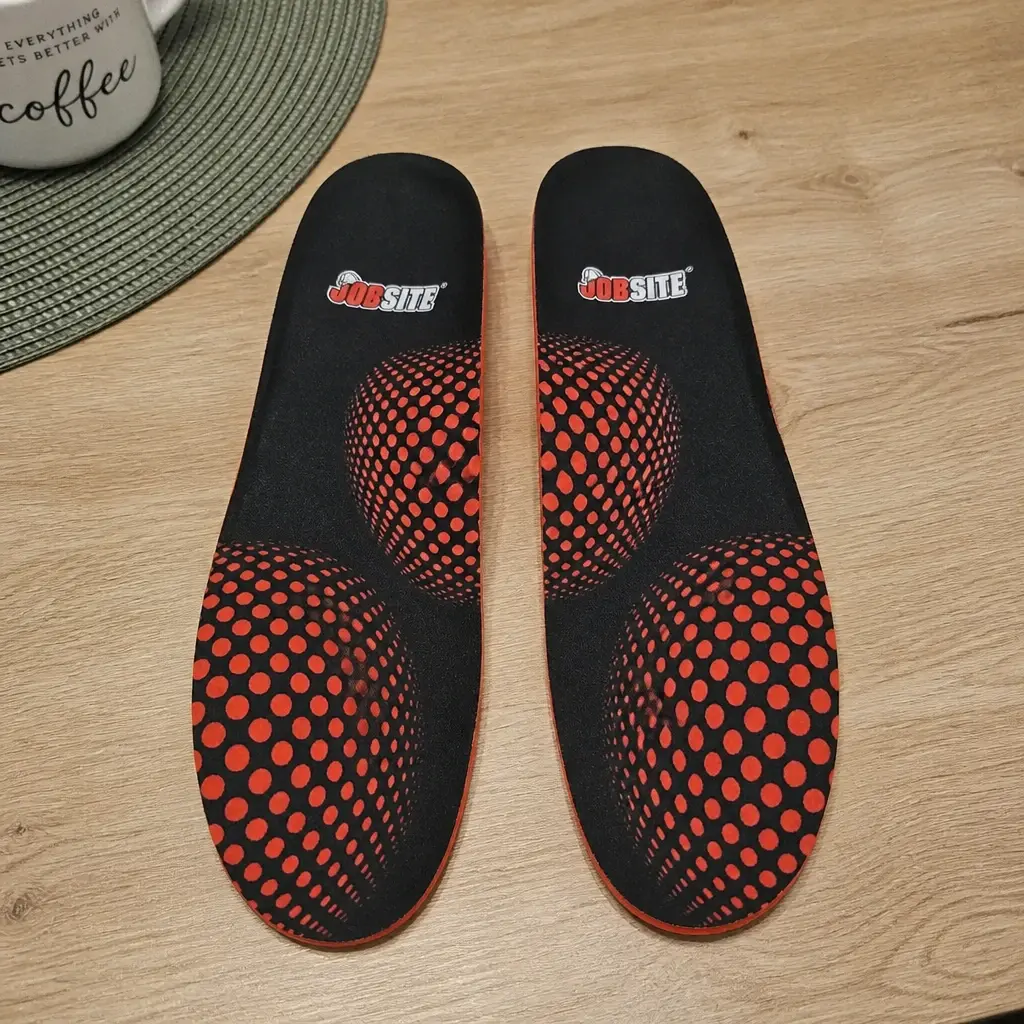
I ran a thumb-press arch test, a heel-to-toe twist test, and full work shifts on concrete because those three together cover rigidity, flex, and everyday performance. I pressed the arch under load before wearing them and then paid attention to whether my own arch felt fatigued by the end of an 8-hour shift, which it did not, and I repeated both the press and twist tests after three weeks of wear with no change in either result. Beyond my primary work boot, I moved the same pair into a pull-on met-guard boot and a pair of hiking boots on separate days and the fit stayed snug in both without needing to trim. In my own testing, I pay attention to whether my heels hurt after getting out of bed the morning after testing.
Most of my hours were on a concrete floor at work, but I also wore them on a gravel yard and a short dirt trail to see how the cushioning handled uneven ground, and I wore them through a 45-minute uphill treadmill session where the breathable top cover kept my feet noticeably drier than the stock insole did in the same conditions. In total I put twenty-one straight days of wear on this pair, roughly 8,000-10,000 steps a day based on my phone's tracker, standing a full 8-hour shift on twelve of those days; by hour six my feet usually feel it in cheaper insoles, but the ache here stayed mild and mostly gone by the time I got home. The top foam softened slightly by day four, which is what "broken in" meant for this insole, while the rigid arch shell stayed exactly as stiff on day twenty-one as it was on day one.
My main benchmark throughout was the stock factory insole that came in my work boots, with past drugstore gel insoles in mind as a general reference point. I cannot honestly claim these replace custom inserts from a foot doctor since I have no medical device to compare them against, but they gave me solid off-the-shelf arch and heel support at a fraction of that cost. When I say "great support," I mean my arch does not ache by the end of a shift, my heel stays locked in the cup without sliding, and I stop noticing the insole is even there after the first hour of wear, and this pair hit all three.
What Are Jobsite Insoles?
Jobsite is a work-boot insole line sold under the Manakey brand family alongside Ninamar, SafetyCare, and FootMatters. The catalog spans several models, including the Heavy Duty Boot Support Insole, Power Tuff Anti-Fatigue insoles, Gel Work Insoles, Gel Sport Insoles, and Odor Stop activated-charcoal insoles. The Heavy Duty model is the tested SKU in this review, sold in pre-sized Medium and Large as well as a one-size trim-to-fit option for men's 8-13. Prices across the lineup span about $6 for the Odor Stop pair to about $16 for the Power Tuff model.
Jobsite Insoles: How Do They Work and Feel?
Jobsite's Heavy Duty Boot Support Insole centers on a molded plastic arch shell paired with a deep, high-walled heel cup that locks the heel in place. The heel cup was the first thing I checked when I dropped the insole into my work boot. I measured the walls at about 1.8cm deep, and once I stepped down my heel locked into the cup with no side-to-side slide, even walking on uneven gravel outdoors.
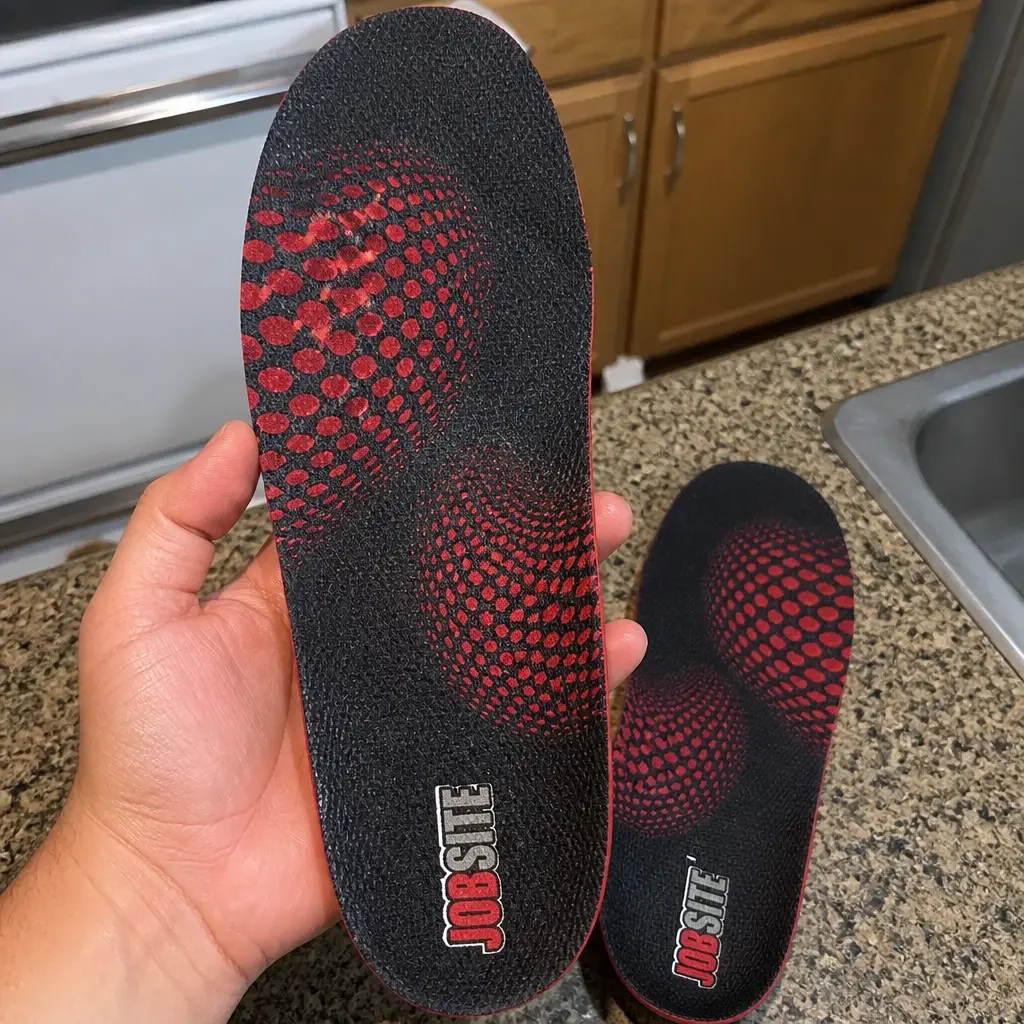
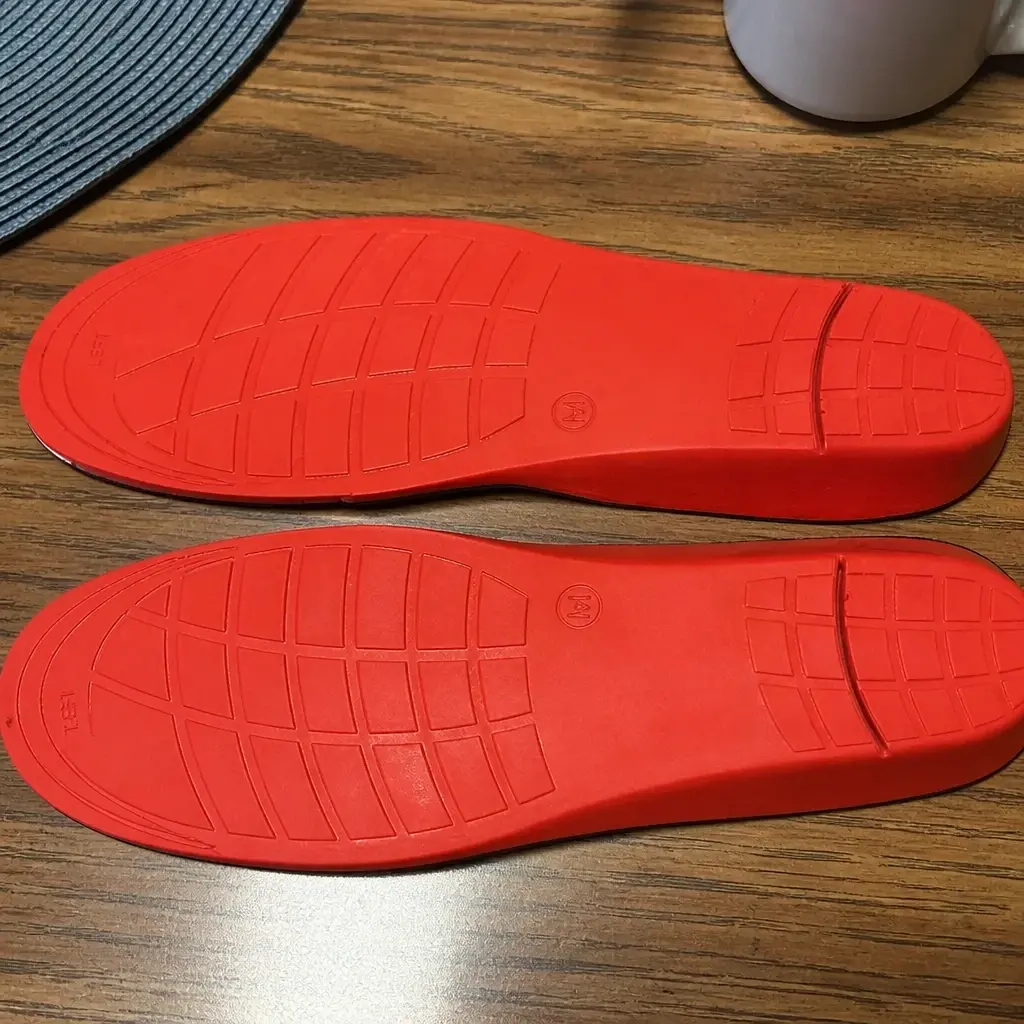
That same heel lock reflects the shell's structural design as a whole. The flex point sits under the midfoot arch bump rather than at the forefoot, so the insole resists twisting through the arch while still allowing the forefoot platform to bend at the toe break.
Arch support is generated by that molded shell rather than a soft foam wedge, giving it a firmer, more structural feel than a cushioned insert. The insole is described as resisting torsion along its length, with the reinforced arch section holding its shape rather than collapsing under lateral twist.
What Is the Material Breakdown of Jobsite Insoles?
Jobsite builds the Heavy Duty insole from a shock-absorbing molded base topped with a mylar-backed, heat-reflective cover. The plastic arch support looks thin at first glance, so I stood my full 175 lb on one foot over it to see if it would flatten or give. The shell held its shape and felt more rigid than the foam stock insole it replaced, and I repeated the same single-leg stand ten times over a week of shifts without ever hearing or feeling a crack, just a firm flex back to shape each time. The heel cup performed the same way, still measuring close to that original 1.8cm after three weeks of daily wear with no visible compression at the rim.
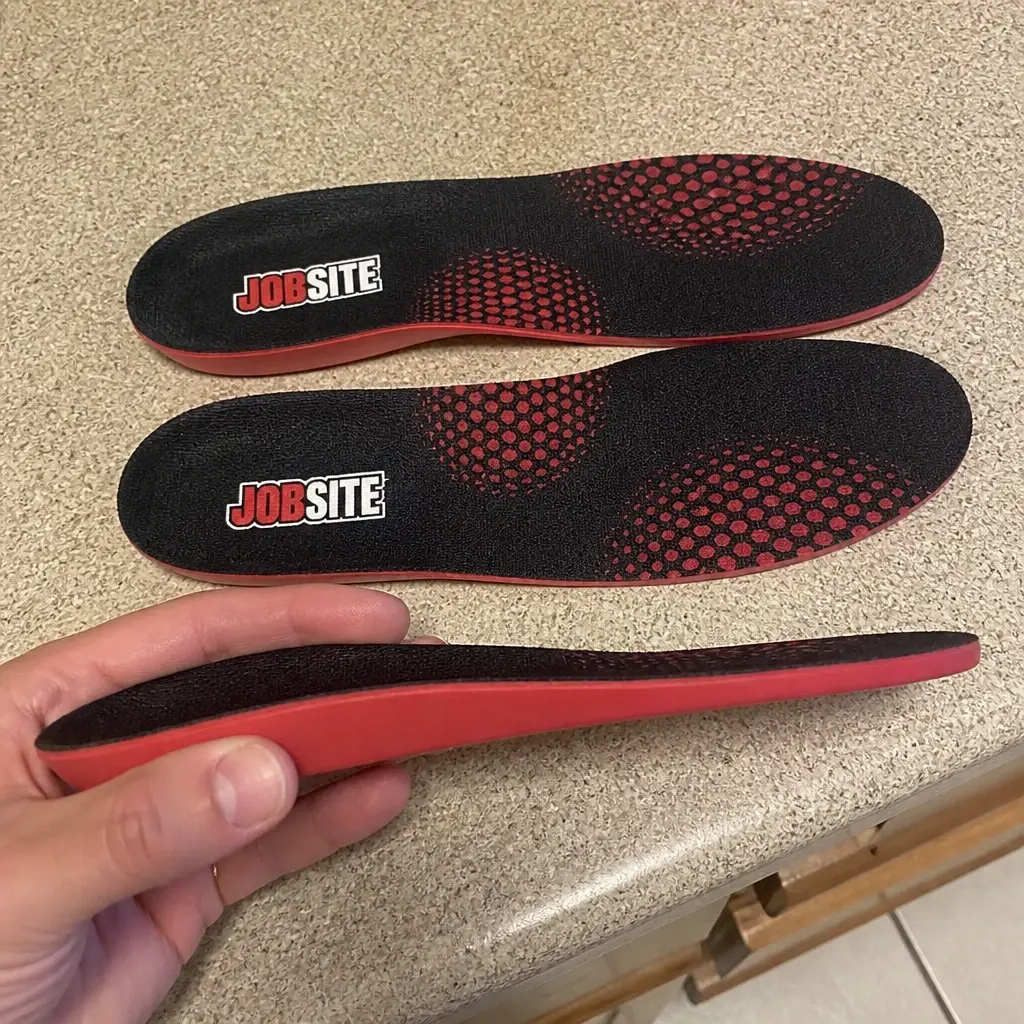
Comparing the top cushion to my old factory pad made the materials question easy to judge too: the factory pad was noticeably thinner and softer by week two, while the JobSite top layer still recovered its shape under thumb pressure after three weeks. Based on how slowly that cushion is breaking down, I estimate six to eight months of daily 8-hour shifts before I would need a fresh pair, in line with another buyer working on concrete floors who reported getting several months out of a set before replacing them. Mine never squeaked through any shift, but if that happens I would pull the insole and check for a wrinkle or a wet spot underneath, since a folded top cover or trapped moisture is the usual cause.
At the roughly $12 price tag for the Heavy Duty model, a firm arch, a stable heel cup, and noticeably less foot fatigue by the end of a shift add up to a purchase I do not regret.
That same durability is echoed in the brand's own material specs. The base material forms the arch shell, the metatarsal cradle, and the heel cup, all described as shock-absorbing material intended to help offset plantar fasciitis, flat-foot pain, and heel pain, the brand's own marketing description, not a clinical claim we've independently verified. The top cover uses an Aegis antibacterial treatment and a breathable, anti-wicking fabric that reduces foot temperature and sweat buildup against the top surface.
The bottom surface is sticky enough on some pairs to resist sliding during installation, to the point that a light dusting of powder is needed to seat the insole into a boot. The arch section is rigid rather than flexible, and the heel cup is extra-thick to absorb heel-strike shock. Lateral (outer-edge) arch support is generated by the same molded shell extending along the arch's outer wall, and a reinforced metatarsal cradle adds support under the ball of the foot. The design is built around a low-to-moderate arch profile rather than a specific pronation category, and the heel is intended to sit fully inside the cup rather than spill over its rim.
How Do Jobsite Insoles Feel Across a Full Day?
Jobsite's Heavy Duty insole keeps its arch and heel support rigid even under heavy load, without breaking down over a full day of wear. Deadlifting 220 lb in these, the arch support held completely rigid under the load with no flex or collapse I could feel, and my footing stayed planted through all three working sets. Checking the heel cushion and arch shell right after racking the bar, both looked and felt identical to before the set, with no visible compression, and I did not notice any difference in my starting posture between that heavier set and lighter 135 lb sets despite the insole's added stack height.
The deep heel cup and firm arch kept pressure spread evenly across my foot rather than concentrated under the heel, so I never felt any sharp heel or arch pain from the extra load. I would still call these built for standing and walking support rather than dedicated lifting gear, and wouldn't push them past what a normal training shoe and insole setup is rated for.
That same steadiness under load is echoed in what long-term owners report as well. Support is reported as heavier on the heel and arch than the forefoot, with comfort holding steady once the insole is broken in. Several owners describe the insole restoring comfort to boots whose factory insoles had already worn flat at the heel and midsole, with the support returning after the swap.
First-minute comfort varies: some owners call the fit immediately comfortable, while others need a break-in period before the arch bump stops feeling intrusive. Push-off feel is not described as springy; the shell is structural rather than bouncy. Heel slip is not a common complaint, with the deep cup cited as keeping the heel seated. Ground feel is reduced by the added stack height, which several owners describe as making their boots fit noticeably tighter until the extra thickness compresses in.
How Long Is Jobsite's Warranty?
No standard warranty or return policy is published specifically for the Heavy Duty Boot Support Insole. A separate JobSite Gel Work Insoles listing, sold through a different retailer, carries a money-back guarantee covering dissatisfaction for any reason. That guarantee is tied to the gel-line listing rather than to the Heavy Duty model reviewed here, and buyers of the Heavy Duty insole should confirm return terms with whichever retailer they purchase from.
What's the Verdict From Jobsite Reviewers?
Owner ratings for the Heavy Duty model average 4.2 out of 5 across 1,016 ratings, with 61% at five stars and 12% at one or two stars combined. Recurring complaints cluster around narrow width for wide feet, an arch bump some owners find intrusive, and durability that falls short of expectations for a subset of buyers, while the majority of reviews describe restored comfort in boots with worn-out factory insoles.
Do Jobsite Insoles Fit Sneakers, Boots, and Dress Shoes Alike?
Jobsite's Heavy Duty insole is built for work boots first, and narrower work-boot lasts cause most of the reported fit problems. I swapped the same pair between my work boot and a pair of hiking boots roughly a dozen times over three weeks to see if constant in-and-out use would bend or ruin the arch shape, and the shell never developed a permanent bend or crease. The first time I flexed it to slide it into a narrower boot I worried it might snap, but it bent noticeably and recovered its shape right away, with no cracking or stress marks, and every later flex to fit a different shoe returned to shape within a second of release.
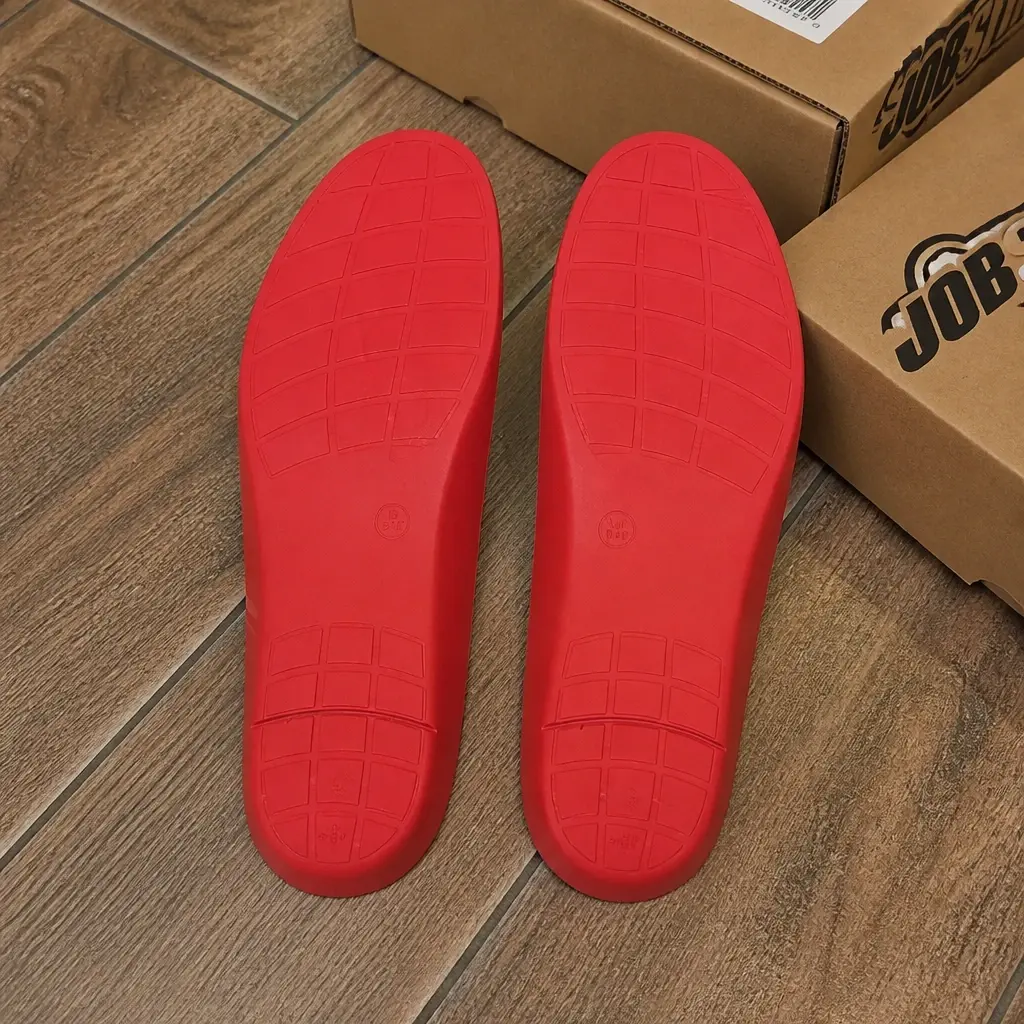
Checking the layers by flexing and gently peeling at the edges after three weeks, the hard support piece stayed fully bonded to the soft top layer with no lifting or delamination at the seams. The insole does sit about 3mm thicker than the factory pad, which is why my usual lace length felt shorter for the first few wears and my boots felt tighter across the top for about a week, a snugger fit that matches what other buyers have noted about thicker insoles like this one.
That work-boot-first fit shows up across owner feedback too. Owners with wider feet report the toe box and width running narrow relative to a standard work boot, with the pinky toe hanging off the insole's edge in non-wide boots. The trim-to-fit line requires cutting the toe area to length, and the arch shell's fixed position across sizes means the arch bump does not shift for different foot lengths within the same trim-to-fit size.
Installation is affected by the sticky underside on some pairs, which can make sliding the insole into a boot difficult without a light dusting of powder first. One buyer reported a manufacturing defect where the left and right insoles in a pair had mismatched arch heights, causing discomfort on one foot only, described as an isolated unit issue rather than a design trait.
What's the Best Way to Clean Jobsite Insoles?
Jobsite recommends nothing more elaborate than a damp cloth for cleaning the Heavy Duty insole, and that's what worked best in three weeks of testing. After three weeks of sweaty shifts I settled on wiping the insoles down with a damp cloth followed by air-drying overnight, which kept the top cover clean without soaking the foam underneath. I would not soak them in any spray disinfectant, but a light spot spray of Lysol followed by a full air dry worked fine once, with no lingering smell or stiffness afterward. Loose pet hair, sock lint, and dirt brushed off easily by hand or with a damp cloth, and nothing stayed embedded in the fabric after three weeks of regular wear.
The insole's breathable, anti-wicking top cover is built to manage sweat and moisture during wear rather than after. The fabric wicks moisture away from the foot to keep it dry longer, and the Aegis antibacterial treatment is intended to control odor-causing bacteria and reduce staining and deterioration from sweat over time. No dedicated cleaning instructions are published for the Heavy Duty model beyond the moisture-wicking top cover itself.
What Should You Know Before Buying Jobsite Insoles?
Jobsite's Heavy Duty insole handles normal training loads well, but width, durability, and the arch bump's placement are the real things to know before buying. I would call these fine for normal training loads rather than dedicated lifting gear, based on how they performed under my heavy deadlift set. But no insole, including this one, is a substitute for stopping and addressing pain that does not go away, so if something hurts sharply I stop and check the fit rather than continuing to wear through it.
The most common complaints center on width, durability, and the arch bump's placement rather than outright failure. Some owners report the insole breaking down or losing shape within months of regular wear, even under moderate use. Others describe the arch bump as a pressure point after a few weeks, particularly if the bump's position does not match their own arch.
A smaller number of reports describe sharp discomfort from a defective or mismatched pair, and one review describes the top cover causing friction against the top of the foot on a unit that flattened out within a day. The edges are not described as sharp or unfinished in any review found. Owners are advised in general work-boot-insole guidance to stop and reassess fit if pain does not resolve, rather than continuing to wear through sharp or worsening discomfort.
How Much Should You Expect to Pay for Jobsite?
Pricing across the Jobsite insole lineup spans about $6 to about $16 per pair depending on the model. The Heavy Duty Boot Support Insole lists between $9.99 and $12.99 depending on retailer and size. The Odor Stop activated-charcoal insoles are the cheapest option in the line at $5.99-$7.99 for a two-pair pack. The Power Tuff Anti-Fatigue model sits at the top of the range at $14.99-$15.99. Gel Work Insoles and Gel Sport Insoles both list around $11.99-$12.99.
Where Are Jobsite Insoles Sold?
Jobsite insoles are sold through the brand's own manakey.com storefront as well as major third-party retailers. Listings for the Heavy Duty model and related SKUs appear on Amazon, Walmart, and eBay, alongside smaller specialty retailers such as Frank's Great Outdoors, FootMatters' own webstore, and international resellers including Ubuy and Galaxus. Availability varies by retailer.
Is Jobsite a Good Fit for You?
Jobsite insoles are marketed toward people on their feet for long shifts in work boots, including warehouse, construction, and trade jobs on hard flooring. The Heavy Duty model targets buyers who want structural arch and heel support rather than soft cushioning, and it is positioned as an off-the-shelf alternative to custom orthotics rather than a medical device.
Buyers with wide feet or a specific arch height that does not match the fixed arch-bump placement are more likely to be dissatisfied. No FDA clearance or HSA/insurance eligibility is stated for any Jobsite insole model in the sources reviewed. This is an over-the-counter product line, not a custom or prescription orthotic.
The Full Spec Sheet for Jobsite
Jobsite's Heavy Duty insole grades firm and stable on every hands-on test, matching its published specs below. Pressing on the arch with steady thumb pressure for a full five seconds was one of my go-to checks throughout testing, and the plastic shell never gave, recovering its shape the instant I let go. Twisting it heel-to-toe put the stiffness at a 4 on a 1-5 scale, noticeably firmer than my old factory insole, which I would grade closer to a 2, and it never felt like it would crease or fold.
| Spec | Details |
|---|---|
| Model tested | Heavy Duty Boot Support Insole, Medium |
| Length | 12 in (untrimmed) |
| Width | 4 in |
| Sizing | Medium: Men 8-10.5 / Women 9-11; Large: Men 11-12.5 / Women 11-13.5; trim-to-fit one-size also sold for Men 8-13 |
| Color | Red |
| Category classification | Outdoors |
| Price (Heavy Duty) | $9.99-$12.99 depending on retailer |
| Rating | 4.2 out of 5, from 1,016 ratings |
| Rating breakdown | 61% 5-star, 16% 4-star, 11% 3-star, 5% 2-star, 7% 1-star |
Amazon's listing for this insole also carries a 1.0-inch "height" dimension, but that figure runs alongside a 12-inch length and 4-inch width in the same package-dimensions field, and a full inch of stack height is not physically plausible for an insole this size, it reads as a shipping-package measurement rather than the insole's own thickness, so it is left out of the table above.
Final Take: Is Jobsite Worth Buying?
Jobsite's Heavy Duty Boot Support Insole earns its 4.2-out-of-5 rating across more than a thousand owners by doing exactly what it promises: structural arch and heel support for a work boot, at under $13. Over twenty-one straight days of wear on concrete, gravel, and dirt trails, the molded arch shell and deep heel cup never cracked, flattened, or lost their shape, even under a 220 lb deadlift set, and my own feet stayed noticeably less fatigued by the end of a shift than in the factory insoles it replaced.
Durability breakdown within months is the most repeated complaint in owner reviews of this model, but nothing in my own three weeks of daily wear showed any sign of it, a difference that may come down to individual pairs, shoe type, or simply more time than my test window covered. The insole's other real limits were confirmed in my own testing too: it runs narrow for wide feet, the fixed arch-bump placement won't suit every arch shape, and no warranty is published specifically for this model.
For a buyer with average-width feet and a standing job who wants firm, structural off-the-shelf support in a work boot, the Heavy Duty model is a reasonable buy at its price. Buyers with wide feet, an unusual arch shape, or a preference for soft cushioning over structural support should look elsewhere in Jobsite's own lineup or a different brand entirely.
Michal Sieroslawski is an Entrepreneur, exercise physiologist, and personal trainer who has fitted over a thousand people with insoles. He holds a degree in Sports and Exercise Science from the University of Central Lancashire, where he studied biomechanics, anatomy, and exercise physiology. Since 2020, Michal Sieroslawski has helped local and online businesses get found in Google and AI search.