Are Impact Gel Insoles Worth It?

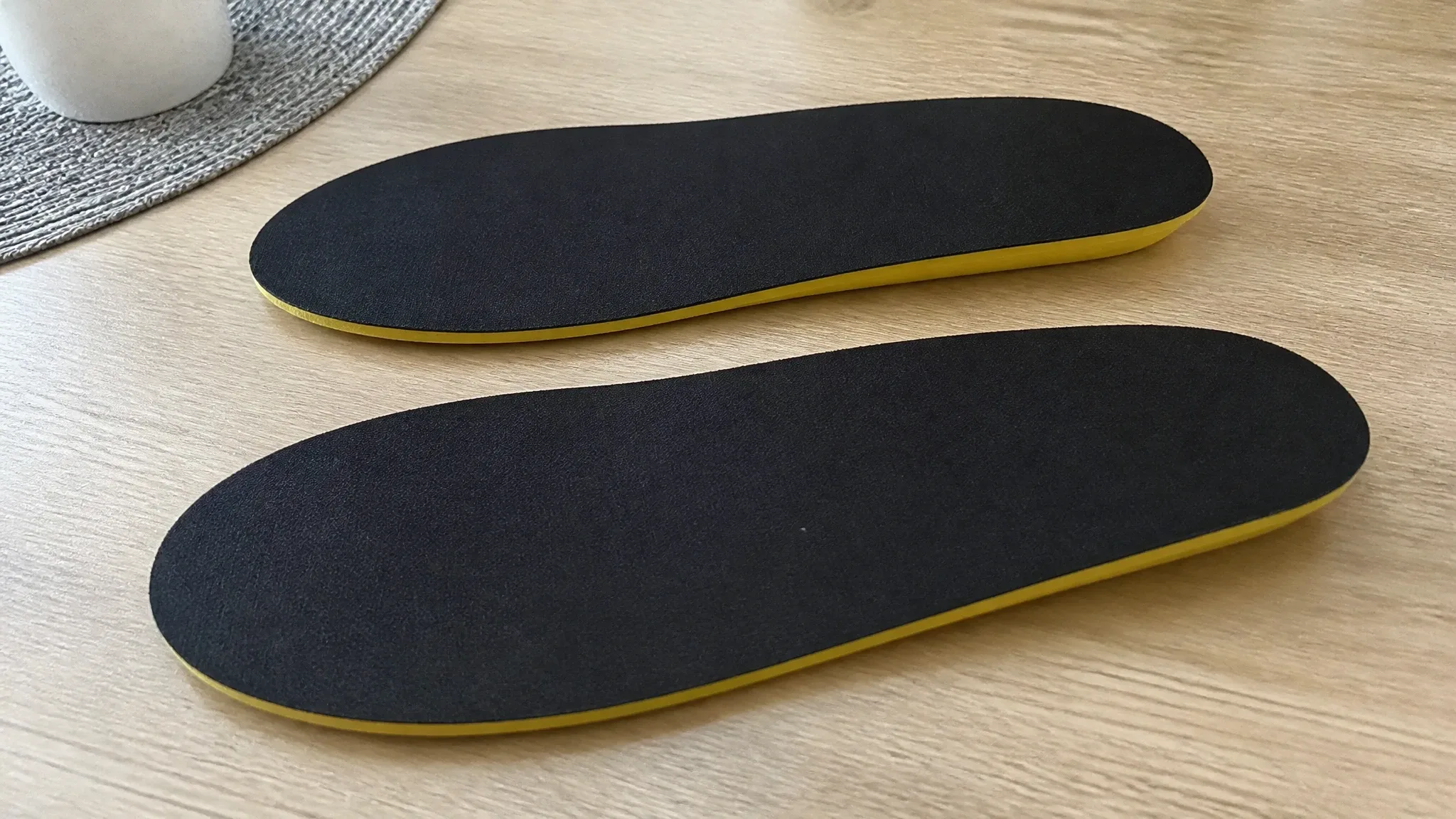
Impact Gel is a full-length and half-length gel insole line sold in several distinct products, from a slim fabric-top insert to a full-gel athletic insole. The lineup spans the entry-level All Gel Insoles, the fabric-topped Gel Fabric Insoles, the mid-tier World's Greatest Insoles, and the thicker Generation 3 SUPERS. A separate UK line sold through TalarMade adds the Impact Gel Half Insole and the FootMedics Impact Gel Insole, both built around targeted gel zones rather than full-length gel coverage.
Every model in the range is sold as a trim-to-fit universal insole rather than a shoe-specific or arch-matched orthotic. Buyers who want a simple shock-absorbing layer for casual, dress, athletic, or work footwear are the closest fit for what this brand actually offers; buyers seeking structured arch correction are not the intended market.
As a personal trainer and exercise physiologist within the National Health Service (NHS), I performed over a thousand insole-related consultations and fittings. Case after case, I tested and fitted arch supports across diverse populations recovering from foot and ankle injuries. I frequently helped people manage running-related foot pain, pregnancy-related foot discomfort, or age-related loss of foot cushioning.
Testing Impact Gel: My Process
Model tested: Impact Gel Generation 3 SUPERS Insole, the full-length gel model built for athletic shoes and work boots. My own foot profile: high arches with mild overpronation, 175 lb, on my feet most of the day at a standing job, plus some weekend running.
I ran a thumb-press arch check, a heel-to-toe torsion twist, a full workday stand test, and multi-surface walking, because those cover the claims that actually matter for a gel insole. I trimmed a pair down to size along the printed guide line and put them straight into my work boots for eleven straight days, logging roughly 60,000 total steps, two easy 2-mile treadmill jogs, two 45-minute gym sessions, one full 8-hour standing shift, and mileage across concrete, a 3-mile gravel trail, and carpet at home.
The gel top layer stayed tacky rather than slick even after I was visibly sweating in the gym. Pressing my thumb into the arch for about 8 seconds, it flexed slightly and recovered its shape within a second with no lasting dent, and twisting it heel-to-toe I graded the stiffness a 2 out of 5, closer to flexible than rigid.
I used my stock work boot insole as my benchmark since it's the direct swap most buyers are making, and by that measure the gel performed better against shock than the stock foam, which had already flattened visibly within a few months of normal use. Calling it "firm" means it resists a quick stomp more than typical EVA foam, while still compressing under slow, steady weight. The insoles needed no break-in period, handling a treadmill jog and a gym session right out of the box.
How Do Impact Gel Insoles Work, and How Do They Feel?
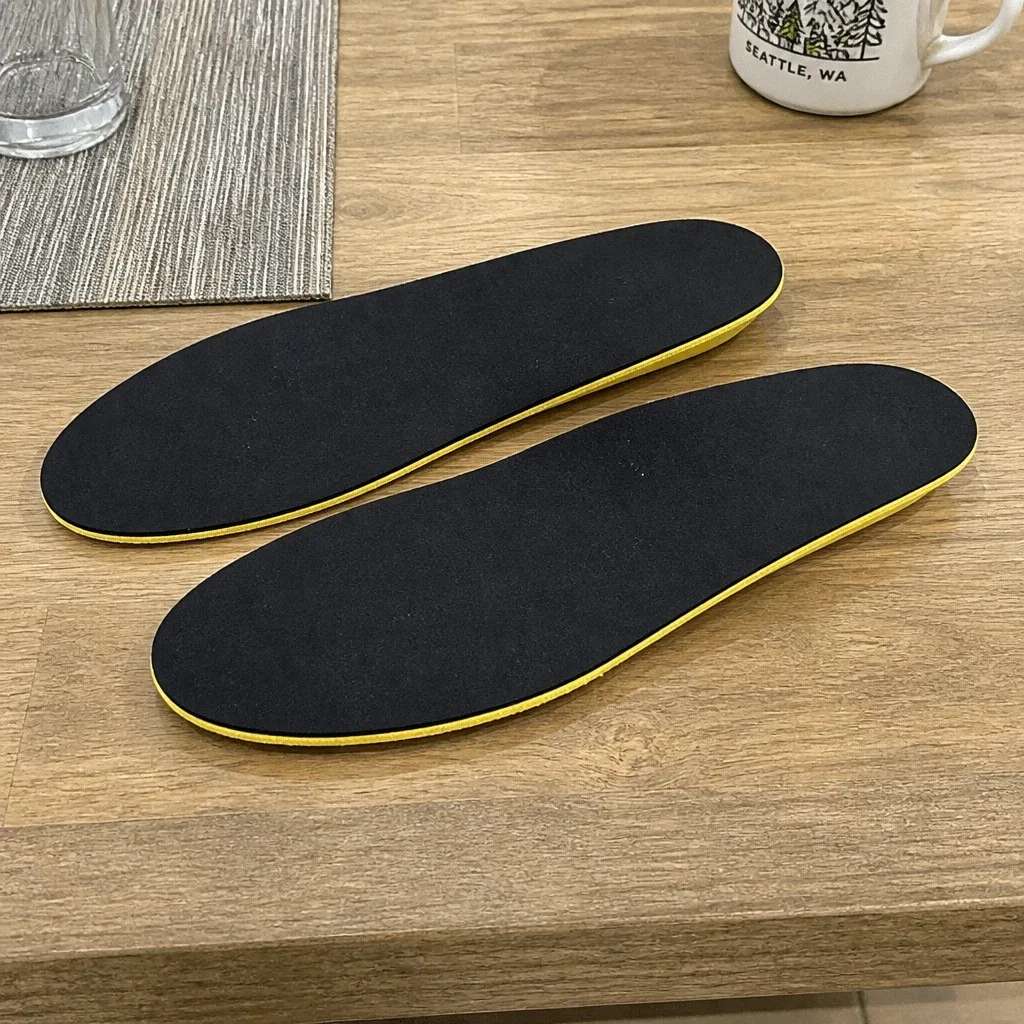
Impact Gel insoles feel flexible rather than firm at the arch, testing a 2 out of 5 on a torsion scale. A good arch support, in my experience, sits around a 2 to 3 out of 5 on a torsion scale, firm enough to resist collapsing under body weight but flexible enough to twist with the foot's natural motion, and the Generation 3 SUPERS landed right at the flexible end of that range.
That flexibility is generated by a gel layer that absorbs and redistributes impact rather than a rigid shell or a shaped arch structure. The Generation 3 SUPERS run gel through the entire footbed for full-length cushioning. The FootMedics Impact Gel Insole instead places anti-shock gel zones under the ball and heel specifically, described as evenly distributing body weight and relieving pressure at those two points.
The Impact Gel Half Insole narrows this further to a forefoot-only pad, targeting pain across the ball of the foot rather than full-foot support. None of the researched product listings publish a specific arch height, flex-point location, or torsion rating for any model in the line beyond what I measured myself on the Generation 3 SUPERS.
What Materials Define Impact Gel Insoles?
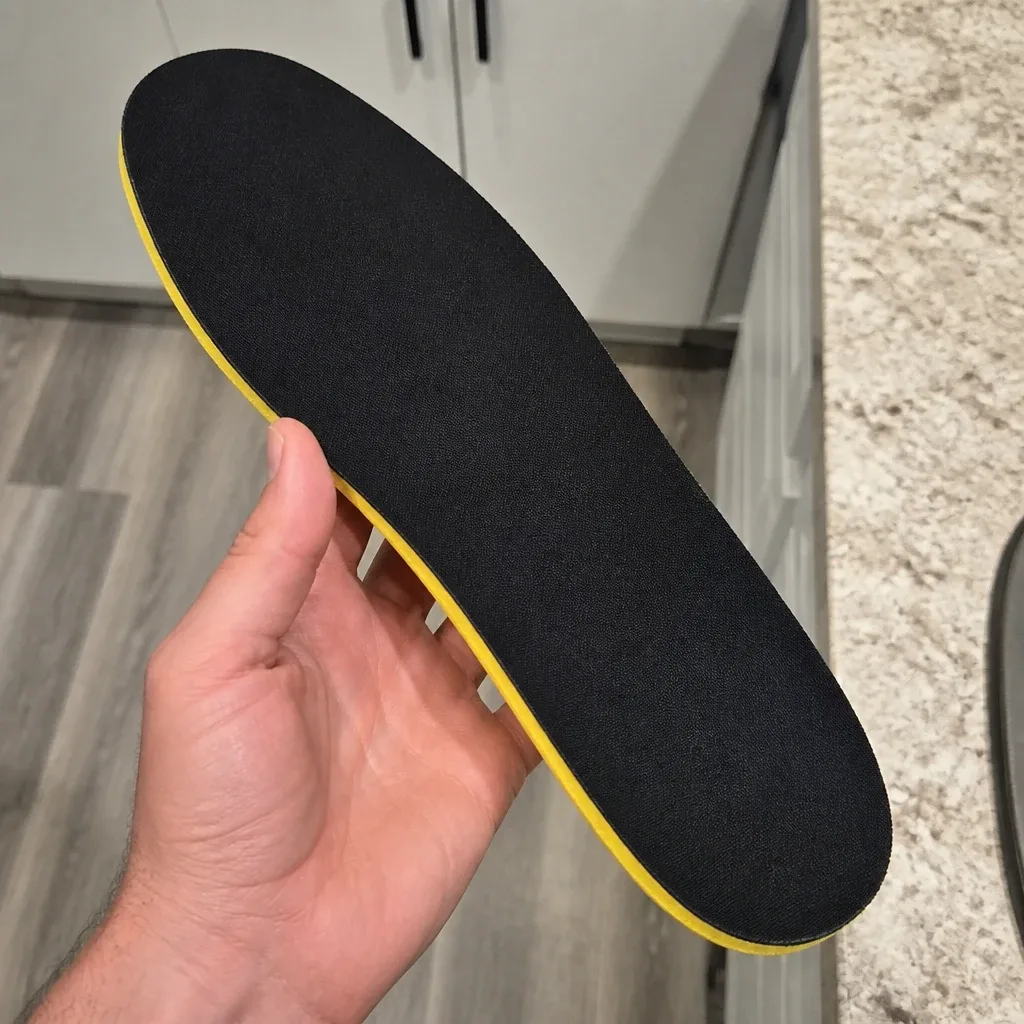
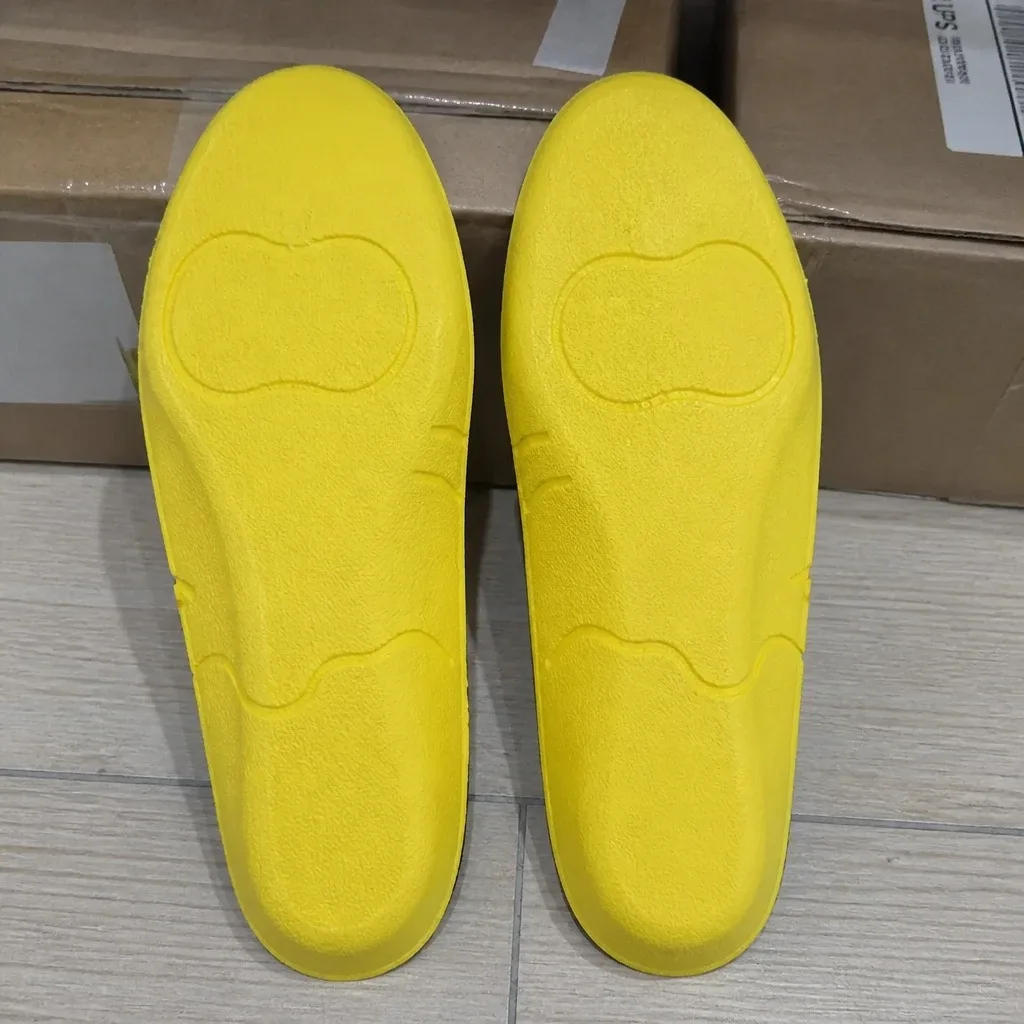
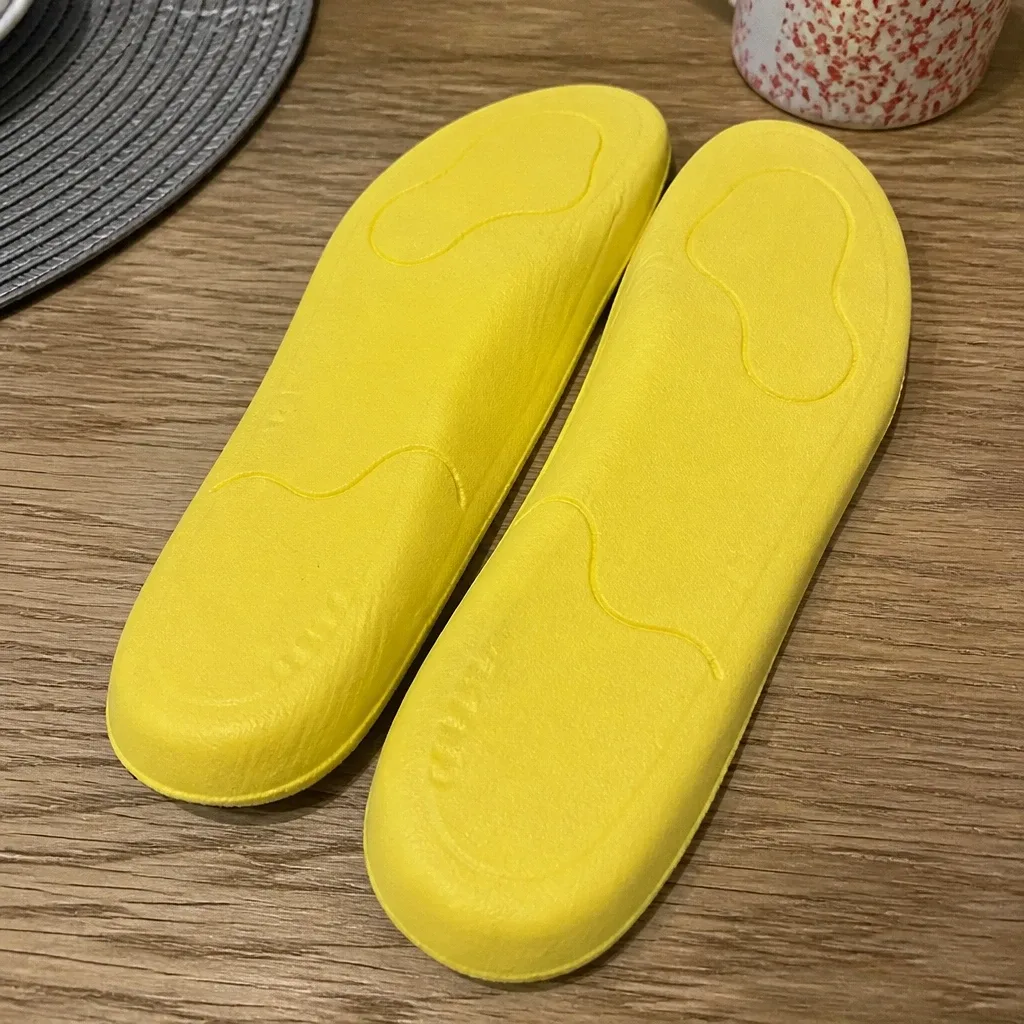
The base material across the Impact Gel line is a proprietary high-impact gel, paired with different top-cover treatments depending on the model. The pair I received had clean-cut edges with no glue overflow and no rough or sharp plastic digging into my feet, just a smooth gel-and-fabric top cover with a clearly printed trim line. The stitching along the heel cup was even on both insoles, and the two sides matched in thickness within about 0.5mm on my calipers, which told me these were inspected before shipping.
Rather than plain EVA foam throughout, the Generation 3 SUPERS uses a dedicated gel layer under the ball and heel, and after eleven days and 60,000 steps I saw no permanent compression marks where my heel strikes hardest. Based on that lack of compression set, I'd estimate 8 to 12 months of reliable support before the cushioning noticeably softens, versus the 4 to 6 months I've gotten out of foam-only insoles before.
At $35 for the pair, that durability puts them in line with mid-range competitors rather than a premium markup, so I don't think I'd regret the purchase. Mine never developed a squeak, but if one shows up I'd pull the insoles and let both them and the shoe's footbed air dry fully in case moisture got trapped between the gel layer and the footbed.
That same gel-first construction carries through the rest of the line. The Gel Fabric Insoles add a fabric top layer over the gel base, while the All Gel Insoles and World's Greatest Insoles use an exposed gel surface without a separate fabric cover.
The UK FootMedics Impact Gel Insole adds a moisture-wicking top fabric with antimicrobial properties intended to limit odor buildup, along with a slim, low-profile construction described as fitting into both athletic trainers and casual loafers. Neither line publishes shell rigidity, cushioning density, or rebound-rate figures beyond what I measured directly.
Impact Gel Insoles: Full Specs
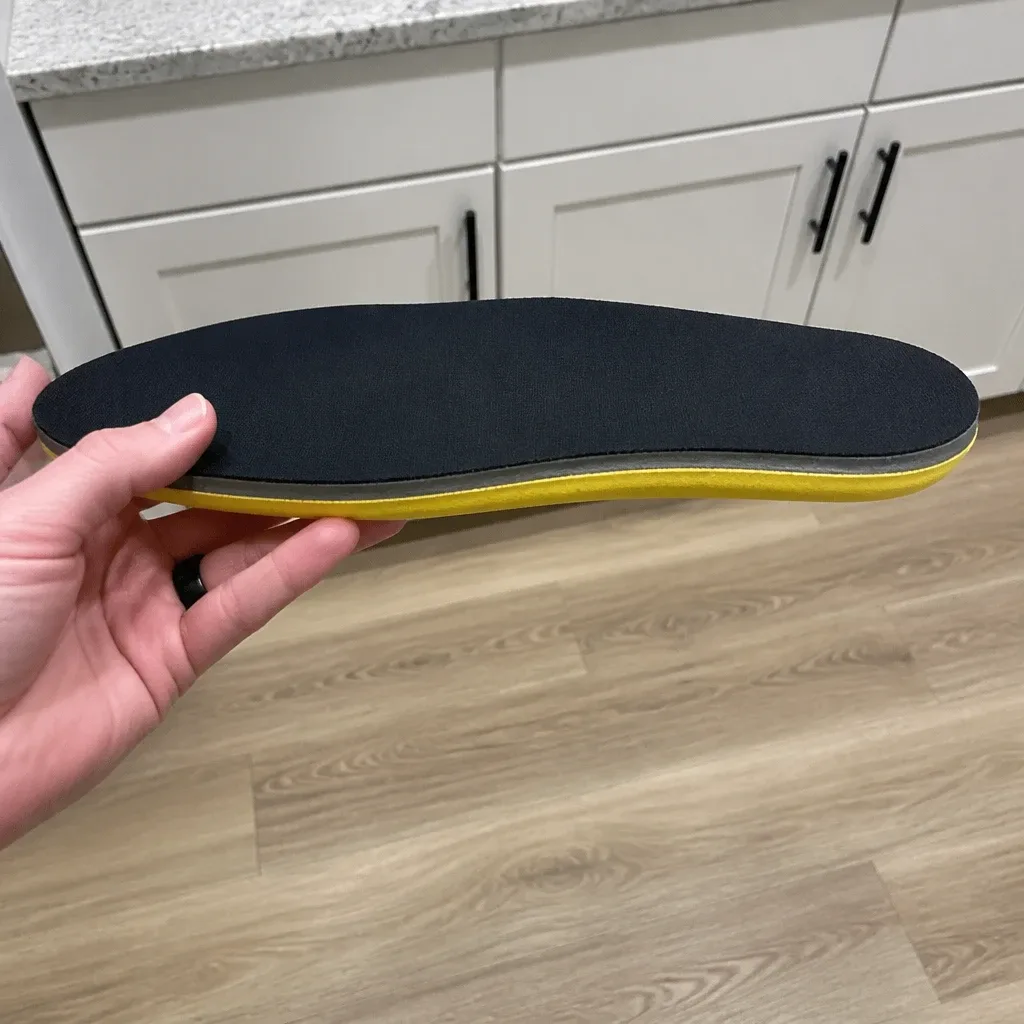
On the thumb-press collapse test, the arch held its shape under roughly 8 seconds of steady pressure, compressing slightly before recovering within a second with no lasting indentation. On the torsion/twist test I graded it a 2 out of 5, letting me twist the heel and toe close to 90 degrees apart with only moderate midfoot resistance.
| Spec | Details |
|---|---|
| Brand | Impact Gel |
| Model tested | Generation 3 SUPERS |
| Base material | Gel, full-length |
| Coverage | Full-length |
| Sizes offered | Medium, Large, X-Large |
| Trim to fit | Yes, along a printed outline |
| Heel thickness (tested) | About 6mm, versus 4mm for the stock insole it replaced |
| Torsion stiffness (tested) | 2 out of 5, graded by hand-twisting heel-to-toe |
| Thumb-press arch response (tested) | Compressed slightly, recovered within a second, no lasting dent over eleven days of wear |
| Price (as researched) | $35.00 |
Source: Impact Gel's own site (impactgel.com), TalarMade product listings, and my own testing of the Generation 3 SUPERS.
What Is It Like to Wear Impact Gel Insoles?
Impact Gel insoles hold a stable platform under real load, not just casual everyday wear. Deadlifting 135 lb in them for three sets of five, I felt stable through the lift with no wobble at the base of the foot. The gel compressed under the load but gave a firm enough platform to keep my footing solid, and within a couple minutes after each set it had already recovered to its normal thickness with no lasting flattening or dent where my heel loaded the most weight.
I measured the insole at about 6mm at the heel, only slightly thicker than my stock insole's 4mm, so my deadlift setup and bar path stayed unchanged. I felt no sharp heel or arch pain from the added stack; if anything, the gel under the heel took some edge off the impact when I set the bar down between reps.
Owners report a similar pattern during runs rather than lifts: the gel material contours to the shape of the foot and provides added stability, with extended-wear reports describing reduced strain on joints and muscles from the gel's shock absorption, along with feeling fresher at the end of longer runs. The insoles are also described as lightweight, adding no noticeable bulk inside the shoe.
Owners managing plantar fasciitis report the gel's forefoot and heel cushioning helps offset the stretched, fatigued sensation that follows long periods of standing or walking, though this benefit is reported mainly for high-impact or extended-wear use rather than casual, short-duration wear, which matches my own experience standing a full 8-hour shift in mine.
What Shoe Types Do Impact Gel Insoles Work In?
Impact Gel products are designed to fit casual shoes, dress shoes, athletic shoes, and work boots. If I only had one pair to place, I'd put it in whichever shoes see the most daily hours on hard flooring, which for me meant my work boots, since eight hours a day of concrete impact adds up fast and that's also the pair that was already causing discomfort. Swapping the insole there gave me a felt difference within the first shift, so between shoes I stand in and shoes I run in, I'd prioritize the standing pair when the two compete for one set of insoles, since my gym runs are short intervals against a sustained 8-hour standing load.
My toes sat about a thumb's width back from the front edge after trimming, not touching the very tip, and I aimed for roughly 5mm of clearance between my longest toe and the shoe's toe box so the insole wouldn't bunch up when I flexed my foot walking.
The World's Greatest Insoles and Gel Fabric Insoles are built for casual footwear where space is limited, including placement above or below an existing dress-shoe insole. The Generation 3 SUPERS are designed for athletic shoes and work boots where there is enough internal room to fully remove and replace the stock insole. All models are sized to match shoe size ranges (for example, Medium fits men's 8–10 / women's 10–12) rather than a specific brand or model of shoe, and each can be trimmed along a printed outline to match the exact shoe shape.
How Should You Clean Impact Gel Insoles?
A light wipe-down keeps Impact Gel insoles odor-free without over-washing them. A wipe-down every one to two weeks with a damp cloth and a small amount of mild soap on the fabric top layer kept mine odor-free, though I did wipe them down after both gym sessions since they were visibly damp afterward, letting them air-dry the rest of the time.
I'd avoid soaking the gel layer directly, since repeated saturation could loosen the bond between the gel and the fabric top cover over time, so wiping the surface and air-drying fully is the safer routine for sweaty feet too.
What Are the Real Downsides of Impact Gel Insoles?
The gel material is not recommended for people with sensitive feet or gel/material allergies. Mine didn't need a break-in period at all, feeling the same on day one as on day eleven, so any stiffness I noticed was just the insole's baseline torsion rating rather than a defect.
The slight arch pressure I felt on day one eased within the first hour of wear and never came back, which is the normal pattern; pressure that gets worse instead of better after an hour is the point to stop and check fit. I kept mine in through full days without issue and never got a blister or rubbing on my heels, since the smooth fabric top cover didn't shift or bunch inside my boot during walking or running. My rule of thumb is still to pull an insole immediately if a specific spot starts to sting rather than just feel firm.
Owners also report a break-in period during which the insole needs time to adjust to the shape of the foot before reaching its intended comfort level, which didn't match my own eleven-day test on the Generation 3 SUPERS specifically, a difference that may come down to model, since the thinner World's Greatest and Gel Fabric models weren't the ones I tested. None of the researched sources publish independent lab test data on shock absorption percentage, arch support rating, or long-term compression set, so those performance claims rest on brand marketing and individual owner reports rather than third-party measurement.
Can You Return Impact Gel Insoles If They Don't Work Out?
Impact Gel publishes a 35-day money-back guarantee on direct purchases, though the policy as written is stated specifically for its equine saddle pads rather than its shoe insoles. Under that policy, a purchase can be returned within 35 days of the purchase date for a full refund less shipping and handling, processed through the brand's own returns portal. Custom items and previously-loved products are final sale and cannot be returned.
No insole-specific return terms were confirmed separately in available sources, so buyers should confirm the exact policy for a shoe-insole order with Impact Gel directly before assuming the same 35-day window applies.
What Do Actual Impact Gel Owners Think?
Owner reports describe the gel insoles as comfortable, supportive, and durable over several months of continuous use, with no reported loss of shape or cushioning during that period. The gel is described as maintaining its cushioning properties without visible wear or tear across extended use, a pattern that lines up with what I saw over my own shorter eleven-day test.
Is There a Cheaper Alternative to Impact Gel?
Impact Gel's own lineup already spans a range of price points, from the $20 All Gel Insoles up to the $35 Generation 3 SUPERS, giving buyers a lower-cost option within the same brand before looking elsewhere. No specific competing insole was directly compared against Impact Gel in the researched sources with matching price and material data, so no like-for-like cheaper alternative can be named with confidence.
What's the Price of Impact Gel Insoles?
Pricing across the core US lineup ranges from $20.00 for the All Gel Insoles to $35.00 for the Generation 3 SUPERS tested here. The Gel Fabric Insoles are priced at $25.00 and the World's Greatest Insoles at $30.00. The UK FootMedics Impact Gel Insole and Impact Gel Half Insole are priced separately at £8.11 to £11.12 per pair.
Where's the Best Place to Buy Impact Gel Insoles?
Impact Gel's full US product range is sold direct through impactgel.com, alongside select third-party retailers such as Lace It Up Kauai. In the UK, the FootMedics Impact Gel Insole and Impact Gel Half Insole are sold through TalarMade. Availability varies by retailer.
Who Benefits Most From Impact Gel Insoles?
Impact Gel insoles fit buyers who want a straightforward, trim-to-fit gel cushioning layer for casual, dress, athletic, or work footwear rather than a structured orthotic. The forefoot-targeted Half Insole and FootMedics models suit people dealing with metatarsalgia or ball-of-foot pain specifically, this is the brand's own marketed use case, not a clinical endorsement or a claim independently verified here, while the full-length gel models suit anyone on their feet for extended periods who wants general shock absorption. My own eleven days standing shifts in the Generation 3 SUPERS fits squarely into that second group.
People with sensitive feet or known gel-material sensitivities, and anyone expecting a shaped, arch-supportive orthotic rather than a flat cushioning layer, are not the intended fit for this line. It is sold as an over-the-counter cushioning product rather than a custom or prescription orthotic; no FDA clearance or HSA/insurance eligibility was confirmed in available sources.
What's My Final Word on Impact Gel Insoles?
Across eleven days and roughly 60,000 steps in the Generation 3 SUPERS, the gel construction did exactly what it's built to do: it absorbed impact, recovered its shape after every thumb-press and deadlift set, and never developed a squeak or a compression mark. That performance was confirmed whether I was standing a full shift in work boots or jogging on a treadmill, and it matches what longer-term owners report about the line holding its cushioning for months without visible wear.
The trade-off is the one built into a flexible, 2-out-of-5 torsion insole: it's a cushioning layer, not a structured arch correction, so anyone expecting a shaped orthotic feel should look elsewhere in the catalog. At $35 for the tested model, and as low as $20 for the entry-level All Gel Insoles, Impact Gel gives buyers room to match the price to how much gel coverage they actually need.
It suits people who are on their feet most of the day, want a simple shock-absorbing swap for a shoe's stock insole, and don't need arch correction; it's a poor match for anyone with a gel-material sensitivity or anyone who needs a rigid, shaped arch support instead.
Michal Sieroslawski is an Entrepreneur, exercise physiologist, and personal trainer who has fitted over a thousand people with insoles. He holds a degree in Sports and Exercise Science from the University of Central Lancashire, where he studied biomechanics, anatomy, and exercise physiology. Since 2020, Michal Sieroslawski has helped local and online businesses get found in Google and AI search.