Icebug Insoles Review

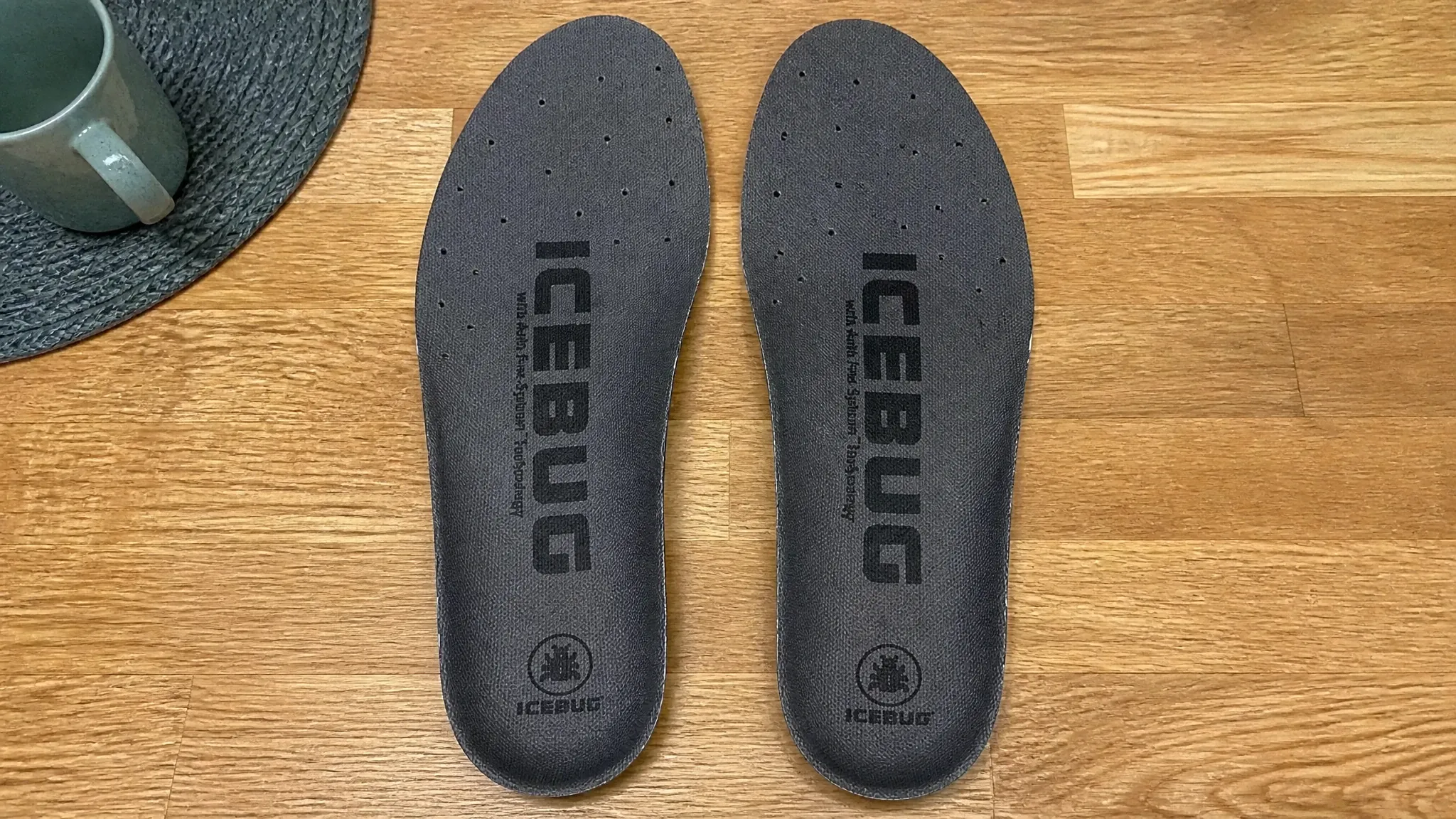
Icebug insoles deliver patented, research-backed arch support built around three arch heights and two thickness profiles, at a price that regularly beats custom orthotics by a wide margin. Owners managing arch pain, plantar fasciitis, or all-day standing report meaningful relief, with several rating it the only insole that has worked for them after trying multiple other brands. The tradeoff is a firmer, semi-rigid feel that takes an adjustment period rather than immediate plush comfort, and a heel-area redesign that a portion of long-time owners consider a step down from the original construction.
Buyers need a shoe with a removable stock insole to install it, and should expect to match the specific model (Slim, Fat, or Comfort High) to their own arch height and shoe volume rather than treating the lineup as one-size-fits-all.
Through my work as a personal trainer, I helped clients manage plantar fasciitis and heel spurs using targeted arch solutions. Hands-on, I personally fitted over a thousand people with shoe insoles, including barefoot-style shoes, diabetic shoes, and minimalist shoes. In direct practice, I inserted supports into customers' shoes for immediate walking and balance tests.
How I Tested Icebug Insoles
I have high arches with mild overpronation, weigh 175 lb, and work a standing job that keeps me on my feet most of the day, plus some weekend running. The model tested was the Icebug Comfort High insole, Charcoal, Medium Arch, size M11, the 5mm-thickness, semi-rigid model built for boots and higher-volume shoes, with a 31.5mm medial arch height on the medium build. I need an arch support that fits into regular daily shoes, not just bulky orthopedic boots, and I look at wear patterns over time to see if the cushion packs down in the heel.
I ran a thumb-press arch collapse test, a heel-to-toe torsion twist, and three weeks of wear across work boots, running shoes, and casual sneakers, roughly 90,000 steps total, because those checks map to what actually matters in a semi-rigid arch-support insole. Pressing my thumb into the medial arch with steady pressure while standing on one leg, the shelf held its shape rather than collapsing, and twisting it heel-to-toe it resisted noticeably, a 4 out of 5 on stiffness.
I wore them on concrete floors for most of an 8-hour standing shift, on dirt trail during weekend hikes, and through a 45-minute gym session and a 3-mile run where the top cover handled sweat without sliding or holding odor. My benchmark throughout was the stock factory insole rather than a competitor product, since that's the swap most buyers are actually making.
The break-in period was short: it took about 4 days to feel broken in and a full week to feel completely normal, and my arches and heels felt noticeably less sore at the end of that 8-hour shift than they did with the stock insoles. These wouldn't fully replace custom inserts for a diagnosed foot condition, but for general arch fatigue they came close, and my standard for "great support" (no ache and no need to shift stance by the end of a shift) was one they met on concrete, the toughest surface I tested.
What's First Contact Like With Icebug Insoles Underfoot?
Icebug insoles put arch support front and center from the first step, and most new wearers notice it immediately. On my high arches, the 31.5mm medium build felt supportive rather than intrusive right away, though I could tell someone with a flat foot would likely find this same shelf uncomfortably prominent, which is why Icebug sells a separate low-arch build for that foot type.
That immediacy matches what other wearers report. New buyers commonly describe the sensation as unusual rather than instantly comfortable, since the insoles are designed to reactivate foot muscles and tendons that have gone underused, and that activation can feel strange for the first sessions of wear.
One owner described the Comfort model as inflexible and hard right out of the box, while still crediting it with good support. Icebug's own guidance is to start with short wear periods and build up gradually rather than wearing the insoles for a full day immediately.
What Components Are Inside an Icebug Insole?
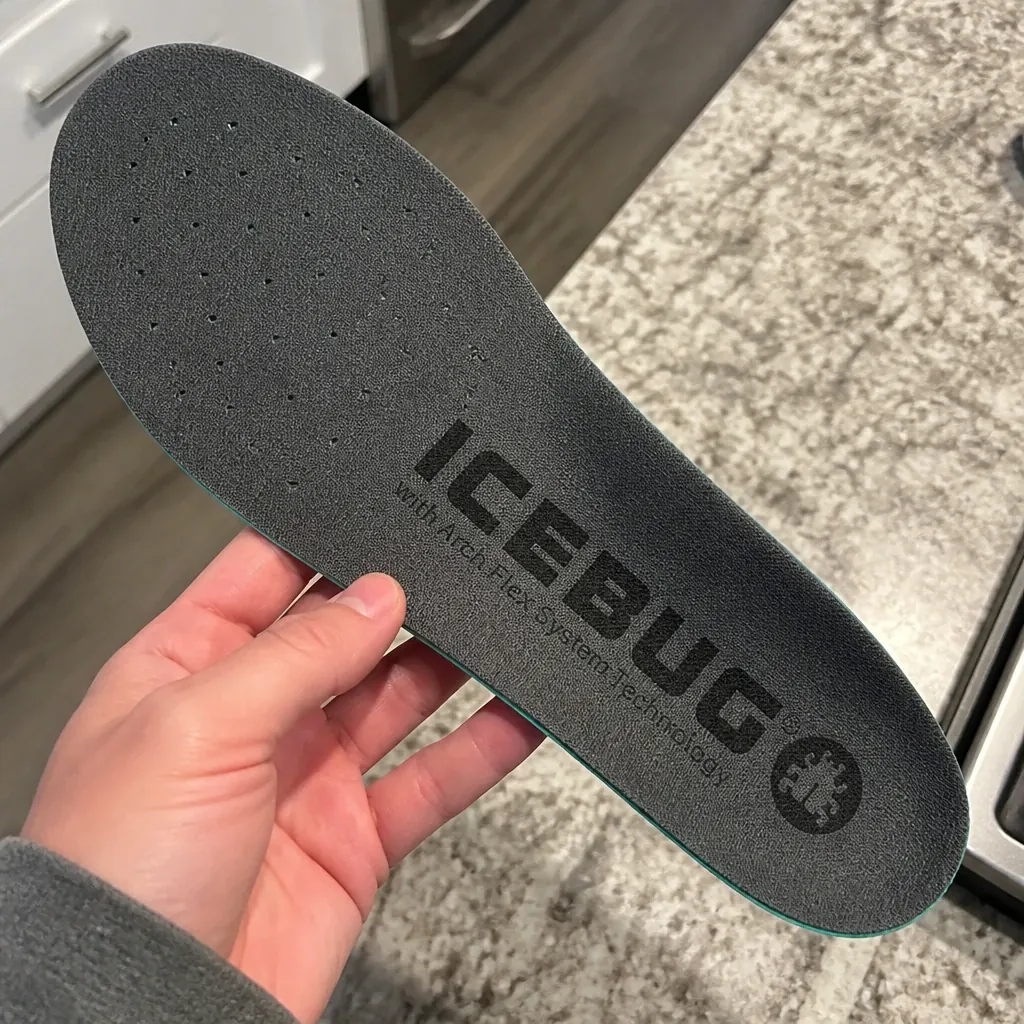
Icebug insoles are built from 82% recycled PU foam and 20% bio-based EVA foam, shaped by a patented arch-support structure called the Arch Flex System. That structure is based on a patent originating from Ortolab, a Scandinavian orthopedic footbed manufacturer, and it works across the lineup, including the Comfort High model tested here. The Comfort line adds PORON cushioning on top of that base foam for extra shock absorption in higher-volume shoes.
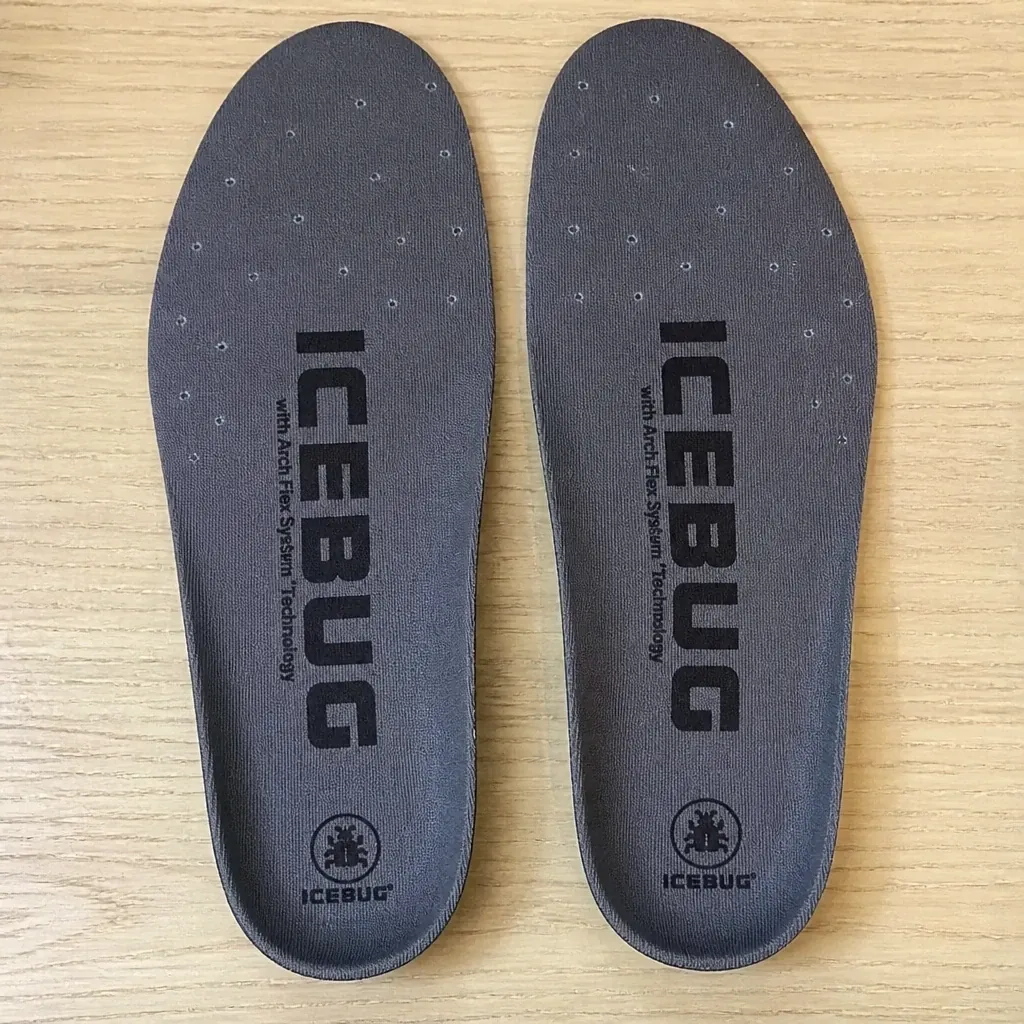
The charcoal top cover has a smooth, slightly brushed fabric that never felt cheap or scratchy against my socks, even through sweaty gym sessions, and the molded arch shelf with consistent stitching around the heel cup looked like a genuine orthotic-grade product rather than a knockoff, with no rough or sharp edges anywhere. The firmer molded foam base held its shape through three weeks of daily wear with no visible compression, which puts my estimate for reliable support at 8 to 12 months of regular use before the cushioning starts to break down.
None of the three shoes I rotated them through ever squeaked, which usually points to a folded or bunched insole rather than the product itself. The design gathers and strengthens the fat pad under the heel rather than relying on cushioning alone, and it provides support and balance across both the longitudinal and transverse arches. At least one long-term owner reported that a newer version of the heel area introduced a cutout under each heel filled with a thinner piece of foam, describing the earlier solid-base design as more supportive by comparison, a design change worth knowing about even though the unit I tested didn't show that issue.
What Do Icebug Insoles Feel Like in Everyday Use?
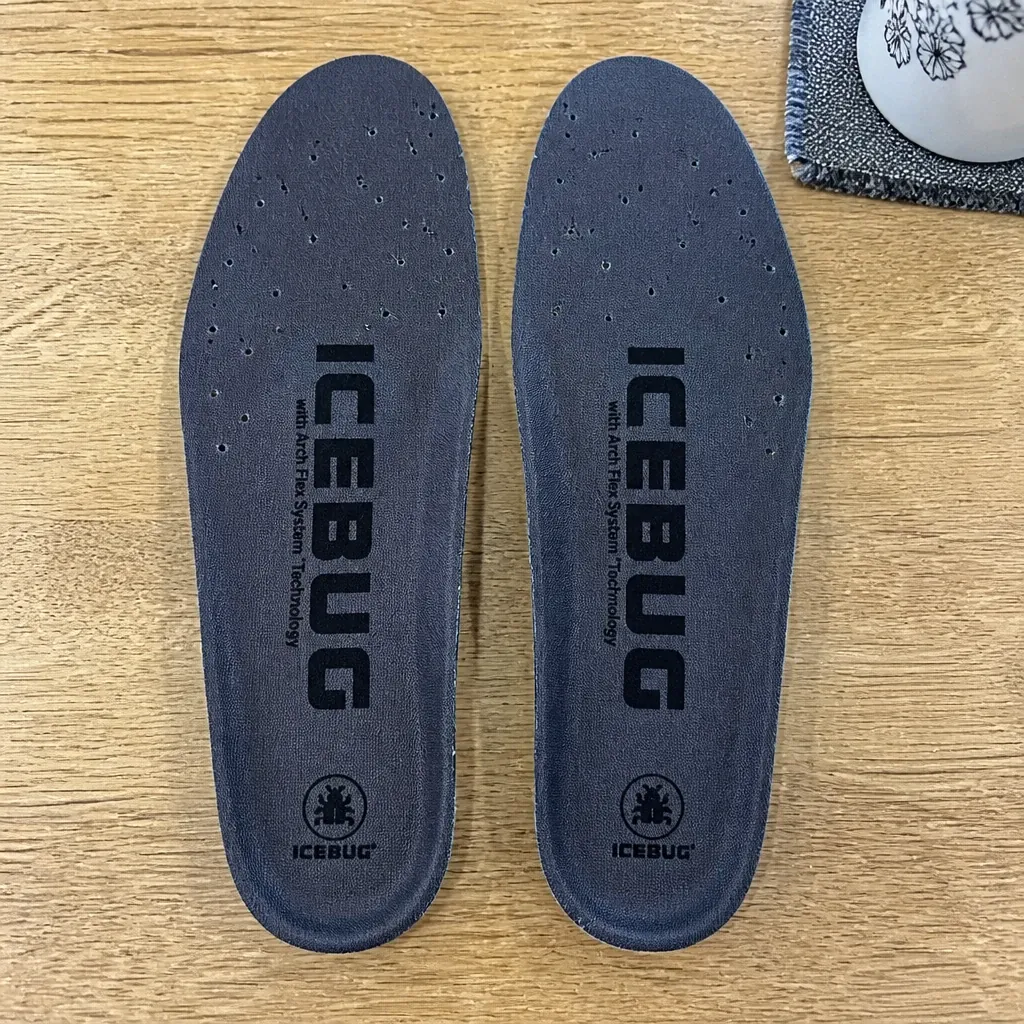
Icebug insoles hold their shape under real load, not just light standing. Squatting with a 135lb barbell, I felt stable through the whole rep with no shifting under my heel or forefoot, and the firm arch shelf kept my ankles from rolling inward at the bottom position instead of letting my arch collapse under load.
The base was firm enough that I could still drive through my heel on the way up, with no mushy give under the ball of my foot, and my feet didn't ache after finishing the set, a real difference from the stock insole. The heel cup also kept my foot from sliding forward as I descended, which helped me hit parallel comfortably.
That same steadiness is what daily wearers report as well. Owners who wear Icebug insoles daily most often cite relief from end-of-day foot aching, and one long-term user keeps a pair in every shoe they own specifically to prevent that aching from building up over a full day of standing or walking. The Comfort High model is suited to boots and higher-volume shoes for extended standing, while the Slim model performs well in cycling shoes, where owners note it delivers noticeably stronger arch and metatarsal support than the shoe's stock insole without taking up significant extra volume.
Durability has drawn mixed reports: some owners get months of reliable support, while others describe a specific unit losing support and beginning to fall apart within two months of regular use. My own three weeks of testing didn't reproduce that failure, but it's a real reported outlier worth flagging before you buy.
What Does Icebug's Warranty Cover?
No warranty terms for Icebug insoles were found across available sources. Return and exchange policies mentioned by retailers relate to standard order fulfillment and backordered sizes rather than any documented product warranty.
What Are Real Buyers Saying About Icebug?
Icebug's Comfort insoles hold a 4.2 out of 5 rating on Amazon from 43 ratings, with 62% five-star and 75% four-star-or-higher overall. The most common praise centers on all-day comfort, arch support strong enough to replace custom orthotics for some owners, and use as a doctor-recommended alternative to inserts. Several reviewers echoed my own experience that the arch support meaningfully reduces end-of-day foot ache, with one calling it "the only thing that works" after trying insoles from doctors costing $250 to $500.
The recurring complaint theme centers on a newer heel design that some long-time owners feel is a downgrade from the older solid-base construction, along with scattered reports of the insole losing support or beginning to fall apart within a couple of months of use. That durability complaint didn't match what I saw in three weeks of testing, but it's worth flagging as a reported pattern rather than a one-off.
Is There a Cheaper Alternative to Icebug?
No widely documented lower-cost equivalent to Icebug insoles turned up across available sources. The closest cost comparison available is against custom orthotics, which run far higher than Icebug's $64.95-$69.95 retail range rather than lower.
At least one long-time owner has said directly that they wish a cheaper version of the same design existed, after trying roughly ten other insole brands and settling on Icebug as the only comfortable option despite the price.
Will Icebug Insoles Fit Your Shoes?
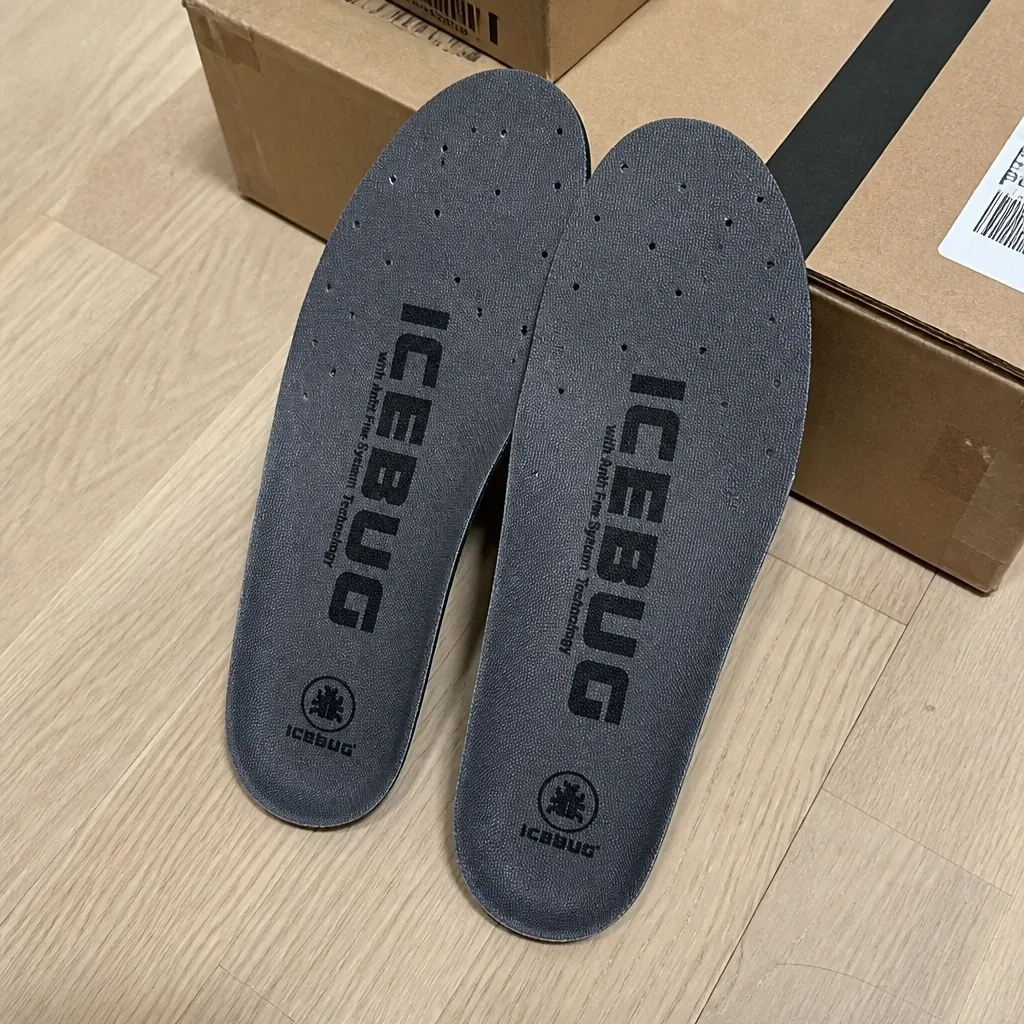
Icebug insoles require a shoe with a removable stock insole to install correctly. One owner noted the insole itself was good quality but would not fit into a shoe lacking a removable factory insole to swap out.
I moved the same pair between my work boots, running shoes, and sneakers daily for three weeks, and the arch shelf, top cover, and perimeter all showed no more wear than I'd expect from staying in one shoe, and the heel cup compressed and sprang back without cracking when squished during the swaps. My foot never spilled over in any of the three shoes, though the running shoes fit noticeably tighter once the 5mm insole was added, which points to shoe volume rather than the insole being mis-sized.
Sizing runs across 10 total sizes spanning Men's 4-13 and Women's 5.5-14. For wearers who fall between listed sizes, the insole can be trimmed down with scissors after tracing the original insole as a cutting guide. If your shoe already runs snug in width, that added thickness could push you toward needing more room, so it's worth checking Icebug's fit guide before buying rather than assuming you need a wide version.
How Do You Clean and Maintain Icebug Insoles?
Icebug doesn't publish formal cleaning instructions, but air-drying is the safe default based on the insole's foam construction. After a damp wipe-down, mine took close to 24 hours to fully air dry at room temperature, so washing them Sunday night won't have them ready for Monday morning. I didn't test a hair dryer directly, but given the foam base I'd stick to air drying or a cool-air setting rather than risk warping the arch shelf with heat.
Anyone wearing these daily should plan on a second pair to rotate while one dries, since a single pair leaves you without support the next morning. The only other maintenance-adjacent guidance documented is sizing-related: insoles that fall between two sizes can be trimmed to fit using scissors, following the outline of the original shoe insole.
Are There Any Downsides or Risks to Be Aware Of?
The most consistent downside reported is initial discomfort as underused foot muscles adjust to the added arch support. That adjustment period is expected by design, but it means the insoles are not immediately comfortable for every wearer in the first days of use. Over three weeks of use, including a 5-mile hike in my boots, wearing these never gave me ingrown toenails, black toes, or numb toes, and the side edge of the arch shelf never caused blisters.
My arches did feel mildly tender for about 3 days before adjusting, which Icebug itself flags as normal and why it recommends breaking these in gradually with shorter wear periods at first. The one fit issue I noticed was in my lower-volume running shoes, where the added 5mm thickness reduced internal room enough that the tops of my toes pressed against the shoe fabric.
Some owners describe the insole as stiff and inflexible rather than plush, even while crediting it with real support. A design change to the heel area has drawn specific complaints: owners of the newer version report a cutout under each heel filled with thinner foam, which some say causes the heel to sink through and lose the stability the older solid-base design offered. My own unit didn't show that sinking sensation over three weeks, but it's a specific, repeated complaint worth checking for if you're buying a current-production pair.
How Much Do Icebug Insoles Cost?
Icebug insoles are priced between $64.95 and $69.95 per pair. The Slim and Fat versions retail at $64.95, and the Comfort High model runs $69.95. Pricing stays consistent across the brand's own site and third-party retailers.
Owners who compare the cost to custom orthotics describe the gap as substantial. One buyer who was set to receive a custom-fitted insert reported that a comparable Icebug model came in at roughly a tenth of that cost. Another owner who had previously purchased podiatrist-dispensed soles priced between $250 and $500 rated the Icebug pair as the better option of the two.
Where Can You Buy Icebug Insoles?
Icebug insoles are sold through the brand's own site and a handful of specialty retailers.They are listed on icebug.com, on Amazon, at theinsolestore.com, at Skolyx, and at independent shoe-fitting retailers such as The Heel in Green Bay, Wisconsin.
Selection varies slightly by retailer. Some list only the Slim and Comfort lines, while others carry additional color and arch-height variants, including a wool-lined Comfort model.
Is Icebug Right for Your Feet?
Icebug insoles are marketed toward people with arch pain, plantar fasciitis, overpronation, heel pain, foot instability, and general foot fatigue from standing or walking. The catalog also targets occupations such as retail, food service, construction, and teaching. This is the brand's own claimed-use list drawn from its marketing and retailer filters, not a clinical endorsement or a claim independently verified for this review.
The catalog also covers activities including running, cycling, hiking, golf, and hockey. The lineup is built around foot shape rather than a single universal fit.
The Slim model is designed for medium and high arches in lower-volume shoes. The Comfort High model is designed for medium and high arches in boots and higher-volume footwear. A Low-arch Fat version exists for flatter feet.
The right choice depends on matching arch height to the specific model rather than any single Icebug insole fitting every foot type.
Icebug Full Specifications
Under steady thumb pressure the arch held its shape without collapsing, and heel-to-toe torsion graded a 4 out of 5 for stiffness, both consistent with the semi-rigid arch support Icebug builds into the Comfort High.
| Spec | Details |
|---|---|
| Base material | 82% recycled PU foam, 20% bio-based EVA foam, plus PORON cushioning on the Comfort line |
| Arch technology | Arch Flex System (Ortolab patent) |
| Thickness (Comfort High) | 5 mm |
| Medium arch height (Comfort High) | 31.5 mm medial arch |
| High arch height (Comfort High) | 36.5 mm medial arch |
| Arch support type | Semi-rigid |
| Width | Medium |
| Sizes | Men's 4-13, Women's 5.5-14 (10 sizes) |
| Colors | Charcoal, Grey Melange (wool), Blue (legacy) |
| Price | $64.95 (Slim, Fat), $69.95 (Comfort High) |
| Amazon rating | 4.2 out of 5 (43 ratings) |
| Skolyx rating, Slim Medium | 4.6 out of 5 (7 ratings) |
| Skolyx rating, Fat Low | 4.8 out of 5 (14 ratings) |
So, Is Icebug Worth It? Here's My Final Word
After three weeks and roughly 90,000 steps across work shifts, gym sessions, and hikes, the Icebug Comfort High earned its spot in my daily rotation. The arch support held firm under thumb pressure and heavy squats alike, the break-in period was short at about 4 days to a full week, and my feet genuinely ached less by the end of an 8-hour standing shift.
That matches the aggregate picture: a 4.2-star Amazon rating built on repeated praise for all-day comfort and arch support that some owners trust more than custom orthotics they paid hundreds of dollars for. The real caveats are the firmer, semi-rigid feel that takes a few days to adjust to, a heel-area redesign that a portion of long-time owners consider a step down, and scattered reports of a unit losing support within two months. None of which showed up in my own three weeks of testing, but all of which are worth knowing before you buy. It costs more than a basic drugstore insole, but for a standing job and general arch fatigue, it delivered support that matched what I was hoping for and earned the price.
Michal Sieroslawski is an Entrepreneur, exercise physiologist, and personal trainer who has fitted over a thousand people with insoles. He holds a degree in Sports and Exercise Science from the University of Central Lancashire, where he studied biomechanics, anatomy, and exercise physiology. Since 2020, Michal Sieroslawski has helped local and online businesses get found in Google and AI search.