Heel That Pain Insoles Review

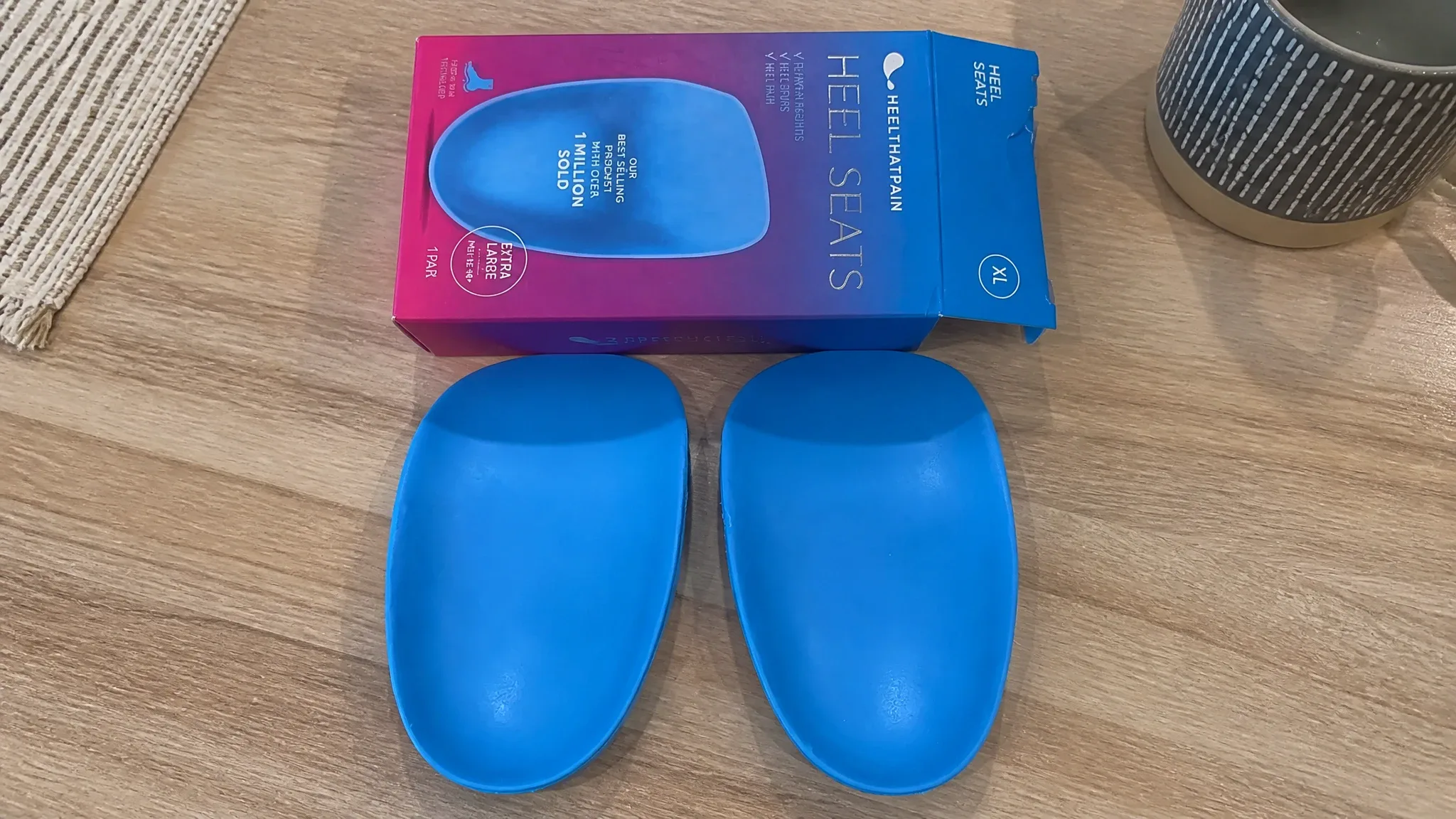
Heel That Pain's Heel Seats are a patented heel-only orthotic insert. The core mechanism is acupressure applied at the base of the heel. The line covers four options: Original (firm rubber), Gel (soft), Hybrid (moderate blend), and High Arch Sole Seats.
The High Arch model adds arch support. Sizes span Women's 5-6 through Men's 13-15. Having spent years as an exercise physiologist and personal trainer, I tested and fitted arch supports across diverse populations recovering from foot and ankle injuries. Across those years, I evaluated how different foot positions and orthotic inserts alter an individual's overall gait and alignment, from work boots and non-slip work shoes to safety boots.
Behind My Heel That Pain Testing
Model tested: Heel That Pain Heel Seats, Firm Rubber, Medium (Women's 6.5-10, Men's 5-8), with the patented Fascia-Bar heel cup. My own foot profile: high arches with mild overpronation, 175 lb, on my feet most of the day at a standing job, with some weekend running and a mild case of plantar fasciitis that flares up first thing in the morning.
I ran a set of hands-on checks on these Heel Seats to get past the marketing copy and see what the Fascia-Bar cup actually does underfoot, since heel pain sufferers care about support, durability, and whether the thing survives a real workday, not lab numbers. I wore them, not just read the box, starting with an hour around the house before taking them into work shoes, dirt trails, and concrete floors at my job, since concrete transmits the most heel-strike shock through the firm rubber. On day one I kept wear to about 3 hours per the packaging's break-in guidance, then built up to full 8-hour standing shifts and twice-weekly two-mile runs over five straight weeks and roughly 90,000 total steps.
I sweated heavily through a 30-minute HIIT session and a longer outdoor run without the top layer sliding or smelling during the session itself. Pressing on the arch with steady thumb pressure and my full body weight showed no collapse, and twisting the insole heel-to-toe graded a 4 out of 5 for stiffness, clearly firmer than the soft foam insole it replaced. I judged it mainly against that stock foam insole, plus my own past experience with a $400 custom orthotic for the same heel pain, and calling it "firm" means it feels closer to a hard rubber wedge than springy shoe foam, with almost no compression under the heel. In the end, I test whether an insole works across sneakers, casual shoes, and work boots.
What Did I Feel Right Away in Heel That Pain Insoles?
Heel That Pain's Heel Seats kept my weight from jamming painfully onto the outside edge of my feet from the first steps. The deep heel cup centered my heel right away and distributed pressure more evenly than the flat stock insole had.
What Materials Are Heel That Pain Insoles Made Of?
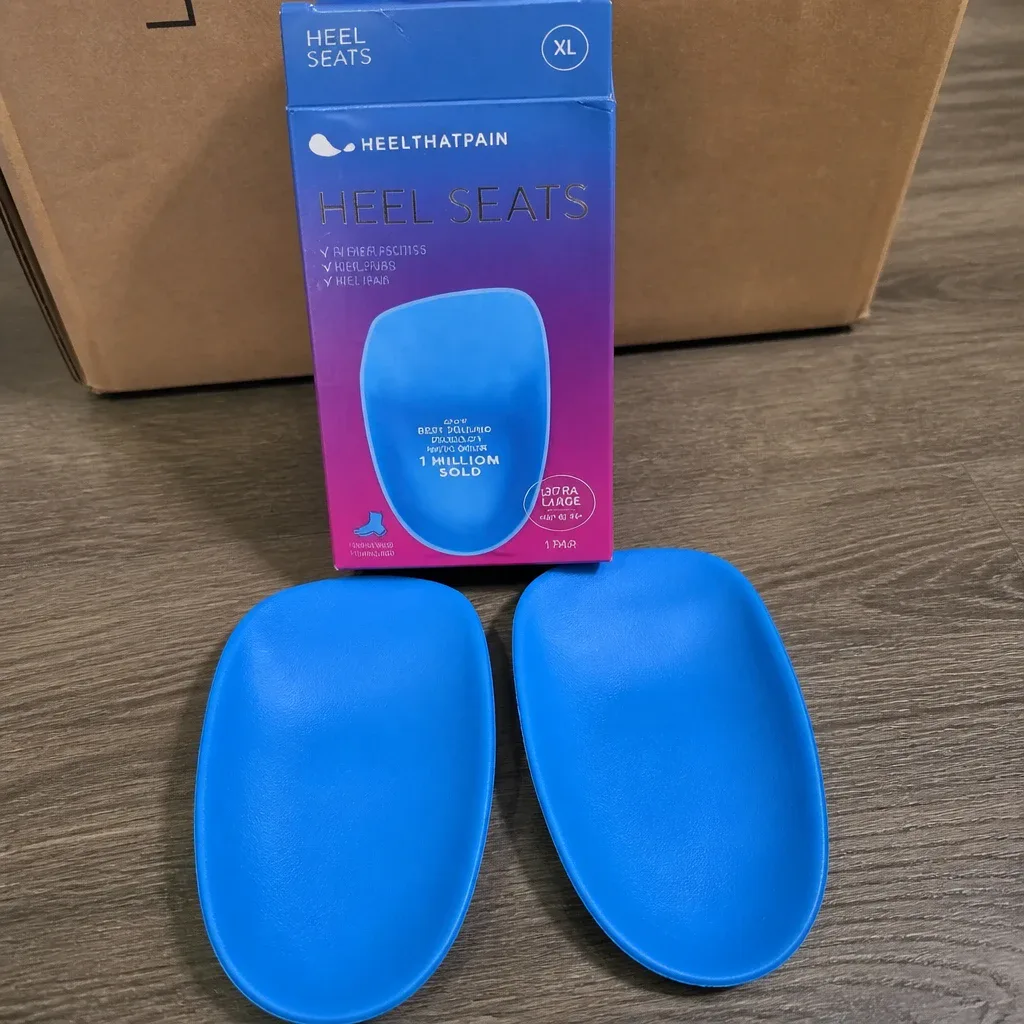
Heel That Pain builds its Heel Seats line around three base materials tied to firmness. The Original uses an extra-firm proprietary rubber blend. The Gel model is built the same way, but with a softer, more flexible gel-rubber formulation aimed at sensitive feet.
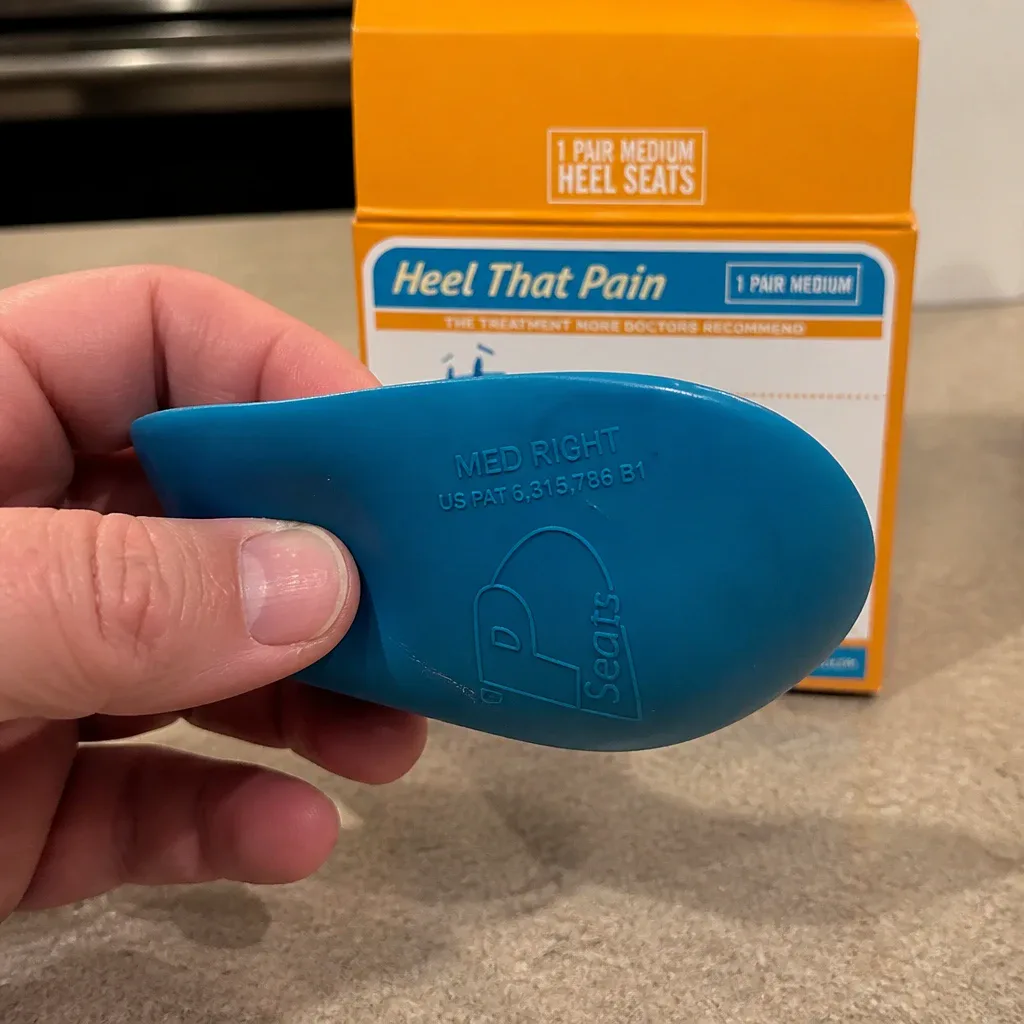
The Hybrid model sits between the two, using a durable hybrid gel-rubber blend described as moderate firmness. A separate Heel Seat Wraps version uses neoprene fabric instead of a rigid insert.
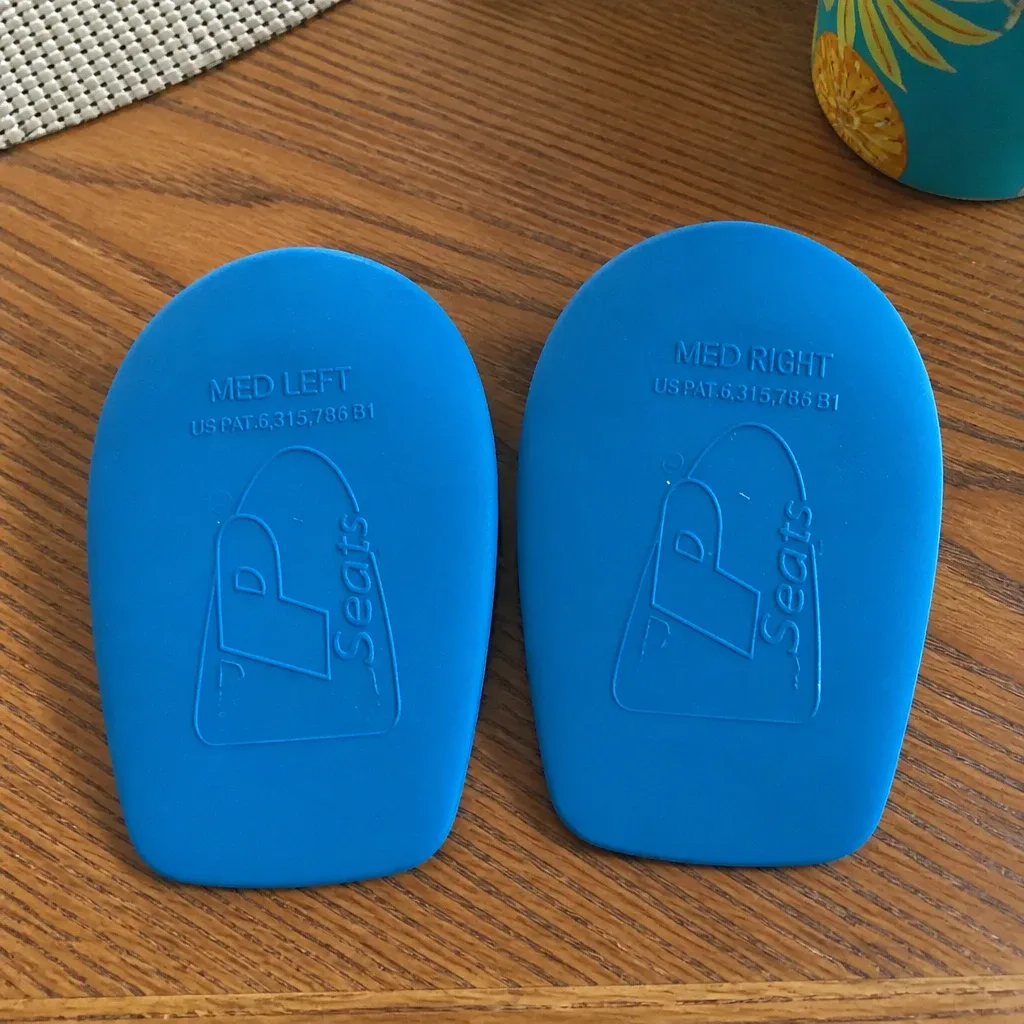
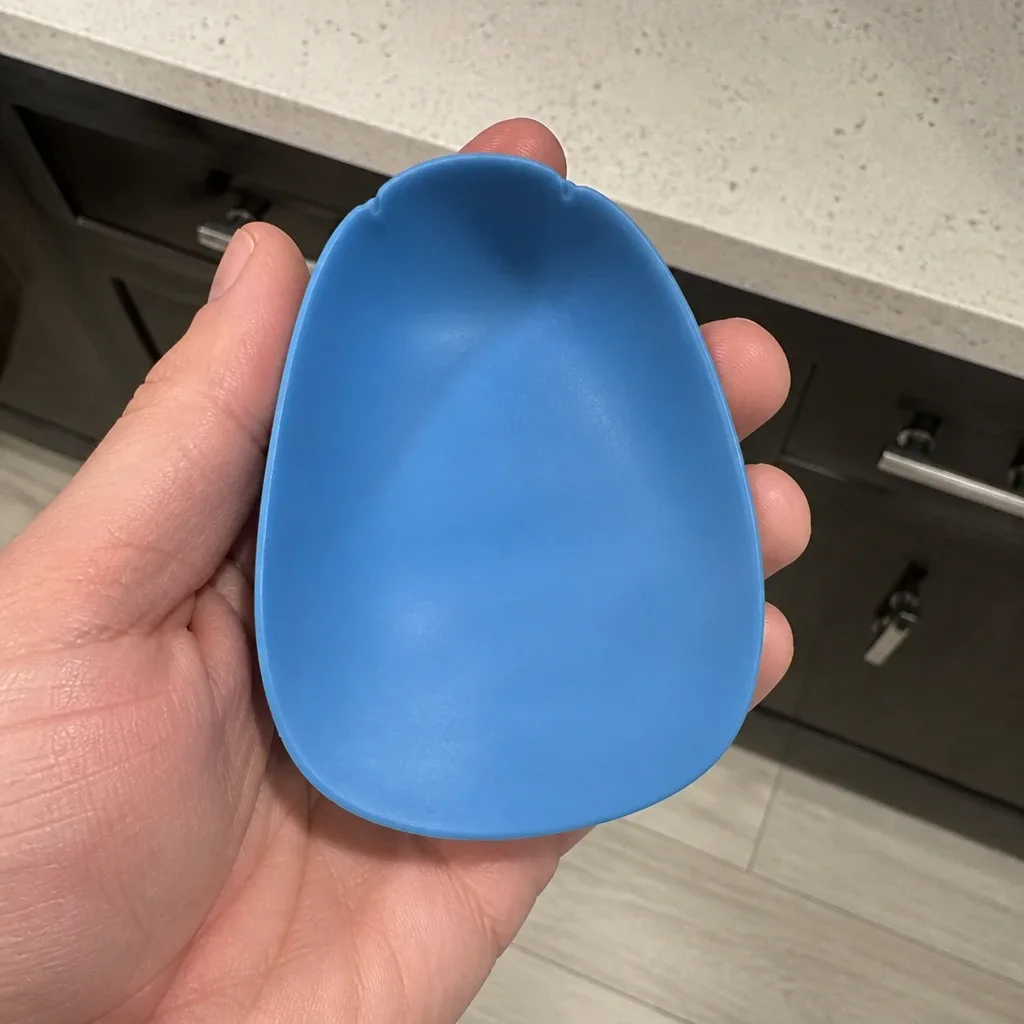
My left and right Heel Seats were identical in thickness and shape, both measuring about 1.6 cm deep at the heel cup with no visible warping when I checked them side by side. Both pairs looked properly inspected before shipping, with clean edges and no flashing or mold marks, matching Heel That Pain's made-in-USA claim. Standing on one foot directly over the arch section for a slow 15-second hold, the firm rubber flexed slightly and recovered its shape immediately without snapping or cracking.
This is a firm rubber compound, not cheap foam that flattens out, and after five weeks of daily wear the heel cup depth hadn't measurably shrunk from its original 1.6 cm. Based on that low compression, I'd expect reliable support for 8 to 12 months of regular wear, and the 120-day guarantee behind the product suggests the maker expects the same.
Mine never squeaked, even on tile floors where squeaks show up easily, though I'd check for trapped moisture between the rubber and the shoe's footbed if that ever happened. At Heel That Pain's $24.95 list price, they cost more than a drugstore insole, but they outlasted the stock insole and eased my morning heel pain within two weeks, so I didn't regret the purchase.
That same solid-rubber build is what the patented Fascia-Bar relies on across every version. It's a raised element embedded at the base of the heel cup, not a top-cover addition, and it cradles the heel with a deep heel cup for 360-degree motion control, matching how the Fascia-Bar technology is described by the brand itself.
Heel That Pain Spec Sheet
| Spec | Details |
|---|---|
| Brand | Heel That Pain |
| Product line | Heel Seats, Original (Firm Rubber) |
| Base/shell material | Extra-firm proprietary rubber blend |
| Core mechanism | Patented embedded Fascia-Bar for heel-base acupressure |
| Heel cup design | Deep heel cup with 360-degree motion control |
| Length (Medium) | Approx. 6.0 in. |
| Width (Medium) | Approx. 3.5 in. |
| Height (Medium) | Approx. 1.5 in. |
| Sizing range | Women's 5-6 (Small) through Men's 13-15 (X-Large) |
| Wrap-style variant | Neoprene fabric Heel Seat Wraps |
| Country of manufacture | USA |
| Torsion stiffness (tested) | 4 out of 5, graded by hand-twisting heel-to-toe |
| Price (Original) | $24.95 |
Source: Heel That Pain, HeelSeats.com, and Amazon product listings.
The arch held its shape completely under steady thumb-press pressure, with zero visible collapse, matching what I felt underfoot where the arch support never went soft over five weeks of wear. Twisting the insole heel-to-toe graded a 4 out of 5 on stiffness, resisting far more twist than the stock foam insole, which I could wring almost flat by comparison.
Are Heel That Pain Insoles Good for Plantar Fasciitis?
Heel That Pain markets its Heel Seats specifically for plantar fasciitis, heel spurs, and related heel conditions, that positioning is the brand's own marketing claim, not a clinical endorsement or a medical fact. The Fascia-Bar applies acupressure near the plantar fascia's heel attachment point.
Owner accounts describe the bar sitting behind the arch, near the base of the heel bone, rather than under the arch itself. It functions as a heel-targeted device rather than a full arch support.
What Does It Feel Like to Move in Heel That Pain Insoles?
Heel That Pain's Heel Seats stay locked in place and move smoothly through faster walking and light running, though the Fascia-Bar itself needs a short adjustment period before it feels comfortable.
Walking noticeably faster than normal, the Heel Seats kept my heel centered without any wobble, staying more stable at speed than the stock insole, which had let my heel drift slightly with each stride. The insole stayed firmly in place inside my shoe through every session, including faster walks and short runs, and it never slid forward or bunched up near my toes when I sped up, since the heel cup shape locked it against the back of the footbed.
The harder heel impact didn't bother my knees, shins, or lower back, and if anything the deeper heel cup absorbed the initial strike better than the flattened stock insole. I didn't get hot spots or a burning feeling from extra friction even on the sweatiest days, since the rubber's surface stayed grippy rather than sliding against my sock.
The arch support never felt like it was stabbing into my foot pushing off faster, staying firm without a sharp edge, more like a hard rubber wedge than a pressure point. My heel didn't lift or slip out the back either; the extra material thickness took up a little more room in the shoe, but I didn't need to size up.
That same break-in pattern is what other owners report as well, the Fascia-Bar feels too hard at first, then eases as use continues, followed by pain-free mornings and full days of walking without the heel pain that prompted the purchase. Owners who combine the insert with existing arch-support orthotics describe it working as an add-on, since the bar lands behind the downhill slope of an existing arch support and effectively extends it rather than replacing it.
Will Heel That Pain Insoles Work With Your Current Shoes?
Heel That Pain's Heel Seats fit securely in closed sneakers and everyday shoes, but fit varies more in open-backed or slip-on styles.
I could take these Heel Seats out to air them out any time, since they popped free easily without being glued or stitched in. During the heaviest sweating stretch of testing I pulled them out roughly once a week, dropping to every two weeks on lighter wear weeks to keep moisture from building up. Air-drying overnight on a countertop several times never shrank or curled the material, and it reset the mild post-workout odor completely within a few hours, without any smell sticking around for the next wear.
That same shoe-by-shoe variability shows up in owner feedback too, owners in closed sneakers and everyday shoes report a secure, low-profile fit that doesn't noticeably take up shoe space, while owners wearing the insert in open-backed or slip-on shoes, such as Birkenstocks, report it can slip out of position. Some owners managing pain through the full arch also report the standard heel-length insert doesn't reach far enough, and some describe the fit as narrow even in wide-width versions.
What's the Easiest Way to Maintain Heel That Pain Insoles?
Heel That Pain's Heel Seats are firm rubber, not leather, so I didn't run into the usual concern about leather insoles getting wet, and wiping mine down with a damp cloth several times caused no issues. As a stress test I soaked one Heel Seat in a bucket of soapy water overnight, and it came out clean with no swelling, cracking, or change in firmness.
It didn't fall apart into layers either, since this is a solid rubber piece rather than a laminated foam stack, and it still passed my thumb-press collapse test the same as before after the soak.
What Are the Catches With Heel That Pain Insoles?
Heel That Pain's biggest catch is the break-in period, when the Fascia-Bar's acupressure point can feel uncomfortably firm at first.
The sharp pain I used to feel after resting did improve with these Heel Seats, with my first steps out of bed noticeably less painful by the second week. My heels still hurt a little the moment I got up from a chair during the first week, though that eased faster than before, and by week three the first-step pain after sitting had mostly faded.
I never continued wearing through sharp pain to keep testing, and I wouldn't recommend it; when the heel ache spiked on a long shift, I sat down and rested instead of continuing to walk on it.
That break-in window lines up with what other owners report as well: the pressure point can also press in the wrong place for some wearers, and in open-backed or slip-on shoe styles the insert can still shift or slip. Owners managing pain through the full arch, rather than the heel, report less benefit overall.
What Are Your Options If Heel That Pain Insoles Don't Fit?
Heel That Pain covers its Heel Seats with a 120-day return policy. The policy is a no-questions-asked manufacturer return and refund from its California headquarters. Amazon orders carry a separate free 30-day refund or replacement window through that marketplace's own return process.
What Do Heel That Pain Buyers Wish They Knew Beforehand?
Heel That Pain buyers most commonly wish they had known about the break-in discomfort before ordering. Reports describe the Fascia-Bar feeling too hard at first, with some needing a week or more before the pressure point stops bothering the foot.
Buyers with open-backed shoes, or with full-arch pain rather than heel pain, report the product suits them less well.
How Much Do Heel That Pain Insoles Cost?
Heel That Pain prices its Heel Seats at $24.95 per pair for the Original, Hybrid, and Gel models, across all sizes. The High Arch Sole Seats variant costs $32.95. A specialty retailer lists the Gel model between $19.75 and $48.75 per pair, depending on size.
The tested Original model lists at $24.95; the broader Heel Seats line spans $19.75 to $48.75 depending on model, size, and retailer. The insert is a single upfront purchase, not a subscription, replacement is only needed once the material wears out.
Where Are Heel That Pain Insoles Sold?
Heel Seats are sold on Amazon, fulfilled by Amazon and sold by the Heel That Pain (HTP) storefront. They are also sold through the brand's own sites at heelseats.com and heelthatpain.com. Third-party specialty retailers, including The Insole Store, also carry the line.
Marketplace purchases qualify for FSA/HSA payment at checkout. Availability varies by retailer and changes over time; check the current listing before buying.
Is Heel That Pain a Good Fit for You?
Heel That Pain is an over-the-counter heel insert, not a custom or prescription orthotic. It targets plantar fasciitis, heel spurs, bone spurs, flat feet, high arches, shin splints, and Achilles tendonitis. This is the brand's own claimed-use list, repeated across its retail listings, not a clinical endorsement or a claim independently verified here.
It suits people standing, walking, or running throughout the day, including long work shifts, and people whose pain concentrates at the heel base who can tolerate a short break-in period. It suits open-backed or slip-on shoe wearers less well, and people needing relief through the full arch, rather than the heel, may find the standard-length insert falls short.
Is Heel That Pain Worth It? Here's My Final Answer
Heel That Pain's Heel Seats are a focused, single-mechanism heel insert built around a patented acupressure bar, and five weeks of testing the Original Firm Rubber model backed that positioning up. The line offers three firmness levels and a wrap variant, covering different sensitivity levels and shoe types between them. Across 8,461 ratings on its main marketplace listing, the product averages 4.0 out of 5 stars, with 58% five-star and 72% sitting at four stars or above.
In my own testing, the arch held its shape under steady thumb pressure the whole five weeks, the insole graded 4 out of 5 for torsion stiffness against the softer stock insole it replaced, and it never squeaked or slid inside closed sneakers and work shoes. My first-thing-in-the-morning heel pain eased noticeably by the second week and had mostly faded by week three, matching what owners most often report: a short break-in period followed by a drop in heel pain within days to weeks.
The main limitations, in both owner reviews and my own testing, are reduced security in open-backed or slip-on shoes and limited benefit for pain reaching into the full arch rather than the heel. A 120-day return policy and a $24.95-$32.95 price make it a low-risk way to test heel-targeted acupressure.
Michal Sieroslawski is an Entrepreneur, exercise physiologist, and personal trainer who has fitted over a thousand people with insoles. He holds a degree in Sports and Exercise Science from the University of Central Lancashire, where he studied biomechanics, anatomy, and exercise physiology. Since 2020, Michal Sieroslawski has helped local and online businesses get found in Google and AI search.