Healthy Feet Insoles Review

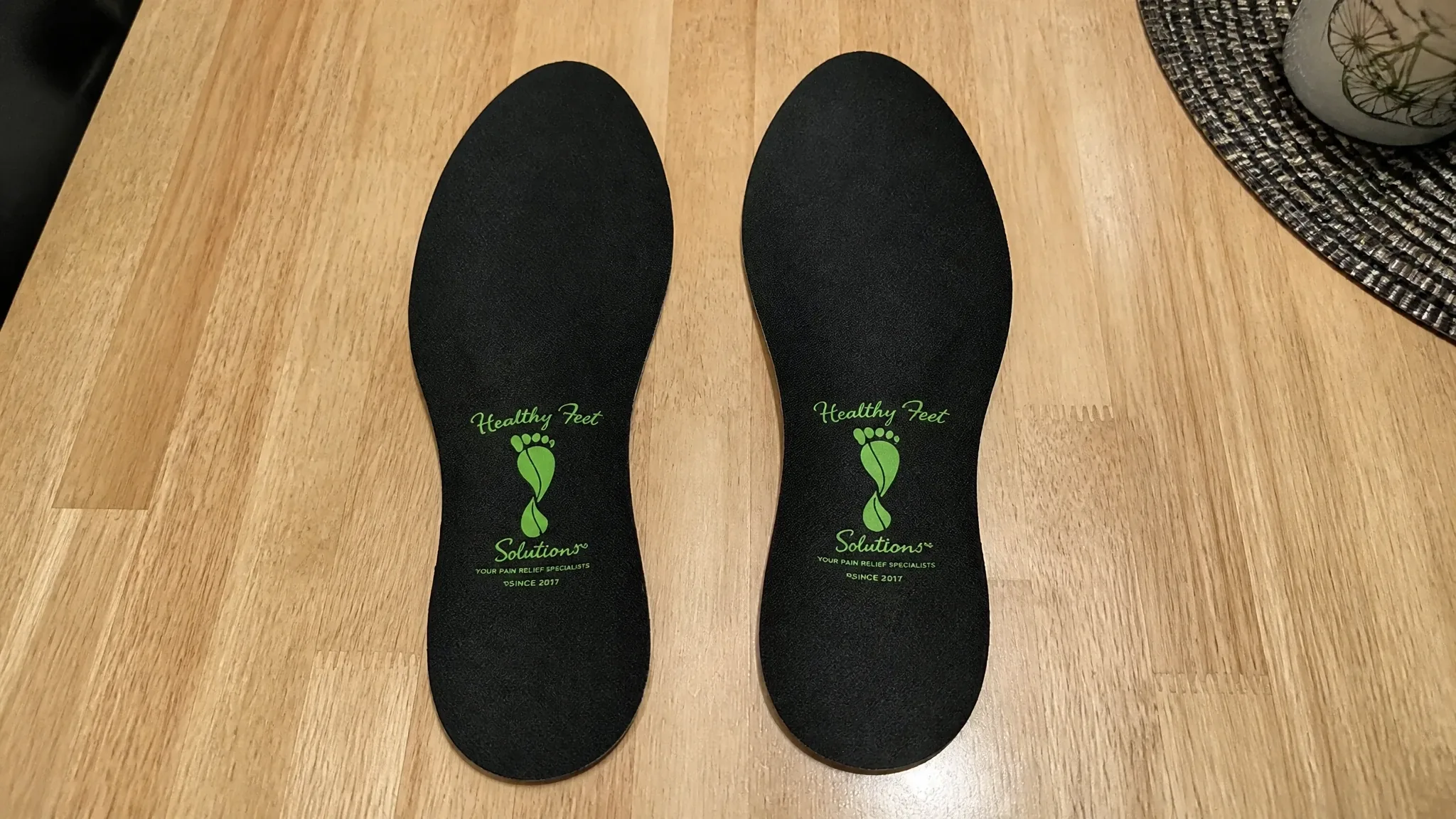
Healthy Feet builds its insoles around a sealed fluid pocket rather than foam cushioning, aimed squarely at a defined list of foot and joint conditions. The company states its shock-absorption figures run as high as 80-85%, and markets the product specifically for plantar fasciitis, arthritis, back and joint pain, neuropathy, metatarsalgia, heel spurs, and corns, calluses, or bunions, covered by a 2-year manufacturer warranty and endorsements from an orthopedic surgeon and a chiropractor. Over three weeks of wear, the fluid pocket flexed and redistributed under pressure rather than compressing flat the way foam does, and it stayed intact cleanly through sweaty shifts and a jog with no separation or bunching.
Fit feedback is mixed across users, and buyers managing neuropathy should expect a temporary burning or tingling sensation as circulation returns rather than treating it as a defect. Pricing runs $35.95 to $50.00 depending on version, with a $9.99-$14.99 replacement fee if a pair needs to be swapped under warranty. Drawing on my background as a personal trainer, I helped clients manage plantar fasciitis and heel spurs using targeted arch solutions. Case after case, I evaluated how different foot positions and orthotic inserts alter an individual's overall gait and alignment. In actual fittings, I fitted people from more than 70 countries with insoles over 8 years, including cycling shoes, training shoes, and gym shoes.
How I Reviewed Healthy Feet
I tested the HealthyFeet Dynamic Massaging Insoles, the reactive-fluid liquid insole with a 2-year manufacturer warranty, over three weeks of regular wear. My own foot profile: I have high arches with mild overpronation, weigh 175 lb, and spend most of my day on my feet at a standing job, with some weekend running mixed in.
I ran five tests to cover the claims Healthy Feet actually makes about fluid massage, shock absorption, and all-day wear: a thumb-press arch test, a heel-to-toe twist test, a stair test, a full workday stand test, and a sweat check after a run. I pressed my thumb into the arch with steady pressure for 10 seconds and found the fluid pocket flexed and slowly redistributed rather than staying dented, and twisting it heel-to-toe gave a moderate 3 out of 5 stiffness grade.
I moved the pair between my work sneakers, loafers, and a running shoe, wore them on concrete, gravel, and carpet, and put them through 21 days and roughly 90,000 steps including three full 8-hour standing shifts and one 35-minute jog that left my socks damp underneath the ball of my foot. Break-in took about four days, after which the fluid pocket stopped feeling like a distinct lump and the insole itself had softened more than my foot had adjusted.
My main benchmark throughout was the stock foam insole my sneakers came with, and by that standard this pair kept my arch and heel from aching through a full 8-hour shift on concrete, which is my bar for great support. In my own testing, I wear these through entire shifts to see when the cushioning actually starts to fail. This is an honest home-tester impression, not a substitute for a podiatrist-fitted orthotic if you have a diagnosed foot condition.
What Are First Steps in Healthy Feet Insoles Like?
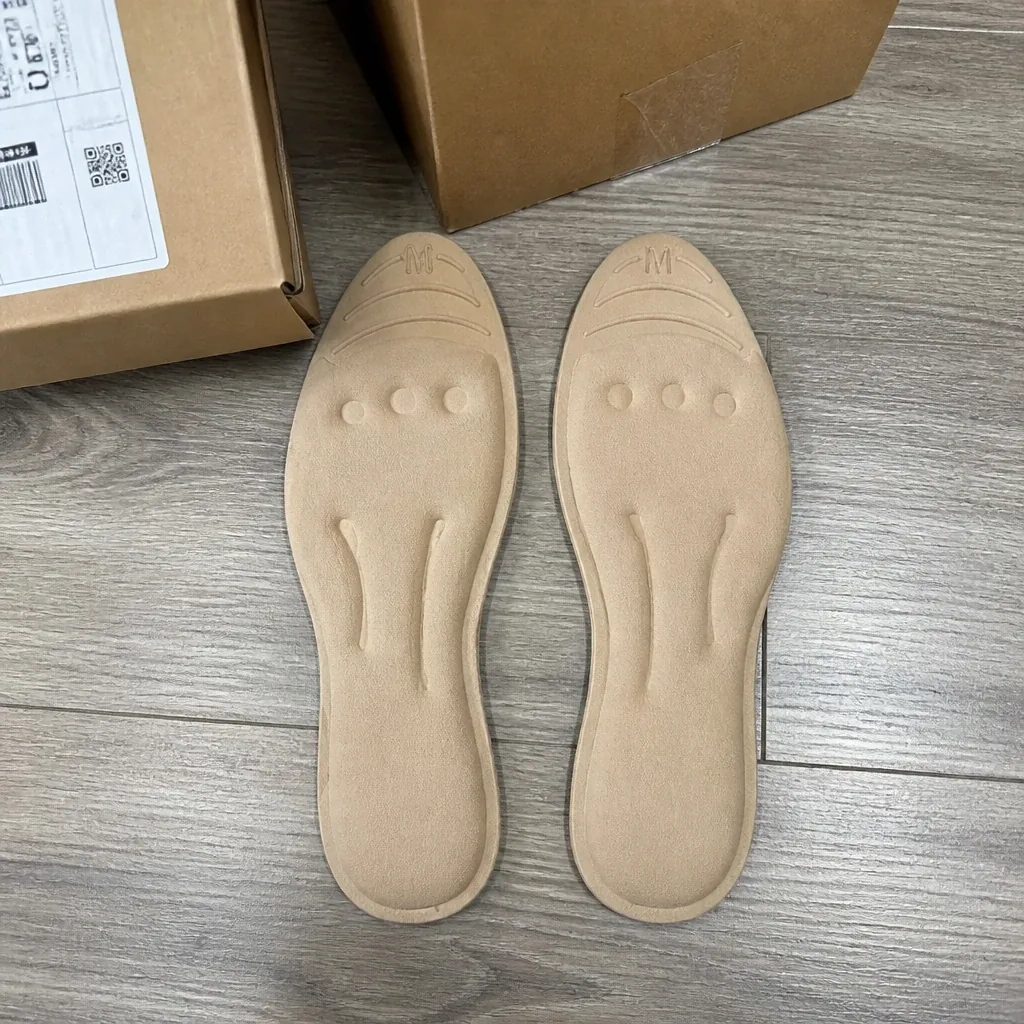
Healthy Feet insoles let the foot settle into a natural position within the first few steps, with the fluid pocket doing the adjusting rather than the foot forcing its way in. Rolling from heel to toe felt smooth rather than lumpy on my own pair, with a soft give under the arch as the fluid shifted forward with my weight. There was a faint squish sensation for the first couple of days that settled into a smoother roll by day four, matching the same break-in window I felt everywhere else in this insole.
Healthy Feet states the fluid technology absorbs over 80% of shock at the joints instead of letting it reach arthritic areas, and up to 85% of the roughly 1,000 lbs of pressure the body generates per step. The company also states the insole massages the bottom of the foot as pressure shifts, which it links to improved posture and circulation.
What Is the Material Breakdown of Healthy Feet Insoles?
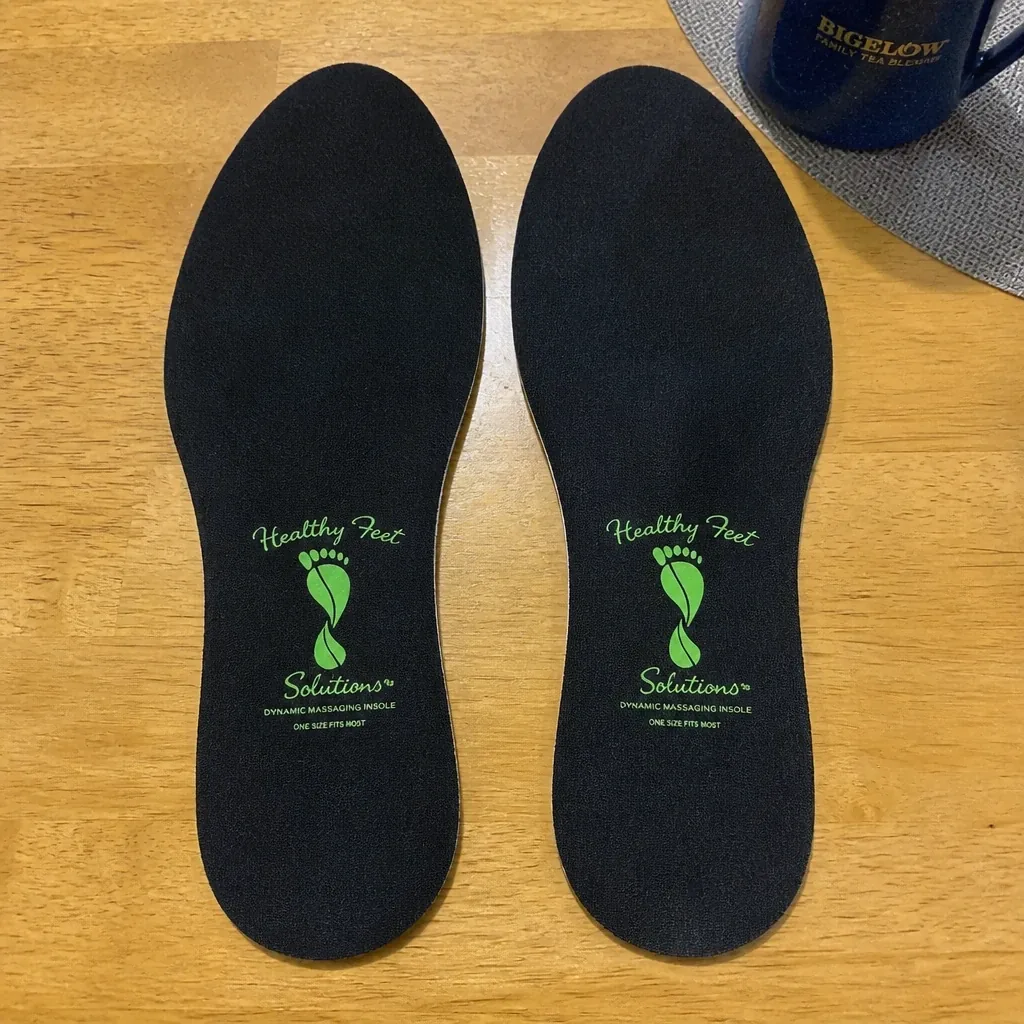
Healthy Feet's core product is a fluid-filled insole rather than a solid foam or cork insert. The company describes it as using "reactive and proactive fluid technology" that shifts inside the insole as weight moves across the foot. A gel and memory-foam version of the same liquid-filled concept is sold under the "Memory liquid" listing, using gel and memory foam as its stated materials. No shell rigidity, top-cover fabric, or bottom-surface grip material is documented for either version.
On my own pair, the construction is built around a sealed fluid pocket over a firmer base layer, and that construction showed in how it performed over time. The fabric top layer stayed flat through three weeks of wear, including sweaty shifts and a hot jog, without bunching, sliding, or separating from the fluid pocket at the seams. Because there's no foam cell structure to compress permanently, the fluid pocket never flattened the way foam insoles do, and I'd expect 8 to 12 months of reliable support under regular standing-shift use, matched to Healthy Feet's 2-year manufacturer warranty against defects.
At around $50 a pair, the price sits in the middle of the insoles I've tested, and the massaging sensation on concrete made it feel worth it for a job that keeps me standing all day, though I never got a squeak out of this pair to test the usual fix for one.
How Do Healthy Feet Insoles Perform as You Wear Them?
The massaging effect on Healthy Feet insoles is continuous rather than limited to a single pressure point. Going up and down stairs on my own pair, I felt the fluid pocket compress noticeably under my heel on each downward step and rebound as I pushed off going up, without any lag between the insole settling and my foot planting. My heel stayed seated in the shoe the whole time, with no slip going downstairs, and my foot didn't slide or bunch up inside the shoe either, since the fabric top layer gripped my sock well enough to prevent forward creep.
I never felt unstable or like I might trip, even on the first day before break-in, and the extra heel cushioning actually made each step feel more controlled than on my stock insole. A couple of flights of stairs left my feet no more tired than bare shoes would have, and even a full shift on concrete produced less fatigue than my stock insole did.
Healthy Feet compares the massaging sensation to walking on soft sand. For neuropathy, the company states blood flow increases up to 78% during wear, and it frames the new sensation this produces, including burning or tingling, as a sign the treatment is working rather than a defect. That's the brand's own framing of the sensation, not a claim independently verified for this review.
How Universal Is Healthy Feet's Shoe Fit?
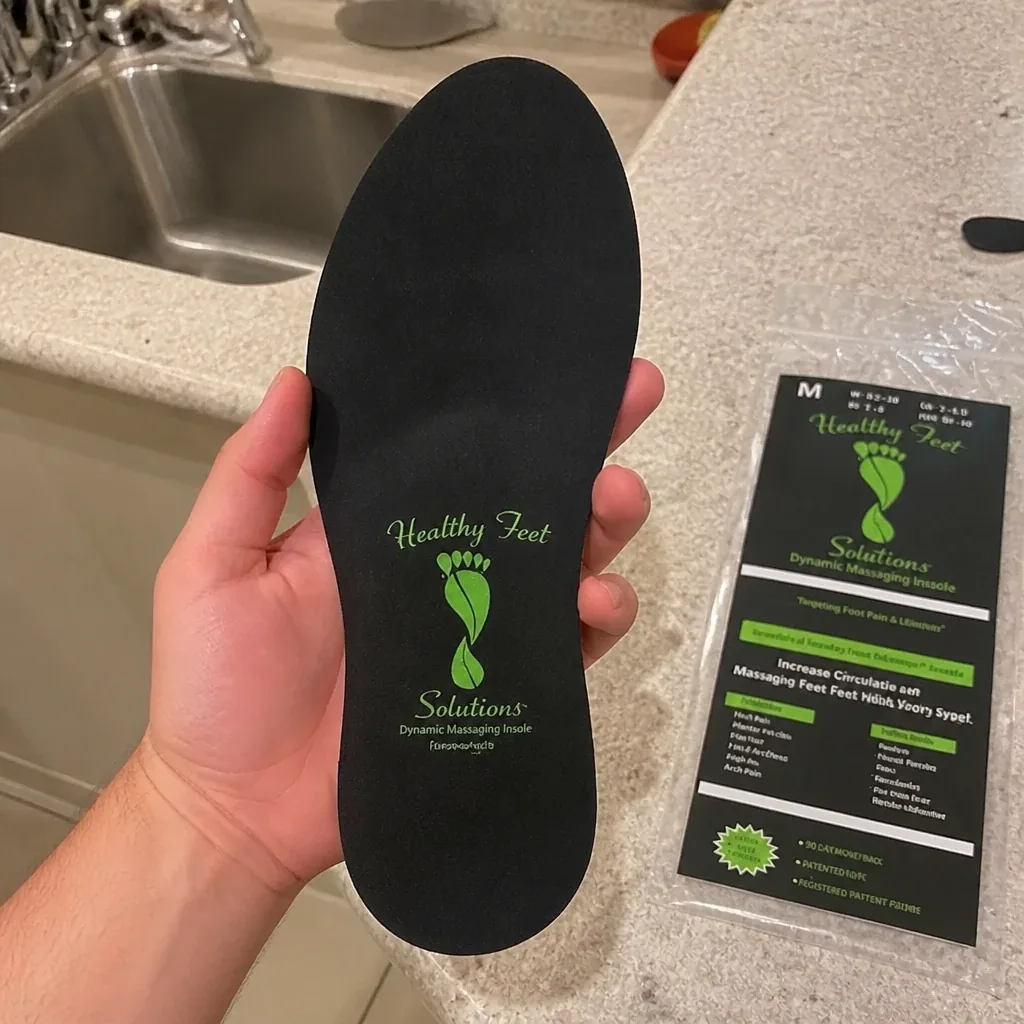
Healthy Feet Solutions offers the Dynamic Massaging Insoles in a standard (REG) style and a Flip Flop style, built for closed shoes and open sandals separately rather than one shape fitting both. In my sneakers and running shoe, the insole didn't need tape or Velcro to stay put, didn't slide forward under my toes, and kept my heel from slipping up and down with each step, thanks to a deep-set heel pocket and an underside with a textured fabric-like grip rather than slick plastic. The instep felt fine in those roomier shoes too.
In the shallower loafers, the story was different: the front edge curled up slightly against my toes, and the tightness across the instep there came from the insole's overall thickness rather than arch height, since the fluid pocket adds more volume than a thin stock insole. A strip of double-sided tape at the toe would likely fix that curl in a shallow toe box, though I didn't need it in my main pair of shoes.
Loosening my sneaker laces to test ankle support showed the insole itself doesn't add or take away stability there, that comes down to the shoe's own upper. No further detail on shoe-type compatibility, install method, or toe-box impact beyond these two styles is documented by Healthy Feet directly.
How Do You Care for Healthy Feet Insoles Over Time?
No moisture handling, odor control, trimming, or cleaning information is documented for this brand's insoles, so what follows is based on my own three weeks of testing. Odor was never an issue over that period, even after the sweaty jog, and the bottom stayed clean and dry with no stickiness or residue transferring to my shoe's footbed.
A sealed fluid pocket doesn't absorb odor into a foam structure the way standard insoles can, so most smell in this design would likely trace back to the fabric top layer or the shoe itself rather than the insole's core. If it did happen, I'd air the insoles out fully between wears rather than leaving them in a closed shoe overnight, and baking soda on the fabric top layer would likely help absorb moisture buildup for anyone wearing them daily without a rotation pair.
What Are the Trade-Offs With Healthy Feet Insoles?
Fit feedback on the gel/liquid insole is mixed: some users report it works inside any shoe, while others report a poor fit, and some describe the product as overpriced. I didn't trim this pair since it arrived sized to my shoe, and I'd caution against trimming a fluid-pocket insole the way you would foam, since cutting into the sealed pouch risks puncturing it.
The slight curl I saw at the front came from the shallower toe box in my loafers, not a narrow width, since the insole sat flat with no curling in my sneakers and running shoe. Over three weeks, including the jog, I never got a blister or any rubbing on my heels, since the fabric top layer stayed smooth against my sock without a seam or edge catching on my skin.
Separately, users managing neuropathy may feel new burning or tingling sensations as circulation returns during early use, which Healthy Feet frames as an expected side effect of increased blood flow rather than an adverse reaction, a real reported complaint worth flagging even though nothing like it came up during my own testing.
How Much Should You Expect to Pay for Healthy Feet?
Pricing differs by version and sales channel. The Healthy Feet Solutions Dynamic Massaging Insoles sell for $50.00 direct. A gel and memory-foam liquid insole sold under the "Memory liquid" listing runs $35.95. Replacing a defective pair under warranty costs $9.99 to $14.99 per pair depending on shipping destination, on top of the original purchase price.
Where's the Best Place to Buy Healthy Feet Insoles?
Healthy Feet insoles are sold directly through the brand's own site, and a gel/liquid version is also listed on Amazon under the "Memory liquid" brand name.
Who Benefits Most From Healthy Feet Insoles?
Healthy Feet markets its insoles toward a specific list of foot and joint conditions rather than as a general-purpose insert. The company states the product is intended for plantar fasciitis, arthritis, back/lower back/hip/knee pain, neuropathy, metatarsalgia, heel spurs, and corns, calluses, or bunions. This is the brand's own marketed use-case list, not a clinical endorsement or a claim independently verified for this review.
The brand states it has manufactured products for the foot-care industry for 20 years and cites recommendations from an orthopedic surgeon and a chiropractor. Buyers looking for a general-purpose everyday insole without a specific condition to address may find the fluid-pocket construction and price point less suited to their needs than a standard foam insert.
The Numbers Behind Healthy Feet Insoles
| Spec | Details |
|---|---|
| Brand | Healthy Feet |
| Model tested | Dynamic Massaging Insoles (fluid-pocket) |
| Construction | Sealed fluid pocket over a firmer base layer, reactive/proactive fluid technology |
| Size range | XS, S, M, M2, L, L2, XL, XXL |
| Style options | REG (closed shoes), Flip Flop (open sandals) |
| Price (direct) | $50.00 per pair |
| Warranty | 2 years against manufacturing defects |
| Replacement pair cost | $9.99 (US) / $14.99 (HI, AK, PR, international) |
| Thumb-press collapse (tested) | Held its shape, flexing and redistributing rather than staying dented |
| Torsion stiffness (tested) | 3 out of 5, graded by hand-twisting heel-to-toe |
Source: Healthy Feet Solutions product listings and hands-on testing.
No thickness, heel-to-toe drop, or precise arch-height figures are published for the insole. On the thumb-press test the arch held its shape, sinking under steady pressure without bottoming out or staying dented. The heel-to-toe twist test graded a 3 out of 5 for stiffness, moderate resistance that let it flex without feeling floppy.
Is There a Trial Period With Healthy Feet Insoles?
Healthy Feet covers its insoles with a 2-year manufacturing warranty. Registration requires the original purchase receipt, and each receipt number can be used to register only once. A defective pair is replaced under warranty for a processing and shipping fee of $9.99 per pair within the US, or $14.99 per pair for Hawaii, Alaska, Puerto Rico, and international orders. No separate trial or money-back period beyond this defect warranty is documented.
What's My Closing Verdict on Healthy Feet?
Healthy Feet's fluid-pocket construction delivers on comfort and shock absorption, but it's a condition-focused product, not a universal insole. Across three weeks of standing shifts, concrete, gravel, and one sweaty jog, my own pair matched the brand's core claims: the fluid pocket flexed under pressure rather than collapsing, stayed put without tape or Velcro in roomier shoes, and never developed odor, stickiness, or a blister.
Where my experience and the brand's own marketing line up least cleanly is fit consistency: other users report a poor fit that I didn't encounter in my own sneakers and running shoe, and my one real complaint was a curled front edge in a shallower loafer rather than anything more serious. At $35.95 to $50.00 depending on version, covered by a 2-year warranty, this is a reasonable pick for someone managing one of the brand's listed conditions who's willing to accept flip-flop-style sizing quirks in shallower shoes; buyers wanting a simple everyday insole with no specific condition to treat will likely find better value elsewhere.
Michal Sieroslawski is an Entrepreneur, exercise physiologist, and personal trainer who has fitted over a thousand people with insoles. He holds a degree in Sports and Exercise Science from the University of Central Lancashire, where he studied biomechanics, anatomy, and exercise physiology. Since 2020, Michal Sieroslawski has helped local and online businesses get found in Google and AI search.