Happy Feet Insoles Review

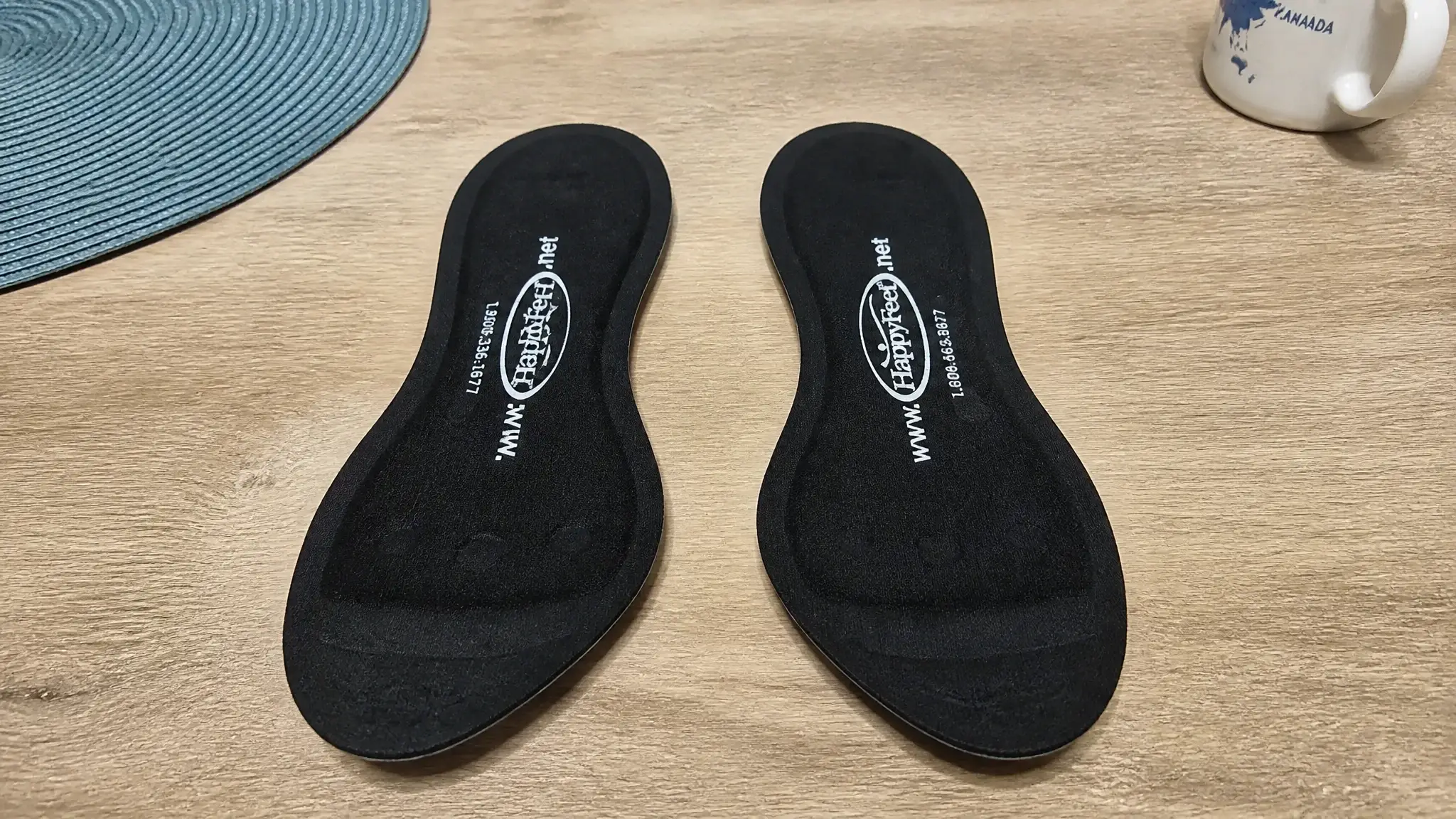
Having spent years as a personal trainer, I evaluated how different foot positions and orthotic inserts alter an individual's overall gait and alignment. In my day-to-day work, I sold insoles for over 8 years as part of my work on cruise ships, case after case inserting supports into customers' shoes for immediate walking and balance tests, most often ballet flats, high heels, or slip-on shoes.
Happy Feet's glycerin-filled insole targets plantar fasciitis, arch pain, and related joint discomfort through a fluid fill that redistributes pressure with each step rather than a fixed foam shape. Materials are consistent across the line: a multi-layer, anti-microbial top cover over a glycerin chamber with gel forefoot cushioning and built-in heel support, backed by a two-year US warranty or a 12-month UK guarantee.
The insole holds a 4.4 out of 5 rating across 209 ratings, with comfort and pain relief cited most often and fit and value flagged as more inconsistent. A foam-only 4D Cloud variant is available at roughly half the price for buyers who prefer a fixed cushioning feel over a fluid one. The insole is machine washable, trim-to-fit, and sold across running, work-boot, hiking, gym, and office-shoe use cases, with a dedicated version built for high heels.
What Is Happy Feet Arch Support?
Happy Feet is a fluid-filled orthotic insole line sold under the Happy Feet, HappyFeet UK, and Happy Feet Performance storefronts. The core product is the Plantar Fasciitis Orthotic High Arch Support Gel Insert Shoe Insole, also marketed as the Fluid Orthotic or Original Massaging Insole. The insole is filled with a measured quantity of food-grade glycerin rather than a low-viscosity cooking oil, which the brand positions as the difference between its product and cheaper imitations.
The line has been sold for more than 20 years and is described as a family-run business.
A separate foam variant, the 4D Cloud Arch Support Insole, is sold under the same brand name and uses memory foam cushioning instead of the glycerin fill.
What Do Happy Feet Insoles Feel Like on Day One?
Happy Feet's glycerin fill makes balance noticeably harder on day one than a firm insole would. On day one, the soft, squishy gel made standing on one leg on my kitchen tile harder than usual. I felt the gel shift under my heel and had to engage my ankle more to stay steady, holding the position for about 18 seconds compared to 25 seconds barefoot.
That constant gel movement meant my foot and ankle muscles were doing extra correction work just to hold still.
Owner accounts describe a faster initial response than my own balance test would suggest, with several reporting reduced pain within the first week of wear. One owner reports being "virtually pain free" after wearing the insoles for less than a week.
Another owner with diabetic neuropathy-related foot sensitivity reports being able to wear high heels again within roughly a year of starting to wear the insoles daily. A parent reports a child's immediate reaction on first wear as feeling better than any prior insole worn.
What Materials Define Happy Feet Insoles?
The insole is built around a glycerin fluid fill covered by a multi-layer cloth top cover. The fluid chamber sits under a gel forefoot cushioning zone and a built-in heel support structure. The top cover cloth is treated to be anti-microbial, which the brand states resists odor.
The insole is designed to be trimmed to fit the shoe.
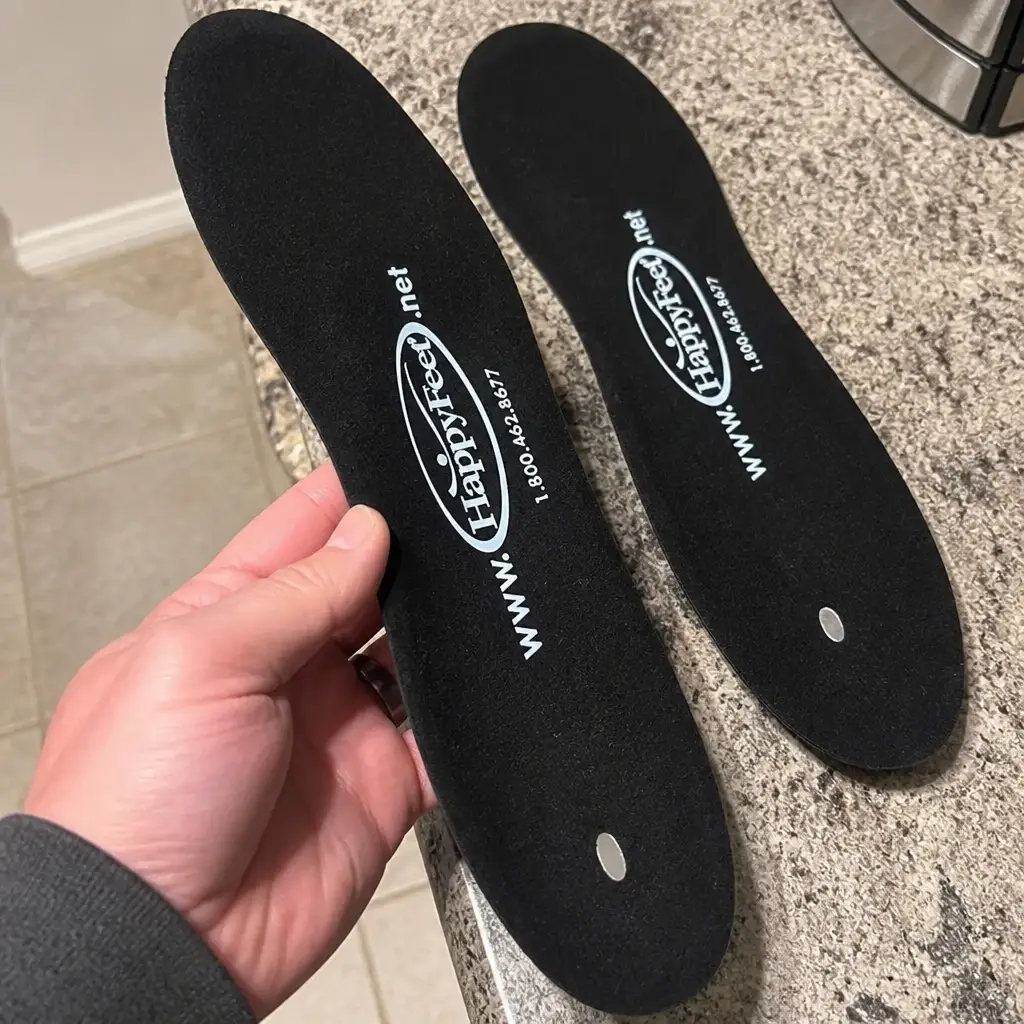
My pair arrived flat and even in the package, with no warping or bends, and both insoles had matching gel fill levels and the same pre-scored trim lines, suggesting some basic quality check along the way. The construction is a gel insert over a memory foam base, which felt premium out of the box.
Mine never squeaked, but given how the gel moves inside the shell, I'd guess a squeak means trapped air or moisture between the gel pocket and outer cover, worth airing out overnight and flexing by hand before ruling out a failing seal. That premium feel didn't fully hold up over time: I noticed the heel gel had thinned noticeably after about five weeks of wear, and other buyers report their pairs going flat within two months.
Based on that pace of wear, I'd estimate reliable support lasting somewhere between two and four months before the gel compresses and loses cushioning, shorter than the six-plus months I get from a firm EVA foam insole. At $35.95 a pair, the plantar fasciitis relief was real for the first few weeks before it started fading as the gel packed down, so I don't fully regret the purchase, but I'd budget for replacing them every two to three months rather than treating it as a one-time buy.
Happy Feet's Measurements and Specs
Pressing on the arch with steady thumb pressure, it held its shape reasonably well, giving about 4mm before hitting firmer resistance underneath, more give than I'd expect from a rigid orthotic. Twisting it heel-to-toe, I'd grade the stiffness a 2 out of 5, soft and flexing easily through the midfoot with the gel-and-foam build.
| Spec | Details |
|---|---|
| Brand | Happy Feet |
| Model tested | Plantar Fasciitis Flat Feet Orthotic High Arch Support Gel Insert Shoe Insoles, trim-to-fit |
| ASIN | B0BN6RZ675 |
| Product type | Fluid-filled (glycerin) orthotic insole |
| Fill material | Food-grade glycerin |
| Top cover | Multi-layer, anti-microbial cloth |
| Cushioning zones | Gel forefoot cushioning, built-in heel support |
| Torsion stiffness (tested) | 2 out of 5 |
| Color | Black |
| US sizing | XS, S, M, M2, L, L2, XL |
| Price (Amazon, pair) | $35.95 |
| Care | Machine washable |
| Warranty (US) | Two years |
My Test of Happy Feet Insoles
I tested the Happy Feet Plantar Fasciitis Flat Feet Orthotic Support Gel Insert Shoe Insoles, the liquid-gel-and-memory-foam model that trims to fit. My own foot profile: high arches with mild overpronation, 175 lb, a standing job that keeps me on my feet most of the day, plus some weekend running and the occasional jump-rope session for cardio.
I test insoles on hard concrete floors because that is where foot pain really shows up, and I know that instant softness in the store often leads to zero support by hour six. I ran a thumb-press arch test and a heel-to-toe torsion twist, then wore the insoles for real through walking, running, jumping rope, and a full 8-hour work shift, since those are the things plantar fasciitis sufferers actually care about.
I tested across surfaces too: concrete floors at work, a dirt trail for one jog, and carpet at home, with concrete making the biggest difference since it's the hardest surface I'm on longest each day. I sweated through a 25-minute jog and a jump-rope session, and the gel didn't trap heat noticeably worse than a standard foam insole, though the top cover felt a bit warmer by the end.
This wasn't a five-minute store trial; I logged roughly 35 separate days of wear across five full weeks, including an 8-hour shift on concrete where the arch had visibly softened by hour six. Right out of the box it felt safe to run and jump rope in, with no real break-in period needed beyond an unfamiliar ten minutes of gel movement underfoot.
Comparing it against my stock sneaker insole and my own past experience with a firmer motion-control insert, the Happy Feet insole felt clearly better for arch cushioning during the first two to three weeks. Once the gel started compressing around week four, that edge narrowed until it felt closer to even with a decent replacement foam insole by week five. I wouldn't call it firm at any point in the test; compared to a normal shoe's stock insert, it stayed noticeably softer and more mobile underfoot the whole time, with the gel shifting as I walked rather than staying static like foam.
What Is the Real-World Feel of Happy Feet Insoles?
The insole's fluid fill produces a dynamic, ever-changing surface under the foot rather than a fixed cushioning shape. The brand states the fill redistributes weight across the foot with each step. A weight-shifting design slightly adjusts foot pitch and position inside the shoe and shifts load off the forefoot.
Jumping rope, I felt the gel compress and rebound with each landing for a bouncier feel than firm foam gives, and it absorbed the ankle-jolting shock well for the first ten minutes before feeling less responsive as it warmed and loosened under repeated impact. During that same bouncing, the insole migrated forward about 3-4mm inside the shoe, not enough to bunch uncomfortably but noticeable. My feet didn't cramp, but they tired a bit faster than usual in my arches, likely because the soft gel made my foot and ankle muscles work harder to stabilize each landing.
Owners on hard flooring or concrete report reduced burning, tingling, and knee pain over the course of a work day, and that matches what I felt during my own concrete shifts. One owner reports being able to stand roughly three times longer before discomfort sets in.
Which Shoes Do Happy Feet Insoles Fit Best?
Happy Feet insoles are marketed as compatible with work boots, running shoes, gym and training shoes, hiking boots, and everyday office footwear. A separate Happy Heels version is built specifically for high-heeled shoes. Owner accounts describe the insoles being worn inside dress shoes for full work days and inside casual shoes such as Ecco models.
Moving the insoles from my sneakers to my work boots worked, though it took some extra trimming along the edges to match the boots' narrower footbed, and once trimmed they laid flat without bunching even around the boots' higher sides. The added thickness, roughly 3mm more than the stock insert, sits mostly underfoot rather than raising overall volume, so my boots never felt too tight over the top of my foot and I didn't need to size up a half size.
The insoles handled the heavier pounding of boot use reasonably well at first, but the gel compressed faster there than in my lighter sneakers, and by week four the arch support in my boots felt noticeably softer than in my sneakers.
How Do You Wash Happy Feet Insoles Without Damaging Them?
Happy Feet insoles are described as machine washable. No additional cleaning steps, drying instructions, or restrictions are published beyond this.
I can tell they're just dirty when the top fabric looks discolored or smells but the gel still bounces back under pressure, versus totally worn out, which for me meant the heel pocket staying compressed even after I pressed and released it by week five.
Washing only once a month left a noticeable odor building up by week three, especially after damp jump-rope sessions, so for everyday walking shoes with lighter sweat exposure a monthly wash felt mostly enough. Anyone standing all day or working out regularly in them would want to wash closer to every two weeks to keep bacteria and fungus buildup in check.
Where Does Happy Feet Fall Short?
Fit feedback on Happy Feet insoles is mixed. Some buyers say the glycerin insole works inside any shoe, while other buyers report poor fit. A portion of buyers describe the insole as overpriced, and some report it did not relieve their foot pain.
One owner reports the insole did not address fat pad loss on the sole of the foot, a condition the fluid fill is not designed to correct.
The gel's shifting created a mild hot spot near my left heel after longer stretches of walking, most noticeable right at the heel strike point after 60 minutes of standing on concrete, while my forefoot and arch stayed comfortable through that same stretch. It never felt like burning, more a warm, slightly irritated patch by the end of an 8-hour shift.
My arches also felt mildly sore, not bruised, for the first two days of wear as I adjusted to the softer, more mobile support compared to my stock insole, but that soreness faded by day three and didn't return for the rest of the five-week test.
What's Happy Feet's Money-Back Guarantee?
Happy Feet backs its insoles with a warranty against manufacturing defects. The US line is described as carrying a two-year warranty. The UK line, sold through happyfeetuk.net, carries a 12-month guarantee against manufacturing defects along with free delivery on orders over £60.
What Do Real-World Reviews Say About Happy Feet?
The Memory liquid Happy Feet Insoles listing on Amazon holds a 4.4-star average across 209 ratings.Buyers most frequently cite comfort, foot support, and effectiveness against foot and back pain as strengths, with fit and value for money cited as more mixed factors.
What's the Price of Happy Feet Insoles?
Pricing varies by product line and region. The glycerin-filled Plantar Fasciitis insole sells for $35.95 a pair on Amazon and for $40 a pair (or $60 for two) direct through happyfeetperformance.com. The 4D Cloud foam variant sells for $17.95 on Amazon.
The UK line sells for £29.95 a pair through happyfeetuk.net, which also runs a recurring buy-two-get-one-free offer.
Where Can You Buy Happy Feet Insoles?
Happy Feet insoles are sold directly through brand-operated storefronts and through Amazon. US buyers can order through happyfeetperformance.com or through the Happy Feet Amazon listings. UK buyers order through happyfeetuk.net.
Third-party retailers, including onemoremile.net, also carry the product.
Is Happy Feet Right for Your Feet?
Happy Feet's glycerin insole is marketed toward people who spend extended periods standing or walking on hard surfaces. The brand targets people managing plantar fasciitis, arch pain, heel spurs, overpronation, and related knee, ankle, and back discomfort, as well as people with diabetic neuropathy-related circulation concerns. The product line covers men, women, and larger kids' sizes, with a dedicated high-heel version for people who need support in dress shoes.
This is the brand's own claimed-use list for conditions like plantar fasciitis and heel spurs, not a clinical endorsement or a claim we've independently verified. It is an over-the-counter comfort and support insole, not a custom or prescription orthotic, and no FDA clearance or HSA/insurance eligibility is published for it.
Wrapping Up: Is Happy Feet Worth It?
Happy Feet earns its 4.4-star average honestly: the glycerin fill genuinely softens hard-surface impact and several owners report real, fast pain relief. My own five weeks in the Plantar Fasciitis model back up the comfort claim for the first two to three weeks, but also back up the durability complaints in owner reviews: the heel gel visibly thinned by week five, and other buyers report the same flattening within two months.
Buy Happy Feet if you want a soft, dynamic-feel insole for standing or walking on concrete and you're willing to replace it every two to three months. Skip it if you want a firm, long-lasting orthotic shell, want it for running-specific stability, or are bothered by a squishier underfoot feel affecting balance. At $35.95 a pair with a two-year US warranty against manufacturing defects, it's a reasonable buy for short-to-medium-term comfort rather than a permanent orthotic replacement.
Michal Sieroslawski is an Entrepreneur, exercise physiologist, and personal trainer who has fitted over a thousand people with insoles. He holds a degree in Sports and Exercise Science from the University of Central Lancashire, where he studied biomechanics, anatomy, and exercise physiology. Since 2020, Michal Sieroslawski has helped local and online businesses get found in Google and AI search.