Groov Insoles Review

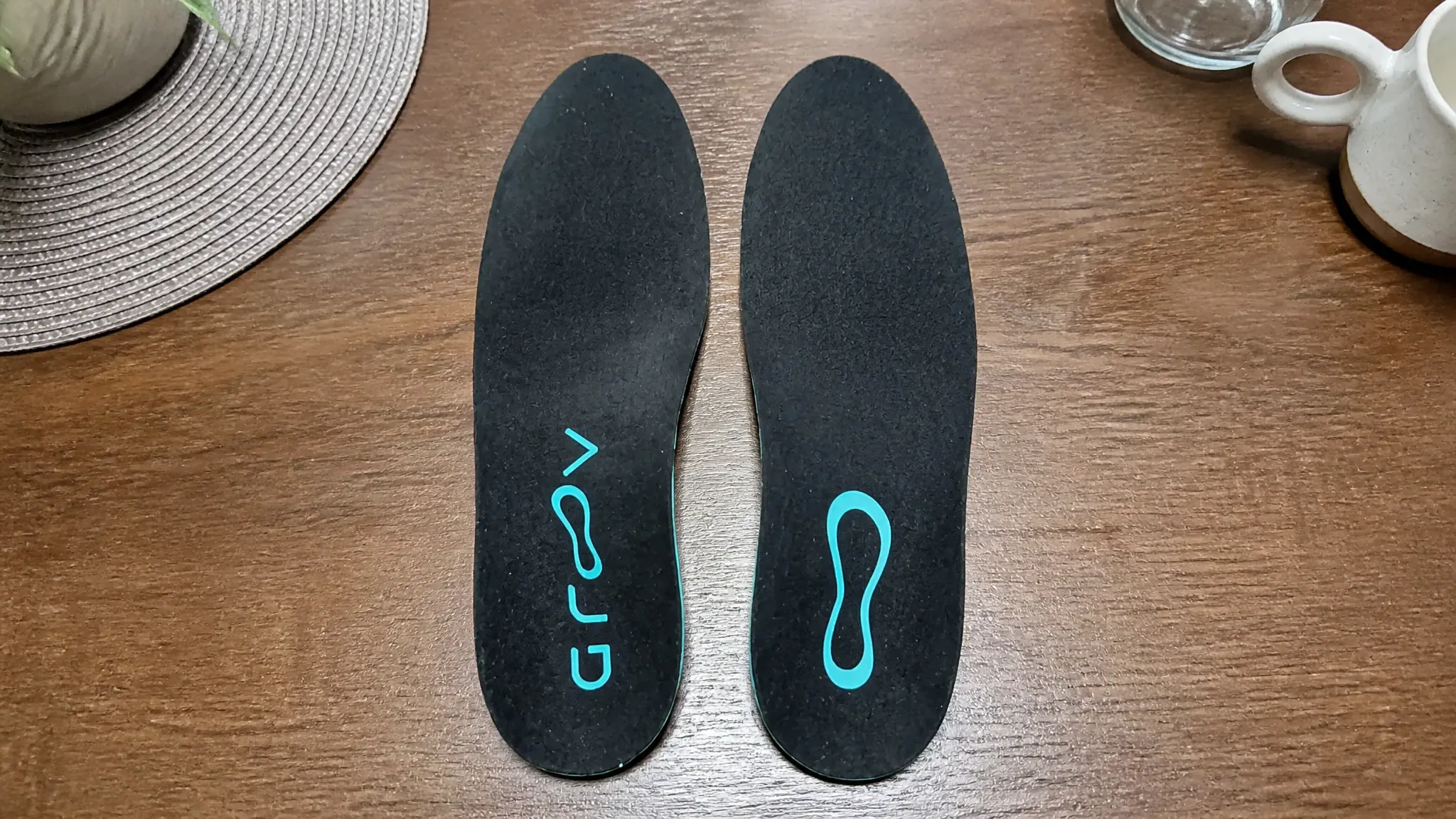
Groov replaces the standard insole-fitting process with a smartphone scan and AI-generated custom build, delivered in about a week for roughly $150 a pair. The Response model has held up over dozens of test miles with a firm, energy-returning ride and a true-to-size fit in compatible shoes, positioning Groov well below the cost of clinician-fitted orthotics.
Working as a personal trainer and exercise physiologist on Celebrity Cruises, I fitted people from more than 70 countries with insoles over 8 years. In that line of work, I used computerized footprint and gait analysis to assess support needs, including hiking shoes, everyday sneakers, and basketball shoes. Over that same period, I fitted thousands of people with insoles for minimalist, wide-fit, and zero-drop shoes. The tradeoffs are real: the firm build can feel uncomfortable on long runs, it doesn't suit wide toe-box shoe shapes, the scan step can look unpolished before the finished product arrives, and there's no re-scan option for a reorder. For athletes and all-day standers in standard-volume shoes, the model lineup and price point make Groov a reasonable middle ground between drugstore inserts and medical orthotics; buyers with wide-fit footwear needs should look elsewhere.
Testing Groov: My Process
I tested the Groov Response, the brand's firm, energy-return model built from an iPhone foot scan, over six weeks of regular wear. My own foot profile: I have high arches with mild overpronation, weigh 175 lb, and spend most of my day on my feet at a standing job, with some weekend running mixed in.
I ran two core checks on this insole, a thumb-press collapse test and a heel-to-toe torsion twist, because those cover the arch support and stiffness questions most buyers actually care about. I wore them rather than just reading the box, starting with two days of walking around the house before moving into full training runs once the fit felt trustworthy, and covered concrete, asphalt, packed dirt trail, carpet, and hardwood along the way.
On my longest run, 8 miles in warm weather, I sweated through a full sock change and the top-cover fabric wicked enough that I didn't feel any sliding inside the shoe. I put the insole through six weeks and roughly 42 days total, spanning daily walking and 10 to 12 runs, plus a full desk-and-errands day with about 3 hours on my feet with no hot spots forming, before writing this.
I reject insoles that require me to buy shoes a full size larger just to fit them. I know that maximum rigidity does not always mean better relief.
I'd say ease into gym or running use rather than going hard right out of the box, since I started with a short 2-mile jog on day one and the firm arch needed a session or two before it stopped feeling noticeable. My main benchmark throughout was the stock insole that came in my running shoes, since that's the direct swap most buyers are making, with some reference to a generic drugstore cushioned insert I'd used before.
Against that stock foam the Response won clearly on arch support, since the factory insole gave almost no resistance under thumb pressure while the Response held firm and matched my actual arch contour. Calling it "firm" compared to a normal shoe means noticeably less give under body weight, closer to a stiff yoga mat than the soft foam most factory insoles use.
What Is Groov Arch Support?
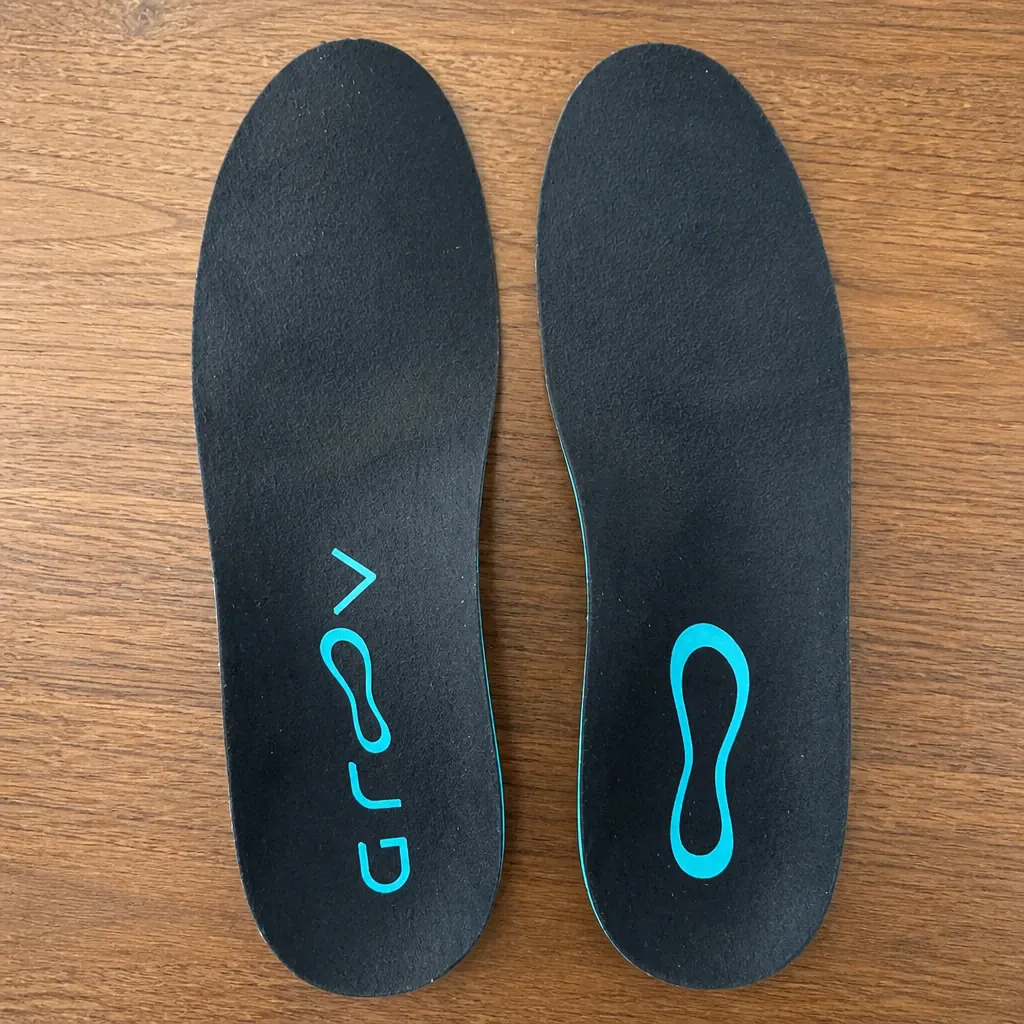
Groov is an AI-powered custom insole system built from a smartphone foot scan rather than a stock insert. A customer scans both feet with an iPhone camera, and the ShapeSense AI processes more than 30,000 data points per scan to produce a 3D foot model.
That model drives production of an insole matched to the individual's foot shape and chosen footwear, with no clinic visit or prescription required. Groov offers three models built around different use cases: the Everyday, the Response, and the Luxe.
What's the First-Minute Feel of Groov Insoles?
The Groov Response held firm from the first minute of standing on it, with no folding flat under my full body weight. A good arch support should tell you something within the first minute of standing on it, and the Response did, giving me a snug press against my medial arch rather than a soft, springy give. That firmness read as supportive, not painful, right out of the box.
What Materials Are Groov Insoles Made Of?
Groov builds the Response from a firmer, high-elasticity 3D-printed lattice designed for energy return, distinct from the cushioned Everyday model and the thin, low-profile Luxe. Pulling the Response out of its box, I checked the edges first and found them cleanly cut with no loose foam fibers or glue residue, the top-cover fabric fully bonded down with no lifting corners. Running a finger around the perimeter turned up nothing sharp enough to dig into my foot, even through a thin sock, and the left and right pair were symmetrical to within about a millimeter, matching the arch contour from my foot scan closely enough to suggest a real quality check before shipping.
The base is a 3D-printed lattice rather than molded foam, and after roughly six weeks of regular wear I saw no visible compression or flattening in the arch or heel zones, which puts my honest estimate at 12 to 18 months of daily rotation before the support noticeably softens. Weighing the roughly $150 price against the fit, I don't regret the purchase given how much more support the custom arch delivered over my stock insole, though I'd think twice for a wide toe box shoe since the fit runs snug there. The one hiccup was a squeak during a rainy week from trapped moisture, which pulling the insole out and air-drying it overnight fully solved and it hasn't recurred since.
That same firm, energy-return construction is what Groov builds into the Response line-wide: a firmer, high-elasticity base designed for explosive push-off during running and other high-impact activity, distinct from the Everyday model's cushioned, shock-absorbing build for extended standing and walking, and the Luxe model's thin, low-profile shell meant to fit inside dress shoes, heels, and loafers without adding bulk. Testers beyond my own unit have reported the same firm ride with noticeable arch contouring, and a durable base that showed no early wear after 18 to 35 miles of use across road, trail, and treadmill surfaces.
What Is It Like Living With Groov Insoles?
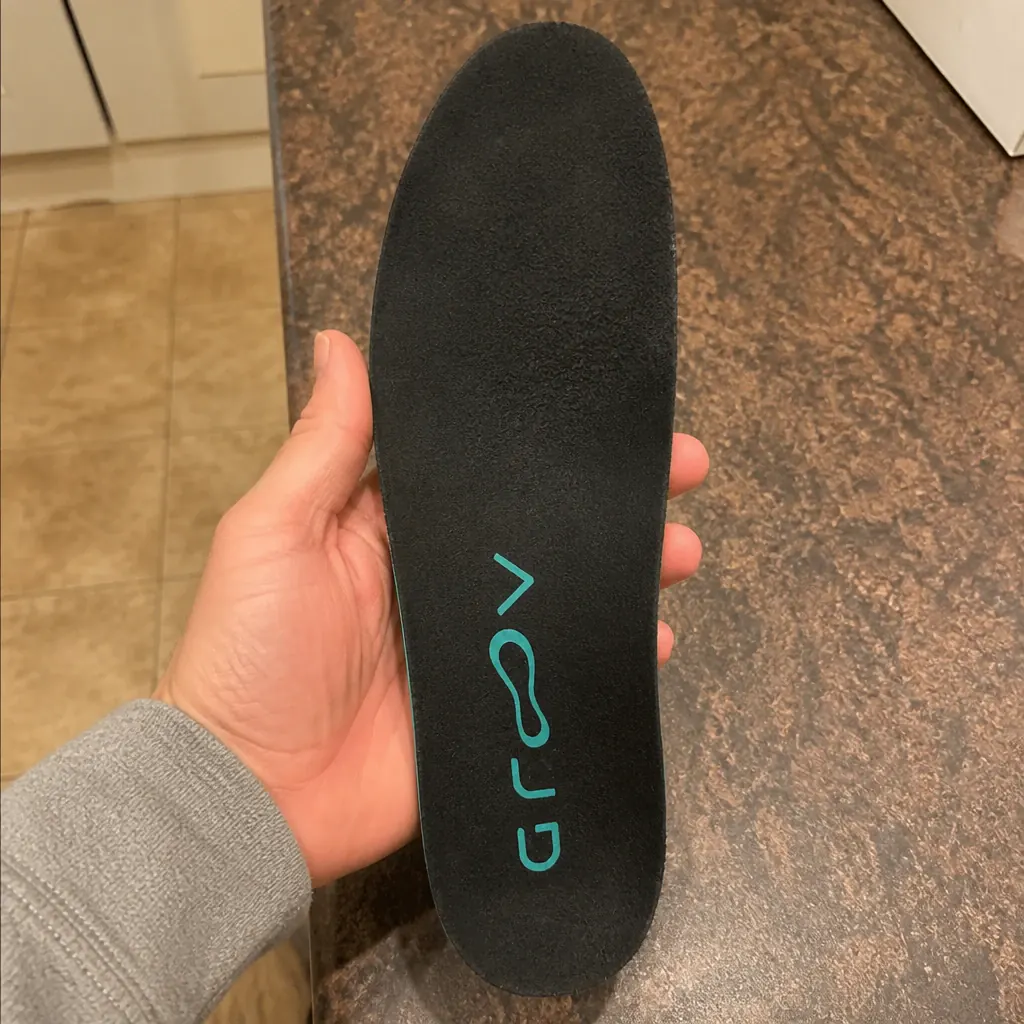
The Groov Response held its shape under load and through daily wear, with no sense of the support breaking down. Deadlifting 135 lb in the Response gave a solid, stable pull with no sense of the arch collapsing under load, keeping my foot from rolling inward at the bottom of the lift the way it sometimes does in a softer shoe. Checking the arch immediately after the set with the same thumb-press test, it still held its shape exactly as before, with no visible compression line or softened spot anywhere.
The added stack height, a few extra millimeters over my stock insole, made my heels sit marginally higher for the first couple of lifting sessions before I stopped noticing it, and at no point did the extra weight or stack cause any sharp heel or arch pain, just firm, even pressure across the arch.
That same durability shows up in reports beyond my own testing: testers who logged between 18 and 35 miles on road, trail, and treadmill surfaces reported no early wear and a build that kept its shape through repeated use, with push-off that felt firm and responsive rather than soft. The tradeoff is that same firmness: some users found the firm feel less comfortable on longer runs than the shorter lifting and walking sessions I put mine through, and the scan itself can also look rough or low-resolution to the customer before the finished insole arrives, which has been reported as an initial source of skepticism about the product.
What's Groov's Policy If You're Not Satisfied?
Groov doesn't offer a standard money-back guarantee for a simple change of mind, but it does replace pairs affected by a production or delivery issue at no charge. Because each pair is custom-built from an individual foot scan, the company reviews satisfaction issues case by case rather than applying a blanket refund policy.
Order changes are also limited once you've placed one: production begins immediately after checkout, so Groov cannot guarantee it can cancel or modify an order already in progress, though its support team says it will try to help if you reach out quickly. Customers with problems are directed to contact Groov support directly rather than go through a generic retail return process.
Source: Groov FAQs.
What Shoe Types Do Groov Insoles Work In?
Groov markets the Response across a wide range of footwear, including sneakers, running shoes, work boots, cleats, golf shoes, loafers, heels, and dress shoes, but fit is scanned to one specific shoe rather than a generic category. If I only bought one pair, I'd put them in my primary daily running shoe first, since that's where I logged the most miles and felt the clearest benefit from the custom arch match, and I'd generally lean toward whichever pair sees the most hours on your feet rather than a specific problem shoe.
For the Response model specifically I'd prioritize shoes you run or train in over ones you mainly stand in, since it's built for energy return and higher-impact use, and in my case the standard-width road running shoes gave the fastest, cleanest fit since the insole is scanned against both your foot and that specific shoe. Fitted in the shoe, my toes weren't touching the very front edge; the scan left roughly 3 to 5mm of space past my longest toe once trimmed and seated, enough to avoid crowding without leaving the insole loose.
That scan-to-shoe matching is exactly how Groov builds fit line-wide: because each insole is scanned against the customer's own shoe as well as their foot, fit is matched to a specific footwear volume rather than a generic shoe category. The Response model's fit is best suited to standard-volume shoe shapes, though, and it has been reported as a poor match for wide toe-box running shoe models such as Altra and Topo, where the insole's shape does not correspond to the shoe's wider forefoot.
How Do You Clean and Maintain Groov Insoles?
The Groov Response doesn't need weekly cleaning, just a damp-cloth wipe every couple of weeks and a deeper clean after the sweatiest sessions. I didn't need to clean these every week, wiping mine down roughly every two weeks with a damp cloth and only doing a deeper clean after the sweatiest long runs. If your feet sweat heavily I'd still pull the insoles out to air dry after any hard session even without a full wash, which is exactly what stopped the squeaking issue I ran into earlier in the test.
I avoided submerging or machine-washing them, sticking to spot-cleaning the top-cover fabric with a damp cloth instead, and saw no added wear from that routine over six weeks.
Are There Any Downsides or Risks to Be Aware Of?
The main reported downside of the Response is a fit mismatch with wide toe-box footwear, plus a firm ride some owners find uncomfortable on long runs. The stiffness felt weird for the first two or three wears, but in my case it was a normal break-in period, softening in perceived feel rather than actual arch collapse once my foot adjusted. The pressure at first was firm, even arch contact rather than pain, a snug, supportive press rather than a pinch or sharp spot, so I kept wearing them through that mild first-week firmness; I'd pull them immediately if a specific spot started to ache rather than easing off gradually.
I didn't get any blisters over six weeks, though the firmer heel cup did require snugging my laces slightly more than usual to stop minor heel slip on the first two runs.
Beyond my own break-in period, Response-model owners using wide-shaped shoes such as Altra or Topo have reported the insole does not suit that shoe category, and the same firmness that drives its energy return has been reported as uncomfortable over longer running distances than the runs I tested. The scanning step has also drawn criticism: the resulting 3D scan can look low-quality to the customer, and the product does not currently offer a re-scan option before a reorder, so a customer's foot changes since the original scan are not reflected in a repeat purchase.
The personalization benefit of scan-based fitting has been publicly questioned as unproven relative to standard insoles, and cost can also add up for anyone ordering multiple pairs across different shoes.
How Much Do Groov Insoles Cost?
A pair of Groov insoles costs approximately $150. The purchase is FSA/HSA eligible. Groov positions this price against podiatrist-fitted custom orthotics, which typically run $300 to $800, often require a prescription, and are not guaranteed to be covered by insurance.
Where's the Best Place to Buy Groov Insoles?
Groov insoles are ordered directly through the Groov mobile app or the groov.me website, where the foot-scanning step happens before the order is placed. They are also available through the HF Innovations store at HelmetFitting.com, a partner retailer that applies discounted pricing automatically at checkout and supports volume ordering for teams and groups.
Who Benefits Most From Groov Insoles?
Groov markets its insoles toward athletes, people who stand or work on their feet for long stretches, and people managing plantar fasciitis, flat feet, overpronation, or high arches. This is Groov's own marketed use-case list, not a clinical endorsement or a claim independently verified for this review. The three-model lineup is built to match that range: the Everyday model targets all-day comfort and recovery, the Response model targets athletic performance and energy return, and the Luxe model targets low-profile fit inside dress and casual footwear.
Buyers who wear wide toe-box running shoes, or who want the option to re-scan their feet before reordering, are less well served by the current Response model based on reported fit and process limitations.
Groov Insoles: Full Specs: Response Model
| Spec | Details |
|---|---|
| Brand | Groov |
| Model tested | Response |
| Customization method | iPhone camera scan (30,000+ data points), AI-generated 3D foot model |
| Construction | Firm, high-elasticity 3D-printed lattice base for energy return |
| Price | ~$150 per pair |
| FSA/HSA eligibility | Eligible |
| Turnaround time | About one week from order |
| Footwear compatibility | Sneakers, running shoes, work boots, cleats, golf shoes, loafers, heels, dress shoes (best suited to standard-volume shapes) |
| Sizing behavior | True-to-size, no reported slip in compatible shoes |
| Thumb-press collapse (tested) | Held its shape, giving about 1mm before the lattice pushed back |
| Torsion stiffness (tested) | 4 out of 5, graded by hand-twisting heel-to-toe |
Source: Groov mobile app product listings, groov.me, and hands-on testing.
Pressing on the arch with steady thumb pressure, roughly the force I'd use to test a firm mattress, the Response held its shape completely, giving maybe 1mm before the printed lattice pushed back with no bottoming-out feeling. Twisting it heel-to-toe earned a 4 out of 5 on my own stiffness scale, resisting far more than the stock insole it replaced, which I could nearly fold in half, while the Response only flexed a few degrees before its semi-rigid base stopped the motion.
My Final Verdict on Groov Insoles: Are They Worth It?
Groov replaces the standard insole-fitting process with a smartphone scan and an AI-generated custom build, delivered in about a week for roughly $150 a pair, well below the $300 to $800 that podiatrist-fitted custom orthotics typically cost. In my own six-week test of the Response model, that price bought a firm, energy-returning insole that held its shape through daily walking, ten to twelve training runs, and a 135 lb deadlift session, with no compression or softening by the end.
The tradeoffs reported by other owners matched what I found in my own testing: the firm build can feel uncomfortable on longer runs than the ones I logged, it isn't a good match for wide toe-box shoes like Altra or Topo, and there's no re-scan option if your foot changes before a reorder. For someone on their feet most of the day with occasional running, in standard-volume shoes, the Response's price and durability make it a reasonable middle ground between drugstore inserts and medical orthotics. Buyers with wide-fit footwear needs should look elsewhere.
Michal Sieroslawski is an Entrepreneur, exercise physiologist, and personal trainer who has fitted over a thousand people with insoles. He holds a degree in Sports and Exercise Science from the University of Central Lancashire, where he studied biomechanics, anatomy, and exercise physiology. Since 2020, Michal Sieroslawski has helped local and online businesses get found in Google and AI search.