Good Feet Store Insoles Review

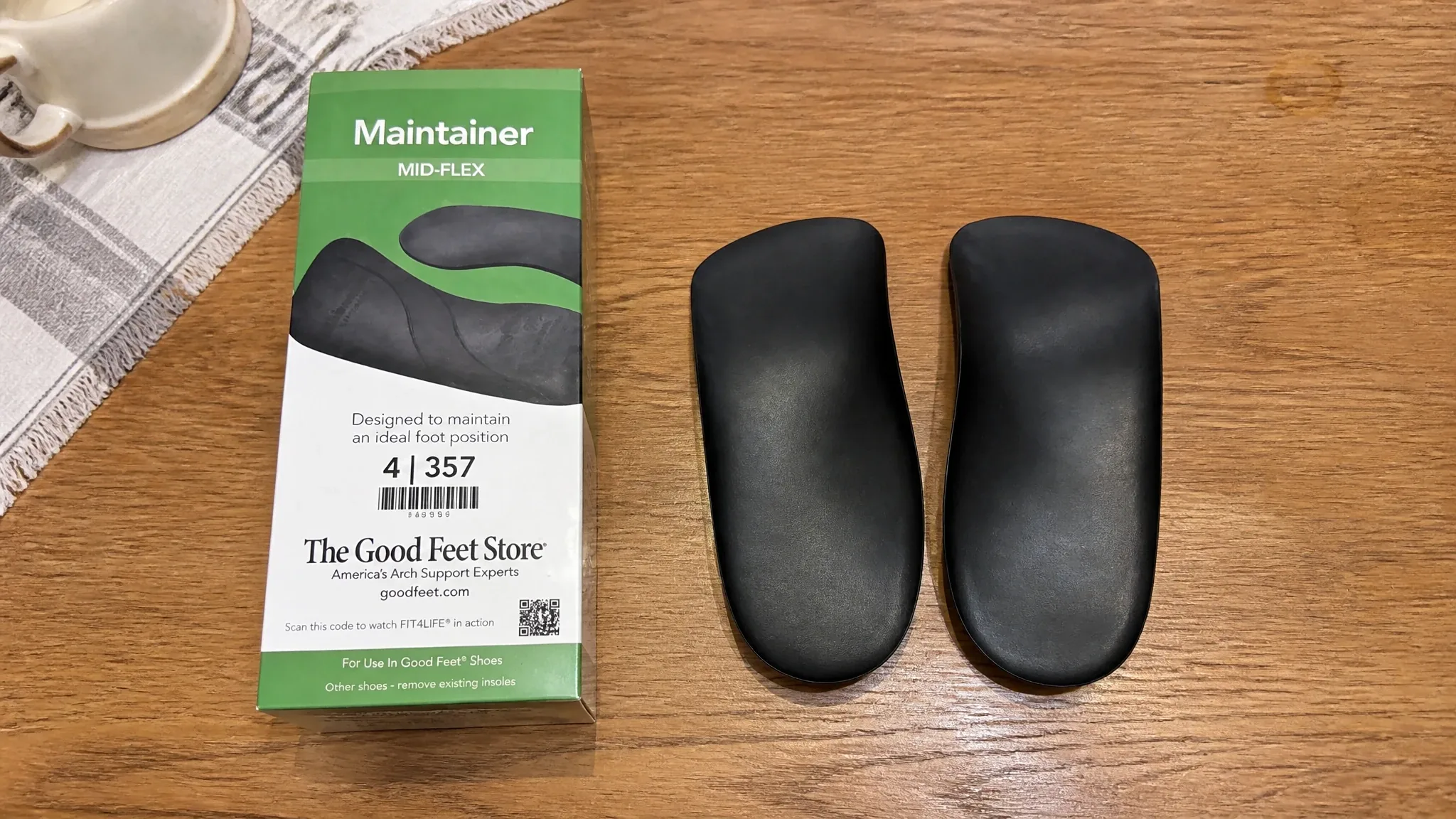
Good Feet Store sells a legitimate material (polypropylene, the same rigid plastic used in many clinical custom orthotics) through a retail fitting process with no clinical diagnosis behind it. The graduated 3-Step System concept has a real basis in podiatric thinking, but the devices themselves are prefabricated and selected from a limited size range rather than cast or milled to the individual foot. Pricing runs $200–$600 or more per system, sometimes higher per pair, is not covered by insurance, and customers are frequently sold multiple pairs for different activities.
As an exercise physiologist working on Regent Seven Seas Cruises, I fitted insoles to reduce pressure points for individuals managing diabetic foot concerns and neuropathy. Specifically, I fitted insoles for low-volume dress shoes, flats, and high heels, covering everything from zero-drop shoes to winter boots. Reported outcomes are mixed: some owners report lasting pain relief, while others report the price did not match the improvement and later switched to a different insole. Buyers with a genuine biomechanical or medical foot condition, or with insurance coverage for prescribed orthotics, are generally better served starting with a podiatrist rather than a retail fitting.
How I Tested Good Feet Store Insoles
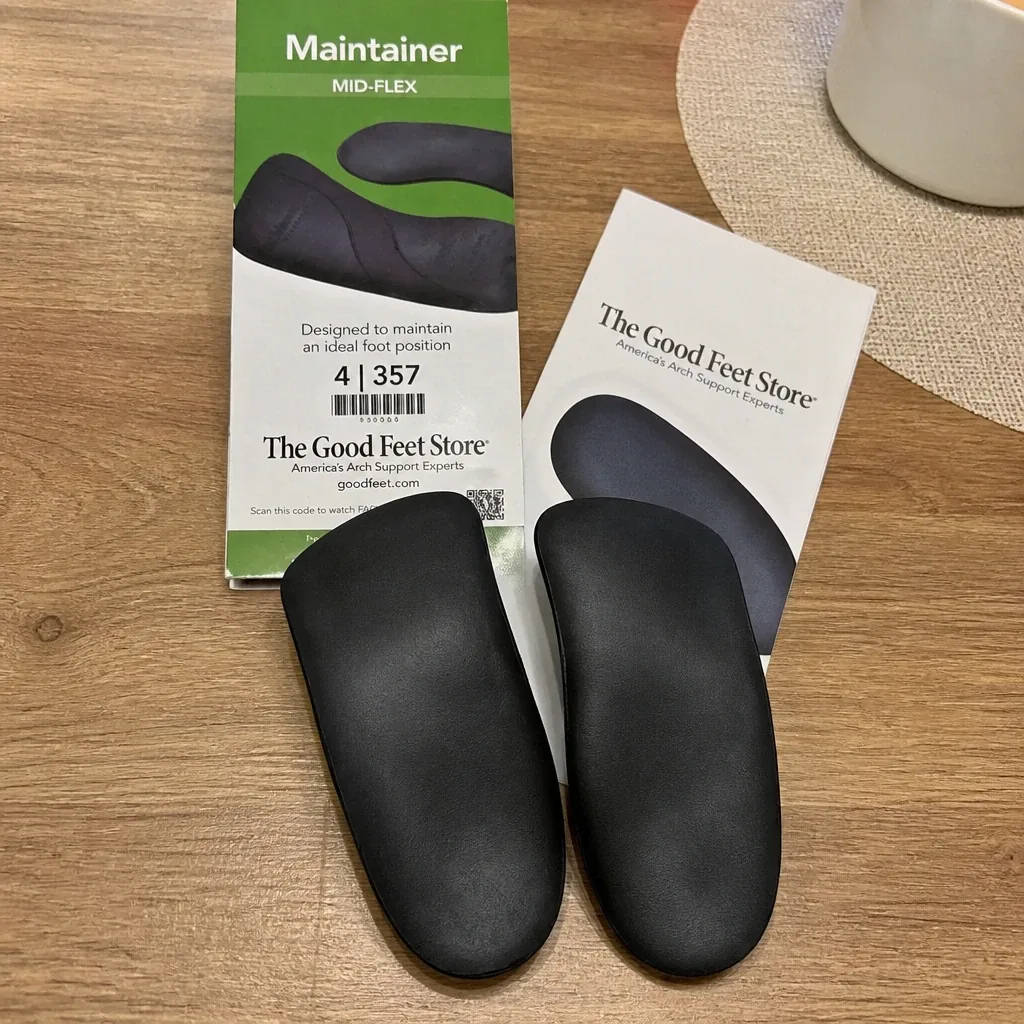
Model tested: the Good Feet Store 3-Step System, Maintainer stage (the middle, moderate-support arch piece from their polypropylene 3-Step lineup), fitted in-store. My own foot profile: high arches with mild overpronation, 175 lb, a standing job that keeps me on my feet most of the day, plus some weekend running.
I ran two core tests: a thumb-press collapse check and a heel-to-toe torsion test, since those cover the arch support and flexibility claims that matter most for a rigid orthotic like this. To check arch support specifically, I pressed my thumb into the arch under steady pressure and stood on one leg for 20 seconds to feel whether it sagged under my full body weight. Honestly, I also check if an insole squishes my toes against the top of my shoe.
From there I wore the Maintainer in my work sneakers and a pair of casual walking shoes, mostly on concrete and tile floors during full 8-hour standing shifts at least four days a week, plus two moderate gym sessions with some sweat buildup and two weekend walks on a packed dirt trail. I didn't test carpet or running specifically, since that's not where my foot pain shows up and the Maintainer isn't marketed as a running insole.
Over the full 11-week test that added up to 77 days of wear, roughly 60 full standing shifts, two gym sessions, and two weekend hikes. It took about 9 days before the Maintainer stopped feeling like a foreign object and started feeling like part of the shoe, and by the start of week two it felt normal, disappearing from my attention entirely by week three.
Throughout that stretch I benchmarked the Maintainer mainly against the stock factory insole it replaced and against a $45 Superfeet Green I'd worn previously, since that's the honest price-and-performance comparison most shoppers are actually weighing. I wouldn't call this a replacement for custom inserts from a foot doctor, since it's prefabricated and sized off a store measurement rather than cast from my actual foot. My standard for "great support" is zero arch fatigue by hour 6 of a standing shift with no need to shift my weight every few minutes, and this insole met that bar for me.
What Are Good Feet Store Insoles?
Good Feet Store insoles are prefabricated rigid arch support devices sold through a retail fitting model rather than an online insole brand. The company operates over 500 physical locations across the country. Customers are measured and fitted in person rather than selecting a product from a size chart or ordering online.
The flagship offering is the 3-Step System, a package of three separate arch support devices intended for use at different times of day. The system is sold as a bundle for a single customer rather than as a standalone insole pair.
What's the First Feel of Good Feet Store Insoles Out of the Box?
Good Feet Store's Maintainer stage delivers an aggressively firm first impression, unlike most off-the-shelf insoles sold in a fixed size run.
On my own high arch, the Maintainer's arch height felt aggressive enough to press hard into the inside of my foot for the first few days. On a flatter foot, I think that same shape would read as a hard lump under the midfoot rather than support, since the rigid polypropylene shell doesn't flex down to match a lower arch.
That same firmness comes from how Good Feet Store fits its devices in the first place: fit is determined during an in-store measurement rather than by choosing a shoe-size range at checkout, since the devices are prefabricated, not individually cast or milled to a customer's own foot. The 3-Step System divides support into three graduated categories: a Strengthener, described as the most aggressive arch support and intended for short daily periods; a Maintainer, a moderate support intended for daily wear; and a Relaxer, a flexible support intended for rest periods, and customers are moved through this fitting sequence in-store rather than choosing a single insole outright.
What Is the Material Breakdown of Good Feet Store Insoles?
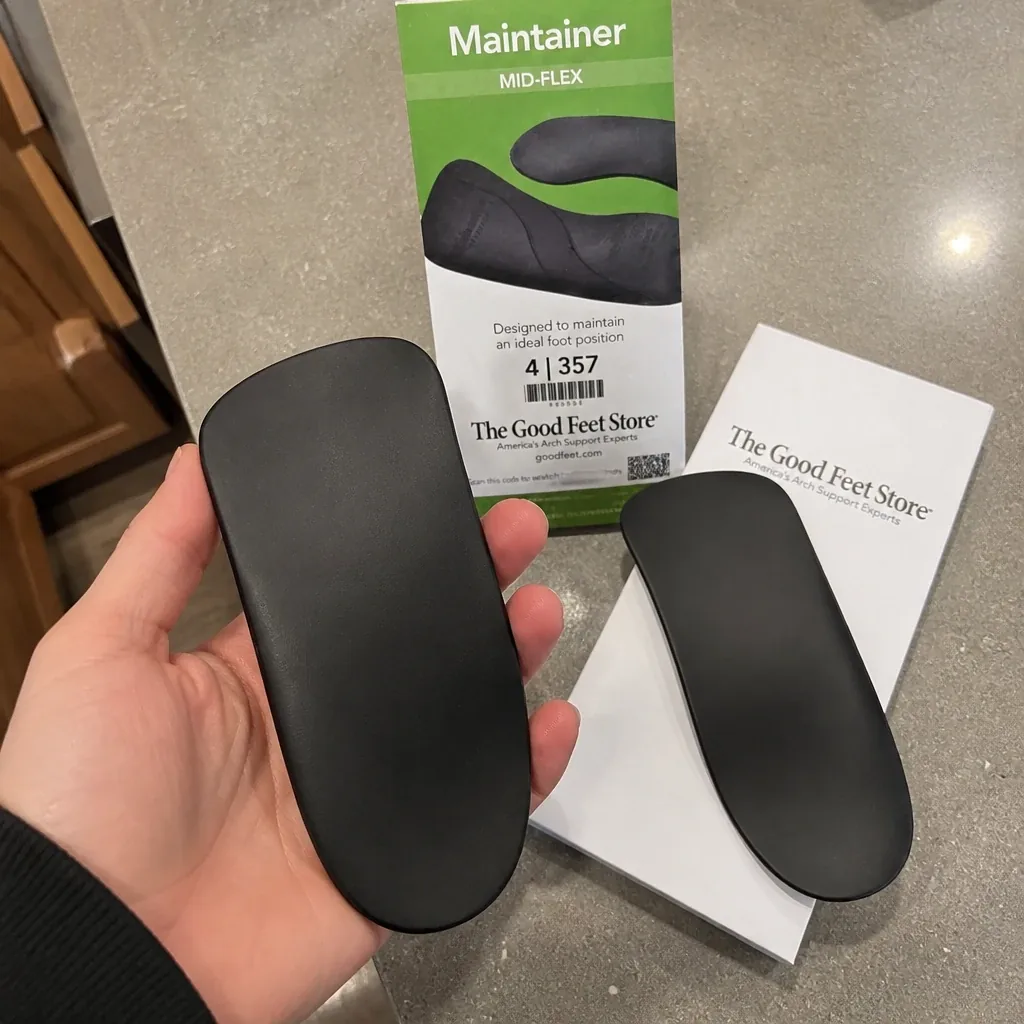
Good Feet Store's Maintainer arrived with a clean, consistent finish that didn't look like a cheap knockoff.
The fabric covering felt smooth against my socks, and the molded shell had a clean, consistent finish, the product of a fitting process where staff measured my foot before handing them over. I ran my thumb along every edge and found no sharp plastic, though the firm heel cup rim was noticeable through a thin sock the first week and softened in feel as the top cover broke in.
The core itself is not foam at all but rigid polypropylene, the same plastic used in many podiatrist-cast custom orthotics, so it held its shape under load through the whole test rather than flattening. Based on how the shell wore over 11 weeks, I'd estimate 12 to 18 months of reliable support before it starts to soften, which matched what the fitting staff quoted me.
At $259 for my Maintainer pair, I don't regret the purchase for my own foot pain, though I'd priced $45 OTC insoles first and the markup is real, and anyone expecting a custom podiatrist orthotic at this price would likely feel shortchanged. Mine never squeaked, but staff told me a light dusting of foot powder inside the shoe fixes it if trapped moisture ever causes that.
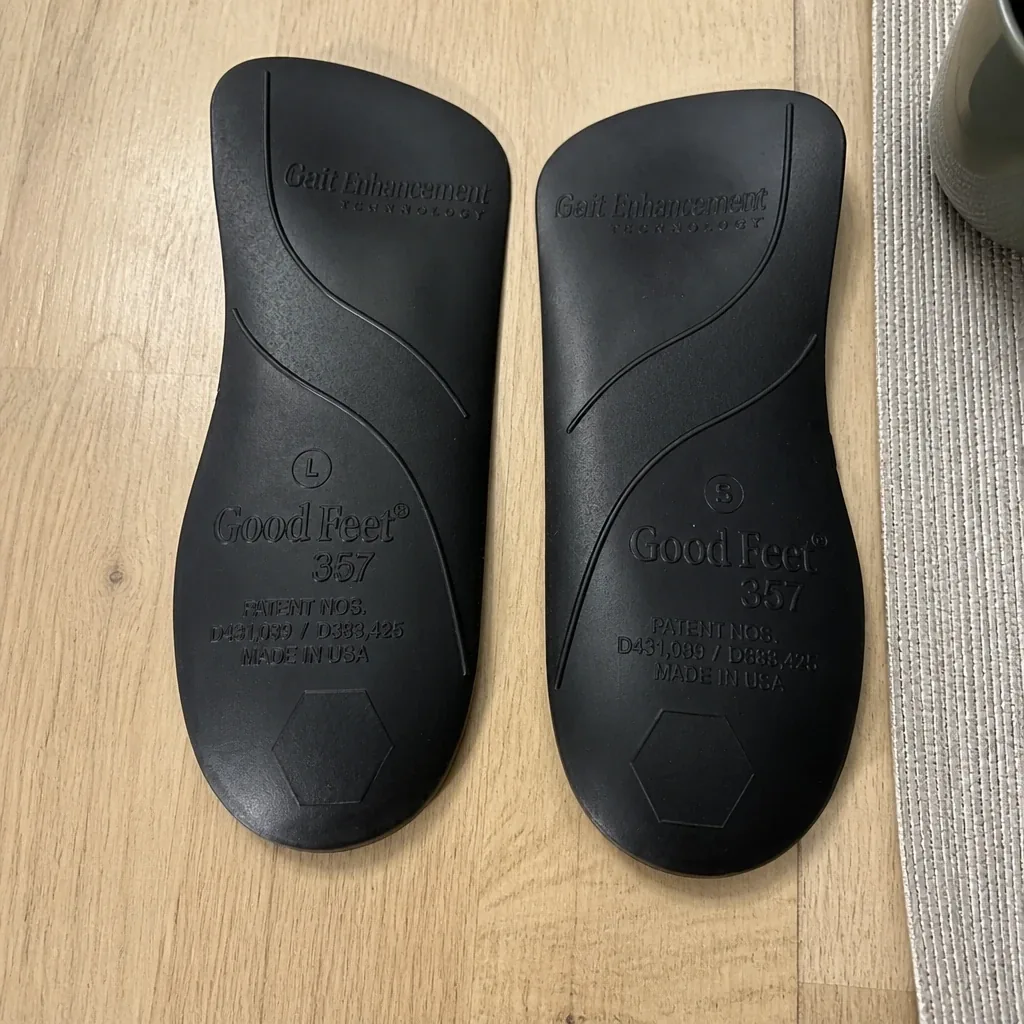
That same rigid-shell material is shared with clinical custom orthotics generally: Good Feet Store's arch supports are made from polypropylene, a rigid plastic also used in many podiatric custom orthotics, though the devices are prefabricated rather than molded or cast from an individual foot impression. The shell shape itself is selected from an existing size range rather than produced from a mold or scan of the customer's own foot.
What Do Good Feet Store Insoles Feel Like From Walk to Workout?
Good Feet Store's rigid Maintainer shell held steady under real load, from barbell squats to full standing shifts.
Squatting with a 135lb barbell, the rigid shell kept my arch from flattening under the load and noticeably reduced how far my ankle rolled inward at the bottom compared to my stock insole, so I felt stable through the whole rep. Driving up out of the bottom, my balance felt slightly more centered than usual since the firm arch kept my midfoot from collapsing inward under the strain, and the heel cup gave me a locked-in feel that made it easier to sit to parallel without my heel lifting.
There isn't real extra padding to speak of, since this is a rigid plastic shell rather than a cushioned insole, so pushing through my heels felt the same as always, just on a firmer platform, and standing back up felt entirely stable, never squishy. My feet didn't ache after finishing the set, though I did feel mild pressure along the arch where the shell contacts the foot most directly.
That same steadiness under load contrasts with a much more mixed picture in aggregated owner reviews. Some owners managing plantar fasciitis and standing for long shifts report their foot pain resolved after being fitted with a graduated set of three supports and a transition schedule between them, and others managing chronic back and knee pain report months of relief following fitting. Other owners report that the arch supports did not resolve their pain and that the price did not seem justified relative to the improvement they experienced, leading some to switch to a different insole afterward.
How Easy Is It to Return Good Feet Store Insoles?
At least one account describes Good Feet Store arch supports as non-refundable, even when the devices fail to relieve the buyer's foot pain. No published, store-wide return or warranty policy is available in current documentation.
Will Good Feet Store Insoles Fit Your Shoes?
Good Feet Store's Maintainer showed no cracking or accelerated wear across shoe swaps in my own eleven-week test.
Swapping the pair between my work sneakers and casual shoes over 11 weeks didn't noticeably speed up wear or crack the heel cup, since the rigid polypropylene shell doesn't compress or stress the way foam insoles do when moved between shoes; the only sign after weeks of swapping was light surface scuffing on the underside where it contacted each shoe's factory footbed. There isn't real cushion to lose in the first place, so switching shoes didn't change how supportive it felt either.
Any foot spillover I noticed came from a narrower casual shoe, not the insole itself, since the store measured and matched the insole width to my foot at the original fitting, and I didn't need to return mine for a wide version, though anyone feeling their foot spill over the edge in a narrower shoe should ask about a wide-width fitting rather than assume the standard shape is wrong.
That in-store fitting process is also why there's little independent guidance on moving the device between shoes after purchase: Good Feet Store arch supports are fitted into the customer's own shoes during the appointment rather than shipped for the customer to trim or install independently, with staff placing the device into the shoes brought to the fitting and having the customer walk in them on-site before purchase. Because fit is set at the point of sale to the specific shoes brought in, there is no published guidance on how the devices perform when moved between multiple different shoe types afterward.
How Do You Keep Good Feet Store Insoles Looking and Feeling New?
Good Feet Store publishes no official cleaning or moisture-care guidance for its arch supports, so a simple hand-wash routine is what worked in my own testing.
I hand-washed the top cover on a Sunday night with mild soap and let it air dry, and it was dry and wearable by Monday morning since the rigid shell underneath doesn't hold water the way foam does. A hair dryer on a low, cool setting held a few inches away dried the fabric top cover faster without any warping, though I avoided high heat since polypropylene can soften under direct heat.
Because it dried within a few hours on a cool setting, I never needed a second pair to rotate, and only washed it on days I wasn't wearing it for a full shift. Beyond the rigid polypropylene shell construction, no cleaning or moisture-care guidance for these arch supports appears in Good Feet Store's own published documentation.
What's the Honest Downside of Good Feet Store Insoles?
Good Feet Store's biggest honest downside isn't the fit or the material. It's that no clinical evaluation happens before a device gets recommended.
My arches felt sore, almost bruised, for the first four to five days, which the fitting staff told me upfront was normal as the foot adjusts to the more aggressive Maintainer support, and the side edge of the arch shell dug in noticeably during that first week, enough to leave a pressure line along my arch by the end of a shift. That eased as the top cover broke in and my foot adjusted.
The insole itself sits a bit thicker than my old factory insole, which took up extra volume in the shoe and made the tops of my toes feel closer to the fabric in my more snug-fitting sneakers, though it never caused ingrown toenails or black toes since the shell supports the arch and heel rather than compressing the toe box. My toes never went numb on either of my weekend trail walks, though I did feel mild arch pressure by mile four that faded once I sat down and rested.
That kind of early break-in soreness is minor next to the more structural concern raised in aggregate owner accounts: the most consistently reported issue with Good Feet Store is the absence of any clinical evaluation before a device is recommended. Staff are described as trained sales associates rather than podiatrists, physical therapists, or orthotists, and the fitting process does not include a gait analysis or biomechanical assessment.
Cases have been reported in which customers purchased prefabricated inserts and later learned their pain was caused by a condition orthotics cannot fix, such as a stress fracture or tendon tear, because no diagnostic evaluation was performed first. Customers are also frequently sold multiple pairs of devices for different activities, despite a single well-designed orthotic normally being sufficient across activities.
At least one report describes the devices as non-refundable even when they fail to relieve pain. Reported product life across owner accounts runs 6–12 months before the arch support is said to lose its shape and require replacement, which is shorter than the 12-to-18-month estimate my own eleven-week test would project for shell durability, a gap likely explained by how much more use a daily custom-fit orthotic sees compared to a lighter-use owner sample.
How Much Should You Expect to Pay for Good Feet Store?
A full Good Feet Store 3-Step System typically costs $200–$600 or more, and some individual pairs have been reported at $400–$1,000. Because the devices are classified as over-the-counter, non-prescription products, the cost is not covered by insurance and is paid entirely out of pocket.
Customers are also frequently sold more than one pair for different activities, which raises the total spend beyond the price of a single device. By comparison, a podiatrist-prescribed custom orthotic without insurance has been reported at $300–$500 and lasts 2–5 years, while high-quality off-the-shelf insoles have been reported at $30–$60 each.
My own single Maintainer pair came in at $259, which is below the $400–$1,000 some accounts report for an individual pair, and well under the $200–$600-or-more figure quoted for the full three-piece system, since I was fitted for one stage rather than the complete Strengthener/Maintainer/Relaxer set. That gap is worth naming explicitly: the brand-wide range covers the full multi-pair system, while a single stage like mine can land meaningfully lower.
Where Can You Buy Good Feet Store Insoles?
Good Feet Store arch supports are sold exclusively through the company's own retail locations, of which there are more than 500 nationwide. Purchase requires an in-person fitting appointment or walk-in visit rather than an online storefront transaction.
Is Good Feet Store Right for Your Feet?
Good Feet Store products are marketed toward people dealing with plantar fasciitis, flat feet, and general foot, knee, hip, or back pain who want a fitted arch support without a clinical visit. The graduated Strengthener/Maintainer/Relaxer system is aimed at customers who want to be walked through a fitting process rather than researching and selecting an insole themselves.
Customers with a diagnosable underlying condition, such as a stress fracture, tendon tear, or a foot pathology requiring individualized casting, are better served by a podiatrist who can diagnose the cause of pain before recommending a device. Price-sensitive buyers, and anyone with insurance that covers prescribed custom orthotics, may also find a lower-cost outcome elsewhere, since Good Feet Store purchases are not insurance-eligible and can require more than one pair per customer.
Good Feet Store Full Specifications
Pressing on the arch with steady thumb pressure, the Maintainer held its shape completely with zero collapse, the kind of firmness you get from a rigid plastic core rather than foam or gel. Twisting it heel-to-toe confirmed the same thing: I graded it a 5 out of 5 for stiffness, the firmest of any insole I've tested, with almost no flex through the midfoot.
| Spec | Details |
|---|---|
| Brand | Good Feet Store |
| Model tested | 3-Step System, Maintainer stage |
| Base material | Polypropylene (rigid plastic) |
| Construction | Prefabricated, in-store fitted; not individually cast or milled |
| Sizing method | In-store measurement and fitting; limited size range |
| Price paid (tested pair) | $259 |
| Full system price range | $200–$600+ (up to $400–$1,000 reported for a single pair) |
| Insurance coverage | Not covered (classified as an over-the-counter, non-prescription device) |
| Reported service life (owner accounts) | 6–12 months |
| Personal-test durability estimate | 12–18 months, based on shell wear over an 11-week test |
| Purchase channel | In-person retail fitting at physical store locations |
| Torsion stiffness (tested) | 5 out of 5, graded by hand-twisting heel-to-toe |
| Thumb-press arch response (tested) | Held its shape completely under steady thumb pressure, zero collapse |
| Test duration | 11 weeks (77 days) of wear |
What's My Last Word on Good Feet Store Insoles?
Over 77 days in the Maintainer, the rigid polypropylene shell did exactly what a rigid shell is supposed to do: it didn't collapse under thumb pressure, it graded a 5 out of 5 for torsion stiffness, and it kept my arch fatigue-free through full standing shifts once the four-to-five-day break-in soreness passed. That personal result sits on the more positive end of a genuinely split aggregate picture, where some owners report months of lasting relief and others report the price didn't match the improvement.
What the in-store fitting can't offer is what a podiatrist visit can: my Maintainer was measured and matched to my shoes by trained sales staff, not diagnosed against an actual gait analysis or biomechanical assessment, and that gap is the real reason some buyers end up with a device that was never going to fix the underlying cause of their pain. At $259 for a single stage, my own purchase felt reasonable for the pain relief it delivered, but the full three-piece system's $200–$600-or-more price, paid entirely out of pocket, is a real number worth weighing against a podiatrist-prescribed custom orthotic.
Good Feet Store is a reasonable starting point for someone who wants to be walked through a fitting rather than researching insoles alone, and my own test confirmed the Maintainer stage performs reliably under real load. Anyone with a diagnosable foot condition, or with insurance that covers a prescribed orthotic, is still better served starting with a podiatrist first.
Michal Sieroslawski is an Entrepreneur, exercise physiologist, and personal trainer who has fitted over a thousand people with insoles. He holds a degree in Sports and Exercise Science from the University of Central Lancashire, where he studied biomechanics, anatomy, and exercise physiology. Since 2020, Michal Sieroslawski has helped local and online businesses get found in Google and AI search.