Fulton Insoles Review

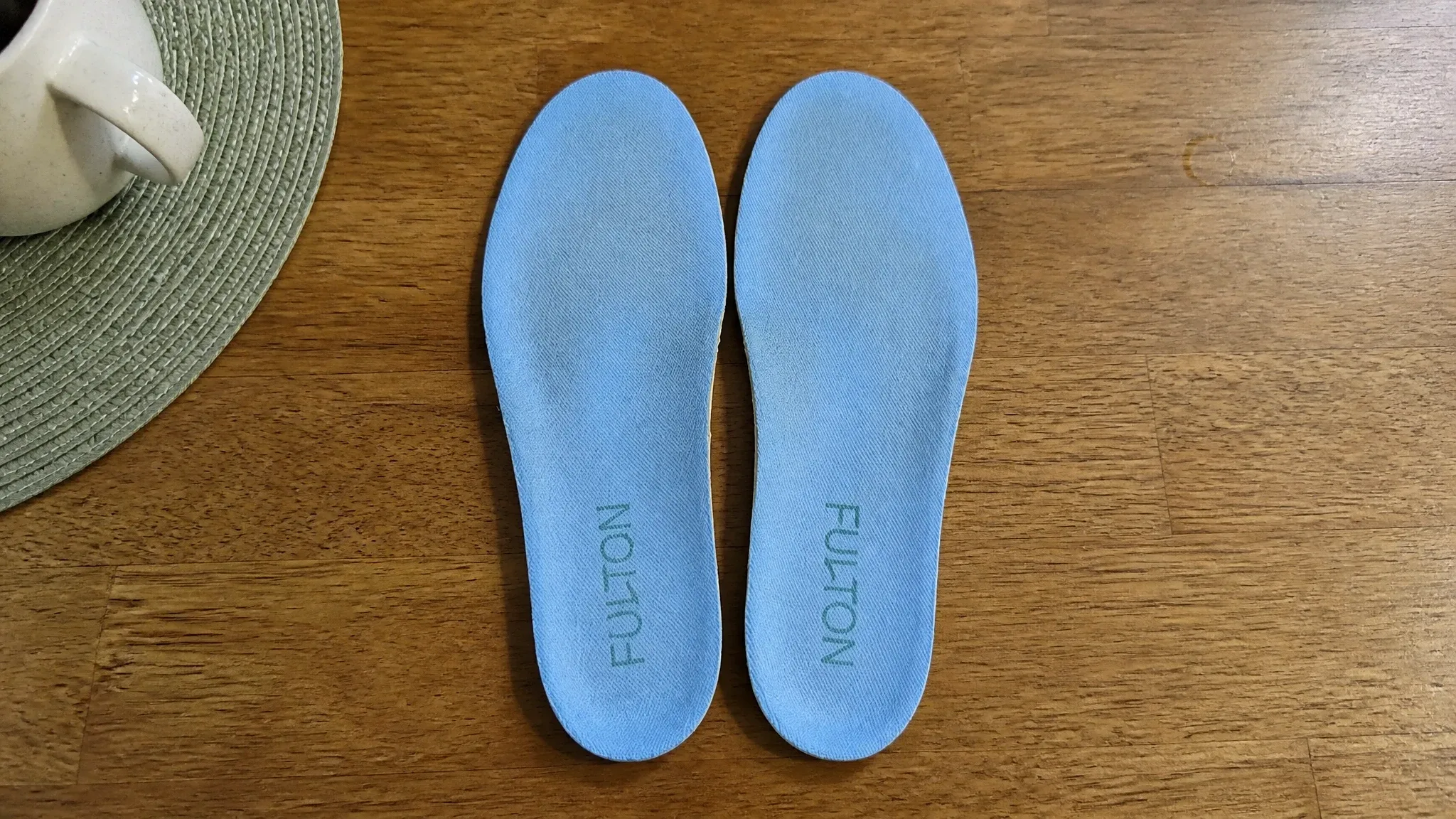
Fulton insoles combine a custom-molding cork base with a 90-day direct-site guarantee, positioning them as a mid-tier alternative to custom orthotics for flat feet, high arches, and plantar fasciitis-related pain. Independent testing rated the Athletic Insole 4.25 out of 5 for durability, comfort, ergonomics, and versatility, and owners frequently report reduced foot, knee, and back pain after completing the required break-in period.
During my years as a personal trainer, I helped individuals suffering from metatarsalgia, Morton's neuroma, and severe ball-of-foot pressure. In actual fittings, I helped over 1,000 people relieve foot, knee, hip, and back pain through proper support. Throughout that work, I fitted people from more than 70 countries with insoles over 8 years. I frequently helped people manage knee pain related to foot mechanics, arthritis in the feet, or osteoarthritis in the feet and ankles. The insoles are priced above many mass-market inserts, require one pair per pair of shoes, and carry a minority of owner reports describing discomfort, durability issues, or difficulty returning international orders. Bundle pricing brings the per-pair cost down for anyone buying for multiple shoes at once.
My Test of Fulton Insoles
I care about how my lower back and knees feel after standing in one spot for hours. I ran three tests on this insole: a thumb-press arch check, a heel-to-toe twist test, and a single-leg balance hold, because together they cover support, flex, and stability. I wore them for real rather than just reading the box, breaking them into my daily training shoe for six straight weeks and logging roughly 60 running miles across sidewalk concrete, two dirt trails, and plenty of carpet at home, plus four full 8-hour work shifts on my feet. On an 8-mile long run in 80-degree heat the cotton top layer soaked through with sweat but dried out overnight with no lingering smell.
I repeated the thumb-press and twist tests weekly, and neither the arch's resistance nor the 4-out-of-5 stiffness grade changed between week one and week six. I deliberately waited six weeks before writing any of this so the cork had time to finish molding to my foot, and I'd hold off running or hitting the gym in them right out of the box, since my first run felt stiffer under the arch than after week two, in line with Fulton's own recommended 10-hour or 30-mile break-in.
My main benchmark was the flat stock insole it replaced, plus a pair of off-the-shelf orthotic inserts I wore two years ago, and against both the Fulton was clearly better for arch support and heel stability, though the stock foam was lighter and needed no break-in at all. Calling it "firm" means the arch barely gives under body weight, closer to a hard orthotic shell than the soft, cushioned feel of a typical running shoe's stock insole, and by the end of those work shifts my lower back felt noticeably less sore than it had on the old insole.
Model tested: the Fulton Athletic Insole, the cork-based version with an organic cotton top layer and a deep heel cup, built for sneakers and cross-training shoes. My own foot profile: I have high arches with mild overpronation, weigh 175 lb, and spend most of my day on my feet at a standing job, with some weekend running.
What Do You Notice First With Fulton Arch Support?
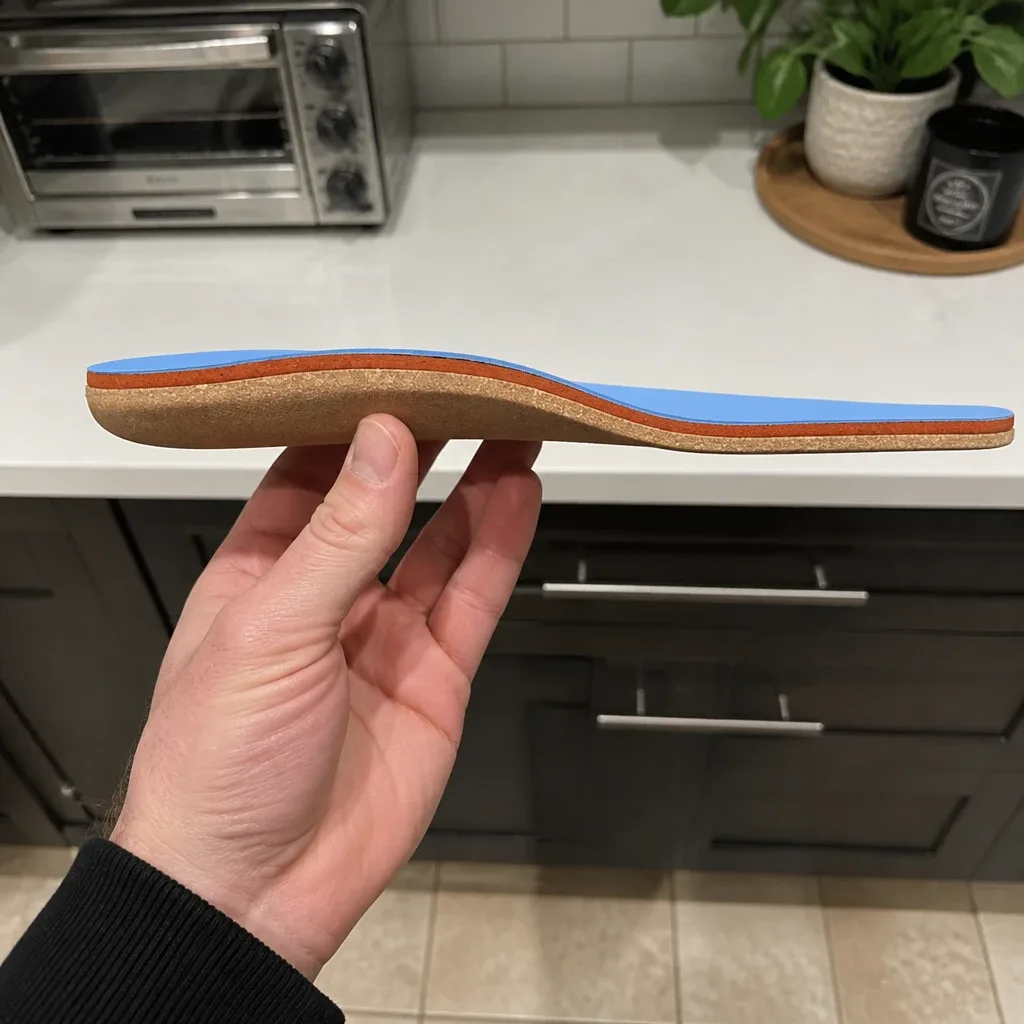
Fulton's firmness is the first thing that stands out, and it shows up immediately in balance. Standing on one leg on my stock foam insole, I wobbled within 8 seconds, while the firmer Fulton cork let me hold the same single-leg stand for a full 25 seconds. That same stability is what the cork footbed is designed to deliver from the outset: it begins shaping itself to the wearer's foot from the first extended wear, and its stated function is to prevent overpronation and supination by stabilizing the foot through the deep heel cup and the custom-molding cork base, built to accommodate a range of arch types and gait patterns rather than a single foot shape.
What Materials Are Fulton Insoles Made Of?
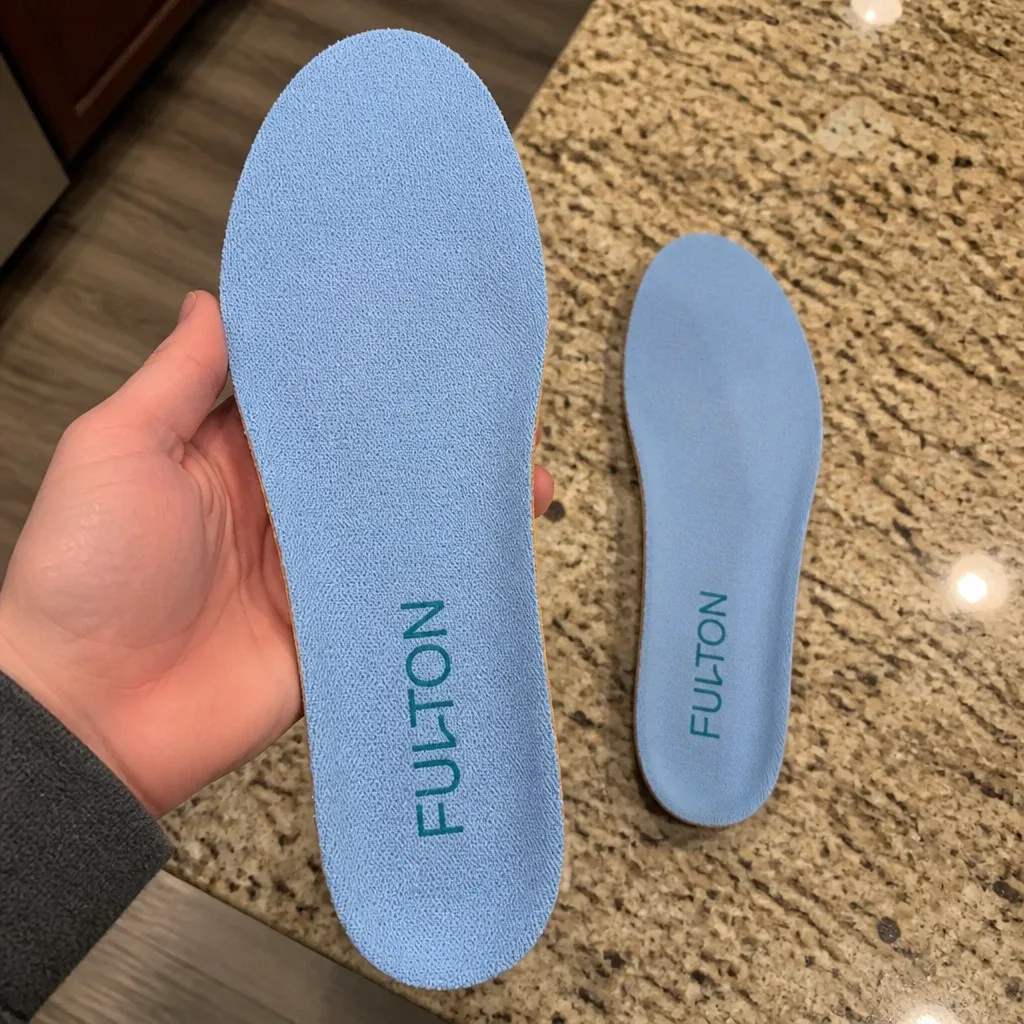
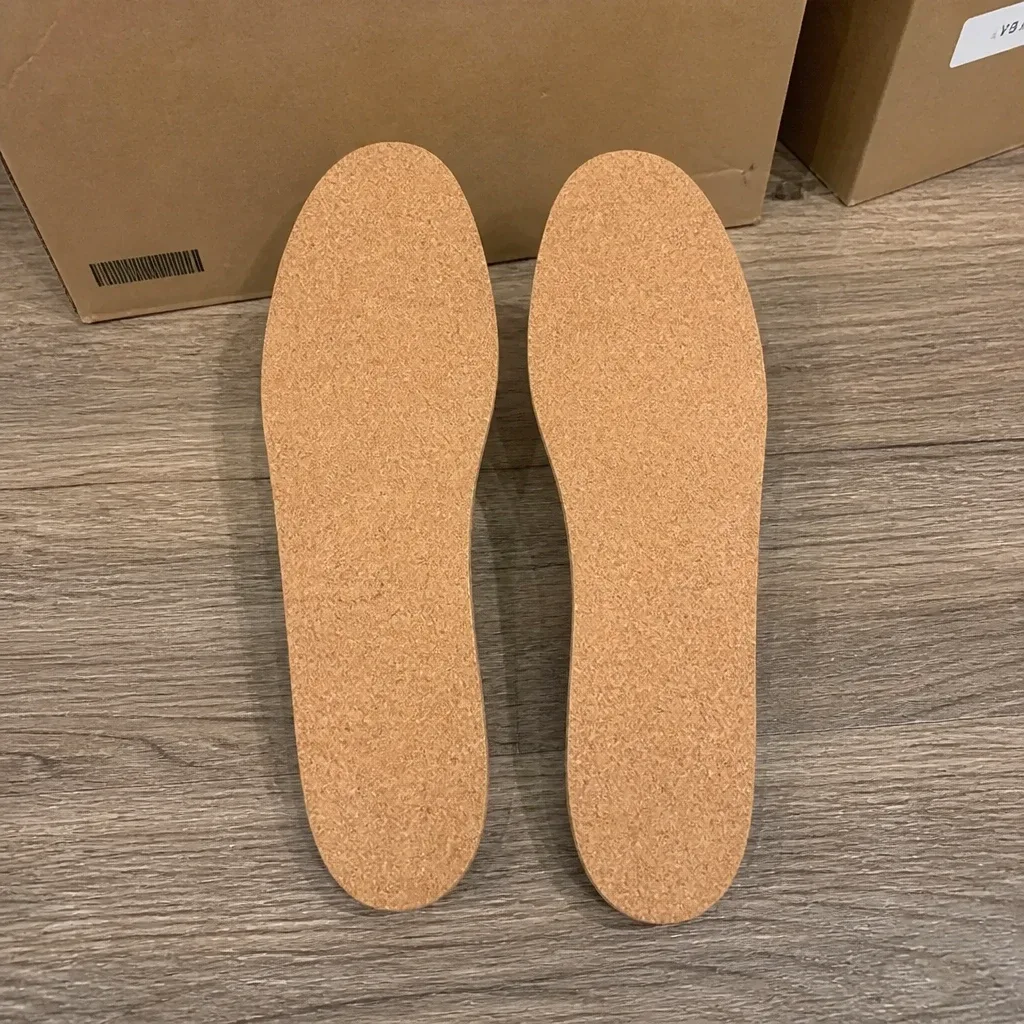
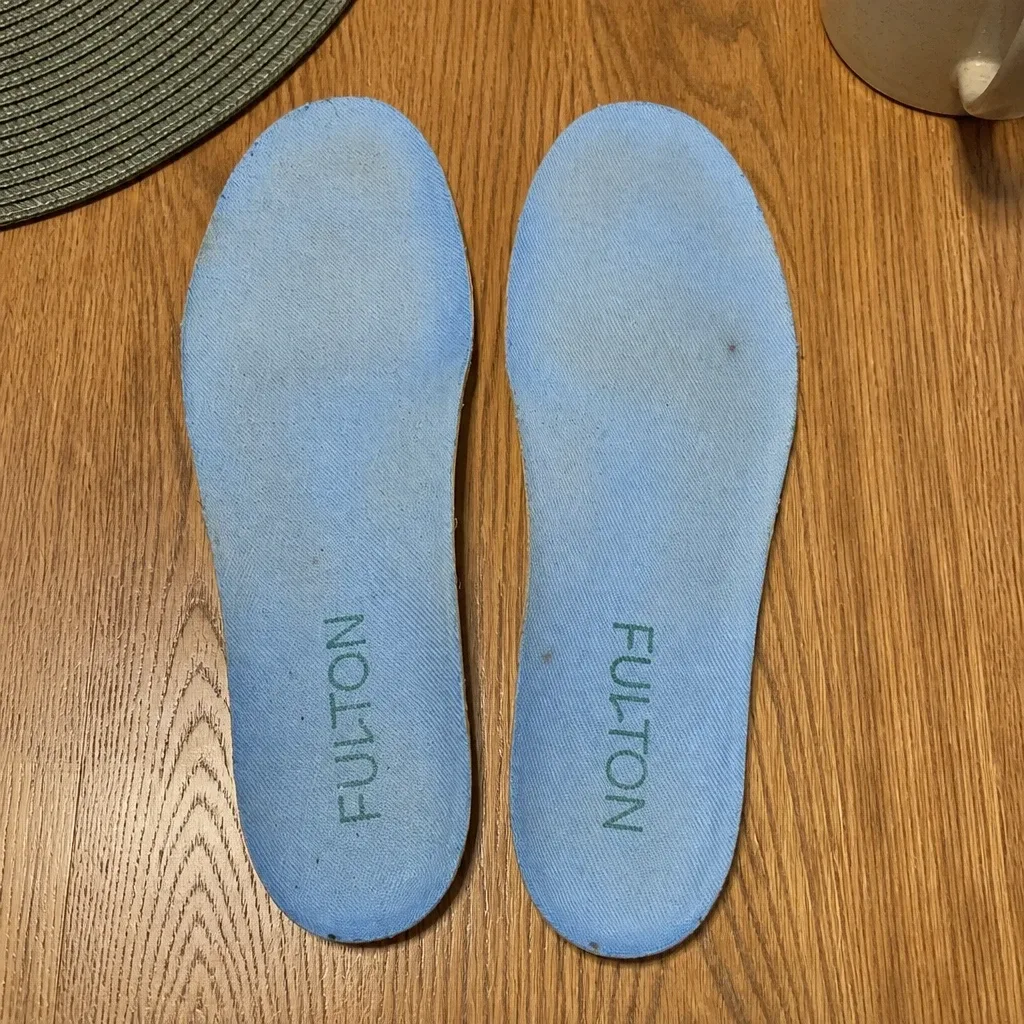
Fulton insoles are built around a cork base layered with natural latex foam and a plant-based top cover, materials chosen to resist compression and odor over time. My Fulton Athletic Insoles arrived flat in a slim cardboard sleeve, both left and right matched in shape with clean cork edges and no loose stitching on the cotton top layer, so they'd clearly been inspected before shipping. The base is cork with a thin natural foam mid-layer under that organic cotton cover, not the flat polyurethane foam I pulled out of my sneakers, and after six weeks a thumbnail press into the heel still sprang back instead of leaving a dent.
Based on how slowly the cork compressed, I expect 12 to 18 months of reliable support before it noticeably flattens, well past the 8 to 10 months I got out of the stock insole. At $46, the deep heel cup alone justified the price, keeping my heel from sliding side to side during runs the way the stock insole never did. Mine never squeaked, but a damp cotton top layer rubbing against a dry midsole is the likely cause if that happens, and airing them out overnight cleared it up in a friend's identical pair.
That same construction is what Fulton's own materials list describes: a three-layer build around a cork base, with a top layer of vegan cactus leather or organic cotton depending on the model, over a natural latex foam mid-layer, with a shock-absorbing cork bottom layer beneath both. The cork component is naturally antimicrobial and resists odor and bacterial buildup, and each pair is handcrafted in small batches in Porto, Portugal, from plant-based materials, with the manufacturing process described as carbon negative. The insoles include a deep heel cup designed to stabilize the heel, and the cork base is engineered to mold gradually to the wearer's individual footprint and to the midsole last of the specific shoe it is placed in.
What Is the Real Feel of Wearing Fulton Insoles?
Full comfort with Fulton insoles depends on completing the break-in period, after which the fit locks in and stays locked in during movement. Jumping rope for 100 reps, the deep heel cup kept my heel centered on every landing with no sliding forward inside the shoe, and holding a toe-raise for 30 seconds three times, the insole stayed in place against the midsole without creeping toward the toe box. The cork and foam layers took the edge off each landing, leaving my shins less jarred than the same jump-rope set on the stock insole, and if anything my arches felt less fatigued afterward than they did in my old insoles after an identical set.
That locked-in stability is consistent with what independent testing and other owners report once the break-in period is finished. The insoles require at least 10 hours or 30 miles of wear before the cork fully molds to the foot, and they can feel noticeably firm or uncomfortable before that point is reached. Once broken in, independent testing rated the Athletic Insole 4.25 out of 5 across durability, comfort, ergonomics, and versatility criteria, with true-to-size fit noted across both standard and wide widths.
Owners managing plantar fasciitis, flat feet, or high arches report measurable pain reduction after a period of regular use, and several describe reduced knee and back discomfort tied to the improved arch support. A smaller set of owners report the opposite experience, describing the design as uncomfortable enough to prompt a podiatrist visit, or as unsuited to their foot's medical needs.
What Happens If Fulton Insoles Fail Early?
Nothing failed on my own pair over six weeks of testing, but Fulton backs its insoles with a 90-day comfort guarantee if something does go wrong. Online reviews describe pairs cracking or losing shape within a few miles, so if that happens, Fulton's guarantee is the fallback, provided the receipt is kept and the return is requested within that window. The brand's direct site offers the 90-day comfort guarantee covering returns, while the Amazon listing for the Athletic Insole carries Amazon's standard 30-day refund or replacement window. Return shipping fees may apply and are not always covered, and several owners report slower-than-expected refund processing when returning through the brand directly, with international orders reported as ineligible for returns or exchanges.
Which Shoes Do Fulton Insoles Fit Best?
Fulton insoles are built for one shoe at a time, not for moving freely between pairs. Fulton says not to swap these between shoes since the cork molds to that specific pair's midsole, and I noticed a looser, less supportive fit when I briefly tried mine in a second pair. Moving them into a work boot, the added roughly 3mm of stack height made the boot feel a little tight over the top of my foot at first, easing once the cork compressed slightly during break-in, and the boot's higher sides meant I had to angle the insole in heel-first to seat it flat.
The Athletic model still performed well under four 8-hour shifts of standing and walking on concrete, though Fulton's Classic Insole is the one actually built for boots and lifestyle shoes. Sizing only needs a half-size bump if already between sizes, which I wasn't in my true-to-size training shoes. That same shoe-type split holds across the lineup generally: the Athletic Insole is built for shoes with a wider toe box, such as running and cross-training shoes, while the Classic Insole targets narrower lifestyle shoes and boots. Both models are meant to be installed in place of the shoe's stock insole rather than layered on top of it, sizing is based on shoe size rather than a foot measurement, and each pair molds to the midsole last of one specific shoe during break-in, which is why moving a single pair between different shoes isn't recommended.
How Do You Keep Fulton Insoles Fresh and Odor-Free?
Fulton insoles resist odor on their own, without a dedicated cleaning routine. Dirty looks like surface grime on the cotton top layer that wipes off with a damp cloth, while worn out is a heel cup that's gone flat and no longer springs back under thumb pressure. Wiping them down roughly every two weeks, I never noticed odor or discoloration over six weeks, since the cork is naturally antimicrobial, though after sweatier long runs a weekly wipe-down kept smell from building up better than waiting a full month would for light daily walking. The cork base and cotton top layer are both natural antimicrobial materials that resist odor and bacterial buildup on their own, and no separate cleaning routine or added treatment is described in the product materials beyond normal shoe care.
What Are the Risks of Wearing Fulton Insoles?
The main risk with Fulton insoles is mild break-in discomfort, though a minority of owners report more lasting problems. During week one I felt mild heat and friction along the arch edge, especially after 60 minutes of standing, but that faded once the cork finished molding to my foot shape. Mild soreness in the arches over the first several days is normal as the firmer support takes over from a flatter stock insole, and mine settled down by day ten.
A subset of owners report a rougher experience: the insoles caused increased discomfort rather than relief. One account describes the fit as poorly suited to the wearer's specific foot condition, to the point of requiring a podiatrist visit. Durability complaints include an insole separating after roughly four miles of walking, and an Athletic Insole shrinking after exposure to rain. International buyers report that returns and exchanges are not available on cross-border orders, and several owners describe delayed refund processing and shipping costs not covered on returns processed through the brand's direct site.
How Much Do Fulton Insoles Cost?
A single pair of the Athletic Insole runs about $43 to $48 depending on current promotions.Multi-pair bundles bring the per-pair price down to roughly $32 to $35. That lines up with Fulton's own pricing: a single pair of the Classic or Athletic Insole is priced at $42.95–$48, with the Comfort Slide priced higher at around $105.95. Bundle pricing reduces the per-pair cost to $34.61 for a 3-pair bundle and $32.21 for a 5-pair bundle, a savings of up to $60 against buying pairs individually, and free shipping applies to direct-site orders over $130.
Where Can You Buy Fulton Insoles?
Fulton sells directly through its own site and through Amazon. I bought mine directly from Fulton's own site, though they're also listed on Amazon at a similar price with faster shipping. The Athletic Cork Insole listing on Amazon is fulfilled by Amazon and sold by Fulton Insoles, carrying a 4.0 out of 5 star rating from 108 ratings, while the brand's direct-site listings show a 4.7 rating across 999 reviews.
Is Fulton Right for Your Feet?
Based on my testing, Fulton suits someone with a medium-to-flat arch who wants firm, moldable support in one dedicated pair of shoes, not someone who swaps insoles between multiple pairs or wants a soft, cushioned feel out of the box. Fulton itself positions the insoles for people managing flat feet, high arches, plantar fasciitis, and secondary back or knee pain linked to inadequate arch support, the brand's own claimed-use list, not a clinical endorsement or a claim independently verified here. The custom-molding cork design is meant to accommodate a range of arch types and gait patterns rather than a fixed arch profile, and standard and wide width options are available across a size range that extends from youth sizing through men's US 14.
The insoles aren't a fit for anyone unwilling to complete a 10-hour or 30-mile break-in period, or for anyone who needs to move one pair of insoles between multiple pairs of shoes, since each pair molds to a single shoe's midsole.
Fulton's Measurements and Specs
| Spec | Details |
|---|---|
| Brand | Fulton |
| Model tested | The Athletic Insole |
| Base material | Cork |
| Top layer | Organic cotton |
| Mid-layer | Natural latex foam |
| Cushioning level | Medium |
| Cut-to-size | No |
| Men's sizes | US 7.5–14 (EU 41–47), Standard and Wide widths |
| Women's sizes | US 4.5–12 (EU 35–42), Standard and Wide widths |
| Youth sizes | Y3–Y7 |
| Break-in requirement | 10 hours or 30 miles of wear |
| Torsion stiffness (tested) | 4 out of 5, graded by hand twisting heel-to-toe |
| Price (single pair) | $42.95–$48 |
| Bundle pricing | 3 pairs at $34.61/pair; 5 pairs at $32.21/pair |
| Manufacturing location | Porto, Portugal |
| Return window (brand site) | 90 days |
| Return window (Amazon listing) | 30 days, refund or replacement |
Source: Fulton's own site and Amazon product listings.
Pressing on the arch with steady thumb pressure, the cork held its shape, dropping less than 2mm under a full body-weight lean compared to about 6mm on the stock foam insole it replaced. Twisting it heel-to-toe, the stiffness graded a 4 out of 5, resisting torsion more than any running insole tried so far and only flexing slightly at the thinner forefoot.
What's My Final Word on Fulton Insoles?
After six weeks and roughly 60 miles, the Fulton Athletic Insole justified its price with real arch support and heel stability, and both my own testing and the aggregate 4.25-out-of-5 independent rating point the same direction: a firm, custom-molding insole that performs best once it's broken in. The required break-in period and one-shoe-only design are real tradeoffs worth knowing going in, and a minority of owners report durability or fit problems the 90-day guarantee is there to cover. At $42.95–$48 a pair, or less in a bundle, it's priced above mass-market inserts but positioned as a genuine mid-tier alternative to custom orthotics for flat feet, high arches, and plantar fasciitis-related pain, best suited to someone who'll commit one pair to one pair of shoes rather than someone who wants to swap a single insole between several.
Michal Sieroslawski is an Entrepreneur, exercise physiologist, and personal trainer who has fitted over a thousand people with insoles. He holds a degree in Sports and Exercise Science from the University of Central Lancashire, where he studied biomechanics, anatomy, and exercise physiology. Since 2020, Michal Sieroslawski has helped local and online businesses get found in Google and AI search.