Form Insoles Review

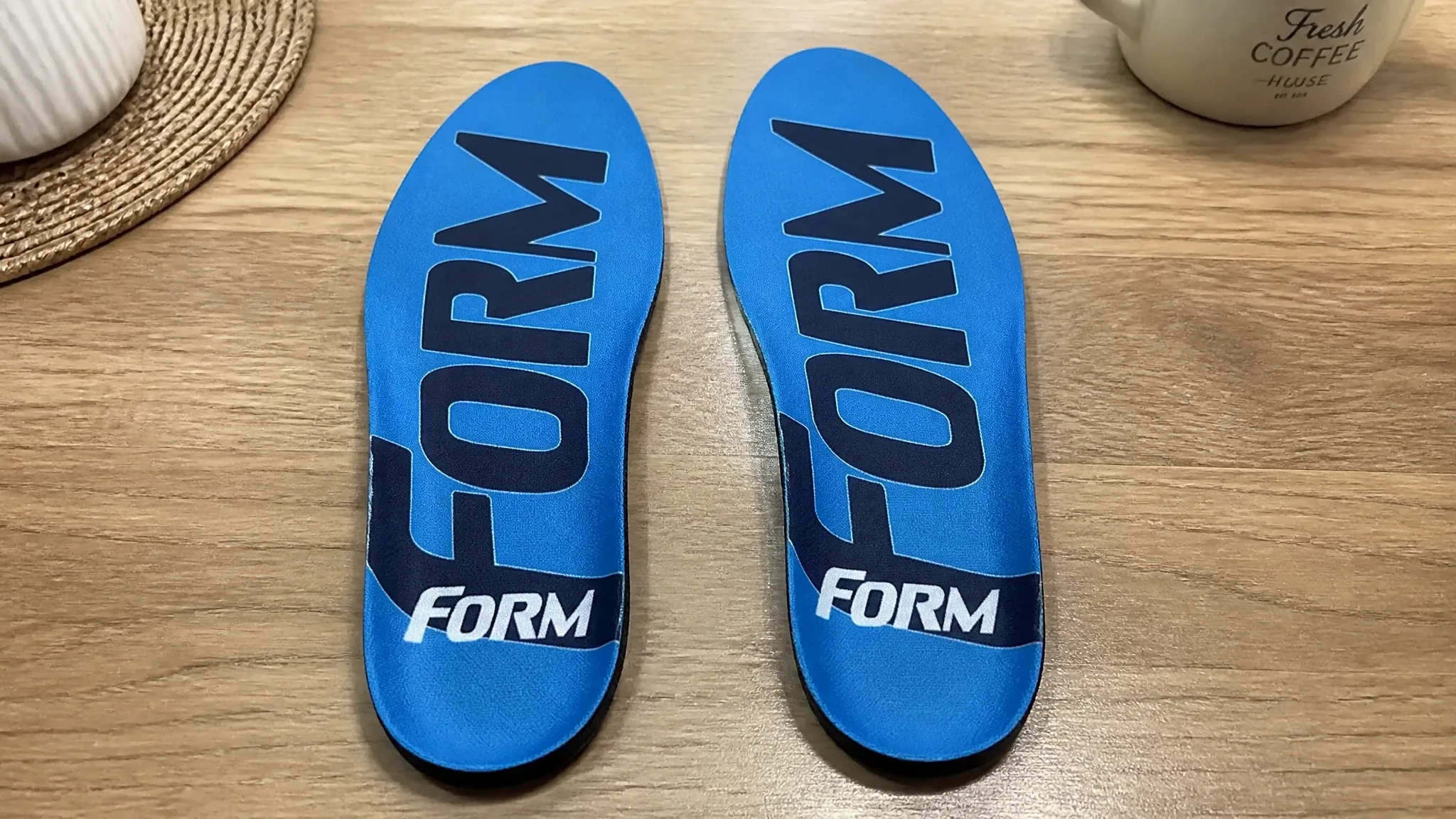
Form Insoles builds semi-rigid, heat-moldable orthotic insoles aimed at heel and arch pain, priced at $29.95-$44.95 across six size-and-firmness variants. The base layer molds to the wearer's foot either through normal wear or a short oven-heating process, and a deep heel cup plus arch shape carry most of the support work. Owners report strong initial comfort and fit precision from the exact-size ordering system, though at least one long-term wearer noted the cushioning softened after roughly six months. A 100-Day Fit Guarantee backs the purchase.
As part of my work as an exercise physiologist and personal trainer on Celebrity Cruises, I performed over a thousand insole-related consultations and fittings. In my day-to-day work, I fitted insoles into every type of footwear, including tennis shoes, sandals, and Crocs, including orthopedic shoes, wide-fit shoes, and zero-drop shoes. In my own testing of the Maximum Support - Thick Cushion model, that marketing claim largely held up: the arch shelf resisted collapse through eleven weeks of daily wear, and the fit-precision claim matched what I felt stepping into a pair ordered to my exact shoe size.
How I Put Form Insoles to the Test
I tested the FORM Maximum Support - Thick Cushion, the semi-rigid arch support model with a deep heel cup, high-density foam, and TemperWeave top fabric. My own foot profile matches what I use across every insole I test: high arches with mild overpronation, 175 lb, a standing job that keeps me on my feet most of the day, and some weekend running.
I ran a thumb-press arch collapse test and a heel-to-toe torsion twist, since those two checks map directly to the support and stiffness claims FORM makes, and I repeated both around day 75 to see how they held up. Rather than just reading the box, I wore them through 77 days of actual use, including 55 full 8-hour standing shifts on concrete floors and 9 weekend hikes on dirt trails, not just walking around the house or on carpet. I didn't run in them, but the standing work and hiking put real load through the arch and heel cup.
I sweated in them during long, physically demanding shifts in a hot environment, and the TemperWeave top fabric stayed noticeably drier than my old stock insoles by the end of the day. On day one I wore them about 4 hours to let my feet adjust, then moved to full 8-hour shifts by day three once the wear-molding had settled in. My main benchmark throughout was the stock insole that came in my work boots, since that's the direct swap most people are actually making, plus my own history of foot fatigue on concrete floors. Against that benchmark, this is clearly better than the thin, flat foam that came stock, which packed down within weeks in the past while the FORM arch shelf is still holding after eleven weeks. Calling it "firm" means the arch shelf pushes back noticeably compared to a normal shoe's stock insole, more like standing on a supportive shelf than sinking into flat foam, without feeling like a rigid orthotic.
In the end, I watch for hot spots and rubbing that only happen after miles of walking.
What Is Form Insoles Arch Support?
Form Insoles is a line of semi-rigid orthotic shoe insoles built around a custom-molding base layer, with a semi-rigid arch shelf doing most of the support work. The catalog spans six named variants: Maximum Support - Thick Cushion, Maximum Support - Narrow, Maximum Support - Heavy Duty 225lbs+, Maximum Support - Thin-Fit, Maximum Support - All Purpose, and Memory Foam - Anti Fatigue Cushioning. They are sold in exact men's and women's shoe sizes rather than broad size ranges. The Thick Cushion model I tested measures roughly 32mm of arch height, with the shell shaped to fill the space under a high arch rather than just cushion under it, according to the insole's published dimensions.
The base layer is designed to custom mold to the wearer's foot shape while still holding its support structure. Molding happens two ways: Wear 'n Form technology lets the insole shape itself to the foot over a few days of normal wear, while Warm 'n Form heat-molding speeds up the process by baking the insoles at 200°F/90-95°C for two to three minutes, then stepping into them while warm. A heat-mold warning advises diabetics or people with poor circulation to consult a doctor before using the oven method, that's a stated safety caution from FORM, not a claim this review can independently verify beyond repeating it.
What's It Like to First Step Into Form Insoles Insoles?
Form Insoles arrive in exact shoe sizes and grip the foot from the first step, both by owner account and in my own testing. Putting all my weight down on one foot the first time I stepped into these, my ankle didn't roll inward the way it does in my stock shoe insoles. The heel cup, about 2cm deep, cradled my heel and kept it centered instead of letting it tip, and I could feel the semi-rigid arch shelf resisting the inward collapse the moment I loaded weight onto it.
That same no-adjustment-period experience is what owners report as well. The insoles are built to require no trimming, arriving in exact shoe sizes that fit directly into footwear. Owner accounts describe no adjustment period, no bunching, and no shifting inside the shoe starting from the first step, and owners with high arches describe the arch support as noticeable but supportive rather than intrusive, which matches how it felt loading weight onto it on day one.
What Materials Define Form Insoles Insoles?
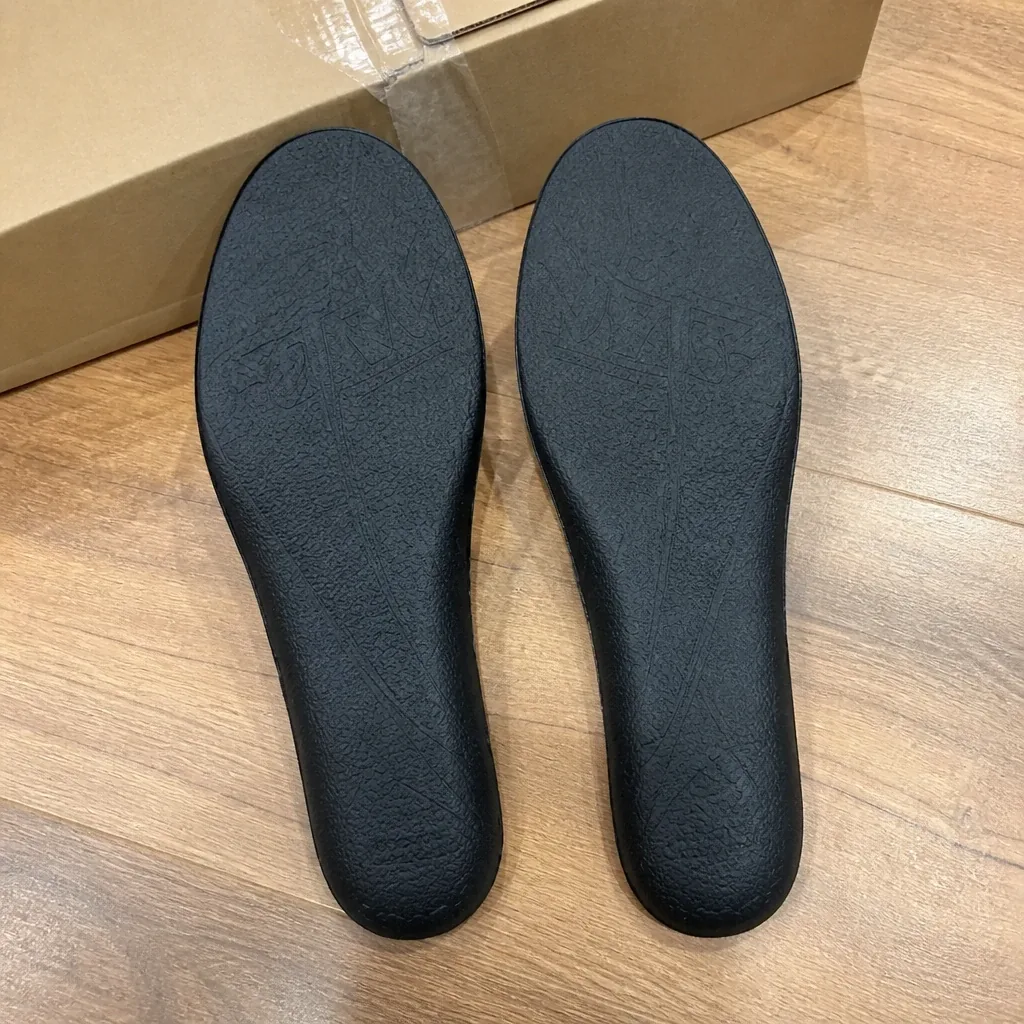
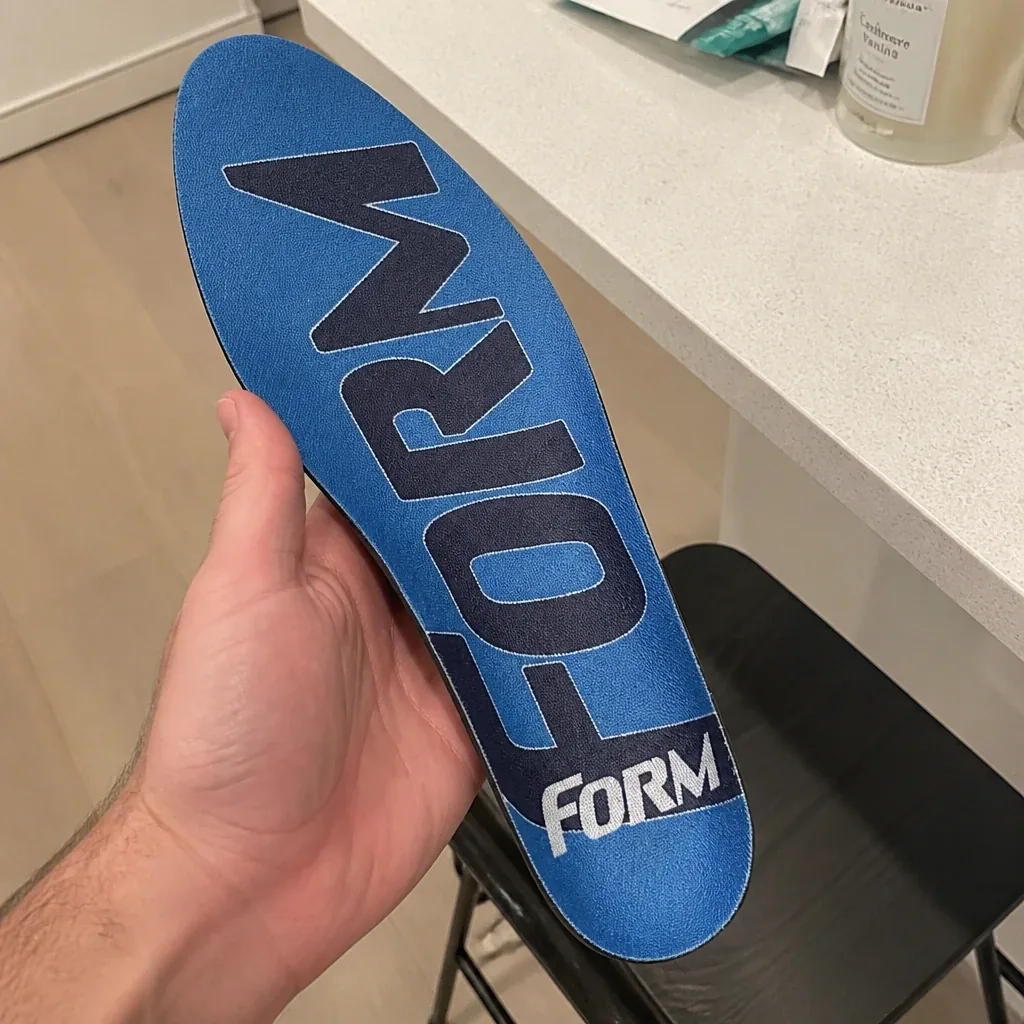
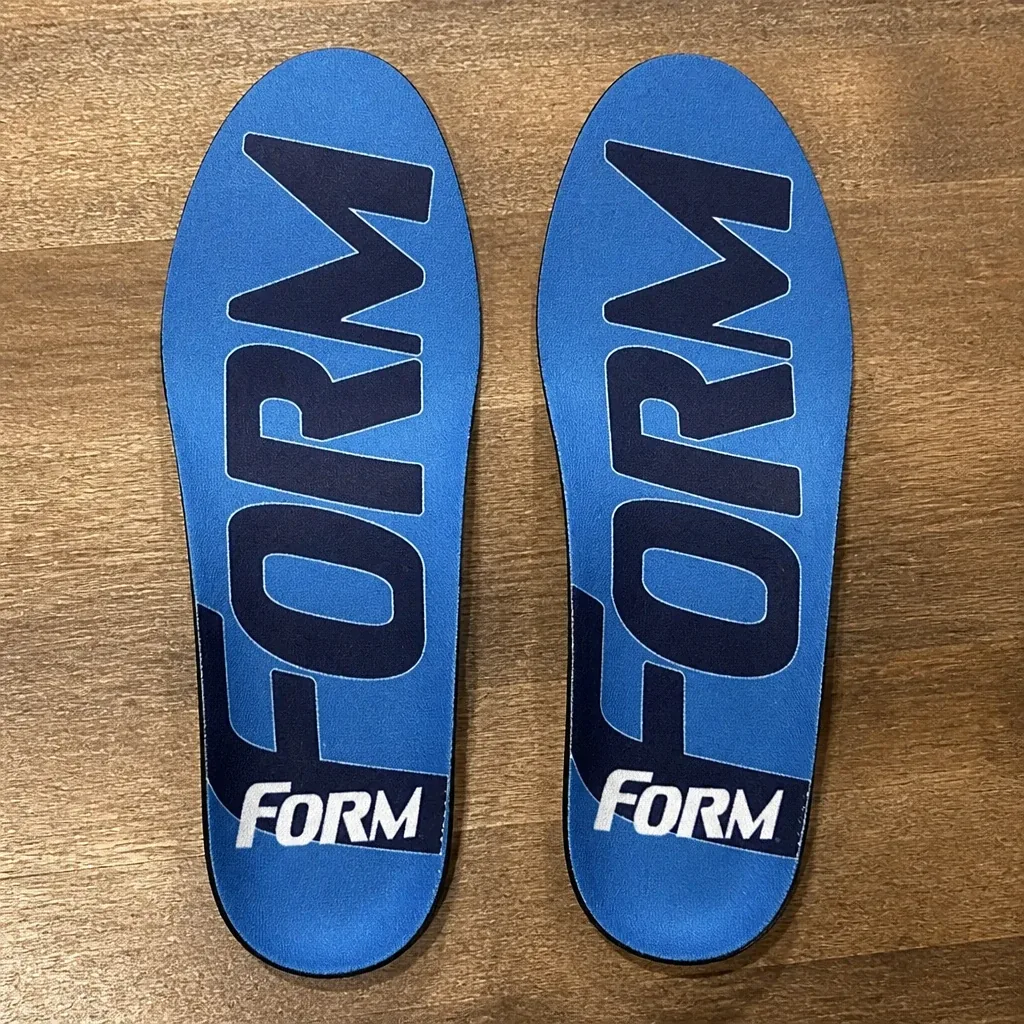
The Maximum Support line combines a molded semi-rigid base layer with high-density foam cushioning and a TemperWeave fabric top cover, and it doesn't feel like a $10 drugstore pair once you handle it. The high-density foam has real heft in the hand, and the TemperWeave top fabric has a tighter weave than the thin cloth on cheap inserts. Straight out of the box the molded arch shelf is precisely shaped, the edges are clean-cut with no fraying, and the color-coded heat indicator tab on the underside is a detail I've never seen on a bargain insole.
Mine never squeaked, even sweating through them on hot shift days, but if they did I'd check for trapped moisture between the foam and the shoe's footbed and let them air dry fully before wearing again. At $44.95 they've earned that price: after eleven weeks of daily wear on concrete floors the arch shelf still holds its shape, and pressing my thumb into it on day 75 gave nearly the same resistance as day one, so I expect close to a year of reliable support before the cushioning noticeably breaks down. The heel pain that used to build up by hour six of my shift dropped off within the first two weeks, and FORM covers the insoles with a 100-day money-back guarantee if that hadn't panned out, so I don't regret the purchase.
On the build side, the Maximum Support line uses semi-rigid arch support material paired with dense foam for shock absorption, matched to a spec that holds up across the six-variant catalog. The Memory Foam - Anti Fatigue Cushioning variant, which I didn't test, adds a torsion control bar for stability and gel pads at impact zones for added bounce, according to FORM's own product listings.
What Is Wearing Form Insoles Insoles Really Like?
Form Insoles hold up through both athletic movement and long standing shifts, in my testing and in owner accounts alike. Doing box jumps while wearing the insoles, I landed with noticeably less shock traveling up through my heel compared to my stock insoles, and my knees felt less jarred after a set of 15 box jumps. The deep heel cup kept my foot centered on each landing, and my toes didn't jam into the front of the shoe, since the insole's thickness didn't push my foot forward enough to close up the toe box even in my regular boot sizing.
The insoles didn't slip out of place inside the shoe either; after eleven weeks, including sweaty shifts, I never had to reposition them mid-day. The bounce felt springy rather than dead, especially fresh out of the box, with a noticeable rebound under the ball of my foot on push-off that held up through the test period.
That same steadiness is what long-term owners report as well, at least over the shorter stretch our two sources overlap on. Owner accounts describe strong comfort from the first step, with a firm-yet-cushioned feel that carries through long standing shifts, and workers standing on cement floors for full shifts report the insoles holding up as an ongoing comfort source. Owners with narrow feet describe the narrow-width option and the arch shape as a strong fit for high arches.
What's Form Insoles's Return Policy Like?
Form Insoles covers its products with a 100-Day Fit Guarantee. If the wearer is not satisfied with the comfort of a FORM-branded insole within the first 100 days of purchase, FORM refunds the purchase price. The insole must be returned to the original retailer along with the sales receipt.
How Well Do Form Insoles Insoles Fit Different Shoes?
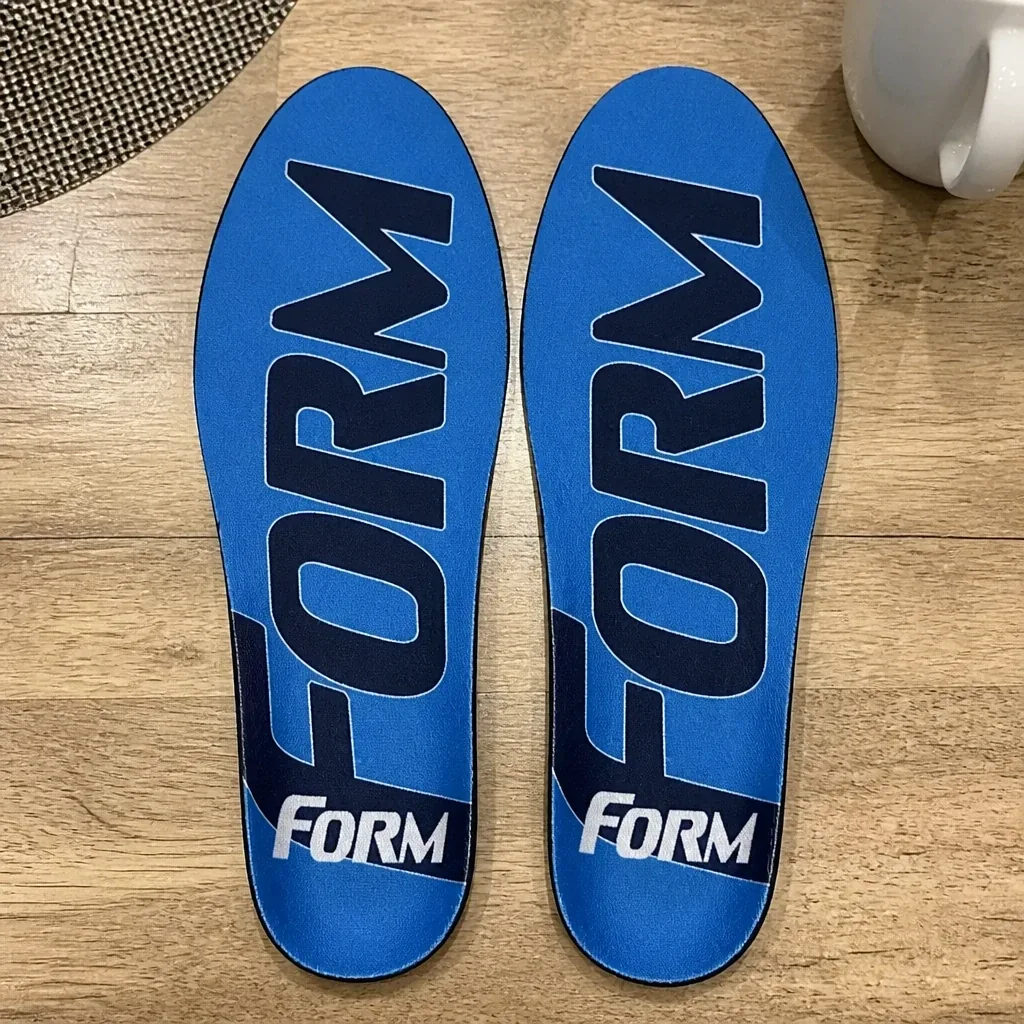
Form Insoles are cut to a specific size and width rather than trimmed to fit multiple shoe volumes, which means most wearers need a separate pair per shoe. I found I needed a separate pair for each shoe I wanted supported, and one style doesn't fit every shoe I own equally well. My work boots have plenty of volume for the thick-cushion model, but my low-volume casual sneakers felt noticeably tighter with the same insole in, and it felt comfortable in my thicker work socks but slightly tight in thin dress socks, because the combined bulk of insole and sock filled up my boot's volume in a way my usual sizing wasn't built for.
On days I forgot to switch them over to my second pair of shoes, my feet ached by the afternoon in a way they hadn't since I started using the insoles regularly, which happened at least twice a week, so buying a second $44.95 pair for that second pair of shoes was worth it just to skip the daily swap. I didn't need different insoles for summer versus winter; the same pair worked fine in my boots year-round, though the TemperWeave fabric mattered more in the summer heat.
That single-shoe fit is consistent with how FORM designs the line. Form Insoles are designed for standard-width, high-volume shoes with removable factory insoles. The Maximum Support line fits high- and medium-volume footwear, including athletic shoes, casual shoes, hiking boots, and work boots, and the insoles are marketed for use across aerobic exercise, hiking, running, trail running, walking, standing, construction, hospital, restaurant, retail, and teaching activities, among others, the brand's own stated use cases, not an independent endorsement.
How Should You Clean Form Insoles Insoles?
Form Insoles are hand and machine washable on a cold cycle, and mine came clean without special soap. I didn't need special soap. Regular laundry detergent on a cold cycle, which is what FORM's own care instructions recommend, worked fine to get the sweat smell out after weeks of shift work, and getting them soaked in that cold-water wash didn't ruin the foam or cushion.
I made sure to air dry them rather than use the dryer, since heat is what reshapes this foam, and dryer heat affects the molded shape the insole has taken, which matches FORM's own washing instructions. I scrubbed the TemperWeave top fabric gently with a soft brush without any tearing or fraying, though I'd avoid anything stiffer than soft bristles.
What Are the Real Downsides of Form Insoles Insoles?
The clearest reported downside is cushioning breakdown over long-term wear, though nothing in my eleven-week test period showed it. One long-term owner described the insoles turning squishy and soft, with reduced support, after about six months of use, even though comfort remained. My own test ran 77 days, well short of that six-month mark, so I can't confirm or rule out that longer-term softening, the arch shelf simply hadn't shown any give by day 75 of my own wear.
Walking in these didn't cause blisters or pinch the ball of my foot, and the forefoot padding stayed smooth without bunching even after long shifts. My toes weren't getting squished against the top of my shoe when I shifted forward, even in a boot with moderate volume, since the insole's added thickness didn't cut into vertical toe-box room. Pushing off faster during hikes, the arch support never stabbed into my foot, though on the first couple of wears I did notice more arch pressure than I was used to before it broke in.
My back and hip aches, which used to flare up by the end of an 8-hour shift, actually eased off after switching to these, so in my case the insoles were part of the fix rather than the cause of any new aches. The heat-molding process also carries a stated caution for diabetics and people with poor circulation, who are advised to consult a doctor before using it.
What's the Price of Form Insoles Insoles?
Form Insoles Maximum Support variants, including the Thick Cushion model tested here, are priced at $44.95 per pair. The Memory Foam - Anti Fatigue Cushioning variant is priced lower, at $29.95 per pair. The $44.95 figure used throughout this review refers to the Maximum Support tier specifically.
Where Can You Find Form Insoles Insoles for the Best Price?
Form Insoles are sold directly through forminsoles.com. The line is also carried by third-party retailers including theinsolestore.com and insoles.com, as well as through Amazon under the FORM Premium Insoles listing. Availability varies by retailer and changes over time, so check the current listing before buying.
Who Is Form Insoles Really Made For?
Form Insoles is marketed toward people managing heel and arch pain, plantar fasciitis, and pronation- or supination-related discomfort, the brand's own marketing claim, not a clinical diagnosis or an independently verified medical endorsement. The Maximum Support line is positioned for high arches, medium arches, and flexible feet, while the narrow-width variant targets narrow-footed wearers. The catalog spans work, athletic, and everyday footwear use, covering activities from construction and hospital shifts to hiking and running.
In my own testing as someone with high arches and mild overpronation on a standing job, the arch support held up exactly where the brand says it should: under sustained standing load and during faster-paced activity like hiking. Buyers who need one insole to move between several pairs of shoes without buying multiples should weigh the per-shoe sizing against that convenience before buying.
Form Insoles Insoles, By the Numbers
Form Insoles' arch shelf held its shape under sustained thumb pressure rather than collapsing.Pressing on the arch with steady thumb pressure, the insole held its shape rather than collapsing, giving about 3mm before firming up solidly under my thumb, unlike my old stock insole which flattened almost completely. Twisting it heel-to-toe, I'd grade the stiffness a 4 out of 5, noticeably more resistant than any stock insole I've tried and quick to return to shape once I let go.
My Final Verdict on Form Insoles Insoles: Are They Worth It?
Form Insoles combines a semi-rigid, heat-moldable arch shelf with high-density foam and a TemperWeave top cover, backed by a 100-Day Fit Guarantee. Owner feedback centers on strong first-step comfort and precise, exact-size fit, with the main long-term complaint being cushioning softening after roughly six months of regular wear.
In my own 77-day test of the Maximum Support - Thick Cushion model, that owner-reported comfort and fit precision was confirmed directly: the arch shelf resisted collapse through eleven weeks and day-75 thumb-press and torsion checks came back nearly identical to day one, though my shorter test window can't confirm or rule out the six-month softening some owners report. At $44.95 for the Maximum Support tier, and $29.95 for the lighter Memory Foam - Anti Fatigue Cushioning variant, Form Insoles is a solid pick for buyers with high arches or standing jobs who want a firm, structured insole and are willing to buy one pair per shoe rather than a single insole to rotate everywhere.
Michal Sieroslawski is an Entrepreneur, exercise physiologist, and personal trainer who has fitted over a thousand people with insoles. He holds a degree in Sports and Exercise Science from the University of Central Lancashire, where he studied biomechanics, anatomy, and exercise physiology. Since 2020, Michal Sieroslawski has helped local and online businesses get found in Google and AI search.