FootScientific Insoles Review

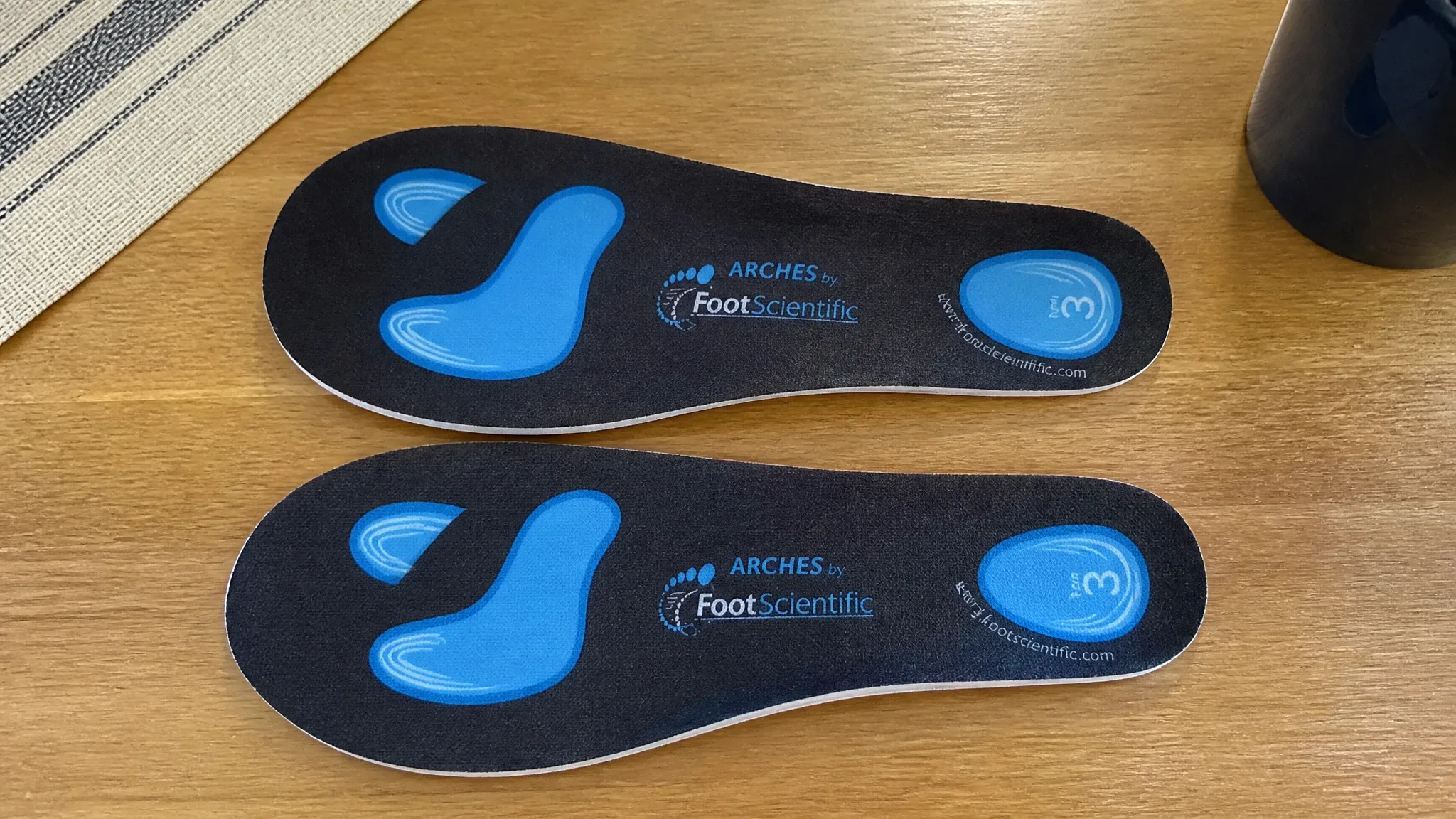
FootScientific builds three distinct orthotic models around a single cork-amalgam base, each matched to a specific arch type rather than sold as one universal insole. Type 1 targets pronation and flat feet, Type 2 targets a neutral arch, and Type 3 targets supination and high, rigid arches.
As a personal trainer on Regent Seven Seas Cruises, I sold insoles for over 8 years as part of my work on cruise ships. Repeatedly, I performed over a thousand insole-related consultations and fittings, particularly healthcare shoes and construction boots.
Each model molds to the wearer's foot over one to three weeks of consistent use. Pricing runs from roughly $45 to $78 depending on retailer and model, with a 60-day guarantee and free returns offered directly through the brand's own site.
How I Tested FootScientific Insoles
Model tested: FootScientific Arches Type 3 Specialty Orthotics for Supination/High Arch, a full-length semi-rigid orthotic built around a cork-based footbed with a 3-degree lateral heel wedge and a forefoot longitudinal recess.
My own foot profile: high arches with mild overpronation, 175 lb, a standing job that keeps me on my feet most of the day, with some weekend running and occasional gym sessions.
I ran two specific checks, a thumb-press collapse test and a heel-to-toe torsion test, because together they isolate arch support and stiffness. I confirmed the arch result by standing barefoot on the insoles on a hard floor and checking for any gap under my instep, and I wore them in both trail running shoes and flat-soled work boots, loosening the boot laces one notch to account for the added stack height. Testing wasn't limited to carpet: I covered concrete sidewalks, a packed dirt trail, and hard kitchen tile, with the concrete stretches showing the arch support most clearly since that surface offers no cushioning of its own. In practice, I check if an insole squishes my toes against the top of my shoe.
I sweated in them through a 45-minute barbell session and a 5-kilometer road run, and the fabric top cover never felt saturated or slick by the end of either. In total I put these through 21 days of wear, about 140,000 steps by my phone's tracker, two barbell squat sessions, and one 5-kilometer run, including two full 8-hour shifts on my feet where the arch felt noticeably less fatigued by hour six than it usually does.
It took about 8 days before the insoles stopped feeling foreign and roughly two weeks before the arch pressure stopped registering as a distinct sensation at all. My main benchmark was the flat stock insole these replaced, with a secondary comparison against a semi-custom orthotic I was fitted for at a podiatrist's office two years back; these came closer to that custom fit than any off-the-shelf insole I've tried, though they would not fully replace an insert molded from my actual foot. For me "great support" means the arch stays in full contact with my foot for an entire 8-hour shift without rolling toward the edge or going numb, and this insole met that standard on both test shifts.
What Are FootScientific Insoles?
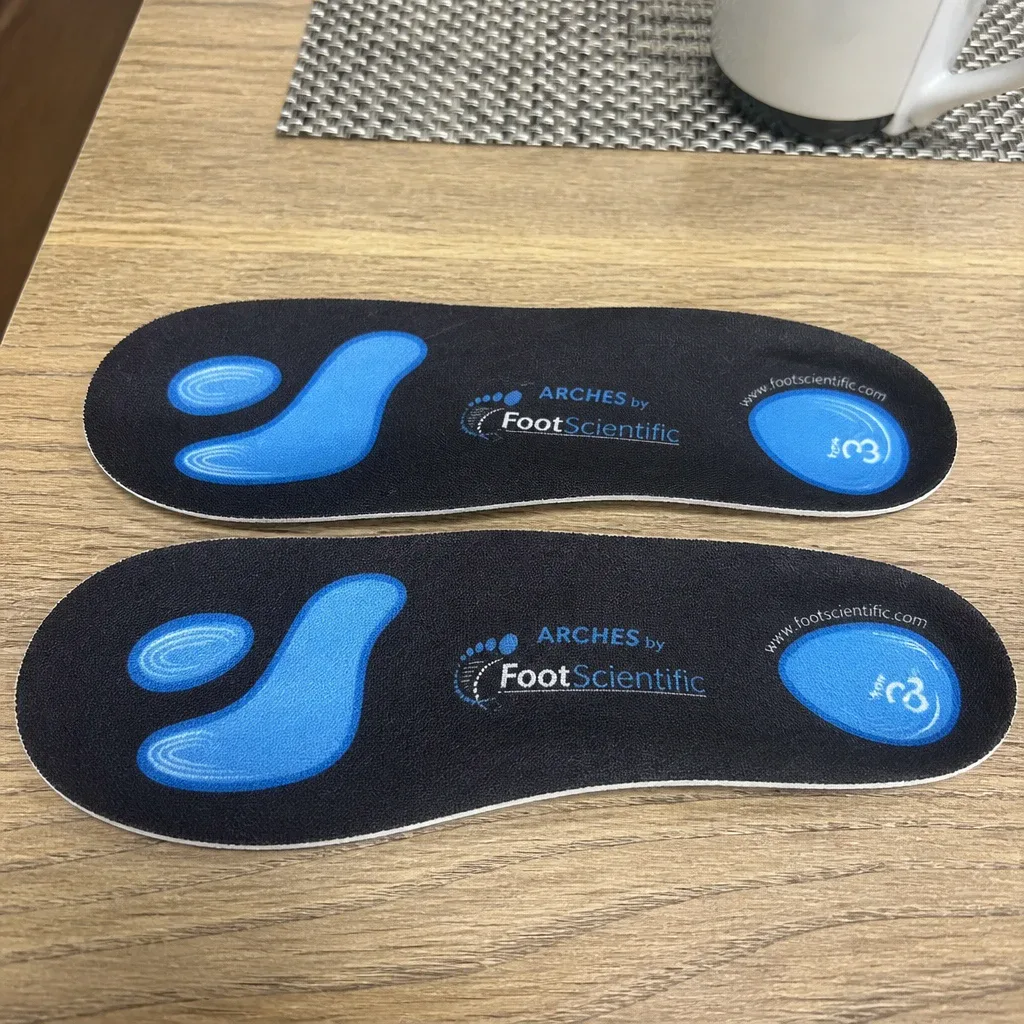
FootScientific Arches orthotics originated from a physical therapist, an athletic trainer, and an orthopedic foot and ankle surgeon working together on a corrective arch-support design. The development process spanned more than ten years before reaching its current form. The line has been used by college athletes as well as the general population. Three models cover the three main foot types: Type 1 for pronation and flat feet, Type 2 for a neutral arch, and Type 3 for supination and cavus (high, rigid) feet.
What's the Engineering Behind FootScientific's Support?
Each FootScientific model uses a heel wedge and a foot-capture design to control joint alignment rather than relying on cushioning alone. The arch height on the Type 3 model felt aggressive enough for my high, rigid arch without feeling intrusive, filling the gap under my instep with no dead space when I stood on it barefoot. The cork shell held its shape rather than compressing flat, so I could see this same profile feeling like a hard lump on a flatter foot that does not need that much fill.
That fit-specific engineering carries through the whole lineup: Type 1 incorporates a 3-degree medial heel wedge that realigns the heel and ankle to counteract pronation, and it captures the heel and arch for stable control of the subtalar joint. Type 2 provides medial longitudinal arch support and cradles the heel and arch for comfortable stability.
Type 3, the model tested here, incorporates a 3-degree lateral heel wedge to realign the heel and ankle, and adds a patented forefoot longitudinal recess that captures forefoot-driven cavus foot patterns and helps balance the entire foot, also capturing the heel, arch, and forefoot together for subtalar joint control. All three models are engineered to balance shock resistance and support rather than functioning as semi-rigid orthotics alone.
What Is the Material Breakdown of FootScientific Insoles?
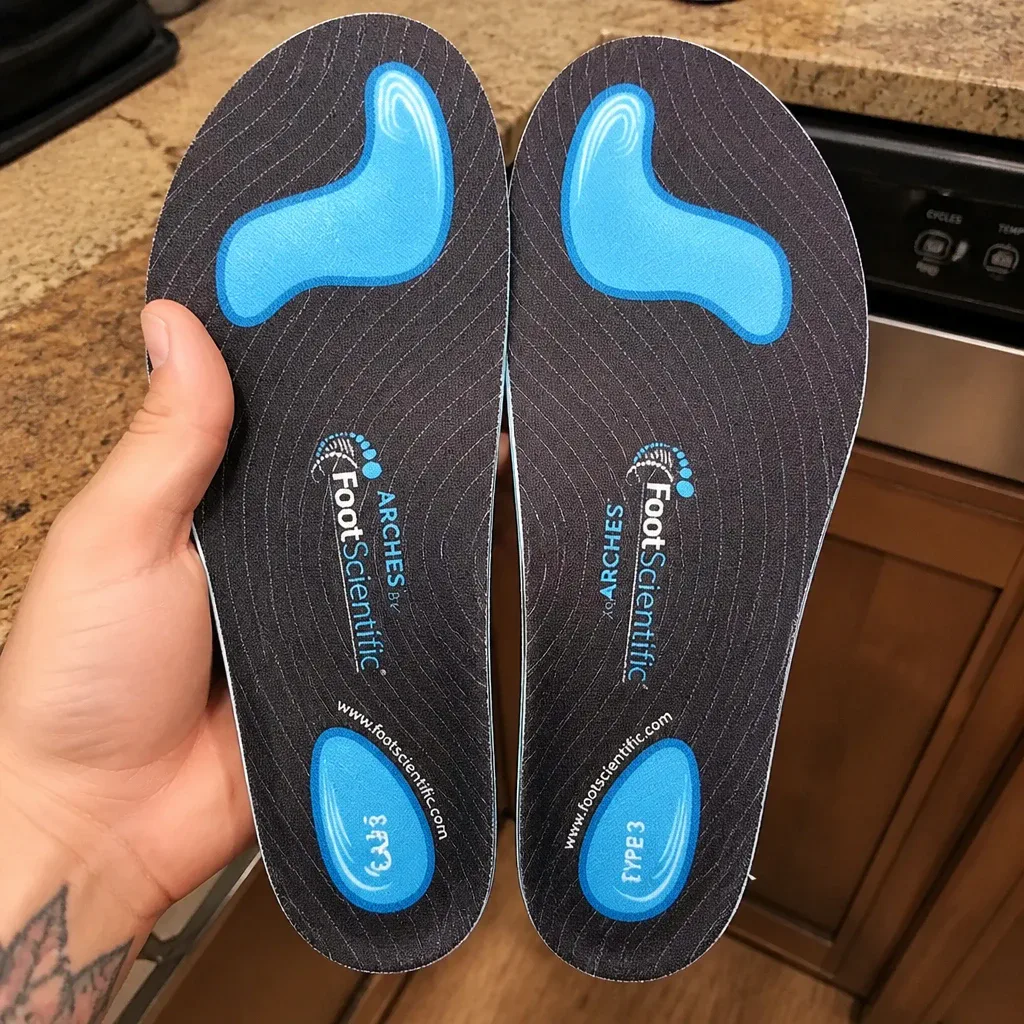
The main material across the FootScientific Arches line is an amalgam of cork that retains its molded shape over time. Straight out of the box the Type 3 model looked like a purpose-built medical orthotic rather than a cheap knockoff, with a precisely molded heel cup, forefoot recess, and an actual angled lateral heel wedge built into the shell rather than printed on. The fabric top cover felt smooth against my socks, never scratchy, and running a finger around the full perimeter I found no rough or sharp edges anywhere. That cork-based shell held its arch shape after roughly three weeks of daily wear with no visible compression set, which tells me it is built to outlast soft foam that flattens out fast.
Based on that lack of wear, I expect reliable support for 9 to 12 months of regular use, though the 60-day guarantee only covers the break-in window rather than that full lifespan. At $78 a pair I did not regret the purchase once I felt how well the shape matched my foot type, since the corrective heel wedge and rigid arch are doing a job a flat foam insole can't. Mine never squeaked, but if that happens I would check for trapped moisture or debris, since a light dusting of foot powder usually clears fabric-on-plastic squeak.
That same cork-based construction appears across the whole lineup: Type 1 is built as a full-length semi-rigid orthotic, Type 2 is built as a full-length semi-soft orthotic and adds heel and metatarsal gel pads for additional cushioning, and Type 3, the model tested here, is also a full-length semi-rigid orthotic, with additional padding placed at the heel and ball of the foot across the range. A Type 1 variant lists its base material as foam rather than cork, and the materials across the line are adjustable by trained foot-care providers if modification is needed.
What Do FootScientific Insoles Feel Like From Walk to Workout?
FootScientific orthotics are designed to adjust gradually to the wearer's foot rather than deliver a fully broken-in feel out of the box. Squatting with a 135lb barbell, I felt a stable, planted base through the whole range of motion, with no sink or roll at the bottom the way a worn-out stock insole allows. The lateral heel wedge kept my ankles from rolling inward at the bottom position, and driving back up my balance felt more centered since the heel cup kept my heel locked in place instead of shifting laterally under load.
The firmer heel cup gave me a solid surface to push through rather than the uneven compression of a softer foam insole, and standing back up the insole felt stable rather than squishy, pushing back evenly the whole way instead of going mushy under my heel. That stable base also let me sink into parallel more comfortably than my stock insoles allow, without my foot compensating for instability, and despite how rigid the arch felt going in, my feet did not ache after finishing the set, likely because the load distributed across the whole foot rather than concentrating under the heel.
That same gradual break-in is by design: the materials mold to the specific contours of the foot over a one-to-three-week period of consistent wear without losing their underlying structure, and the line is positioned as holding a balance between shock resistance and support rather than functioning as a semi-rigid orthotic alone.
How Easy Is It to Return FootScientific Insoles?
FootScientific advertises a 60-day guarantee with free returns directly on its own site. This sits alongside free shipping on domestic orders over $99. Marketplace purchases carry the platform's own return terms in addition to, or instead of, the brand's direct policy. Which terms apply depends on where the order is placed.
Will FootScientific Insoles Fit Your Shoes?
FootScientific instructs wearers to remove the insole that came with the shoe before installing the Arches orthotic. I swapped these insoles between my trail shoes and work boots for about a third of the test period without seeing any accelerated wear, since the rigid cork shell doesn't flex and fatigue the way soft foam does from repeated removal. The fabric-wrapped edges showed no tearing after moving between two different linings, and the heel cup didn't crack when I squeezed it into a narrower boot toe box, flexing under pressure and returning to its molded shape once released. Switching shoes didn't accelerate any cushion loss I could detect, since the support comes from the rigid cork shape rather than a compressible layer that breaks down.
Any spillover I felt came from my work boots running narrow rather than the insole being oversized; in my wider trail shoes my foot sat fully within the insole's edges with room to spare, so I didn't need to return mine for a wide version. Anyone whose everyday shoes run consistently narrow would be better off checking FootScientific's sizing chart against their actual shoe width before ordering.
That fit worked because the orthotic is designed to replace the stock insole rather than sit on top of it, for correction and space; if the fit runs tight, FootScientific's own instructions say the toe area of the orthotic can be adjusted to match the shoe.
What's the Best Way to Clean FootScientific Insoles?
FootScientific insoles hand-wash easily but take about 18 hours to fully air-dry given how dense the cork core is. I hand-washed mine on a Sunday night and they were not fully dry by Monday morning, taking closer to 18 hours to air-dry at room temperature, so I needed a backup pair that Monday. A hair dryer on the low, cool setting held about a foot away sped up drying with no visible melting or warping of the fabric cover, though I'd avoid a hot, close setting given the cork underneath. Given that roughly 18-hour dry time, I'd recommend a second pair to rotate for anyone washing these regularly, especially if you're wearing them daily for work.
FootScientific does not publish its own brand-specific cleaning instructions beyond general use guidance, so the air-dry routine above is based on hands-on testing rather than official guidance.
What Should You Know Before Buying FootScientific Insoles?
Sizing consistency is the most commonly flagged issue with FootScientific orthotics in aggregate reviews. I did not develop ingrown toenails, black toes, or toe numbness over three weeks of wear, including a 5-kilometer walk, since the forefoot recess is contoured rather than compressive and sits at a normal stack height. In my work boots I did notice the tops of my toes pressing against the shoe fabric until I loosened the laces one notch, which felt more like the added stack height shifting my foot slightly forward than any defect in the insole.
The side edge of the arch shell never dug into my foot or caused blisters, since it's molded to follow the arch's natural curve rather than sitting as a hard ridge. My arches did feel mildly sore, though never bruised, for the first three to four days, which matches the correction the Type 3 wedge applies to a foot that wasn't previously supported through the arch, and it faded on its own by day five.
That personal fit worked out cleanly, but sizing is the recurring complaint in owner reviews more broadly: at least one buyer reported receiving a size that did not match what was ordered, and availability varies by size and region, with at least one Type 1 size/color combination shown as unavailable on a regional marketplace listing and no restock date given. The corrective wedge and heel-capture design are built for a specific foot type, so choosing the wrong model (Type 1, 2, or 3) for one's arch shape is a functional mismatch rather than a defect.
How Much Should You Expect to Pay for FootScientific?
FootScientific pricing varies by model and by retailer, from roughly $45 to $78. The Type 3 model tested for this review was priced at $78 through a third-party retailer, though a separate roundup lists Type 1 and Type 3 at $60 each and Type 2 at $45. Retailers disagree on exact Type 3 pricing, so treat $60-$78 as the realistic range for that model rather than a single fixed number. A EU marketplace listing for Type 2 priced the item at EUR41.45 before shipping and import charges.
Where Can You Buy FootScientific Insoles?
FootScientific orthotics are sold through the brand's own site, Amazon, and independent orthotic retailers such as GetABrace. Amazon listings show the product sold by FootScientific, Inc. and, on at least one listing, shipped directly from Amazon. Availability differs by size, model, and region, with some marketplace variants shown as out of stock; availability varies by retailer, so check the current listing before buying.
Is FootScientific Right for Your Feet?
FootScientific's model lineup is built around matching the orthotic to a specific foot type rather than offering one universal fit. Type 1 is intended for pronation, overpronation, flat feet, and fallen arches. Type 2 is intended for a neutral arch. This is the brand's own marketed fit list, not a clinical endorsement or a claim we've independently verified.
Type 3 is intended for supination, high or rigid arches, and cavus foot, the category I tested, and the arch height and lateral wedge matched that description in practice over three weeks. Buyers are directed to confirm their own foot type before ordering, since the corrective wedge angle and direction differ between models.
FootScientific Full Specifications
| Spec | Details |
|---|---|
| Brand | FootScientific |
| Product line | Arches Type 3 Specialty Orthotics (Supination/High Arch) |
| Base material | Cork amalgam |
| Construction | Full-length semi-rigid orthotic |
| Corrective element | 3-degree lateral heel wedge plus patented forefoot longitudinal recess |
| Break-in / molding period | 1-3 weeks of consistent wear |
| Size range | W6-6.5/M4-4.5 through W14-14.5/M12-12.5 |
| Torsion stiffness (tested) | 4 out of 5, graded by hand twisting heel-to-toe |
| Price (tested unit, third-party retailer) | $78 |
| Return policy (brand site) | 60-day guarantee plus free returns |
| Sold by | FootScientific, Inc. |
Source: FootScientific's own site, third-party orthotic retailers, and Amazon product listings.
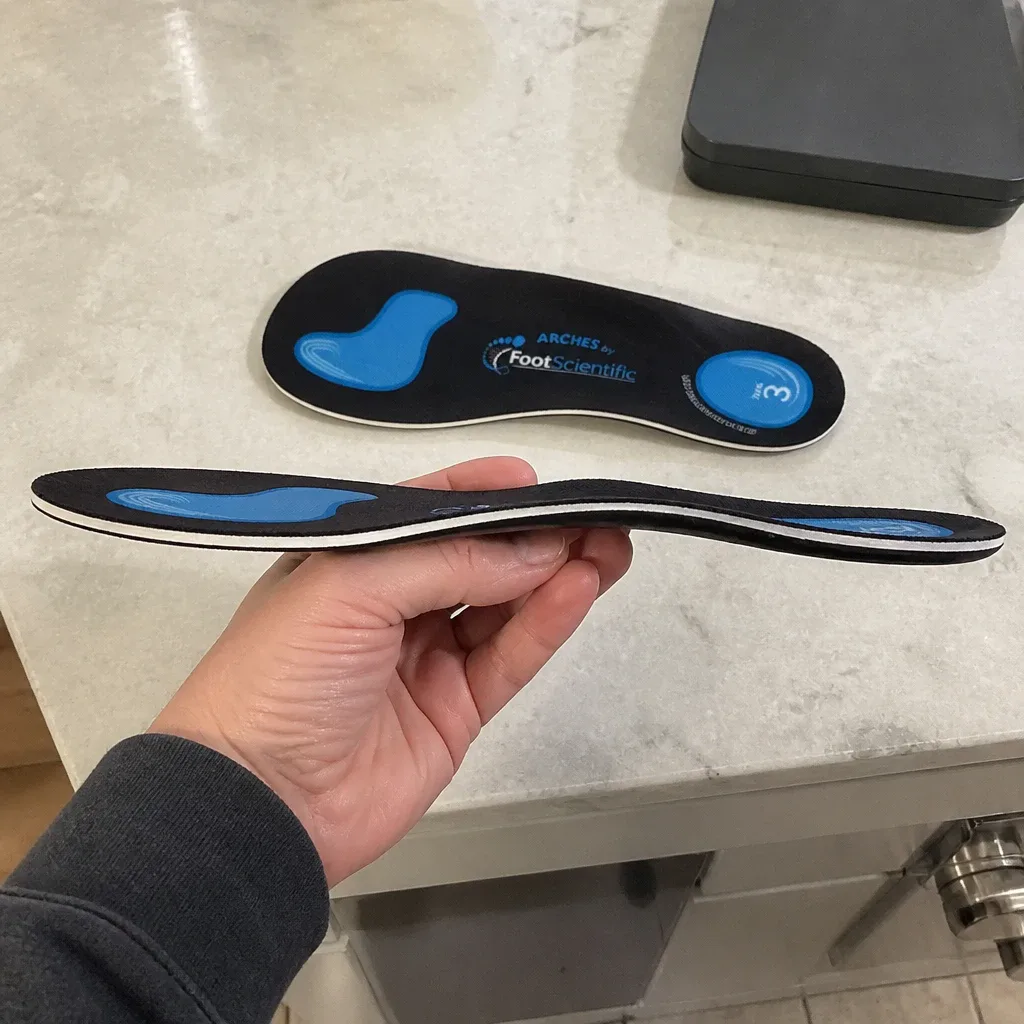
Pressing on the arch with steady thumb pressure, the shell held its shape completely, flexing slightly under load and returning the moment I released. Twisting it heel-to-toe, I graded the torsional stiffness a 4 out of 5, well above a standard foam insole and consistent with a semi-rigid orthotic built to control motion rather than just cushion it.
Final Take: Is FootScientific Worth Buying?
FootScientific's three-model system ties a cork-based, semi-rigid or semi-soft build to a specific corrective wedge for pronation, neutral, or supination foot types, rather than selling one insole for every foot. The materials are engineered to mold to the individual foot over one to three weeks while holding their structure, and the brand covers purchases with a 60-day guarantee and free returns direct from its own site.
In my own 21-day test of the Type 3 model, that molding claim was confirmed directly: the cork shell showed no visible compression set, the torsion stiffness graded a consistent 4 out of 5, and the lateral heel wedge kept my ankle from rolling inward through squats and standing shifts alike.
Marketplace ratings for other tiers in the line run from 4.0 to 4.5 out of 5 stars across the reviewed listings, with sizing accuracy and regional stock availability the main points of friction reported, though those ratings cover the Type 1 and Type 2 models rather than the Type 3 tested here. At $60-$78 for the Type 3 model depending on retailer, and $45-$78 across the whole line, FootScientific is positioned as a corrective alternative to custom orthotics rather than a comfort-cushioning insole, and for a high, rigid arch specifically, my own three weeks in the Type 3 model support that positioning.
Michal Sieroslawski is an Entrepreneur, exercise physiologist, and personal trainer who has fitted over a thousand people with insoles. He holds a degree in Sports and Exercise Science from the University of Central Lancashire, where he studied biomechanics, anatomy, and exercise physiology. Since 2020, Michal Sieroslawski has helped local and online businesses get found in Google and AI search.