FootBalance Insoles Review

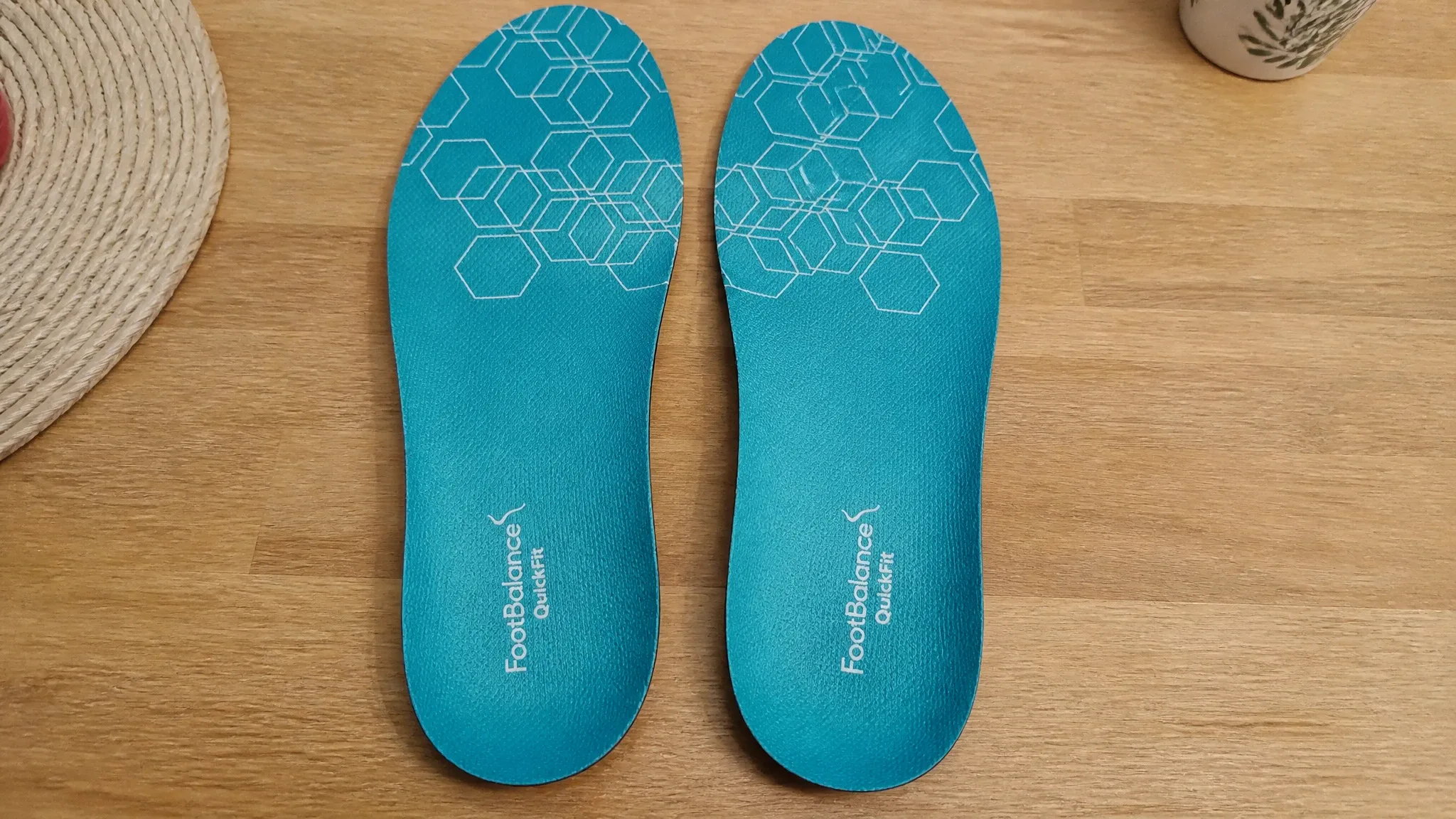
FootBalance sells both pre-molded, heat-customizable insoles and fully custom in-store molded insoles built around a dynamic Balance Plate. The lineup spans the QuickFit Balance, QuickFit Casual, QuickFit Control, and 100% Impact models alongside a fully bespoke in-store molding service. Pricing runs from roughly $45-50 for pre-molded models to $79.95 for the 100% Impact model, with the in-store custom process priced separately through partner retailers. The brand positions its insoles as fit-and-comfort enhancers rather than rigid orthotics, built to alleviate foot and heel pain, plantar fasciitis, shin splints, and heel spurs through a dynamic medial arch support plate.
Working as an exercise physiologist on Oceania Cruises, I fitted people from 70-plus countries with insoles over 8 years. Repeatedly, I based the arch support size directly on the customer's dynamic footprint. In real fittings, I inserted supports into customers' shoes for immediate walking and balance tests. That included construction boots, hiking shoes, and training shoes, the same range of footwear I leaned on while testing FootBalance's own QuickFit Balance model below.
How I Tested FootBalance Insoles
Model tested: FootBalance QuickFit Balance, the heat-moldable pair built around the dynamic Balance Plate and a double EVA foam base.
My own foot profile: high arches with mild overpronation, a history of mild posterior tibial tendonitis in my right foot, 175 lb, a standing job on my feet most of the day, plus some weekend running.
I ran a thumb-press arch collapse test, a heel-to-toe torsion check, and three weeks of real mileage across a daily trainer, work boots, and a casual sneaker, because those tests map directly to what FootBalance claims about arch support, alignment, and all-day wear. Over those three weeks I put roughly 90,000 steps, six runs, and four gym sessions through the pair, covering concrete, a dirt trail, carpet during an 8-hour work shift, a 45-minute treadmill sweat session, and a 90-minute outdoor run in 78-degree heat.
Pressing my thumb into the arch for 10 seconds showed only about 2mm of give before the Balance Plate resisted, and twisting the insole heel-to-toe landed at a 4 out of 5 on stiffness, clearly firmer than the stock foam insole it replaced. They started feeling broken in around day 4 and felt fully normal by day 5 or 6, and standing through that full 8-hour shift left my feet noticeably less fatigued than usual.
My benchmark throughout was that stock insole plus my past experience with a podiatrist-molded orthotic, and by that standard these aren't a full replacement for a custom medical device: FootBalance itself positions the QuickFit line as fit-and-comfort insoles rather than rigid orthotics, and I felt that difference as cushioned support rather than hard correction. "Great support," for me, meant my arch stopped aching after a full shift and my right foot's tendonitis pain dropped from a noticeable ache to barely there by day's end, which is roughly what happened. Practically speaking, I make sure an insole works when I am rushing to catch a train, not just strolling.
What's the Engineering Behind FootBalance's Support?
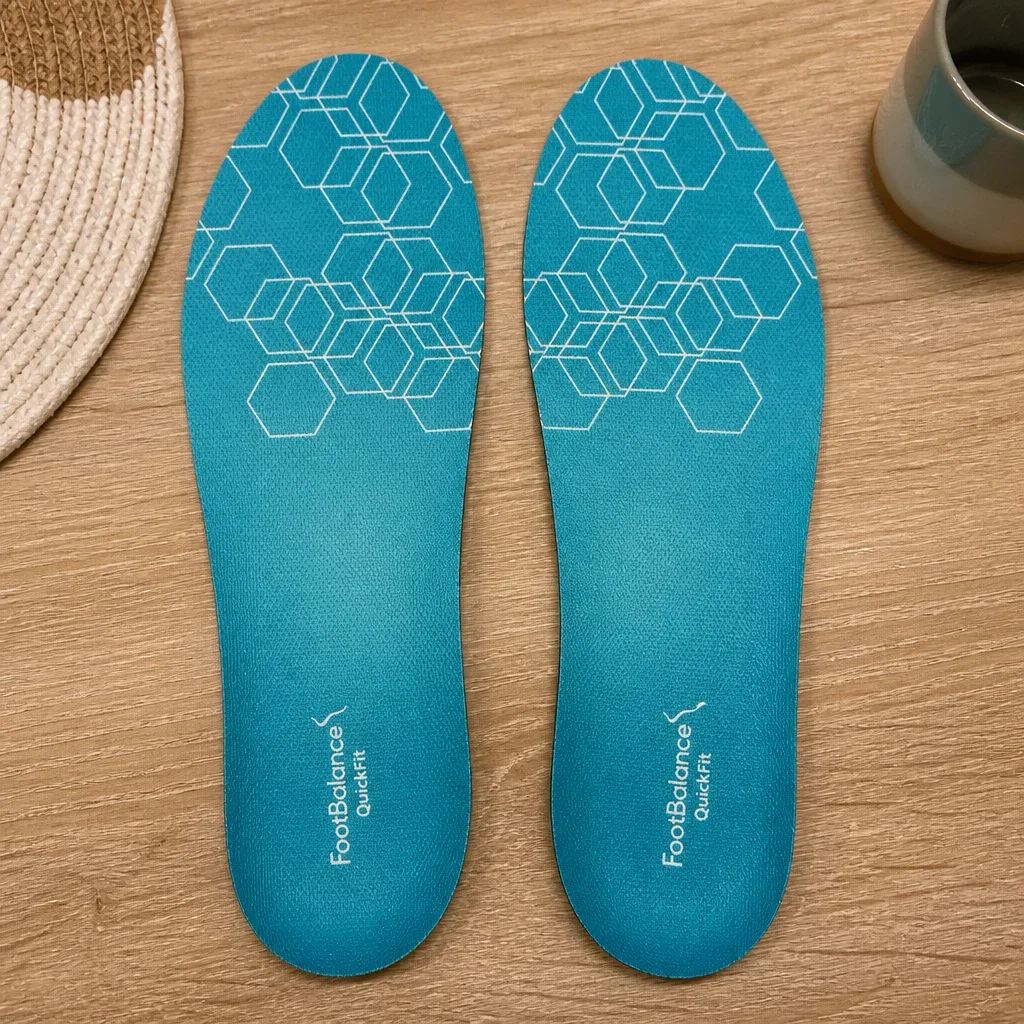
FootBalance channels its arch support through a single engineering element, the dynamic Balance Plate, positioned under the medial arch on every model in the lineup.
The arch height on the Balance Plate felt moderate rather than aggressive for my high arches, supporting without digging in through a full day of wear. I'd expect someone with genuinely flat feet to notice it as a distinct ridge for the first few days before it breaks in, while someone with even higher arches than mine might want a firmer add-on.
That moderate, dynamic engineering is also how FootBalance describes the plate across its own lineup. It sits under the medial arch and is designed to dynamically support natural foot alignment during movement rather than acting as a fixed, rigid post. On the QuickFit Balance model, the balance plate combines with a double EVA foam base to provide arch and heel support, and the patented design is stated to support both the transverse and longitudinal arches and to reduce ankle rotation.
What's the Construction of FootBalance Insoles?
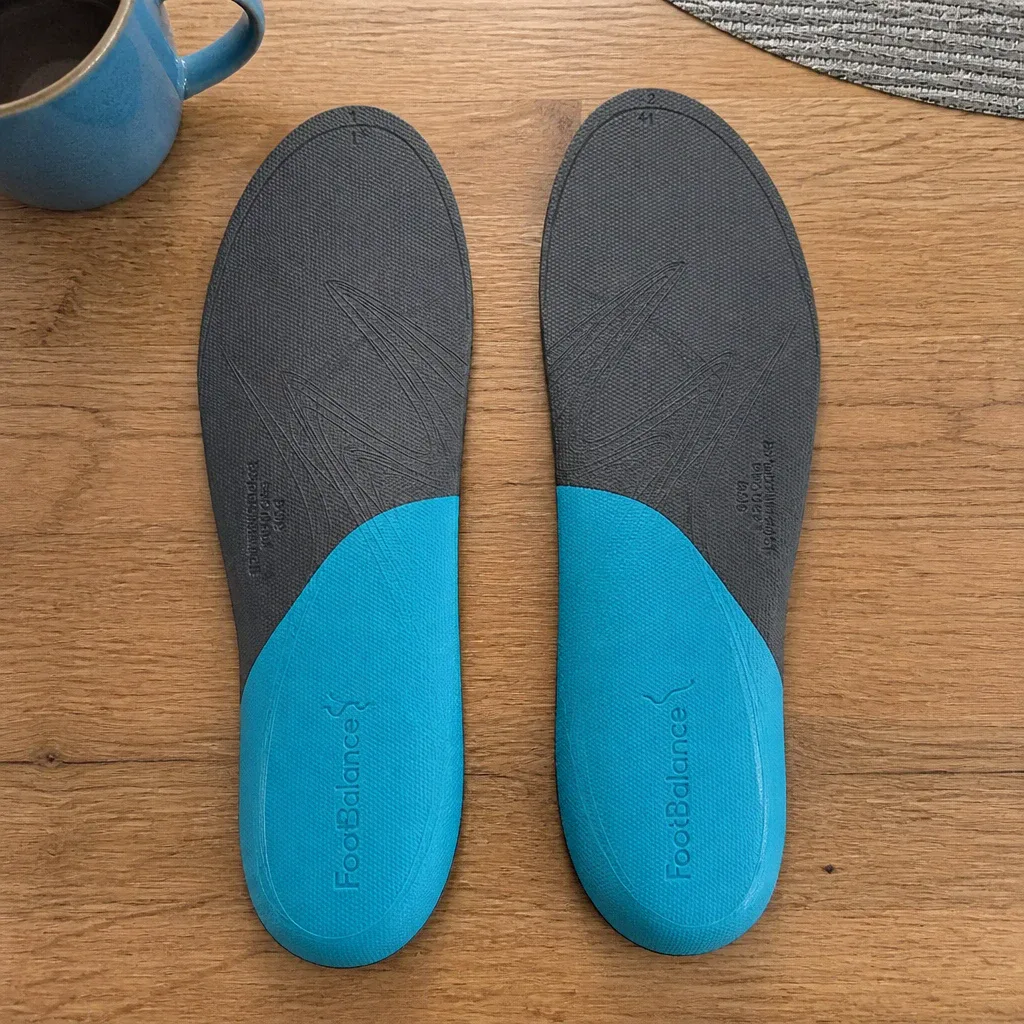
FootBalance insoles use a layered EVA and PU foam construction built around the Balance Plate.
Nothing about the fabric felt cheap, scratchy, or rough against my socks, and running a finger along every edge before wearing them turned up no rough or sharp plastic. The molded Balance Plate, double EVA foam base, and clean heel-cup stitching read as a legitimate product at the $45-50 price point FootBalance lists, not a knockoff.
That double EVA base paired with a PU foam top layer performed well over three weeks: heel compression measured under 1mm, which projects out to roughly 9-12 months of reliable support before the foam loses enough spring to notice. I never got a squeak, but if one showed up I'd check for trapped moisture between the EVA base and the shoe's footbed, the usual cause with foam insoles like this. Given how much my end-of-day arch ache dropped, I don't regret the cost.
That same layered build is consistent across FootBalance's retail lineup. The QuickFit Balance model uses an EVA bottom layer combined with PU foam cushioning, paired with the molded balance plate for custom comfort at each step, while the 100% Impact model uses a multi-layer construction offering high-impact shock absorption, distributing shock across the entire foot for repeated hard landings.
QuickFit-line insoles carry an antibacterial top-surface treatment intended to reduce odor during long-term wear. Insoles are heat-moldable at home: QuickFit Balance and QuickFit Casual models mold in a standard electric oven preheated to 80 degrees for up to 5 minutes, while the QuickFit Control model requires up to 8 minutes.
A color-change indicator on the underside of the insole signals when the material has reached molding temperature. A pre-molded trimming line on the bottom of the insole marks where it can be trimmed to fit at the toe.
The in-store custom process differs from the heat-moldable retail models. It uses a podoscope to analyze arch shape, photographs of the ankles to assess alignment, and heated insoles positioned on molding pillows that a staff member shapes to the customer's feet while maintaining alignment. The insoles are then trimmed to fit the customer's footwear if needed, and the full in-store process takes approximately 10 minutes across its stages.
FootBalance Full Specifications
On the full spec thumb-press test the arch held its shape, compressing about 2mm before resisting rather than bottoming out. The torsion/twist test graded a 4 out of 5, flexing freely only at the forefoot and staying stiff through the midfoot.
| Spec | Details |
|---|---|
| Brand founded | 2003, by physiotherapist Erkki Hakkala |
| Patents | Over 100 |
| Model | QuickFit Balance |
| Price | $49.99 ($44.99 VIP price) |
| Sizing (EU) | 36-38, 39-40, 45-46 |
| Mold time | Up to 5 minutes at 80°C in a standard electric oven |
| Construction | EVA bottom layer, PU foam, dynamic Balance Plate |
| Top-surface treatment | Antibacterial |
| Manufacturer (per EU retailer) | SPINFLO s.r.o. |
What Do FootBalance Insoles Feel Like in Everyday Use?
FootBalance insoles feel supportive rather than plush in everyday use, with the Balance Plate doing steady, active work under the arch through long sessions.
Squatting 135 lb, I felt the Balance Plate push back evenly under my arch through the whole range down to parallel, and the medial arch support gave me a firmer edge to push against, reducing the inward ankle wobble I sometimes get on heavier working sets. Coming back up out of the bottom, the firmer heel cup gave me a more stable base to drive from than the stock insole did, without ever feeling squishy, and the extra PU foam padding didn't block me from pushing through my heels on the way up.
By the time I finished the set my feet weren't sore, since the plate spread the barbell load across my arch instead of letting it concentrate under my heel.
That same steadiness under load is echoed by owners managing chronic pain over much longer stretches. Owner-reported experience with FootBalance insoles is mixed but skews toward measurable relief for chronic foot pain when adjustment is given time: one long-term owner managing posterior tibial tendonitis reported the ache in the affected foot was vastly reduced while wearing the insoles, after nearly 12 months of use on the first pair.
Another owner managing flat feet and iliotibial band problems described a painful roughly one-month adjustment period followed by becoming problem-free. New wearers are advised to introduce the insoles gradually because they can stimulate arch muscles that have not previously been engaged, starting with a few hours of wear per day before increasing.
Switching the insoles into a new pair of shoes has been reported to change fit enough to cause heel blistering during a first long session, indicating a break-in period applies both to the insole and to newly paired footwear.
Will FootBalance Insoles Fit Your Shoes?
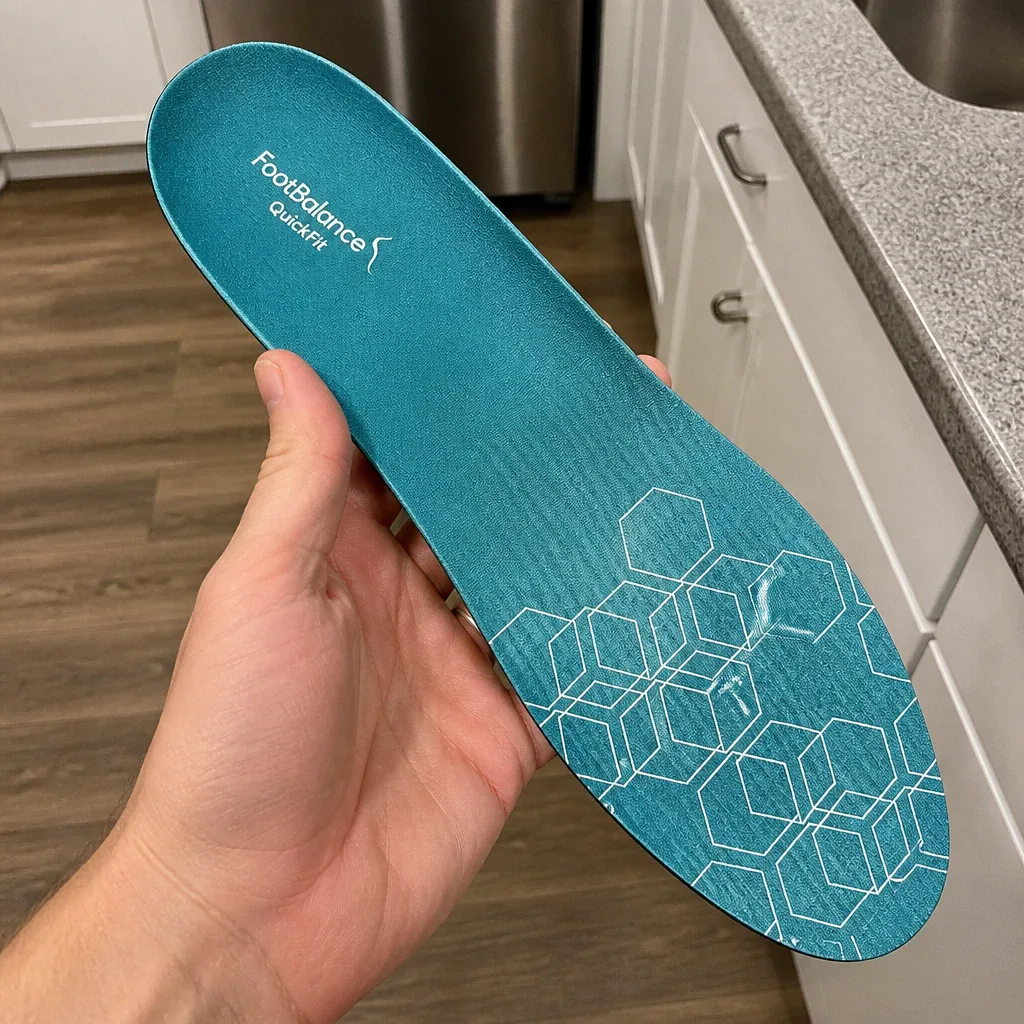
FootBalance insoles are built to move between shoes, not stay locked to one pair.
Rotating the same pair through three shoes over three weeks didn't wear them out any faster than single-shoe use would have: the trimmed edges stayed smooth, and the heel cup flexed back to shape every time I reseated it in a different shoe. My foot did spill over slightly in one narrower casual sneaker, but that came down to that shoe's narrow last rather than the insole itself, since it sat flush with no overhang in my regular-width trainer and work boots.
I wouldn't switch to a wide version unless your everyday shoes run narrow the way that sneaker did.
That trim-to-fit flexibility is also how FootBalance designs the insole for its own retail lineup. The pre-molded trimming line on the underside of the insole is intended to let the wearer trim it to match the original insole outline at the toe area, and the insoles are compatible with a range of footwear once the original shoe insole is removed first.
How Do You Handle Sweat and Moisture in FootBalance Insoles?
FootBalance manages moisture mainly through its antibacterial top-surface treatment rather than any drainage or ventilation feature.
Washing them Sunday night wasn't enough to wear them Monday morning: air drying at room temperature took closer to 18-20 hours for the EVA base to fully dry through. A hair dryer on a low, cool setting cut that time down to about 6 hours without melting anything, though I kept it away from direct high heat since these mold at 80 degrees Celsius in an oven.
Given how long a full air-dry takes, I'd recommend a second pair to rotate rather than skip a workout waiting on one to dry.
That antibacterial layer is the brand's main defense against odor rather than a quick-dry claim. QuickFit-line insoles carry an antibacterial surface intended to manage odor during long-term wear, described as helping keep feet fresh even with extended use, though no separate cleaning instructions were identified in available sources.
What Could Go Wrong With FootBalance Insoles?
Over three weeks of regular use I never got ingrown toenails, black toes, or numb toes, even after a 90-minute long run, and the insole's added stack height never pushed my toes against the front of any of my three test shoes.
The trimmed side edge sat below my arch's natural curve rather than pressing into it, so I never got blisters there either. The one real adjustment period was a low-level soreness in my arches for the first 4 days, normal as the Balance Plate engaged muscles my stock insole never activated, and it faded to nothing after that.
What Does FootBalance's Warranty Cover?
Return terms for FootBalance insoles are set by the selling retailer rather than a uniform brand-wide policy. UK retailer Sweatshop offered a standard 30-day guarantee on custom-molded pairs. US retailer Grivet Outdoors lists a 30-day return window on FootBalance products that applies even after the insoles have been used in running shoes.
What's the Price of FootBalance Insoles?
FootBalance retail pricing spans roughly $45 to $80 per pair depending on the model. The QuickFit Balance model lists at $49.99, discounted to a $44.99 VIP price at some retailers. The 100% Impact model lists at $79.95. In-store custom-molded pairs were priced around £45 through a UK retailer, described by one owner as costing less than a single physiotherapy session.
Where Can You Buy FootBalance Insoles?
FootBalance products are sold both online through specialty retailers and in person through partner fitting locations. Online retailers carrying FootBalance products include Road Runner Sports and Grivet Outdoors in the US and florbal4u in the EU. In-store custom molding and 3D foot scanning is offered through partner shops such as Smith & Davis Clothing in the US, Sweatshop locations in the UK, and FootBalance-branded centers in other regions. FootBalance is not currently confirmed for sale on Amazon, so the shop link on this page goes straight to the brand's own site instead.
Is FootBalance Right for Your Feet?
FootBalance insoles are marketed toward people managing foot and lower-limb pain conditions and toward athletes needing custom-fit support. The brand states its products are aimed at alleviating foot and heel pain, plantar fasciitis, shin splints, heel spurs, and other lower-limb discomfort, and at correcting overpronation and supination. This is the brand's own claimed-use list, not a clinical endorsement or a claim we've independently verified. The 100% Impact model is marketed specifically toward athletes in high-impact sports such as running and court sports.
The brand explicitly describes its insoles as enhancing shoe fit and comfort rather than functioning as a rigid orthotic device, a distinction drawn by at least one authorized retailer when selling the product. Reported outcomes vary by individual: some owners describe measurable pain relief after an adjustment period, while others report no meaningful benefit compared to prior insoles or podiatrist-prescribed orthotics.
What's My Closing Verdict on FootBalance?
FootBalance occupies the space between off-the-shelf drugstore insoles and fully custom podiatrist orthotics, using a dynamic Balance Plate and a heat-moldable or in-store-molded fitting process to bridge the two. Pricing sits in the $45-80 range for pre-molded and custom retail models, materials center on an EVA/PU foam base built around the Balance Plate, and the antibacterial top surface addresses odor over long-term wear.
In my own three-week test of the QuickFit Balance, that engineering translated into real, felt relief: my right foot's chronic posterior tibial tendonitis ache dropped from noticeable to barely there by the end of a full work shift, the arch held firm at just 2mm of give under thumb pressure, and the insole graded a firm 4 out of 5 on torsion stiffness.
Owner experience outside my own test is more mixed: some report vast improvement in chronic conditions like posterior tibial tendonitis and plantar fasciitis after an adjustment period, while others find no advantage over prior insoles. The brand's own positioning, fit-and-comfort enhancement rather than rigid orthotic correction, sets realistic expectations for buyers considering it as an alternative to prescription orthotics, and it matched what I felt directly: cushioned support, not hard correction.
Michal Sieroslawski is an Entrepreneur, exercise physiologist, and personal trainer who has fitted over a thousand people with insoles. He holds a degree in Sports and Exercise Science from the University of Central Lancashire, where he studied biomechanics, anatomy, and exercise physiology. Since 2020, Michal Sieroslawski has helped local and online businesses get found in Google and AI search.