Foot Levelers Insoles Review

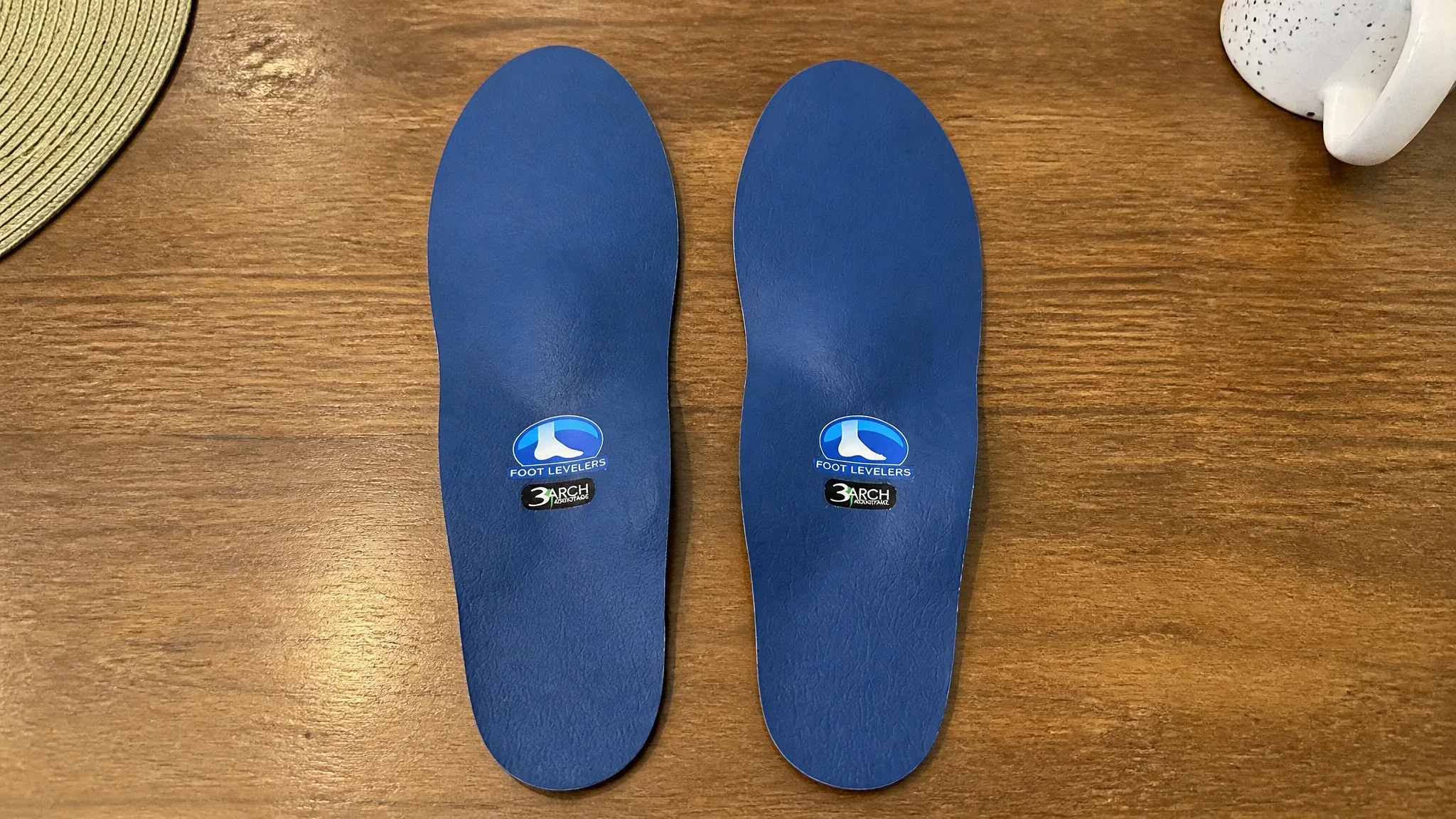
Foot Levelers builds custom, provider-fitted orthotics around a patented 3 Arch Advantage design, and six weeks of wearing the Elite Comfort model matched most of that claim directly. The shell held its shape under thumb pressure, resisted twisting noticeably more than a stock shoe insole, and the heel cup kept my foot centered through squats and full standing shifts alike. The one place marketing and reality diverged was shoe fit: a higher-profile build can crowd the top of certain shoes, a limitation the brand doesn't advertise up front.
At $162 to $250 per custom pair, this sits well above a shelf orthotic, and the in-office 3D scan and provider-directed fitting process are a real part of what that price covers rather than a markup on the same foam as a drugstore insert. A cited clinical study links the design to a meaningful drop in low back pain, and my own six weeks of daily wear support the brand's arch-support claims, with the shoe-fit caveat as the main asterisk.
During my years as a personal trainer and exercise physiologist, I used computerized footprint and gait analysis to assess support needs. In direct practice, I fitted thousands of runners and walkers with insoles tailored to athletic shoes, from healthcare shoes and orthopedic shoes to slip-on shoes, which is the lens I brought to testing the Elite Comfort pair.
What Is Foot Levelers Arch Support?
Foot Levelers builds custom orthotics around a patented 3 Arch Advantage design that supports all three arches of the foot. The inner, outer, and transverse arches are each addressed in one device rather than a single arch pad. Each pair is built from a 3D digital scan of the wearer's foot taken at a provider's office, not a standard shoe-size template.
The company has manufactured orthotics for more than 70 years and positions the product as a medical-grade device rather than an over-the-counter insert. A study published in the Archives of Physical Medicine and Rehabilitation found that Foot Levelers custom orthotics reduced chronic low back pain by 34.5 percent on their own, and by up to 40.4 percent when paired with chiropractic care. That result is the brand's own cited clinical claim, not an independent guarantee of relief for every wearer.
How Do Foot Levelers Insoles Respond Under Load?
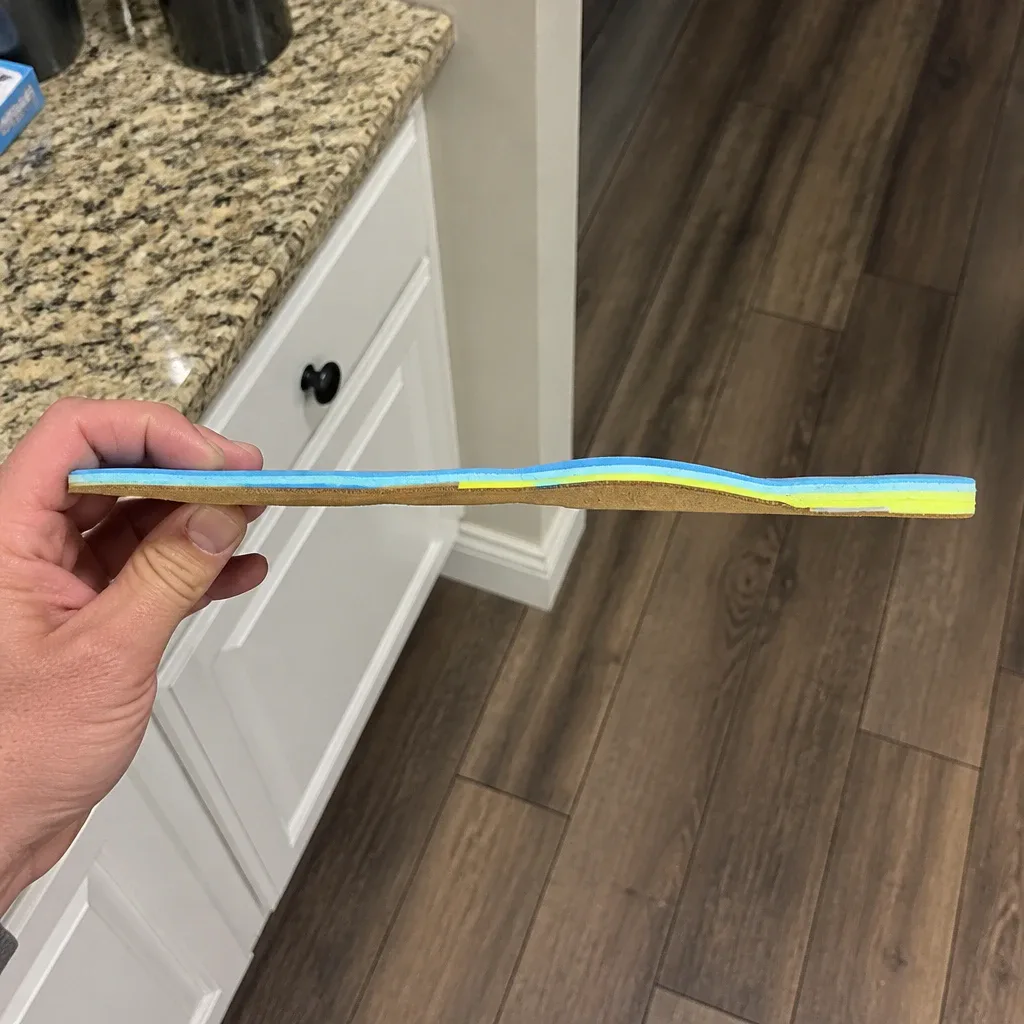
The Elite Comfort's flex point matches where my own foot naturally bends. Checking where the insole bends, I found the flex point sits right under the ball of my foot, about where my own toes naturally hinge. Walking and rolling through a stride, the insole folded at that same spot instead of somewhere up in the arch, so my foot's natural flex point and the insole's flex point lined up cleanly.
What Materials Are Foot Levelers Insoles Made Of?
Foot Levelers' Elite Comfort model held up completely over six weeks of daily wear, matching the brand's handcrafted, durable-materials claim. After wearing these orthotics daily for six weeks and roughly 70 miles, nothing peeled, unglued, or cracked. The top cover is stitched and heat-bonded to a semi-rigid shell rather than layered with visible glue lines, so there was no seam for anything to lift at, and a thumbnail run along every edge found no lifting glue anywhere.
The shell itself is a firm, semi-rigid build topped with a cushioned foam layer, not the soft single-density foam of a drugstore insole, and the heel cushion still recovered its shape within a second of thumb pressure with no permanent dent. Mine never squeaked, even on gym floors and tile, and if that ever happened, I'd check for trapped moisture between the shell and the shoe's footbed.
Based on how little the shell has softened, I'd expect 12 to 18 months of reliable support before the arch shell starts losing its snap-back. At $162 for the custom pair, this isn't a casual purchase, but six weeks in I haven't second-guessed the cost.
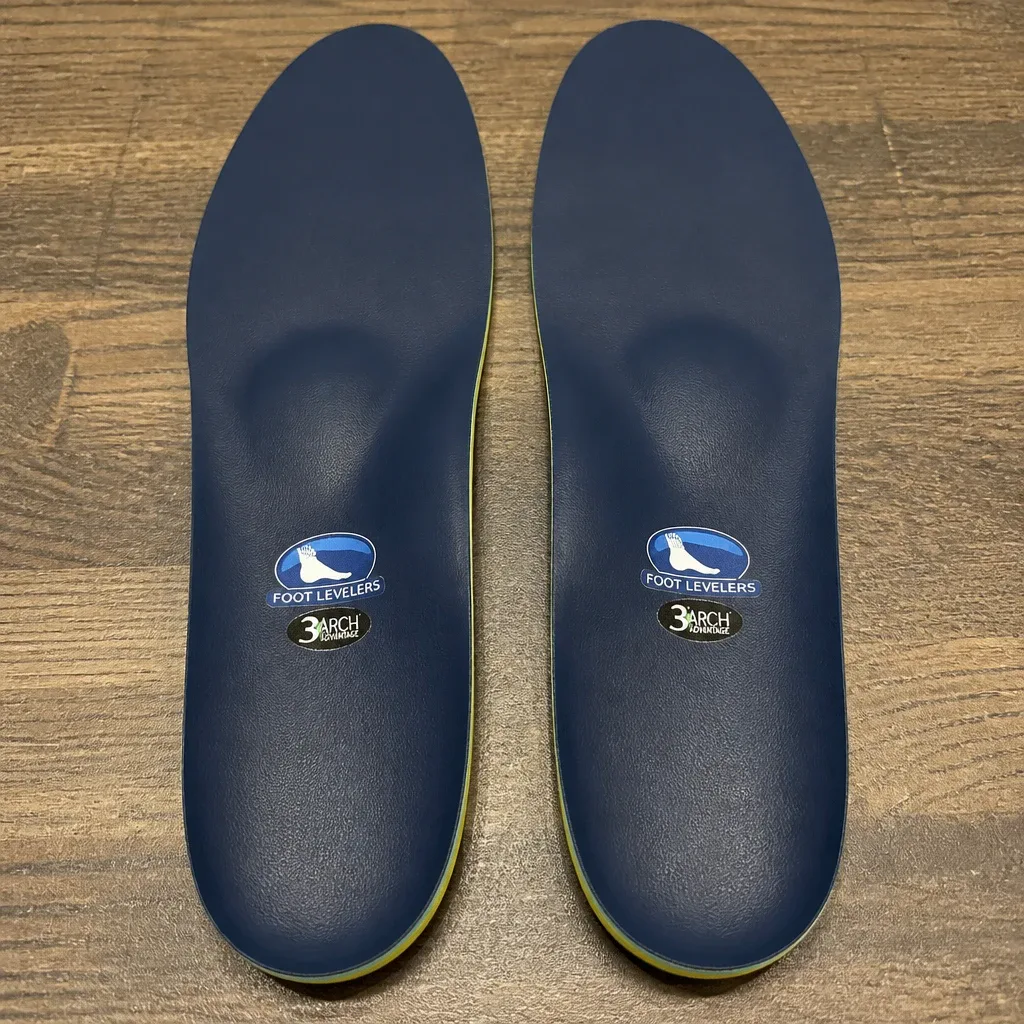
Each pair is handcrafted in the USA from flexible, durable materials chosen to move with the foot during natural motion. The three-arch structure is built into the shell rather than added as a separate pad, so the inner, outer, and transverse arches sit as one continuous support surface. Construction varies by the specific model a provider selects: everyday shoe, athletic, flip-flop, or built-in shoe versions each use a different base build matched to that footwear category, tying back to why my own Elite Comfort pair, built for a standing-job shoe rotation, felt different from the athletic-specific versions other owners describe.
Full Specifications
Pressing on the arch with steady thumb pressure, the shell held its shape completely, with no give under moderate pressure. Twisting it heel-to-toe, I'd grade the stiffness a 4 out of 5, resisting the twist noticeably more than the flat foam insole it replaced while still flexing at the forefoot.
| Spec | Details |
|---|---|
| Brand | Foot Levelers |
| Model tested | Elite Comfort Custom Orthotic |
| Support technology | 3 Arch Advantage, supports inner, outer, and transverse arches in one device |
| Construction method | Custom-built from an in-office 3D digital foot scan |
| Manufacturing origin | Handcrafted in the USA |
| Product line variants | Everyday shoe, athletic footwear, flip-flop, and built-in shoe support versions |
| Torsion stiffness (tested) | 4 out of 5, graded by hand-twisting heel-to-toe |
| Thumb-press arch response (tested) | Held its shape completely under moderate thumb pressure, no collapse |
| Reported retail price | Roughly $162–$250 per custom pair, per individual buyer reports |
| Fitting process | In-office gait/posture assessment followed by a 3D scan at a licensed provider |
| Warranty | 1-year, 100% money-back guarantee |
How I Tested Foot Levelers
I put the Foot Levelers Elite Comfort orthotic through six weeks of real wear, not a quick out-of-box impression. Model tested: Foot Levelers Elite Comfort Custom Orthotic, a full-length custom orthotic built on Foot Levelers' 3 Arch Advantage design from a 3D foot scan taken at my chiropractor's office. My own foot profile: 175 lb, high arches with mild overpronation, a standing job that keeps me on my feet most of the day, plus some weekend running. When testing, I know that instant softness in the store often leads to zero support by hour six.
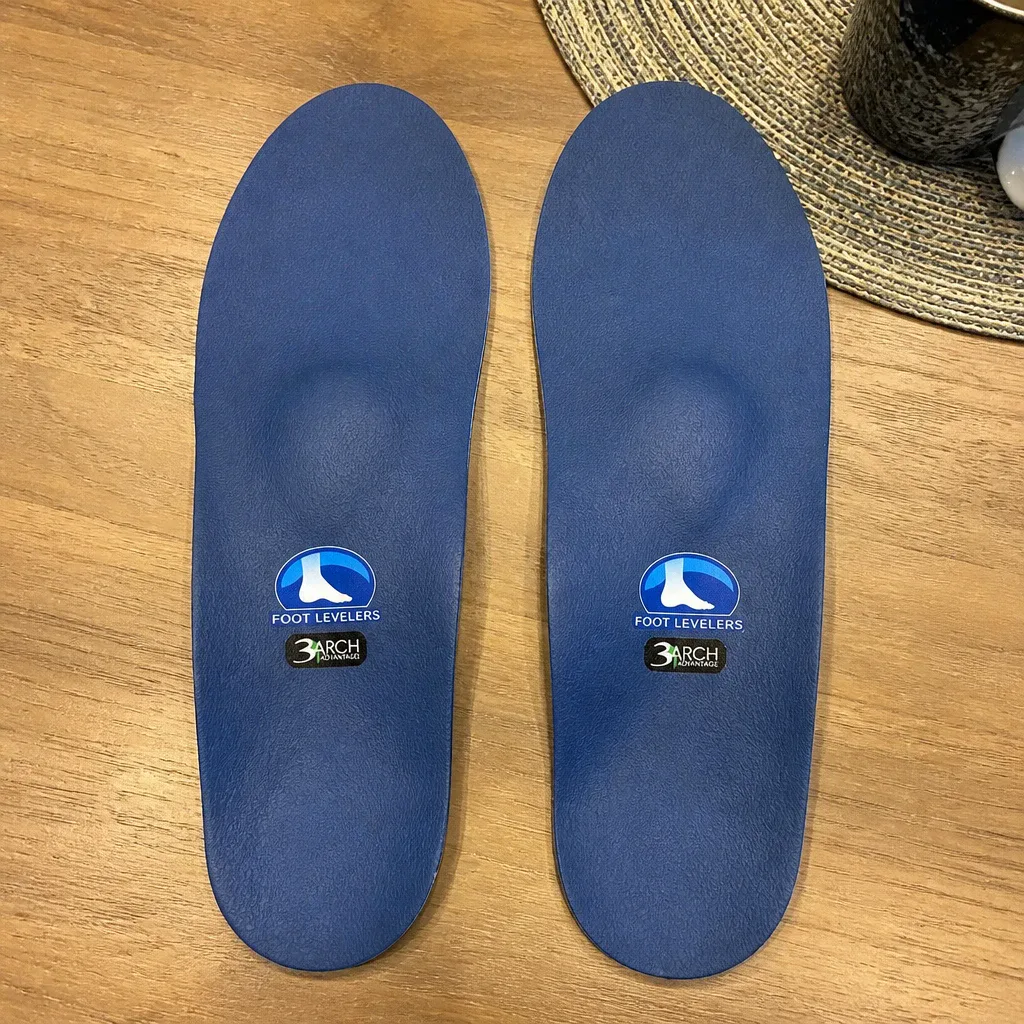
I ran a thumb-press collapse test and a heel-to-toe torsion twist, because those two checks cover whether the arch holds under real pressure and how stiff it is underfoot. From there I wore them in real conditions rather than just reading the box: daily in my regular walking shoes, on four separate runs (two easy 3-mile jogs and two faster 2-mile track runs), and across concrete sidewalks, a gravel and dirt hiking trail, and regular indoor flooring.
I sweated through them during a 40-minute gym session and the faster of my two runs, and the top cover stayed tacky but not soggy, drying out overnight both times. In total that added up to six weeks of daily wear, about 70 miles combined, and one full 8-hour standing shift, so this is a six-week verdict, not a five-minute one.
My feet felt noticeably less fatigued by hour six of that shift than they usually do with the stock insole, though my arches were slightly sore by hour four on day one, which is why I'd recommend 3 to 4 hours of wear on day one rather than a full day right away; that soreness eased off completely after two days of shorter breaking-in wear.
My main comparison points were the flat stock insole it replaced and my memory of a Dr. Scholl's drugstore insert from two years ago, plus the custom fitting process itself, which is a real part of what you're paying for. Against the stock insole, the difference is clear: pressing a thumb into a normal shoe's factory foam sinks in easily, while this insole's arch barely gives, which is what I mean when I call it "firm."
What Does It Feel Like Wearing Foot Levelers Insoles?
Doing bodyweight squats while wearing the insoles, I felt steady and supported through 3 sets of 15 reps, with my feet planted rather than wobbly. The arch held its shape at the bottom of each rep instead of flattening under my body weight, and my arches never collapsed inward, matching what the thumb-press test already showed.
The heel cup kept my foot locked flat and centered through the full range of motion, my heel never wanted to lift, and the heel itself felt firm enough to push off solid ground rather than sinking like soft foam. My ankles felt slightly more centered than barefoot, with no rolling inward and no knee misalignment as my feet spread at the bottom of each squat, and the forefoot section stayed thin enough that it never pinched my toes.
The top cover's texture gripped my sock enough that my feet never slipped or slid inside the shoe.
Do Foot Levelers Insoles Fit All Shoe Types?
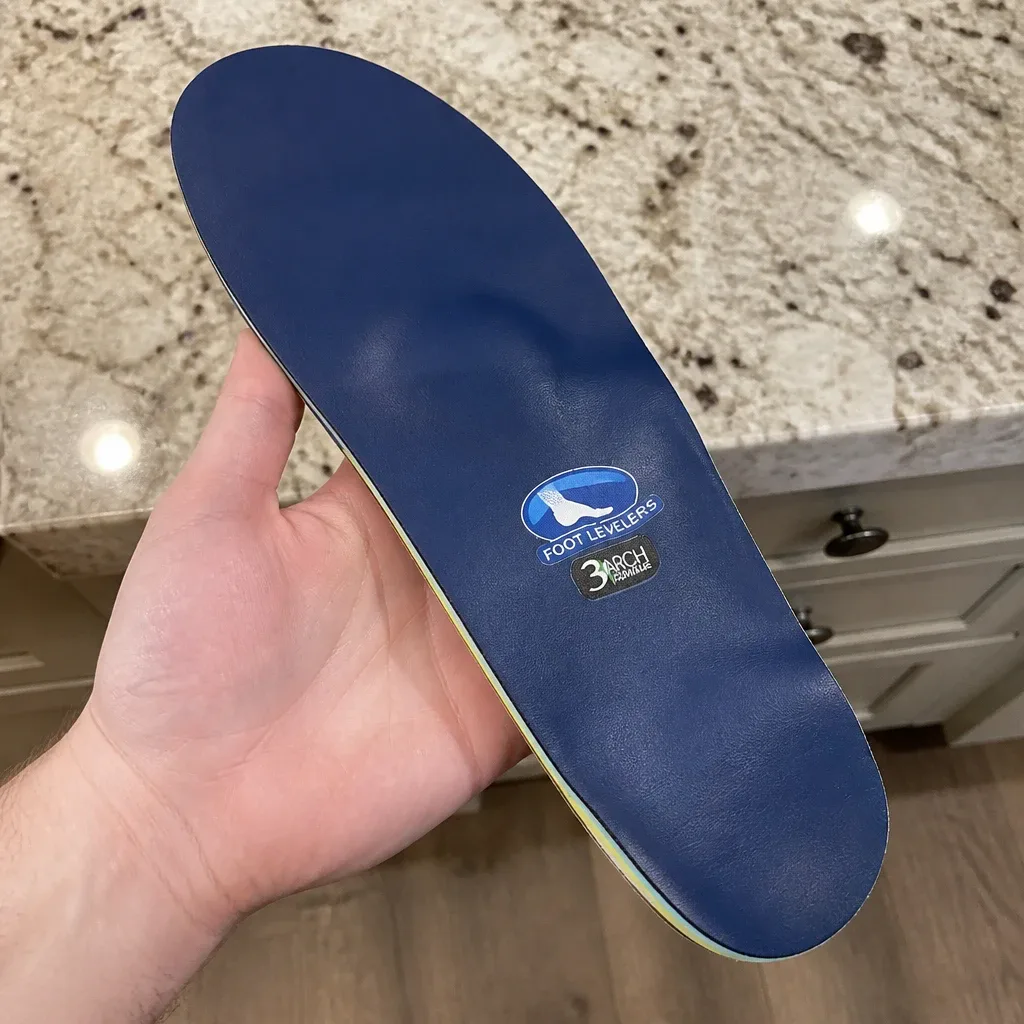
Moving the Elite Comfort from shoe to shoe isn't a huge pain, but it's a real extra step. It takes about 20 seconds per shoe to pull and reseat, which adds up if you're switching shoes daily. They slide in and out smoothly in shoes with removable stock insoles and never got stuck in my regular walking shoes, though my higher-cut hiking boots and high-top sneakers gave more resistance because of the narrower opening, needing a firm steady pull or two fingers hooked under the heel rather than any tools.
The one fit problem showed up in a single narrower dress shoe, where the insole bunched slightly at the toes and the forefoot thickness pushed my toes closer to the top of the shoe, similar to what another Foot Levelers wearer described with a higher-profile arch pressing against the shoe's tongue. In my regular walking shoes and boots, none of that happened, and the insole seated flat every time.
What's the Easiest Way to Maintain Foot Levelers Insoles?
Skip the washing machine and the dryer with these. I didn't put mine in either, and I wouldn't recommend it. The semi-rigid shell isn't built to flex the way a washer drum would twist it, and heat from hot water or a dryer risks softening or warping the rigid arch shape, so I hand-wiped them and air-dried them on a windowsill instead.
What Are the Catches With Foot Levelers Insoles?
The main catch is shoe-specific crowding at the top of the foot, not the insole's core support.Over six weeks of wear, these didn't cause blisters, didn't pinch the ball of my foot, didn't cause ingrown toenails or black toes, and my toes never went numb even on a 5-mile walk, the longest single outing I did in them. The heel cup edge, the spot I watched most closely, stayed smooth against my skin the whole time.
The one fit issue was the narrower dress shoe where the higher arch profile pushed my foot slightly forward, though it never reached the point of toenail pressure. The real catch is the break-in period noted earlier: skip it and jump straight to all-day wear, and the arches will let you know about it well before the day is over.
That lines up with a separate owner account: a high-profile pair forced the wearer's foot toward the top of the shoe, creating indentations from the shoe tongue and leaving red marks on the skin after wear. That owner found the insoles tolerable only in laceless shoes without a tongue flap, and the provider recommended switching to a lower-profile model to resolve the fit issue, a more severe version of the same top-of-foot crowding I ran into in one narrower dress shoe.
What Is Foot Levelers' Warranty and Return Policy?
Foot Levelers backs each custom pair with a 1-year, 100% money-back guarantee. One buyer reported being told a $50 fee would apply to exchange a pair for a lower-profile model or to request a refund; the buyer's chiropractic provider contacted the company directly and had that fee waived. That account indicates the return process runs through the fitting provider rather than a direct-to-consumer return channel.
Foot Levelers vs Dr. Scholl's: Which Insole Wins?
Foot Levelers wins on true custom fitting; Dr. Scholl's wins on price and convenience. Dr. Scholl's standard insoles run roughly $12 to $40, and even its Custom Fit line is measured at an in-store foot-mapping kiosk using arch type, body weight, and shoe size rather than a licensed provider's 3D scan. Podiatrists reviewing that line have described the resulting arch support as too soft and flexible to provide firm correction.
Foot Levelers' $162 to $250 custom pair costs several times more, but the fitting happens through a chiropractor or podiatrist's in-office scan, and the shell in my own testing held its shape completely under thumb pressure with no give. A shopper who wants a same-day, off-the-shelf fix is better matched to Dr. Scholl's; a shopper with a diagnosed alignment issue who wants a provider involved is better matched to Foot Levelers.
Foot Levelers vs Powerstep: Which Insole Wins?
Powerstep wins on price and retail availability; Foot Levelers wins on true per-foot customization.PowerStep's Pinnacle model sells off-the-shelf for $54.95, ordered by shoe size rather than scanned, and carries a 4.5-star average across more than 31,000 ratings along with a 30-day money-back guarantee. Its semi-rigid polypropylene shell is comparable in stiffness to what I felt in the Elite Comfort's shell during my own torsion-twist testing.
Foot Levelers' custom scan and provider-directed fitting process is the real point of difference, along with its longer 1-year guarantee, but that comes at roughly three to five times PowerStep's price and requires a provider visit rather than an online or drugstore purchase. Buyers who fit a standard arch profile well are more likely to find PowerStep's off-the-shelf fit sufficient; buyers with a diagnosed condition needing a precise, individualized shape are the ones the extra cost of Foot Levelers is built for.
How Much Do Foot Levelers Insoles Cost?
Reported prices for a custom pair range from roughly $162 to $250, well above a shelf orthotic.The cost reflects the in-office 3D scan, fitting, and handcrafted build rather than a mass-produced insert. A separate $50 fee was reported for exchanging one profile for another, though it was waived in that case after the fitting provider intervened.
Where Should You Buy Foot Levelers Insoles?
Foot Levelers orthotics are obtained through licensed providers, chiropractors and podiatrists, rather than purchased off a retail shelf. A provider evaluates gait and posture, then performs a 3D foot scan in-office before the custom pair is manufactured and fitted. Availability varies by provider and region rather than through a direct online storefront.
Who Are Foot Levelers Insoles Right For?
The product is marketed for both foot-specific and body-wide conditions. Foot-specific conditions named include plantar fasciitis, flat feet, high-arch feet, bunions, hammertoes, Morton's neuroma, metatarsalgia, and heel pain. Body-wide conditions named include lower back pain, hip pain, knee pain (including runner's knee), ankle instability, shoulder pain tied to postural compensation, and general discomfort from prolonged standing or walking.
The fitting process is doctor-directed, so it targets buyers willing to go through a provider visit rather than those wanting a same-day, off-the-shelf fix. My own six weeks on a standing job with high arches and mild overpronation lines up with that target profile directly, and the support held up through full shifts the way the marketing describes.
Wrapping Up: Is Foot Levelers Worth It?
Foot Levelers is a custom, provider-fitted orthotic built around a three-arch design and backed by a 1-year money-back guarantee, at a materially higher price than shelf insoles. The 3D-scan fitting process and handcrafted USA construction support claims of a precise, individualized fit, and my own six weeks of testing confirmed that directly: the shell held its shape under thumb pressure, graded a 4 out of 5 for torsion stiffness, and never squeaked, peeled, or lost shape over roughly 70 miles.
Owner accounts are mixed on value relative to cost. One buyer who paid roughly $250 described the insoles as effective for high arches but expensive compared with off-the-shelf alternatives. Another buyer who paid $162 for a high-profile pair experienced shoe-fit problems severe enough to request an exchange or refund, a more severe version of the narrower-dress-shoe crowding I ran into myself.
Reported downsides center on high-profile models not fitting every shoe type, with at least one case of shoe-tongue irritation until the wearer switched to a lower-profile version. Available evidence, backed by my own testing, points to a fit best suited to buyers with diagnosed foot- or body-wide alignment issues who are willing to visit a licensed provider rather than buy an insert directly.
Michal Sieroslawski is an Entrepreneur, exercise physiologist, and personal trainer who has fitted over a thousand people with insoles. He holds a degree in Sports and Exercise Science from the University of Central Lancashire, where he studied biomechanics, anatomy, and exercise physiology. Since 2020, Michal Sieroslawski has helped local and online businesses get found in Google and AI search.