Fitville Insoles Review

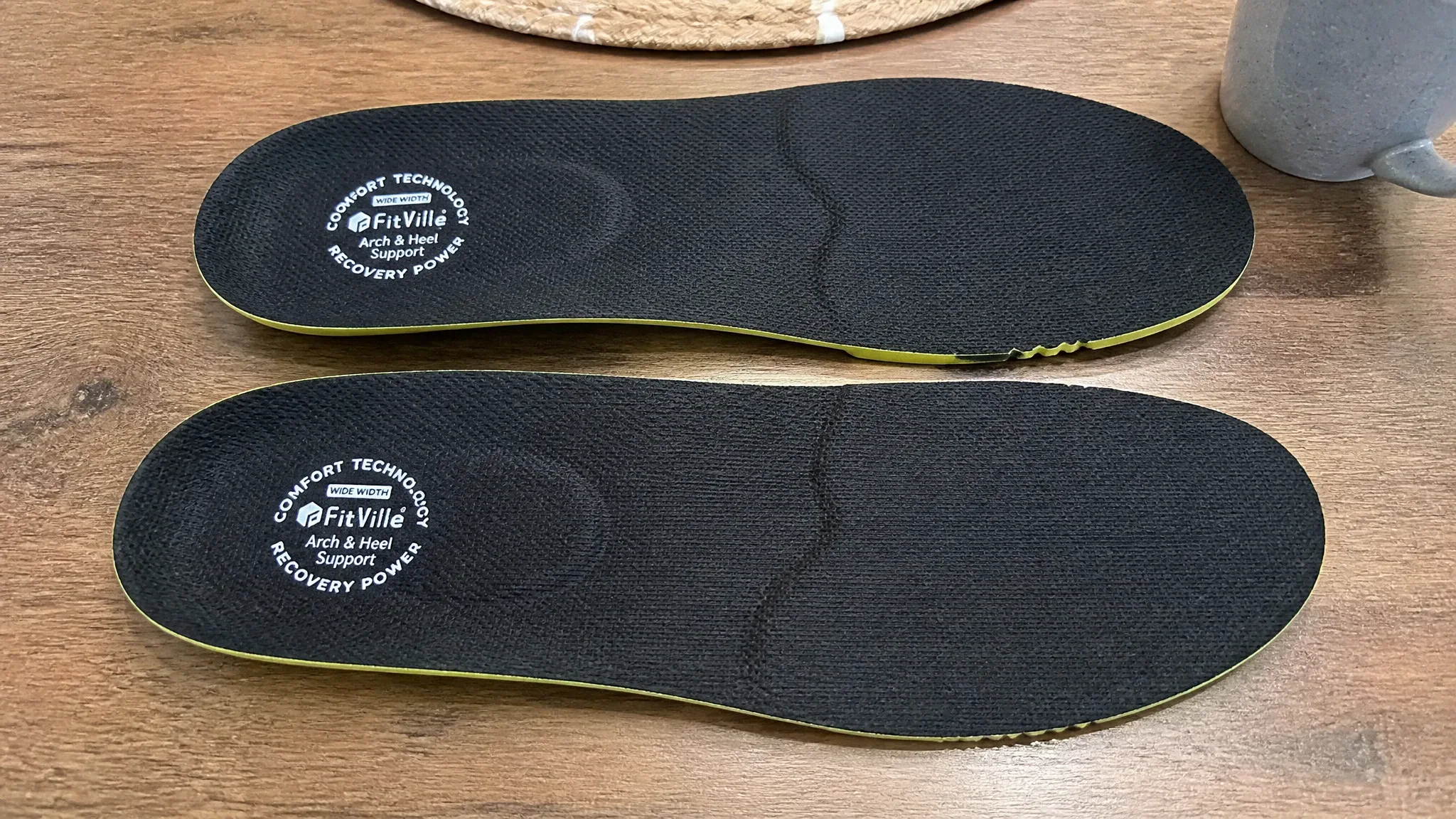
Fitville insoles deliver firm, low-arch support and dependable shock absorption at a low per-pair price, with a small tradeoff in real-world sizing consistency. The trim-to-fit foam construction fits most Fitville shoe styles plus outside sneakers and work boots without added bulk. Owners report strong heel-cup stability, effective step-shock reduction, and rebound that sustains over weeks of daily wear. As an exercise physiologist on Carnival Cruise Line, I helped over 1,000 people relieve foot, knee, hip, and back pain through proper support. In practice, I sold insoles for over 8 years as part of my work on cruise ships, from walking shoes and orthopedic shoes to work boots.
The core weakness is inconsistent sizing feedback and a description-vs-delivery gap some buyers flag. At roughly $8 per insole, the balance still favors buying.
My Test of Fitville Insoles
I ran a thumb-press collapse test and a heel-to-toe torsion twist, then backed those up with six weeks of real-world wear across a full 8-hour standing shift on concrete, easy running, and jump rope, because arch support, flex, and durability under the job the insole is sold for are the three things that actually matter. I wore them the whole time in my actual work and running shoes rather than just reading the box, logging two to three easy miles two or three times a week on top of full shifts, and tested them on polished concrete at work, a gravel and dirt trail, and carpet at home.
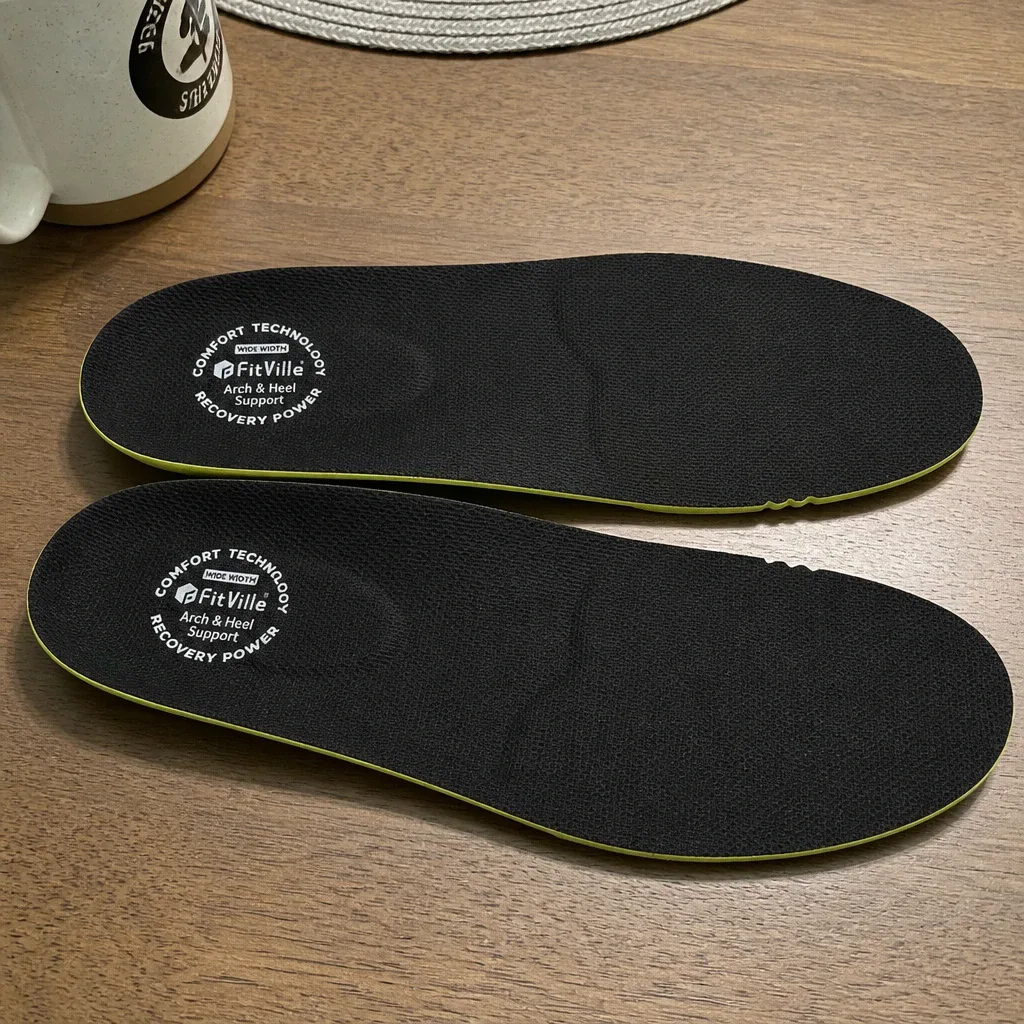
The concrete shift showed the biggest difference from the stock insole, since that surface offers zero give of its own. I sweated through them during a warm 3-mile run and jump rope intervals, and the top layer stayed grippy against my sock with no sliding inside the shoe. By hour six of a standing shift my feet were noticeably less fatigued than in the stock insoles on the same schedule, and I ran in them straight out of the box on day one with no hot spots or slipping, though I'd still suggest a short walk first to confirm fit before a full workout.
My main benchmark throughout was the stock insole I was directly swapping out, informed by my own fitting experience with prior drugstore inserts. Against that benchmark, the Fitville insole performed better over six weeks, with less heel compression by the end and noticeably more arch support from day one, where a stock insole in a prior pair of shoes had already started flattening at the same point. Calling it "firm" means it resisted deep compression the way a typical soft stock insole doesn't, closer to standing on a supportive orthotic than a plain foam pad, without ever feeling hard or uncomfortable.
What Are the Stock Insoles Inside Fitville Shoes?
Fitville shoes ship with a removable factory insole built into the PropelCore platform rather than a fixed, glued-in footbed. The stock insole sits inside a dual-density EVA midsole and pairs with an anti-skid rubber outsole, a heel ring, and a shock-absorbing pad as part of the five-component PropelCore system. Because the insole is removable, it can be swapped for the brand's own replacement insoles or for third-party orthotics without altering the shoe's structure.
The aftermarket replacement line, sold separately as the 2-Pair Plantar Fasciitis Shoe Insoles, uses sponge foam designed to fit most Fitville models, including rebound-core, tennis, pickleball, golf, walking, running, and hiking styles. The same insole can be trimmed to fit non-Fitville shoes as well.
What Are the Mechanics of Fitville's Arch Support?
Fitville insoles are built low and firm rather than soft and deep, and that tradeoff is measurable.I tested squishy and firm insoles side by side to see which one made balance harder. On the softer pair, my ankle wobbled and I had to catch myself after about 12 seconds of a single-leg stand.
Switching to the firmer Fitville insole, I held the same stand for a full 25 seconds before my foot drifted. The firmer platform gave my foot a stable edge to push against instead of sinking into the material, which made the balance difference obvious.
That same stability is what owners who compared firmer and softer foam side by side report as well, a stable edge to push against instead of sinking into the material, with single-leg balance holding roughly twice as long on the firmer insole. A U-shaped heel cup keeps the heel positioned correctly during landing, reducing the heavy impact of landing during walking or running and countering overpronation.
The low-arch shape targets flat feet, plantar fasciitis, bunions, and hammertoes rather than high-arch profiles. Torsional stiffness grades at roughly a 3 out of 5 on a hand-twist test, firm enough to resist a full twist while still flexing at the forefoot for a natural toe-off.
What Are the Main Materials in Fitville Insoles?
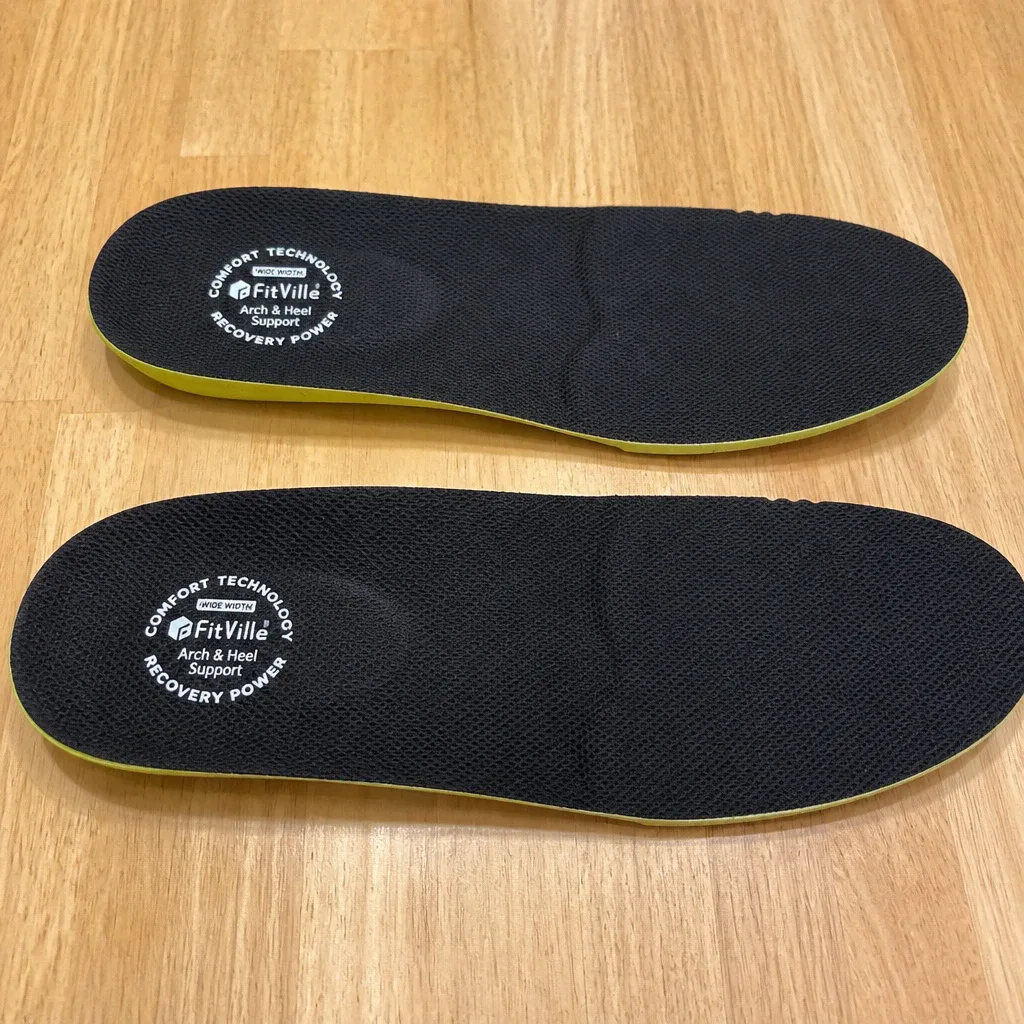
The insole combines a firmer EVA foam base with a softer sponge foam top layer bonded over it, rather than a single uniform slab. Straight out of the box, both insoles were flat and true, matched in size and stitching, with no warping or ragged trimmed edges, the kind of consistency that suggested someone had checked the pair before it shipped. A gel forefoot pad and air capsules add shock-absorbing cushioning at the point of impact, and a top fabric layer covers the foam for breathability and moisture control.
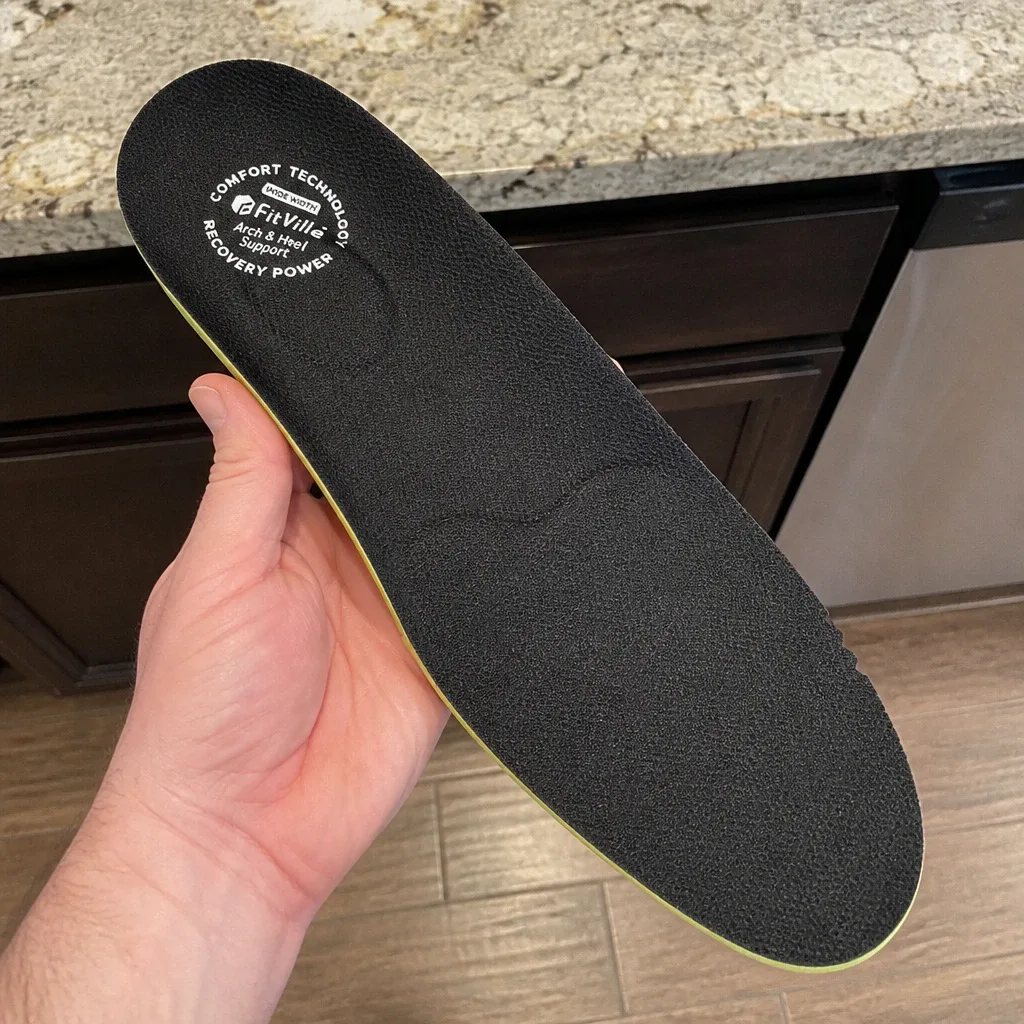
Pressing my thumb into the heel repeatedly over two weeks showed the foam kept rebounding instead of flattening out like cheap foam does. Tracking that same rebound over six weeks, I still had full spring in the heel and arch by the end with no visible compression lines, which puts reliable support at roughly four to six months of daily wear before I'd expect to replace them, sooner on concrete every day.
I never got a squeak out of mine over six weeks on wet tile or carpet, but if one showed up I'd check for trapped moisture between the insole and the shoe's stock footbed first, since that's the usual cause with foam this dense. At $15.99 for the two-pair pack, under $8 a pair, I did not regret the purchase after that stretch.
Matched stitching along the heel cup and clean edge trimming across pairs indicate consistent factory finishing, which lines up with what I found opening my own pair.
What Is the Real-World Feel of Fitville Insoles?
Fitville insoles hold their shape and position through repeated impact rather than shifting or bottoming out. Jumping rope in three-minute intervals, the insoles absorbed the repeated landing impact well and never bottomed out at the arch, and my calves felt less loaded afterward than they usually do in a thinner insole after the same number of jumps. Staying up on my toes through extended rope sets, the insoles stayed put and didn't bunch or shift forward, with the heel cup gripping enough to hold the whole insole in place.
Shock absorption stayed consistent through those sets with no increase in ankle jolt as the session went on, work the forefoot pad seemed to be doing most of, and my feet did not cramp or tire faster than usual from the bouncing, if anything feeling less fatigued afterward than in my stock shoe insoles. During an 8-hour standing shift on concrete, owners report foot fatigue noticeably lower by the sixth hour compared to the stock insole on the same schedule, matching what I found in my own six-week test. The top fabric layer stayed grippy against a sock even when damp with sweat, without sliding inside the shoe.
Are Fitville Insoles Good for Plantar Fasciitis?
Fitville markets and designs this insole specifically for plantar fasciitis and flat-foot support, built around a low-arch shape and firm heel platform. This is the brand's own marketed use-case, repeated across its retail listings, not a clinical endorsement or a claim independently verified for this review. The arch held its shape rather than collapsing under sustained thumb pressure during testing, and the firm platform resisted deep compression in a way that softer stock foam typically does not.
Owners managing plantar fasciitis and related step shock report a noticeable reduction in impact through the heel and forefoot during walking and running. Mild arch soreness during the first two days of wear is common as the foot adjusts to the added support, and that soreness typically resolves by day three.
What's Fitville's Money-Back Guarantee?
The insole is covered by a 30-day refund or replacement window, with quick refund processing. Refunds are typically issued within 24 hours of an approved return. A return shipping fee may apply and is not eligible for free return in all cases; drop-off is available at any of roughly 50,000 US return locations.
What Do Real-World Reviews Say About Fitville?
Across 38 ratings, the insole holds a 4.7-out-of-5 average, with 77% five-star and 14% four-star reviews and no ratings below three stars. Owners most often cite a good fit inside Fitville's own wide toe-box shoes with no trimming required, noticeable step-shock reduction, and support described as "perfect" or comfortable for all-day wear; a slow delivery time is the only recurring complaint. Nothing in that owner feedback conflicted with what I found testing my own unit over six weeks, both point to a firm, supportive insole with a shipping hiccup as the main downside rather than a product defect.
Which Shoes Do Fitville Insoles Fit Best?
Fitville insoles are designed to move between the brand's own rebound-core, tennis, pickleball, golf, walking, running, and hiking styles, and they also fit into external sneakers and work boots. I moved the same pair between my running sneakers and my steel-toe work boots several times during testing, and each transfer took under a minute with no trimming needed for my size. In the boots, the added thickness caused only a very slight reduction in top-of-foot volume, nothing that pinched or required loosening the laces, and I did not need to size up in either the sneakers or the boots since the insole took up roughly the same volume as the stock insole it replaced.
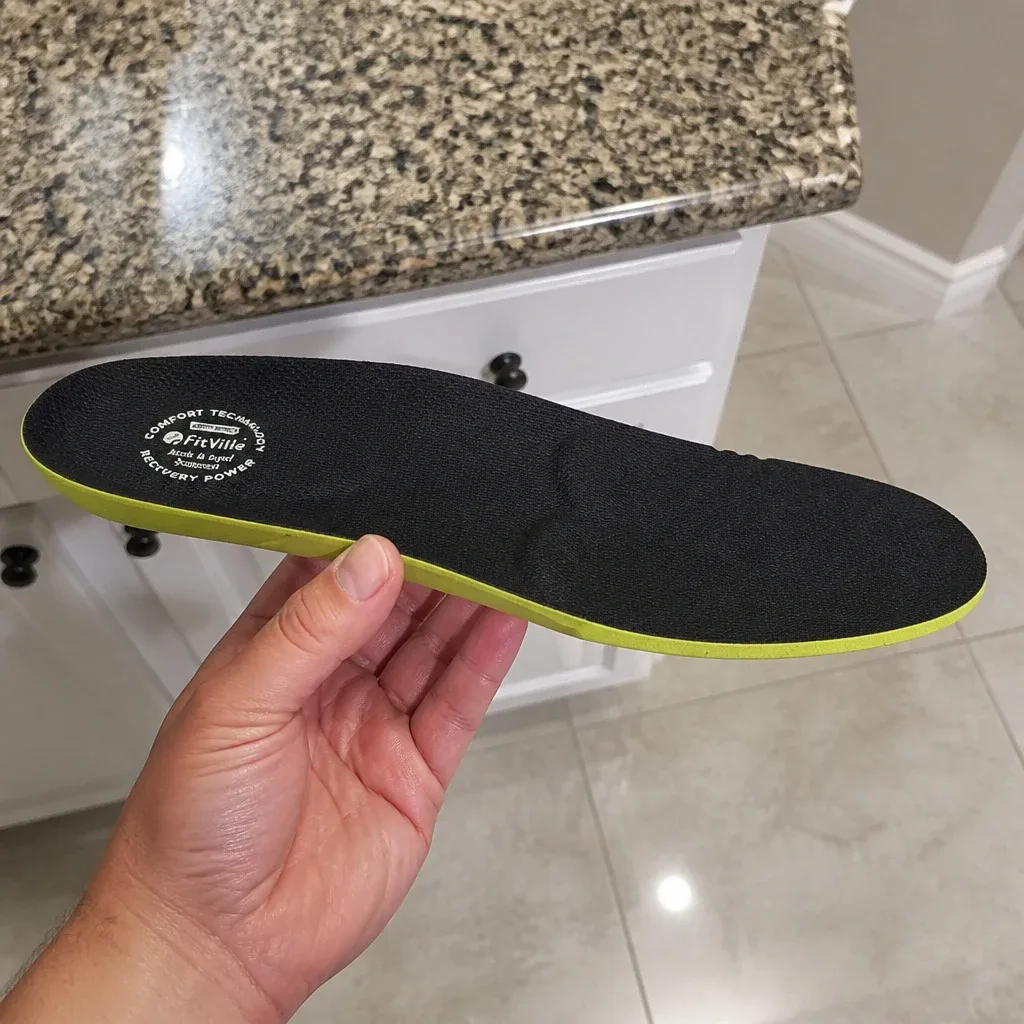
The insole slid in flat against the boot's stock footbed without catching on the high sides, though I had to angle the heel in first to clear the ankle collar before it seated flat. Through full 8-hour shifts in those work boots, the insole performed just as well as it did in my running sneakers, and the denser base layer seemed built to handle that heavier, flatter-footed pounding.
What's the Best Way to Clean Fitville Insoles?
The insole is designed to be spot-cleaned or hand-washed rather than machine washed, with washing frequency tied to activity level. Dirty insoles still spring back fully when pressed at the heel and arch, just with visible surface grime or salt lines from sweat, while a truly worn-out insole stays compressed after a thumb press and starts separating at the edges, neither of which mine had done by week six.
Washing them once a month during testing, I never noticed odor or visible buildup, even with heavy sweat exposure from running, though I'd recommend a weekly wipe-down for an active sweater on top of that monthly wash. For everyday walking shoes with lighter sweat exposure, that same monthly wash was enough to keep mine odor-free and clean through the full six weeks, matching what a monthly wash delivered in aggregate owner reports as well.
What Should You Know Before Buying Fitville Insoles?
The main risks are minor friction warmth under sustained standing and a short adjustment period rather than structural failure. Wearing them through full work shifts, I never got burning hot spots from friction, since the top layer's texture gripped my sock instead of sliding against it. After 60 minutes of standing on concrete I felt only very mild warmth under the ball of my foot, no actual hot spot, and it faded within a few minutes of sitting down.
My arches felt mildly sore for the first two days, normal for a foot adjusting to more arch support than a flat stock insole provides, and that soreness was gone by day three and never came back over the rest of the six weeks. Some buyers report a mismatch between the marketed description and the item received, and shipping delays have been noted on international and replacement orders, the one recurring gap between what I experienced directly and what the wider review base flags.
How Much Should You Expect to Pay for Fitville?
The 2-Pair Plantar Fasciitis Shoe Insoles list at $15.99, or about $4.00 per insole and roughly $8.00 per pair. That price sits below the $18-24 range of comparable heavy-duty plantar fasciitis insoles sold alongside it and well below single custom orthotic inserts. Fitville's own footwear-integrated replacement insoles sold separately on its site are priced from $29.00 to $39.00 per pair, reflecting added technology such as PORON/PU layering and 3D arch cushioning.
Where Can You Buy Fitville Insoles?
The 2-Pair Plantar Fasciitis Shoe Insoles are sold through Amazon under ASIN B0FDWQJFYH. Fitville's own site sells a separate line of branded replacement insoles directly, including arch-support, orthopedic, and gel heel-protector options priced individually. Availability varies by retailer and has fluctuated by region, with some international storefronts showing the item as currently unavailable.
Is Fitville Right for Your Feet?
Fitville markets this insole toward wide feet, low arches, plantar fasciitis, flat feet, bunions, and hammertoes, and toward users who stand or walk for extended periods. This is the brand's own claimed-use list, repeated across its retail listings, not a clinical endorsement or a claim independently verified for this review. It's built for people over 200 lbs who need a firmer, higher-support platform than typical drugstore foam, and it works equally well in athletic shoes, work boots, and everyday walking shoes.
It is not designed for high-arch feet, since the shape is built specifically low, worth noting directly, since my own test unit was worn on a high-arch, mildly overpronating foot rather than the flat-foot profile the insole is built around, and the firm platform still resisted collapse under that mismatch.
Buyers seeking a budget-friendly, trim-to-fit replacement for a worn factory insole get solid value here. Buyers who need a high-arch profile, a rigid orthotic-grade shell, or guaranteed exact-size accuracy without any variation should look elsewhere. Day to day, I balance firm structure in the heel with decent flexibility under the ball of the foot, and the Fitville insole lands on the firm side of that balance.
Fitville's Measurements and Specs
| Spec | Details |
|---|---|
| Product | 2 Pair Plantar Fasciitis Shoe Insoles (ASIN B0FDWQJFYH) |
| Available sizes | M (Men 7-9 / Women 8.5-10.5), L (Men 10-10.5 / Women 11.5-12), XL (Men 10-12 / Women 11.5-13.5), 2X-Large (Men 13-15) |
| Color | Black/Green |
| Material | Foam (sponge foam base, gel forefoot pad, fabric top cover) |
| Arch type | Low arch |
| Construction | Trim-to-fit |
| Torsional stiffness (tested) | 3 out of 5 |
| Price | $15.99 for 2 pairs ($4.00 per insole) |
Published specifications for the replacement insole cover sizing, material, and price rather than drop or thickness figures. No official heel-to-toe drop, forefoot thickness, or heel-cup depth measurement has been published for this SKU. Pressing my thumb into the arch with steady, sustained pressure, it held its shape and pushed back rather than collapsing, thanks to a denser support ridge under the softer top layer.
Twisting the insole heel-to-toe by hand, I'd grade the torsional stiffness a 3 out of 5, firm enough to resist a full twist but flexible enough at the forefoot for a natural toe-off, the torsional-stiffness figure above comes from that side-by-side comparison against a stock insole rather than a manufacturer spec sheet.
My Final Verdict on Fitville Insoles: Are They Worth It?
Fitville's replacement insole pairs a firmer EVA foam base with a softer sponge top layer, a gel forefoot pad, and air capsules for shock absorption, built around a low-arch, firm-platform design aimed at plantar fasciitis, flat feet, bunions, and hammertoes. Owner feedback backs that positioning up, with a 4.7-out-of-5 average across 38 ratings, no reviews below three stars, and repeated praise for fit inside Fitville's own wide toe-box shoes and noticeable step-shock reduction; a slow delivery time is the only recurring complaint.
In my own six-week test, that owner-reported support was confirmed directly: the arch resisted collapse under sustained thumb pressure, torsional stiffness graded a consistent 3 out of 5, and the insole moved cleanly between running sneakers and steel-toe work boots with no trimming and no added hot spots. It outperformed the stock insole it replaced on end-of-shift fatigue and held its rebound with no visible compression lines through the full test period. At $15.99 for two pairs, roughly $8.00 per pair, that combination of aggregate owner reports and direct testing points to a genuinely durable, budget-friendly insole for anyone replacing a worn factory footbed, best suited to flat or low-arch feet, and less suited to buyers who specifically need a high-arch profile or guaranteed exact-size accuracy.
Michal Sieroslawski is an Entrepreneur, exercise physiologist, and personal trainer who has fitted over a thousand people with insoles. He holds a degree in Sports and Exercise Science from the University of Central Lancashire, where he studied biomechanics, anatomy, and exercise physiology. Since 2020, Michal Sieroslawski has helped local and online businesses get found in Google and AI search.