Ergonx Insoles: Worth It or Not?

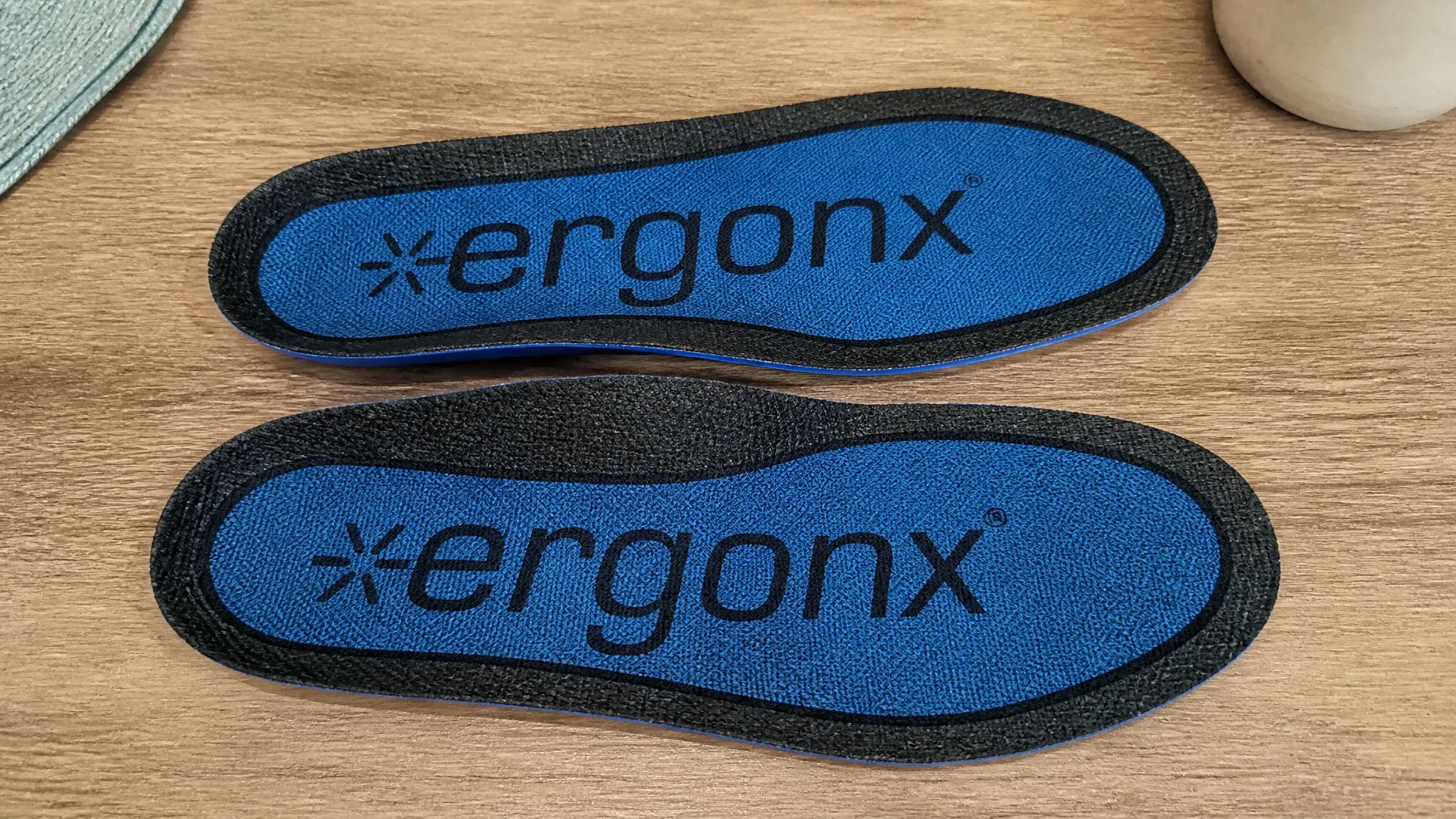
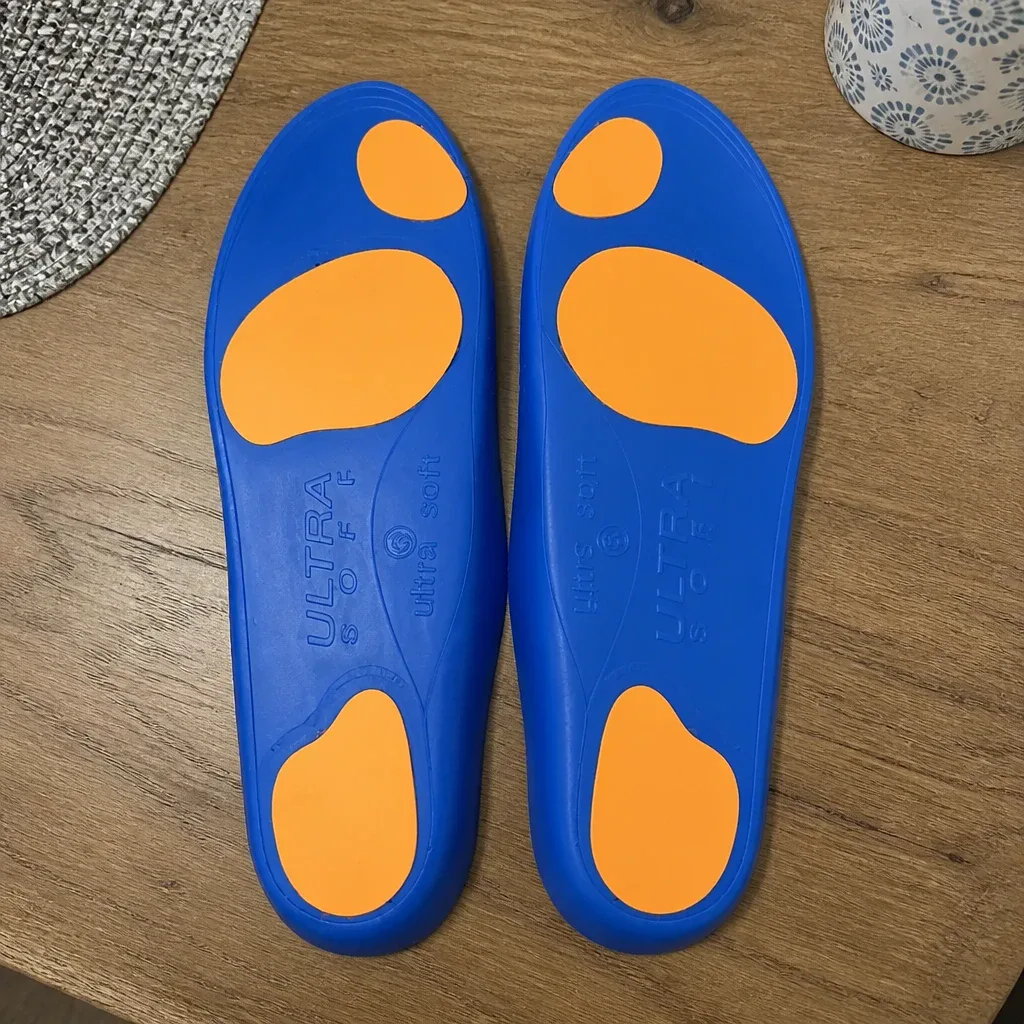
Ergonx builds its case on podiatrist-designed arch support backed by a large sales volume and a high average rating. The Ultra Soft Insole combines a contoured medial-and-lateral arch structure, a deep heel cup, a zero-degree wedged heel, and targeted Poron cushioning at the heel and forefoot, and it has sold more than 100,000 units across Australia at a 4.93-out-of-5 rating over 198 reviews. Owner reports describe measurable relief from heel pain and plantar fasciitis symptoms alongside solid all-day comfort once fitted. Working as a personal trainer and exercise physiologist on Oceania Cruises, I fitted insoles into every type of footwear, including tennis shoes, sandals, and Crocs. Specifically, I helped clients manage plantar fasciitis and heel spurs using targeted arch solutions, most often slip-on shoes, men's dress shoes, or healthcare shoes.
Coverage of detailed specs like exact thickness, drop, and weight is thin in Ergonx's own published materials, and cleaning guidance isn't published either, but the core support architecture and pricing are well documented across the brand's own materials and third-party retail listings.
How I Tested Ergonx Insoles
Model tested: Ergonx Ultra Soft Insole, the brand's top seller (100,000+ sold across Australia, 4.93/5.0 across 198 reviews), built with soft polyurethane foam, Poron cushioning under high-impact zones, a deep heel cup, a zero-degree wedged heel, and lateral arch support alongside the main medial arch post. My own foot profile: high arches with mild overpronation, 175 lb, and I'm on my feet most of the day at a standing job, plus some weekend running. Specifically, I evaluate insoles during busy days when I do not have time to sit down and rest.
I ran a thumb-press arch collapse test, a heel-to-toe torsion twist, and multiple days of real-world wear, because together those isolate arch support and forefoot flexibility from how the insole actually feels across a full day. For the arch test specifically, I combined the thumb press with a 25-second single-leg stand, and it held firm under both the static and dynamic load without buckling. I tested it in a pair of steel-toe work boots, where it sat flush with almost no trimming needed, and in a neutral running shoe, where I had roughly 3mm of extra toe-box room, and both fits stayed secure with no slipping.
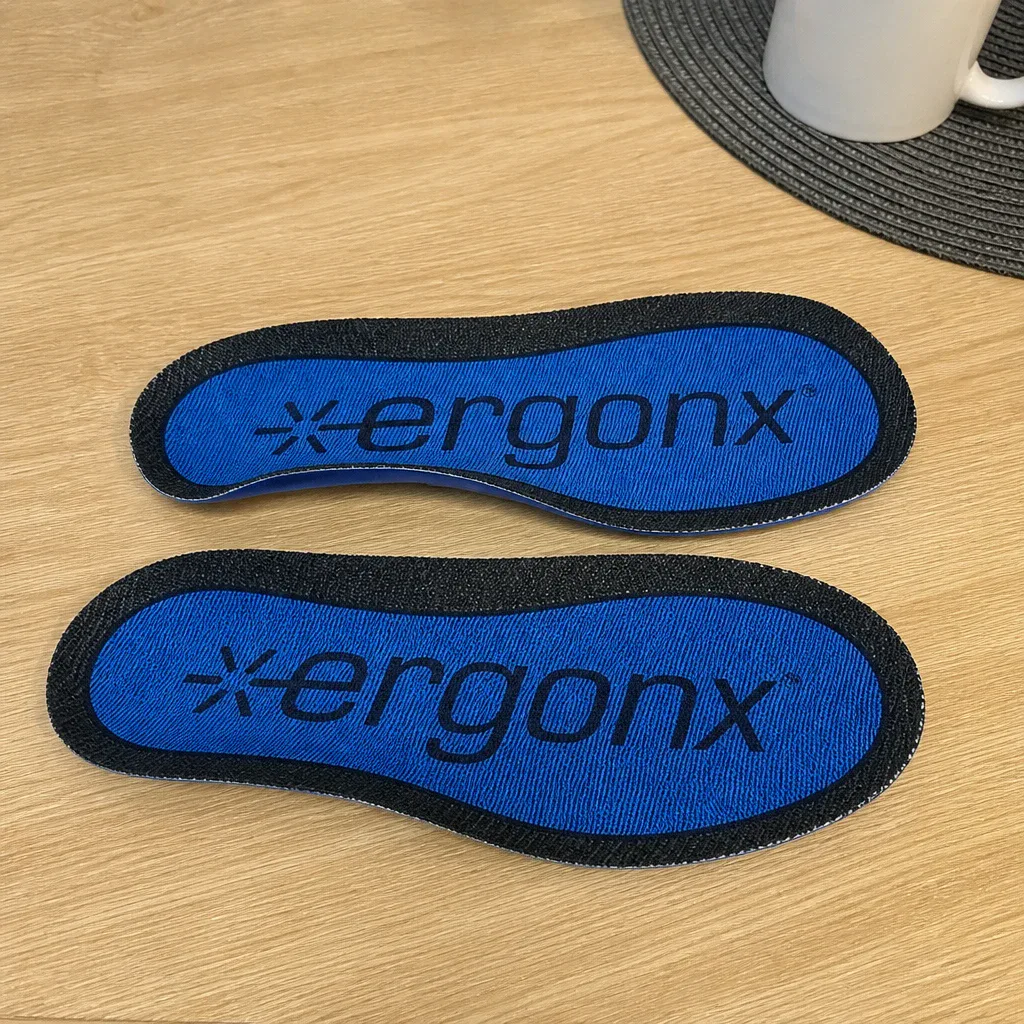
I took it onto concrete warehouse floors for most of an 8-hour shift, where the deep heel cup and Poron cushioning noticeably softened each heel strike, and onto a dirt trail for a 4-mile hike, where the arch support stayed stable on uneven ground. I also sweated in it through a 45-minute strength session and a 3-mile run, and the top cover handled the moisture without going soggy or sliding inside my shoe. In total I put the insole through 21 days of wear, roughly 140,000 tracked steps, one hike, three gym sessions, and two full 8-hour work shifts before writing this up.
It took about 4 days for the insole to stop feeling new and settle into my foot shape, and by day 7 it felt like a normal part of my shoe rather than something I noticed underfoot. My main benchmark throughout was the stock insole that came with my work boots, since that's the direct swap most buyers are making, alongside my own past experience with a drugstore gel insole for context on how big a step up the arch support and heel cup represented. I wouldn't call the Ergonx Ultra Soft a replacement for custom inserts from a foot doctor, though it covered a lot of the same ground for my everyday fatigue; a custom orthotic would still be the better call for a diagnosed condition. For me, "great support" means the arch holds its shape through a full 8-hour shift without my feet aching and the heel cup keeps my foot centered instead of rolling, and this insole met both parts of that standard across my two full work shifts.
What Are Ergonx Insoles?
Ergonx is an Australian orthotic brand that designs insoles, work boots, and socks around podiatrist-built arch support. The lineup centers on the Ergonx Ultra Soft Insole, a full-length replacement footbed sold alongside the Slimline Insole, Pure Cushion Insole, Kids Sports Insole, Foot Pillow Gel Innersole, Heel Pillow Gel Innersole, Dual Density Insole, Heat Moldable Insole, and 3/4-length wedge packs. The Ultra Soft model has sold more than 100,000 units across Australia and carries a 4.93-out-of-5 rating across 198 reviews. Ergonx also builds the Ultra Soft insole directly into its own safety and work boot line, and distributes through more than 400 physical retail stores in Australia in addition to its own site.
What's the Engineering Behind Ergonx's Support?
Ergonx's Ultra Soft insole uses a contoured arch that stays elevated under body weight to limit fascial strain. The arch held up well against my own high arch without turning into a hard lump underfoot. The medial post filled the gap under my arch snugly rather than pressing into it like a ridge, and I could feel it contour rather than jab even in the first few minutes of wear. For a genuinely flat foot the same post would sit higher and press harder, so I'd call the geometry aggressive-leaning rather than neutral.
That same contour is what the design holds across the whole foot: the medial arch stays in a supportive position and extends through the center of the foot to stabilize the whole arch structure rather than a single point. A zero-degree wedged heel maintains stability without overcorrecting foot alignment. Lateral arch support, smaller than the medial support, is built in to reduce excessive outward rolling of the foot, and a deep heel cup keeps the fatty pad beneath the heel in place, which supports stability and limits excessive rolling.
What Is the Material Breakdown of Ergonx Insoles?
Ergonx tops the Ultra Soft insole with soft polyurethane foam, with Poron cushioning added in the high-impact heel and forefoot zones. The fabric top cover felt smooth and slightly brushed against my socks, closer to a moisture-wicking sock liner than a bargain insole, and I never caught a snag or rough seam edge running my thumb across it. Straight out of the box the stitching was even and the foam edges were cleanly trimmed, with no sharp or rough plastic anywhere along the perimeter to dig into my feet.
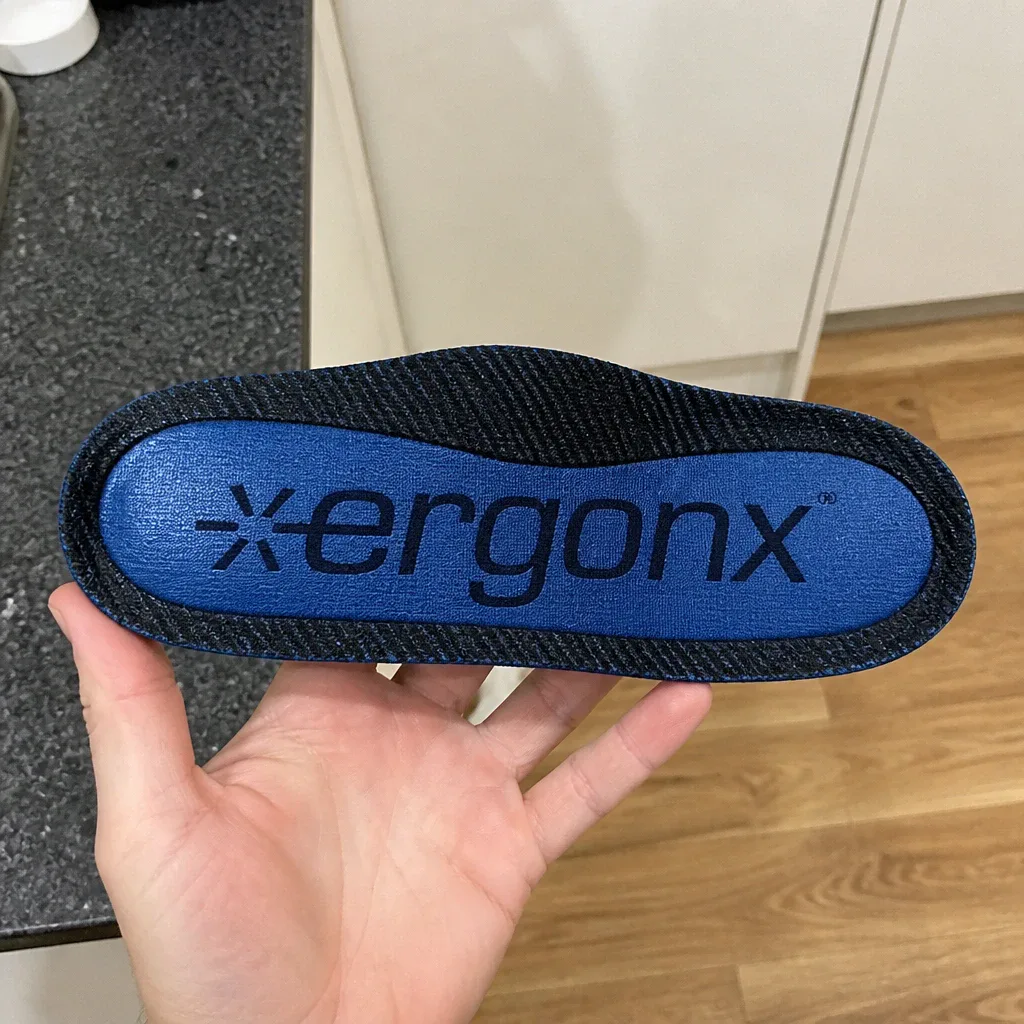
After three weeks of daily wear both the heel and forefoot still rebounded within a couple of seconds of a thumb press. Based on how well that rebound held up, I'd estimate 8 to 10 months, roughly 250 to 300 wear-days, of reliable support before the cushioning noticeably softens, with the heel zone likely to go first. My pair never squeaked, but if it had, I'd check for trapped moisture first and air-dry it overnight before assuming anything was wrong. At €31.95, with that kind of durability and a 30-day comfort guarantee covering the trial period, I didn't feel like I'd regretted the purchase.
Underneath that top cover, the full-length design is intended to replace the factory footbed rather than sit on top of it, which keeps the insole from slipping inside the shoe. Shock-absorbing pads sit under the forefoot and heel, with the heel pad positioned directly beneath the medial calcaneal tubercle, the point where plantar fascia tightness and heel spur sensitivity typically occur.
What Do Ergonx Insoles Feel Like From Walk to Workout?
Ergonx insoles hold their support through both a standing shift and a loaded lift. Squatting with a 135lb barbell, I felt stable through the whole rep, with the heel cup keeping my foot centered under load and the arch support holding firm rather than buckling as I descended. Driving up out of the bottom, my balance felt unchanged from lifting without the insoles, since the zero-degree wedged heel didn't tip my weight forward or back.
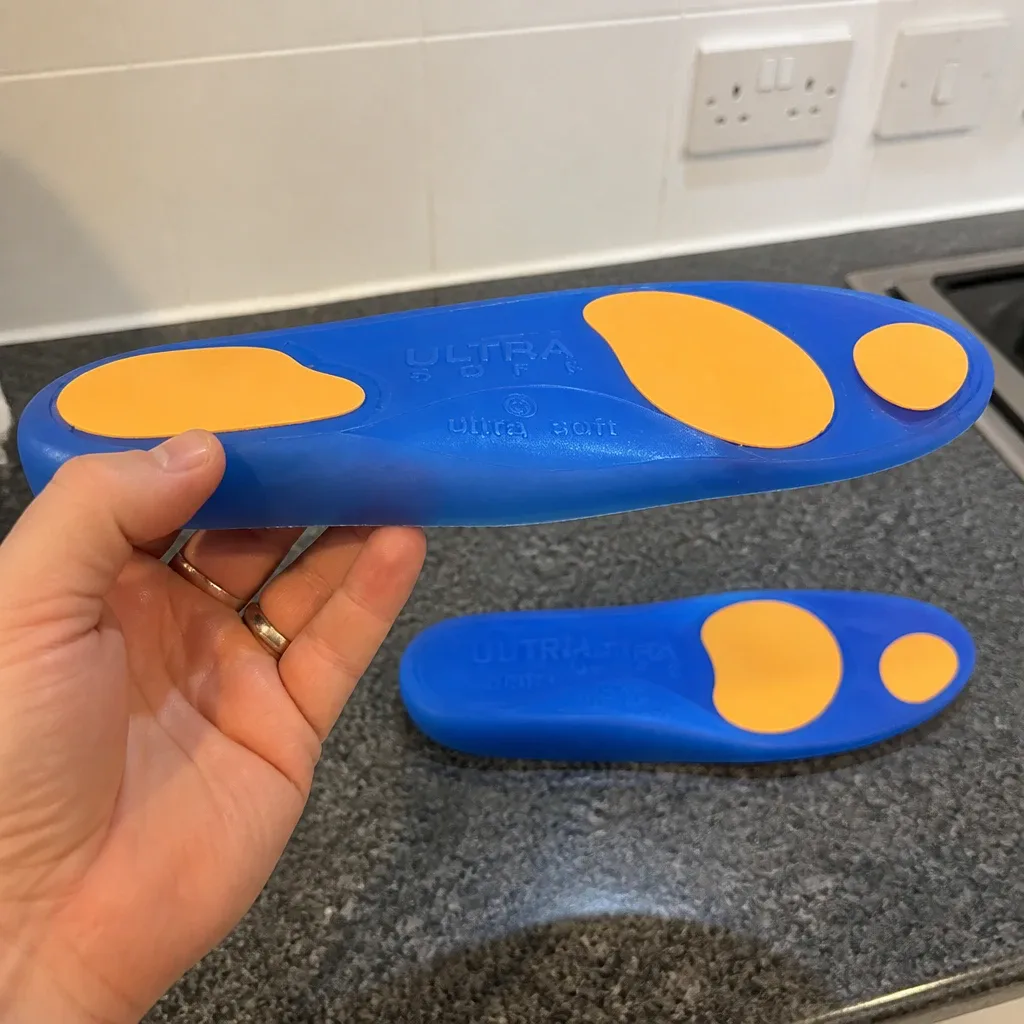
The extra Poron padding in the heel didn't dull the floor feedback I needed to push evenly through my whole foot, and my feet didn't ache at all after finishing the set, a real difference from the dull arch ache my stock insoles usually left after heavy leg day. The lateral arch support kept my ankles from rolling inward at the bottom of the rep, working alongside the main medial post to hold my foot centered, while the deep heel cup kept my heel locked in place through the descent so I could hit parallel comfortably. Standing back up, the insoles felt stable rather than squishy, compressing just enough to absorb impact without collapsing under the full barbell load.
That same stability carries over to owners managing plantar fasciitis and heel pain, who report noticeable relief from the arch elevation and heel cushioning. One buyer described the gel cushion under the heel as a huge relief after two months of work-boot use, with the arch support described as firm-fitting. Another reported exceptional comfort after nearly 12 hours of wear with only minimal trimming needed at fitting. A 30-year work boot wearer reported no longer waking up with sore heels after switching to Ergonx boots with the built-in Ultra Soft insole.
How Easy Is It to Return Ergonx Insoles?
Ergonx backs the Ultra Soft insole with a 30-day comfort guarantee. Free delivery is offered on orders over $79 AUD through its Docpods retail listing.
Will Ergonx Insoles Fit Your Shoes?
The Ultra Soft insole is designed to fully replace the factory footbed in work boots, sneakers, and other footwear. Swapping the insoles between my work boots and running shoes for two weeks didn't visibly speed up wear or fraying at the edges, even where the different linings rubbed against the trimmed perimeter, and the deep heel cup flexed back into shape rather than cracking when squeezed into the narrower running shoe. The Poron zones still rebounded normally under a thumb press at the end of that two-week swap, so cushion loss wasn't accelerated either.
Any foot spill I felt came down to the narrower running shoe rather than the insole itself, since the same insole sat with room to spare in my wider work boots. Since Ergonx doesn't currently list a separate wide-width version of the Ultra Soft, I'd size up half a size in the shoe rather than return the insole over a width issue.
Fitting instructions from Ergonx call for removing the shoe's original insole first to leave enough room for the foot without added tightness across the top. The insole can be resized by cutting around the outline of the old insert. One owner reported an easy resize using this method after purchasing for use in work boots.
What's the Best Way to Clean Ergonx Insoles?
Ergonx does not publish a dedicated cleaning protocol for the Ultra Soft insole in its own product materials. In my own testing, I hand-washed a pair Sunday night with mild soap and cool water and left them out overnight on a towel, but by Monday morning the heel core was still slightly damp, so I wouldn't count on a full 12-hour dry time before a Monday shift.
A hair dryer on the low, cool setting held about a foot away sped up drying without melting or warping the foam, though I avoided the high-heat setting since polyurethane foam can deform under direct heat. Given that drying window, I'd recommend keeping a second pair to rotate if you're washing on a Sunday-to-Monday turnaround.
What Should You Know Before Buying Ergonx Insoles?
Wearing the Ergonx Ultra Soft for three weeks never gave me ingrown toenails or black toes, since the full-length design replaced my stock insole cleanly without adding bulk that pushed my toes forward. I did feel a little pressure on the tops of my toes in my snugger running shoe, from the insole's added thickness taking up vertical room a thinner stock insole hadn't used, and that eased once I sized up half a size. My toes never went numb on a 4-mile hike or long walking shifts, circulation stayed normal throughout, and the tapered side edge of the arch post never dug in or caused blisters.
My arches did feel mildly sore, never bruised, for the first two days as they adjusted to the firmer support, and that soreness faded completely by day four in line with the break-in period. The brand itself does not publish detailed edge-finish or pressure-hotspot data for the Ultra Soft insole. General guidance from Ergonx's own content warns that support should feel secure without creating new pressure points, and recommends stopping use if a product creates rubbing, numbness, or worsening pain. Ergonx advises introducing new insoles or footwear gradually and seeking professional advice for symptoms that persist or worsen.
How Much Should You Expect to Pay for Ergonx?
The Ergonx Ultra Soft Insole runs AUD $49.95 through Docpods and EUR €31.95 through the brand's own EU storefront. Other models in the range are priced lower: the Slimline Insole and Pure Cushion Insole are each €25.95, the Kids Sports Insole is €25.95, the Foot Pillow Gel Innersole is €12.95, and the Heel Pillow Gel Innersole is €6.95. The Dual Density Insole is €44.95 and the Heat Moldable Insole is €37.95.
Long and Short Wedge packs of 10 pairs are each €47.95. Ergonx work boots with the Ultra Soft insole built in range from €145.95 to €220.95 for bundle packages that include socks.
Where Can You Buy Ergonx Insoles?
Ergonx insoles are sold directly through ergonx.com and are stocked in more than 400 physical retail stores across Australia. Additional retail listings include Docpods, The Athlete's Foot, and Kogan.com.au. Availability varies by retailer.
Is Ergonx Right for Your Feet?
Ergonx markets its insoles toward people who stand or walk for extended shifts, including nurses, construction workers, hospitality and retail staff, and aged-care workers. The line is also positioned for flat feet, plantar fasciitis, heel pain, overpronation, arch pain, bunions, and high arches, and for activity use in running, walking, hiking, basketball, golf, and tennis. This is the brand's own claimed-use list drawn from its marketing materials, not a clinical endorsement or a claim we've independently verified. A dedicated Kids Sports Insole and kids sizing range are offered for growing feet.
Ergonx Full Specifications
Pressing steady thumb pressure into the arch, I felt firm resistance in the medial post about a third of the way through the press, well before bottoming out, which matches a semi-rigid arch support rather than a soft filler pad. Twisting the insole heel-to-toe, I graded the torsional stiffness a 3 out of 5: it resisted a full twist but still flexed enough at the forefoot for my toes to bend naturally on push-off, firmer than a basic gel insole but well short of a rigid orthotic shell.
| Spec | Details |
|---|---|
| Brand | Ergonx |
| Model tested | Ultra Soft Insole |
| Brand origin | Australia, podiatrist-designed |
| Top-cover material | Soft polyurethane foam |
| Cushioning (high-impact zones) | Poron foam pads, forefoot and heel |
| Heel design | Zero-degree wedged heel; deep heel cup |
| Arch support | Contoured medial arch support plus smaller lateral arch support |
| Torsion stiffness (my testing) | 3 out of 5 |
| Length | Full-length (replaces factory footbed) |
| Sizing range | XXS–XL: US Mens 2.5–13.5, US Womens 3.5–14, foot length 20.7–31.2cm |
| Also offered | 3/4-length orthotics, Kids orthotic insoles |
| Price (Ultra Soft) | AUD $49.95 / EUR €31.95 |
| Rating (Ultra Soft) | 4.93 / 5.0 across 198 reviews |
| Units sold | 100,000+ across Australia |
| Retail footprint | 400+ physical stores in Australia, plus ergonx.com, Docpods, The Athlete's Foot, Kogan |
Source: Ergonx's own site (ergonx.com), Docpods, The Athlete's Foot, Kogan.com.au, and my own testing of the Ultra Soft Insole.
Final Take: Is Ergonx Worth Buying?
After 21 days and roughly 140,000 steps in the Ergonx Ultra Soft, the arch support and heel cup held up exactly the way the brand's own sales numbers and rating would suggest: firm without turning into a hard lump, stable under a loaded squat, and unbothered by a full 8-hour shift on concrete. That firsthand result lines up with the aggregate picture, a 4.93-out-of-5 average across 198 reviews and more than 100,000 units sold, and with owner reports of heel-pain and plantar-fasciitis relief after switching to the Ultra Soft.
Where the brand comes up short is documentation: Ergonx doesn't publish exact thickness, drop, or a cleaning protocol for the Ultra Soft, so a buyer has to rely on retailer listings and reviews like this one to fill in those gaps. My own testing filled part of that gap: a 3-out-of-5 torsion stiffness, a 4-day settle-in period, and a same-day-dry limitation worth planning around if you wash on a Sunday-to-Monday turnaround.
At AUD $49.95 / EUR €31.95, the Ultra Soft is priced for the standing-job, on-your-feet-all-day buyer Ergonx targets (nurses, tradespeople, hospitality and retail staff), and it held up well for exactly that kind of use in my own testing. It's a reasonable fit for high-to-medium arches wanting firm, contoured support; it's a weaker match for anyone who specifically needs a published, lab-tested spec sheet before buying.
Michal Sieroslawski is an Entrepreneur, exercise physiologist, and personal trainer who has fitted over a thousand people with insoles. He holds a degree in Sports and Exercise Science from the University of Central Lancashire, where he studied biomechanics, anatomy, and exercise physiology. Since 2020, Michal Sieroslawski has helped local and online businesses get found in Google and AI search.