Enertor Insoles Review

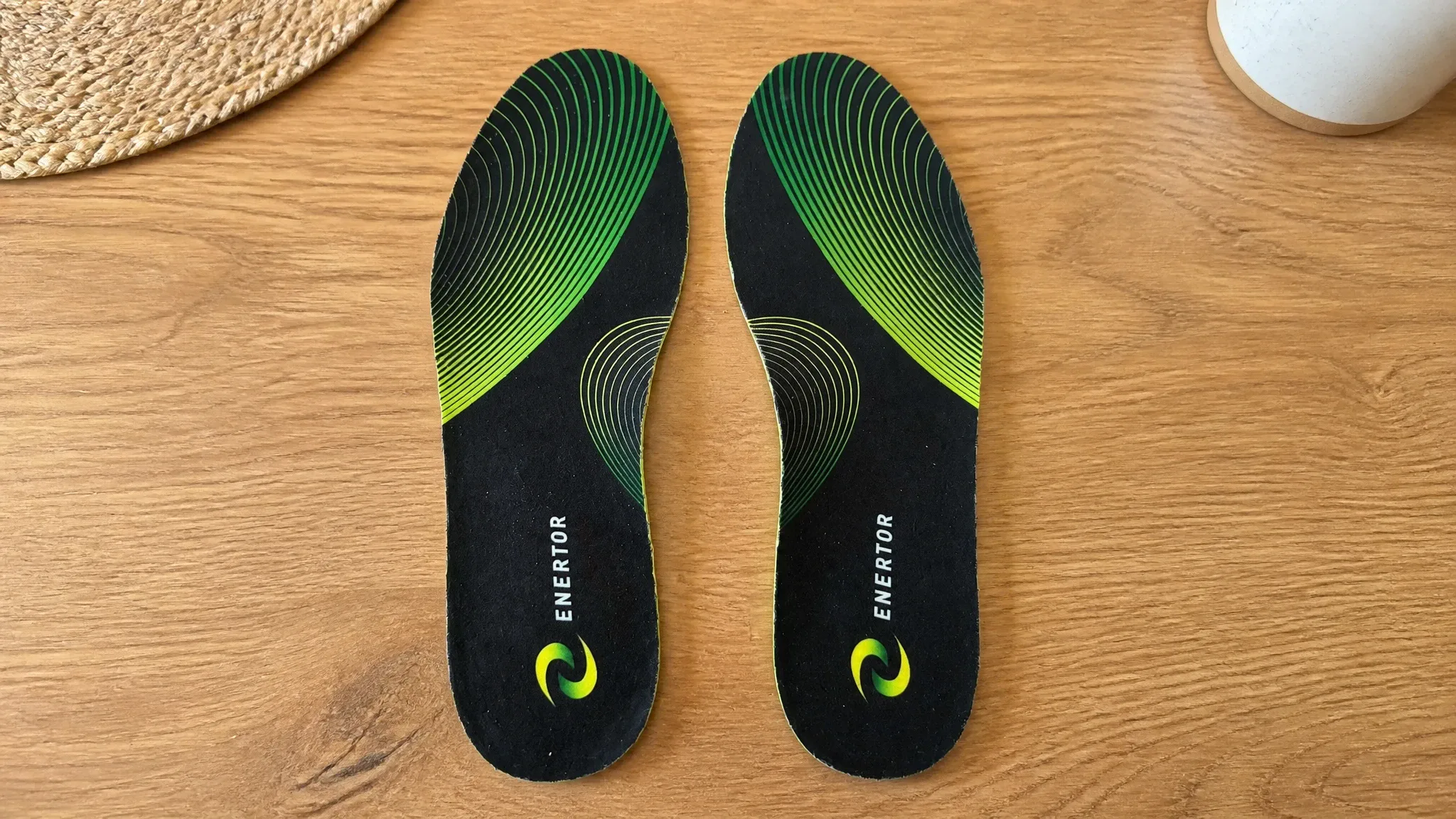
Enertor is a UK-based insole brand built around a patented cushioning material called PX1, and after six weeks of testing its PX1 Running Insoles, I'd recommend them to neutral-gait or mild-overpronation runners chasing shock reduction over plush cushioning. The lineup covers running insoles, walking insoles, and post-activity recovery slides, sold individually or as bundles. Enertor insoles are manufactured in Britain and are marketed as lasting approximately 500 miles or one year of use. Over the years working as a personal trainer, I sized arch support directly from a customer's own footprint. I logged over a thousand insole fittings, across hiking boots, casual boots, and cowboy boots. That work helped more than 1,000 people relieve foot, knee, hip, and back pain through proper support.
The brand markets its running insole as designed for neutral runners or mild overpronators, and states the insole is not suited to supinators, a claim that matched what I felt in my own testing.
My Enertor Testing Process
Model tested: Enertor PX1 Running Insoles, US Men's 10-11, built with Enertor's PX1 shock-absorbing material and a raised heel, met pad, and cushioned arch support. I want an insole that fixes foot pain without creating new pain somewhere else. Rock-hard support is just as bad as no support at all.
My own foot profile: I have high arches with mild overpronation, weigh 175 lb, and spend most of my day on my feet at a standing job, with some weekend running.
I ran a thumb-press arch test, a heel-to-toe torsion twist, and six weeks of real wear across running, standing, and everyday shoes, because those cover whether the arch actually holds up, whether the material is stiff enough to support a stride, and whether the fit and feel hold up once the insole has logged real miles. The plastic-backed arch shelf held firm under steady thumb pressure and never sank under my full 175 lb, and it graded around a 4 out of 5 for stiffness on the torsion twist, resisting a full heel-to-toe wring more than a basic foam insole would.
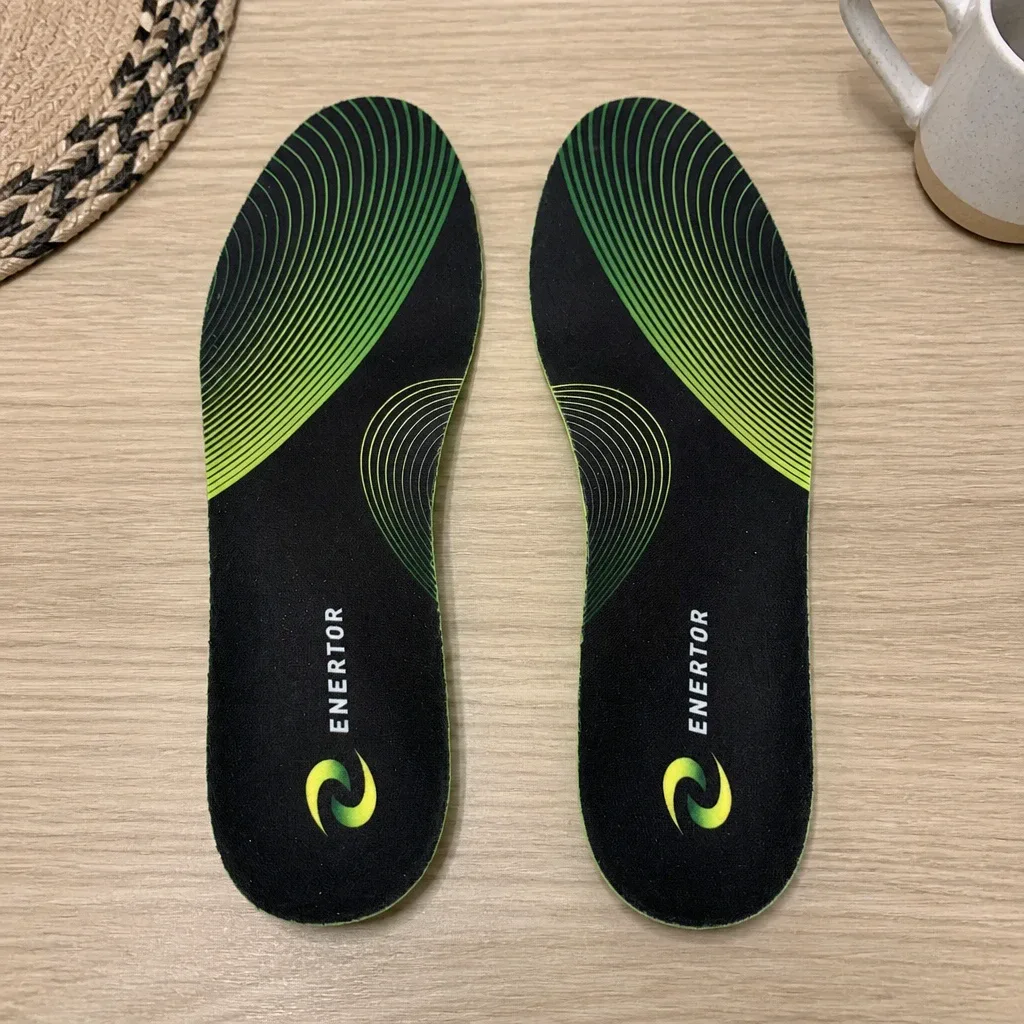
I tested it in my daily running trainers, flat canvas sneakers, and a stiffer leather dress shoe, trimming it cleanly for the narrower shoe, and took it across concrete, dirt trails, and carpet, with the shock absorption most noticeable against hard concrete. It performed through a sweaty 90-minute long run without sliding, three full 8-hour work shifts with noticeably less foot fatigue than the stock insole, and 90 total running miles over six weeks.
It took close to three weeks to feel fully broken in, and comparing the arch's firmness on day one against day twenty showed that period was my foot adjusting rather than the material softening. My benchmark throughout was a direct before-and-after against the stock insole, and by that standard this insole met my bar for "great support": no arch collapse under pressure and less end-of-day fatigue, though it's still a fixed off-the-shelf shape rather than a substitute for a podiatrist's custom orthotic.
How Do Enertor Insoles Really Work?
Enertor insoles hold a wearer's foot with a heel cup that measured roughly 1.8 cm deep with calipers, and it held my foot firmly in place through running and lateral movement in my sneakers, with no sliding off the cushioned base. The core mechanism is PX1, a material engineered to spread impact forces horizontally through the insole rather than letting them travel vertically up the leg. Enertor states this reduces shockwaves reaching the knees and hips at each foot strike.
The running insole adds a slightly raised heel to protect the foot at the point of highest impact, a drop point near the big toe intended to reduce pressure on the toe or bunion area, a metatarsal pad at the forefoot, and cushioned arch support intended to lessen pronation. An earlier Enertor product generation used a technology called D3O, described as a putty-like compound that stays soft at rest and stiffens on impact to absorb and disperse energy.
What Is the Material Breakdown of Enertor Insoles?
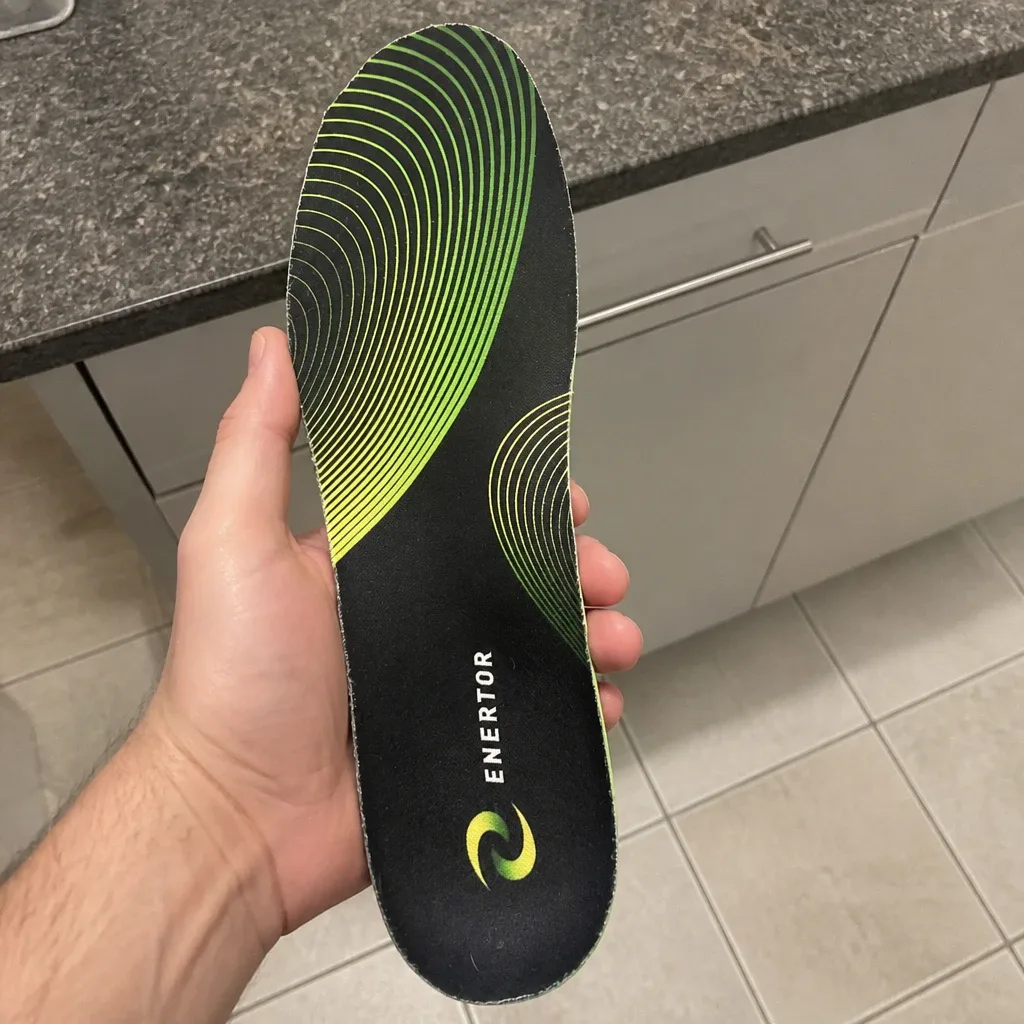
Enertor insoles use the brand's proprietary PX1 material as the primary shock-absorbing layer, combined with a cushioned arch-support structure and a forefoot metatarsal pad. The plastic arch support held its shape without any flex or crackling under my full 175 lb on one foot, and through six weeks of single-leg stands, jumping, and daily wear it never snapped or cracked, flexing slightly under load and always returning to shape.
The heel cup stayed sturdy the entire time, still holding its molded form after 90 running miles with no collapsing or thinning at the base. The insole is a full-length, trim-to-fit design meant to sit inside the shoe in place of the stock insole. Manufacturer testing figures state PX1 absorbs 51% of the force of each foot strike, provides up to 89% more shock absorbency per millimeter of thickness than the nearest competitor, and is around 90% softer and 40% lighter than competing insoles.
The PX1 top layer and firmer arch shell felt closer to a performance insole than cheap foam, and the cushioning kept rebounding quickly when pressed even after weeks of daily wear, which puts my estimate for reliable support at around 400 to 500 miles or about a year before replacement. At roughly $50, it costs more than a basic drugstore insole, but it performed reliably enough over six weeks that I'd buy it again. Mine never squeaked, but if it did I'd check for trapped moisture or debris underneath before assuming a defect.
How Do Enertor Insoles Perform and Feel in Real Use?
Owners report a firmer, less "squidgy" ride than soft foam insoles, with a noticeable softening of hard-surface impact on pavement and tarmac. Wear testers describe the insole as not bulky, so it does not crowd the instep against the laces the way some thicker insoles do. Owners managing Achilles tendinitis and calf tightness report reduced pain and improved recovery-day comfort after switching to Enertor.
Deadlifting 220 lb in the insoles felt stable through the heel and midfoot, with the firm arch shelf keeping my foot from rolling inward and no sharp heel or arch pain afterward, just normal fatigue in my lower back and hamstrings from the lift itself. Checking the arch height with a ruler right after the set showed no flattening or crushing compared to before I started. The added stack height raised my heel slightly and disrupted my starting posture a bit at both 135 lb and 220 lb, though I didn't notice a meaningful difference between the two loads.
I found the insole safe to keep in for moderately heavy lifting like this, though I'd still pull any insole, not just this one, for a true one-rep max attempt, which is standard lifting practice rather than a knock on the product. The insole is reported to require a break-in period of roughly three weeks before the fit and feel settle in, during which the insole is described as slightly changing the wearer's walking mechanics while the foot and lower leg adapt, matching almost exactly the three weeks it took me to feel fully broken in.
Does Enertor Back Its Insoles With a Guarantee?
Enertor insoles carry a 60-day satisfaction, money-back guarantee. The guarantee remains valid even after an insole has been trimmed to size for a better fit.
How Do Customers Really Feel About Enertor?
Enertor's own site reports an overall customer rating of 4.5 out of 5 from roughly 6,200 reviews. On Amazon, the PX1 running insole carries a 4.2-out-of-5 rating from 370 reviews and the PX1 walking insole carries a 4.0-out-of-5 rating from 330 reviews.
Is There a Cheaper Alternative to Enertor?
Wirecutter names Spenco's RX Comfort Insole as its budget pick among tested insoles, at roughly $22 compared with Enertor's roughly $50 running insole. For low-arch feet specifically, Wirecutter recommends Currex RunPro, priced similarly to Enertor at around $60.
Do Enertor Insoles Fit Sneakers, Boots, and Dress Shoes Alike?
Enertor insoles are designed to fit into shoes with a removable stock insole, where the original insole is removed and replaced with the Enertor insole. Swapping the insole between three pairs of shoes for six weeks never bent or ruined the arch shape, and folding it to fit a narrower dress shoe never came close to snapping the plastic, flexing noticeably and springing back to its molded curve within a second or two each time I tested it by hand.
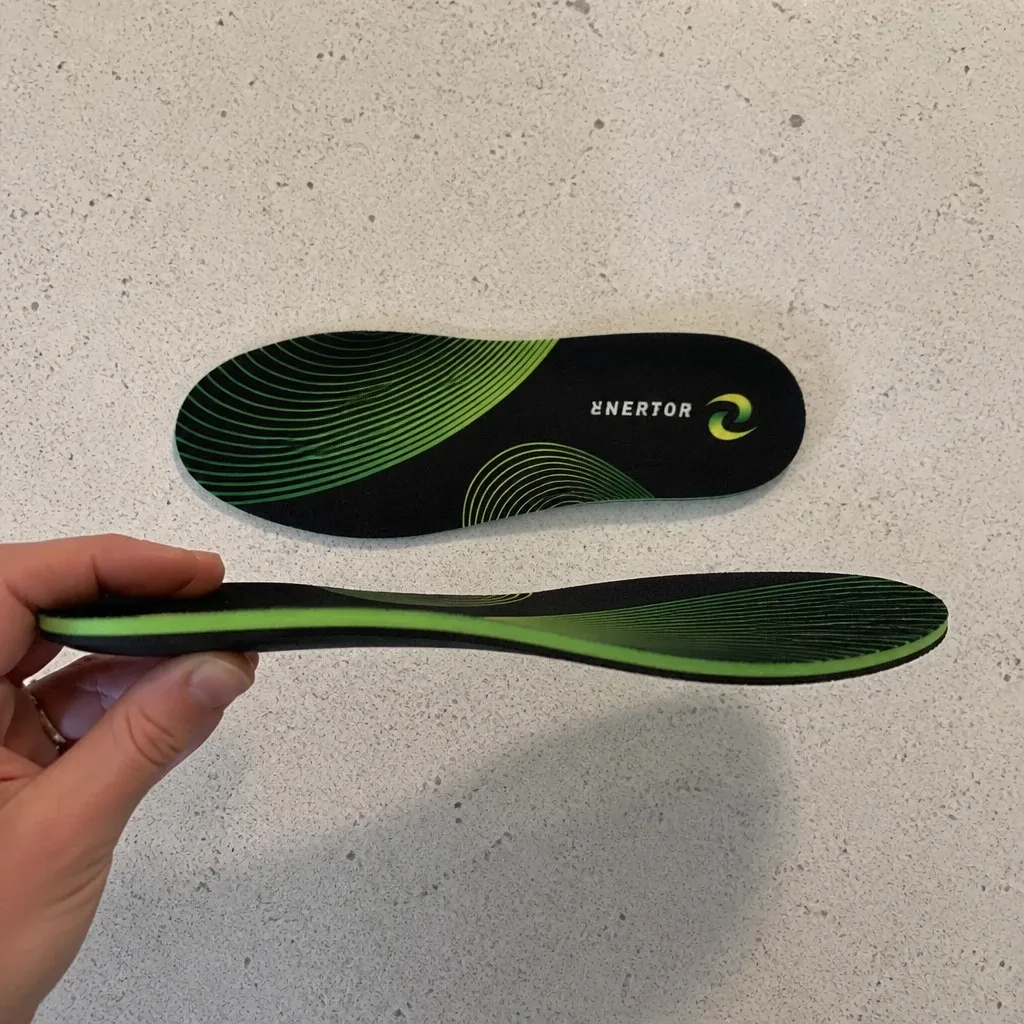
After all that swapping, the hard support piece still hadn't separated from the soft top layer, with the bonding at the edges intact. My laces looked slightly shorter than usual in my running shoes because the insole's added stack height takes up a bit more room, which is normal with any thicker aftermarket insole, and my foot sat maybe 3-4 mm higher than with the stock insole, not enough to feel like a real fit problem.
The brand markets the insole as suited to neutral or supportive running shoes. Owners have also fitted the insoles inside hiking boots, worn them on multi-day hikes, and layered them on top of the existing shoe insole rather than replacing it, for additional cushioning at the cost of reduced toe-box room.
How Do You Keep Enertor Insoles Looking and Feeling New?
Wiping the insole down with a damp cloth kept the top cover looking clean without soaking the foam underneath, and a light disinfectant spray followed by air drying handled odor control fine, though I avoided fully soaking it since the foam layers take a while to dry out. Pet hair and sock lint picked up on the textured top layer during testing, but a quick wipe or light brushing removed nearly all of it without leaving any permanent residue.
What's the Honest Downside of Enertor Insoles?
The most consistent reported downside is a firm, hard-feeling ride that some owners find too stiff compared with softer foam insoles. Owners with shoes that already include their own arch support report the Enertor insole's arch as "incredibly high," to the point of causing blisters and altering knee-loading gait until the arch is manually trimmed down.
The brand itself states the insole is not designed for supinators. Buyers ordering from outside the UK report added overseas shipping and import charges on top of the listed insole price.
Even under my heaviest test load, the 220 lb deadlift sets, the insole held its shape with no flattening, crushing, or felt difference in the arch or heel cup once I set the bar down. The one real caveat worth flagging is that continuing to wear any insole through pain, this one included, can mask a developing injury rather than fix it, so I stopped and rested any time I felt sharp discomfort instead of trying to train through it.
How Much Should You Expect to Pay for Enertor?
Enertor's running insoles and walking insoles are each priced at €39,95 (roughly $50) for a single pair direct from the brand, with bundle pricing of €47,95 for a running-insole-plus-sock bundle and €88,95 for a run-and-recover bundle pairing insoles with recovery slides. On Amazon US, the PX1 running and walking insoles are listed at $49.99 per pair. Buying two pairs direct from Enertor drops the per-pair price to roughly €33.96, and buying four pairs drops it further to roughly €29.96 per pair.
Where Are Enertor Insoles Sold?
Enertor insoles are sold directly through enertor.com and through Amazon in both the US and UK marketplaces. Wirecutter notes that some stateside specialty retailers also carry Enertor insoles in physical stores. Availability varies by retailer; check the current listing before buying.
Is Enertor a Good Fit for You?
Enertor markets its running insole toward runners with neutral gait or mild overpronation, and specifically toward relief from plantar fasciitis, Achilles tendonitis, shin splints, IT band syndrome, runner's knee, and metatarsalgia. This is the brand's own claimed-use list, repeated across its product listings, not a clinical endorsement or a claim we've independently verified. The brand states the insole is not designed for supinators.
Wirecutter's independent testing concluded the insole is best suited to people with neutral arches, while still providing usable support for testers with high or low arches, which tracks with my own experience testing it with high arches and mild overpronation over six weeks. Enertor insoles are sold as an over-the-counter product rather than a custom or prescription orthotic; no FDA clearance or HSA/insurance eligibility is documented in the sourced material.
The Full Spec Sheet for Enertor: PX1 Running Insole
| Spec | Details |
|---|---|
| Brand | Enertor |
| Product | PX1 Running Insoles |
| Core material | PX1 shock-absorbing shell with cushioned arch support and a forefoot metatarsal pad |
| Size tested | US Men's 10-11 |
| Heel cup depth (measured) | Roughly 1.8 cm |
| Torsion stiffness (tested) | 4 out of 5, graded by hand twisting heel-to-toe |
| Thumb-press arch compression (tested) | Gave roughly 1-2 mm before holding its shape completely |
| Break-in period | Roughly three weeks |
| Rated lifespan | Roughly 500 miles or one year |
| Price (single pair, direct) | €39,95 (roughly $50) |
| Warranty | 60-day money-back guarantee, valid even after trimming |
| Amazon rating (PX1 Running Insole) | 4.2 out of 5 (370 reviews) |
Source: Enertor, Amazon product listings, and Wirecutter.
What's My Closing Verdict on Enertor?
Enertor's PX1 running insole earned Wirecutter's top pick for neutral-arch runners, supported by an 89%-more-shock-absorption claim over competing insoles and a 60-day money-back guarantee that survives trimming the insole to fit. The insole is firmer than soft foam alternatives, and its arch sits aggressively high for feet already supported by their shoe's own arch, both of which show up as the most repeated owner complaints.
In my own six-week test of the PX1 Running Insole, that firmness read as stability rather than harshness: the arch and heel cup held their shape through 90 running miles and a 220 lb deadlift session with zero measurable change, and the roughly three-week break-in period the brand describes matched what I felt directly. Made in Britain and rated for roughly 500 miles or a year of wear, it is best suited to neutral or mildly overpronating runners chasing shock reduction rather than plush cushioning, and less suited to supinators or anyone who prefers a soft landing.
Michal Sieroslawski is an Entrepreneur, exercise physiologist, and personal trainer who has fitted over a thousand people with insoles. He holds a degree in Sports and Exercise Science from the University of Central Lancashire, where he studied biomechanics, anatomy, and exercise physiology. Since 2020, Michal Sieroslawski has helped local and online businesses get found in Google and AI search.