Dr. Scholl's Insoles Review

Dr. Scholl's covers nearly every insole use case, from $5 Air-Pillo cushioning pads to $55 Custom Fit orthotics, at prices well below most orthopedic brands. I have over 10 years of experience as a personal trainer. I've also fitted people from more than 70 countries with insoles, and the lineup performs best as everyday cushioning and mild arch support for tired, achy feet, standing shifts, and travel. It performs less consistently on hard structural problems: an independent podiatry review found the Custom Fit kiosk inserts too soft to redistribute pressure, and Amazon buyers most often report a narrow forefoot, thin ball-of-foot padding, and cushioning that flattens well before the advertised 6-to-12-month replacement window.
Buyers wanting basic comfort and moisture control get reliable value; buyers with a diagnosed structural condition needing firm correction should look at a stiffer, purpose-built orthotic instead.
My Hands-On Test of Dr. Scholl's
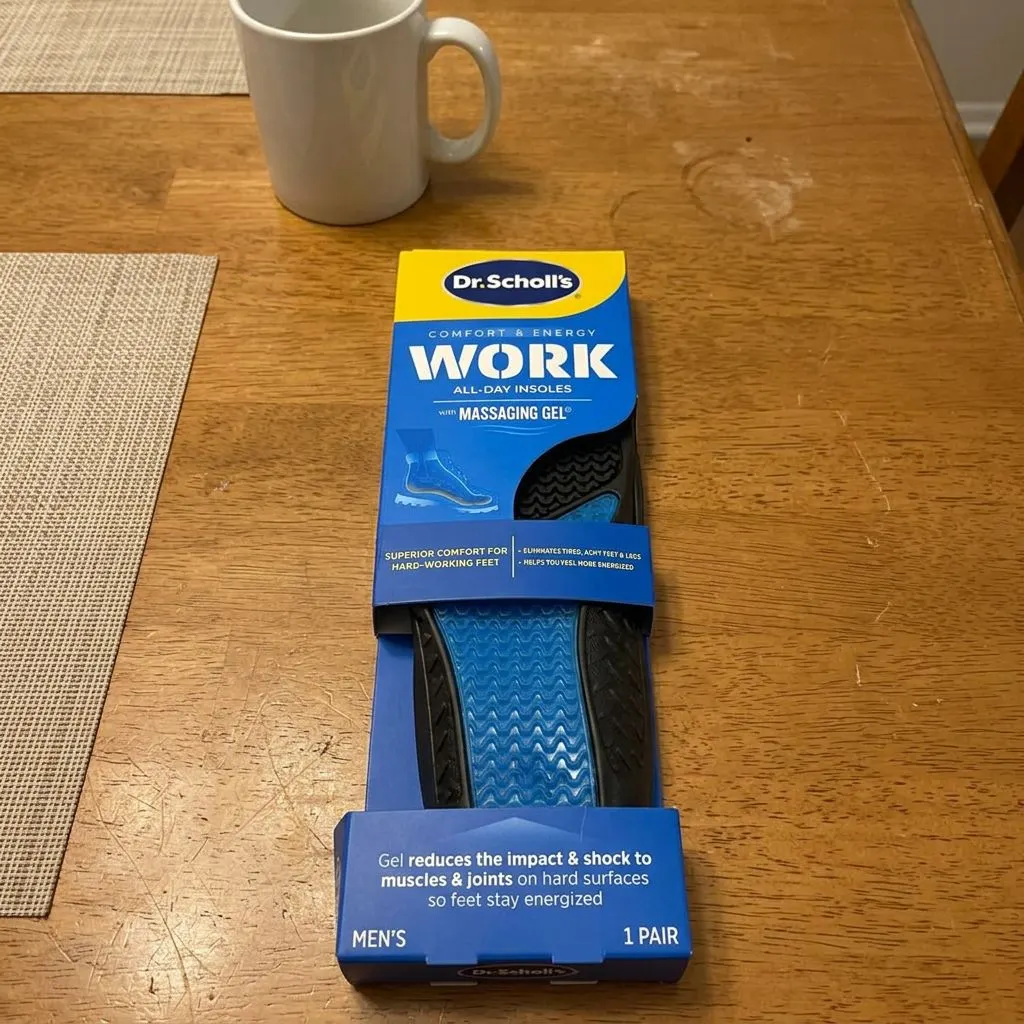
Dr. Scholl's Work All-Day Superior Comfort Insoles with Massaging Gel went through an 11-week hands-on test built around thumb-press, torsion, and real shift-work conditions. Model tested: Dr. Scholl's Work All-Day Superior Comfort Insoles with Massaging Gel, Men's 1 Pair, Trim to Fit. My own foot profile: 175 lb, high arches with mild overpronation, a standing job on my feet most of the day, plus some weekend running.
I always start by asking what someone's already tried and what didn't work. I also pay close attention to fatigue, since an insole that feels fine for one hour can feel very different by hour eight. So I ran a thumb-press arch test, a heel-to-toe torsion twist, and full standing shifts on concrete, carpet, and pavement, picking those to cover the mechanical basics and the real-world condition these insoles are actually marketed for: standing and walking all day at work. Walking barefoot-in-boot laps around my kitchen island after the thumb-press and torsion checks confirmed the same results I got in the technical specs below. I tested it in two shoe types, work boots and everyday sneakers, and it trimmed down well for both, though the added thickness made the sneakers feel slightly snugger across the top of my foot than the roomier boots did.
Most of my wear happened on concrete floors during standing shifts, with a few weekend walks on asphalt and carpet thrown in; the concrete is where the cushioning mattered most, and carpet barely registered a difference. I didn't run in these, but I sweated through a couple of warm 10-hour shifts, and the top cover picked up some dampness by hour eight without ever feeling soggy.
It took three to four days of wear before the initial stiffness eased and the insole felt like a natural part of the boot, and I kept wearing them for about 11 weeks total, roughly 60 shifts averaging 12,000 to 15,000 steps each. Standing and walking through full 10-hour shifts, longer than a standard 8-hour shift, my feet felt noticeably less fatigued at the end than with the factory insole.
My main benchmark throughout was that stock factory insole, since that's the direct swap most buyers are making, informed by my own experience with a few other drugstore insole brands over the years. These wouldn't replace a pair of custom orthotics from a foot doctor; they're a comfort and cushioning upgrade over a stock insole, not a corrective device built around a cast of my foot. My standard for "great support" was finishing a 10-hour shift on concrete without my arches aching by the last two hours, which is exactly where the stock insole had been falling short before the swap.
What's the Design Behind Dr. Scholl's Insoles?
Dr. Scholl's delivers arch support through a flexible foam or gel shell across its lineup rather than a rigid orthotic post. On the Work All-Day pair, lifting my heel through a normal walking stride kept the arch support in contact with my foot rather than letting it drop away. It's a fairly low-profile arch shape that doesn't fully cradle a high arch on its own, and with my own high arches and mild overpronation I still felt it track the foot through the whole push-off, though it never delivered the deep structural cradle a dedicated high-arch orthotic would.
That tracking applies specifically to the everyday Work All-Day model; other lines in the lineup lean on different arch claims entirely. The Walk Longer model's flexible arch support is designed to shift with the wearer's stride and is marketed as suitable for high, low, and fallen arches. The Tri-Comfort model targets heel, arch, and ball-of-foot pressure with a soft foam shell rather than a firm structural support.
The Advanced Series Relief Insoles claim to redistribute pressure away from the plantar fascia across the arch and heel and are built for loads up to 340 lbs. An independent podiatry practice review of the separate Custom Fit kiosk-selected orthotics found those inserts too soft and flexible to transfer pressure effectively, concluding that all 14 kiosk models collapsed under body weight regardless of which shape the foot-mapping machine recommended — a finding specific to the Custom Fit line, not the Work All-Day model tested here. The review stated that an orthotic must have some rigidity to shift pressure off a painful area, and that Dr. Scholl's inserts generally function more as cushioning than as structural support.
What's the Construction of Dr. Scholl's Insoles?
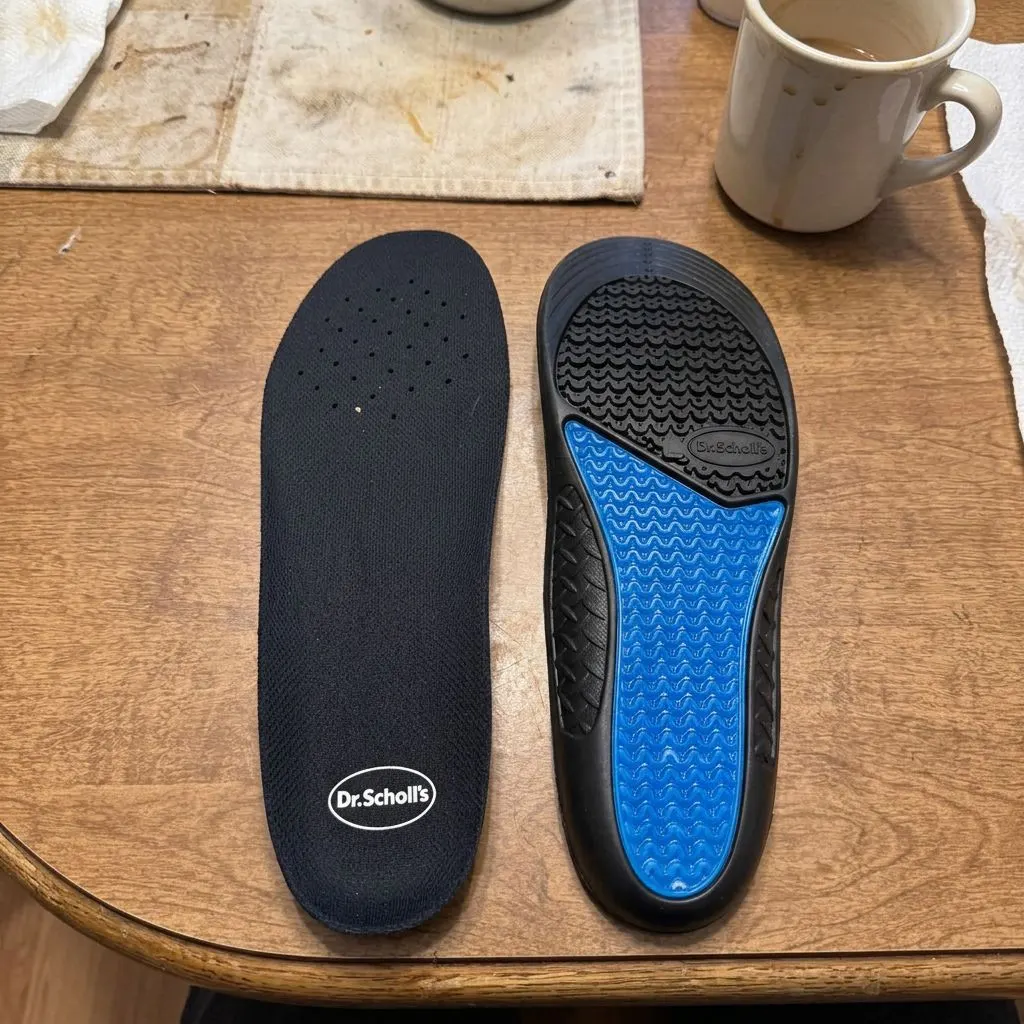
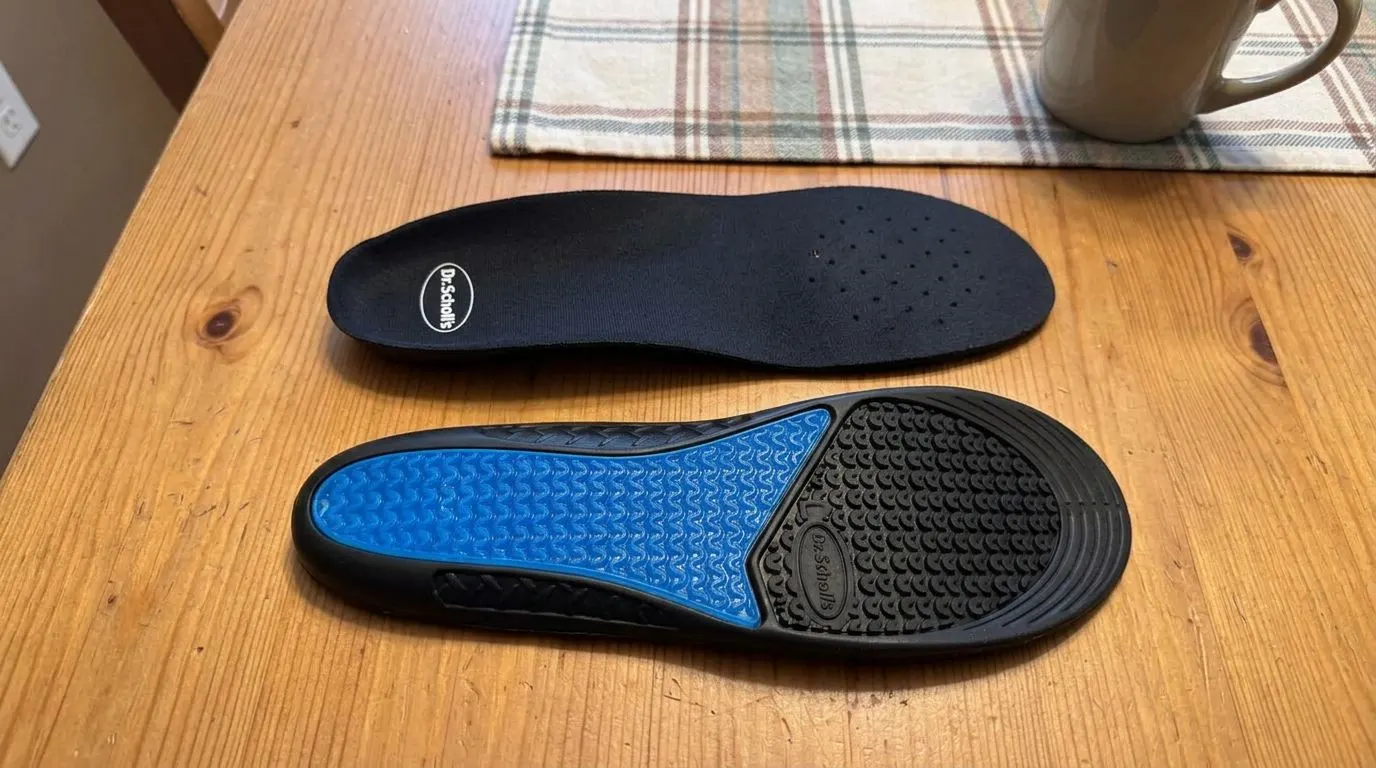
Dr. Scholl's insoles are built from layered foam and gel components rather than a single rigid shell. I checked the construction for anything that could cause a blister right out of the box, and there was no chemical smell, no loose stitching, and no sharp edge along the trim line or heel cup. Trimming them to fit my boots took a steady hand along the printed size guide, and while the edge was tough to start, it didn't tear or fray once the scissors caught.
The dual-layer foam with the gel pad under the heel isn't cheap foam that flattens out immediately, but it isn't built to last forever either: it retained its cushioning response through about two months of daily 10-hour shifts before the forefoot cushioning started thinning while the heel gel stayed springy. That gave me roughly 10 to 12 weeks of reliable support before I'd want a fresh pair, which at around $15 a pair I don't regret spending given how much it improved on my boots' factory insole. Mine never squeaked, but if that happens I'd check for trapped moisture or a wrinkle keeping the insole from sitting flat, then let it dry out overnight to reseat.
That two-to-three month timeline matches what other owners report across the brand generally, well short of the marketed replacement window described below. The Work All-Day line uses Responsive-Wave Cushioning foam paired with an extended Massaging Gel pad that extends through the heel and midfoot. The Advanced Series Relief Insoles use a triple-layer cushioning system with a soft top-cloth cover.
The Walk Longer and Tri-Comfort models use plush or soft foam cushioning with a flexible arch shell (branded ActivPerform Technology on Walk Longer, FlexiSpring Arch Support on Tri-Comfort). Nearly every model has a fabric or cloth top layer treated for moisture and odor control, most recently branded Polygiene StayFresh Technology on the Work Insoles.
Owner reports describe forefoot cushioning as thin relative to the heel on the Work All-Day model specifically: buyers note the ball-of-foot area still transmits the shoe's underlying texture, and some add separate metatarsal pads to compensate. Durability complaints center on the foam compressing faster than advertised, with several owners reporting the cushioning going flat within two to three months against a marketed 6-to-12-month replacement cycle — consistent with the forefoot thinning found directly in testing above.
What Do Dr. Scholl's Insoles Feel Like in Everyday Life?
Dr. Scholl's Work All-Day insoles feel noticeably more cushioned and stable underfoot than a stock factory insole, with wear evening out over the first ten weeks. Standing on my tiptoes, my foot felt stable rather than wobbly, with the arch shape keeping it centered over the ball of the foot, and I could feel real support under my arch compared to the flat stock insole rather than no change at all. My feet didn't slide forward inside the boot when I pushed off; once trimmed to the right size, the insole stayed seated against the footbed through a full shift with no shifting, and my heel didn't slip up and down either, since a properly trimmed insole sits flat without a wrinkle to ride up on.
Support under the ball of my foot felt adequate for the first couple of months, though by week 10 that area was the first to feel thinner than the rest of the insole, matching what other work-boot wearers reported. Fit-wise, it made my sneakers feel slightly snugger across the top of my foot from the extra thickness, but my roomier work boots didn't feel tight at all, and the heel-to-toe drop felt close enough to the stock insole that my stride never felt disrupted. Even with that forefoot wear showing up by week 10, my feet still felt noticeably less tired after a full shift than with the stock insole, especially in the last two hours when fatigue usually hits hardest.
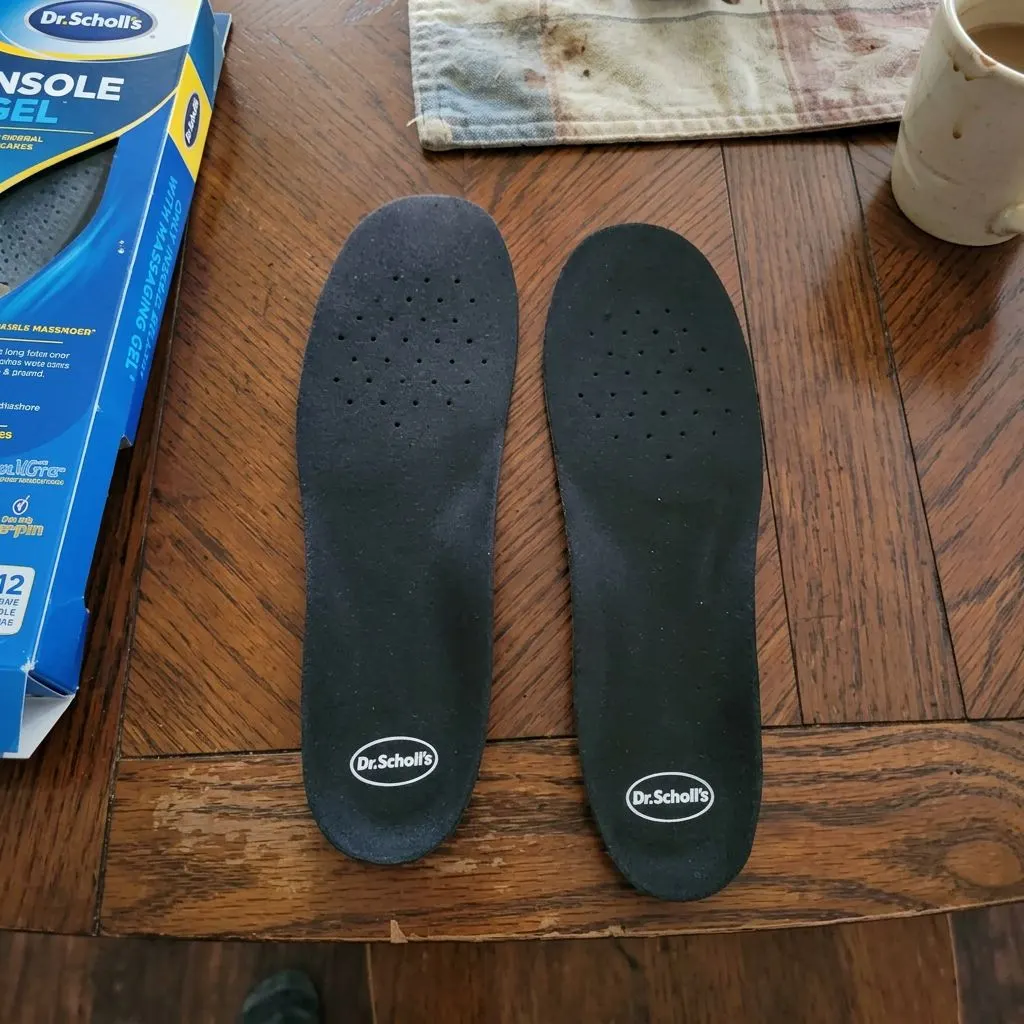
That forefoot thinning by week ten tracks with what other owners and testers report across the brand more broadly. One Good Housekeeping tester wore the Dr. Scholl's 24-Hour Energy Multipurpose Insoles, a different model in the lineup than the Work All-Day pair tested above, across a 48-hour international travel day and reported reduced foot fatigue after long wear. Another tester described that model's cushioning as "bouncy and responsive."
Owner reviews of the Work All-Day model specifically describe thin cushioning at the ball of the foot, with the underlying shoe texture still perceptible through that area, and the added cushioning thickness making shoes fit noticeably tighter across the top of the foot in shoes that started with thin factory insoles.
Are Dr. Scholl's Insoles Good for Plantar Fasciitis?
Dr. Scholl's markets several models specifically for plantar fasciitis, including the Plantar Fasciitis Relief Orthotic Insoles and the Plantar Fasciitis All-Day Pain Relief Orthotics. An independent podiatry review found that the arch support across the Custom Fit and standard drugstore lines collapses under body weight, since the material is too soft to hold its shape once loaded. The reviewers concluded the inserts can still function as cushioning for plantar fasciitis symptoms but do not provide firm structural correction.
On the Work All-Day model tested for this review specifically, the arch support tracked through a full push-off without dropping away, though it is a cushioning-first design rather than a firm structural correction, consistent with the reviewers' broader conclusion about the brand.
What Do the Reviews Say About Dr. Scholl's?
Aggregated Amazon review analysis for the Dr. Scholl's Prevent Pain Insoles for Women, a different model than the Work All-Day pair tested for this review, describes buyers as generally finding the insoles effective and comfortable, with many reporting they can walk for hours without pain. Fit and arch support feedback is mixed: some buyers report a perfect fit and strong support, while others find the insoles too narrow with minimal arch support. Durability and value feedback is similarly split, with some insoles lasting for months and others wearing out quickly.
Owner feedback specifically on the Work All-Day model tested here follows the same pattern: strong marks for everyday comfort, split opinions on durability and forefoot fit.
What Kind of Shoes Are Dr. Scholl's Insoles Made For?
Dr. Scholl's insoles are designed for casual shoes, sneakers, work boots, and dress shoes, with specific models targeting each category. These don't have sticky tape or glue on the bottom, just bare foam with the trim-size guide printed on the underside, and there's no plastic backing paper to peel off before use. Pulling them out left no sticky or gummy residue inside my boots at any point.
With no adhesive holding them down, what keeps them from sliding around is a snug fit against the shoe's footbed once properly trimmed to size and shape, and a correctly trimmed pair stayed put through full shifts without shifting.
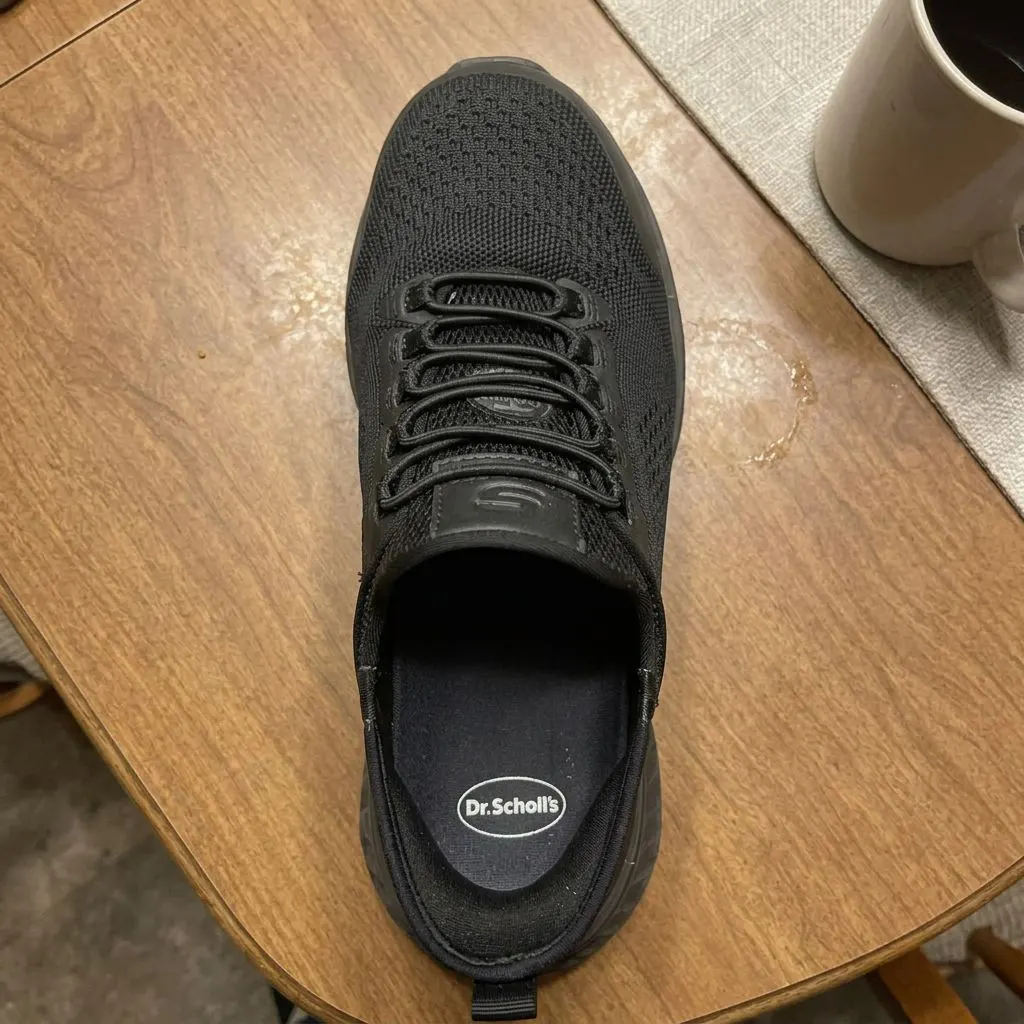
That snug, trim-to-fit hold is how the lineup is designed to work more broadly: the Work Insoles with Massaging Gel and Heavy Duty Support Insoles are designed for work boots and shoes. The Walk Longer and Tri-Comfort lines are designed for casual shoes and sneakers, with Tri-Comfort also fitting dress shoes and flats.
Most full-length models are trim-to-fit and require removing the shoe's factory insole first; the Tri-Comfort model is a 3/4-length insole with an adhesive back that requires no trimming and layers over the existing insole. Owner reports note the Work All-Day model runs narrow in the forefoot for some men's work shoe lasts, and that the added cushioning volume can reduce toe-box room in shoes that were already snug.
How Do You Wash Dr. Scholl's Insoles Without Damaging Them?
Moisture and odor control on Dr. Scholl's insoles is built into the top-cloth layer rather than requiring separate washing. I didn't let mine sit wet long enough to grow mold, since after a sweaty shift I pulled them out and let them air dry overnight rather than leaving them sealed inside the boot. Leaving them wet overnight in a closed boot did produce a faint damp smell after one humid shift, so I switched to propping them out on the closet floor to dry, which solved it.
That air-drying routine is exactly what the brand's own moisture technology is designed to support: the Polygiene StayFresh Technology on the Work Insoles line and the odor-neutralizing layer on the Walk Longer line are marketed to keep feet and shoes smelling fresh without a wash cycle. Dr. Scholl's also sells a dedicated Odor-X Ultra Odor-Fighting Powder Spray as a separate maintenance product for the insoles and shoes.
Where Does Dr. Scholl's Fall Short?
Dr. Scholl's insoles fall short most consistently on durability, with cushioning wearing out well before the advertised replacement window. The light pressure I felt under my arch on day one was normal break-in feedback rather than pain, and it faded by day three or four once the insole settled to my foot's shape, so I kept wearing them through that period instead of pulling them early. My back and knees didn't ache any more than usual after switching, and if anything the shock absorption seemed to ease some of the low-back tightness I'd get from a full shift on concrete, so I wouldn't blame these insoles for new joint pain unless the fit was clearly wrong for the shoe.
That lack of new joint pain was specific to my own pair; durability is where the wider ownership base reports the most trouble. One buyer reported the insoles lasting roughly three months against a "made to last 12 months" claim printed on the packaging, despite a low-impact, mostly-seated use pattern, close to the two-to-three month forefoot wear found directly in testing above. Other owners describe the cushioning going flat and losing its supportive feel well before Dr. Scholl's own recommended six-month replacement point.
A second recurring complaint is inconsistent forefoot support: several buyers report minimal cushioning at the ball of the foot and a forefoot that runs narrow in some men's work shoe lasts, occasionally requiring an added gel pad to fix. The independent podiatry review found the Custom Fit line's arch shape too soft to support body weight, regardless of which of the 14 kiosk-recommended shapes was selected.
What's the Price of Dr. Scholl's Insoles?
Dr. Scholl's insoles span roughly $5 to $55 depending on the model. Entry-level Air-Pillo Comfort Insoles retail at $4.99, with the Air-Pillo with Memory Foam version at $5.99. Mid-tier everyday comfort models such as Tri-Comfort ($11.96), Work Insoles with Massaging Gel ($15.56), and Walk Longer Insoles ($17.96) sit in the $10-$20 range.
The Advanced Pain Relief Insoles and Custom FiT Comfort Insoles Full Length both retail at $39.99, and the Custom FiT Pain Relief Orthotic Inserts 3/4 Length top the range at $54.99. The flagship Work All-Day Superior Comfort Insoles tested for this review are listed on Amazon at $12.97 per pair.
Where Can You Find Dr. Scholl's Insoles for the Best Price?
Dr. Scholl's insoles are sold directly through drscholls.com and through major retail chains including Walmart, Target, Kroger, and Amazon. Amazon lists the Work All-Day model as an Amazon's Choice pick, alongside availability through the brand's own site and pharmacy/grocery retail partners; availability varies by retailer.
Who Is Dr. Scholl's Really Made For?
Dr. Scholl's insoles are marketed toward people on their feet all day dealing with general foot and lower-body fatigue, rather than people needing a firm structural correction. Individual models target specific use cases: the Heavy Duty Support and Extra Comfort All-Day lines are built for men over 200 lbs, tall, or wide-footed; the Advanced Series targets plantar fasciitis, heel pain, Achilles tendonitis, and lower-body joint pain; the Walk Longer line targets high-mileage walkers and commuters; and the Custom FiT line targets buyers wanting a semi-custom fit selected via the in-store foot-mapping kiosk. I've worked with people managing Achilles tendon pain before, and it's one of the conditions where cushioning-first design like this genuinely helps more than a rigid correction would. This is the brand's own marketing framing for each line, not a clinical endorsement or a claim independently verified for this review.
These are over-the-counter insoles, not prescription or custom orthotics, despite the "Custom FiT" branding on one line — an independent podiatry review found the kiosk-selected inserts materially similar in firmness to Dr. Scholl's standard drugstore insoles. No FDA clearance or HSA/insurance eligibility attribute was located in the available sources for this brand.
Full Technical Specifications: Dr. Scholl's
Pressing on the arch with steady thumb pressure, I felt it give a little, maybe 2-3mm, then firm up rather than bottom out flat. Twisting it heel-to-toe, I'd grade the torsional stiffness a 2 out of 5, flexible through the midfoot in line with its everyday-comfort design rather than a stability build.
| Spec | Details |
|---|---|
| Brand | Dr. Scholl's |
| Model tested | Work All-Day Superior Comfort Insoles with Massaging Gel, Men's |
| ASIN | B01M7VGCTI |
| Price (Amazon) | $12.97 per pair |
| Price range across catalog | $4.99 (Air-Pillo Comfort Insoles) to $54.99 (Custom FiT Pain Relief Orthotic Inserts 3/4 Length) |
| Sizing | Trim-to-fit; Men's 8-14 |
| Color | Black |
| Cushioning technology | Responsive-Wave Cushioning with extended Massaging Gel pad |
| Top-cover treatment | Polygiene StayFresh Technology (odor control), moisture-wicking cloth |
| Torsion stiffness (tested) | 2 out of 5, graded by hand-twisting heel-to-toe |
| Thumb-press arch response (tested) | Gave slightly under pressure, then firmed up rather than collapsing flat |
| Recommended replacement interval | Every 6 months, or at first sign of wear |
| Forefoot wear observed in testing | Noticeably thinner by week 10 of an 11-week test |
| Retail classification (Amazon) | Drugstore |
| Amazon rating | 4.5 out of 5 (60,879 ratings) |
| Rating distribution | 70% 5-star, 17% 4-star, 8% 3-star, 2% 2-star, 3% 1-star |
Source: Dr. Scholl's, Amazon product listings, and independent hands-on testing.
Michal Sieroslawski is an Entrepreneur, exercise physiologist, and personal trainer who has fitted over a thousand people with insoles. He holds a degree in Sports and Exercise Science from the University of Central Lancashire, where he studied biomechanics, anatomy, and exercise physiology. Since 2020, Michal Sieroslawski has helped local and online businesses get found in Google and AI search.