Dr Plantar Insoles Review

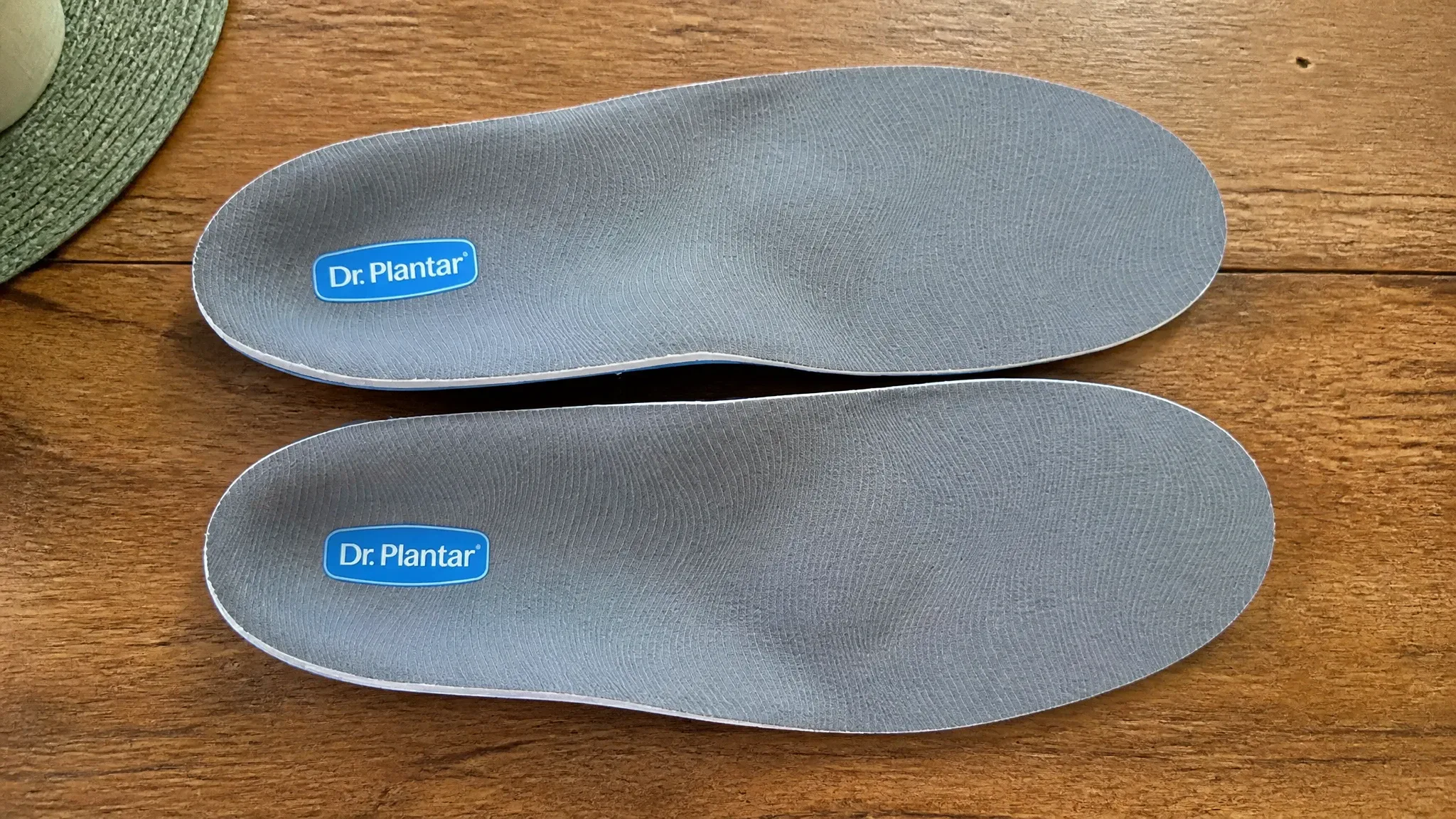
Dr Plantar insoles pair a rigid carbon fiber arch and heel structure with gel stabilizers, a memory foam upper, and a nylon top layer, sold across multiple retailers between roughly $8 and $20. The construction targets stability and plantar fasciitis relief rather than plush cushioning, and reviews at 3.6 to 4.6 out of 5 across listings reflect a product that performs well for owners it fits and less well for others.
The clearest strengths are a firm, non-collapsing arch under sustained pressure and multi-shoe versatility through the trim-to-fit design. The clearest tradeoffs are a narrower fit for wide feet, added thickness that can crowd snug shoes, and heel firmness that does not suit every plantar fasciitis case. Buyers whose foot shape and pain pattern match this profile are positioned to get real value from the price point; buyers with wide feet or heel-centered pain sensitivity may want to look elsewhere first.
My name is Michal, and my background is as a personal trainer on Oceania Cruises. Time and again, I inserted supports into customers' shoes for immediate walking and balance tests. Across those years, I personally fitted over a thousand people with shoe insoles. In direct practice, I helped individuals suffering from metatarsalgia, Morton's neuroma, and severe ball-of-foot pressure. Common cases I handled included neuropathy, big-toe joint pain, and pregnancy-related foot discomfort.
My Test of Dr Plantar Insoles
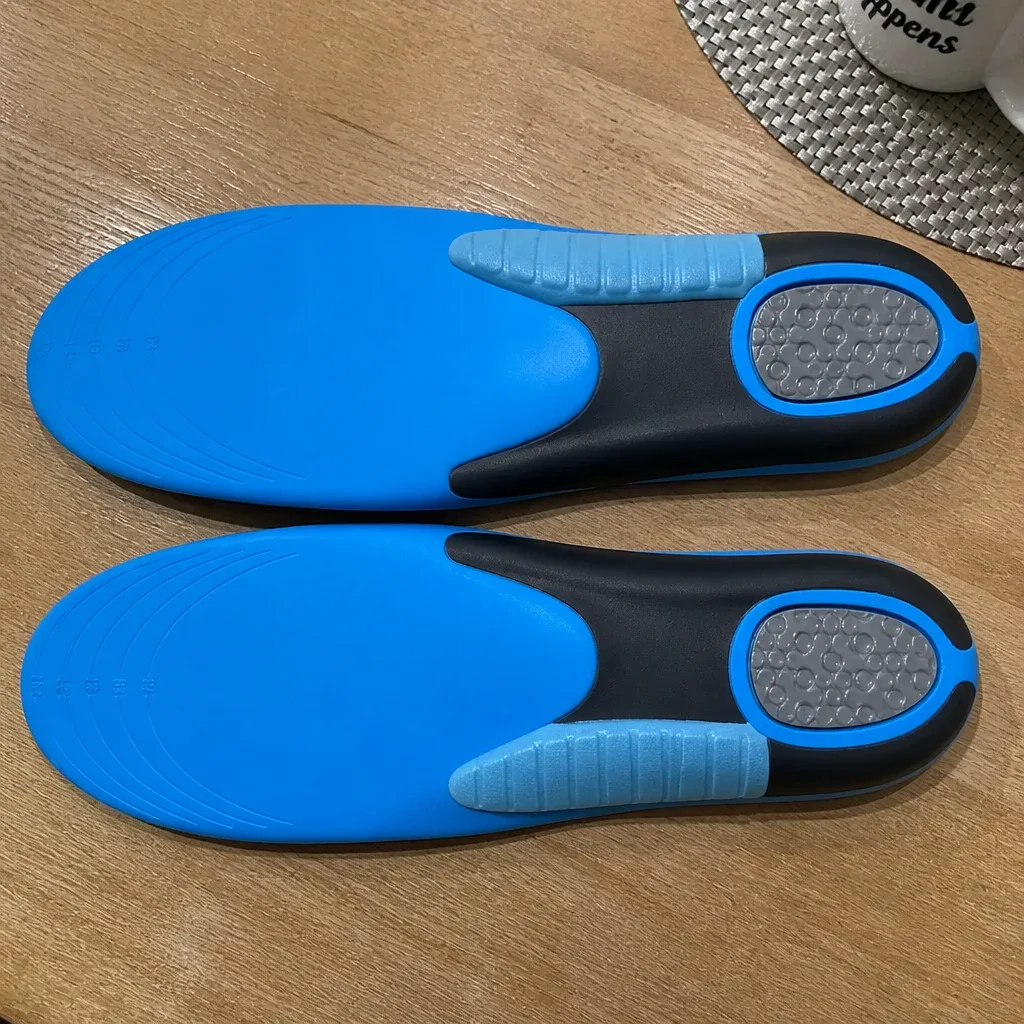
Model tested: Dr Plantar Insoles for Men, Arch Support, Heel Cushion, Memory Foam, Gel Stabilizers, Full Length, Sizes 8-12, Trim to Fit. Carbon fiber arch and heel support, gel stabilizers under the heel and arch, a memory foam upper, and a nylon top layer.
My own foot profile: high arches with mild overpronation, size 10.5 US trimmed down half a size to the 10 line, around 175 lb, a standing job on my feet most of the day with some weekend running, and occasional plantar fasciitis flare-ups in my right heel.
I ran four specific checks on this insole: a thumb-press arch test, a heel-to-toe torsion twist, a full workday standing test, and a jump-rope session, because those cover arch stability, underfoot stiffness, and how the materials survive real activity. I wore them daily for three straight weeks across 18 work shifts, an estimated 140,000 steps, one two-mile treadmill run, and two jump-rope blocks, mostly on polished concrete floors with a short gravel and treadmill stretch thrown in.
On the treadmill and during a jump-rope session my feet sweat noticeably, and the nylon top layer stayed dry to the touch faster than I expected with no sliding. The thumb-press and torsion tests both confirmed a firm carbon fiber arch piece that held its shape under pressure. Nothing shifted or felt unstable during a short day-one jog, so I'd call them safe for light gym use right out of the box, though I'd still trim and break them in before a longer run.
My main benchmark was the flat stock foam insole they replaced, matched against my experience with two prior drugstore insoles, and against that stock foam this insole was clearly better: the old foam had flattened within a month while the carbon fiber arch piece showed no loss of resistance after three weeks. Calling it "firm" means the arch and heel resist finger pressure the way a stiff work boot sole does, while the forefoot stayed noticeably softer since that's where the carbon fiber piece doesn't reach.
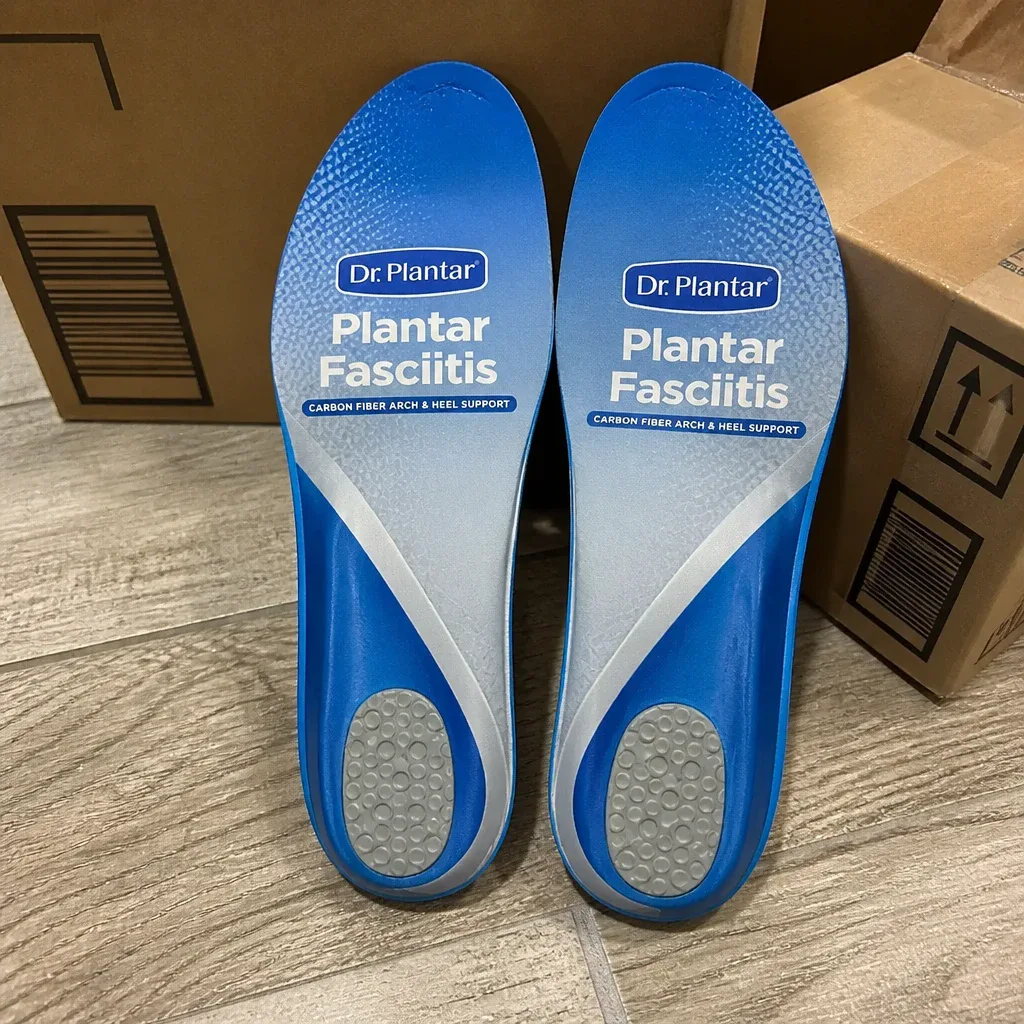
How Does Dr Plantar's Support Respond to Your Step?
The arch support is built around the rigid carbon fiber piece rather than a soft foam wedge.That piece resists compression and torsion, giving the insole a firm, stability-first response rather than a plush, barefoot-style flex.
Compared against a softer all-gel insole I'd tested previously, where my ankle wobbled slightly on uneven pallets underfoot, this insole's firmer carbon fiber arch kept my foot planted with noticeably less side-to-side give.
That same steadiness is what the construction is built for structurally: the forefoot and toe area of the insole are made from softer memory foam and flex more than the arch and heel zone. This creates an insole with a stiff rear two-thirds and a softer front third, a layout aimed at controlling motion at the heel and arch while leaving toe flex largely unrestricted.
What Materials Define Dr Plantar Insoles?
Dr Plantar insoles combine a carbon fiber arch and heel support piece with gel stabilizers, a memory foam upper, and a nylon top layer. The carbon fiber piece sits under the arch and heel and forms the structural core of the insole. Gel stabilizers are placed at the heel and arch to absorb impact and hold the insole in place inside the shoe.
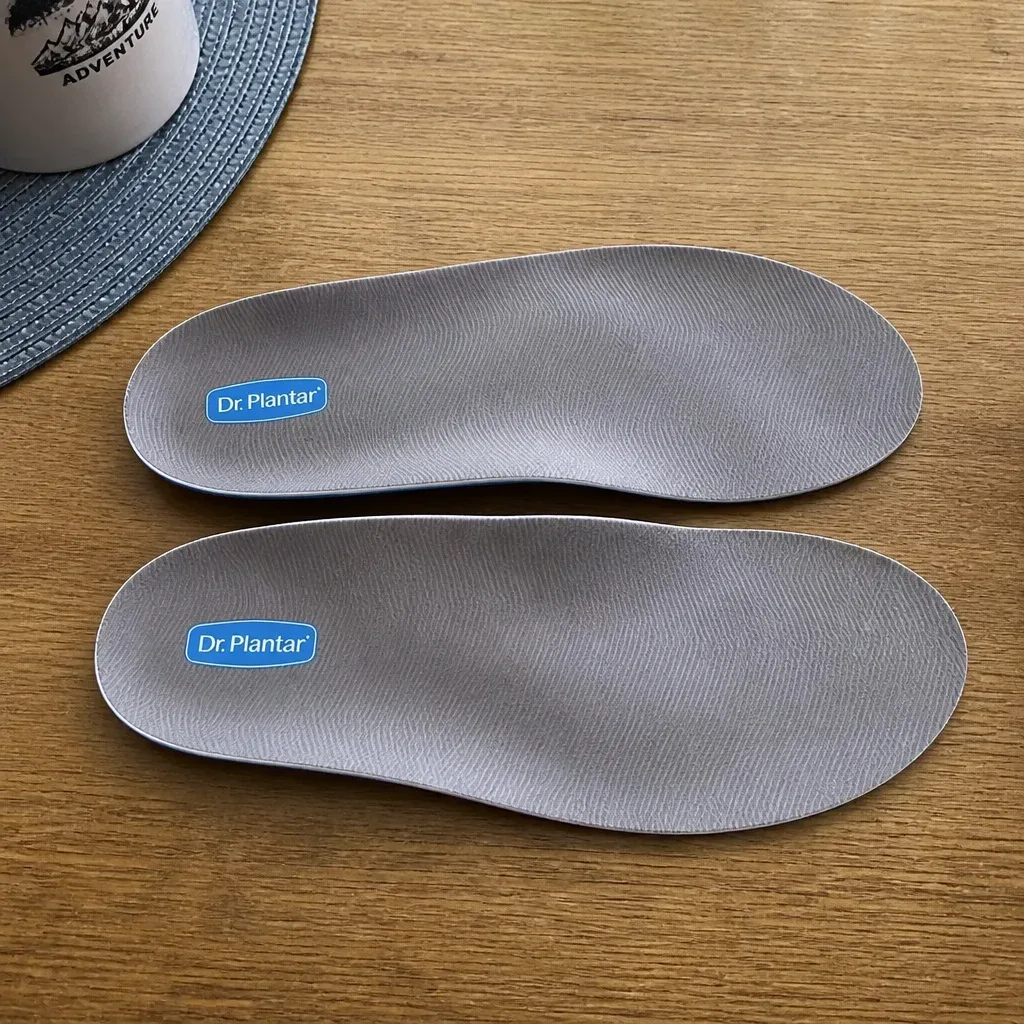
Mine arrived flat and undamaged in a slim retail box, with the trim lines evenly printed on the underside and both insoles matching in shape and thickness, which suggested reasonable quality control even though I can't confirm an inspection process directly. Over three weeks and 140,000-plus steps, the memory foam upper compressed under body weight but recovered its shape within seconds, and the carbon fiber arch piece showed zero visible flattening, which points toward durable materials rather than the cheap foam that flattens fast.
Based on how little the gel heel has softened so far, I'd project roughly 4 to 6 months of reliable support before real breakdown, though that's an estimate rather than a guarantee. At the roughly 9 to 20 dollar price range I paid depending on the sale, getting a firmer arch than my stock insole and a heel that stayed supportive through three weeks of 8-hour shifts felt like a fair trade, so I don't regret the purchase. Mine never squeaked during testing, but if that happened I'd check for trapped moisture or debris under the heel gel first, since that's the usual cause with gel-stabilized insoles.
That same durable core is what the construction breakdown confirms as well: the memory foam upper molds to the shape of the wearer's foot and sits above the carbon fiber base, while a nylon top layer covers the foam and forms the surface that contacts the sock or bare foot. The underside carries a tacky texture designed to grip the shoe's factory footbed rather than slide against it.
Insoles ship flat in a slim retail box with trim lines printed on the underside. Sizing runs in whole ranges (Men's 8-12, Women's 6-10) rather than single sizes, with cutting required to reach an exact fit within that range.
Dr Plantar's Measurements and Specs
Dr Plantar insoles measure firm and resistant to both compression and twisting when tested directly. Ten seconds of full thumb pressure barely dented the carbon fiber arch piece, holding its shape far better than the stock foam insole it replaced, and the same firmness showed up in the torsion test, where it resisted twisting past roughly 20 degrees and graded out around a 4 out of 5 for stiffness.
That firmness lines up with the insole's published construction and pricing details below, matched to this exact tested model: the men's full-length, sizes 8-12, trim-to-fit version.
| Spec | Details |
|---|---|
| Brand | Dr Plantar |
| Base/arch structure | Carbon fiber arch and heel support |
| Cushioning | Gel stabilizers (heel and arch) plus memory foam upper |
| Top layer | Nylon |
| Underside | Tacky, grip-oriented surface |
| Torsion stiffness (heel-to-toe twist, graded 1-5) | 4 out of 5, firm and resistant to twisting |
| Length options | Trim-to-fit within size range; also offered pre-cut in 3/4 length |
| Sizing | Men's 8-12, Women's 6-10, plus a 200lbs+ variant in both |
| Colors | Black/Blue, Grey/Blue, Blue/Grey |
| Price (Amazon, single ASIN) | $13.01 |
| Price range across retailers | $8.36-$19.99 depending on retailer and promotion |
| Warranty (Woot listing) | 90-Day Woot Limited Warranty |
| Return policy (Amazon) | 30-day refund/replacement |
Are Dr Plantar Insoles Good for Plantar Fasciitis?
Dr Plantar markets this insole specifically for plantar fasciitis relief, built around the rigid carbon fiber arch piece. The stated mechanism is stabilizing the arch and heel to reduce strain on the plantar fascia during weight-bearing. This is the brand's own marketed use-case, not a clinical endorsement or a claim we've independently verified.
Owner feedback on this claim is split. Some owners managing plantar fasciitis report the firm heel gel eases their flare-ups, while others find that same heel firmness aggravates the specific spot where their plantar fasciitis pain is centered and return the product for that reason. A separate group of owners describes the insole as offering close to no structured arch support at all, despite the carbon fiber piece.
What Is the Real Feel of Wearing Dr Plantar Insoles?
Underfoot feel varies by which layer an owner notices first. Owners who feel the memory foam and gel first describe the insole as extra soft at initial contact, needing a short break-in period before the cushioning settles into a comfortable, supportive feel with noticeable heel and arch presence.
During a 30-minute jump-rope session the gel heel absorbed each landing with a springy but controlled feel and never bottomed out against the shoe's midsole, while the tacky underside kept the insole from shifting forward even while I stayed up on my toes through the full set. My ankles came away from that session feeling noticeably less jolted than they do in my stock insoles, which usually leave a mild ache after the same kind of repeated bouncing, and my arches actually felt less fatigued afterward too, likely because the firm carbon fiber arch held its shape through the impact instead of collapsing.
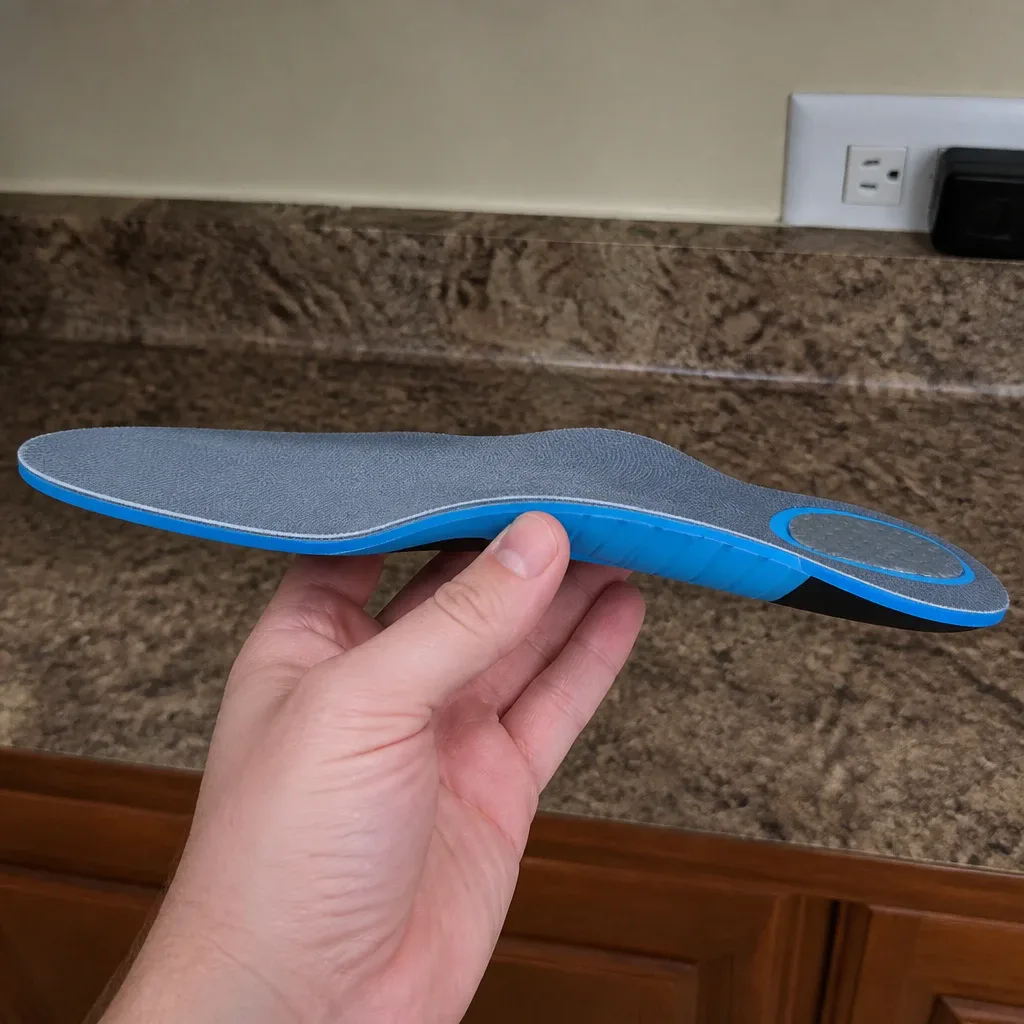
That same firm response is what owners who feel the carbon fiber base first also describe: a firm, stability-focused insole with limited plush give at the arch and heel. The gel layer produces a springy, bouncy response that some owners like and others describe as unstable or overly energetic underfoot. Thickness runs noticeably greater than a standard factory insole, which some owners find creates pressure across the top of the foot inside snugger shoes.
Which Shoes Do Dr Plantar Insoles Fit Best?
The full-length version is designed to move between shoe types, including sneakers and work boots.It requires the factory insole to be removed first and installs with the trimmed edge toward the toe, guided by printed cut lines on the underside.
I moved this full-length insole between sneakers and steel-toe work boots over the three-week test, only needing to re-check the trim line once, and it handled the extra pounding of six full 8-hour boot shifts without the carbon fiber arch flattening the way plain foam would. In my mid-width work boots the top of my foot felt slightly snugger during the first week, easing up once the memory foam broke in, and the stiff plastic heel cup meant angling the insole in rather than dropping it straight down. I didn't need to size my shoes up a half-size to make it work, though I did trim the insole itself down half a size from my usual 10.5 to get a proper fit, since it runs slightly long before trimming.
That same snug fit shows up more broadly in owner reports as well: fit within the shoe body runs narrow for some owners with wide feet, even though the insole is offered in a size range rather than a fixed width. The added thickness can make snugger shoes and running shoes feel tighter across the top of the foot, and a few owners note the heel-cup area is stiff enough that it takes extra care to seat it flat rather than dropping it straight in. The tacky underside that keeps the insole from sliding also makes initial installation slower for some owners.
How Should You Clean Dr Plantar Insoles?
Dr Plantar does not publish a dedicated cleaning method for this insole.
I judge dirty versus worn out by checking whether the carbon fiber arch still pushes back under thumb pressure the way it did on day one, since surface dirt wipes off the nylon top layer easily but permanent flattening doesn't. Given how much I sweat in mine during 8-hour shifts, a monthly wash alone wasn't quite enough to prevent odor buildup, so I paired it with a weekly damp-cloth wipe-down and letting the shoes air out overnight, which kept them smelling fine through the whole three-week test.
That absence of an official routine matches the nylon top layer and gel-stabilized construction, which are consistent with the general trim-to-fit insole category, where surface wiping and air-drying are the standard maintenance approach rather than machine washing.
What Are the Real Downsides of Dr Plantar Insoles?
The most consistent complaint is fit width, with several owners describing the insole as narrow for wide feet. A second recurring theme is added thickness creating pressure or tightness across the top of the foot in already snug shoes, particularly running shoes.
On my own feet, break-in was the main friction point rather than fit width: the first few days brought two separate adjustments, with my arches feeling mildly sore from the firmer carbon fiber arch support after months in a flatter stock insole, and mild hot-spot friction showing up along the inside edge of my left foot where my trim line wasn't perfectly smooth, including during 60-minute standing stretches. The arch soreness eased on its own by day four, and once I re-trimmed that rough edge more carefully in week two, even 60-minute standing stretches passed without new hot spots.
That short break-in period didn't match every owner's experience, though. Some owners report the heel gel is too firm for their specific plantar fasciitis pain point, leading them to return the product. A smaller number of reports describe the insole material separating or breaking down after only a couple of hours of wear. The tacky underside, while functional for preventing slippage, is also cited as making the insole harder to slide into place during installation.
What Happens If Dr Plantar Insoles Fail Early?
Return and warranty terms differ by retailer. Purchases through Amazon carry a standard 30-day refund or replacement window. The Woot listing for this product carries a separate 90-Day Woot Limited Warranty.
What Do Verified Buyers Say About Dr Plantar?
Owner ratings for this insole are mixed, landing at 3.6 out of 5 on one listing (23 ratings) and as high as 4.6 out of 5 on another (18 ratings) for a different color/size variant. Complaints center on narrow fit for wide feet, excess thickness in snug shoes, heel firmness not suiting every plantar fasciitis case, and isolated reports of the material breaking down quickly.
What's the Price of Dr Plantar Insoles?
Dr Plantar insoles list at $13.01 on Amazon for the standard full-length men's pair, with pricing across retailers ranging from $8.36 to $19.99 depending on promotions. Discount and deal-site listings regularly appear below $10, while list price on some pages reaches closer to $20 before markdown.
Where Can You Buy Dr Plantar Insoles?
Dr Plantar insoles are sold through Amazon, Walmart, Woot, and eBay, as well as smaller international resellers. Multiple size and length variants (full length, 3/4 length, standard and 200lbs+ heavy-duty, men's and women's) are distributed across these listings rather than concentrated on one page. Availability varies by retailer.
Is Dr Plantar Right for Your Feet?
Dr Plantar insoles are marketed toward people seeking plantar fasciitis relief, arch support, and all-day cushioning in everyday and work footwear. The carbon fiber arch piece and gel heel stabilizers target stability-focused buyers rather than those wanting a soft, minimal-support feel. This is the brand's own marketed use-case list, not a clinical endorsement or a claim we've independently verified.
Buyers with wide feet or already-snug shoes are more likely to find the fit tight given the insole's above-average thickness. Buyers whose plantar fasciitis pain centers specifically on the heel should weigh the firm heel gel against their own sensitivity, since owner experience on that point is split.
Is Dr Plantar Worth It? Here's My Final Answer
After three weeks of daily wear across 18 work shifts, a treadmill run, and jump-rope sessions, my own experience matches the aggregate picture: the carbon fiber arch piece held its shape under sustained pressure the entire time, with none of the flattening I'd seen from a month-old stock foam insole. Break-in soreness and one hot spot from an uneven trim line both resolved within the first two weeks, and the insole moved cleanly between sneakers and steel-toe work boots without issue.
That personal result lines up with the strongest points in owner reviews, a firm, non-collapsing arch and genuine multi-shoe versatility, while also confirming the two most repeated complaints didn't disqualify the product on my feet, even though they're real for a meaningful share of other owners: fit runs narrow for wide feet, and the added thickness can crowd already-snug shoes. My own plantar fasciitis flare-ups didn't worsen during testing, but owner experience on heel-gel firmness is genuinely split, so buyers with heel-centered pain should treat that as a real consideration rather than a settled point.
At $8 to $20 depending on retailer and promotion, Dr Plantar insoles are worth it for buyers with average-width feet who want a firm, stability-first insole for standing jobs, work boots, or general plantar fasciitis support. Buyers with wide feet, already-tight shoes, or heel pain that flares under firm pressure are better served looking at a softer or wider-fit alternative first.
Michal Sieroslawski is an Entrepreneur, exercise physiologist, and personal trainer who has fitted over a thousand people with insoles. He holds a degree in Sports and Exercise Science from the University of Central Lancashire, where he studied biomechanics, anatomy, and exercise physiology. Since 2020, Michal Sieroslawski has helped local and online businesses get found in Google and AI search.