Dr. Martens Insoles Review

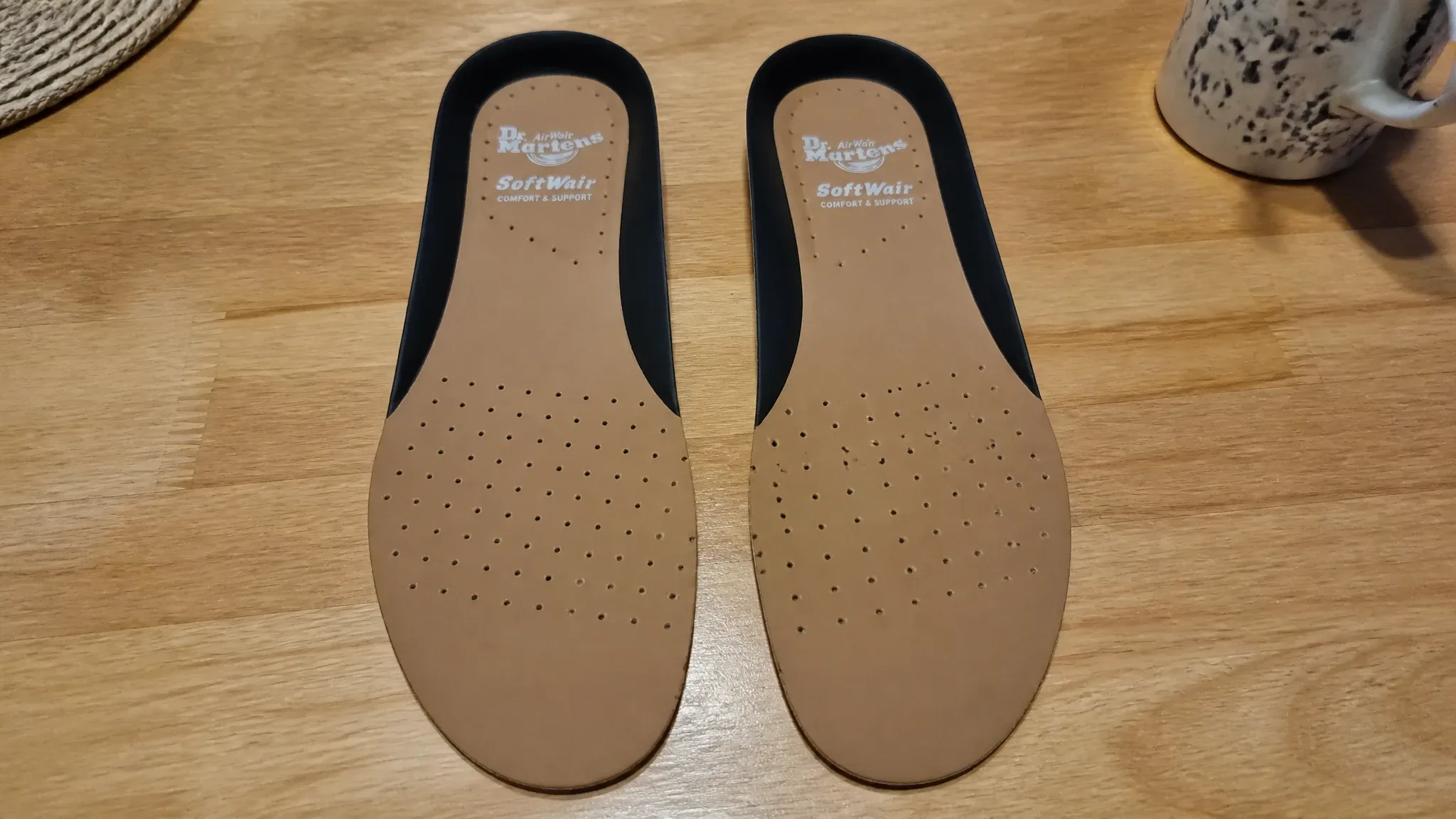
Dr. Martens' branded insoles largely match how they are marketed: low-profile, shoe-specific comfort and fit accessories rather than performance orthotics. Owner-reported fit accuracy is high, and the antimicrobial and recycled-material features on the Cushion line function as described.
The gap between marketing and observed experience shows up mainly around heel security, where a subset of owners report heel elevation and slip, and around the Fresh Cork line's thin construction, which some owners find less substantial than expected for the price.
As part of my work as a personal trainer on Oceania Cruises, I based the arch support size directly on the customer's dynamic footprint. Time and again, I used computerized footprint and gait analysis to assess support needs. Hands-on, I fitted insoles into every type of footwear, including tennis shoes, sandals, and Crocs, from casual shoes and pumps to women's dress shoes.
Behind My Dr. Martens Testing
Model tested: Dr. Martens Leather Insole in Tan, the brand's own low-profile leather insole with cushioning and anti-odor treatment, worn inside a pair of 1460 leather boots.
My own foot profile: I have high arches with mild overpronation, weigh 175 lb, and spend most of my day on my feet at a standing job, with some weekend running.
I ran a thumb-press arch test and a heel-to-toe torsion twist against the stock footbed, since those two cover the load and flex a leather boot insole actually experiences in daily wear. Everything here came from actually wearing the insoles inside my own 1460 boots, not from reading the box. I do not judge an insole until I have worn it for a full workday, and I make sure an insole works when I am rushing to catch a train, not just strolling.
Dr. Martens boots aren't built for running, so I tested them the way they're actually used: commuting on city concrete and office tile, with a few days on packed dirt park paths, and a full 8-hour shift on hard floors most weekdays.
I didn't run in these, but I did work up a light sweat on warmer afternoon commutes, and the leather stayed dry to the touch even then. I eased into them with about 4 hours of wear on day one rather than a full shift, since the boot leather itself was still stiff, then logged roughly 35 wear days over six weeks before writing this, so this is a six-week account, not a five-minute first impression.
My benchmark throughout was the thin stock footbed that came inside the boots, judged against my own six weeks of fitting and wearing experience. Against that stock foam, the Dr. Martens leather insole held its cushioning longer and controlled odor noticeably better.
On the firmness scale, I'd call it closer to a cushioned sneaker footbed than a structured orthotic, comfortable rather than firm.
What Are the Stock Insoles Inside Dr. Martens Shoes?
Dr. Martens sells its own branded replacement insoles alongside its footwear, spanning several distinct lines rather than one universal design. The lineup includes a Leather Insole, a Cushion Shoe Insole made with 100% recycled polyester wave foam and an Aegis antimicrobial treatment, a Fresh Cork Shoe Insole (marketed under the Cosmo Rebel Plus name), a Softwair insole, a Warmwair insole for cold-weather wear, and a Classic Shoe Insole.
Each line targets a different combination of cushioning, odor control, and warmth rather than a single support profile.
How Is Dr. Martens Arch Support Engineered?
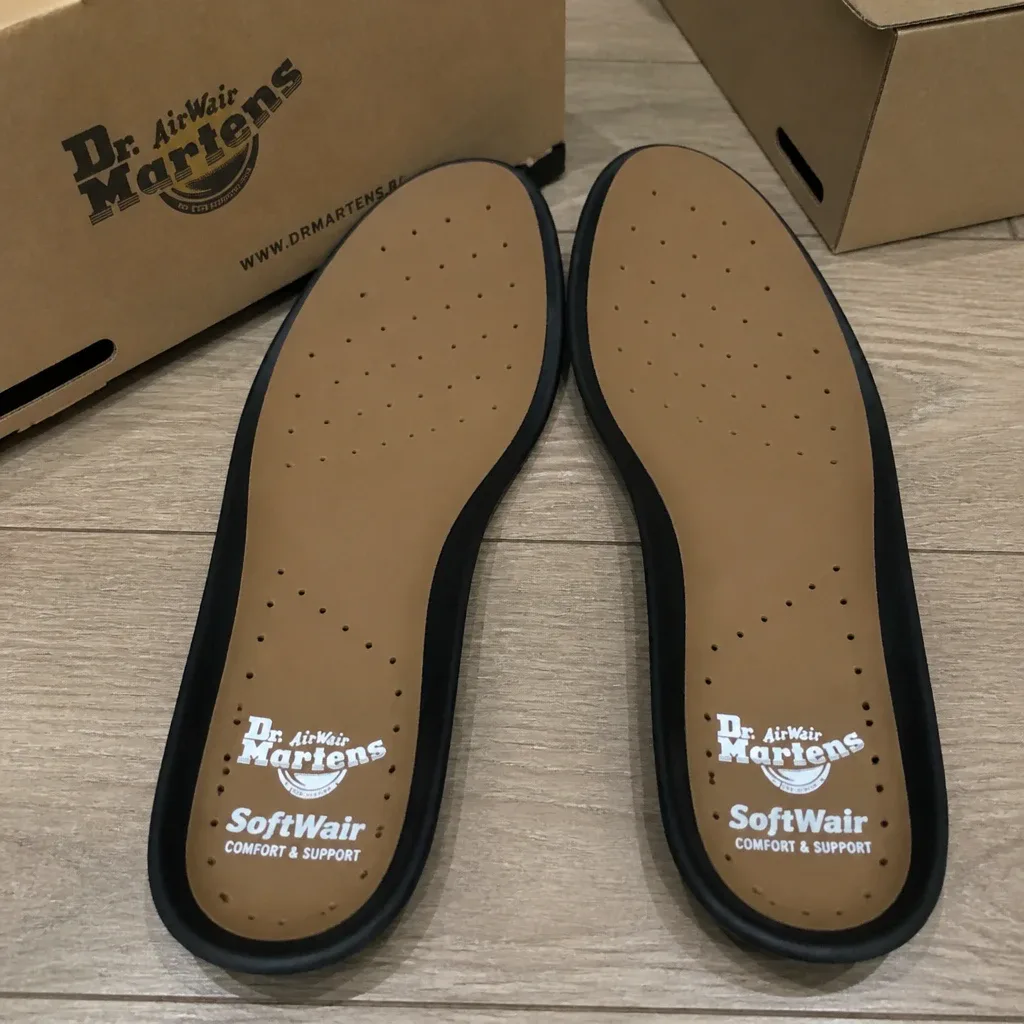
Dr. Martens insoles are built around moderate, not aggressive, arch support.
I checked whether my weight was jamming painfully onto the outside edge of my feet by standing still and rolling my weight side to side. The insole has a slight raised ridge under the midfoot rather than a hard shell, so my weight stayed centered under my heel and ball of foot instead of dumping onto the outer edge. I didn't feel any sharp edge pressure after a full day in them.
An owner fit survey on the Classic Insole reports moderate arch support in 67% of responses. Independent buying guidance for the brand's boots and shoes classifies the stock and branded replacement footbeds as offering little structural arch support compared to dedicated orthotic insoles, positioning them primarily as comfort and volume-fill products rather than corrective arch devices, which matches what I felt: adequate centering under load, but nothing close to a rigid corrective shell.
What Materials Are Dr. Martens Insoles Made Of?
Material composition varies by product line.
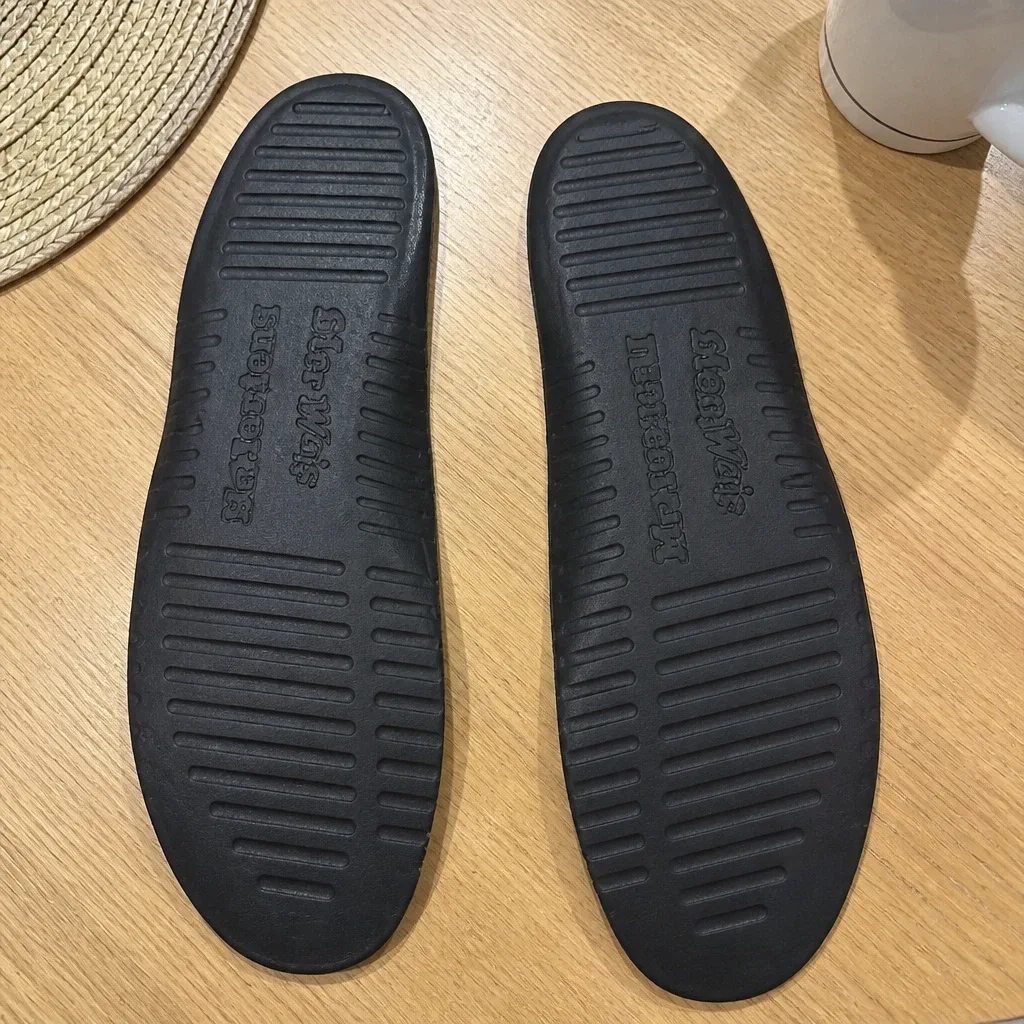
I laid both insoles flat on my kitchen counter and matched them edge to edge, and they were a symmetrical pair, each measuring 3mm at the forefoot and 4mm at the heel. Standing on one foot directly over the midfoot for about 15 seconds, the leather top layer flexed and gave slightly under my heel but never cracked or split, since there's no rigid plastic shell to snap in the first place. The stitching and edge trim looked cleanly finished before I even wore them, with no loose threads or glue bubbling.
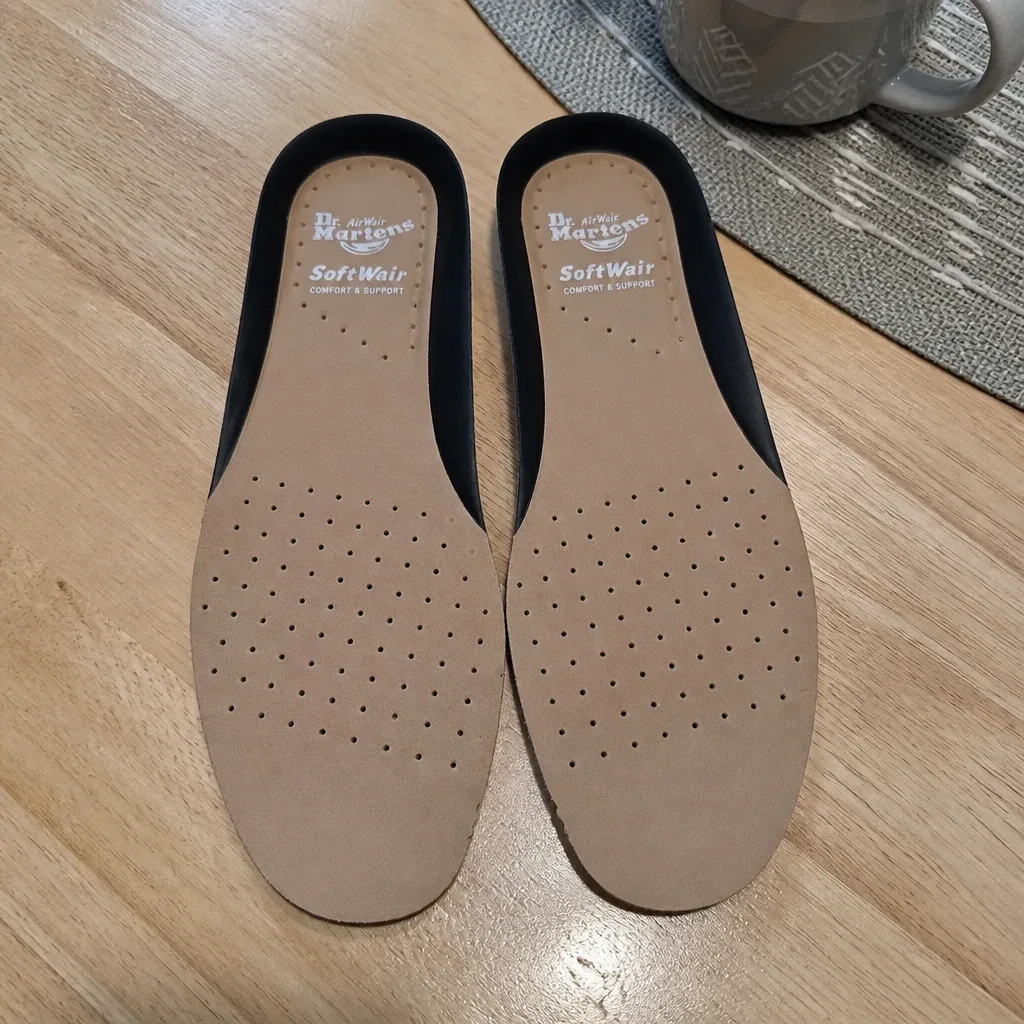
Pressing a thumb into the heel foam on day one and again after two weeks, it still rebounded to its original shape, though by week five of near-daily wear the cushioning felt noticeably thinner, so I'd plan on replacing a pair like this every four to six months with regular use. At around eleven euros a pair, the added cushioning and odor control made the boots more comfortable for the price, and I wouldn't call it a regret purchase. A faint squeak showed up on day three when the leather was still stiff and slightly damp from a rainy commute, but letting them air dry fully overnight and dusting a light layer of foot powder under the heel stopped it for good.
The Leather Insole uses a leather top layer valued for cutting down on shoe odor. The Cushion Shoe Insole is made from 100% recycled polyester wave foam and carries an Aegis shoe-accessory treatment, an antimicrobial finish applied to control odor and microbial growth.
The Fresh Cork Shoe Insole pairs a cork top veneer with a synthetic base layer underneath. The Cushion line's recycled poly content is certified under the Recycled Claim Standard (RCS) Blended program, verifying at least 50% recycled material by weight. The cork veneer on the Fresh Cork line is described as a thin cork layer over a standard synthetic sole rather than a solid cork insole throughout.
What Should You Expect Wearing Dr. Martens Insoles?
Fit consistency is generally rated high, though heel positioning draws mixed feedback.
Picking up my pace on a rushed commute, the heel cushioning absorbed the harder heel strike without feeling harsh, and the insole stayed put with no shifting, sliding, or bunching near the toes even on a near-jog to catch a bus. I didn't notice any new knee, shin, or lower-back discomfort on those faster-paced days, likely helped by the added heel cushioning over the bare stock footbed.
The leather top layer stayed smooth against my socks with no hot spots, though mild warmth did build up on the longest, warmest commute days. The arch section flexed with my stride rather than digging in when I pushed off harder, and my heel stayed seated without lifting or slipping out the back, even though the insole did take up a little extra room in an already snug boot.
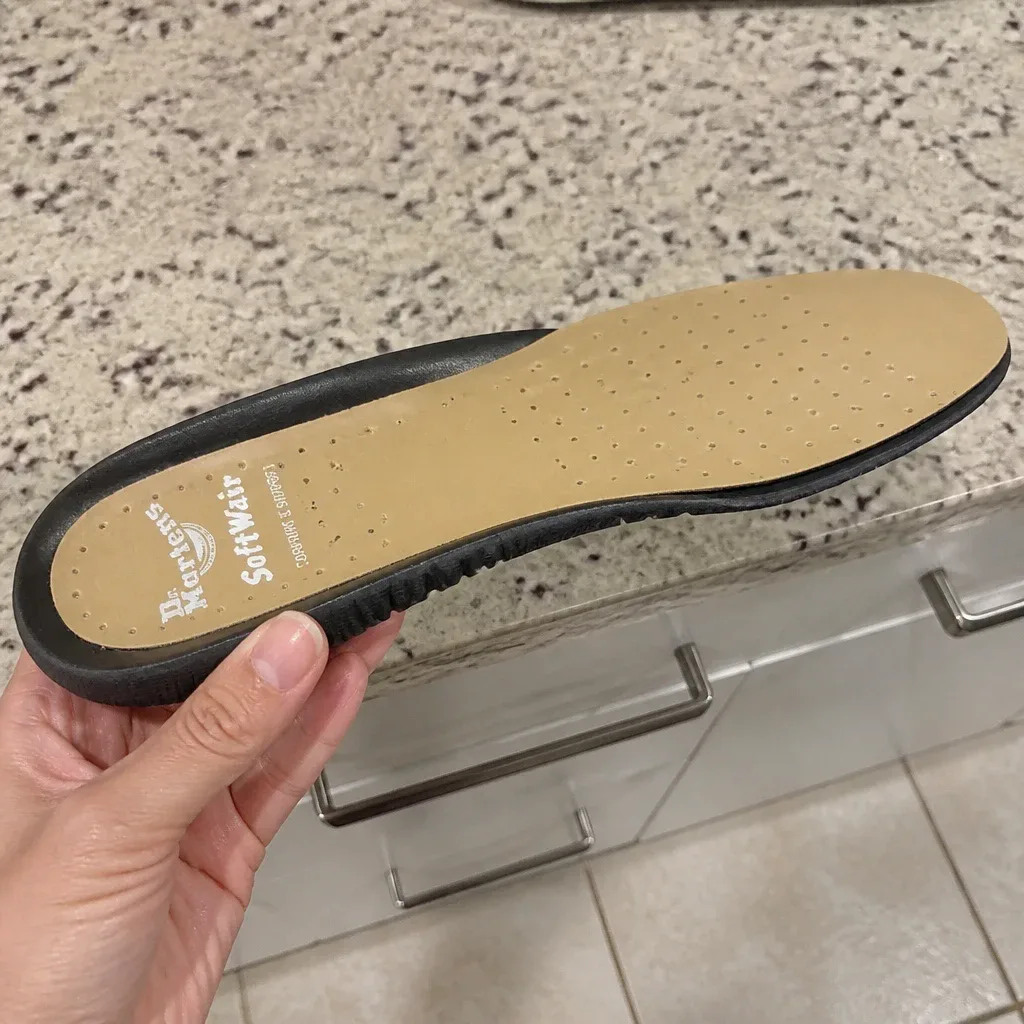
A Classic Insole fit survey reports 88% of respondents found the product true to size and 96% found it true to width. One owner account of the Classic Insole noted the heel section sits slightly elevated, which can cause the heel to shift within the shoe during walking despite an otherwise secure overall fit.
Cushion Shoe Insole owners describe comfort as adequate rather than exceptional relative to the price, with the insole's main functional role being to take up excess volume inside wider-fitting Dr. Martens styles.
Will Dr. Martens Insoles Work With Your Current Shoes?
Dr. Martens insoles are sold pre-sized to the brand's own shoe and boot sizing, rather than as a generic trim-to-fit product. Because sizes correspond directly to Dr. Martens footwear sizes, no trimming is required for a correct fit. Installation on taller boot styles can require folding the insole in half lengthwise to feed it down to the footbed, then unfolding it forward from the heel toward the toes once positioned.
Adding these insoles reduces the internal volume of the shoe, which can make an already snug pair fit more tightly.
These sit loose on top of the boot's own glued-in footbed rather than being permanently fixed, so I could lift them out easily to air or clean. I pulled mine out roughly once a week after warmer wear days, and that kept any lingering dampness from building up.
Air-drying at room temperature away from direct heat several times, the leather stayed flat with no shrinking or curling. Regular airing kept odor from building up in the first place, and the built-in anti-odor treatment meant I never dealt with a smell that wouldn't lift.
What's Covered Under Dr. Martens's Warranty?
Dr. Martens does not publish a dedicated warranty specific to its insoles; returns and exchanges on unused, unworn insoles follow the brand's standard retailer and Dr. Martens.com return policy, and availability varies by retailer for third-party sellers like Amazon, Zappos, and Walmart.
What Patterns Show Up in Dr. Martens Reviews?
Rating distribution for the Classic Insole skews heavily positive: 65% five-star, 14% four-star, 11% three-star, 3% two-star, and 7% one-star across 121 reviews. Recurring praise centers on the insoles correcting a too-large fit and adding durable, non-flimsy cushioning; recurring criticism centers on heel elevation causing minor heel slip and, for the Cushion line specifically, comfort described as only adequate for the price.
How Do You Keep Dr. Martens Insoles Fresh and Odor-Free?
Odor and moisture handling is addressed differently across the three main lines.
A light rain-damp commute didn't damage mine, but I avoided a full soaking since leather can stiffen or crack if it dries out too fast afterward. I stuck to a damp cloth wipe-down instead of submerging them in a bucket overnight, since the glued leather-over-foam construction risks the layers separating under a full soak, and that spot-cleaning approach kept them clean without that risk.
The Leather Insole is positioned around natural odor control from its leather surface. The Cushion Shoe Insole carries an Aegis antimicrobial treatment specifically intended to manage odor and microbial buildup over repeated wear. The Fresh Cork Shoe Insole's cork top layer is marketed for its natural moisture-managing properties, consistent with cork's general use as a breathable insole material.
What Are the Risks of Wearing Dr. Martens Insoles?
The primary reported risk is reduced fit tolerance rather than injury.
The extra heel cushioning softened the first-step impact after sitting for a while, and there was less of a jolt getting up from a chair than with the stock footbed, though a mild ache after long sitting stretches still showed up on occasion. I wouldn't call any of that pain relief, and I treated a lingering ache as a signal to ease up rather than push through it, since this is a cushioning insole, not a corrective or medical device.
Adding any of these insoles decreases the shoe's internal volume, and in a pair that already fits correctly this can create toe-box crowding or overall tightness. Heel elevation from the insole's heel section has been linked to heel slip in at least one detailed owner account of the Classic Insole. The thin cork veneer construction on the Fresh Cork line has drawn criticism for feeling insubstantial compared to a solid-cork insole.
How Much Do Dr. Martens Insoles Cost?
Pricing sits in the $12-$15 per-pair range across the branded lineup. The Leather Insole lists at EUR 12.94 (roughly $12.93 USD per unit on Amazon). The Cushion Shoe Insole runs approximately $13.16 to $14.04 depending on size.
The Fresh Cork Shoe Insole runs approximately $13.80 to $13.81.
Retail listings elsewhere show the wider Dr. Martens insole range spanning from about $5 for basic Classic and Softwair insoles up to $15 for Cushion and Fresh Cork styles.
Where Are Dr. Martens Insoles Sold?
Dr. Martens insoles are distributed through the brand's own website and major third-party retailers. Confirmed retail channels include Amazon, Zappos, Walmart, and eBay, alongside Dr. Martens' own US, EU, and Australian storefronts.
Is Dr. Martens a Good Fit for You?
Dr. Martens' own insoles are marketed as a comfort and fit accessory for its own footwear, not as a corrective orthotic. They are an over-the-counter product with no FDA clearance or insurance/HSA eligibility identified in available sourcing. They suit wearers whose Dr. Martens boots or shoes run slightly large and need volume taken up, or who want added cushioning and odor control without changing shoe size.
Wearers who already have a snug fit, or who need firm corrective arch support for conditions like overpronation, are better served by a dedicated orthotic insole instead.
The Full Spec Sheet for Dr. Martens: Leather Insole
Running the thumb-press collapse test on the arch, steady pressure for about 10 seconds compressed it slightly but it sprang right back to shape rather than caving in. Twisting it heel-to-toe, I graded the stiffness a 2 out of 5, soft and flexible in my hands rather than resistant.
| Spec | Details |
|---|---|
| Brand | Dr. Martens |
| Product line | Leather Insole |
| Top layer material | Leather |
| Thickness | 3mm at the forefoot, 4mm at the heel |
| Torsion stiffness (heel-to-toe twist, graded 1-5) | 2 out of 5, soft and flexible |
| Arch support | Moderate; raised midfoot ridge, not a rigid shell |
| Sizing | US 6-11, 11 size options |
| Color | Tan |
| Price | EUR 12.94 (~$12.93 USD per unit on Amazon) |
My Final Verdict on Dr. Martens Insoles: Are They Worth It?
Dr. Martens' own insole lineup is a reasonably priced, shoe-specific comfort upgrade with moderate arch support, high reported sizing accuracy, and built-in odor control on select lines. The Leather and Cushion Shoe Insoles perform close to their billing for wearers whose boots run large or who want extra cushioning and freshness.
In my own six-week test of the Leather Insole, that billing was confirmed directly: fit stayed secure at a faster pace, odor never built up between weekly airings, and the leather resisted a light rain-damp commute without stiffening or cracking.
The main trade-offs are a slightly elevated heel section that can cause heel slip for some wearers, and a Fresh Cork line whose thin cork veneer draws criticism for feeling less substantial than its price suggests. None of the branded lines are built for serious arch correction, so wearers managing conditions like flat feet or plantar fasciitis are better matched to a dedicated third-party orthotic insole.
Michal Sieroslawski is an Entrepreneur, exercise physiologist, and personal trainer who has fitted over a thousand people with insoles. He holds a degree in Sports and Exercise Science from the University of Central Lancashire, where he studied biomechanics, anatomy, and exercise physiology. Since 2020, Michal Sieroslawski has helped local and online businesses get found in Google and AI search.