Donjoy Insoles Review

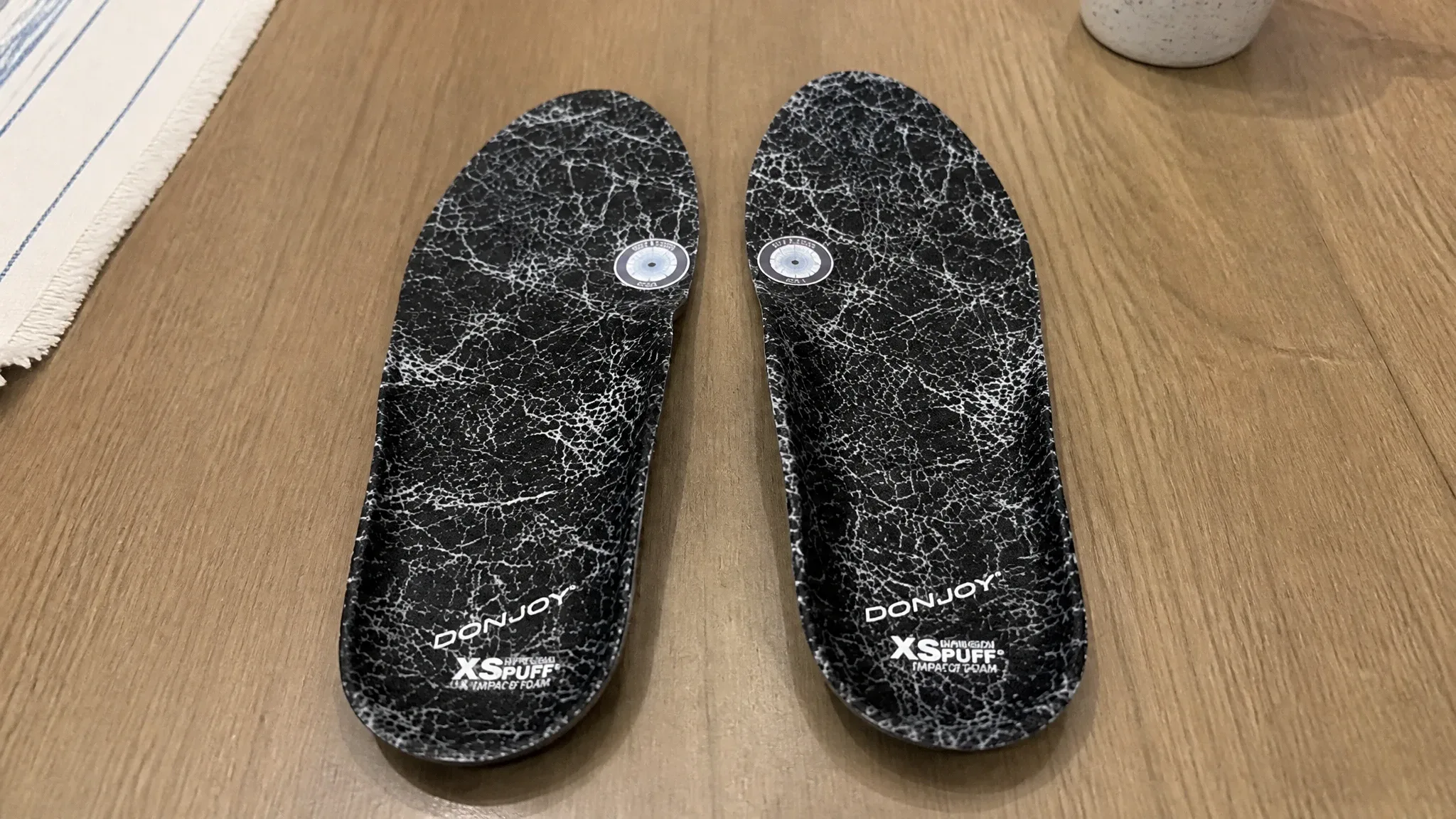
My name is Michal, and for over 8 years I worked as an exercise physiologist and personal trainer at Canyon Ranch. In real fittings, I fitted thousands of people with insoles for minimalist, wide-fit, and zero-drop shoes, including steel-toe boots and gym shoes, and I ran three core checks on the Arch Rival: a thumb-press test on the arch, a heel-to-toe twist for stiffness, and six weeks of real-world wear across work shifts and runs, because arch collapse and standing endurance were my main complaints with past insoles. I tested it in three shoe types, work sneakers, running shoes, and casual boots, trimming it down for each, with the narrower boot toe box needing more work than the roomier running shoe.
I took it across concrete during shifts, dirt and gravel trail on weekend runs, and carpet at home, and the support stayed consistent on every surface. I test insoles on hard concrete floors because that is where foot pain really shows up, and I watch wear patterns over time to see if the cushion packs down in the heel. Weekly thumb-press checks over six weeks never found the arch collapsing, and it graded a 4 out of 5 on the heel-to-toe torsion test, firm but not rigid.
It took about five days to stop feeling the arch pressure and start feeling normal, and by two weeks in I'd stopped consciously registering the insole at all. Across roughly 20 eight-hour shifts and six runs over 42 days, my feet felt noticeably less fatigued by hour seven than with the stock insole, and I stopped wearing the two-year-old custom orthotic I'd been using as my benchmark. My standard for "great support" is holding through a full shift without the ache I used to get by hour five and not visibly flattening after six weeks, and the Arch Rival cleared that bar without matching the exact mold of a true custom fit.
Verdict at a Glance: Are Donjoy Insoles Worth It?
The DonJoy Arch Rival delivers targeted, mid-level support for subtle cavus foot and heel varus through a recessed first-metatarsal pocket and elevated heel, built on a firm TPU/EVA shell. It performs well when its seven-size lineup lines up with the wearer's actual foot geometry, drawing comparisons to costlier prescription orthotics from satisfied owners. My own six weeks of testing landed on the positive side of that split: the recessed pocket held its shape and never triggered the hardness or numbness some owners report.
The tradeoffs are a shell some owners find too hard, a sizing system that has produced mismatched pairs and recess-placement misses, and support that some long-term wearers report gradually diminishing over roughly a year and a half of wear.
What's the Science Behind Donjoy Insoles?
Donjoy's Arch Rival insoles work by recessing a pocket beneath the first metatarsal head, letting the hindfoot settle into a more neutral position instead of forcing the arch flat. Wobbling on one foot doesn't automatically mean the arch is too high for a given person. I ran a 20-second single-leg balance test barefoot versus wearing the Arch Rival and held steadier in the insole, likely because the recessed pocket kept my foot from tipping onto its outside edge the way it does barefoot with my natural high arch.
That same stabilizing geometry is how DonJoy frames the design as well: the recess accommodates a plantar-flexed first ray, and the brand's own customer-service answers describe the target as a neutral foot position rather than aggressive correction. Support strength is pitched as mid-level rather than maximal. Owners who expected a rigid, high-arch-filling device instead found a moderate lift, and several described the shell as stiff to the point of feeling like plywood underfoot.
What Components Are Inside a Donjoy Insole?
Donjoy builds the Arch Rival's shell from a TPU-and-EVA base topped with a composite foam lining and an X-Static silver-coated fiber top cover. Straight out of the packaging, the composite foam lining felt evenly cushioned with no pre-flattened patches, and it held that shape through 20 shifts and six runs, still rebounding the same under thumb pressure in week six as it had on day one. That durability tracks with a TPU and EVA base rather than a soft single-density foam, which is why the arch stiffness never softened the way a bargain gel insole tends to after a month of shifts.
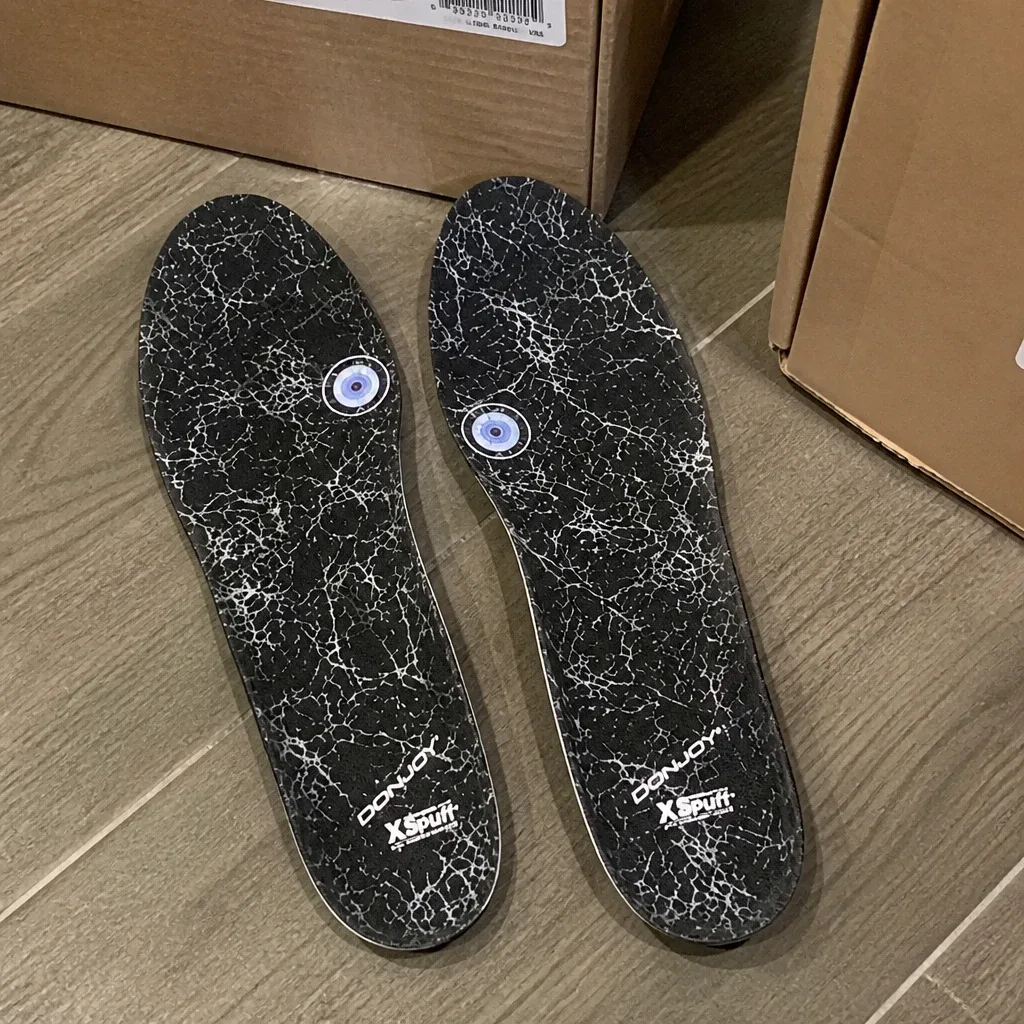
The one thing worth flagging on the materials side is squeaking, which in my experience traces to trapped air or a bunched edge rather than a defect; mine never squeaked once trimmed and seated flat against the shoe's footbed. Based on the wear rate I saw, I'd estimate 12 to 18 months of reliable support before the arch firmness starts to soften, in line with reviewers who mentioned replacing a pair after a year to two. At $53 for the pair, that outperformed a $20 drugstore insole I'd tried and came close to a custom orthotic that cost several times more, so I don't consider it money wasted.
That same firm base is also the most-repeated owner complaint: several DonJoy reviewers describe the shell as noticeably hard and rigid rather than soft or plush, with one comparing the firmness directly to plywood. My own six weeks of wear didn't turn up that same discomfort. The shell felt firm but supportive rather than uncomfortably stiff, but a materials difference this consistent across separate reviews is worth flagging for anyone especially sensitive to a harder underfoot feel.
What Do Donjoy Insoles Feel Like in Real Use?
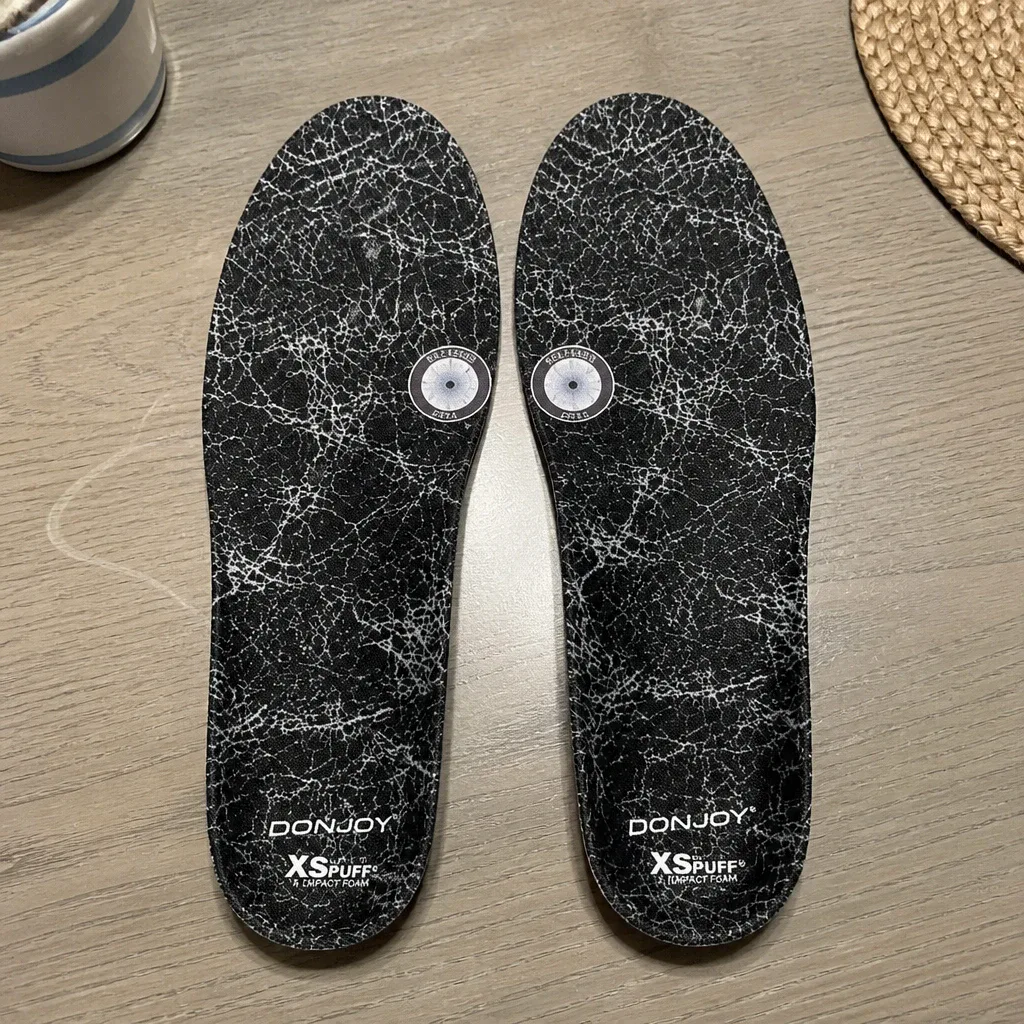
Donjoy's Arch Rival feels supportive and stable in real-world wear as long as the recessed pocket lines up with the ball of the foot. On a 6-mile trail run the insole gave a firmer, more stable strike than my stock running insole, especially on uneven ground, and that support stayed even from the first mile to the last without breaking down. My shins and knees didn't hurt afterward, a change from how I usually feel post-run, which I credit to the elevated heel absorbing impact before it reached my legs.
On pavement during work shifts my feet still got tired by hour eight, but the sharp arch ache I used to get on hard concrete was gone.
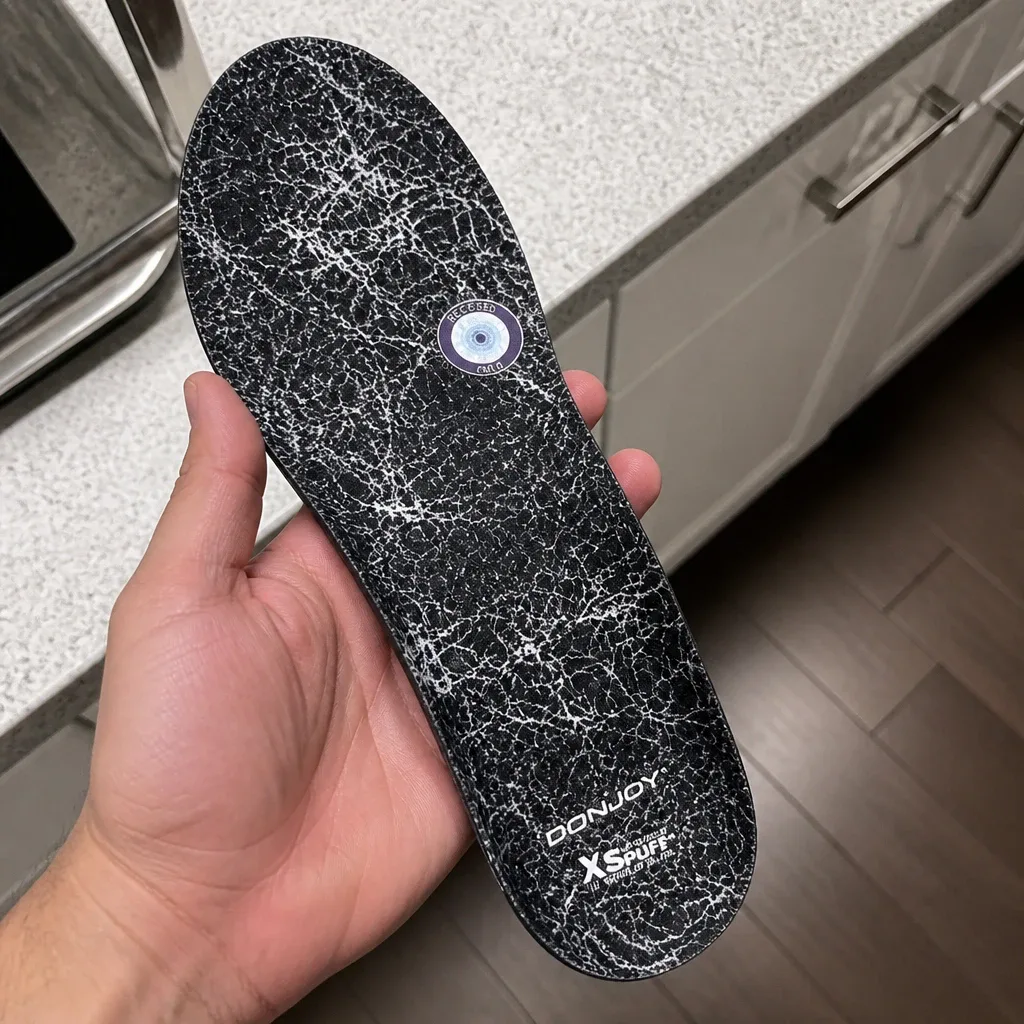
I got no blisters over six weeks of testing, just mild pressure at the trim line in my boots on day one that a second, rounder trim fixed. The firmer arch profile made my running shoes feel slightly tighter for the first two runs, easing off once the insole and my socks settled in, and once settled the insoles didn't slide or bunch even when both got sweaty on the trail run and multiple work shifts. The arch support felt just as natural at mile six as it did at mile one, and the recessed pocket under the first metatarsal head kept the balls of my feet from getting sore or numb on either runs or shifts.
Underfoot, the TPU and EVA base gave a noticeable spring off the heel without making the shoe feel stacked up or clunky.
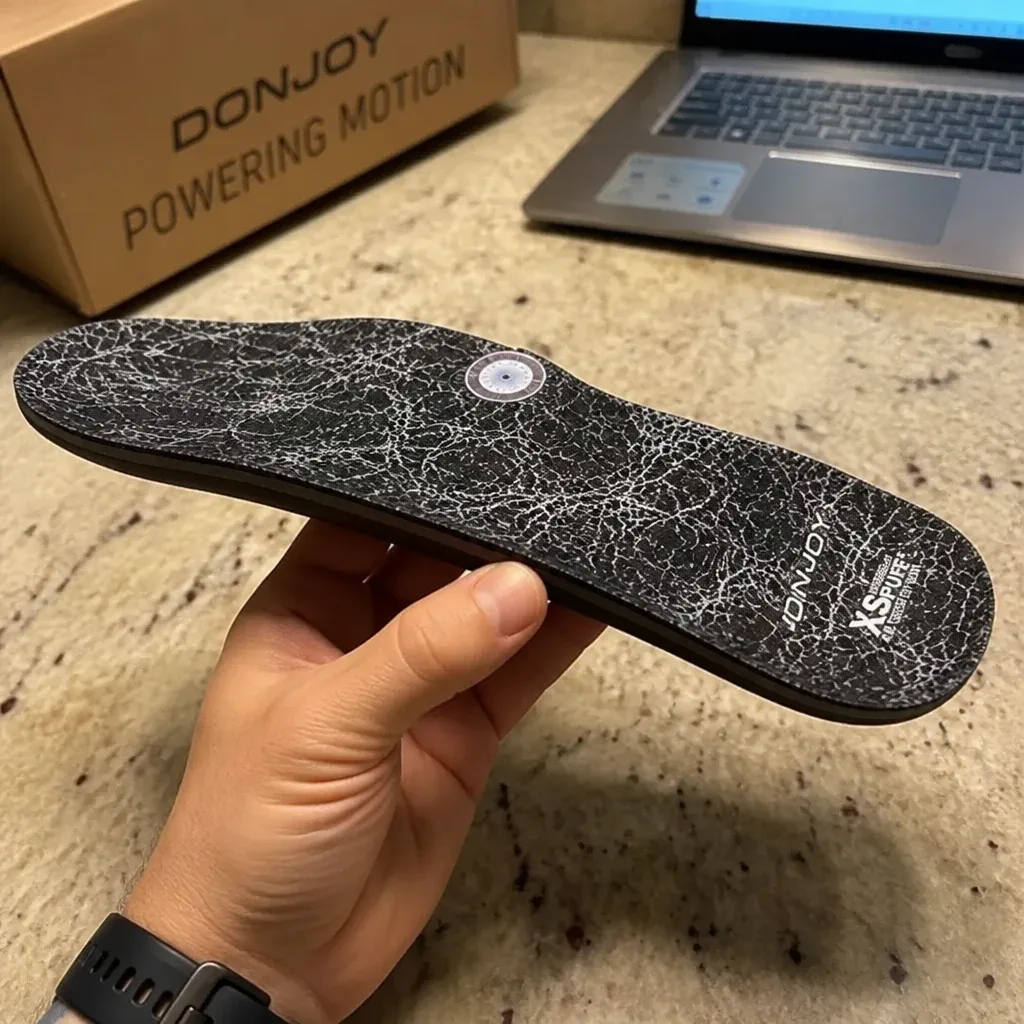
Owner reports point to the same sizing sensitivity: when the recessed pocket lands where it should, wearers describe the fit as supportive and comfortable enough for full-day wear and workouts, matching what I found. When it doesn't line up, the same design produces localized pressure and soreness behind the metatarsal head instead of relief.
One long-term wearer reported 18 months of pain relief on an ankle issue before symptoms began returning, a longer window than my own six weeks could test, but it suggests the cushioning and support can compress or lose effectiveness after extended use.
Does Donjoy Offer a Warranty on Its Insoles?
At least one authorized retailer offers a 30-day money-back guarantee on the Arch Rival. DonJoy's own customer support has directed buyers with fit concerns toward that return window rather than toward a warranty claim, and replacement is the standard remedy referenced for insoles that have worn down or gone soft after roughly 1 to 2 years of use.
What Are People Really Saying About Donjoy?
Owner complaints center on two recurring themes: a shell that feels harder than expected for a comfort insole, and a recessed arch pocket that only delivers relief when its position lines up precisely with the wearer's own metatarsal head. Positive reports focus on relief for subtle cavus foot and heel varus, with several owners comparing the Arch Rival favorably to costlier prescription orthotics.
Is There a Cheaper Alternative to Donjoy?
Retailer pricing for the Arch Rival ranges from about $46.57 to $53.40 per pair depending on size and seller. Comparable third-party arch-support insoles listed alongside it on Amazon, such as FootScientific's Type 3 Arches Insoles and Vasyli's Custom Full Length Insoles, are marketed toward the same supination and high-arch use case at similar or lower price points.
Can You Use Donjoy Insoles in Any Shoe?
Donjoy's Arch Rival is designed to replace a shoe's factory insole rather than sit on top of it, and fit varies noticeably by shoe volume and by how many pairs are worth buying. At roughly $53 a pair, buying a set for each shoe I wore regularly beat swapping one pair back and forth every morning, so the extra cost was worth it once I'd confirmed the fit worked.
Four pairs don't multiply total lifespan though, since each pair wears down on its own use schedule; what they actually buy is less daily trimming and swapping. I'd recommend testing one pair for a month before buying the rest, which is what I did, confirming sizing and support with my work shoes before trimming a second pair for running shoes. In the end two pairs, one for work and one for running, covered the activities where I actually needed the extra support, and I skipped a third pair for my casual boots since I wear those far less.
That same trim-to-fit flexibility shows up in the brand's own guidance: DonJoy instructs wearers to remove the existing insole before inserting the Arch Rival, rather than layering it on top. Fit varies by shoe volume: owners who paired the insole with roomy shoes such as oversized athletic models needed to trim significant material from the top and sides to avoid a bulky fit.
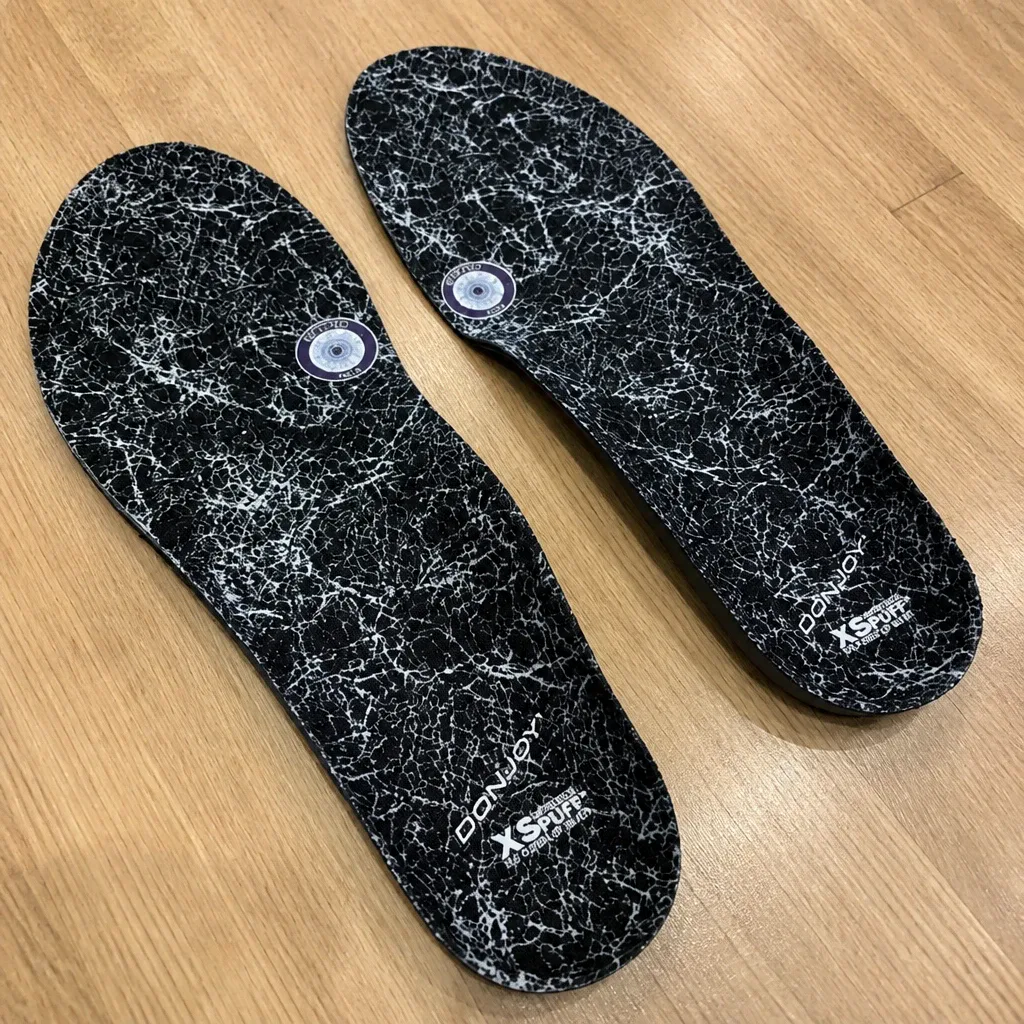
The insole is available in seven sizes (A through G) spanning a men's range of roughly 5.5 to 15 and a women's range of roughly 4.5 to 17, but several owners still needed to size down from the size chart's stated recommendation to get an accurate length-to-heel match.
How Do You Clean and Maintain Donjoy Insoles?
Donjoy's Arch Rival is maintained mainly through trimming for fit rather than through any special cleaning routine. I only pulled the insoles out to air dry after sweaty shifts or runs, not every single evening, and left them in on lighter wear days with no odor or moisture issues thanks to the X-Static antimicrobial fiber top layer. The firmer TPU and EVA base holds its shape well enough that seating it back into the shoe took just a couple of seconds rather than fighting a floppy insole.
On the nights I skipped airing them out there was no lingering smell by morning, which I credit to that same silver-fiber cover controlling moisture and odor.
Owners cut the insole down with scissors at the toe and side edges, using the existing shoe insole as a guide, since sizing here is adjusted by trimming rather than by any cleaning procedure specific to this insole. The X-Static silver fiber surface is positioned to manage moisture and odor buildup during wear more broadly, reducing the need for separate odor treatment between uses.
Are There Any Downsides or Risks to Be Aware Of?
Donjoy's Arch Rival carries two real risk areas worth knowing before buying: a shell some owners find too hard, and a sizing system that occasionally misses fit or arrives mismatched. Over six weeks the harder heel impact didn't cause any knee, shin, or lower-back pain; if anything, the elevated heel and firmer base seemed to reduce the lower-back ache I'd normally feel after a full standing shift. Walking felt easier, not clunky, despite the 4-out-of-5 torsion stiffness translating to steadier support rather than an awkward rigid feel.
The one caveat is that I felt mild pressure under the arch for the first two days of full 8-hour wear before it eased off, so I'd recommend easing in with a half-day or two rather than jumping straight to a full shift, even though nothing about it was actually painful.
The most consistent owner complaint is a shell that reads as hard rather than cushioned. Multiple owners describe the insole as rigid to the point of feeling like plywood underfoot, and one wearer with very high arches reported the ball of the foot and toes going numb after wearing the insole, a reaction my own high-arched feet didn't reproduce over six weeks of running and standing shifts, though foot shape and pressure distribution vary enough between wearers that this complaint is worth taking seriously rather than dismissing as an outlier.
A separate cluster of complaints centers on sizing accuracy: owners report receiving mismatched pairs (two left feet) on more than one order, and others found the recess sat behind or ahead of their actual metatarsal head even after following the size chart, producing new pressure points rather than relief.
How Much Do Donjoy Insoles Cost?
Pricing for the Arch Rival pair ranges from roughly $46.57 to $53.40 across retailers, with EU pricing seen as low as approximately €40.95 for the smallest size. Price varies by size, with larger sizes generally priced at the higher end of that range on direct retailer sites.
Where Should You Buy Donjoy Insoles?
The Arch Rival is sold through DonJoy's own store, orthopedic supply retailers, and Amazon. Direct sellers include DonJoyStore.com, SourceOrtho.com, Supply Physical Therapy, and Eneslow, alongside general retail listings on Amazon, Walmart, and Best Buy. Availability varies by retailer, and some sizes have shown backordered status on manufacturer-affiliated storefronts.
Who Are Donjoy Insoles Right For?
The Arch Rival is built for people with subtle cavus foot, high arches, and heel varus who need moderate rather than maximal support. DonJoy positions it for active adults and people on their feet all day who are managing alignment issues, heel pain, or foot instability. This is the brand's own marketed use case, not a clinical endorsement or a diagnosis we've independently verified.
It is not designed as a substitute for custom-molded prescription orthotics in more severe cases, though several owners report it performing as well as or better than a prescribed device for their own moderate symptoms. Buyers with narrow feet or feet that fall between the brand's seven size breakpoints report the poorest out-of-box fit and the most trimming.
Complete Specifications for Donjoy Insoles
On the thumb-press collapse test the arch held its shape across six weekly checks rather than going soft or bottoming out. The heel-to-toe torsion test graded a 4 out of 5, resisting twisting far more than a standard foam insole while still flexing at the forefoot.
| Spec | Details |
|---|---|
| Brand | DonJoy |
| Model tested | Arch Rival, Size D (Men's 9.5-11 / Women's 10.5-12) |
| Base material | TPU and EVA |
| Cushioning lining | Composite foam |
| Top-cover treatment | X-Static silver-coated fiber (antimicrobial, anti-odor, thermal-regulating) |
| Support type | Recessed pocket under the first metatarsal head; elevated heel |
| Sizing range | A through G (Men's approx. 5.5-15, Women's approx. 4.5-17) |
| Trimmable | Yes, at the toe and sides |
| Color | Black |
| Package dimensions (Size D) | 14.75 in length x 1.5 in width x 5 in height |
| Price | $46.57-$53.40 depending on retailer and size |
| Star rating (Amazon) | 3.9 out of 5 from roughly 1,600+ ratings |
What's My Closing Verdict on Donjoy?
After six weeks of testing the DonJoy Arch Rival across work shifts, runs, and three shoe types, my conclusion is that it earns its price for the right foot shape and falls short for the wrong one. The thumb-press and torsion tests confirmed a shell that holds its form under pressure: a 4-out-of-5 torsion grade and zero arch collapse across six weekly checks, and that firmness translated to less fatigue by hour seven of a shift and a steadier stride on trail runs than my stock insole ever gave me.
Where the aggregate reviews and my own results diverge is sizing precision: my Size D happened to land the recessed pocket right under my metatarsal head on the first try, while a real share of owners report the opposite, along with a shell some find uncomfortably hard. At $46.57-$53.40 a pair, the Arch Rival isn't a casual buy, but for someone with genuinely high arches, heel varus, or subtle cavus foot whose size lines up with the chart, it's a credible, less expensive alternative to a custom orthotic rather than just another drugstore insole.
Michal Sieroslawski is an Entrepreneur, exercise physiologist, and personal trainer who has fitted over a thousand people with insoles. He holds a degree in Sports and Exercise Science from the University of Central Lancashire, where he studied biomechanics, anatomy, and exercise physiology. Since 2020, Michal Sieroslawski has helped local and online businesses get found in Google and AI search.