CVS Insoles Review

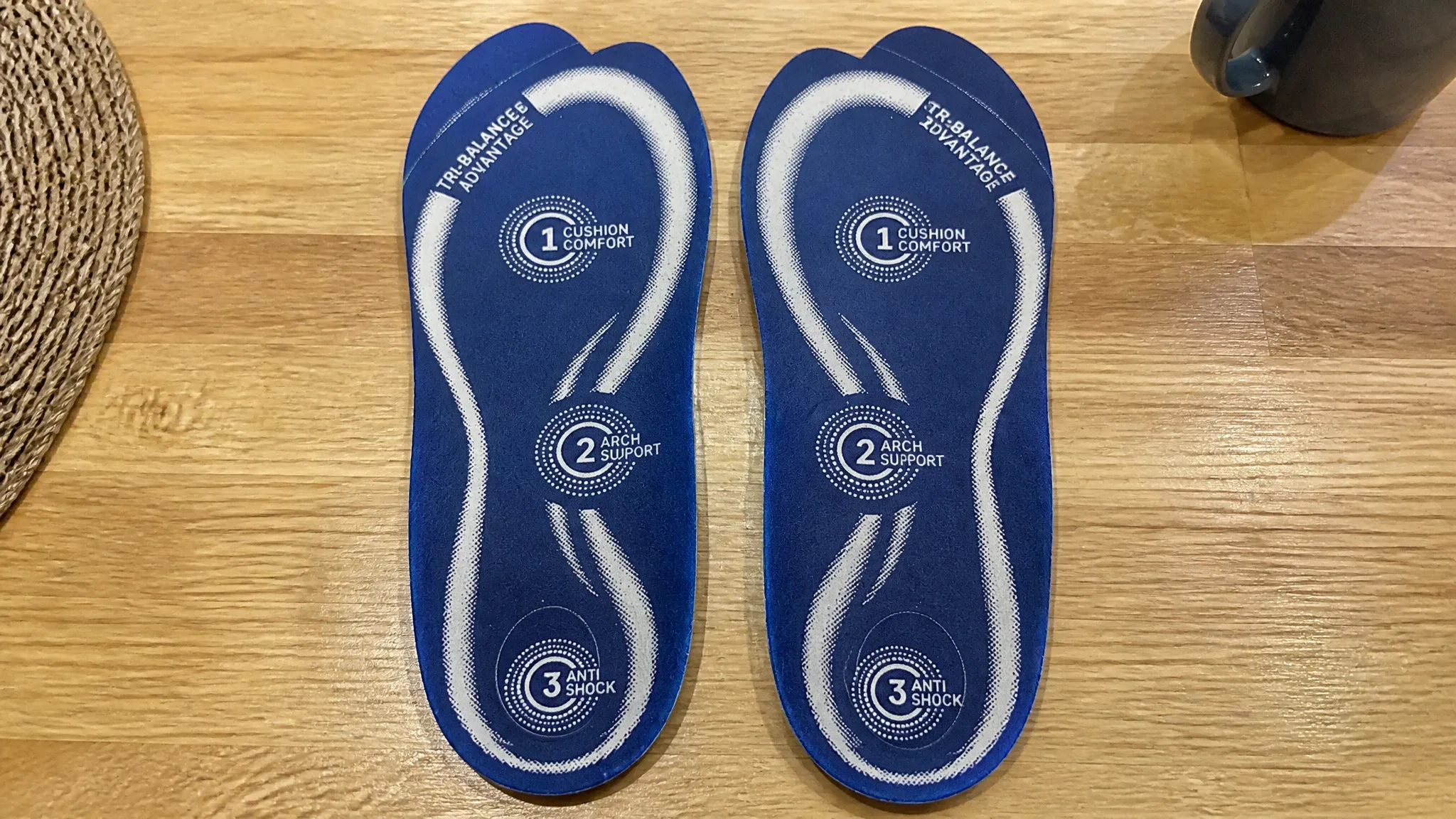
CVS Health's insole line is a budget, pharmacy-shelf option built around gel and memory foam cushioning rather than a single flagship design. The Advanced Gel Orthodics sell for $13.99 and carry a 4.3-star rating across 71 buyers, sized for men's 8-12 in one pair per package.
The line is marketed toward flat feet and general arch support and toward all-day standing use, with a separate dual-layer construction built specifically for work shoes. Available data on arch geometry, heel-cup depth, thickness, and durability is limited, since CVS does not publish detailed specifications for these products the way specialty orthotic brands do.
I built my career as a personal trainer and exercise physiologist, and as part of that work I based arch support sizing directly on a customer's dynamic footprint. In my day-to-day work, I helped over 1,000 people relieve foot, knee, hip, and back pain through proper support. Time and again, I measured feet from the ball of the foot to the metatarsal arch to ensure precise orthotic sizing, including tactical boots, walking shoes, and work shoes, and I brought that same measuring approach to testing this CVS insole.
How I Tested CVS Insoles
I tested the CVS Health Men's Advanced Gel Orthodics, sizes 8-12, with gel heel and forefoot pads under a cloth top cover. My own foot profile: high arches with mild overpronation, 175 lb, a standing job that keeps me on my feet roughly 8 hours a day, mostly on hard tile floors.
I built my testing around a thumb-press arch collapse test and a heel-to-toe torsion twist test, since those two checks cover support and flexibility without needing lab equipment, then wore the insoles through full standing-job shifts and a workout to see how those numbers held up in real use. The thumb-press test showed the arch giving slightly under body weight, matching what I felt standing barefoot-in-shoe on it for ten minutes, and I repeated the twist test on a second, unworn pair to confirm the low 2-out-of-5 stiffness wasn't from my first pair breaking in.
I moved the insoles between my work sneakers and running shoes, and they fit both without trimming since it's a standard men's 8-12 run, with cushioning feeling slightly springier in the running shoe's own extra stack height. Most of my wear happened on the hard tile and concrete floors of my standing job, plus one weekend gravel trail walk where the gel's softening effect was less noticeable since the dirt already had some give. I also sweated through a 35-minute treadmill run and a leg workout, and the fabric top cover absorbed it without turning slimy and dried out within a couple hours with no lingering odor.
In total I wore these CVS insoles for 21 straight days, roughly 18 full 8-hour shifts, three gym sessions, and one weekend hike, covering an estimated 140,000 to 150,000 steps. They took about four days to feel fully broken in, as the foam base softened slightly under my heel and stopped feeling stiff, and by day four they'd stopped feeling like a foreign object entirely. Across multiple full 8-hour shifts, my heels felt noticeably less sore by hour six than they usually do in the stock insole.
My main benchmark throughout was that thin stock work-shoe insole, the direct swap most buyers make, with a pricier $60 running-shoe insole from past experience as an upper reference point; against the stock insole this was a clear cushioning upgrade, against the pricier one it fell short on structure. I wouldn't call these a replacement for custom orthotics from a podiatrist, since they add comfort and shock absorption without holding a rigid, individualized arch shape, making them a budget stopgap rather than a medical substitute. My own bar for "great support" is an insole that keeps my arch from feeling flat and tired by the end of an 8-hour shift without a new ache elsewhere, and by that standard this insole landed as decent rather than great, clearly reducing heel fatigue but not touching how tired my arch felt by hour eight.
What Are CVS Insoles?
CVS Health sells its insoles as a house-brand orthotics line under the CVS Health label. The range includes gel insoles, memory foam insoles, and dual-layer work insoles, sold alongside the CVS Health Advanced Gel Orthodics. Products are sized by shoe size rather than by S/M/L, with the Men's Advanced Gel Orthodics covering sizes 8-12 in a single pair per package.
What's First Contact Like With CVS Insoles Underfoot?
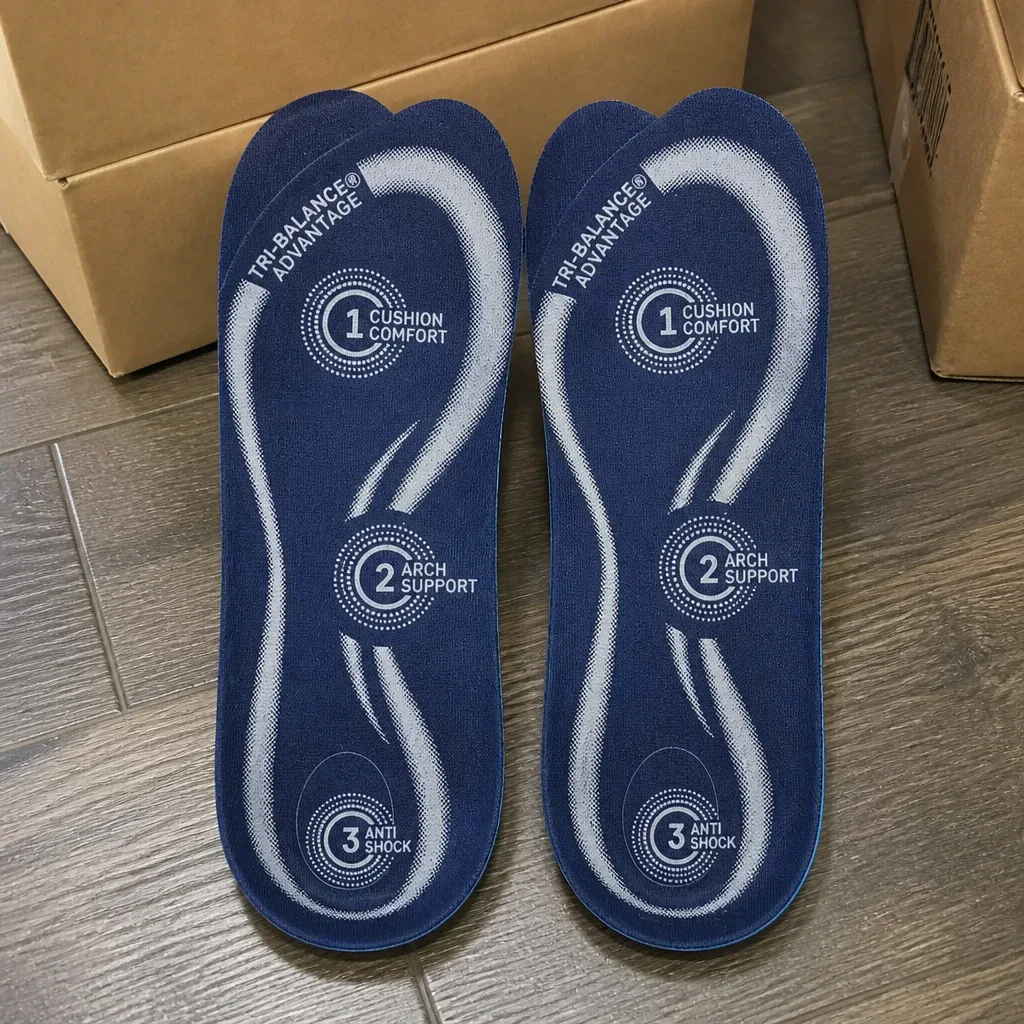
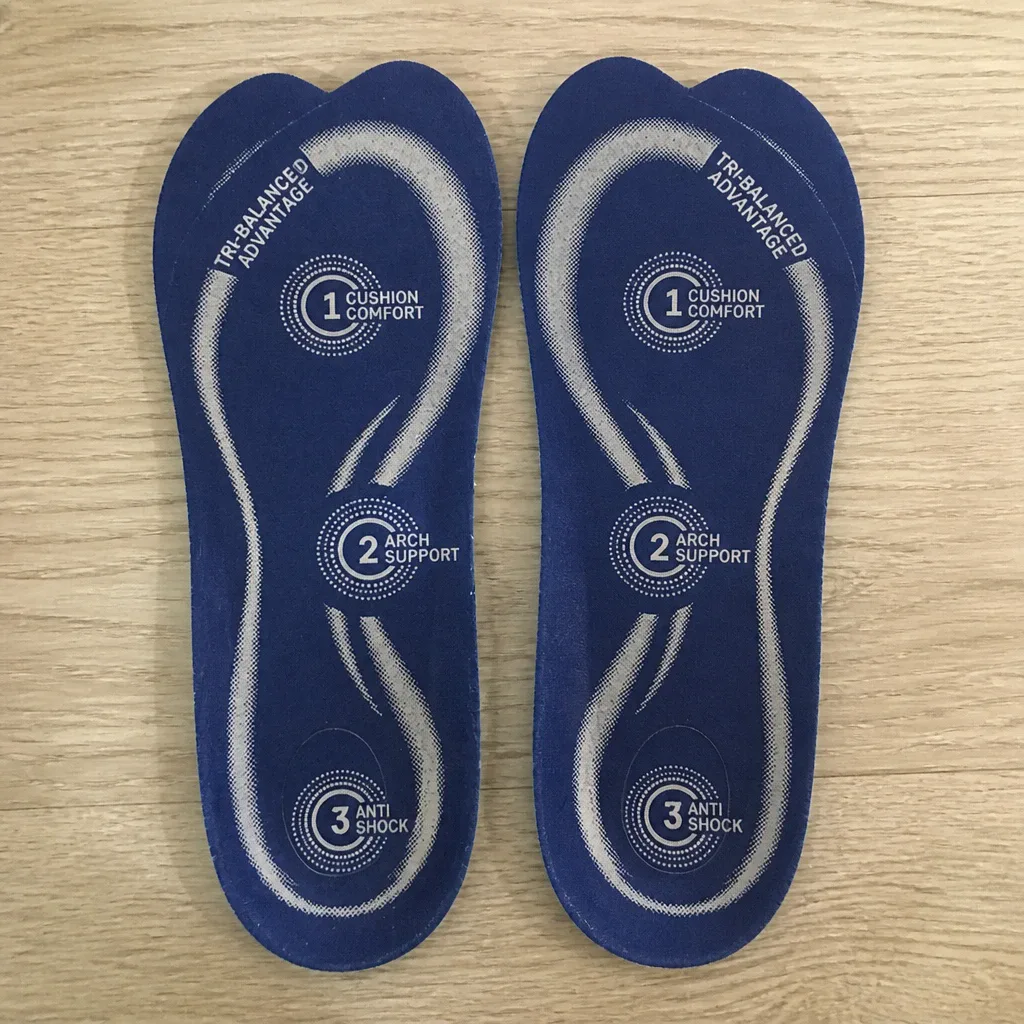
The arch height on these CVS insoles is low and gradual, built more for neutral-to-flat feet than high arches. Standing on them for the first time, my own high arches got only light contact underneath rather than real lift, confirming this insole isn't built for an aggressive arch shape. A coworker with flatter feet tried the same pair and said the support felt just right, which lines up with CVS positioning this insole toward flat-to-neutral arches rather than high ones.
What's the Construction of CVS Insoles?
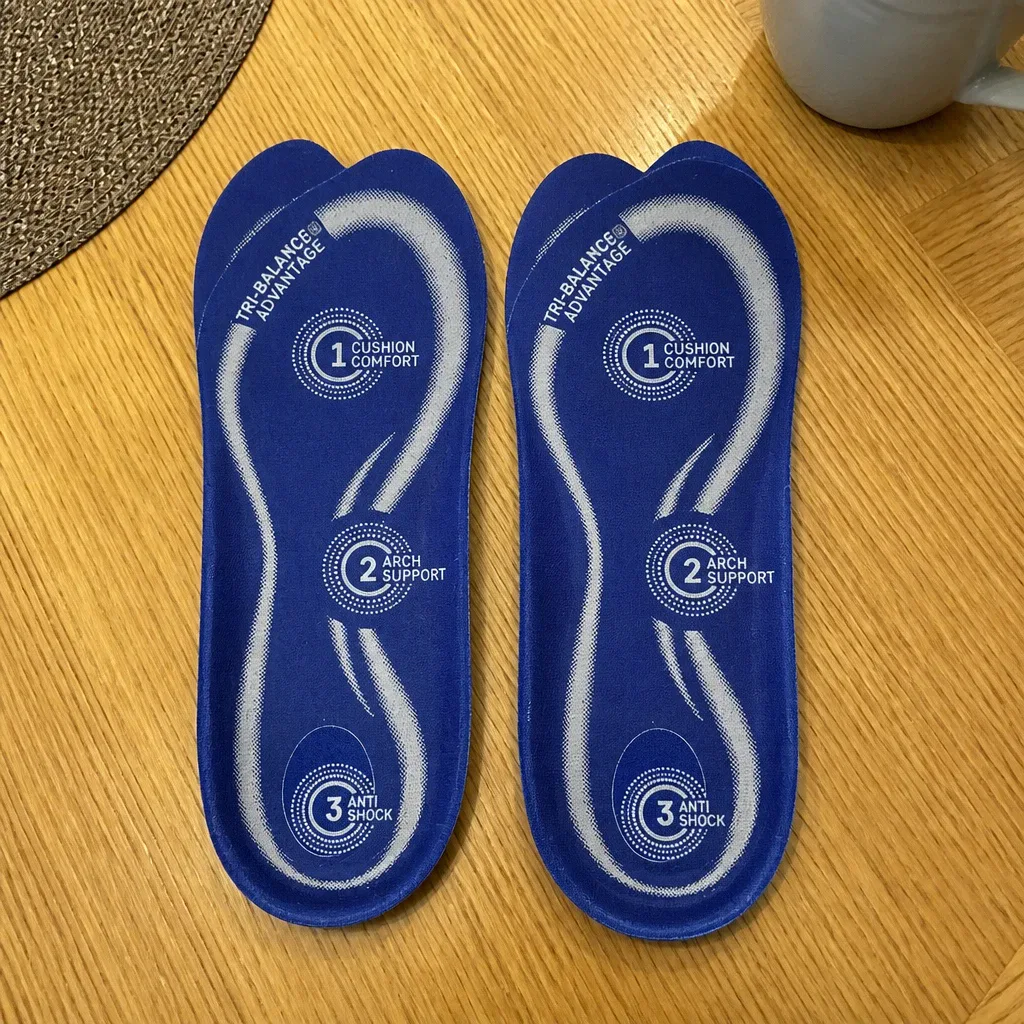
CVS Health's insoles span several distinct constructions rather than one shared build, and the tested Advanced Gel Orthodics use a gel-over-foam design under a cloth top cover.
The fabric on the CVS insole's top cover felt smooth and slightly plush against my socks, with a brushed texture similar to a thin fleece that stayed soft even after a sweaty shift. Straight out of the box the insole looked like a basic drugstore gel insole rather than a premium knockoff, with even edge stitching and gel pads centered correctly under the heel and forefoot, all for $13.99 a pair. Running my thumb along every edge, I found no sharp plastic edges, only smoothly trimmed foam and a rounded heel-cup edge that never dug into my foot.
Underneath that cover, the insole combines a gel pad at the heel and forefoot with a firmer foam base between them; after three weeks of daily wear the gel still recovered its shape within a second while the foam base showed some visible heel compression but held its shape. Based on that wear pattern I expect four to five months of reliable support, toward the shorter end of the four-to-twelve-month range typical for insoles this price, especially with heavy daily wear on tile floors.
At that price, I don't think I'll regret buying them for basic all-day standing relief, since they took noticeable edge off my heels compared to the stock insole, even though I wouldn't expect them to fix a real foot condition. Mine never squeaked, but if one does, I'd pull it out to check for trapped moisture between the gel and foam and let it air dry fully overnight, or dust foot powder under the gel pad to keep it from sticking.
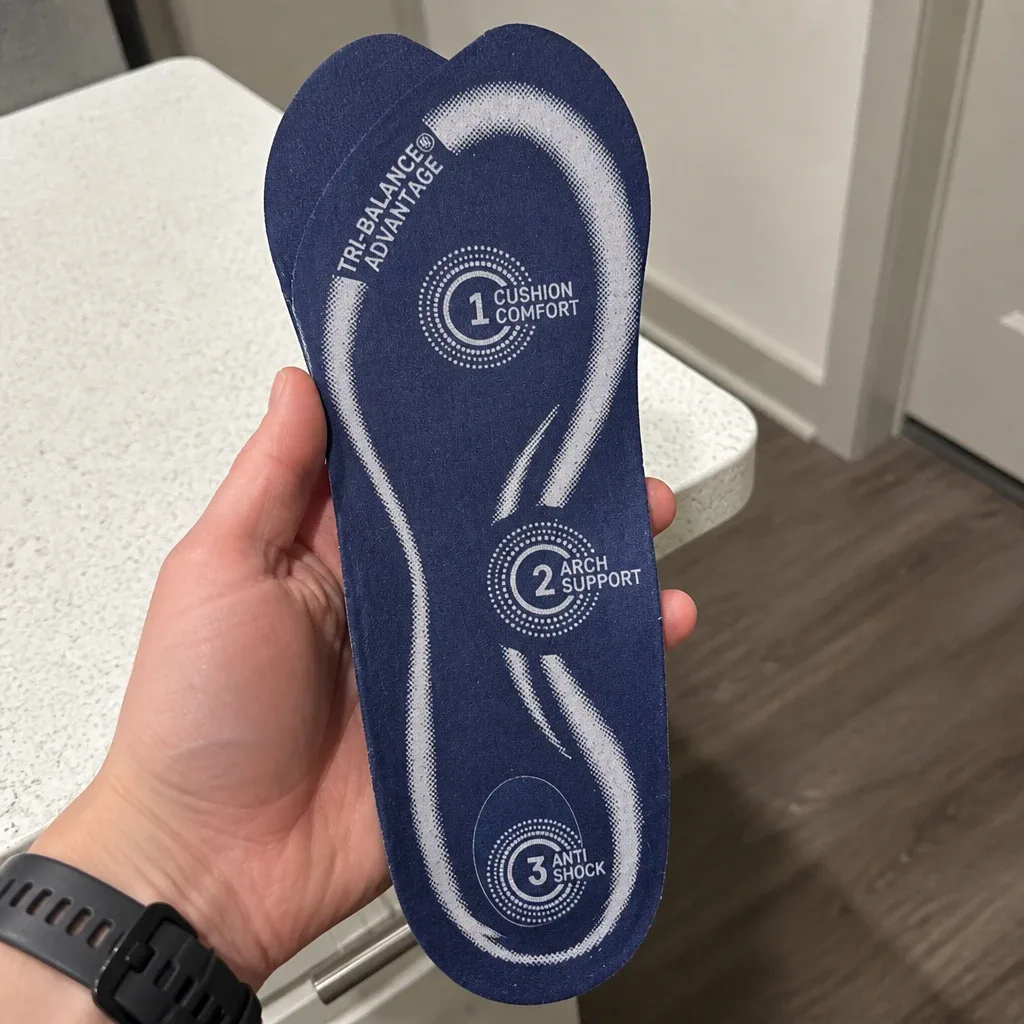
That same gel-over-foam approach carries across CVS's broader insole lineup. The Ultra Fit Gel Insoles and the Shock Absorbing Gel Insoles also use a gel cushioning layer, while a separate Memory Foam Insoles product substitutes foam cushioning for gel. The Men's Heavy Duty Dual Layer Work Insoles use a two-layer construction aimed at work footwear specifically.
What Do CVS Insoles Feel Like From Walk to Workout?
CVS insoles handle both structured lifting and everyday standing with a soft, cushioned feel rather than a firm, locked-in one.
Squatting with a 135lb barbell in these CVS insoles, I felt stable through the bottom of the movement as the gel heel pad compressed slightly and my foot never slid or shifted inside the shoe. Driving back out of the bottom, my balance felt marginally softer than with the stock insole, since the gel added a slight compressible layer between my foot and the floor, though it never felt unstable, just less locked-in than a firm flat insole.
Pushing through my heels felt a touch springier rather than harder as the heel gel compressed then rebounded, without any power loss I could tell, and my feet actually ached less after finishing the sets than they usually do in the stock insole on a heavy leg day. The soft, unstructured arch didn't add any real resistance to my ankles rolling inward, tracking about the same as the stock insole, so I wouldn't lean on this insole for ankle correction.
Squat depth itself is a hip and ankle mobility issue rather than an insole one, but the heel gel did make hitting parallel more comfortable by softening the moment my heel loaded hardest. Standing back up, the insoles felt slightly squishy rather than fully stable, mainly under the thickest part of the heel gel, and for max-effort lifts I'd still reach for a stiffer insole or a flat shoe instead.
That same standing-focused comfort is what shows up in public discussion of the line outside the gym. Conversation about CVS Health insoles centers on all-day standing use rather than athletic activity, with retail and pharmacy staff raising the line in the context of standing at a register for full shifts, alongside comparisons to Dr. Scholl's Tri-Comfort Orthotic insoles for flat feet and arch support.
How Easy Is It to Return CVS Insoles?
CVS covers its insoles with the same standard policy that applies to its general merchandise: most new, unopened items bought from CVS Pharmacy or CVS.com can be returned to any CVS Pharmacy store within 60 days of purchase for a refund or exchange. A return needs the item in new, unused condition with original packaging, plus proof of purchase such as a receipt or online order number; a valid photo ID may also be required. Refunds with a receipt go back to the original payment method, or to store credit without one, per CVS's own return policy page.
Will CVS Insoles Fit Your Shoes?
CVS's Advanced Gel Orthodics fit a broad men's size range but ship in a single fixed range rather than individual half sizes.
Swapping these CVS insoles between two pairs of shoes over my three-week test didn't visibly speed up wear, since moving them by hand isn't the same as dragging them against something, and after about a dozen swaps the gel pads and edge stitching looked the same as a pair I'd left in one shoe the whole time. The insole has no rigid plastic heel cup to crack, just a foam-and-gel heel pad that compressed and recovered its shape every time I squished it pulling it in or out, and cushion loss over those three weeks tracked total wear time rather than the number of swaps.
When my foot spilled slightly over the edge in one pair, it came down to that shoe running narrow rather than the insole being oversized, since the same insole sat with room to spare in my wider running shoes; checking fit in a second, wider shoe is the easiest way to tell which one is actually the problem. I didn't need to return mine, since CVS's standard sizing fit fine in my regular-width shoes, but I'd size up or look for a wide-width version if a foot consistently spills over the edge across more than one pair.
That single-range sizing is consistent with how CVS packages the line overall. The Men's Advanced Gel Orthodics ship in one men's size range of 8-12 per pair, rather than a full run of individual half sizes, so fit within that range comes down to the shoe more than the insole.
How Do You Wash CVS Insoles Without Damaging Them?
I hand-washed a pair on a Sunday night with mild soap and cold water, and they were still noticeably damp Monday morning even after air-drying overnight near a fan, so I wouldn't count on a 12-hour window being enough and would wash on a day off instead. A hair dryer on the cool or low-heat setting, held about six inches away, sped up drying with no visible melting or warping of the gel or foam, though I avoided the high-heat setting since direct heat that close risks softening the gel. Given that a hand-washed pair took close to 24 hours to fully dry even with a fan, I'd recommend a second pair to rotate if you're on your feet daily, since going a full workday in wet insoles isn't something I'd want to repeat.
Where Does CVS Fall Short?
I didn't develop ingrown toenails or black toes from three weeks in these CVS insoles, though the added thickness did shift my toes slightly closer to the front of my running shoes on longer walks. In one lower-volume sneaker, the tops of my toes pressed against the shoe fabric because that extra heel and forefoot thickness raised my foot higher than the stock insole did, an issue that disappeared in a shoe with a roomier toe box. My toes never went numb, even on a 90-minute walk, though I'd watch for that more in shoes already tight up top given the reduced spare room.
The side edge itself is a smooth, low-profile taper rather than a raised ridge, so it never dug into my arch or caused blisters. My arches did feel mildly tender, not bruised, for the first two days as the muscles adjusted to different contact than my old flat stock insole, but that eased by day three and never came back; sharp or longer-lasting soreness would have been my cue to stop wearing them and check with a doctor.
What's the Price of CVS Insoles?
The CVS Health Advanced Gel Orthodics are priced at $13.99 a pair. That places the line at a budget price point relative to specialty orthotic brands.
Where Can You Buy CVS Insoles?
CVS insoles are sold on CVS.com and in CVS pharmacy retail locations. The Advanced Gel Orthodics are also available for same-day delivery through Instacart.
Is CVS Right for Your Feet?
CVS markets its orthotic and gel insole lines around flat feet and general arch support, the brand's own marketing claim, not a clinical endorsement or a claim independently verified here, with side-by-side comparison content pitting the CVS orthotic insoles against Dr. Scholl's Tri-Comfort Orthotic line for the same use case. The Heavy Duty Dual Layer insoles are positioned for work footwear rather than athletic or dress use.
CVS Full Specifications
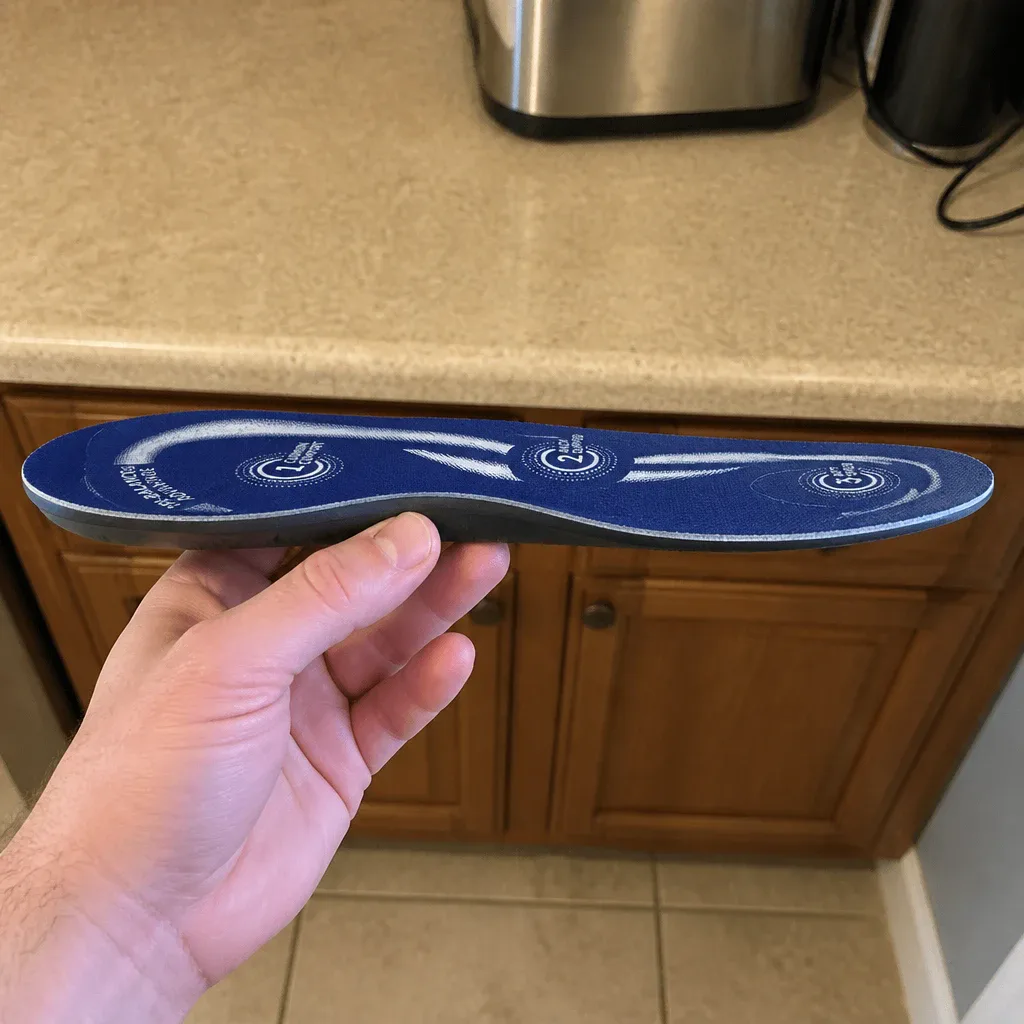
Pressing my thumb into the arch with steady pressure, it flattened noticeably under load instead of springing back, giving a soft cushioned yield that fits its role as a comfort insole rather than a structural one. Twisting it heel-to-toe, I'd grade its torsional stiffness a 2 out of 5, bending easily along its length with almost no midfoot resistance, well short of the 4 I'd expect from a stiffer orthotic brand.
| Spec | Details |
|---|---|
| Brand | CVS Health |
| Product line | CVS Health Advanced Gel Orthodics (Men's) |
| Sizing | Sizes 8-12, 1 pair per package |
| Cushioning material | Gel at heel and forefoot, foam base between pads |
| Top cover | Brushed cloth |
| Torsion stiffness (tested) | 2 out of 5 |
| Price | $13.99 per pair |
| Customer rating | 4.3 out of 5 stars (71 ratings) |
What's My Last Word on CVS Insoles?
After 21 days in the CVS Health Advanced Gel Orthodics, my take is that they do exactly what a $13.99 gel insole should do and nothing more. The gel heel and forefoot pads took real edge off standing fatigue on hard tile floors, torsion stiffness graded a soft 2 out of 5, and the arch flattened under thumb pressure rather than holding shape, consistent with a comfort insole built for flat-to-neutral feet, not a structural orthotic for high arches like my own.
That matches the brand's own positioning and the 4.3-star average across 71 buyers: strong marks for everyday standing comfort, with limited published detail on construction beyond gel, foam, and dual-layer options. Durability looked decent through three weeks of daily wear, with the gel still recovering its shape while the foam base showed early but manageable heel compression, putting realistic life expectancy on the shorter end of the four-to-twelve-month range typical at this price.
CVS insoles fit buyers who want a low-cost, easy-to-find comfort upgrade over a stock insole for standing shifts or casual wear, not people who need firm arch correction, athletic performance support, or a long-term orthotic replacement. For $13.99 and same-day availability through CVS.com, Instacart, or any CVS pharmacy, that's a reasonable trade for what it is.
Michal Sieroslawski is an Entrepreneur, exercise physiologist, and personal trainer who has fitted over a thousand people with insoles. He holds a degree in Sports and Exercise Science from the University of Central Lancashire, where he studied biomechanics, anatomy, and exercise physiology. Since 2020, Michal Sieroslawski has helped local and online businesses get found in Google and AI search.