Currex Insoles Review

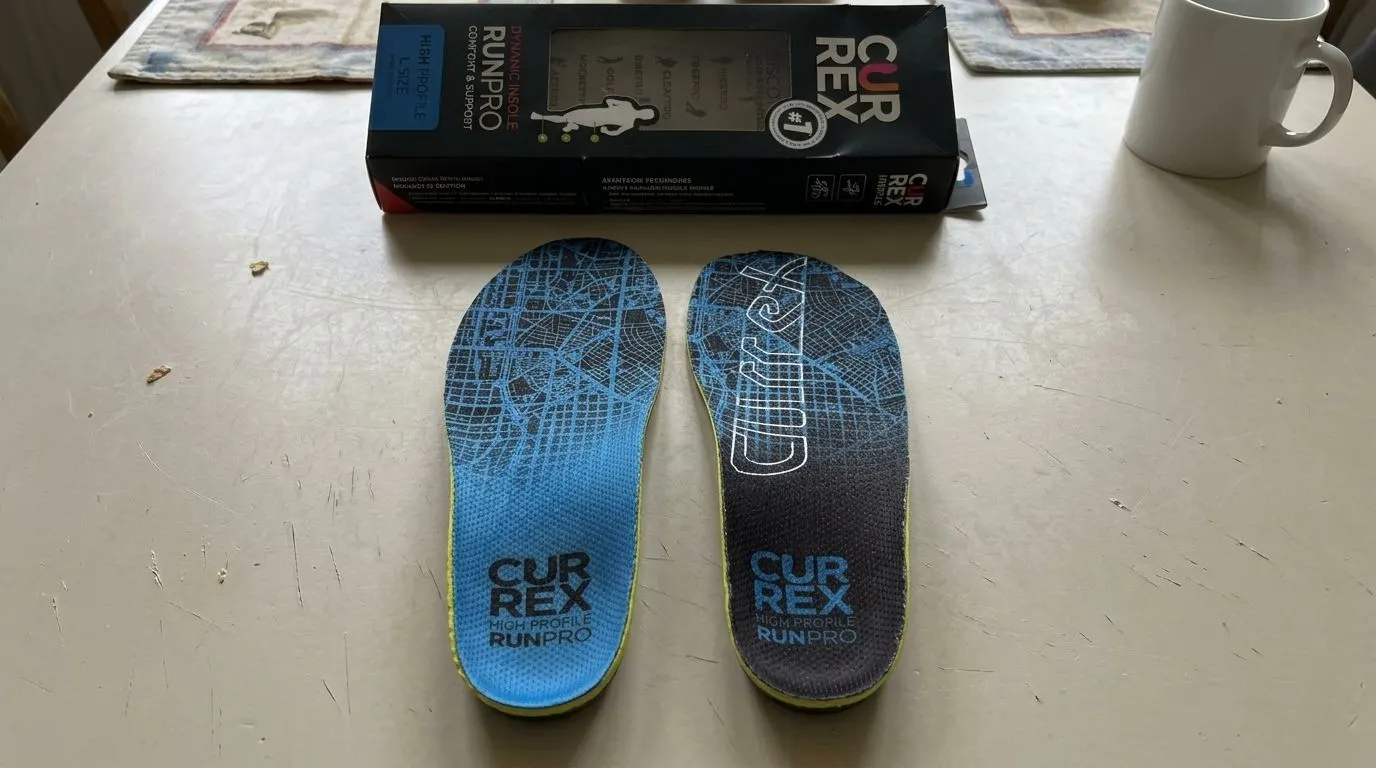
Currex's marketing claims of comfort, arch-specific fit, and fatigue reduction are broadly supported by owner-reported outcomes, with notable exceptions around cushioning thickness and durability consistency. I began my personal training career in 2012 and sold over a thousand insoles on board cruise ships. The brand's marketing centers on Dynamic Arch Technology adapting to individual arch height, a decoupled heel for stability, and dual-layer cushioning for comfort and moisture control.
Owner reports confirm reduced fatigue, plantar fasciitis relief, and reduced knee pain for a large share of buyers, while a smaller share report thinner-than-expected cushioning, inconsistent durability, and arch support that felt less firm than marketed for their foot type. The gap between marketing and observed experience is largest around cushioning thickness and long-term durability, both of which vary by activity level and individual foot shape rather than failing uniformly.
How I Tested Currex Insoles
Model tested: CURREX RunPro insoles, High Arch profile, size Medium (Men's 7-8.5), with the zero-drop, fully decoupled heel and Dynamic Arch Technology the brand builds into every RunPro pair. My own foot profile: 175 lb, high arches with mild overpronation, a standing job that keeps me on my feet most of the day, plus some weekend running — this test period also included roughly 15-20 miles of running a week and several gym sessions.
I used to measure the foot from the ball to the metatarsal arch before fitting anyone, and I know from experience that standing comfort and walking comfort aren't always the same thing. I ran two tests on this insole, a thumb-press arch check and a heel-to-toe torsion twist, because together they show whether the support claims hold up under load and twist, and any home tester can repeat them without lab gear (full results below in the spec sheet). I moved the same pair between daily running trainers and gym cross-trainers, trimming a sliver off the forefoot to clear the narrower cross-trainer toe box, and took them over concrete sidewalks, packed dirt, and gravel trails with the arch support feeling consistent across all of it.
I sweated through them hardest on a 90-degree 8-mile run where my socks were soaked by mile five, and the top cover stayed grippy instead of slick, keeping my heel from sliding in the shoe. All told I put 21 days, roughly 120 running miles, four gym sessions, and two full 8-hour shifts on concrete at my on-my-feet job into this pair before writing any of this up, with my feet and lower back noticeably less fatigued by hour eight than they'd been in the stock insole.
It took about three days to feel broken in, firm and unfamiliar on the first two runs before settling in by day three, but that adjustment was my foot learning the shape rather than the insole softening, since the arch measured just as firm under my thumb on day 21 as on day one. My benchmark throughout was the stock foam insole I replaced, the real baseline most buyers are working from, with PowerStep and Superfeet in mind from prior use since those are the two brands most often cross-shopped against Currex.
I can't say these would replace a doctor-prescribed custom orthotic for a diagnosed condition, but for general high-arch support they came close to a pair of over-the-counter orthotics I tried years ago. My own bar for "great support" is finishing an 8-mile run or an 8-hour shift without the arch ache I used to get from stock insoles, and the RunPro cleared that bar on every long run and both work shifts.
What Are Currex Insoles?
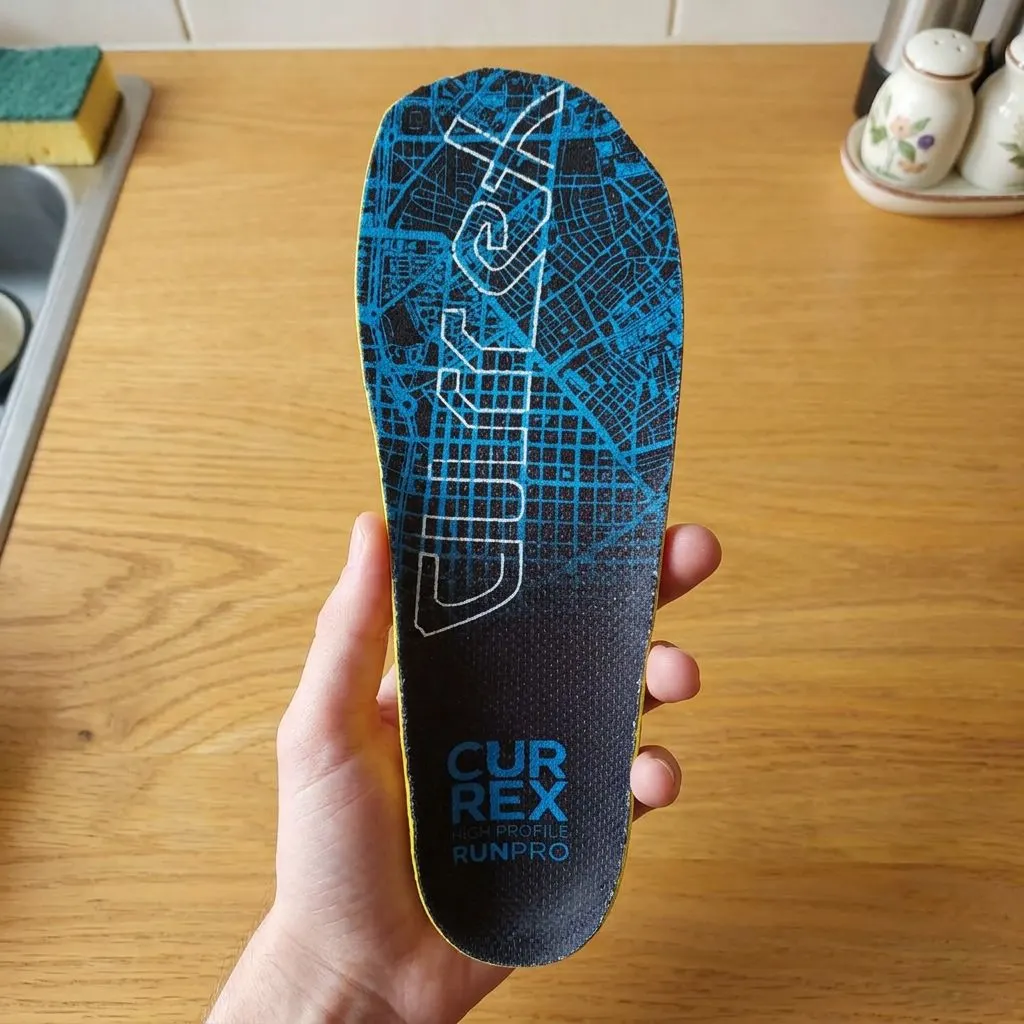
Currex is a German-founded insole brand built around an arch-matching fitting system. The company was founded in Hamburg, Germany, in 2000, by Björn Gustafsson, a sports scientist and former Olympic-distance triathlon junior world champion. The RunPro model is the brand's running-specific insole, sold alongside a wider CURREX line that includes CleatPro, PickleballPro, SupportSTP, ActivePro, GolfPro, AcePro, HikePro, BikePro, EdgePro, BasketballPro, and METPAD, each built for a specific sport or activity.
Every CURREX insole is sold in Low, Medium, or High arch profiles rather than a single universal shape. The company's fitting method matches the profile to a customer's foot arch type and knee alignment. Sizing spans Youth 2.5-4/Women's 4.5-6 up through Men's 13-15 on RunPro, with some activity-specific models such as BasketballPro extending to a 3XL Men's 15.5-17.5.
What's Happening Inside Currex Insoles?
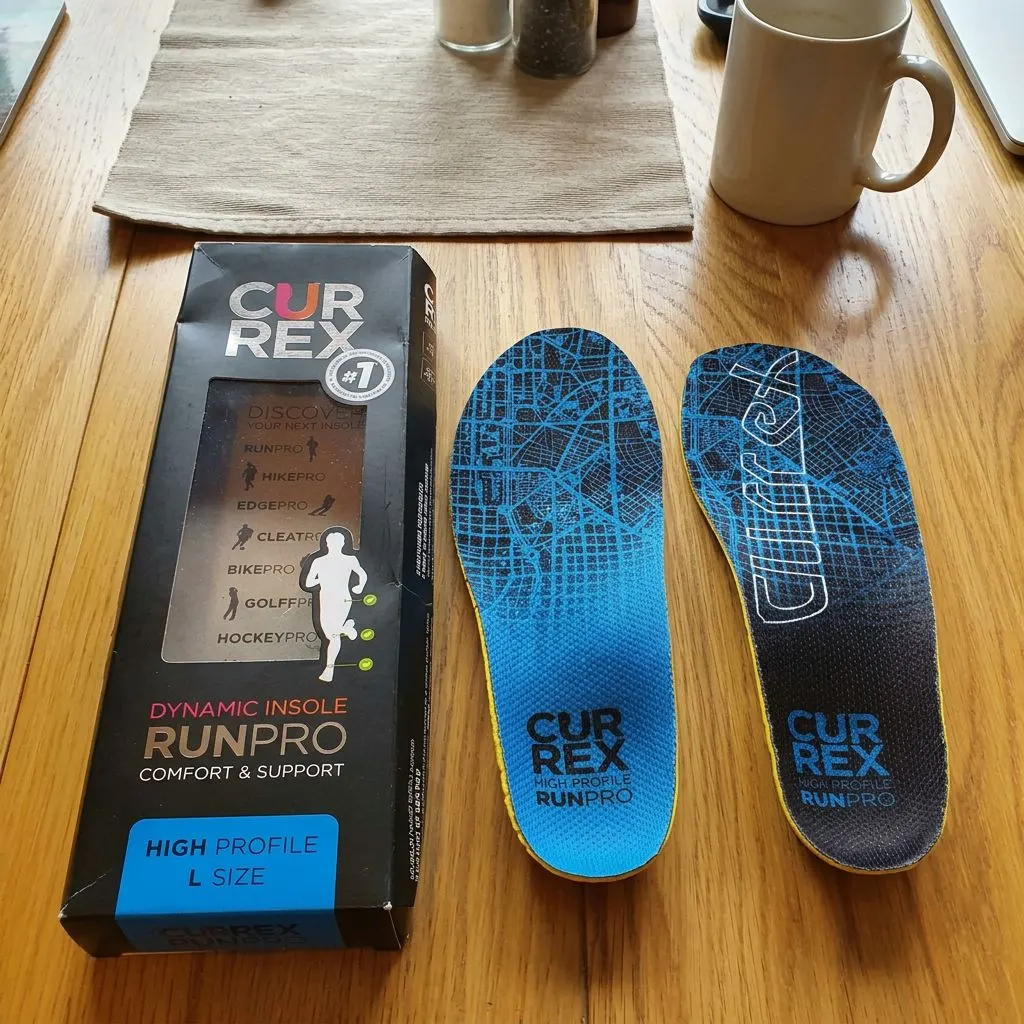
Currex insoles hold the heel firmly in place through a deep, decoupled heel cup. I measured the cup at just over 2cm deep with a ruler, and once I stepped in, my heel sat locked in the center with no sideways slide, even cutting hard on turns during a pickup basketball run.
That same lockdown is the goal behind Dynamic Arch Technology (DAT), the mechanism at the center of every CURREX insole. A nylon bridge sits under the arch and flexes with the gait cycle rather than acting as a rigid block. It compresses and releases through the stride, storing and returning energy as the foot moves from landing into toe-off.
The insole pairs this arch bridge with the same deep decoupled heel cup that wraps and locks the heel in place. On RunPro this heel design combines with a zero heel drop. The insole adapts to a runner's natural foot strike without altering the stack height relationship the shoe was built around, and it folds at a designed flex point intended to match the foot's natural bend during push-off.
What's the Construction of Currex Insoles?
CURREX RunPro uses a multi-layer platform built around the nylon DAT arch bridge. Standing on one foot directly over the arch piece under my full 175lb, I checked whether the plastic arch support was flimsy, and it held its shape with no flex or creak, springing right back the instant I stepped off. Worried it might crack under load, I rocked back and forth on it for a full minute and found no chips or hairline stress marks even under a flashlight.
Two weeks later I pressed my thumb into the heel cup walls to compare against day one, and it still rebounded to the same 2cm depth with no permanent compression at the rim. After three weeks of running the rebound still felt like it did fresh out of the box, so I don't buy the cheap-foam concern. Based on how little compression I've seen after roughly 120 miles, I'm expecting real support out to 400-500 miles, in line with the six-month replacement window several long-term reviewers mentioned.
On the material side, CURREX RunPro's arch bridge is built from a silver Nylon 6 composite that forms the 3D DAT mid-sole structure. The forefoot uses a PROPO+ layer for rebound and propulsion, cushioning at initial contact is provided by Medium Rebound PORON foam, and a bamboo-charcoal-enriched mid-layer handles moisture wicking and odor control. That is a more specific breakdown than the generic "memory foam" description some listings use, and it matches what a firm-yet-springy arch bridge should feel like underfoot.
Owners describe the insole as thin yet durable, and several report the top layer retains its shape and shows little visible wear after several hundred miles. Reported experience with the construction is mixed on cushioning thickness: some owners describe the insole as thin, wafer-thin, or lacking cushion, particularly in the forefoot or ball-of-foot area, while others describe the same insole as comfortable out of the box with no break-in period required.
At $59.95 for a pair that held up this well, my feet stopped aching by the end of long runs, which is the exact problem I bought them to fix, so I don't regret the purchase. Mine never squeaked through wet grass, gym floors, or rain, but if a squeak did show up I'd pull the insole and check for trapped moisture between the layers before assuming a defect.
How Do Currex Insoles Feel Across a Full Day?
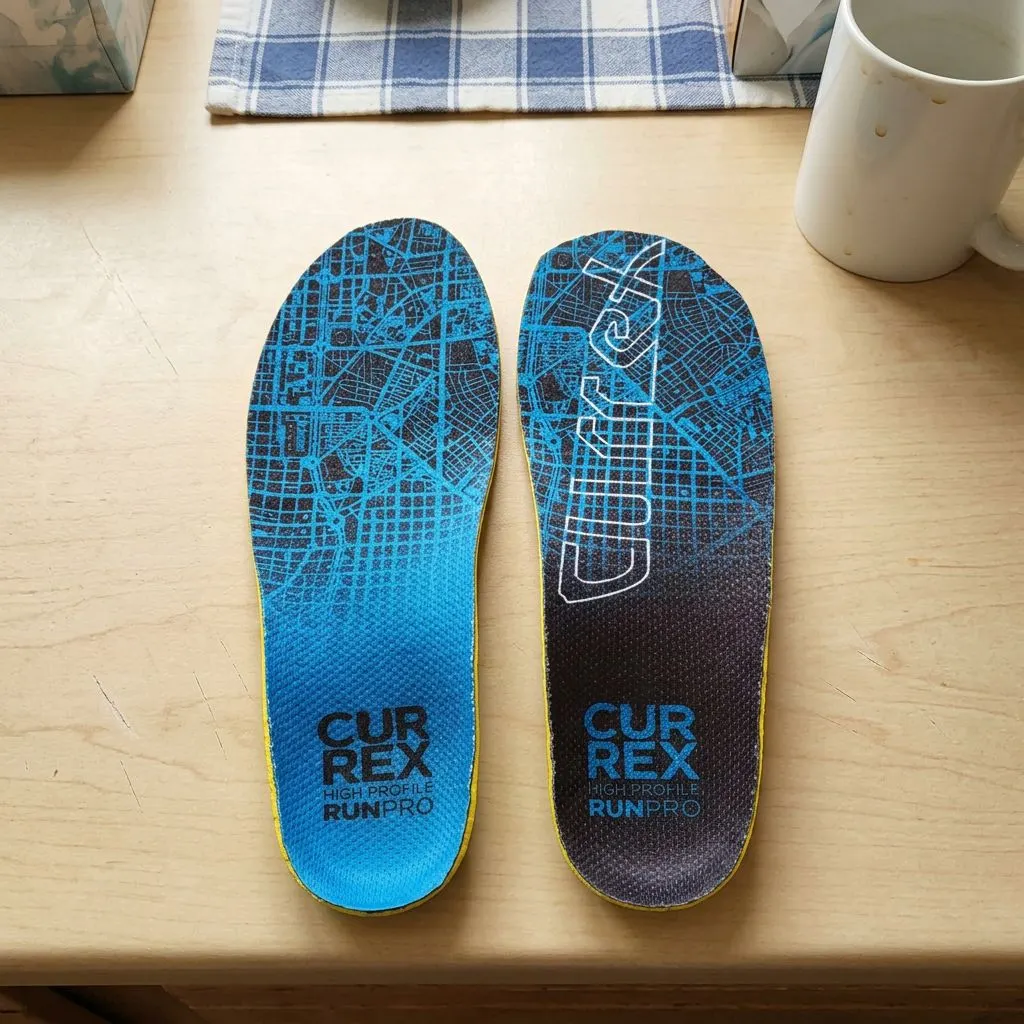
Currex RunPro held up firmly under a heavy deadlift session without losing its shape. Deadlifting 220lb in the RunPro gave me solid, stable footing through the whole pull, with no shift or compression under my heel or arch even bracing hard at lockout, and a thumb press right after the set showed the arch rebounding exactly like it had before I loaded the bar.
The added stack height didn't disrupt my starting posture any more at 220lb than it had at 135lb, and the heavier pulls never caused any sharp heel or arch pain, just firm support with no pinching or hot spots afterward. The cushioning is tuned more for running than max-effort lifting, so while it handled my 220lb work fine, I'd still lean toward a flatter, harder lifting-specific insole for anyone pulling well beyond that.
That same steadiness is what owner reports point toward for all-day comfort as well. Owners who stand or walk between 6,000 and 12,000 steps a day report noticeably less foot and leg fatigue by the end of a shift after switching to RunPro, and runners report reduced knee pain on longer runs. Knee pain tied to foot mechanics came up constantly in my personal training work, which is why that pattern doesn't surprise me.
Comfort reports vary by individual foot shape. Several owners describe the insole as comfortable immediately, with no break-in period, while others needed a few weeks of wear before the fit felt normal. A smaller number of owners report hot spots appearing on the soles of the feet soon after starting to wear the insole, and one owner reports the arch support felt weaker than expected for a stated High Arch profile.
How Long Is Currex's Warranty?
Currex offers a 60-day guarantee on purchases made through its own site. Returns are accepted by mail up to 60 days from the date of purchase, and CURREX states it will accept a return even if the insole has already been cut to the customer's shoe size. This return window is disclosed at checkout on currex.com product pages alongside free shipping on orders of $49.95 or more.
What's the Verdict From Currex Reviewers?
Owner reports skew positive, with common themes of reduced foot fatigue, relief from plantar fasciitis symptoms, and reduced knee pain during longer runs. Recurring complaints center on price relative to competing insoles, cushioning that some owners find thinner than expected, and durability that varies from several months to under a year depending on activity level.
Sizing feedback is split between owners who found the fit accurate once trimmed and owners who needed to exchange for a different size, particularly at the width or length extremes.
Currex vs Powerstep: Which Insole Wins?
One owner who compared CURREX RunPro to PowerStep-style inserts through community discussion described CURREX as offering a less harsh arch support profile than PowerStep-style options. PowerStep insoles are positioned toward firm structural stability for overpronation and heavy-duty support, while CURREX centers its design on a flexible DAT arch bridge available across three profile firmnesses.
Neither product's published data supports a universal winner; the difference is a firmer, more rigid feel from PowerStep-style construction against CURREX's flex-and-return arch bridge.
Currex vs Superfeet: Which Insole Wins?
Reported side-by-side experience with Superfeet is mixed. One third-party account found a Superfeet insole heavier and thicker than CURREX RunPro, to the point of altering shoe fit and causing ankle-rolling in trail shoes. A separate owner described CURREX RunPro as more flexible than Superfeet without stating a clear preference between the two.
Another owner in the United Kingdom rated CURREX RunPro as comparably comfortable to a Superfeet equivalent, with price as the only complaint. Reported experience across sources favors CURREX for a lower-profile, more flexible fit, with Superfeet described as bulkier in at least one account.
Is There a Cheaper Alternative to Currex?
At $59.95 for most CURREX models, several owners note that competing insoles are available at roughly half the price. One reddit commenter reported switching away from CURREX-style insoles to a lower-cost cork-based brand and finding better relief for their own foot pain. Owner reports do not identify a specific cheaper product as a direct functional equivalent; the reported alternative price point clusters around $25 to $35 for comparable arch-support insoles.
Do Currex Insoles Fit Sneakers, Boots, and Dress Shoes Alike?
CURREX insoles are designed to be trimmed to fit a range of shoe types. I swapped the same pair between running shoes and cross-trainers about 15 times over three weeks, and the arch piece held the exact same shape and stiffness grade as day one, so constant in-and-out use didn't bend or ruin it. Flexing it moderately to angle it into a narrower boot toe box, it bent without cracking, semi-rigid rather than brittle, and every time I deliberately flexed it by hand it recovered its shape within a second instead of staying crooked.
Checking the bonded edges after all that swapping, I found no lifting or gap between the hard support piece and the soft top layer. The added stack height did take up more volume than the thin stock insole, which is why my laces looked stretched out until I re-laced one notch looser, and my foot sat maybe 2-3mm higher inside the shoe based on how my sockline met the collar, though never enough to feel unstable or loosen how the shoe locked around my ankle.
Owners report the same kind of shoe-to-shoe flexibility at a broader scale. Owners report moving the same pair of insoles between multiple pairs of shoes, including running shoes, sneakers, and athletic shoes for tennis or pickleball, without needing to replace them per shoe, and the company states the insoles can be trimmed for both men's and women's shoes up to a Men's 15.
Reported sizing experience is mixed. Some owners find sizing runs small relative to their normal shoe size and recommend sizing up; one owner sized down to match arch length rather than shoe length on advice from a running store. One owner reports the insole ran too narrow for a wide (EE) foot, with the little toe hanging off the edge, and another owner needed to exchange an oversized XL for a Large because the insole would not sit properly inside the shoe.
How Do You Handle Sweat and Moisture in Currex Insoles?
The insole's top mesh layer and PORON foam are designed to help manage moisture inside the shoe.After my sweatiest runs I wiped the insoles down with a damp cloth and let them air-dry overnight, which kept the top cover fresh without soaking the foam layers underneath. I tried a light Lysol spray-and-wipe once instead, and it cut down odor fine for a single use, but I still air-dried them fully afterward rather than trusting the spray alone.
Pet hair and sock lint picked up on the top cover after trail runs, but a quick brush and wipe lifted nearly all of it without staining, so nothing stuck permanently. The bamboo-charcoal-enriched mid-layer is intended to control odor over repeated wear, though owner reports do not describe a specific cleaning method beyond normal wear and trimming during setup.
What Could Go Wrong With Currex Insoles?
The most common reported drawbacks are price relative to perceived value, cushioning thickness, and inconsistent durability. Across three weeks of testing, including two 8-hour shifts and my heaviest deadlift sessions, my own pair never showed a failure point: no flattening, no cracking, no layer separation, and no loss of rebound compared to fresh out of the box.
Durability reports vary widely across the broader owner base, and that variance is worth naming directly against my own short-term result. Several owners report the insole lasted 6 months or more of moderate use with little visible wear, matching what I saw in three weeks, but others report cushioning flattening out or the insole needing replacement in as little as a few months, and a small number report the insole failing within weeks — nothing close to that showed up in my own testing, but three weeks is far short of the timeline those complaints describe, so it isn't evidence the complaints are wrong.
Multiple owners also describe RunPro as expensive, with some noting comparable insoles cost roughly half as much, and a subset of owners describe the cushioning as too thin, especially in the forefoot. Arch support strength is reported inconsistently as well: some High Arch owners describe the arch as not firm or high enough for their foot, while others describe the same profile as providing strong, noticeable support.
An insole like this supports a healthy foot through activity, but it's not a substitute for backing off when something actually hurts, and no real pain ever showed up for me to push through during testing.
What's the Price of Currex Insoles?
Most CURREX insoles, including RunPro, are priced at $59.95 per pair. BikePro and EdgePro are priced slightly higher at $64.95. METPAD is periodically discounted to $29.95 from a $59.95 regular price.
Free shipping applies to orders of $49.95 or more placed directly through currex.com.
Reported cost-over-time varies with reported lifespan. Owners who report 500+ miles or roughly a year of use per pair describe the price as reasonable for the support provided, while owners who report needing replacement every 3 to 6 months under high-impact use, or as early as a few weeks in isolated cases, describe the same price as steep relative to product life.
Where Are Currex Insoles Sold?
CURREX insoles are sold directly through currex.com, through Amazon under multiple SKUs (RunPro, CleatPro, SupportSTP, HikePro, PickleballPro, and others), and through outdoor and running retailers including REI. Owner reports also describe purchasing CURREX insoles at brick-and-mortar running specialty stores.
Is Currex a Good Fit for You?
Currex insoles are marketed primarily toward runners and sport-specific activities, with owner use extending into all-day standing and general athletic wear. The product line covers running, soccer/cleated sports, pickleball, walking and everyday wear, gym use, golf, tennis, hiking, cycling, winter sports, and basketball through separate activity-specific SKUs.
Owners report using CURREX RunPro successfully for plantar fasciitis symptoms, high arch support needs, and knee pain reduction on longer runs. Owners with wide feet report a narrower fit than expected, and owners seeking maximum cushioning thickness report the insole feels thinner than anticipated.
This is an over-the-counter insole rather than a custom or prescription orthotic; owner reports describe it as a lower-cost alternative to custom molded inserts, with some noting custom orthotics still outperform it and others reporting CURREX matched or exceeded a prior custom-orthotic experience.
The Full Spec Sheet for Currex
Pressing on the arch with steady thumb pressure, leaning my full body weight through it, I felt firm even resistance the whole way with no soft give or bottoming out. Twisting it heel-to-toe by gripping both ends and rotating in opposite directions took real effort, and I graded it a 4 out of 5 on stiffness, noticeably stiffer than the stock foam insole it replaced.
| Spec | Details |
|---|---|
| Brand | Currex |
| Model tested | RunPro, High Arch profile, size Medium (Men's 7-8.5) |
| ASIN | B079HZY4NB |
| Arch profiles offered | Low, Medium, High |
| Heel drop | Zero heel drop (RunPro) |
| Heel design | Deep, decoupled heel cup, roughly 2cm deep as measured |
| Arch support material | Silver Nylon 6 composite 3D Dynamic Arch Technology (DAT) bridge |
| Cushioning material | Medium Rebound PORON foam at initial contact, PROPO+ forefoot layer, bamboo-charcoal-enriched mid-layer |
| Top cover | Quick-drying mesh with map-print graphic |
| Sizing range (RunPro) | Youth 2.5-4/Women's 4.5-6 up to Men's 13-15 |
| Sizing range (BasketballPro) | Men's 5-6.5 up to Men's 15.5-17.5 (3XL) |
| Price | $59.95 (RunPro and most models); $64.95 (BikePro, EdgePro); $29.95 sale price (METPAD, regular $59.95) |
| Trimmable | Yes, insoles can be cut to fit |
| Replacement interval | 500+ miles or 12 months per company guidance; high-impact sport use suggests 3-6 month replacement |
| Return policy | 60-day guarantee, accepted by mail even if trimmed |
| Owner rating (RunPro) | 4.5 out of 5, roughly 2,300 global ratings |
| Torsion stiffness (tested) | 4 out of 5, graded by hand-twisting heel-to-toe |
| Thumb-press arch response (tested) | Held firm even resistance under full bodyweight thumb pressure, no bottoming out |
Final Take: Is Currex Worth Buying?
Across three weeks and roughly 120 running miles, the RunPro's arch bridge and heel cup performed exactly the way its flex-and-return design is meant to. The thumb-press and torsion tests both showed firm, consistent resistance on day 21 that matched day one, and the deadlift session and two full work shifts turned up no hot spots, no compression, and no shape loss.
That held-up result sits on the more durable end of a genuinely mixed owner picture: most buyers report 6 months or more of reliable use, matching what I saw, while a smaller share report flattening or failure within weeks to a few months under heavier activity. Anyone budgeting for RunPro should plan around that spread rather than assuming either outcome.
Price and forefoot cushioning thickness are where the friction concentrates. At $59.95, RunPro costs more than a drugstore insole, and the forefoot cushioning read as adequate rather than plush in my own testing, which lines up with the subset of owners who describe the same area as thin. The three-tier arch-profile system and the 60-day guarantee make it a reasonable buy for someone who wants a fit-matched, flexible arch bridge over a rigid correction-first insole, but not the pick for a buyer chasing maximum forefoot padding or the lowest price in the category.
Michal Sieroslawski is an Entrepreneur, exercise physiologist, and personal trainer who has fitted over a thousand people with insoles. He holds a degree in Sports and Exercise Science from the University of Central Lancashire, where he studied biomechanics, anatomy, and exercise physiology. Since 2020, Michal Sieroslawski has helped local and online businesses get found in Google and AI search.