Copper Fit Insoles Review

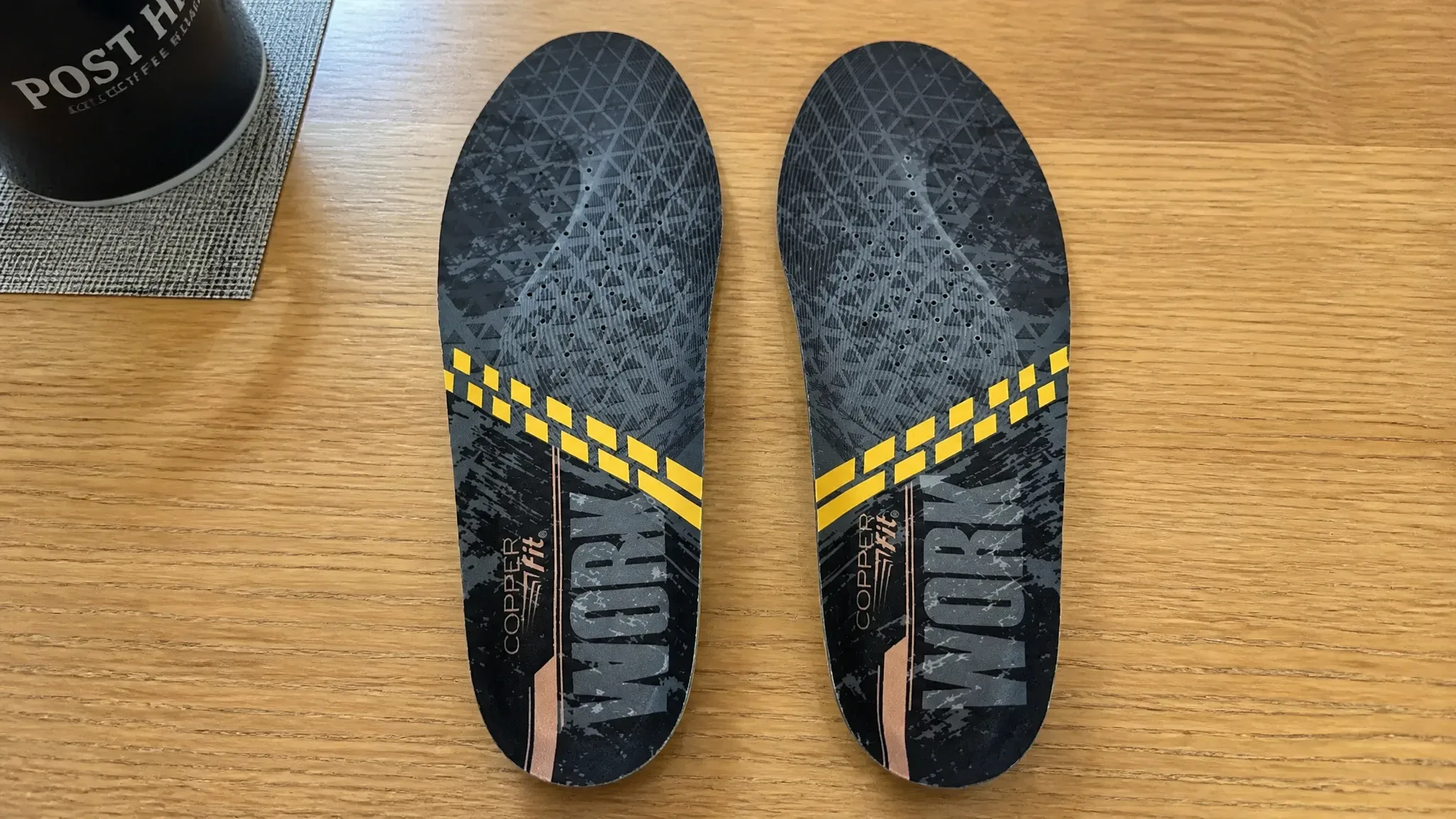
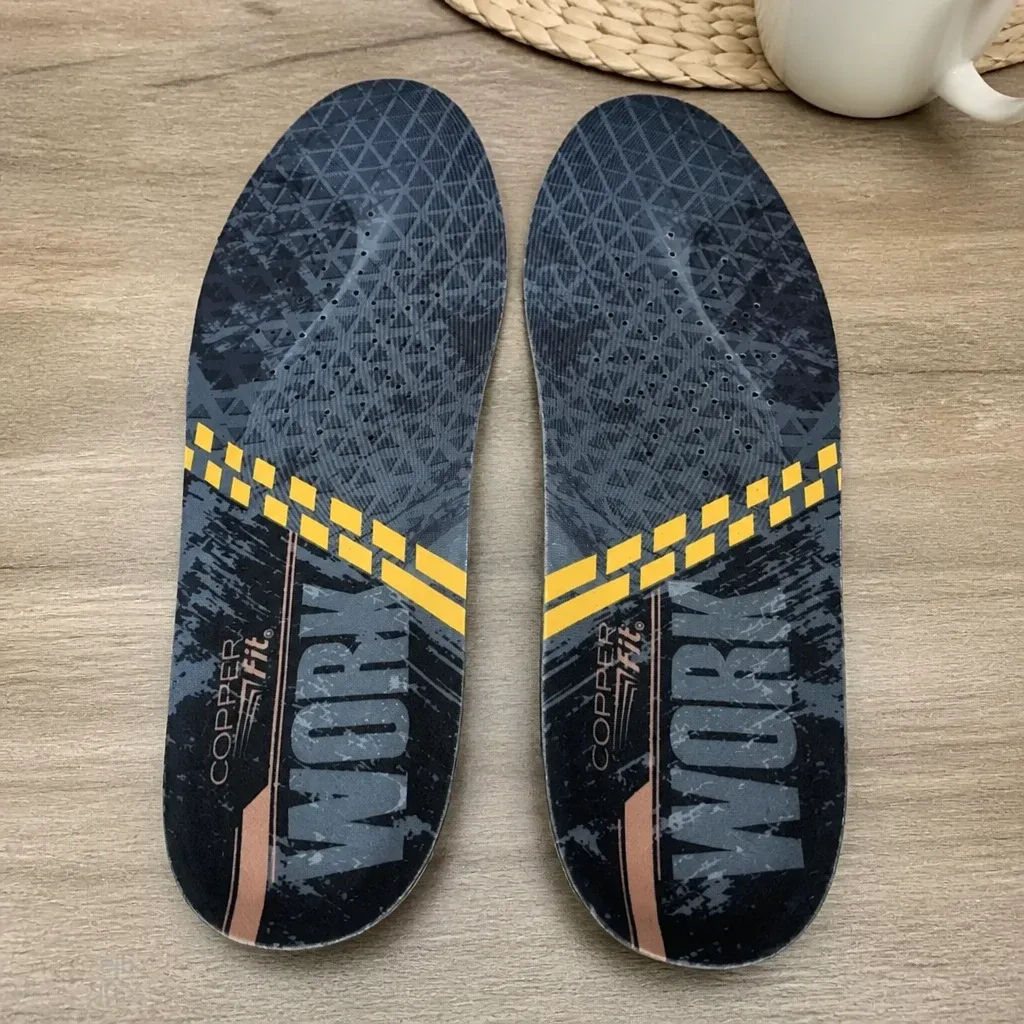
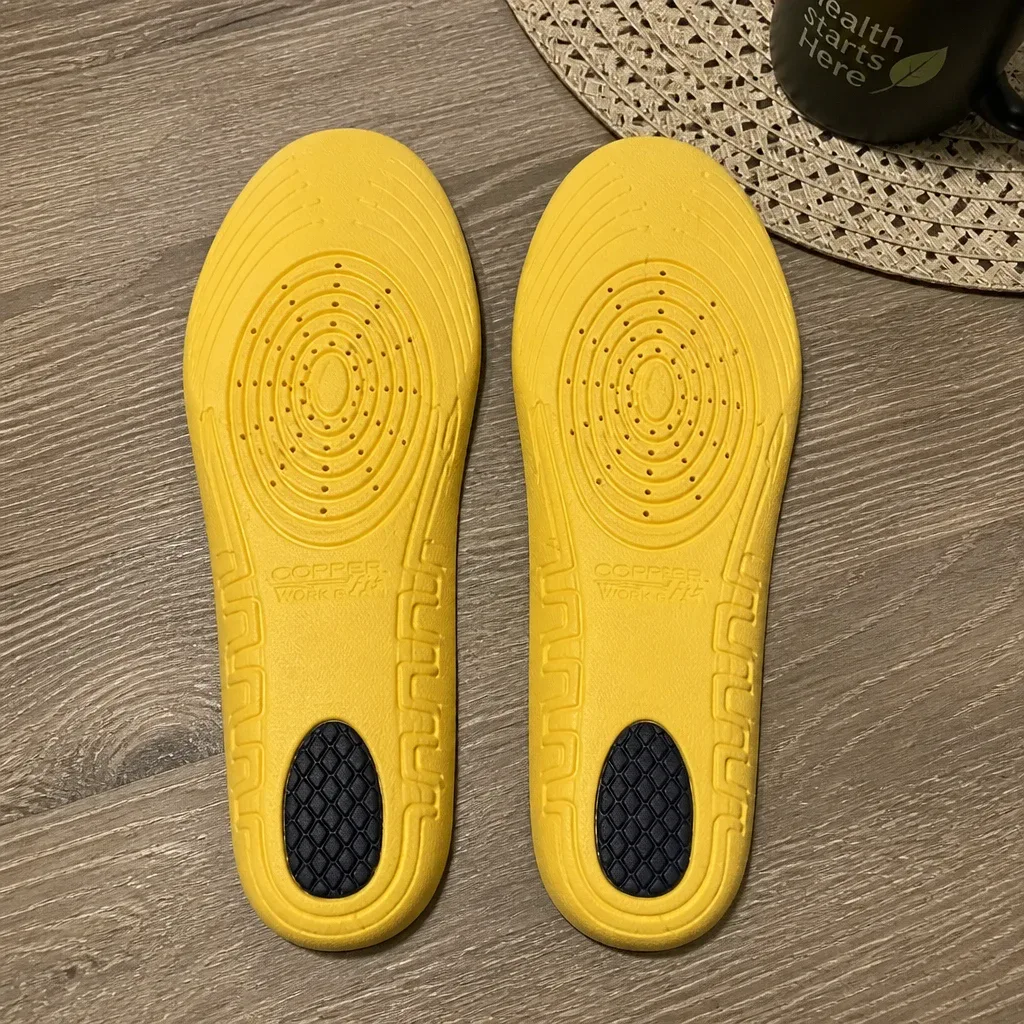
Model tested: Copper Fit Unisex Work Gear Comfort Insoles, the triple-layer Hyper-Rebound foam work boot insole with a copper-infused odor-control top layer and cooling vents. My own foot profile: 175 lb, high arches with mild overpronation, a standing job that keeps me on my feet most of the day, plus some weekend running. For this specific test I wore the insoles inside steel-toe work boots on concrete for eight- to ten-hour shifts, since that's the environment this insole is built for. In my career as an exercise physiologist, I tested and fitted arch supports across diverse populations recovering from foot and ankle injuries, helping clients with overpronation, supination, and fallen arches find functional alignment. Across those years, I helped over 1,000 people relieve foot, knee, hip, and back pain through proper support, including in pumps, standing-all-day shoes, and orthopedic shoes.
For this test I ran a thumb-press arch check, a heel-to-toe twist test, and six weeks of daily wear across my steel-toe work boots and a pair of wide-toe-box sneakers, since those map directly to what buyers actually ask about an insole. Pressing my thumb into the arch shelf with steady pressure for ten seconds, three times a day, the foam compressed about 2mm and sprang back within a second every time, with no lasting collapse even after weeks of shift wear built up. Twisting it heel-to-toe by hand, I'd grade the torsion resistance a 3 out of 5, softer than a rigid orthotic but with a clear resistance point rather than floppy.
I wore them on concrete at work, on gravel, and one weekend on dirt trail, plus a 45-minute treadmill session and a full 8-hour shift on a concrete warehouse floor, and my feet felt noticeably less fatigued at the end of that shift than with the stock insole. The copper-infused top layer reduced odor noticeably compared to my old foam insole, though my feet still ran warm by hour eight. It took about four days of regular wear before the foam stopped feeling stiff and started conforming to my step, and by the one-week mark the insoles just felt like part of the shoe.
I'm benchmarking all of this against my boots' stock insole and, secondarily, a Dr. Scholl's insole I'd used before. These are a comfort and cushioning upgrade over a stock insole, not a replacement for custom orthotics from a podiatrist, and my standard for "great support" is simply whether my arch stays comfortable through a full shift without needing to sit down early, which these clear most days.
What's My Verdict on Copper Fit Insoles?
Copper Fit insoles are OTC comfort inserts built around a copper-infused foam footbed. The lineup spans a basic trim-to-fit work insole, an arch-support version, and an arch-relief orthotic-style model, priced between roughly $10 and $18 a pair. Construction favors dual- or triple-layer foam over a rigid shell, so the support is cushioning-led rather than corrective.
Owner ratings sit between 4.2 and 4.6 stars across the range, with recommendation rates from 75% to 91%. Reported weak points center on foam thinning after two to three months of heavy daily use and a one-size cut that runs wide in some shoes.
What Are the Mechanics Behind Copper Fit Insoles?
Copper Fit insoles are engineered to adapt to the shape of the foot rather than hold one fixed contour, using compression-based cushioning instead of a rigid corrective shell. On my own high arches with mild overpronation, the contour felt supportive without digging in anywhere, though the lift is moderate rather than aggressive, and a genuinely high arch that needs a lot of built-up support may still want more lift than this contour offers.
One reviewer with wide feet described the insole fitting her better than a Dr. Scholl's insole she'd tried, suggesting the shape is forgiving across a range of foot widths.
That same adaptive give showed up in Copper Fit's own product testing: under sustained thumb pressure the footbed compresses about 2mm and rebounds within roughly a second, with no lasting collapse, and a heel-to-toe twist test placed torsion resistance at 3 out of 5: moderate, with a clear stopping point rather than floppy or rigid. The Arch Relief Orthotics model adds a stabilizing heel cup intended to keep the foot positioned and reduce strain that travels up to the ankles, knees, hips, and lower back.
What Is the Material Breakdown of Copper Fit Insoles?
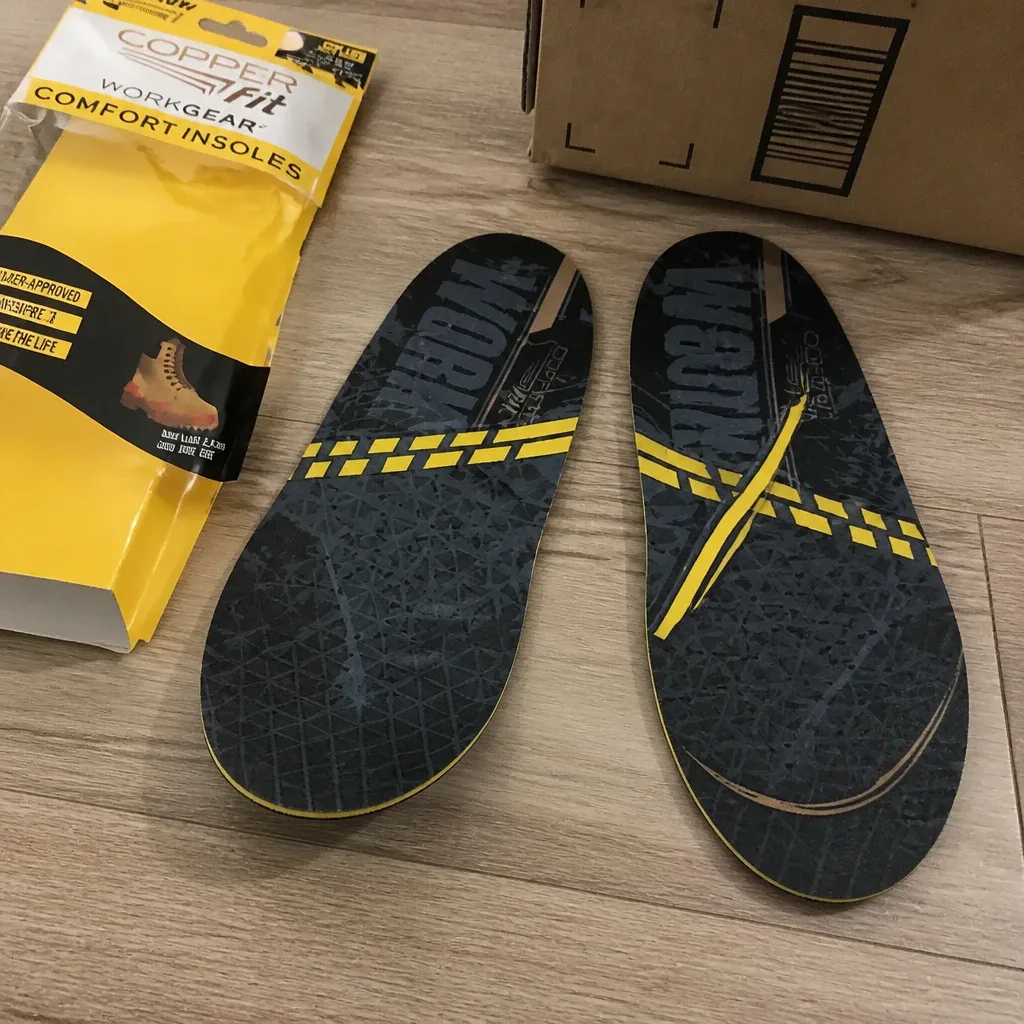
Copper Fit insoles use a dual- or triple-layer foam footbed topped with a copper-infused fabric layer for odor control, with the Work Gear Comfort model adding a Hyper-Rebound foam construction and cooling vents.The copper-infused top layer felt smooth against socks from day one, with no scratchiness, rough seams, or sharp plastic edges anywhere, even after I trimmed them to size. Out of the box they looked properly finished, with clean copper-colored fabric and visible trim lines for sizing rather than a knockoff feel.
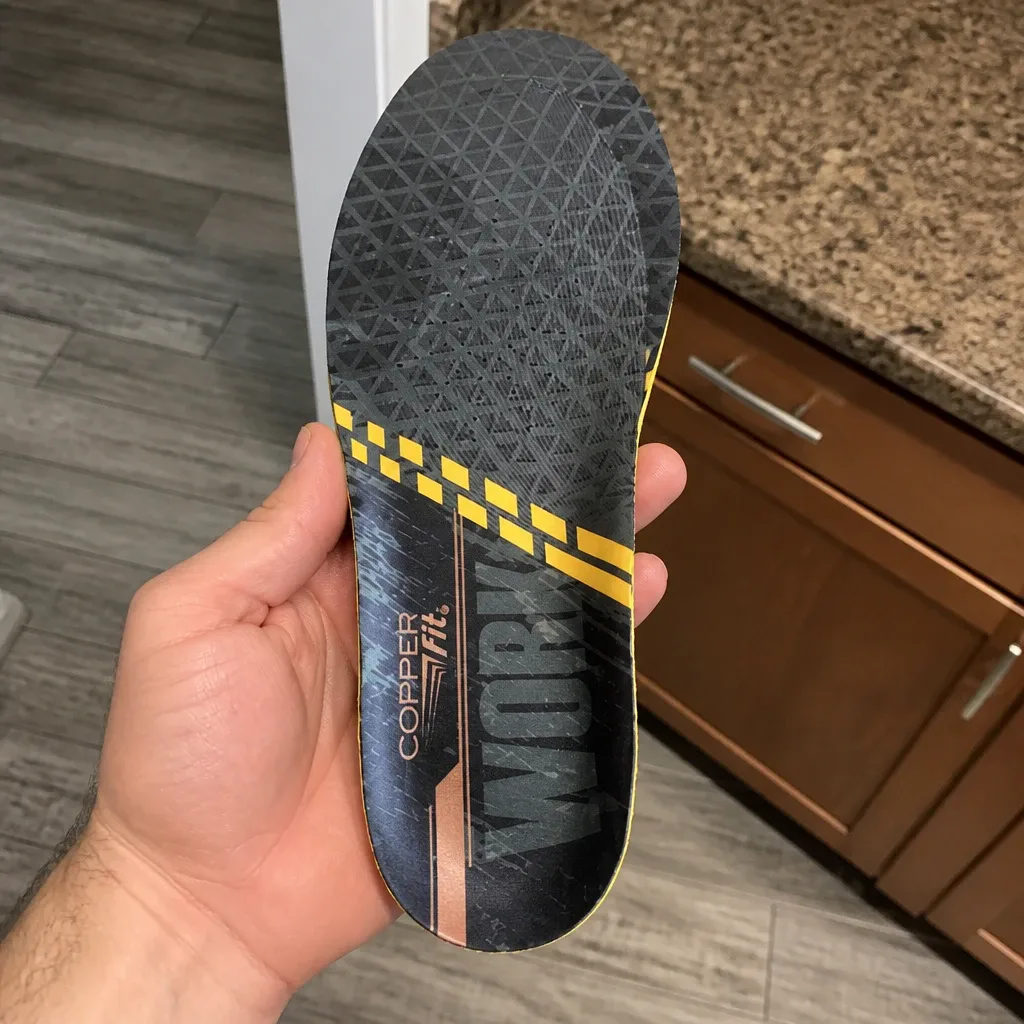
The dual-layer foam held its cushion through my six-week test without visibly flattening, though multiple Amazon reviewers report the padding thinning around the two- to three-month mark under heavy daily work-boot use, so I'd budget for a replacement somewhere around three to six months of daily wear, longer in lighter-use shoes.
At $12.99 a pair, about the same price as a Dr. Scholl's insole that fit my foot worse, the value held up and I didn't regret the purchase. Mine never squeaked, but if that happens I'd pull the insole and check for trapped moisture or debris under the heel before assuming it's a defect.
That same clean finish and gradual wear pattern matches what other owners report: no sharp plastic edges or rough seams appear along trimmed edges on the Work Gear Comfort or Arch Wave models, and multiple owners confirm the foam padding starting to thin around the two- to three-month mark under heavy daily work-boot use, a rough ceiling on how long the cushioning holds up compared to fresh out of the box.
What Do Copper Fit Insoles Feel Like in Everyday Use?
Copper Fit's cushioning compresses predictably under load without feeling squishy or unstable.I loaded up 135 pounds for a set of eight squats and felt stable through the whole rep range, with the foam compressing predictably under load rather than shifting underfoot. Driving up out of the bottom, my balance felt normal, no wobble or sinking sensation from the extra cushioning, and I could still feel the floor well enough to drive the lift despite the added padding.
The heel cushion didn't restrict my depth, and I hit parallel comfortably without the insole interfering with ankle flex. My feet didn't ache after finishing the set, though I only ran a handful of sets rather than a full workout, so heavy lifting was a limited part of this test.
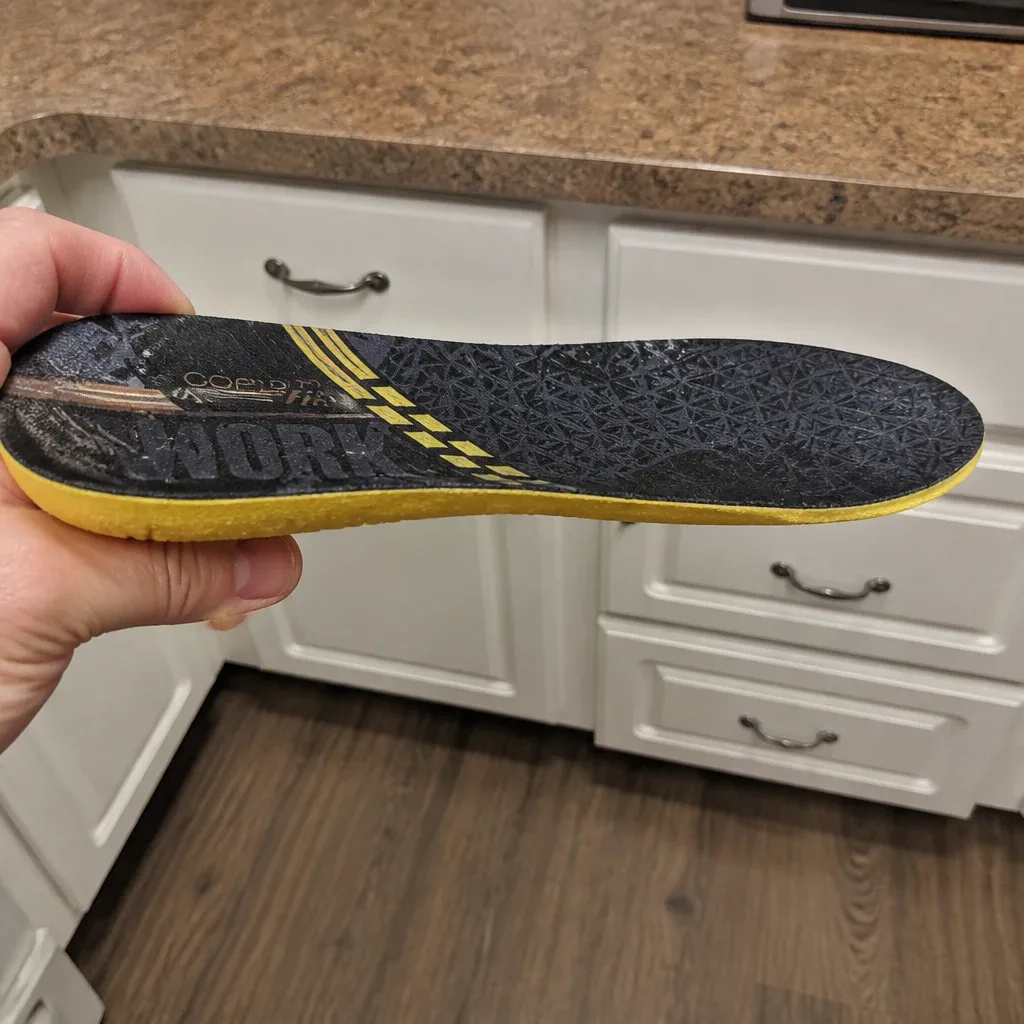
Standing back up felt stable rather than squishy. The foam compressed under load but never felt mushy or unpredictable. As a comfort insole rather than a stability device, it is not built to resist ankle roll, and I didn't expect or feel any meaningful resistance to ankle roll during the lift.
That predictable compression is consistent with how the foam behaves generally: push-off through the heel is not restricted by the added padding, and break-in runs short, with the foam settling into the foot's step within about four days of regular wear, the same window I noted at the start of this test. I notice right away if the arch shape pushes my ankle to roll outward, and I care about how my lower back and knees feel after standing in one spot for hours, and this footbed never gave me a reason to flag either.
What Does Copper Fit's Warranty Cover?
No dedicated warranty or return policy specific to the insole line surfaces in the brand's own listings or retailer pages; standard retailer return windows would apply through whichever channel a pair is purchased.
What Are Real Buyers Saying About Copper Fit?
Owner complaints cluster around two themes: foam cushioning thinning out after two to three months of heavy daily work-boot wear, and the one-size cut running wide in narrower shoes even after trimming to the printed guide.
Will Copper Fit Insoles Fit Your Shoes?
Copper Fit insoles are trim-to-fit and install into work boots, sneakers, and casual shoes. I moved my pair between boots and sneakers a few times over six weeks and didn't notice accelerated wear or cushion loss from the swapping itself, though long-term wear reports online suggest the foam thins after a few months regardless of how many shoes it rotates through. The edges stayed intact after moving between two different shoe linings, with no fraying or tearing, and the heel cup never cracked since it's foam rather than a rigid plastic shell, so it just recompresses.
In my own case any foot spillover came down to shoe width, not the insole, though one reviewer found the one-size cut too wide even after trimming and had to move it to a different pair. Copper Fit doesn't sell a separate wide-width version of this insole, so if the standard cut is consistently too wide for your shoe, moving it to a wider shoe is more practical than hunting for a wide SKU that doesn't exist. Owner reports confirm the same pattern brand-wide: the one-size cut running wide for some narrower shoes even after trimming is the most consistently flagged fit complaint.
How Do You Care for Copper Fit Insoles Over Time?
The foam construction takes longer than one overnight cycle to fully air-dry after a hand wash.I hand-washed mine Sunday evening and they were still damp Monday morning, so a full overnight air-dry wasn't quite enough for foam this thick. A hair dryer on a low, cool setting held a few inches away sped up drying without melting or warping the foam.
Given how long these take to fully dry, I'd say a second pair to rotate is worth having if you're washing them regularly and can't afford a day barefoot in your boots. That matches the broader pattern for owners who wash regularly and cannot go a day without an insole in the shoe.
What Are the Trade-Offs With Copper Fit Insoles?
The main reported downsides are foam thinning over time and reduced toe-box room in some shoes.I didn't get ingrown toenails, black toes, blisters, or numb toes from six weeks of wear, including my longest test walk of about 90 minutes on pavement. A little soreness in the first few days of adjusting to a new arch contour is common with most insoles, and mine settled down within the same four-day break-in window I noted earlier.
One reviewer did flag that the insole's thickness at the ball of the foot made closed-toe shoes fit tighter than expected, and if your toes feel pressed against the top of the shoe, that added forefoot thickness eating into the shoe's usual toe clearance is the likely cause, not a defect. A different reviewer who trimmed the insole poorly reported the sides sitting too high near the arch and feeling uncomfortable, which matches my own experience that a clean trim matters. Foam padding thinning after two to three months of heavy daily wear remains the most consistently reported long-term durability complaint.
How Much Should You Expect to Pay for Copper Fit?
Pricing runs from about $10 to $18 a pair depending on the model and retailer. The tested Work Gear Comfort insole lists at $12.99 direct from the brand and has sold as low as $9.97-$12.28 on Amazon. The broader lineup spans higher: the Arch Relief Orthotics model lists at $17.99 per pair.
At this price range, replacement every few months due to foam thinning adds a recurring cost on top of the initial purchase.
Where Can You Buy Copper Fit Insoles?
Copper Fit insoles are sold directly through copperfitusa.com and through Amazon under the Copper Fit brand, with multiple SKUs and size options listed on each channel. Availability varies by retailer.
Is Copper Fit Right for Your Feet?
The lineup is marketed as a comfort and support upgrade for flat, medium, and high arches, plantar fasciitis, bunions, arthritis, Achilles tendonitis, and overpronation. That condition list is the brand's own marketing claim, not a clinical endorsement or a claim independently verified here. Copper Fit is an over-the-counter insole, not a custom or prescription orthotic, and no FDA clearance or HSA/insurance eligibility is referenced in the available listings.
Buyers looking for a low-cost, trim-to-fit cushioning upgrade for work boots or everyday shoes are the closest fit; buyers needing a corrective device prescribed for a diagnosed foot condition would need to look beyond an OTC comfort insole.
Copper Fit Full Specifications
To put a number on the two core hands-on tests: the thumb-press collapse test held its shape with no lasting compression, and the heel-to-toe torsion test graded a 3 out of 5.
| Spec | Details |
|---|---|
| Brand | Copper Fit |
| Model tested | Copper Fit Unisex Work Gear Comfort Insoles |
| Base/cushioning material | Triple-layer Hyper-Rebound foam with cooling vents |
| Top cover | Copper-infused fabric, odor-reducing |
| Sizing | Trim to fit, one size |
| Torsion resistance (tested) | 3 out of 5, graded by hand-twisting heel-to-toe |
| Arch compression (tested) | ~2mm under sustained thumb pressure, rebounds in about 1 second |
| Price (tested model) | $9.97-$12.99 depending on retailer |
| Owner rating (brand-wide range) | 4.2-4.6 out of 5 stars across the Copper Fit insole lineup; not broken out per individual model in available data |
So, Is Copper Fit Worth It? Here's My Final Word
Copper Fit's Work Gear Comfort insole does exactly what a $10-13 trim-to-fit comfort upgrade should do: it cushions a full work shift, resists lasting compression under thumb pressure, and holds a moderate 3-out-of-5 torsion resistance without going floppy. It is not a corrective orthotic. The arch lift is moderate, not aggressive, and a genuinely high arch needing built-up support may still want more than this contour provides.
The clearest tension in the ownership picture is timeline: my own six-week test showed no visible flattening, but the same foam construction is the thing multiple owners report thinning around the two- to three-month mark under heavy daily work-boot use, so expect a shorter usable life than the price might suggest. Sizing is the other recurring friction point: the one-size, trim-to-fit cut runs wide in some narrower shoes with no dedicated wide-width SKU to fall back on. For someone who mainly wants extra cushioning and odor control under a stock work boot insole, rather than structural correction, Copper Fit clears that bar; anyone chasing a corrective device for a diagnosed condition should look at a purpose-built orthotic instead.
Michal Sieroslawski is an Entrepreneur, exercise physiologist, and personal trainer who has fitted over a thousand people with insoles. He holds a degree in Sports and Exercise Science from the University of Central Lancashire, where he studied biomechanics, anatomy, and exercise physiology. Since 2020, Michal Sieroslawski has helped local and online businesses get found in Google and AI search.