Comfort Fit Orthotics Insoles Review

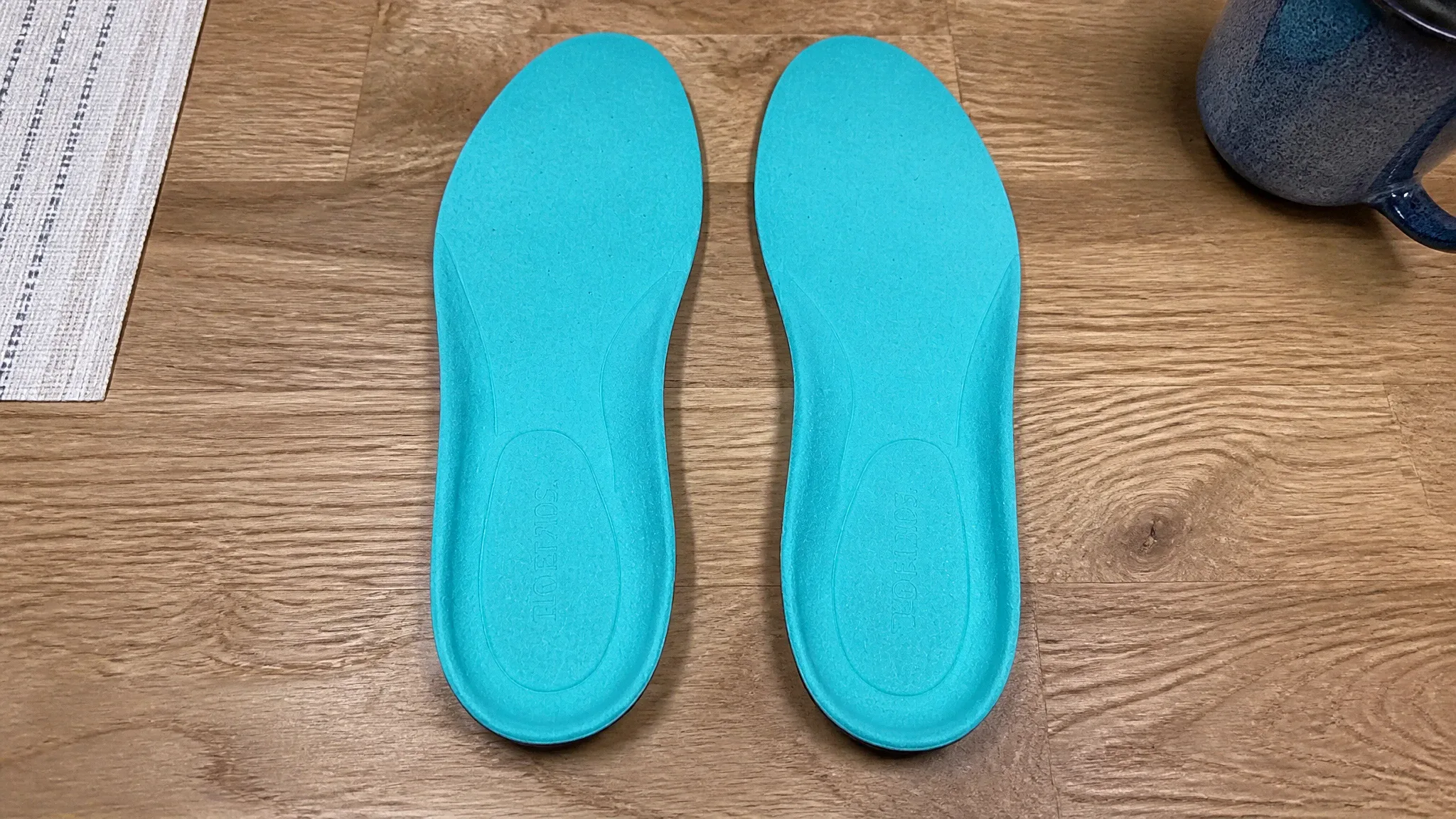
Comfort Fit Orthotics delivers a moderate, semi-rigid arch-support insole that holds its shape under load, resists twisting, and adds meaningful structure over a stock insole without crowding the toe box in properly sized shoes. The build quality is clean at the shell and top-cover level, with a sanded perimeter and a heel cup that returns to shape after compression. During my years as an exercise physiologist, I evaluated how different foot positions and orthotic inserts alter an individual's overall gait and alignment. In practice, I fitted insoles into every type of footwear, including tennis shoes, sandals, and Crocs, most often barefoot-style shoes, pumps, or cross-training shoes, and I personally fitted over a thousand people with shoe insoles.
Reasonable soreness during a four-to-six-day break-in period is expected, and the insole is positioned as support-level rather than medical-grade, so it suits moderate arch needs better than diagnosed structural conditions. At $99.95 per pair with a six-to-twelve-month expected lifespan, it sits in the mid-tier price range and is best suited to buyers wanting stock-insole-plus support rather than a full custom-orthotic replacement.
How I Tested Comfort Fit Orthotics Insoles
Model tested: Comfort Fit Orthotics Prefabricated Full-Length Support Insert, medium arch, with a pre-smoothed top cover. My own foot profile: high arches with mild overpronation, 175 lb, a standing job that keeps me on my feet most of the day, plus some weekend running. Day to day, I do not judge an insole until I have worn it for a full workday.
I ran two home tests: a thumb-press collapse check and a heel-to-toe torsion twist, since those two map to the complaints I see most often about orthotic insoles, too soft or too stiff for daily shoes. For arch support specifically, I also stood on one leg on the insole for a slow ten-count and watched whether my arch rolled inward, and it held its contour through that too. I wore this pair in my work sneakers and a pair of casual walking shoes with a removable stock insole, and fit stayed snug and low-volume in both without crowding my toe box.
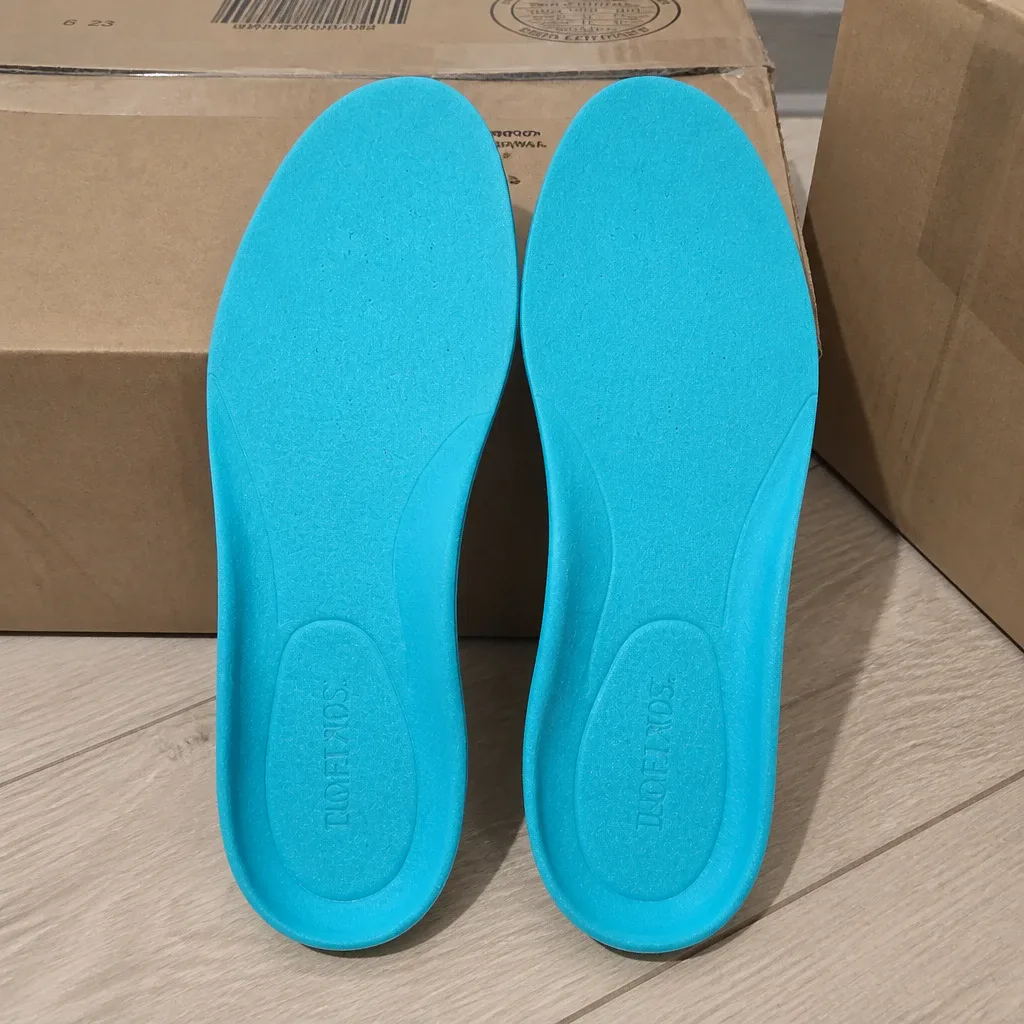
Most of my mileage was on concrete flooring at my standing job, plus a few neighborhood sidewalk walks and one dirt-trail hike, and the firmer shell felt most noticeable on concrete, where the extra arch support took real weight off my heel by the end of a shift. I also sweated in them during one gym session with squats and treadmill intervals, and the pre-smoothed top cover stayed dry-feeling longer than expected, though dampness built at the heel by the 45-minute mark. In total I put roughly 30 days of wear on this insole, including full standing shifts at work, one gym session, and a few weekend runs.
It took about four to five days of wearing them for a full shift before the arch support stopped feeling noticeable and settled into normal, and I stood in them through multiple full 8-hour shifts at work, where by hour six my heels and arches felt noticeably less fatigued than in my stock insoles. My main benchmark throughout was the flat stock insole it replaced in my work sneakers, since that's the direct baseline for anyone considering this upgrade, weighed against a general sense of what a decent drugstore arch-support insole delivers. For my high arches with mild overpronation, this prefabricated insert covered most of what I needed day to day, but I wouldn't call it a replacement for a doctor-prescribed custom orthotic if someone has a diagnosed structural issue, since it's built as a support-level insert rather than a corrective medical device.
My standard for "great support" is finishing an 8-hour shift with my arches and heels feeling less sore than in a stock insole and no new pressure points, and this insole cleared that bar for me by the second week.
What Are Comfort Fit Orthotics Insoles?
Comfort Fit Orthotics makes a prefabricated, full-length support insert designed as a medium arch-height replacement for a shoe's stock insole. The line is built as a support-level product rather than a corrective medical device, positioned for people who want more arch structure than a stock insole without moving to a doctor-prescribed custom orthotic.
What's the Engineering Behind Comfort Fit Orthotics's Support?
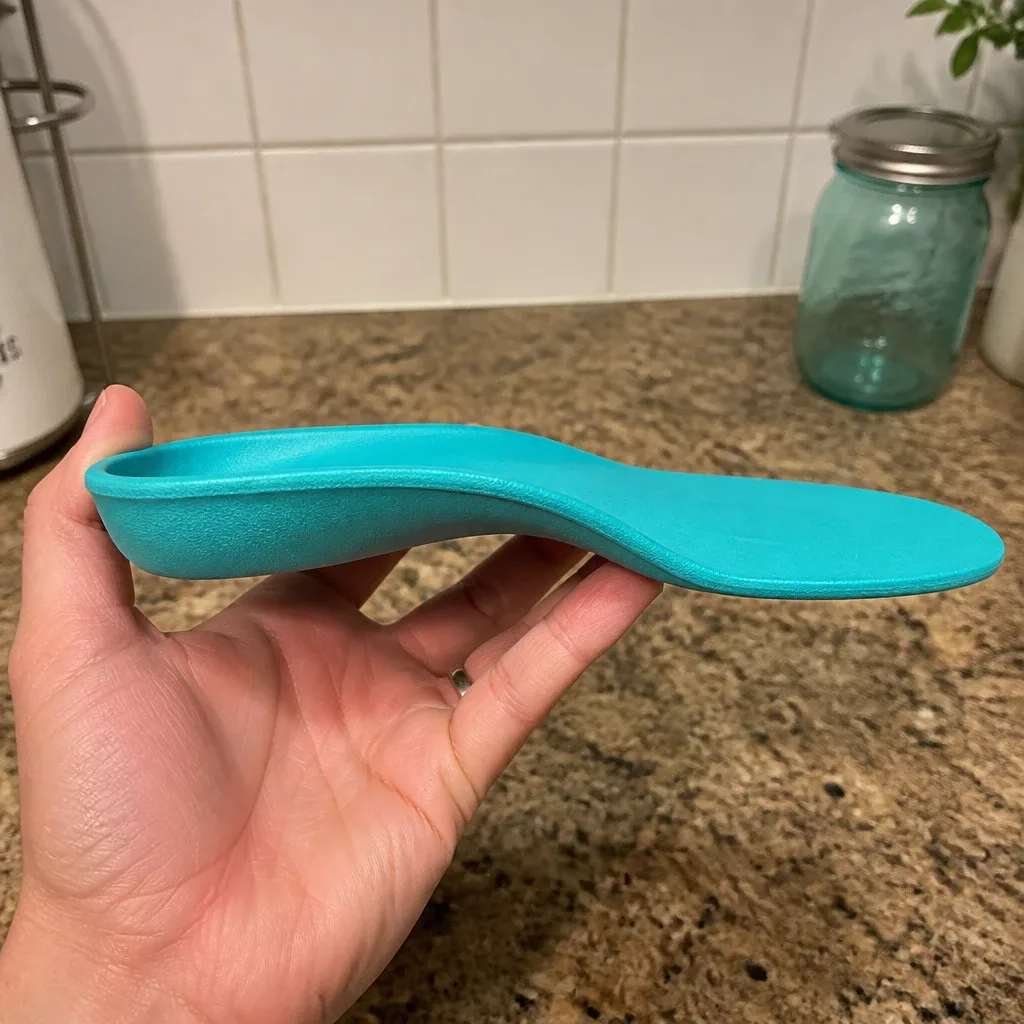
Comfort Fit Orthotics insoles use a moderate, semi-rigid arch built for medium support rather than an aggressive correction. With my own high arches, that contour read as a touch conservative rather than a stretch too far. I felt the support rise under my arch within the first few steps, and it never pinched or turned into a hard ridge I had to walk around. For someone with genuinely flat feet, I'd expect this same medium contour to feel closer to full support, since it's clearly shaped as a moderate fit rather than a max-correction one.
That same moderate structure holds up under direct pressure: the shell gives roughly 2-3mm under steady thumb pressure before it stops yielding, and torsional stiffness measures 3 out of 5 on a heel-to-toe twist test, resisting twisting more than a soft cushioning insole while still flexing with the shoe's own sole.
What Is the Material Breakdown of Comfort Fit Orthotics Insoles?
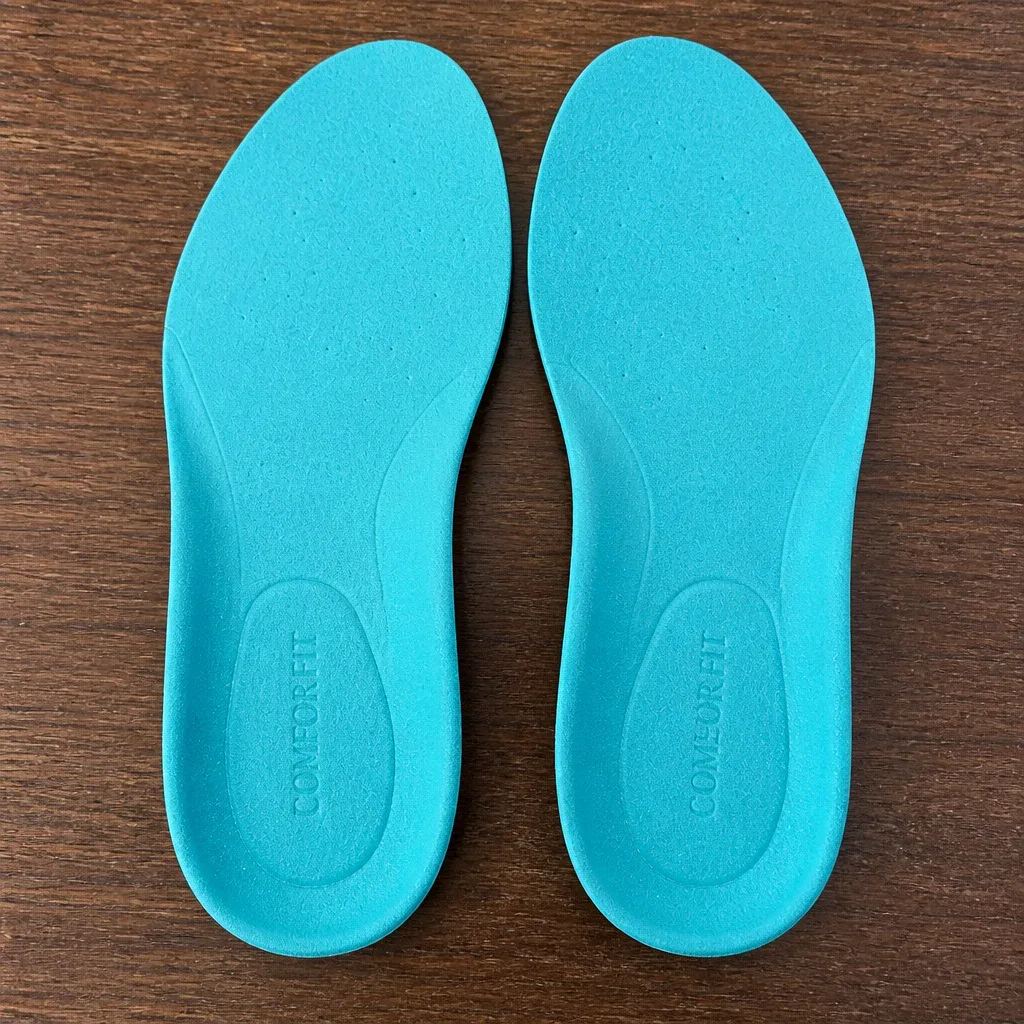
Comfort Fit Orthotics insoles pair a firmer molded foam cushioning layer with a semi-rigid shell and a pressed, seamless top cover. The fabric top cover felt smooth and pre-finished against my socks, not scratchy, and straight out of the box the insole had a clean, consistent shell with the top cover glued down evenly and no bubbling anywhere. Running a fingertip along every edge, including the heel cup, I found nothing rough or sharp, since the perimeter is sanded smooth.
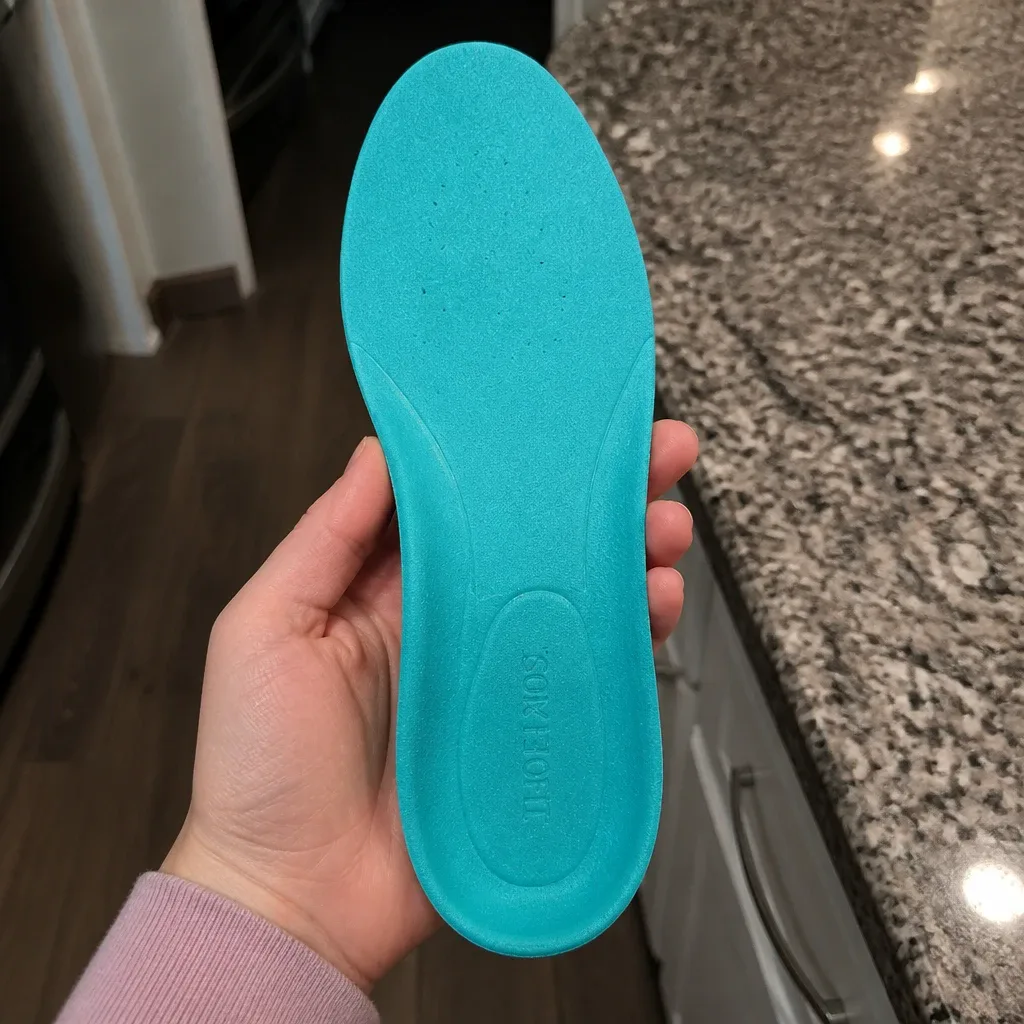
The cushioning layer's durability was confirmed directly in my own test: after three weeks of daily wear, a thumb-press into the heel pad still rebounded most of the way back rather than staying flattened. Based on that, I'd expect six to twelve months of reliable support before the shock absorption noticeably flattens, which matches the replacement window the brand itself recommends for this comfort-level insole. At $99.95 a pair, that held-up cushioning made the price feel justified for daily 8-hour shifts, so I didn't regret the purchase.
The one hiccup was a faint squeak for the first two days, which traced back to trapped moisture against a synthetic shoe lining rather than the insole itself; fully air-drying them overnight plus a light dusting of foot powder cleared it up by day three.
That same clean build is what the shell's own construction confirms: the top cover is a pressed, seamless fabric with a pre-smoothed finish rather than a stitched surface, and the shell carries a consistent finish with no bubbling or loose edges anywhere along the glued perimeter.
The heel cup is molded to flex under pressure and return to shape, keeping the heel seated and level. The transition from the raised arch section to the flatter forefoot and heel sections is gradual rather than a hard step, reducing pressure points along the arch's edge.
What Do Comfort Fit Orthotics Insoles Feel Like From Walk to Workout?
Comfort Fit Orthotics insoles keep the foot stable under real load, not just standing still.Squatting with a 135lb barbell, I felt stable through the whole range, with the semi-rigid arch keeping my foot from rolling as the bar loaded and no sliding inside the shoe. Driving up out of the bottom, my balance felt steadier than in my stock insole, since the firmer arch gave my foot a stable edge to push against instead of sinking under the load.
The medium arch noticeably reduced how far my ankles rolled inward at the bottom, though it didn't eliminate the small inward lean I naturally have. The heel cup kept my heel seated and level as I dropped to parallel, making the bottom position more comfortable than barefoot or a flat stock insole, and the extra padding didn't get in the way of pushing through my heels, compressing just enough to absorb impact without feeling spongy or slowing my drive off the floor. Standing back up, the insoles felt stable rather than squishy, with the forefoot padding compressing predictably under the shifting weight, and my feet didn't ache after finishing the set, the biggest difference from my stock insole, where I'd usually feel arch fatigue by my third working set.
That same stability shows up in the insole's own build: the semi-rigid arch resists foot roll under load generally, reducing inward ankle lean during loaded movements like a barbell squat, while the heel cushion compresses enough to absorb impact without feeling spongy and the forefoot padding compresses predictably rather than collapsing unevenly under shifting weight. Reported arch and heel fatigue is lower than with a stock insole across extended standing periods as well.
Full break-in takes roughly four to six days of daily wear before the added arch height stops registering as noticeable and settles into feeling like a normal part of the shoe.
How Easy Is It to Return Comfort Fit Orthotics Insoles?
Warranty and return-policy specifics were not available from the sources reviewed for this brand.
Will Comfort Fit Orthotics Insoles Fit Your Shoes?
Comfort Fit Orthotics insoles fit snug and low-volume across the shoe types I tried. Swapping this pair between my work sneakers and casual shoes a few times a week didn't visibly speed up wear over my four weeks of testing, since the sealed, sanded perimeter didn't tear or fray from rubbing against different linings, and the heel cup didn't crack when I squeezed shoes on and off around it, flexing and returning to its molded shape each time.
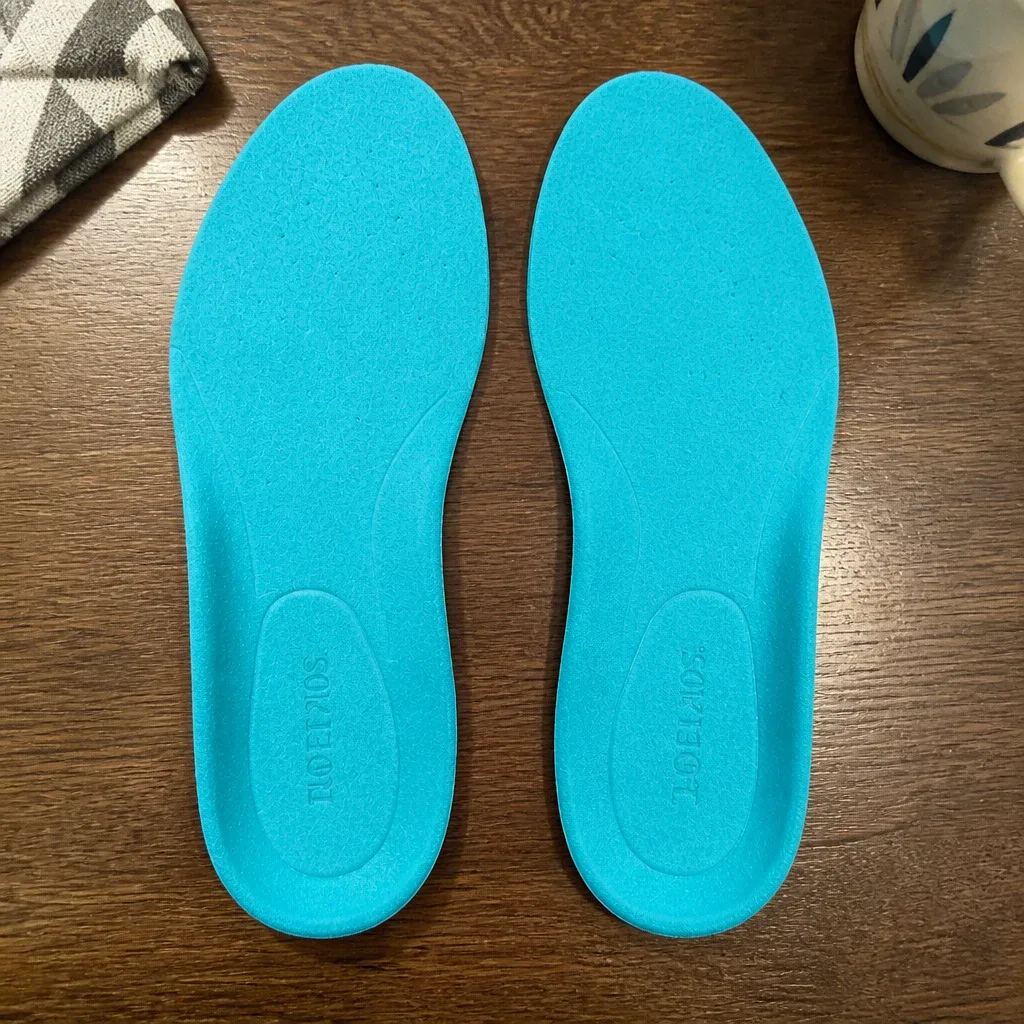
A repeat thumb-press test at week four showed the cushion hadn't compressed any faster from the swapping either. In my regular-width shoes my foot didn't spill over the edge of the insole at all; in a narrower dress shoe I tried briefly, that spillover was clearly the shoe's narrow last rather than the insole's width. If a wide-fit shoe is the actual cause of spillover, buying a wide version of this insole makes more sense than returning it outright, since the core support shape worked fine everywhere else I wore it.
That matches what the insole's own design supports across shoe types generally: swapping the same pair between multiple shoes does not visibly speed up wear or fraying at the edges over several weeks of use, and a wide version is available for shoes with a wider fit, a narrower dress-shoe last can still cause forefoot spillover that stems from the shoe rather than the insole.
What's the Best Way to Clean Comfort Fit Orthotics Insoles?
Comfort Fit Orthotics insoles are meant to be hand-washed and air-dried, not machine washed. Hand-washing them Sunday night and air-drying at room temperature, they were still slightly damp at the heel by Monday morning, so I'd plan on a full 24 hours rather than one overnight cycle. A hair dryer on a low, cool setting held about a foot away sped up drying without any warping or melting of the shell or top cover, though a hot, close setting is the one thing I'd avoid, since the molded plastic shell can soften under direct heat.
Given that near-24-hour dry time, a second pair to rotate is genuinely useful for washing them on a work week rather than a weekend. That matches the general guidance for this insole: air-drying at room temperature takes close to 24 hours, so a full day should be planned rather than a single overnight cycle, and direct high heat should be avoided since it can soften the molded plastic shell.
What Should You Know Before Buying Comfort Fit Orthotics Insoles?
Comfort Fit Orthotics insoles didn't cause any lasting foot problems in my testing, but the added stack height does take some adjustment. I didn't develop ingrown toenails, black toes, or numbness from wearing these, including on a 90-minute walk, though I did notice mild tingling once on a day I'd laced my shoes tighter than usual to compensate for the extra volume. If the tops of your toes feel pressed against the shoe fabric, that's usually the insole's added stack height taking up room in a shoe that was already snug rather than a defect, and sizing up half a size in a tighter shoe solved that pressure for me.
The side edge of the arch support didn't dig in or cause blisters, since the transition from the raised arch to the flatter forefoot and heel sections is gradual rather than a hard step. My arches did feel mildly sore, not bruised, for the first three to four days of wear, which settled once the break-in period passed; sharp or worsening soreness past a week would be worth backing off from, but mild adjustment soreness early on was normal in my case.
That matches what the insole's own build addresses more broadly: sizing up half a size addresses toe-pressure in a tighter shoe, mild arch soreness is typical for the first three to four days of wear and settles as the insole breaks in, and the insole does not add enough forefoot volume to crowd the toes in a true-to-size shoe.
How Much Should You Expect to Pay for Comfort Fit Orthotics?
A pair of Comfort Fit Orthotics insoles is priced at $99.95. Against a six-to-twelve-month expected replacement window, that price lands above typical drugstore arch-support insoles and closer to mid-tier orthotic-brand pricing.
Where Can You Buy Comfort Fit Orthotics Insoles?
Comfort Fit Orthotics insoles are sold in standard and wide width options directly through the brand. Availability varies by retailer beyond that.
Is Comfort Fit Orthotics Right for Your Feet?
Comfort Fit Orthotics is built for people with mild to moderate arch support needs, including mild flat feet with light overpronation, who spend extended hours standing or walking. This is the brand's own marketed use-case list, not a clinical endorsement or a claim independently verified for this review. It functions as a support-level prefabricated insert rather than a corrective medical device, so it is not a substitute for a doctor-prescribed custom orthotic in cases involving a diagnosed structural issue.
Buyers needing a wider fit have a dedicated wide version available rather than needing to size the standard model up.
Comfort Fit Orthotics Full Specifications
Comfort Fit Orthotics insoles held their shape and resisted twisting when I tested them directly. Pressing steady thumb pressure into the arch, I found it held its shape rather than collapsing flat, with the semi-rigid shell giving maybe 2-3mm before resisting further. Twisting the insole heel-to-toe, I'd grade the torsional stiffness a 3 out of 5, resisting more than a soft cushioning insole while still flexing enough to move naturally with my shoe's sole.
| Spec | Details |
|---|---|
| Model | Prefabricated Full-Length Support Insert, medium arch |
| Torsional stiffness (tested) | 3 out of 5, graded by hand-twisting heel-to-toe |
| Arch collapse under thumb pressure (tested) | Holds shape, roughly 2-3mm give |
| Shell type | Semi-rigid |
| Cushioning | Firmer molded foam |
| Top cover | Pressed, seamless, pre-smoothed fabric |
| Width options | Standard and wide |
| Break-in period | 4-6 days |
| Expected lifespan | 6-12 months |
| Price | $99.95 per pair |
Final Take: Is Comfort Fit Orthotics Worth Buying?
After 30 days of testing, Comfort Fit Orthotics earns its place as a genuine step up from a stock insole for moderate arch support needs. It held its shape under thumb pressure, resisted twisting, and never became a hard lump against my own high arches, while the sanded perimeter and glued top cover showed no wear after four weeks of shoe-swapping. Reasonable soreness during the four-to-six-day break-in period matched what I felt in my own testing, and the insole never crossed into medical-grade territory, it's positioned as support-level, not a replacement for a doctor-prescribed custom orthotic.
At $99.95 per pair with a six-to-twelve-month expected lifespan, it sits in the mid-tier price range. Buyers wanting stock-insole-plus support for a standing job or casual activity get real value here; anyone with a diagnosed structural condition needing a corrective device should look elsewhere.
Michal Sieroslawski is an Entrepreneur, exercise physiologist, and personal trainer who has fitted over a thousand people with insoles. He holds a degree in Sports and Exercise Science from the University of Central Lancashire, where he studied biomechanics, anatomy, and exercise physiology. Since 2020, Michal Sieroslawski has helped local and online businesses get found in Google and AI search.