Boot Doc Insoles Review

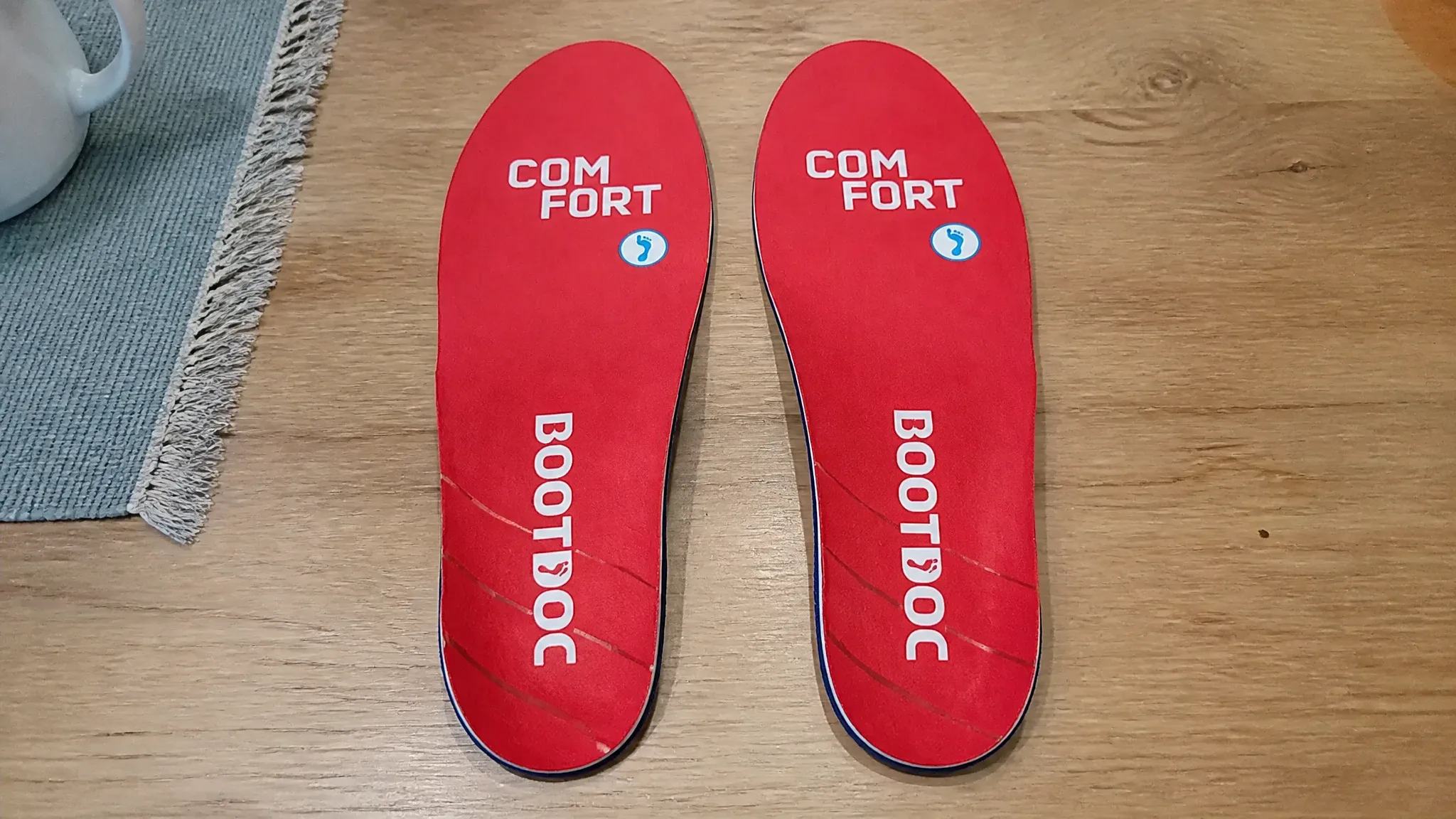
Boot Doc's insole lineup centers on heat-moldable, semi-custom footbeds built for ski boots, snowboard boots, and everyday footwear. As an exercise physiologist at Canyon Ranch, I based the arch support size directly on the customer's dynamic footprint. Across those years, I helped clients with overpronation, supination, and fallen arches find functional alignment, covering everything from walking shoes to cowboy boots. The Comfort line ships in three arch heights and can be trimmed and heat-molded for a closer fit, while the Alpine model adds a 3D base shell for performance skiers and riders. Owners on ski forums describe the footbeds as lasting through season-long use, with fitters noting more posting material under the arch than comparable brands. Pricing spans $10 on closeout to more than $110 for a full-price Alpine model, sold through ski and snowboard specialty retailers rather than direct-to-consumer channels.
How I Tested Boot Doc Insoles
Boot Doc Comfort Insoles, Mid Arch, went through a 14-day hands-on test built around thumb-press, torsion, and real ski-and-everyday-wear conditions. I test insoles on hard concrete floors because that is where foot pain really shows up, and I reject insoles that require me to buy shoes a full size larger just to fit them. Model tested: Boot Doc Comfort Insoles, Mid Arch, heat-moldable with the 3-Arch concept, forefoot/heel/5th-metatarsal dampening, and a microfiber anti-odor top cover. My own foot profile: 175 lb, high arches with mild overpronation, a standing job on my feet most of the day, plus some weekend running, and for this test, a recreational skier who gets out about 20 days a season.
I ran four checks over 14 straight days of wear: a thumb-press arch test, a heel-to-toe torsion twist, an 8-hour standing shift, and a barbell squat session, chosen because they cover the arch rigidity, forefoot flex, and underfoot dampening claims Boot Doc actually makes. I wore the pair in my ski boots on two resort days and in an everyday trail-runner-style shoe the rest of the time, across sidewalk and parking-lot concrete, a couple of dirt-trail walks, and normal indoor carpet and hardwood.
During a 45-minute weighted workout the microfiber top cover stayed dry to the touch afterward with no odor the next morning. It took about three to four days of regular wear for the dampening pads to soften slightly and for the arch pressure to stop feeling like a new sensation. Standing a full 8-hour work shift, I noticed mild forefoot fatigue by hour six, though nothing close to the ache I get from the stock insole over the same shift.
My main benchmark throughout was that flimsy stock ski-boot insole, with some reference to a mid-range Superfeet I've worn in past seasons. For me, "great support" means a shell that holds my arch shape under a full standing day or a resort day without collapsing, with enough forefoot dampening that I don't feel every hard step. Boot Doc's semi-custom, heat-moldable design gets closer to a personalized fit than a stock insole, but it wouldn't replace a podiatrist-cast custom orthotic for me.
What Are Boot Doc Insoles?
Boot Doc Comfort Insoles are semi-custom footbeds designed to improve fit and support in ski boots, snowboard boots, and everyday footwear. They are available in three arch heights so the shape can be matched to the wearer's foot before any heat molding takes place. The Alpine version is positioned for performance athletes and pairs a 3D base construction with a microfiber top cover.
The brand also sells the footbeds as a semi-custom product line rather than a fully custom, in-store molded system. Sizing on the Comfort model spans 23 through 31, matching boot-sizing conventions, while the Alpine model is sized S through XXL.
What's the Engineering Behind Boot Doc's Support?
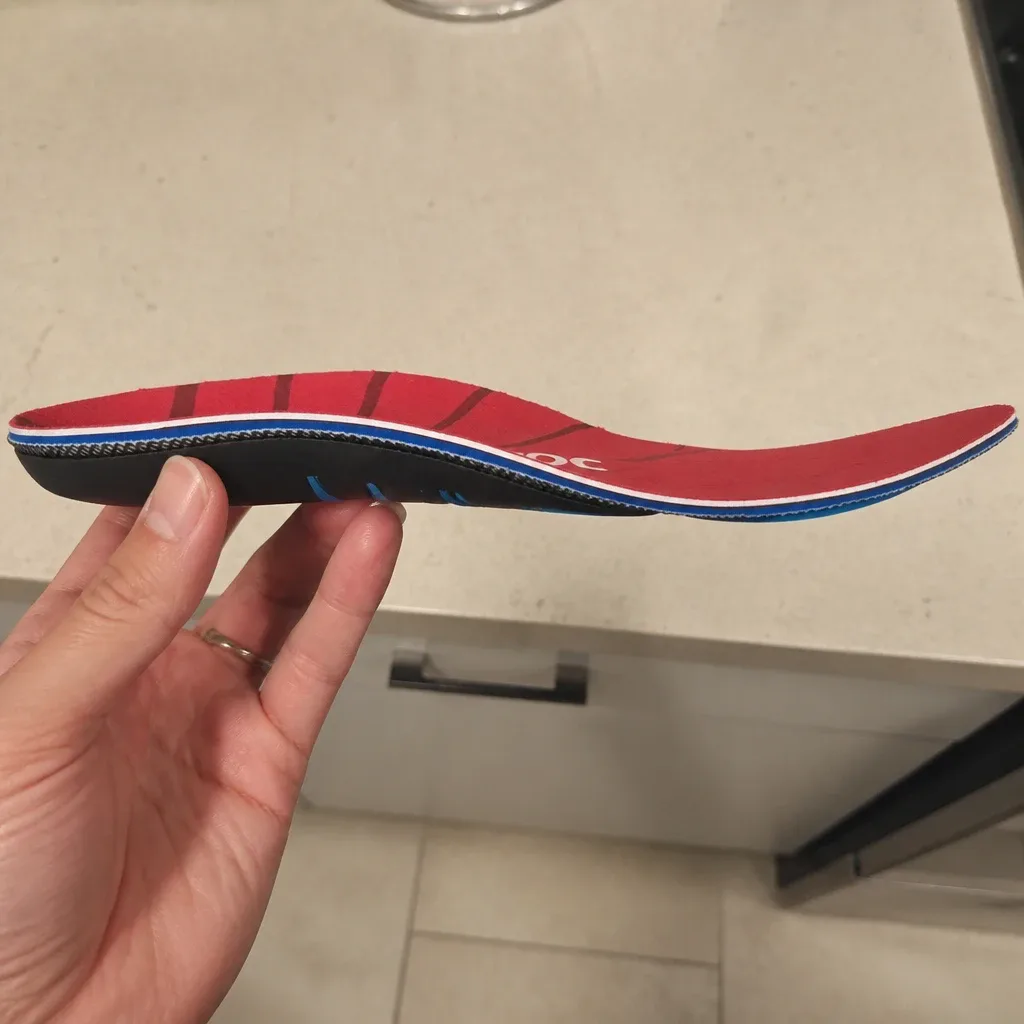
Boot Doc's Mid Arch shell is built to fill the space under a moderate-to-high arch without turning into a hard lump underfoot. Testing the Mid Arch shell against my own high arches, it filled a solid amount of the space beneath the arch without ever pressing in like a hard lump, though it read slightly softer than a shell built specifically for a high arch might feel. Boot Doc sells the same shell in Low, Mid, and High Arch versions, so someone with genuinely flat feet or a very aggressive arch has a dedicated option instead of settling for a compromise fit like mine.
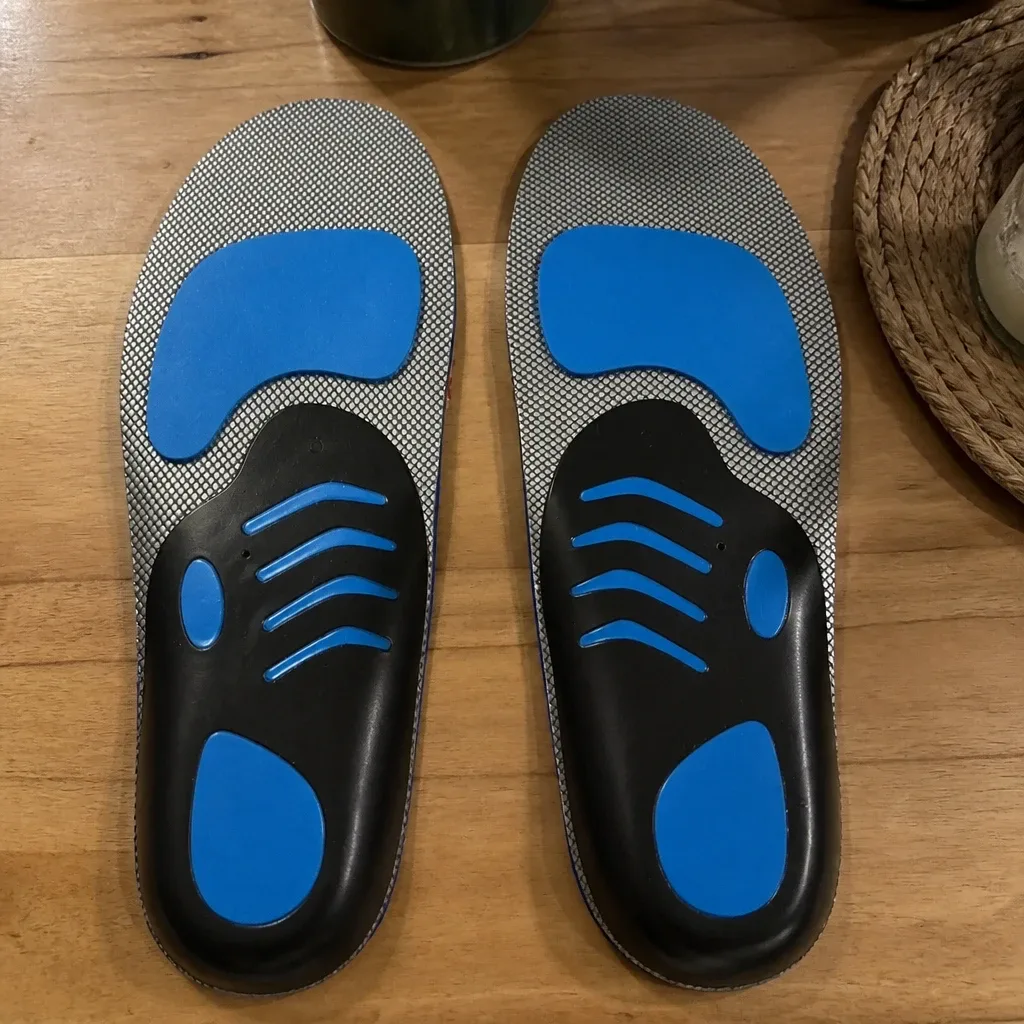
That fit-matching approach carries through the engineering itself: the Comfort Insole uses a heat-moldable arch that can be reshaped for a more personalized fit after purchase. Flex zones are built into the arch area, and an arch-type color system marks which of the three arch heights a given footbed uses. A flexible forefoot is built to allow natural forward movement of the foot inside a rigid ski or snowboard boot shell.
The Alpine model's 3D base construction is built around integrated stabilizers intended to improve power transmission from foot to boot without sacrificing comfort underfoot.
What Is the Material Breakdown of Boot Doc Insoles?
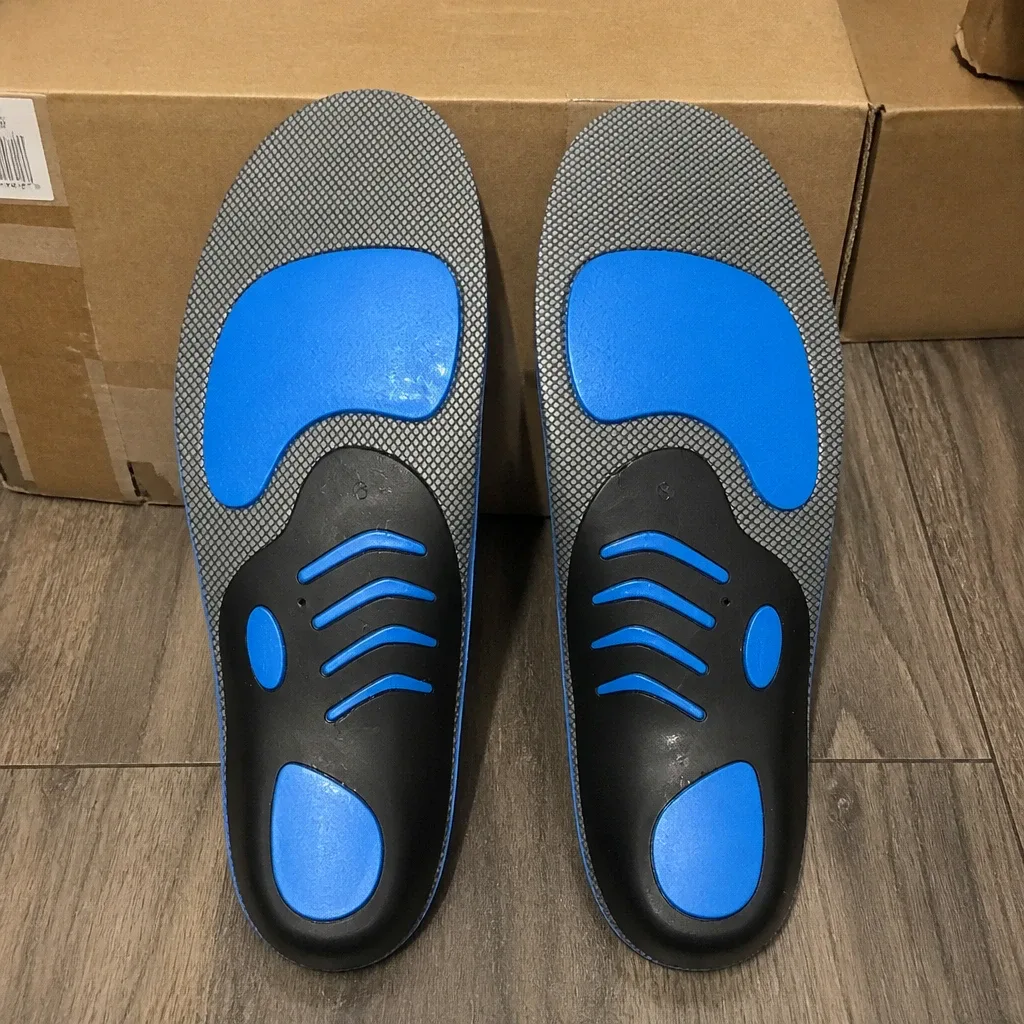
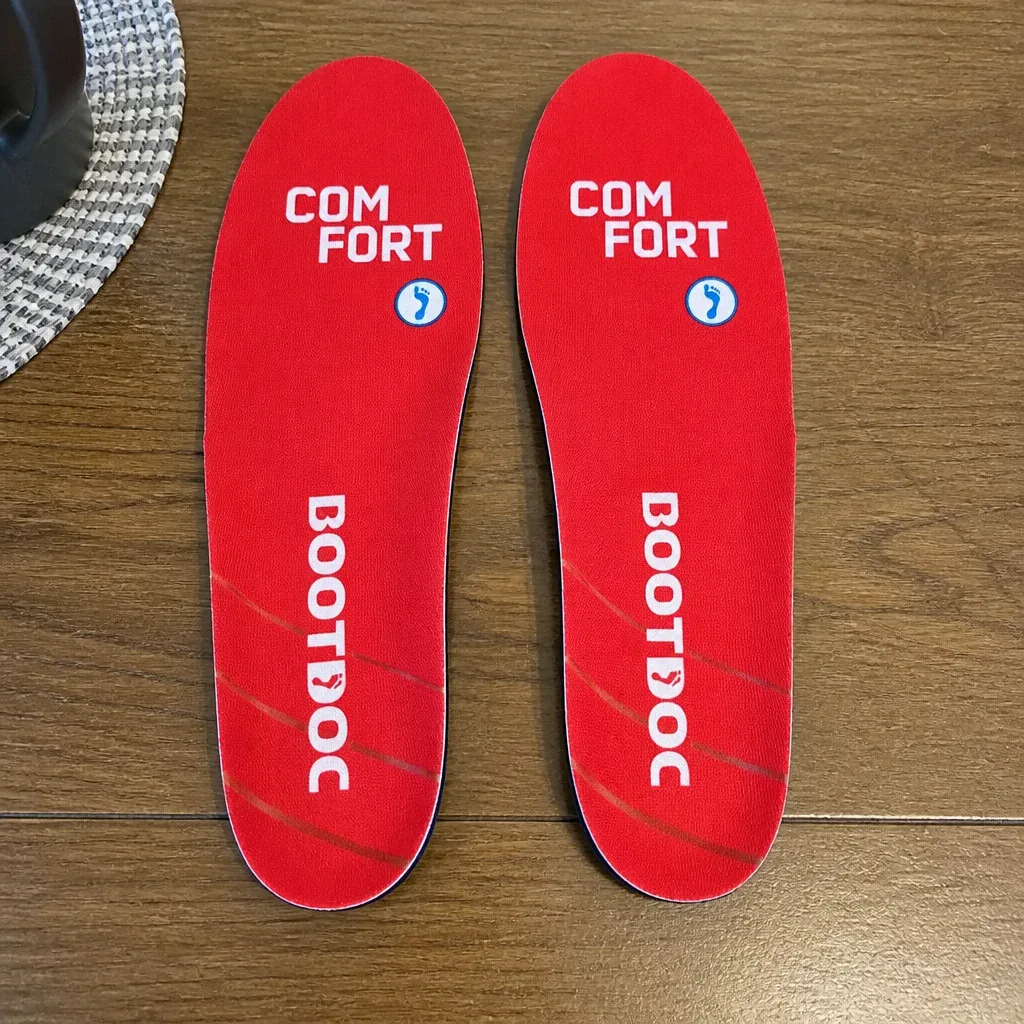
Boot Doc Comfort Insoles use a heat-moldable 3-Arch shell with dampening built into the forefoot, heel, and 5th-metatarsal zones. Out of the box, the shell edges on my Mid Arch pair were cleanly molded and the arch color coding was printed sharply, with no rough or sharp plastic edges anywhere I checked with a fingertip, and nothing about the construction looked like a bargain-bin knockoff. The microfiber top cover felt smooth and slightly cool against my sock from the first wear.
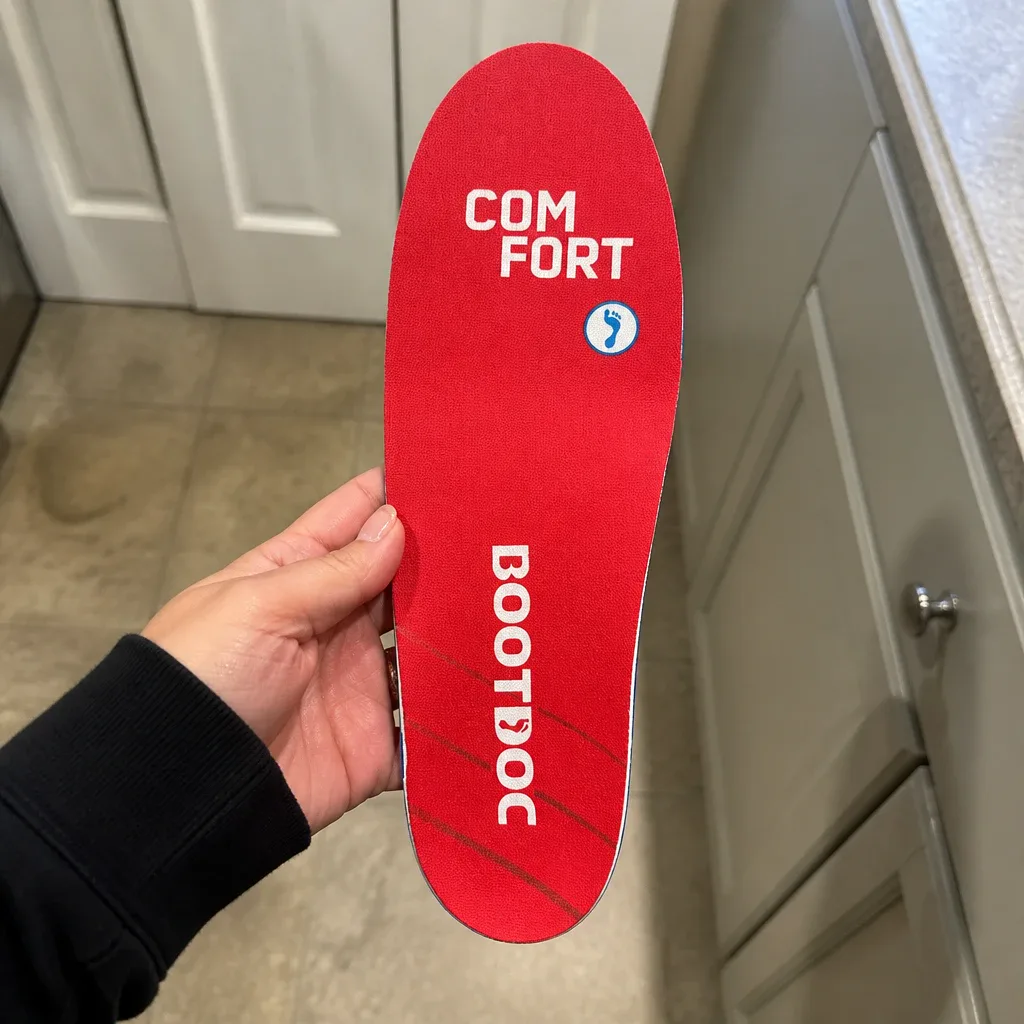
Two weeks of daily use never produced a squeak, and after that stretch the dampening pads in the heel and forefoot still rebounded under thumb pressure instead of staying flattened, while the 3-Arch shell itself stayed rigid with no flex-memory sag. At $80, I worried I'd regret the price, but the heat-moldable fit and the dampening under my heel and forefoot delivered noticeably more support than the stock insole I pulled out of my boot.
Reviewers who ski 60-plus days a year report reliable support lasting about one full season, roughly 20 to 25 days on snow, before the shell loses some of its original stiffness and needs replacing every season or two, a wear pattern well beyond the two resort days I logged in mine, though the shell showed no stiffness loss at all over my shorter test.
The Comfort Insole's shell uses the same heat-moldable 3-Arch concept with full-shell construction, paired with a heat-reflective layer beneath the top cover for warmth. The heel cup is built with reinforced stability for the shell. The Alpine model's top cover is a microfiber material with an anti-odor treatment, and its base layer incorporates integrated stabilizers for pressure distribution and cushioning across the footbed.
What Do Boot Doc Insoles Feel Like From Walk to Workout?
Boot Doc's Mid Arch insole stayed stable and planted through a full barbell squat session, without collapsing under load. Squatting 135 lb for five working sets, the insoles gave a stable, planted feel through the whole rep, with the rigid arch keeping my foot from rolling as I drove up out of the bottom and my ankles from collapsing inward the way they do in a soft stock insole. The improved heel cup kept my heel centered through the bottom of each rep, and the heel dampening pad compressed just enough to absorb impact without ever feeling mushy or delaying my push-off, so standing back up felt stable rather than squishy. I only felt mild forefoot fatigue after the sets, nothing like the sharp arch ache I've felt in stock insoles under the same barbell weight.
That same stability is what long-term owners report as well: owners who wear Boot Doc footbeds through a full ski season say they last as well as other reasonably good aftermarket footbeds, while heavy users skiing 60-plus days a year describe replacing the insoles every season or two as wear and disintegration set in. Fitters comparing Boot Doc against other semi-custom brands have noted more "posting" material under the arch, which they associate with better support for higher-arched feet.
Boot fitters who have molded the footbeds for customers describe them as effective when paired with a trained fitter, framing the outcome as dependent on fitting skill as much as the product itself.
How Easy Is It to Return Boot Doc Insoles?
No warranty or return-policy details specific to Boot Doc insoles were found in the available sources. Retailers selling the product, such as Amazon and ski specialty shops, apply their own standard return terms rather than a documented Boot Doc-specific policy.
Will Boot Doc Insoles Fit Your Shoes?
Boot Doc builds its Comfort Insoles to work across ski boots, snowboard boots, and street shoes thanks to the flexible forefoot design. Moving the same pair between my ski boot and my everyday shoe over two weeks, I didn't see accelerated wear, cracking in the heel cup, or faster loss of cushion from the swapping itself, since wear on the dampening pads seemed tied to total hours worn rather than how many shoes they'd been in. The molded shell edges also stayed smooth despite rubbing against two different linings, though I was deliberate about not folding or bending the shell sharply when pulling it out of a tight boot.
The one fit issue I hit, my foot spilling over the edge, traced back to a narrower street shoe rather than the insole itself, since the Mid Arch shape matched my foot width fine in my ski boot. Boot Doc doesn't sell a separate wide-width Comfort insole, so in a case like that, sizing up the shoe made more sense than returning the insole. Long-term, the heat-molded shape is best left set to one boot's shell rather than swapped indefinitely between different footwear.
The semi-custom shell and heat-moldable arch let the same footbed be reshaped for a closer fit inside different boot volumes, which is what makes the cross-shoe use case work in practice. The Alpine model is scoped specifically to performance ski and snowboard boots rather than street footwear.
What's the Best Way to Clean Boot Doc Insoles?
Boot Doc doesn't publish official care instructions, so the safest routine for the Comfort Insole is a hand-wash with a low, cool-air dry. After hand-washing my pair, the microfiber top cover was still slightly damp the next morning and needed another three to four hours of air-drying to fully dry out, so washing Sunday night doesn't reliably mean wearing them dry Monday morning.
A hair dryer on the low, cool-air setting held a few inches away sped that up without any warping, though I'd avoid a hot setting given the shell is heat-moldable and could reshape under real heat. Given that overnight-plus drying time, anyone washing on a tight schedule is better off with a second pair to rotate.
What Should You Know Before Buying Boot Doc Insoles?
Boot Doc's Comfort Insole caused no ingrown toenails, black toes, numbness, or blisters over two weeks of testing. The forefoot shape never pushed my toes forward into the front of my shoe or boot, and the one place my toes felt pressed against shoe fabric was in a narrower street shoe I tried briefly, which traced back to that shoe's tighter toe box rather than the insole's shape. Mild soreness on day one, similar to breaking in any firmer insole after a soft stock one, faded within the same three-to-four-day break-in window I felt everywhere else in testing.
Reported wear and disintegration is the main complaint among owners who ski frequently, with some replacing the footbeds every one to two seasons. One owner on a ski forum noted experimenting with dropping arch support altogether after watching technique videos, suggesting the arch height on Boot Doc's higher-support models can feel like more structure than some skiers want.
Fitters have also pointed out that the product's performance depends heavily on who does the fitting, since a poorly molded semi-custom footbed will not deliver the same support as a well-molded one.
How Much Should You Expect to Pay for Boot Doc?
Boot Doc Comfort Insoles list at $80, though the same model has also turned up marked down to $9.99 as a closeout item priced at $59.95 before the discount. The Alpine model, built for performance skiers and snowboarders, sells for $113.95. Some retailers offer a 20% discount code on the Comfort Insoles when purchased alongside a pair of Boot Doc-equipped boots.
Where Can You Buy Boot Doc Insoles?
Boot Doc insoles are sold through ski and snowboard specialty retailers rather than a single direct storefront. Listings have been found on Amazon, at Utah Ski Gear, at Erik's Bike Board & Ski, and at ShopGeigers. Availability and specific arch-height or size options vary by retailer, and some models are sold as closeout or limited-stock items.
Is Boot Doc Right for Your Feet?
Boot Doc's three arch heights make the Comfort Insole suited to a range of foot shapes, from low to high arches, once properly fitted. The semi-custom, heat-moldable design is built for wearers who want more shape-matching than a stock boot liner without going through a fully custom in-store molding process. The Alpine model is built more narrowly for performance skiers and snowboarders who want maximum power transmission from a stiffer 3D base shell.
Frequent skiers logging 60-plus days a season should expect to replace the footbeds every one to two seasons based on owner-reported wear patterns.
Boot Doc Full Specifications
The Comfort Insole's shell held its shape completely under a steady thumb-press test, with no give at all. Pressing into the arch, the shell matched the "full-shell technology" Boot Doc advertises for the Comfort line. A heel-to-toe twist graded out at a 4 out of 5 on stiffness, resisting the twist noticeably more than the soft stock insole it replaced, while the forefoot still flexed enough for a natural push-off, in line with Boot Doc's stated flexible-forefoot design.
| Spec | Details |
|---|---|
| Model tested | Comfort Insole, Mid Arch |
| Fit type | Semi-custom, heat-moldable |
| Intended use | Ski boots, snowboard boots, street shoes |
| Arch options | Low, Mid, High (Mid tested) |
| Sizing | 23–31, matching boot-sizing conventions |
| Item weight (size 23) | 5.6 ounces |
| Shell | Heat-moldable 3-Arch concept, full-shell construction |
| Warmth layer | Heat-reflective layer beneath top cover |
| Cushioning zones | Forefoot, heel, 5th metatarsal dampening |
| Measured torsion stiffness | 4 out of 5 |
| Price | $80 list; observed as low as $9.99 on closeout ($59.95 regular closeout price) |
Final Take: Is Boot Doc Worth Buying?
Boot Doc's Comfort Insole is worth buying for skiers and snowboarders who want a semi-custom, heat-moldable footbed without paying for a fully custom in-store molding. Fourteen days of testing showed a rigid, full-shell arch that held firm under thumb pressure and a barbell squat alike, a flexible forefoot that still allowed a natural push-off, and dampening pads that never flattened out or squeaked. The main tradeoffs are ones a fitting can't fully solve: Boot Doc doesn't publish care instructions, doesn't sell a wide-width Comfort option, and owner reports point to the shell losing stiffness after one to two full seasons of heavy 60-plus-day skiing.
For everyday street-shoe wear, occasional skiers, and anyone comparing against a soft factory boot liner, the Comfort Insole is a clear upgrade at its $80 list price, and a strong deal if found on closeout. Skiers chasing maximum performance transmission should look at the stiffer Alpine model instead, and anyone needing a diagnosed structural correction should still see a podiatrist for a fully custom orthotic rather than relying on a semi-custom footbed.
Michal Sieroslawski is an Entrepreneur, exercise physiologist, and personal trainer who has fitted over a thousand people with insoles. He holds a degree in Sports and Exercise Science from the University of Central Lancashire, where he studied biomechanics, anatomy, and exercise physiology. Since 2020, Michal Sieroslawski has helped local and online businesses get found in Google and AI search.