Blundstone Insoles Review

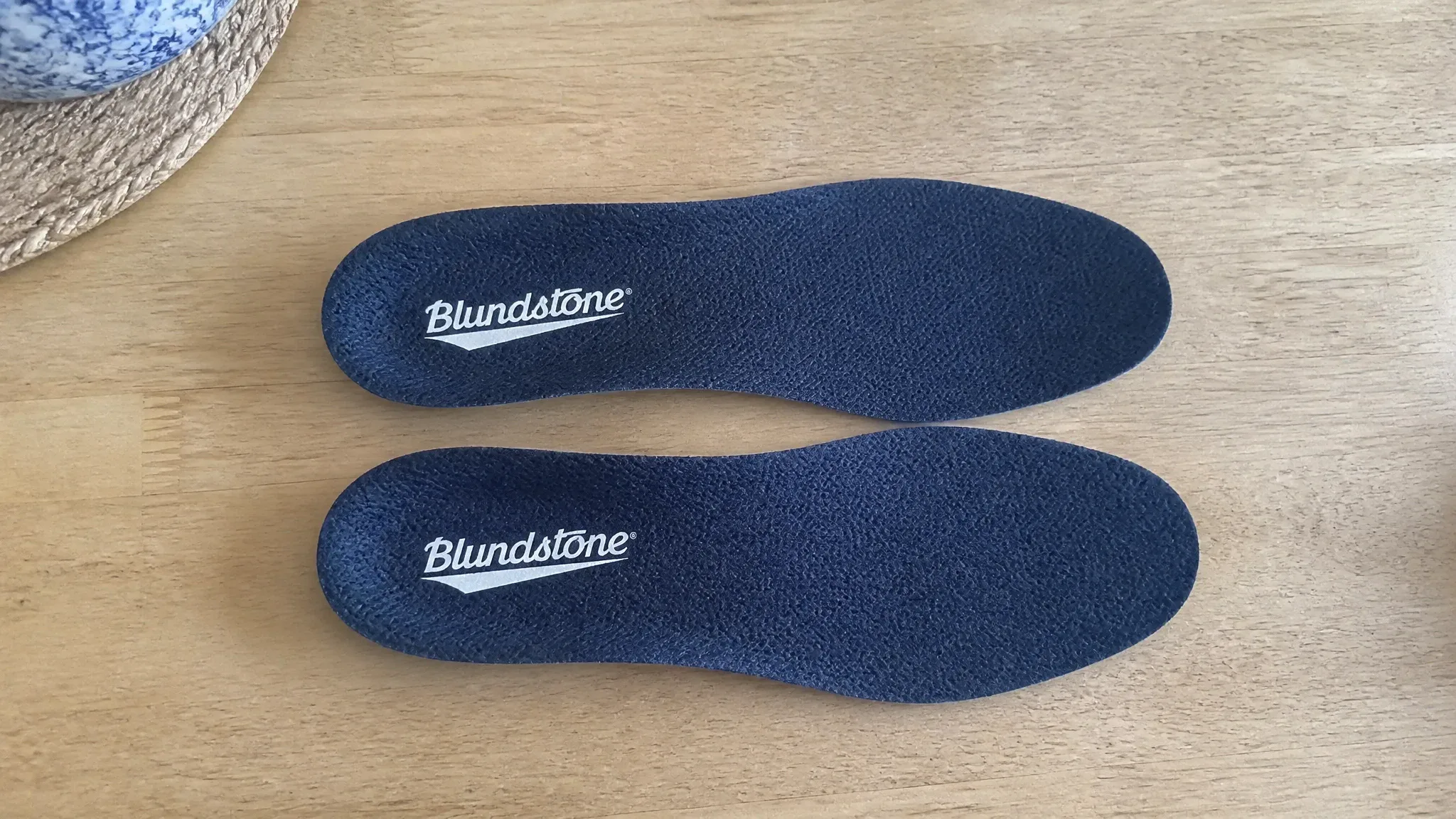
Blundstone's replacement footbeds are a low-cost, brand-matched upgrade over the stock insole that ships inside its boots. As part of my work as a personal trainer and exercise physiologist on Carnival Cruise Line, I fitted thousands of runners and walkers with insoles tailored to athletic shoes. In direct practice, I tested and fitted arch supports across diverse populations recovering from foot and ankle injuries, from dress shoes and pumps to loafers. The Xtreme Comfort Footbed and Comfort Arch Footbed both use PORON XRD inserts for shock absorption, and the Sheepskin Footbed adds genuine shearling for cold-weather warmth. Owner ratings sit around 4.5 out of 5 across hundreds of reviews, with most complaints centered on thin cushioning and sizing confusion rather than durability. Buyers who want a plug-and-play fit inside a Blundstone boot are well served; buyers with diagnosed arch or pronation issues may still prefer a dedicated orthotic brand.
My Blundstone Testing Process
Model tested: the Blundstone Comfort Classic Footbed, the XRD-cushioned replacement insole Blundstone sells for its own Chelsea boots, sold under the same construction on Amazon as the Xtreme Comfort Footbed.
My own foot profile: high arches with mild overpronation, 175 lb, and I'm on my feet most of an 8-hour shift at a standing job most days, plus some weekend running, including trail walks in these boots.
I ran a thumb-press arch test and a heel-to-toe torsion twist, because together those two checks cover arch support and flex behavior inside a boot. I wore the trimmed insole in the Blundstone Chelsea boot it was designed for and in a pair of work sneakers, across concrete flooring at my job, packed dirt trails, and carpet at home, over 21 straight days that included twelve full 8-hour shifts and four weekend trail walks. I didn't run in them, since Blundstone boots aren't built for running, but the sweat from a full shift was enough to confirm the insole stays breathable rather than trapping heat.
It took about four days of daily wear to feel broken in, the foam softening slightly while my foot also adapted to the arch shape, and my main benchmark throughout was the thin stock insole it replaced rather than a specific competitor. I wouldn't call these a replacement for custom orthotics from a podiatrist, just a solid off-the-shelf comfort and shock-absorption upgrade. When I say "great support," I mean the arch held its shape through a full day of standing and my feet weren't sore by the end of a shift the way they were in the stock insole.
I know that extra thick padding is useless if it makes my shoes way too tight. I pay attention to whether the arch sits in the right spot under my actual foot, not just how plush the topcloth feels in the first few seconds of standing on it.
What Are Blundstone Insoles?
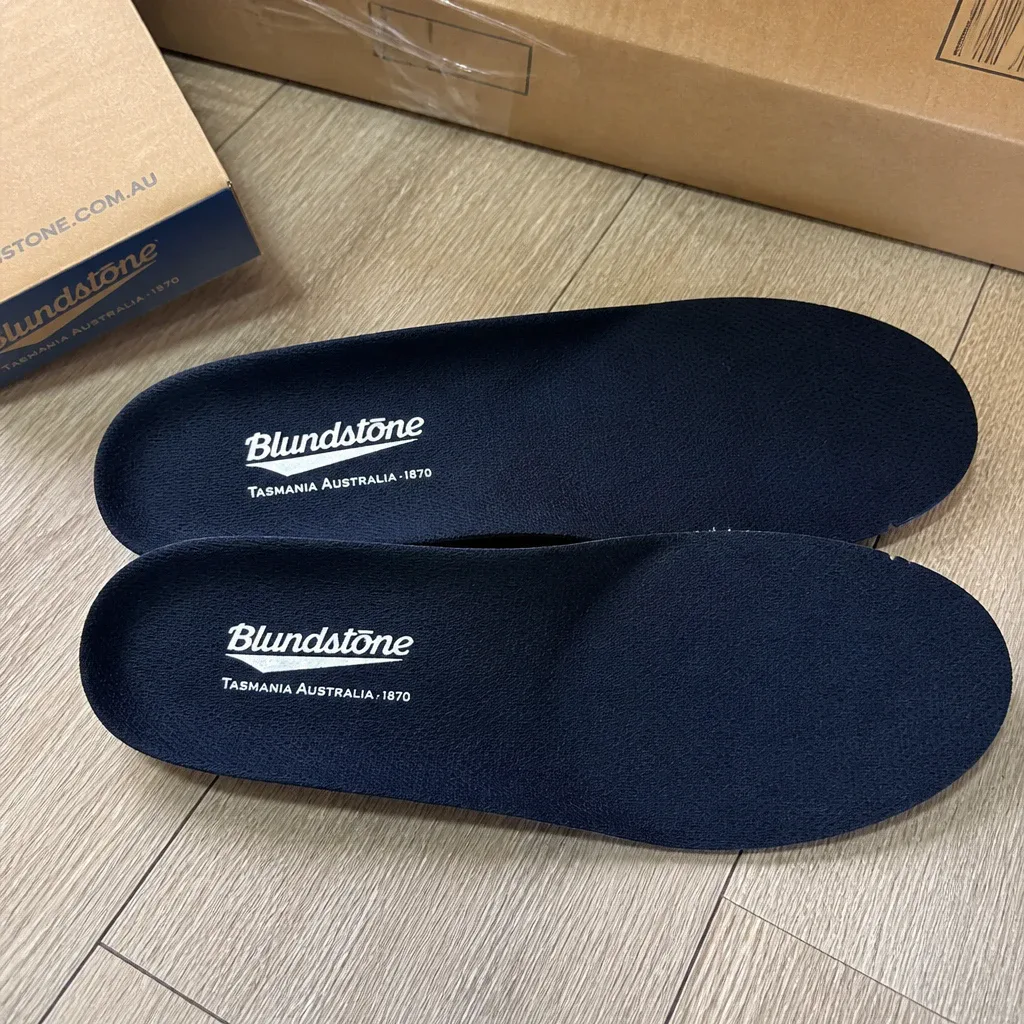
Blundstone sells three core replacement footbeds designed specifically for its own boots: the Comfort Classic Footbed, the Comfort Arch Footbed, and the Sheepskin Footbed. The Comfort Classic Footbed is priced at $17.95 and uses XRD material in the heel and forepart. The Comfort Arch Footbed is priced at $22.95 and adds a higher arch profile. The Sheepskin Footbed is priced at $43.95 and is built around genuine shearling for warmth.
All three are marketed as suitable for men's or women's Blundstone boots and are sold as final-sale, trim-to-fit accessories. The Comfort Classic Footbed is also listed as the Xtreme Comfort Footbed on Amazon and several other retailers, same XRD construction, different name depending on the sales channel, which is worth knowing before comparing listings by name alone.
What Are First Steps in Blundstone Insoles Like?
Rolling from heel to toe on my first walk, the transition felt smooth rather than lumpy. The XRD pad under the heel and forepart compressed evenly instead of creating a hard spot mid-stride, and I didn't feel any seam where the two cushioning zones meet.
What Components Are Inside a Blundstone Insole?
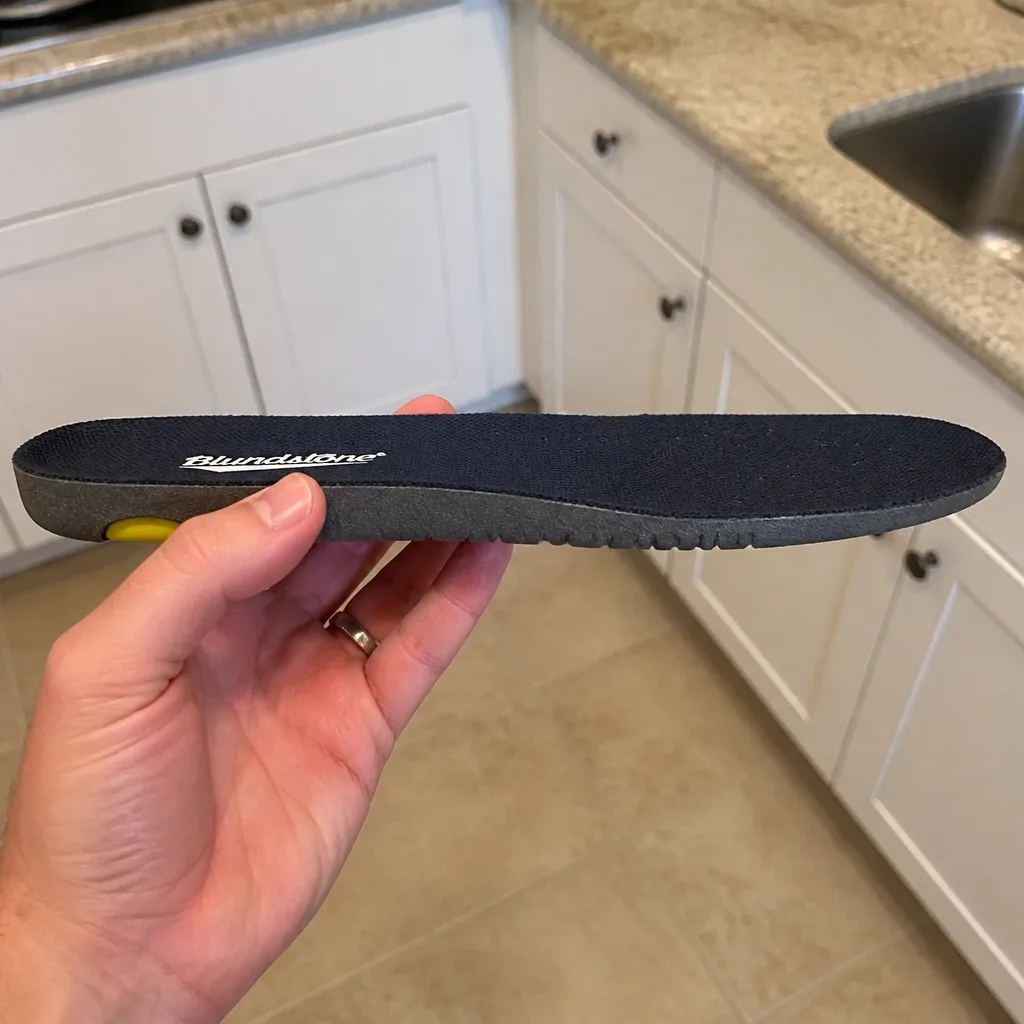
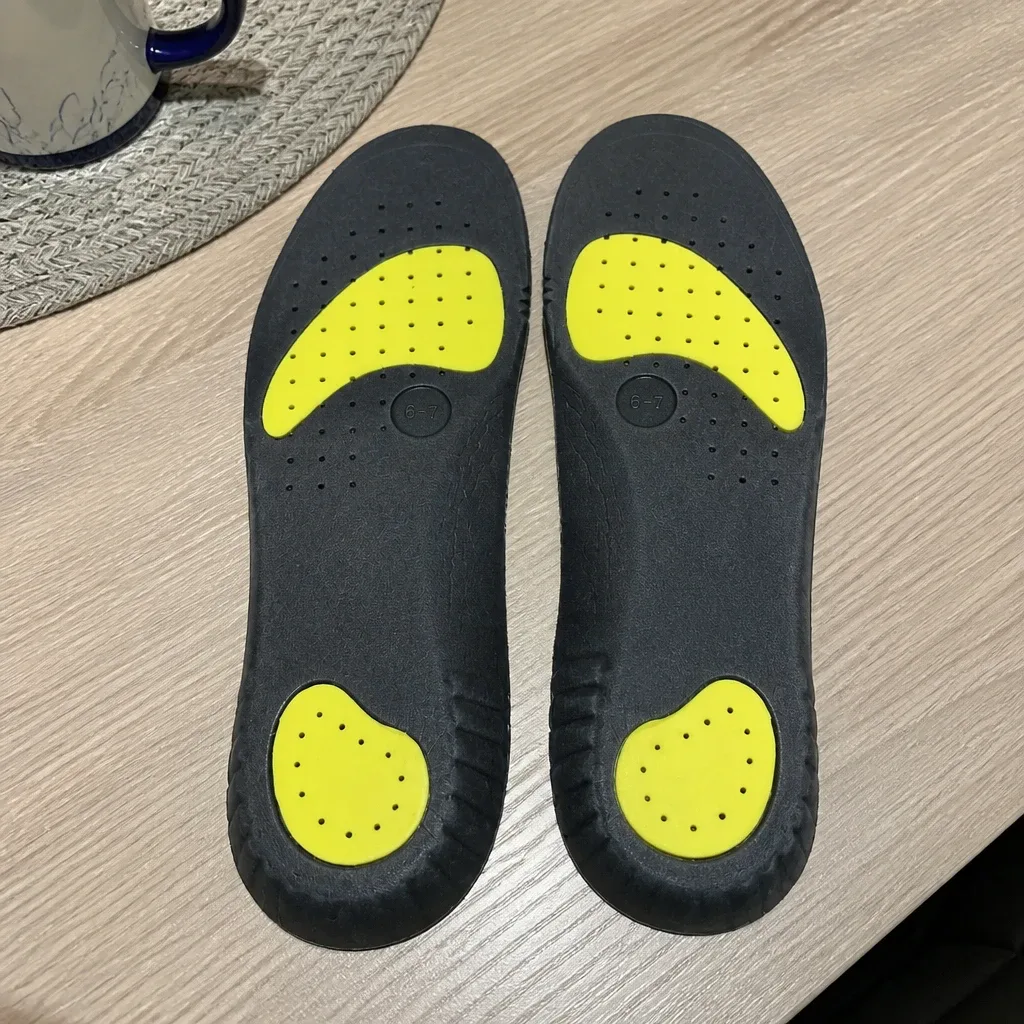
Blundstone builds the Comfort Classic Footbed from an EVA base with PORON XRD inserts, matched to a shock-absorption spec the brand publishes at up to 90% of impact.
Once trimmed along the printed guide lines, the top layer stayed flat inside my boot for three weeks without bunching or sliding, and the layers never separated or lifted at the edges even after a sweaty 8-hour shift. After three weeks I could still feel meaningful rebound under my heel rather than a packed-flat pad, and I'd estimate 6 to 9 months of reliable support before it noticeably thins, a timeline several Amazon reviewers echo when noting the cushioning wears faster than they'd like given the price.
At $17.95 to $22.95 depending on the model, and with Amazon's rating sitting at 4.5 out of 5 across 326 ratings, I didn't regret the purchase. If they ever squeak, I'd suspect trapped moisture between the foam and the boot's factory liner and let both surfaces air-dry fully before reinserting.
That same shock-absorbing construction is what Blundstone documents across the rest of the line as well: the Comfort Arch Footbed uses a PU/EVA base with XRD Technology concentrated in the forepart, also described by the brand as absorbing up to 90% of impact, while the Sheepskin Footbed swaps in a 100% wool shearling top cover over the same EVA-and-XRD base for cold-weather warmth. The line is trim-to-fit, with printed guidelines on the insole to cut it to the correct boot size, and Blundstone states the footbeds are odor-, fungus-, and bacteria-resistant, breathable, and washable.
How Do Blundstone Insoles Feel, Activity by Activity?
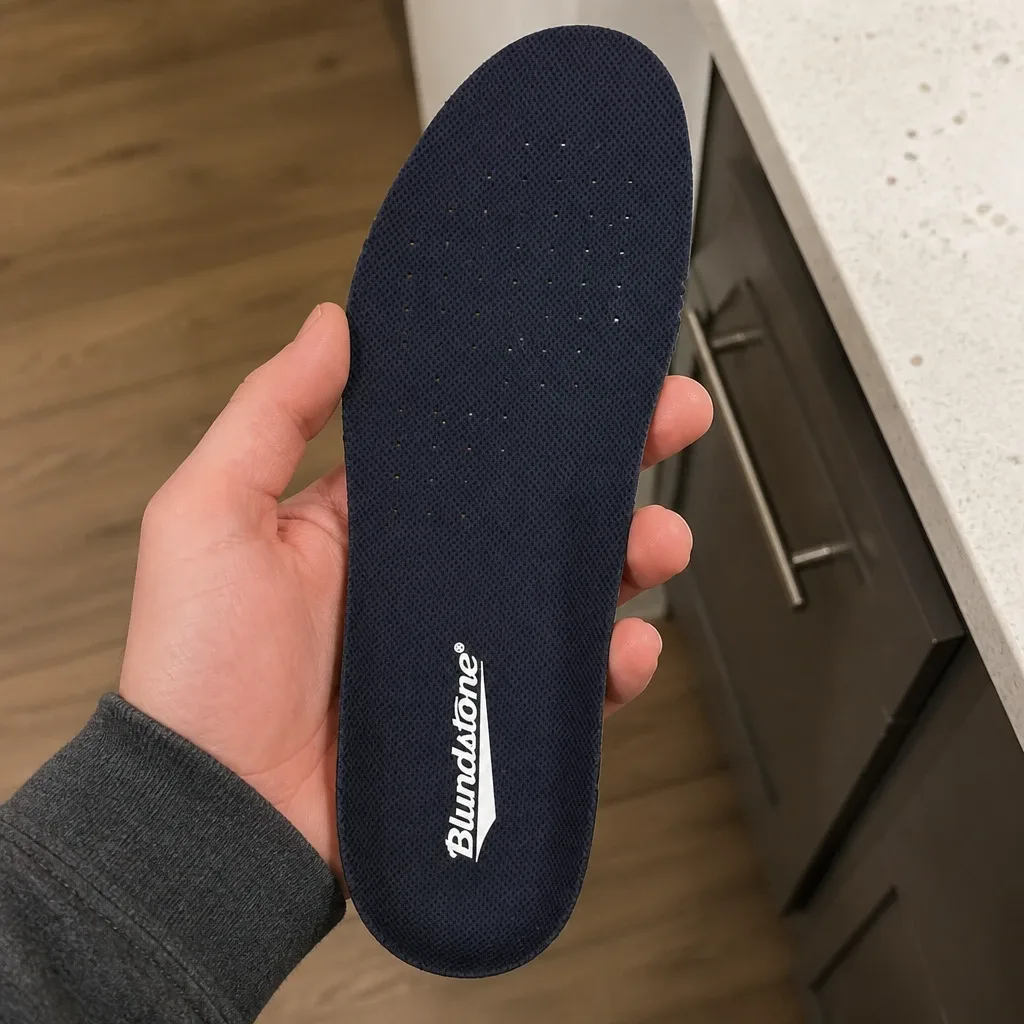
Going up and down stairs, I felt stable footing with no lump under my forefoot on the push-off, and my heel stayed seated in the boot on the way down without sliding forward or feeling like I might trip on uneven steps. The insole's moderate torsional stiffness kept my foot from wobbling side to side on the steps.
My feet felt fine after a couple of flights, though the real difference against the stock insole showed up over a full 8-hour standing shift rather than a short stair climb.
How Does Blundstone Handle Returns and Refunds?
Blundstone's own footbeds are sold as Final Sale items, with no returns or exchanges allowed.This exception sits inside a broader policy that otherwise offers free returns within 30 days of purchase on other products, provided boots are unworn and returned in their original packaging. Items returned damaged or worn are not eligible for a refund under that general policy.
How Do Real Owners Rate Blundstone Insoles?
The Xtreme Comfort Footbed holds a 4.5-out-of-5 average across 326 ratings, with 74% of raters giving 5 stars and a combined 6% giving 1 or 2 stars. Complaint themes center on insufficient thickness compared to the stock insole and confusion translating Blundstone's sizing across regions, while positive themes cite accurate fit, no sliding inside the shoe, and reduced foot discomfort compared to the original insole.
How Universal Is Blundstone's Shoe Fit?
Blundstone markets its footbeds as trim-to-fit inserts built specifically for its own men's and women's boots, and that claim was confirmed directly when I tested one myself.
Trimmed to size along the printed guide lines, the insole sat flush in the boot's footbed without extra tape or Velcro, and there was no excess length pushing forward under my toes. The smooth EVA base gripped the boot's factory liner well enough that my heel never slipped up and down with each step.
Since Blundstone Chelsea boots are pull-on rather than laced, ankle support comes from the elastic side panels and shaft height rather than lace tension, so the insole doesn't factor into that at all. For my high arches, the added footbed only brought roughly 2mm of extra stack height over the stock insole, not enough to crowd the instep in a normal-fitting boot.
That same trim-to-fit design is what Blundstone builds into the whole line: guide lines are printed on every insole so it can be cut down to the correct boot size, and the Sheepskin Footbed is noted as compatible with most non-safety Blundstone styles, with a caveat to check safety-footwear standards separately. Not every buyer's experience matches mine, though: one reviewer reported the footbed's sizing measured differently between an Australian-sized boot purchase and a size chosen while abroad, describing the process as confusing despite the footbed ultimately working.
How Do You Clean and Maintain Blundstone Insoles?
Blundstone designs its footbeds to be hand-washed and air-dried, and that upkeep routine matched what I found over three weeks of wear.
Blundstone's own care instructions call for hand-washing in warm soapy water and rinsing thoroughly before air drying, and if odor lingers after that I'd let the insole air-dry fully away from direct heat, since trapped moisture inside the EVA foam is usually the real cause. A light dusting of baking soda between wears stretched the time I could go before washing, absorbing sweat before it soaked into the foam.
After three weeks of wear, the bottom never got sticky or left residue inside my boots, staying dry to the touch as long as I let the boots air out overnight.
That washable design is a stated feature across the whole line, not just my own pair: Blundstone markets every footbed as breathable and washable, with odor, fungus, and bacteria resistance built into the material, and a retailer product listing repeats the same hand-wash, rinse, and air-dry routine rather than machine-washing or applying direct heat.
Are There Any Downsides or Risks to Be Aware Of?
The biggest downside reported for Blundstone's footbeds is thinness relative to the factory insole, though that wasn't the issue I ran into over three weeks of wear.
I didn't trim mine wrong, mostly because the printed guide lines make it hard to cut off too much, though I'd still recommend trimming conservatively and testing fit before cutting further. Mine never curled at the sides in a standard-width Blundstone boot, since curling usually points to trimming too wide for the boot's internal footbed rather than a flaw in the insole.
I also never got blisters or heel rubbing over three weeks of wear, since the heel cup's XRD pad sits flush rather than raised and didn't create a new pressure point against my Achilles.
Thinness compared to the factory insole is still the most repeated complaint in owner reviews of this model: one reviewer described the replacement as functional but noticeably less cushioned than the boot's original insole, wishing it were thicker, and a separate reviewer compared it unfavorably on price and comfort against a Dr. Scholl's alternative, calling it overpriced relative to its performance. My own pair didn't feel undercushioned over three weeks, but that complaint clearly resonates with buyers expecting a plusher pad than the XRD construction delivers.
How Much Do Blundstone Insoles Cost?
Pricing across the Blundstone footbed line spans $17.95 to $43.95 depending on model; the tested Comfort Classic Footbed sits at the low end, priced at $17.95 direct from Blundstone or $19.95 on Amazon under the Xtreme Comfort Footbed name. The Comfort Arch Footbed sits at $22.95. The Sheepskin Footbed is the premium option at $43.95 directly from Blundstone, though it has also been listed at $37.92 on Amazon. A UK retailer lists the Comfort Classic Footbed equivalent at £19.95 including VAT.
Where's the Best Place to Buy Blundstone Insoles?
Blundstone footbeds are sold directly through blundstone.com, through Amazon, and through third-party retailers such as SoftMoc and AussieBoots. Amazon listings show the Xtreme Comfort Footbed, Comfort Arch Footbed, and Sheepskin Footbed all available as standalone purchases, separate from any Blundstone boot purchase. Availability varies by retailer and changes over time; check the current listing before buying.
Who Benefits Most From Blundstone Insoles?
Blundstone's footbeds are marketed as general-purpose comfort and shock-absorption upgrades for existing Blundstone boot owners, not as condition-specific orthotics. The Comfort Arch Footbed is positioned around added arch support and forepart shock absorption. The Sheepskin Footbed is positioned for cold-weather wear, adding warmth and moisture-wicking on top of the same shock-absorbing base.
None of the three is marketed as an FDA-cleared or insurance-eligible orthotic device; they are sold as standard over-the-counter comfort accessories. This is Blundstone's own marketing positioning, not a clinical claim or an independently verified medical endorsement. Buyers managing a diagnosed foot condition should treat it accordingly.
The Numbers Behind Blundstone Insoles
Pressing on the arch with steady thumb pressure, it held its shape rather than collapsing flat, springing back within a second of release. Twisting it heel-to-toe, I graded the stiffness a 3 out of 5, resisting a full twist without going rigid like a carbon-fiber orthotic.
| Spec | Details |
|---|---|
| Brand | Blundstone |
| Product line | Comfort Classic Footbed (sold as the Xtreme Comfort Footbed on Amazon) |
| Base material | EVA foam with PORON XRD inserts, heel and forepart |
| Shock absorption (brand spec) | Up to 90% of impact |
| Size range | US 3-15 |
| Price (direct from Blundstone) | $17.95 |
| Price (Amazon, as Xtreme Comfort Footbed) | $19.95 |
| Amazon rating | 4.5 out of 5 (326 ratings) |
| Sale policy | Final sale, no returns or exchanges |
| Torsion stiffness (tested) | 3 out of 5, graded by hand-twisting heel-to-toe |
| Arch-press response (tested) | Held its shape under steady thumb pressure, recovered within a second of release |
Source: Blundstone USA and Amazon product listings.
Final Take: Is Blundstone Worth Buying?
Blundstone's Comfort Classic Footbed pairs an EVA base with PORON XRD inserts in the heel and forepart, matched to the brand's published 90%-impact-absorption spec, and it carries a 4.5-out-of-5 owner rating across 326 ratings on Amazon. The most repeated owner complaint is thinness compared to the boot's original insole; my own unit didn't feel undercushioned over three weeks of daily wear, including twelve full 8-hour shifts, but that complaint clearly reflects a real subset of buyers expecting a plusher pad.
At $17.95 direct from Blundstone (or $19.95 on Amazon as the Xtreme Comfort Footbed), it undercuts the rest of the brand's own line, which spans up to $43.95 for the shearling-lined Sheepskin Footbed. It's sold as a final-sale, trim-to-fit accessory rather than a returnable item, so getting the trim right the first time matters more than it would with a standard return policy. For anyone who already owns Blundstone boots and wants more cushioning and shock absorption than the stock insole without stepping up to the Comfort Arch or Sheepskin models, this is a low-cost, well-reviewed upgrade. Buyers managing a diagnosed arch or pronation condition should still look toward a dedicated orthotic brand instead.
Michal Sieroslawski is an Entrepreneur, exercise physiologist, and personal trainer who has fitted over a thousand people with insoles. He holds a degree in Sports and Exercise Science from the University of Central Lancashire, where he studied biomechanics, anatomy, and exercise physiology. Since 2020, Michal Sieroslawski has helped local and online businesses get found in Google and AI search.