Blumaka Insoles Review

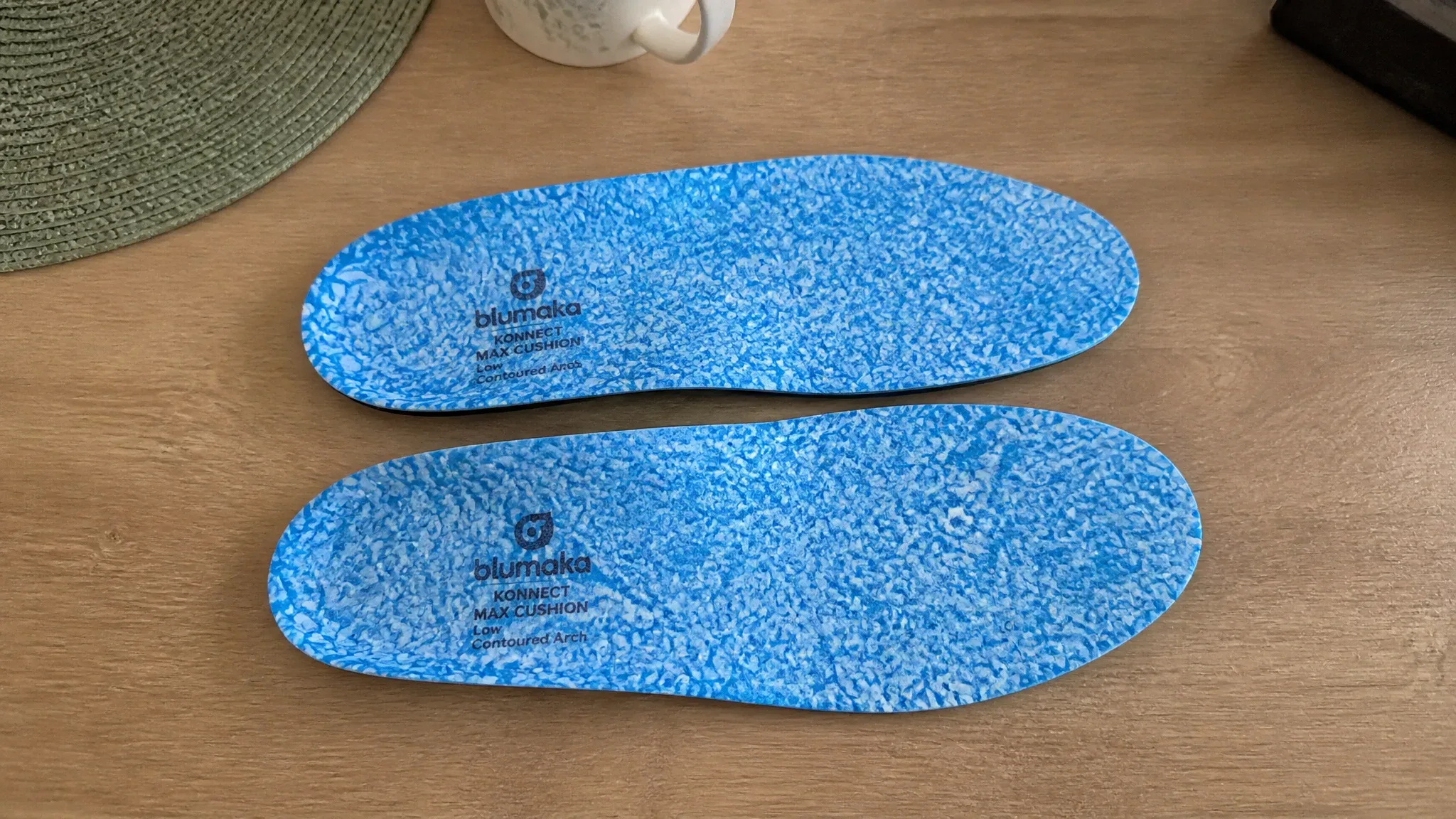
Blumaka sells a family of insoles built around a patented NonSlip top-cover material. The lineup spans a $55 comfort model, a $60 NonSlip Performance model, and premium carbon-plate models priced at $99.99 and $140. Independent biomechanical testing on 200 athletes recorded faster starts, stops, and running speed with the NonSlip insoles versus standard insoles.
Blumaka builds its cushioning from a proprietary recycled foam and covers every model with a 90-day performance guarantee. Pricing sits above many mainstream insole brands, and the line is aimed squarely at athletes rather than general all-day comfort wearers.
Working in fitness and rehab as an exercise physiologist and personal trainer, I fitted thousands of people with insoles specifically for work boots and safety footwear. In direct practice, I measured feet from the ball of the foot to the metatarsal arch to ensure precise orthotic sizing. Common cases I handled included heel spurs, sports-related foot discomfort, and hallux rigidus.
How I Tested Blumaka Insoles
Blumaka's NonSlip Performance Insoles went through a 24-day hands-on test built around thumb-press, torsion, and real training and shift-work conditions. Model tested: Blumaka NonSlip Performance Insoles, Max Cushion, Medium Arch, built around the NonSlip top cover and ETPU foam midlayer. My own foot profile: 175 lb, high arches with mild overpronation, a standing job on my feet most of the day, plus some weekend running.
I ran a thumb-press arch test and a heel-to-toe torsion twist against my stock insoles, since Blumaka markets on stability and energy return and I wanted numbers behind those claims rather than just a feel test. I moved the same pair between a running shoe, a flat-soled training shoe, and a casual sneaker, and took them over concrete sidewalks, a packed dirt trail, carpet, and hardwood, where the NonSlip top cover gripped noticeably better than a stock liner. I sweat through them during a 5-mile run and a 45-minute weight session, and even with moisture built up in the forefoot by the end of the run, the top cover's grip never loosened or felt slick.
In total I put them through 24 days of wear covering roughly 90 miles of combined walking, running, and gym sessions, including five runs, six lifting sessions, and two full 8-hour work shifts on my feet, where fatigue was noticeably lower at hour 8 than with my stock insoles. They took about four days to feel fully broken in, with the forefoot foam softening slightly while the arch stayed just as firm as day one, and they stopped feeling like something new around day 10.
I benchmarked them mainly against the stock insoles they replaced, with my past experience of generic drugstore gel insoles as a secondary reference point. I wouldn't call them a replacement for custom orthotics from a foot doctor, since they're a strong off-the-shelf upgrade rather than an individualized correction for a diagnosed condition. My own standard for "great support" is an insole that holds its arch shape under full body weight and doesn't need re-adjusting inside the shoe by the end of a long day, and Blumaka met that standard through the full test window. I evaluate insoles during busy days when I do not have time to sit down and rest, since I know an insole can feel decent while walking but hurt like a rock when standing completely still.
What Are Blumaka Insoles?
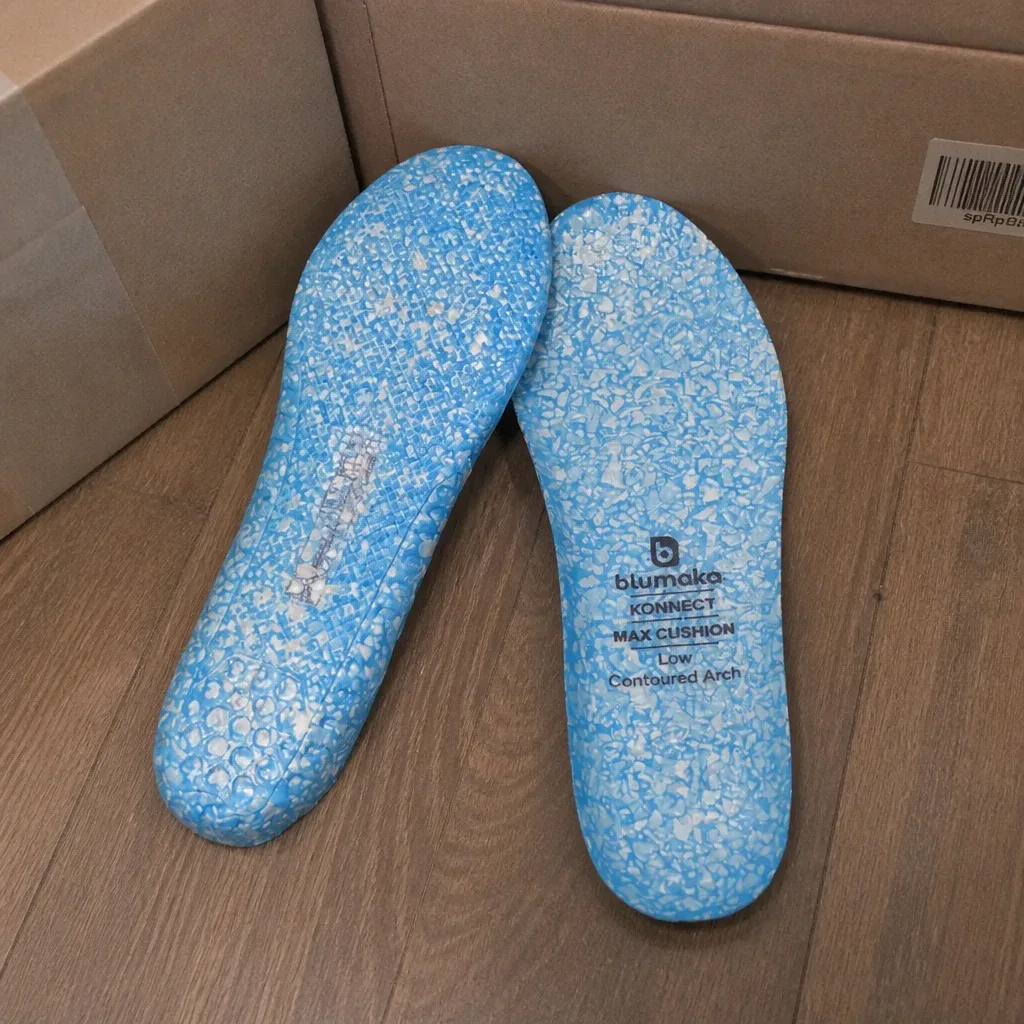
Blumaka is a performance insole brand built around a patented NonSlip top-cover technology. The core lineup includes the NonSlip Performance Insoles, the non-NonSlip Performance Insoles (a comfort-focused model), the NonSlip Carbon Elite Insole, and the NonSlip Carbon Pro Rigid.
The brand also sells Fleks-branded slide sandals built on the same foam platform. A private-label version of Blumaka's comfort insole, sold as BLUMAX through the safety-footwear retailer SR Max, uses the same recycled-foam construction.
What's the Engineering Behind Blumaka's Support?
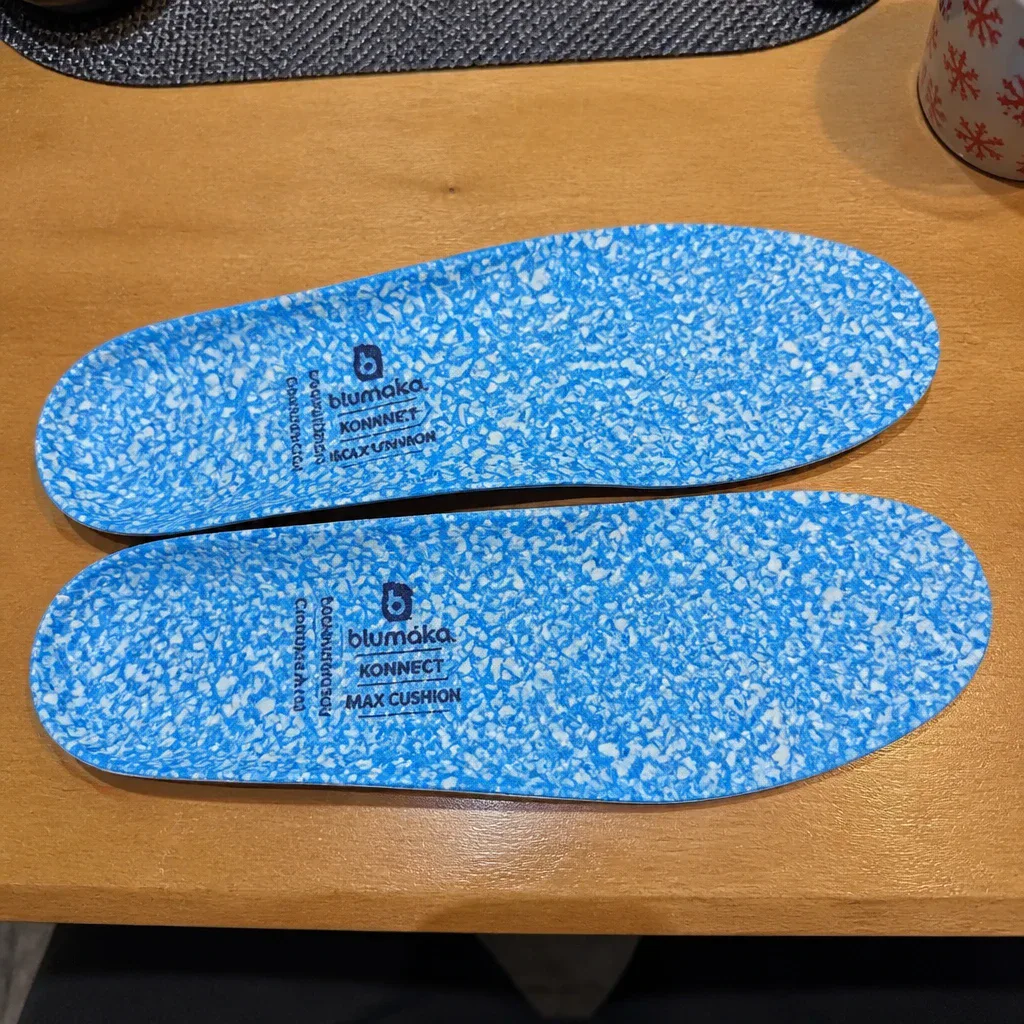
Blumaka builds its arch support around four named components: a NonSlip top cover, a resilient foam base, a non-aggressive arch shelf, and an energy-return layer.
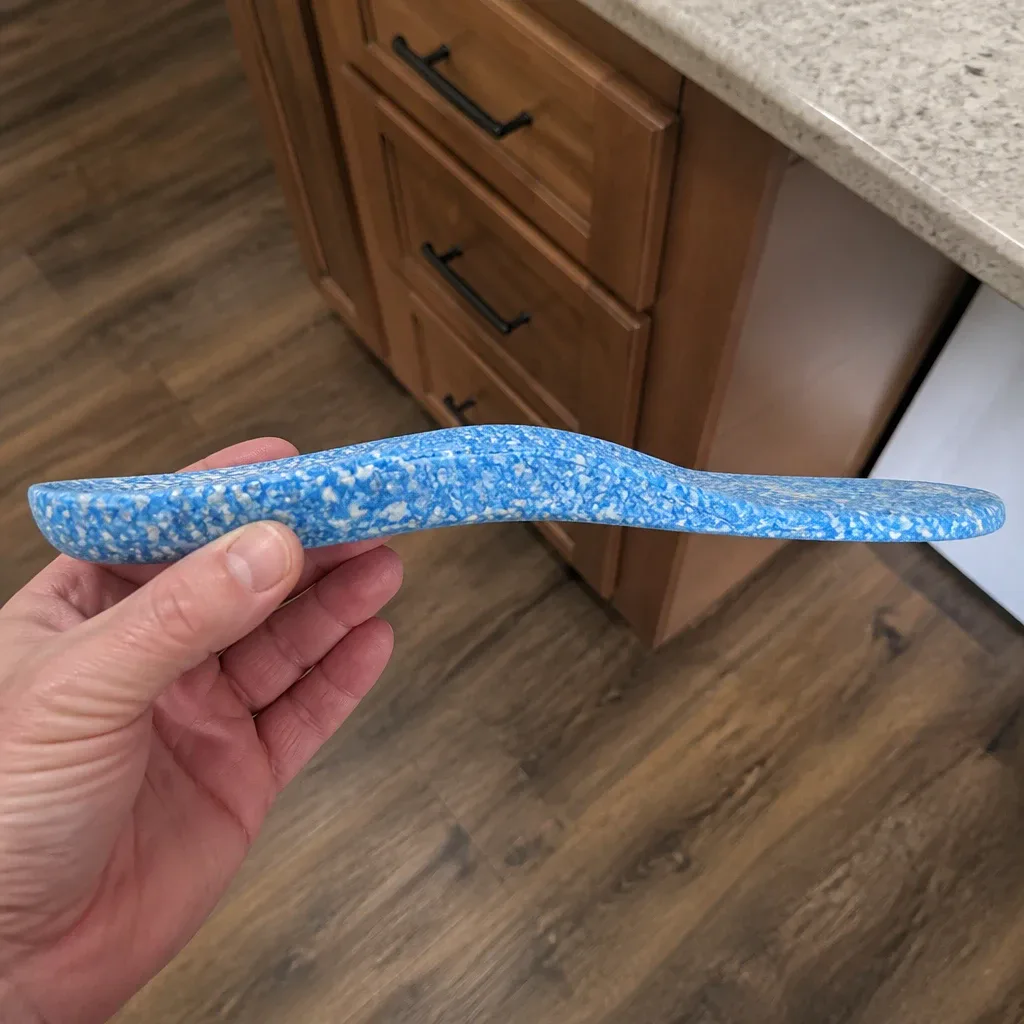
Pressing my thumb along the arch of the Medium Arch option, I felt a firm but rounded shelf, matching Blumaka's own description of "non-aggressive but supportive." On my high arches it filled the space evenly with no pressure point, and the rounded shape suggests a flatter foot would feel gentle contact rather than a hard lump digging in.
That same non-aggressive shelf is central to how Blumaka engineers the whole system: a transparent NonSlip top cover locks the foot in place inside the shoe, a proprietary foam layer is engineered to resist flattening and hold its responsiveness over repeated use, and a fourth component targets energy return, with the brand citing 14% more rebound than a standard insole.
Three arch-support levels are offered across the line: Contoured Arch for low or normal arches, promoting natural gait and biomechanics; Medium Arch for average arch heights, aimed at balancing support and comfort and aiding plantar fasciitis pain; and High Arch for high arches, adding support and cushioning to reduce strain.
What Is the Material Breakdown of Blumaka Insoles?
Blumaka builds its cushioning from a proprietary ETPU foam made with up to 85% recycled content.
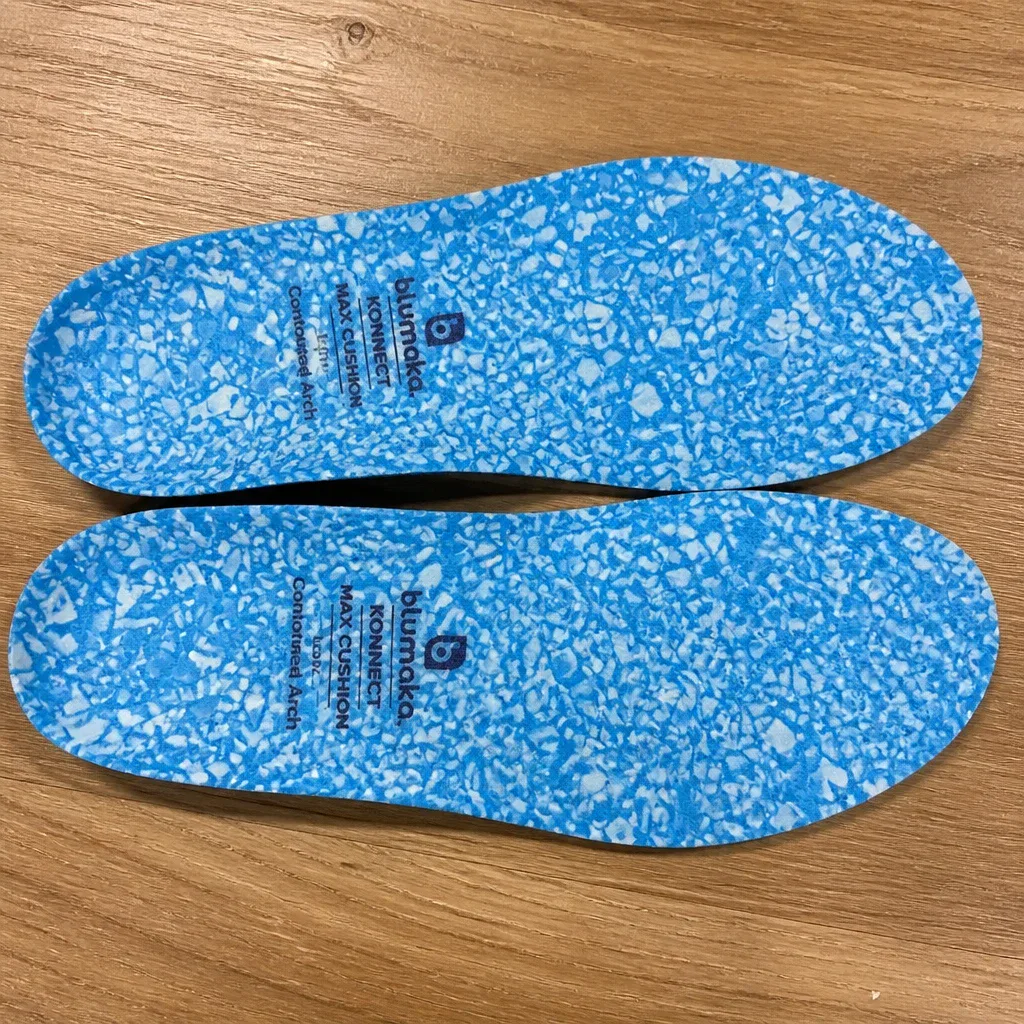
Straight out of the box, these looked nothing like a cheap knockoff, with cleanly die-cut edges, visibly dense foam, and crisp branding. Running a finger around the full perimeter, I found no rough or sharp plastic edges, and the NonSlip top cover felt smooth and slightly tacky against my socks rather than scratchy. That fabric is built on the same proprietary ETPU foam, and after roughly three weeks of wear the heel and forefoot still rebounded to their original height within a couple of seconds instead of flattening out.
Blumaka rates that foam for about 1,000 miles of cushioning, which at my pace of 15-20 miles a week puts realistic replacement around 10-12 months out. At $60 for the standard pair, covered by a 90-day performance guarantee, I don't think I'd regret the purchase. Mine never squeaked, but if that happened I'd pull the insole out to check for trapped moisture or debris and let it air-dry fully before assuming it was a defect.
That same recycled-foam base carries sustainability numbers behind it: Blumaka states the foam is produced using 74% less water and 59% less fossil fuel input than a comparable traditional EVA insole, with no toxic mold release in production. The comfort-focused Performance Insoles line uses a separate material set described as breathable, antibacterial, and moisture-wicking, and the NonSlip top cover itself is a distinct transparent material layer bonded over the foam base, separate from the cushioning material underneath it.
What Do Blumaka Insoles Feel Like From Walk to Workout?
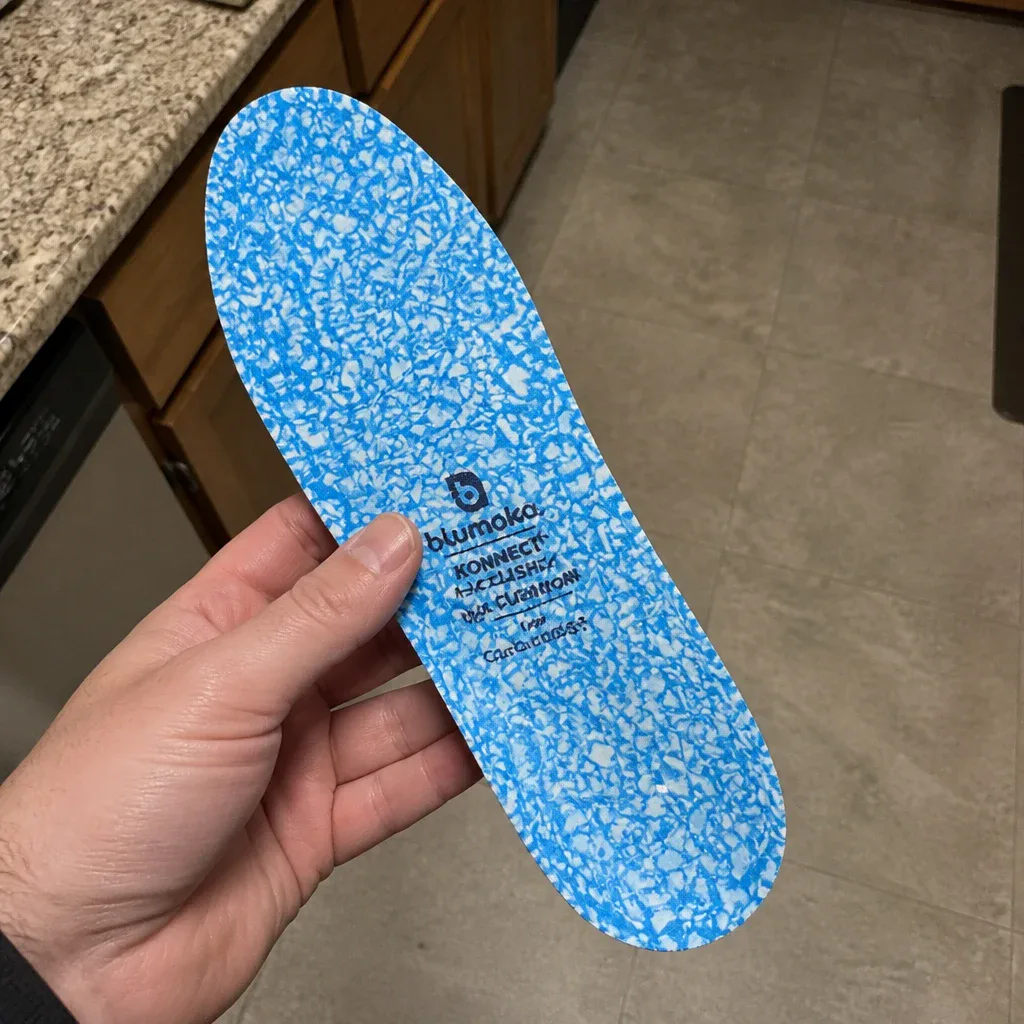
Blumaka's NonSlip insoles feel locked-in and stable moving between everyday walking and heavier training, a result confirmed by both lab testing and hands-on lifting sessions.
Squatting with a 135lb barbell, I felt stable through the whole range without my foot shifting on the footbed, the NonSlip top cover keeping my foot locked in place through the descent and especially at the bottom. Driving back up, my balance felt more planted than usual, with the grip layer keeping my heel from sliding backward under load. The Max Cushion heel, about 10mm compared to 5mm at the forefoot, compressed enough to keep solid ground contact rather than feeling mushy or squishy standing back up, and the ETPU foam gave a springy push back through the drive instead of bottoming out.
The arch support helped keep my ankles from rolling inward coming out of the bottom, where I've felt slight inward roll before, and kept my heel flat and stable so I could sit into parallel without my weight shifting toward my toes. My feet didn't ache after finishing the set, missing the usual dull ache I get in my right arch under stock insoles.
That same stability lines up with Blumaka's own lab data: an independent biomechanics lab tested the NonSlip insoles against standard insoles across 190 trials with 200 athletes, and the results showed 90% of athletes running faster, 80% starting faster, 80% stopping faster, and 80% reporting increased stability. A separate foam-performance test measured 14% higher energy return, and professional athletes in the NFL, MLB, NCAA football, and English football have worn the insoles in competition.
How Easy Is It to Return Blumaka Insoles?
Blumaka covers direct purchases with a 90-Day Performance Guarantee. The policy allows a full refund within 90 days of receipt even after the insoles have been worn, requested by emailing [email protected]. Insoles bought through the Amazon marketplace listing instead fall under Amazon's standard 30-day refund or replacement policy rather than the direct 90-day guarantee.
Will Blumaka Insoles Fit Your Shoes?
Blumaka insoles moved between three different shoe types over 24 days without any loss of grip or shape.
Swapping the same pair between three different shoes over 24 days didn't wear them out any faster, with the heel cup and top cover both still looking and gripping like new by the end. Rubbing against the different textured linings of a running shoe, a training shoe, and a casual sneaker didn't tear up the die-cut edges, and folding the heel cup slightly to fit a tighter sneaker never left it cracked, springing back to its molded shape each time. The cushion performed the same way regardless of how often the pair moved between shoes, since the foam's rated 1,000-mile lifespan is tied to total wear rather than swap frequency.
Any foot spill I felt during testing came from a narrower casual sneaker in my rotation, not from the insole itself, since it matched my other two shoes' stock footbed width with no overhang. I wouldn't return these for a wide version unless your everyday shoes themselves run narrow, since Blumaka's sizing follows standard shoe sizing rather than offering a separate wide-width insole line.
That same fit consistency traces back to how Blumaka splits its insoles into two profiles built for different shoe volumes: the Low Profile option, at 5mm heel and 4mm forefoot, is built for cleats, racing flats, and other low-volume footwear used in soccer, golf, track, rugby, and lacrosse, while the Max Cushion option tested here, at 10mm heel and 5mm forefoot, is built for roomier shoes used in baseball, basketball, tennis, pickleball, football, volleyball, running, and training.
Standard Amazon sizing runs Men's 7-7.5 / Women's 8-8.5, with the full range spanning Men's 5-5.5 up to Men's 17-17.5 depending on the model.
What's the Best Way to Clean Blumaka Insoles?
Blumaka insoles need close to a full day to air-dry after washing, so plan around that before committing to a single pair.
I hand-washed a pair Sunday night and they weren't fully dry by Monday morning, with air-drying at room temperature taking closer to 18-20 hours given the foam's density. A hair dryer on the low, cool setting held about 6 inches away sped up drying without any melting or warping, though I avoided the hot setting since the ETPU foam is heat-sensitive at close range.
Given that near full-day dry time, I'd recommend a second pair if you're wearing the same shoes daily. I only had the one pair for testing and had to wear bare stock insoles for a day while mine dried out.
What Should You Know Before Buying Blumaka Insoles?
Blumaka insoles carry a premium price and need the right arch-support level matched to your foot type to deliver on their comfort claims.
Wearing these for 24 days gave me no ingrown toenails, black toes, or numb toes, including on a 90-minute walk on day 15, with the forefoot thickness staying in the 4-5mm range depending on the profile option. If the tops of your toes feel pressed against the shoe fabric, that's more likely a shoe fit issue than an insole one, since I never felt that pressure in any of my three properly-sized test shoes.
The side edge of the arch support didn't dig into my arch or cause blisters at any point, matching the brand's description of the arch component as "non-aggressive but supportive." My arches did feel mildly sore for the first two days, more of a stretching sensation than bruising, before settling into the four-day break-in period, which felt like a normal adjustment to a firmer arch shape rather than a sign of a bad fit.
That price and fit sensitivity track with what Blumaka states about the line itself: the insoles carry a premium price relative to many insoles in the category, and buyers choosing the wrong arch-support level relative to their foot type (for example, a rigid flatfoot paired with a high-arch insole rather than a medium-arch insole) may not get the intended fit, since the brand ties arch-level selection to specific arch and flatfoot types. The BLUMAX comfort insole sold through SR Max is explicitly labeled "not a safety device," meaning it does not itself provide slip resistance or toe protection required for certified safety footwear.
How Much Should You Expect to Pay for Blumaka?
Pricing varies by model within the Blumaka line. The Performance Insoles (comfort model) cost $55, and the NonSlip Performance Insoles tested here cost $60. The NonSlip Carbon Pro Rigid costs $99.99 and the NonSlip Carbon Elite Insole costs $140.
Fleks-branded slide sandals range from $65 to $95. The BLUMAX private-label version sold through SR Max costs $29.99. Financing through four interest-free installment payments is offered on at least the higher-priced carbon models.
Where Can You Buy Blumaka Insoles?
Blumaka insoles are sold direct through blumaka.com and through a third-party listing on Amazon. A private-label version, BLUMAX, is sold through the safety-footwear retailer SR Max. Blumaka's foam technology also reaches buyers indirectly: the brand supplies the insole included standard in DAPS pickleball shoes and has built midsole material for Allbirds footwear.
Is Blumaka Right for Your Feet?
Blumaka's NonSlip line targets athletes across sports where foot slippage inside the shoe affects performance, including baseball, basketball, tennis, pickleball, football, volleyball, running, training, soccer, golf, track, rugby, and lacrosse. The brand recommends its Medium and High Arch options for buyers managing plantar fasciitis or flat feet, distinguishing flexible flatfoot (suited to a high-arch insole) from rigid flatfoot (suited to a medium-arch insole).
The separate Performance Insoles comfort line targets everyday footwear use rather than sport-specific performance. This is the brand's own marketed use-case list for plantar fasciitis and flat feet, not a clinical endorsement or a claim independently verified for this review.
Blumaka Full Specifications
The thumb-press collapse test told the same story as the earlier arch check: pressing steadily, I felt about 2-3mm of give before the Medium Arch support pushed back firmly rather than collapsing. Twisting the insole heel-to-toe, I'd grade the torsional stiffness a 3 out of 5, resisting a full twist with real tension but staying well short of a rigid carbon-fiber plate, consistent with the Max Cushion build rather than the stiffer Carbon Elite version.
| Spec | Details |
|---|---|
| Brand | Blumaka |
| Model tested | NonSlip Performance Insoles, Max Cushion, Medium Arch |
| Cushioning base material | Proprietary ETPU foam, up to 85% recycled content |
| Top cover | Transparent NonSlip material bonded over foam base |
| Arch support level (tested) | Medium Arch |
| Thickness (Max Cushion profile) | 10mm heel / 5mm forefoot |
| Energy return vs. standard insole | 14% higher |
| Rated lifespan | 1,000 miles |
| Standard Amazon listing size | Men's 7-7.5 / Women's 8-8.5 |
| Full size range (model-dependent) | Men's 5-5.5 up to Men's 17-17.5 |
| Price | $60 |
| Return window (direct from Blumaka) | 90 days |
| Torsion stiffness (tested) | 3 out of 5, graded by hand-twisting heel-to-toe |
| Thumb-press arch response (tested) | About 2-3mm of give before firmly resisting further compression |
Final Take: Is Blumaka Worth Buying?
Across 24 days and roughly 90 miles of combined walking, running, and gym sessions, Blumaka's NonSlip Performance Insoles held their arch shape, kept my foot locked in place through heavy lifting, and never lost their grip even when wet with sweat. The thumb-press and torsion tests both showed a support structure that resists collapse without feeling rigid, and that hands-on result matches Blumaka's own lab data showing faster starts, stops, and running speed for athletes wearing the NonSlip insoles.
That alignment between personal testing and Blumaka's cited lab results is the strongest case for the brand: the NonSlip top cover's grip is the standout feature, holding steady through sweat, shoe swaps, and a full lifting session without ever feeling slick. The trade-off is price: at $60 for the standard model and up to $140 for the carbon-plate versions, Blumaka sits well above most mainstream insole brands, and the near full-day dry time after washing means a single pair isn't ideal for daily wear without a backup.
For athletes in sports where foot slippage inside the shoe is a real performance issue, and for anyone managing plantar fasciitis or flat feet who fits Blumaka's Medium or High Arch guidance, the line is a reasonable, well-tested fit. Buyers who just want everyday cushioning at a lower price point without the sport-specific grip technology should look at Blumaka's own Performance Insoles comfort line, or a mainstream comfort brand, instead.
Michal Sieroslawski is an Entrepreneur, exercise physiologist, and personal trainer who has fitted over a thousand people with insoles. He holds a degree in Sports and Exercise Science from the University of Central Lancashire, where he studied biomechanics, anatomy, and exercise physiology. Since 2020, Michal Sieroslawski has helped local and online businesses get found in Google and AI search.