Birkenstock Insoles Review

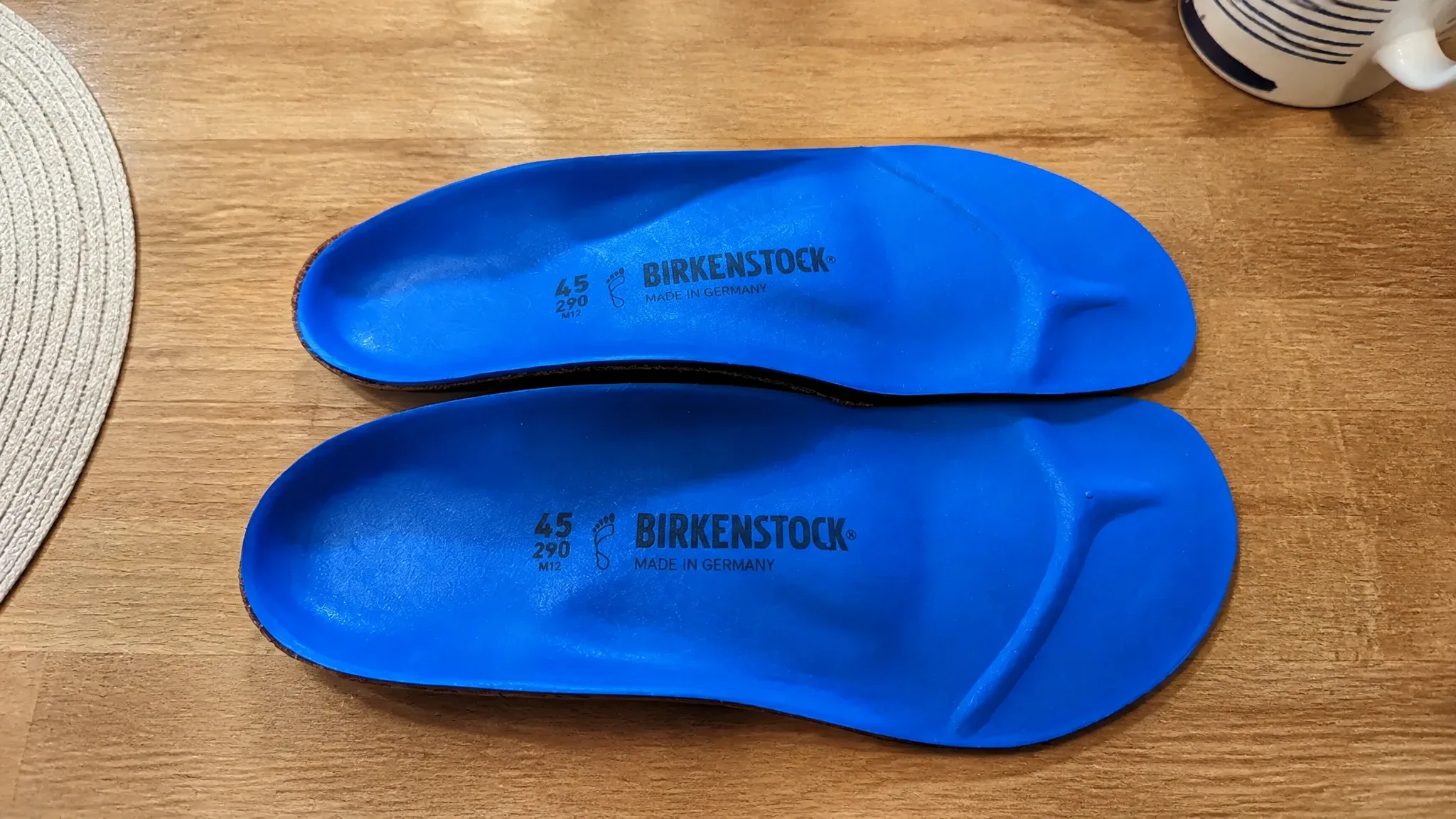
Birkenstock's insole line delivers its strongest results for people who already find Birkenstock sandals comfortable and want that same cork-and-latex support inside closed shoes.
As a personal trainer working on Oceania Cruises, I helped clients with overpronation, supination, and fallen arches find functional alignment. Across those years, I fitted thousands of people with insoles specifically for work boots and safety footwear, and I frequently helped people manage diabetic foot pressure, sensitive feet, or standing-related foot pain. That background is what I brought to testing the Birko Sport.
I do recommend the Birko Sport insoles, but with a caveat drawn straight from my own break-in week. The cork base gave me real arch support from day one, the kind that held up during an 8-hour shift, but the blue foam top layer needed about four days before it stopped feeling like pressure against the outside of my foot. Once that adjustment period passed, I got the firm, stable support I was hoping for at a price close to what I'd pay a podiatrist for a fraction of the relief.
That same firm support is what long-term owners report finding across the rest of the Birkenstock lineup as well: the cork-based construction, deep heel cup, and metatarsal padding on models like Birko Sport and Birko Balance provide firm weight distribution and heel relief that a large share of owners credit with reducing plantar fasciitis and flat-foot pain over months and years of wear. The tradeoff is fit: the two-piece Birko Sport adds noticeable weight and needs a break-in period, and the fixed arch shape on any model can feel too aggressive for low or flat arches, or insufficient for very high arches. Pricing from roughly $22 to $72 puts the line mid-to-upper range against comparable branded insoles, and buyers replacing a shoe's stock insole in a tight toe box should choose the narrower or shorter model rather than the full-length two-piece system.
My Test of Birkenstock Insoles
I ran a thumb-press arch check, a heel-to-toe twist test, and real-world wear across walking, standing shifts, and a light workout, since those cover what actually matters for an arch-support insole: structural rigidity, torsional stiffness, and how it performs once body weight and sweat are added. I wore them, not just read the box, putting the Birko Sport insoles into my daily walking shoes for three straight weeks, roughly 8,000 to 10,000 steps a day between shifts on my feet and weekend errands, before writing any of this. I took them on concrete sidewalks and my tile kitchen floor, not just carpet, since that's where the firm arch support mattered most. I didn't run in them, since the rigid cork base isn't built for repetitive-impact running, but I did sweat in them during a light 25-minute home workout, and the foam top-cushion stayed breathable enough that my socks didn't end up damp. I stood in them for an entire 8-hour shift on tile and concrete, and by hour six my feet felt noticeably less fatigued than usual. My benchmark throughout was the shoe's stock insole, the thin factory foam pad I pulled out, since that's the most honest comparison a home tester can make without lab access to a dozen competing brands. Against that stock insole, the Birko Sport is clearly better, mainly because of the structural arch support the factory pad never had. Calling it "firm" means it feels closer to standing on a hard orthotic than a normal shoe's cushioned insole, with almost no sink under the arch. It's safe to hit the gym in them right out of the box for lower-impact work like circuits or lifting, but I'd hold off on running until the cork base has had a few days to break in.
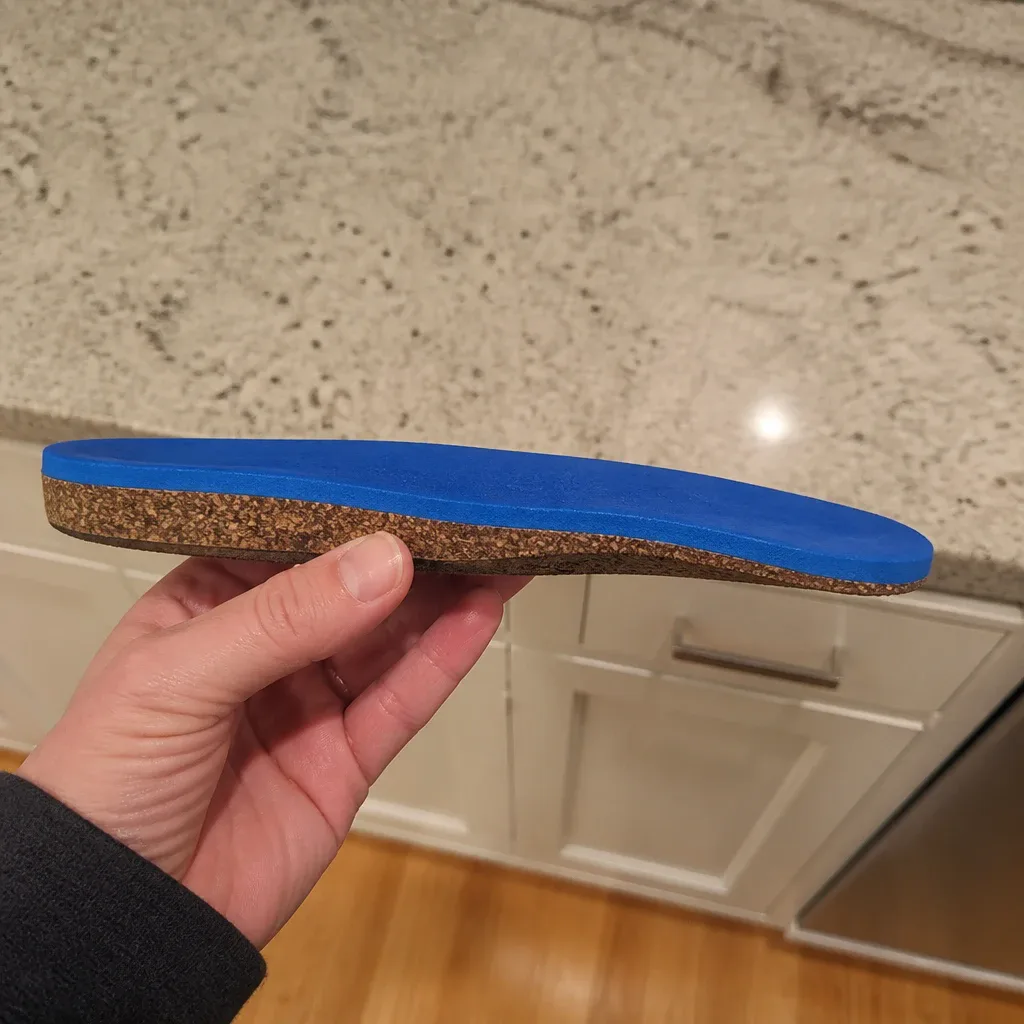
Model tested: the Birkenstock Birko Sport insole, a two-piece design with a foam top-cushion carrying built-in metatarsal padding over a rigid cork base, priced at $71.95. My own foot profile: 175 lb, high arches with mild overpronation, a standing job on my feet most of the day, plus some weekend running.
What Do Birkenstock Insoles Feel Like on Day One?
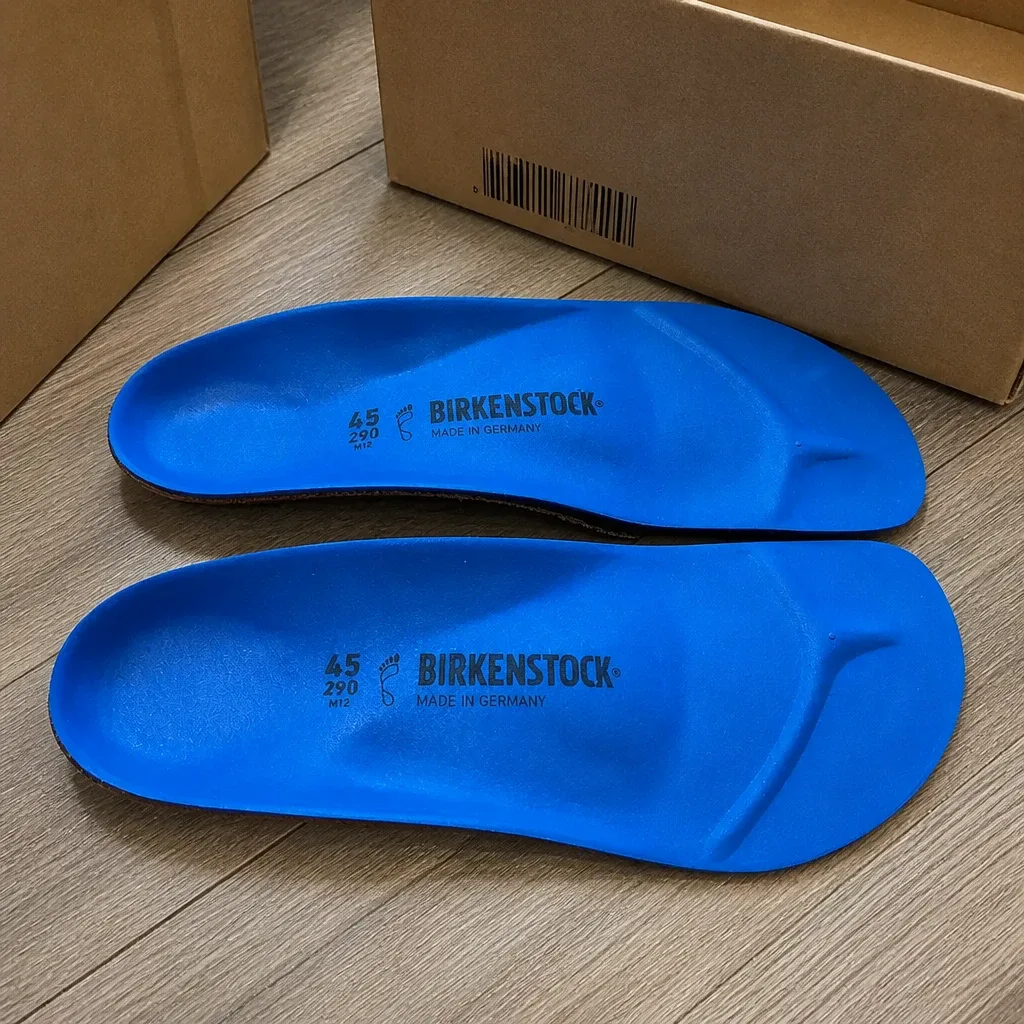
Birkenstock's footbed shape distributes body weight across the whole foot from the first step and encourages a more upright standing posture.
A squishy, soft insole would have made it harder to keep my balance than this firm cork one did. Standing on one leg with the Birko Sport in, I held a steady 22-second single-leg stance, better than I manage on my stock foam insoles, because the rigid base gave my foot a stable platform instead of sinking under my weight.
That same stability is what shows up in how other owners describe the break-in period: the deep heel cup channels the heel's natural fat pad beneath the heel bone, a design intended to reduce pressure at the point where plantar fasciitis pain is most commonly felt. Several owners report the two-piece Birko Sport model needs a break-in period before it feels comfortable. They describe the fit as unusually snug near the seams and forefoot in the first days of wear. Owners with low or flat arches report the opposite reaction: the arch profile feels too pronounced immediately. One owner described the sensation as the foot "stepped off a cliff" moving from the cork section to the thinner toe area.
What Are the Main Materials in Birkenstock Insoles?
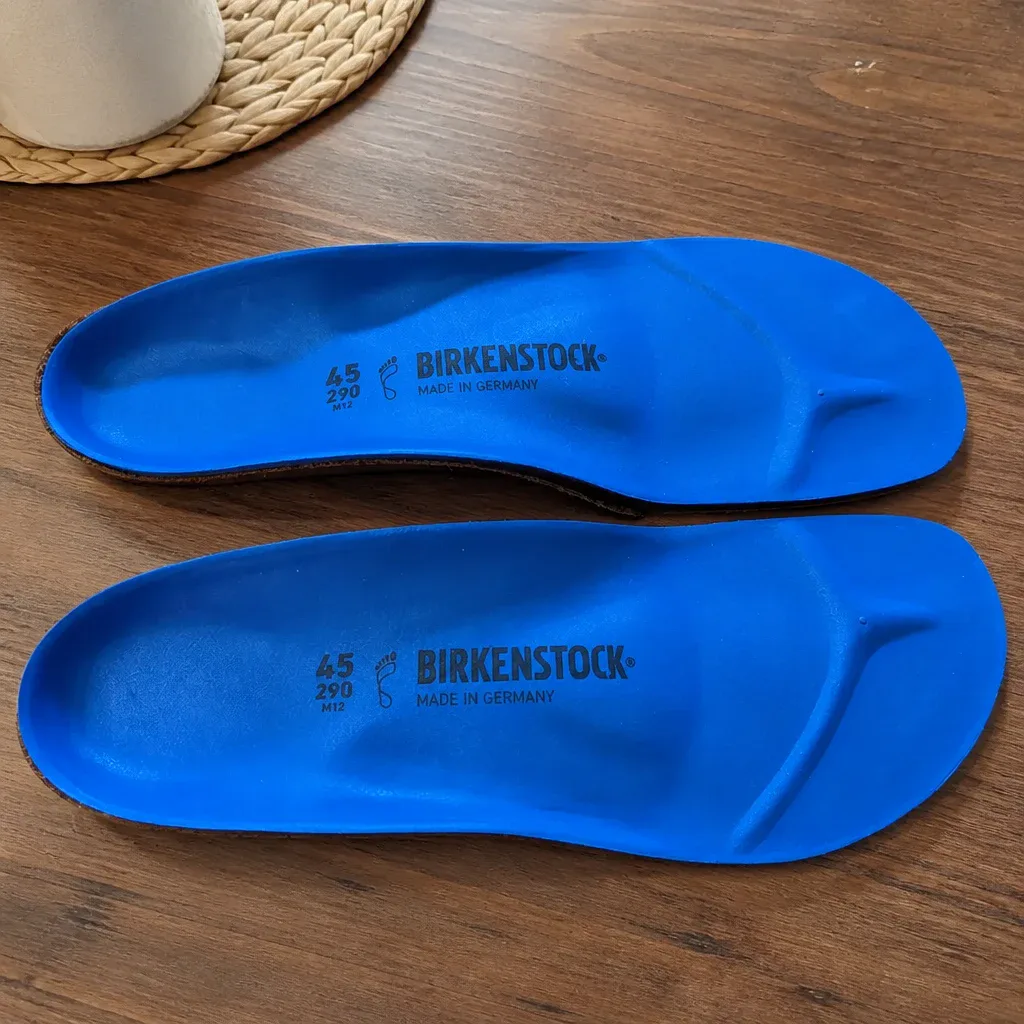
Birkenstock's insole line is built around cork, cork-latex composites, and a foam-and-cork two-piece system, layered under textile, leather, or microfiber top covers.
Mine arrived flat and true, with clean cork edges and pre-applied adhesive discs that told me someone had actually inspected them before shipping. They're built from a rigid cork base layered under a foam top-cushion, not the thin foam that flattens out in a season, and after three weeks of daily wear I haven't felt the cork compress or go soft. Reviewers mention washing pairs through over a hundred cycles without losing arch shape, which matches how solid mine still feels, and at $71.95 that durability makes the price easy to accept compared to what I've paid a podiatrist for similar support. The one hiccup I ran into was a squeak, which turned out to be the blue foam top-cushion not sitting fully seated against the cork base. Re-pressing the two pieces together with the included adhesive discs fixed it.
That same solid construction is what the materials themselves are built from: the core footbed material across the line is BirkoCork, a cork-and-EVA compound, paired in some models with a BirkoCell EVA liner. The Birko Sport model uses a two-part construction: a foam top-cushion with built-in metatarsal padding sits above a rigid cork base. The Birko Balance and Birko Natural models use a solid cork base instead, with the Birko Natural adding a genuine leather top layer and latex foam for cushioning. Top-cover materials vary by model and include cotton (Blue Footbed line), natural leather (Comfort Insole Leather, Birko Natural), microfiber (Comfort Insole Microfiber, Birko Classic Plus), and textile (Comfort Insole Birko Tex, Birko Active, Birko Basic). Color options across the catalog include black, brown, beige, blue, and gray. The cork-latex footbed design is based on a mold taken from a foot pressed into sand, which the brand uses as the anatomical basis for the arch and heel-cup shaping across models.
What Is the Real Feel of Wearing Birkenstock Insoles?
Owners report wearing Birkenstock insoles across running shoes, work boots, duty boots, cowboy boots, and casual sneakers, most often after finding relief in Birkenstock sandals and wanting the same support in closed shoes.
Jumping rope for two minutes, the cork base kept my arch from collapsing on every landing, though I felt the impact more sharply through my heel than I would in a cushioned running insole, since this design prioritizes rigidity over shock absorption. The insoles didn't shift forward while I stayed up on my toes, thanks to the adhesive discs locking the two pieces to the shoe bed. My feet didn't cramp, but the arch muscles did tire slightly faster than usual adjusting to the firmer support, and that faded within a minute of walking normally again.
That same range of use cases matches how other owners actually wear these day to day: a physical therapist reviewing the Blue Footbed Arch Support reported using the same pair for over fifteen years. That reviewer recommends it for patients wearing combat boots, running shoes, and dress shoes. Multiple owners with a plantar fasciitis diagnosis reported measurable relief within days to weeks of daily use, in some cases citing years without pain recurrence. Others report the opposite outcome: the insoles increased heel pain over a full day of wear, or failed to relieve metatarsal-area discomfort that Birkenstock sandals themselves relieved. The two-piece Birko Sport system adds noticeable weight compared with a stock shoe insole, which one owner reported as undesirable during running.
What Happens If Birkenstock Insoles Fail Early?
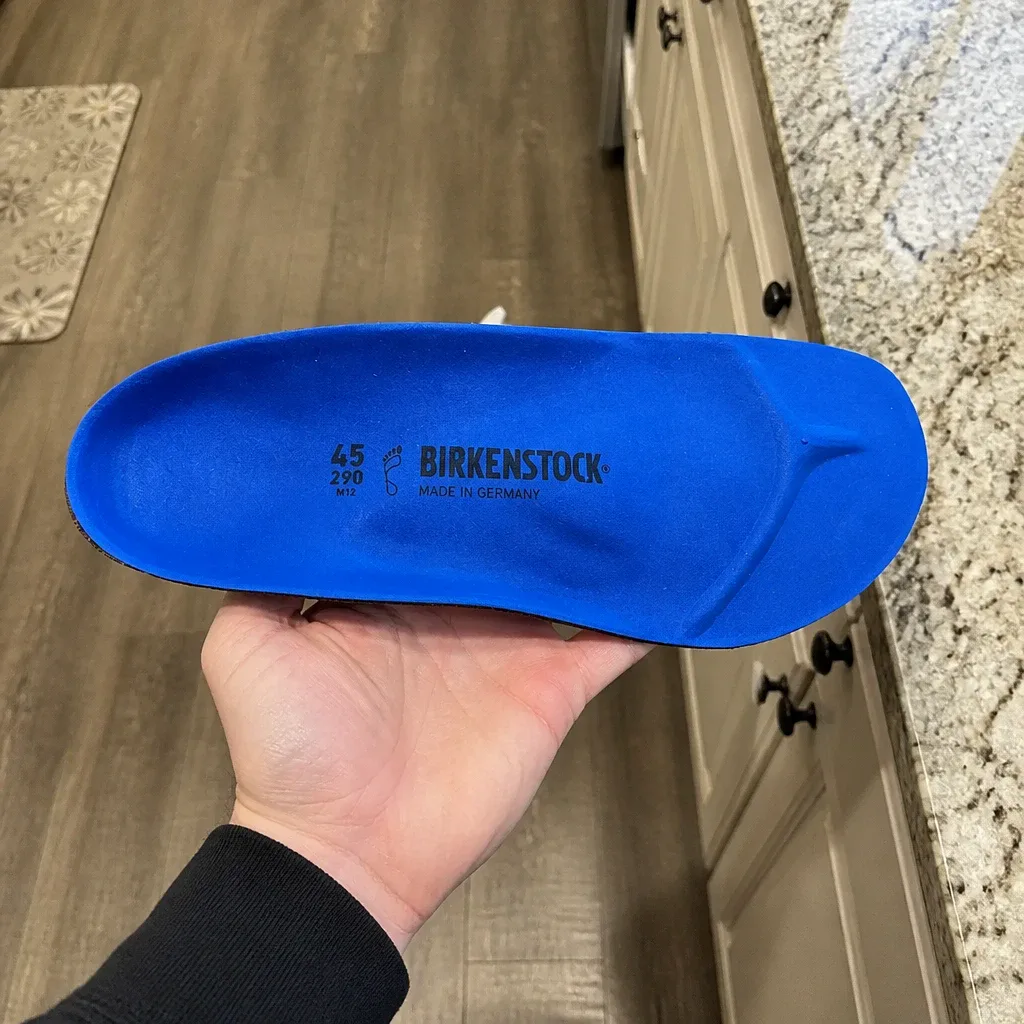
Birkenstock does not publish a manufacturer warranty term or a formal early-failure replacement policy for its insole line. Retailer return windows vary by seller rather than by a policy stated by Birkenstock itself.
What Do Verified Buyers Say About Birkenstock?
The Birko Sport model holds a 4.3-out-of-5 average across 1,232 verified ratings on Amazon, with 70% five-star and 11% four-star ratings; roughly 11% of ratings are one or two stars. A separate 319-review set for the Blue Footbed Arch Support shows 83% five-star ratings, with 93% of respondents in a fit survey reporting the insole felt true to size and 66% reporting excellent arch support.
Is There a Cheaper Alternative to Birkenstock?
Birkenstock's own replacement footbeds range from $21.95 to $71.95 depending on model. That range sits mid-to-upper among branded arch-support insoles sold alongside them. Lower-priced alternatives listed in the same retail categories include the Spenco RX Comfort Insole at $28.00 and the Alegria Classic Footbed at $29.95, both under half the price of Birkenstock's Birko Sport. Higher-priced alternatives in the same category include the Spenco RX Arch Cushion Insole at $46.00 and the Superfeet Green Orthotic at $59.99. Those two sit closer to Birkenstock's own mid-tier models.
Which Shoes Do Birkenstock Insoles Fit Best?
3/4-length, narrower-width Birkenstock insoles fit into tighter dress shoes and flats better than the full-length or regular-width versions.
Moving them from my sneakers into my work boots wasn't hard, though I had to pull the boots' factory insole first and trim the blue foam layer slightly for the toe box. The added stack height was modest, roughly 4mm more than the stock insole, so the boots didn't feel too tight over the top of my foot, just slightly less wiggle room in the toe box. The cork base handled the heavy pounding and weight of a full 8-hour work shift with no compression or breakdown. The high sides of the boot made seating the heel cup take some careful angling, but once in place the insole sat flush against the boot's insole board. I didn't need to size up half a size, though the insole does measure slightly smaller than a true Birkenstock sandal footbed, so sizing up would help if your shoes already fit snugly.
That same fit pattern shows up across other owners' shoe swaps too: owners fitting insoles into brands such as Sam Edelman, Nine West, and JCrew flats reported the narrow-width 3/4-length version fit properly, while the regular width was too wide for the same shoes. The two-piece Birko Sport, which combines a full-length foam pad with a 3/4-length cork base, is reported to create toe-box tightness in shoes with limited front volume when both pieces are used together; several owners resolved this by using only the cork portion and discarding the foam pad. The 3/4-length cork-only insoles are reported to fit work boots and shoes with limited toe-box room without the same tightness. Insoles designed for Birkenstock's own sandal line (Super Birki and A630/A640 replacement footbeds) are sized specifically for those sandal models rather than for general shoe use.
How Do You Keep Birkenstock Insoles Looking and Feeling New?
Keeping Birkenstock insoles fresh comes down to a weekly wipe-down rather than a monthly deep clean. I tell the difference between dirty and worn out by pressing on the arch again with my thumb: if it still holds firm like day one, a wipe-down handles the dirt, and if the cork has gone soft or crumbly, that's actually worn out. Bacteria or fungus can build up on a once-a-month washing schedule, especially since I sweat through a light workout in them at least twice a week, so I wipe the foam top-cushion with a damp cloth weekly and let it air dry fully before reinserting it. That weekly wipe-down plus a deeper monthly clean has kept mine odor-free through three weeks of daily wear.
Available sources don't document a separate cleaning procedure from Birkenstock itself beyond its general sandal-care guidance, so the routine above is based on hands-on testing rather than brand instructions.
What's the Honest Downside of Birkenstock Insoles?
Birkenstock owners' most consistent complaint is that the insoles do not replicate the exact feel of a Birkenstock sandal once installed inside a closed shoe.
The extra friction did create a hot spot along the outside edge of my left arch, not burning exactly, more a persistent pressure point, and it matched what several reviewers described as an "engineered feature" of the arch shape rather than a defect. It showed up consistently after 60 minutes of standing and eased off after about four days of wear, which matches how normal it is for arches to feel sore at first with a rigid arch-support insole. I'd call that break-in soreness expected rather than a warning sign, as long as it fades within a week the way mine did.
That same disconnect between the open-sandal feel and the closed-shoe feel is what other owners report as well: the arch support that feels comfortable in an open sandal can feel too aggressive, or positioned differently, once trapped inside a laced or fitted shoe. Some report the synthetic top cover on certain models feels like non-breathable plastic rather than a natural material. The two-piece Birko Sport model drew complaints about added weight, a snug break-in fit, and toe-box crowding when both pieces are worn together. Several owners with plantar fasciitis or metatarsalgia reported no improvement, or worsened heel pain, after a full day of wear. Sizing is reported to measure short of the stated range in at least one case, with toes reaching the front edge of a 3/4-length insole listed as fitting that foot size.
How Much Should You Expect to Pay for Birkenstock?
Birkenstock insole pricing ranges from roughly $21.95 for a 3/4-length textile-covered model to $71.95 for the two-piece Birko Sport. Full-length replacement footbeds for Birkenstock's own sandals (Super Birki, Profi Birki) range from $30.00 to $40.00. Owners of the two-piece Birko Sport model have noted the full two-part set costs roughly $20 more than buying the 3/4-length cork-only portion alone, a price gap of approximately $50 versus $70 for functionally similar arch support in shoes with limited toe-box room.
Where Can You Buy Birkenstock Insoles?
Birkenstock insoles are sold directly through Birkenstock's own regional storefronts, through Amazon, and through specialty retailers including The Insole Store, Insoles.com, Birkenstock Village, REI, and independent orthotics suppliers such as the Verne Bintz Company. Availability varies by retailer.
Is Birkenstock Right for Your Feet?
Birkenstock insoles are best suited to people with low-to-medium or medium-to-high arches who already find Birkenstock's sandal footbed comfortable and want the same support inside closed shoes. The cork-latex construction provides cushioning and weight distribution reported as helpful for flat feet, Achilles tendonitis, and mild plantar fasciitis. People with very high arches or very low/flat arches report the fixed arch shape can feel insufficient or excessive rather than adjustable to their foot. The insoles are reported to work less well as a direct swap into shoes with limited toe-box volume unless the buyer selects the narrower or shorter model variant for that shoe.
Birkenstock's Measurements and Specs
Pressing on the arch with steady thumb pressure, the cork base held its shape completely, with zero give under a firm push, and it felt more rigid than the product photos suggested. Twisting it heel-to-toe, I'd grade the stiffness a 4 out of 5, resisting almost as much as a stiff hiking boot's midsole.
| Spec | Details |
|---|---|
| Brand | Birkenstock |
| Model tested | Birko Sport, two-piece cork and EVA-foam arch support insole |
| ASIN | B002Y4GCH0 |
| Price (Amazon) | $69.95–$71.95 per pair |
| Base material | BirkoCork (cork + EVA) |
| Top layer | EVA foam with built-in metatarsal pad |
| Construction | Two-piece: full-length foam top-cushion over a 3/4-length rigid cork base |
| Arch suitability | Low to high (adjustable by using one or both pieces) |
| Torsion stiffness (tested) | 4 out of 5, graded by hand-twisting heel-to-toe |
| Thumb-press arch response (tested) | Held firm with zero give under steady pressure |
| Warranty / return policy | No published manufacturer warranty; retailer return windows vary |
| Amazon rating | 4.3 out of 5 (1,232 ratings) |
| Rating distribution | 70% five-star, 11% four-star, roughly 11% one- or two-star |
Detailed forefoot/heel thickness, heel-to-toe drop, and heel-cup depth figures are not published for the Birko Sport in available sources.
Source: Birkenstock, Amazon product listings, and independent hands-on testing.
What's My Final Word on Birkenstock Insoles?
The Birko Sport earns its price if you already trust Birkenstock's cork footbed and want that same firm support inside a closed shoe, not if you're looking for a soft, cushioned everyday insole. Three weeks of daily wear, an 8-hour standing shift, and a light workout all pointed the same direction: the rigid cork base held its shape completely under thumb pressure and resisted twisting like a stiff hiking boot's midsole, which is exactly the kind of structural support the shoe's stock foam pad never came close to providing.
The tradeoffs are real and match what the wider ownership base reports. The four-day break-in period before the foam top layer stopped feeling like pressure against my foot lines up with owner complaints about a snug initial fit, and the arch shape that felt right on my own medium-arch profile is reported elsewhere as too aggressive for flat feet and insufficient for very high arches. Anyone coming from a Birkenstock sandal expecting an identical feel inside a laced shoe should expect an adjustment period, and anyone with a tight toe box should size toward the narrower 3/4-length cork-only models instead of the full two-piece system tested here.
Michal Sieroslawski is an Entrepreneur, exercise physiologist, and personal trainer who has fitted over a thousand people with insoles. He holds a degree in Sports and Exercise Science from the University of Central Lancashire, where he studied biomechanics, anatomy, and exercise physiology. Since 2020, Michal Sieroslawski has helped local and online businesses get found in Google and AI search.