Bauerfeind Insoles Review

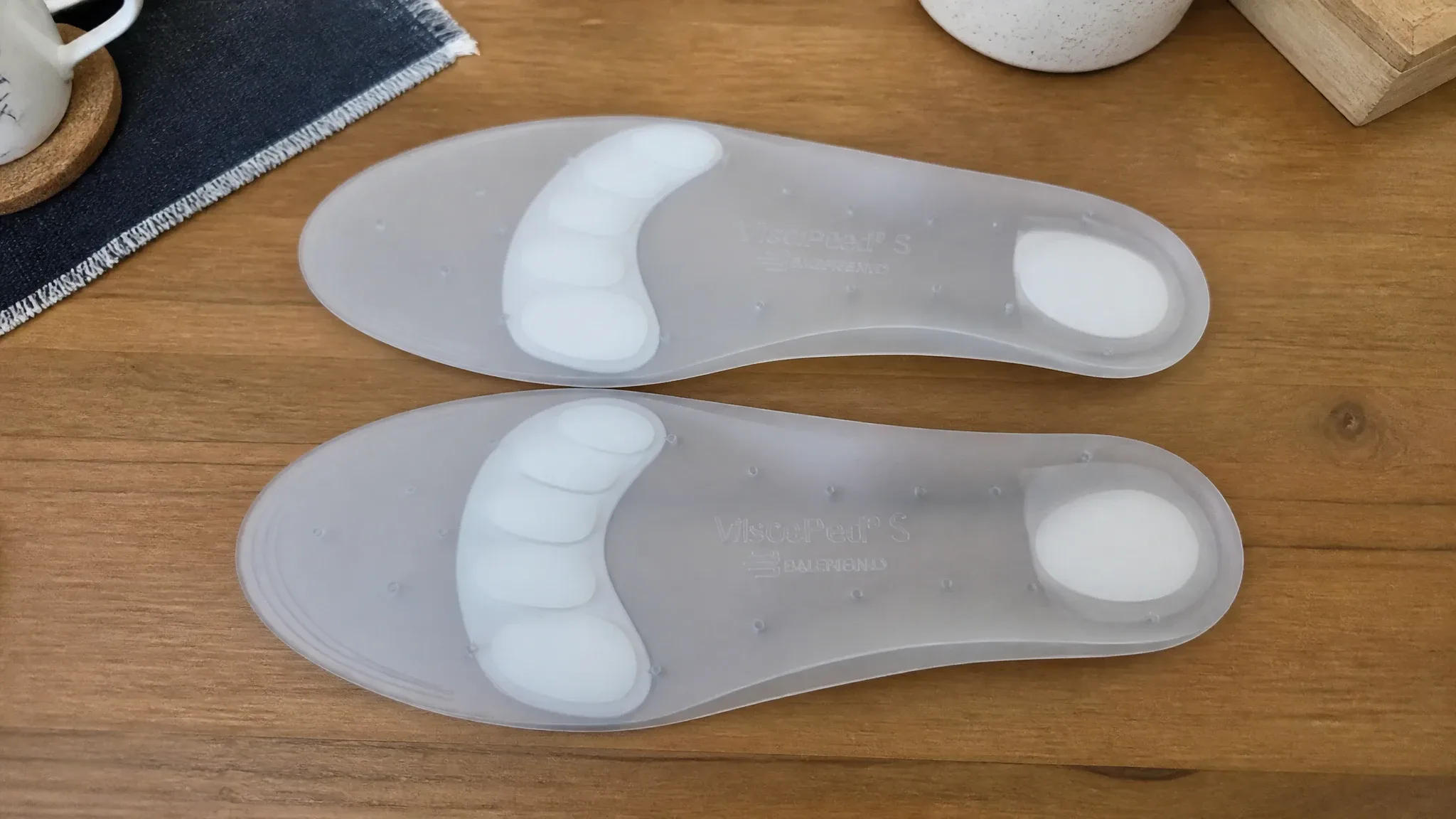
Bauerfeind sells sized, off-the-shelf foot orthoses rather than custom orthotics, built around a German manufacturing base with more than 300 orthosis variants across plastic, foam, visco, and milled construction. Having spent years as an exercise physiologist, I tested and fitted arch supports across diverse populations recovering from foot and ankle injuries. Repeatedly, I fitted thousands of runners and walkers with insoles tailored to athletic shoes. In real fittings, I helped clients with overpronation, supination, and fallen arches find functional alignment, and I often worked with people facing corns, claw toes, or ball-of-foot pain. That background is what I brought to testing this catalog, which splits cleanly by purpose: silicone ViscoPed models for pressure redistribution under painful areas, foam-and-plastic-core ErgoPad models for targeted heel relief, and Weightflex-core Run Performance and Sport insoles for active use, each priced and constructed differently rather than sharing one formula.
Owner feedback reflects that split. Buyers managing milder discomfort or seeking everyday support report the firmness and shock absorption holding steady over years of daily wear. Those buyers describe inexpensive insoles compressing and losing shape quickly by comparison.
Buyers with more severe, pre-existing foot pain report a less consistent outcome, with some finding no felt arch support or lasting relief despite the higher price. Sizing complaints run in both directions in aggregate reviews: some report the fit running large enough to crowd the shoe, others report it running small. A careful size check against actual shoe fit is the main practical risk to manage before buying, and the money-back window on the medical line (more on that below) offers a workable way to test fit before committing to the full price.
Bauerfeind, Tested
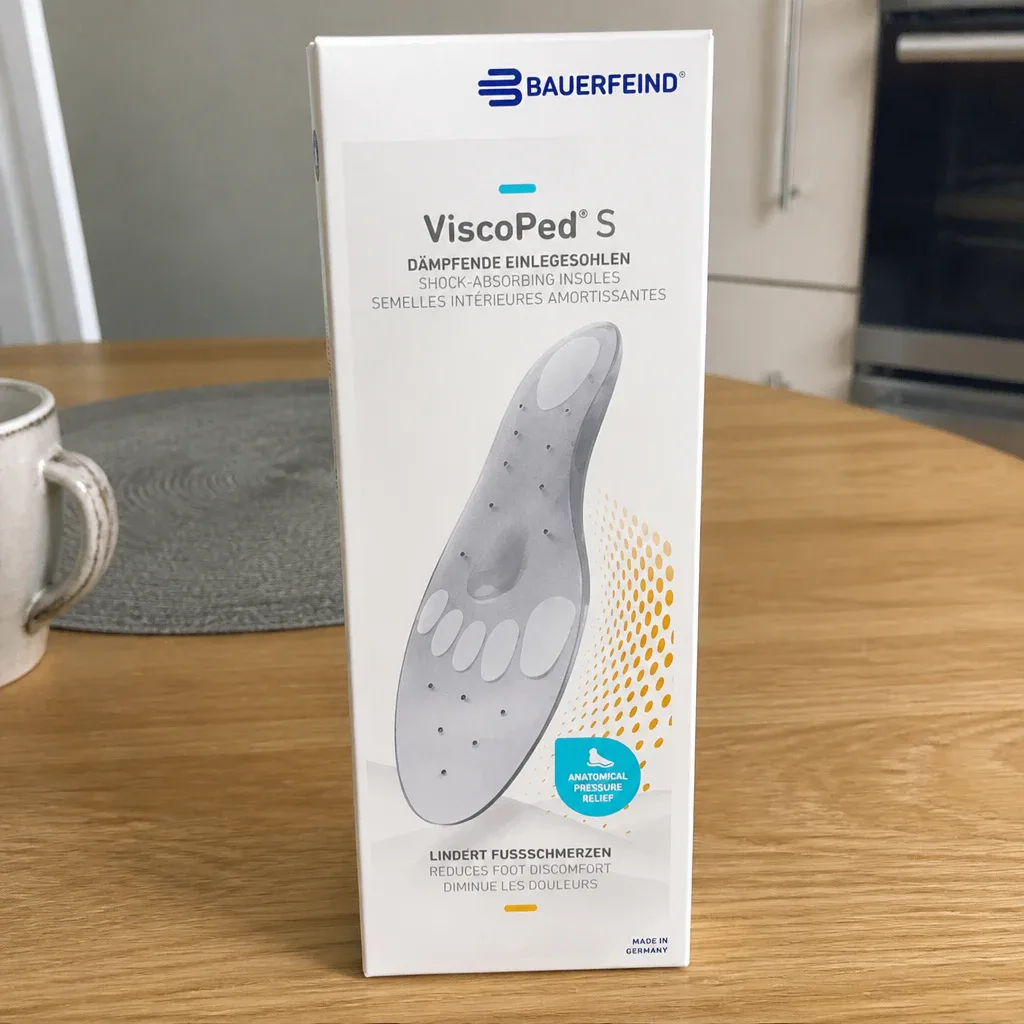
I ran the ViscoPed S, a viscoelastic silicone insole built for plantar fasciitis and general forefoot and heel pain relief, sized to my own size 5, through the same battery I run on every insole: a thumb-press arch collapse check, a heel-to-toe torsion twist, a full 8-hour retail shift, and six weeks of daily wear covering 40 to 50 miles of walking and eight runs, across concrete, dirt trails, carpet, and both a work sneaker and a wider walking shoe I trimmed to fit.
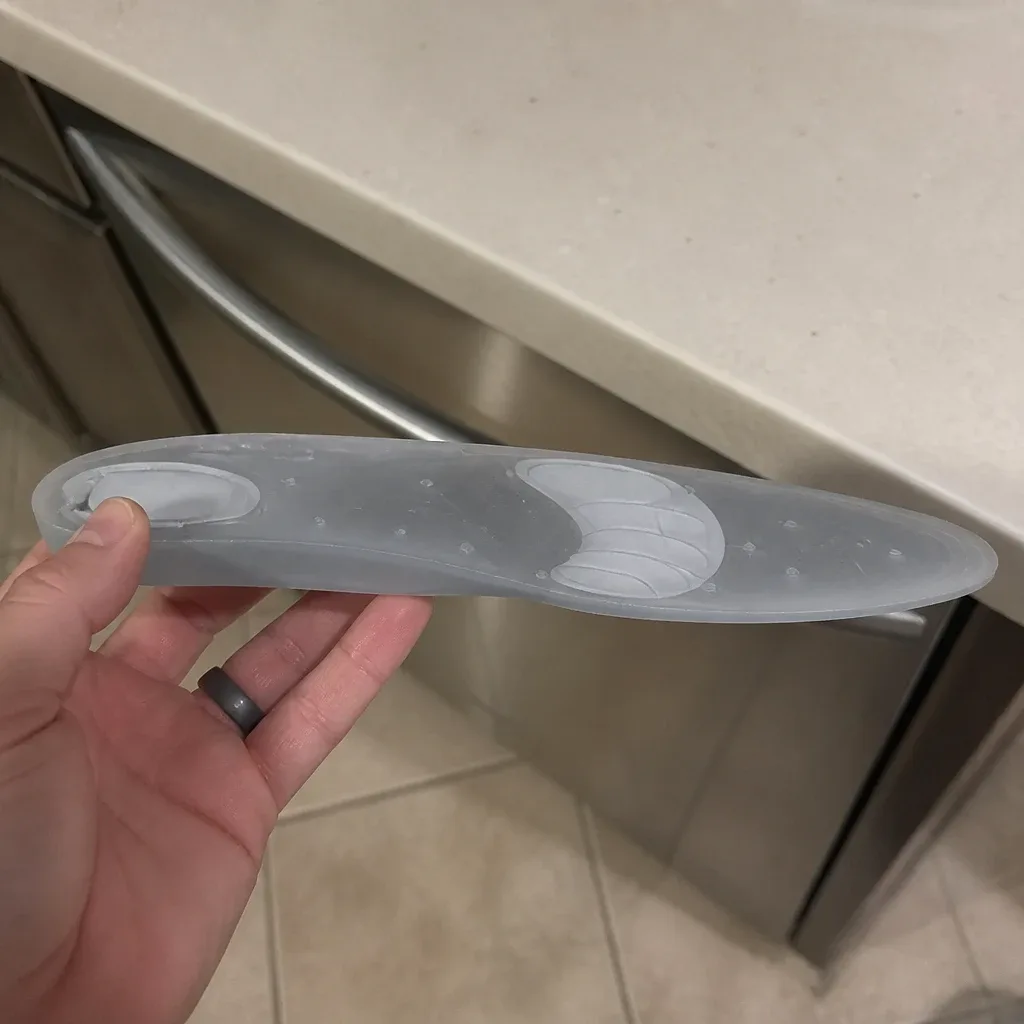
Under steady thumb pressure the arch compressed 2-3mm and sprang back immediately rather than bottoming out, and twisted heel-to-toe it graded a 2 out of 5, flexible rather than rigid. It took four to five days to stop feeling new and about a week and a half to feel fully normal, and by the end of the six weeks my heels and forefeet felt noticeably less beat up after a full shift than they had in the stock insole.
My benchmark throughout was the shoe's own factory insole rather than a competitor or a doctor's custom orthotic, and on that standard I wouldn't call these a substitute for a custom mold, just a solid off-the-shelf upgrade. "Great support," for me, means my arch never feels like it's collapsing by the end of a long day and my heel doesn't take a sharp jolt on hard flooring. The ViscoPed S met that bar on concrete and tile while feeling like overkill on carpet. I stand most of the day at work and run recreationally most weekends, at a body weight of 175 lb, with high arches and mild overpronation.
How Does Bauerfeind Support Feel the Moment You Stand?
Arch support in the Bauerfeind lineup is generated by a flexible core rather than a rigid shell. The patented Weightflex core uses an X-shaped module that engages under the arch and guides the foot through its heel-to-toe roll. The core stays springy at rest and firms up under load, so it resists collapse without locking the arch into one fixed position.
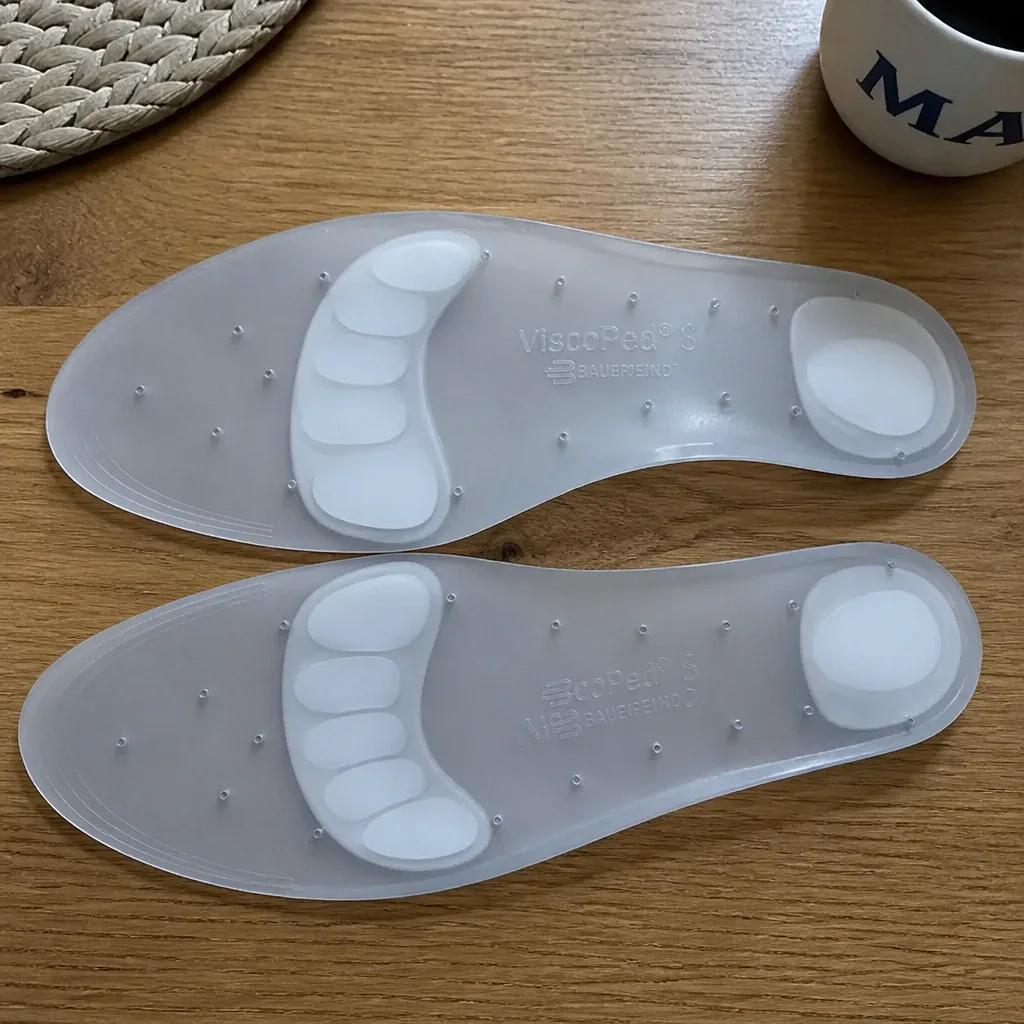
On the ViscoPed line, arch behavior works differently: a splay foot pad sits behind the metatarsal head and stabilizes a flattened or widened transverse arch instead of propping up the longitudinal arch. The ViscoPed S variant drops the firmer forefoot arch support found on the standard ViscoPed, trading that arch pressure for a softer, more even surface suited to feet sensitive to point pressure.
Torsional stiffness varies by product line. The Weightflex core is built to flex through the gait cycle rather than resist twisting outright, keeping the forefoot mobile during push-off instead of holding it rigid.
Standing on one leg on the ViscoPed S, I held steady for about 22 seconds, roughly the same as barefoot, so a wobble on one foot read to me as a balance and ankle-stability issue rather than proof the arch was wrong for my foot.
What's the Construction of Bauerfeind Insoles?
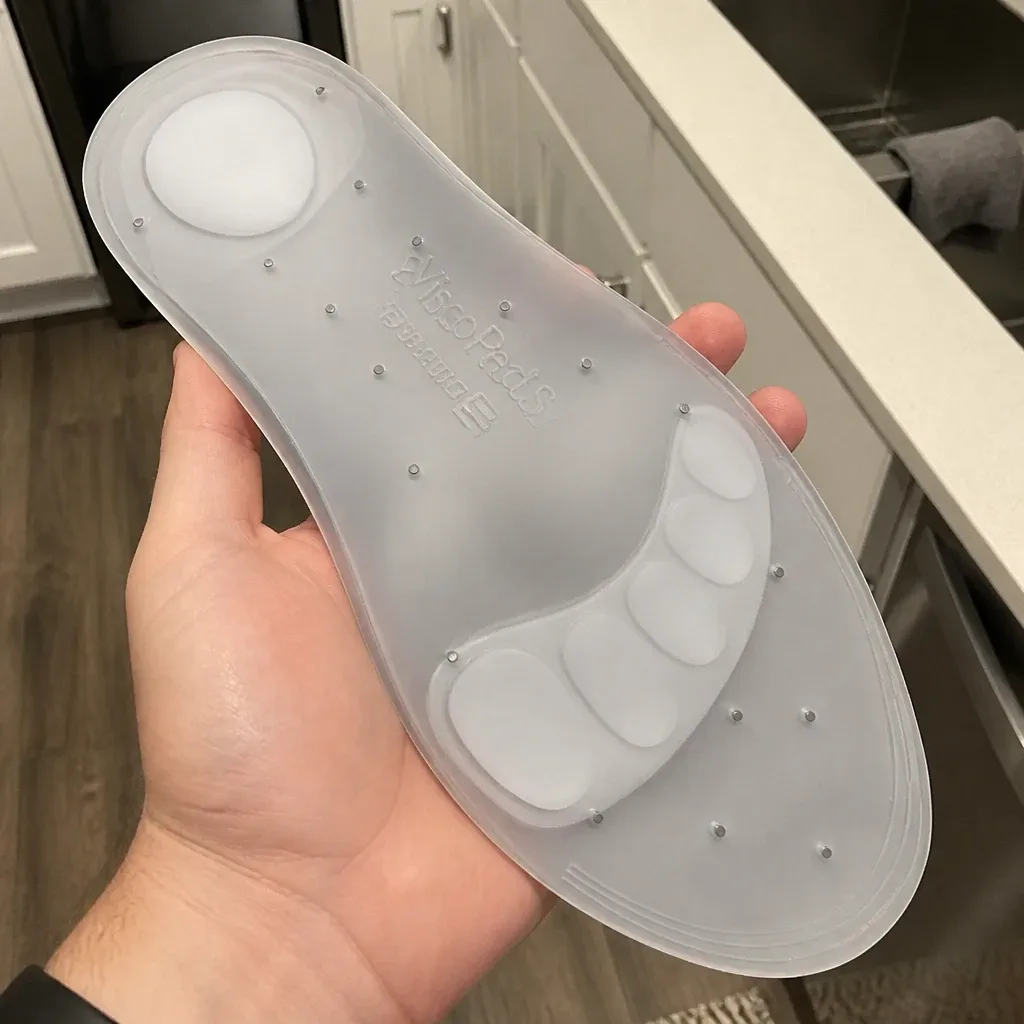
Construction differs meaningfully across the Bauerfeind range rather than following one fixed formula. The ViscoPed and ViscoPed S insoles are molded from high-quality silicone that stays gentle against skin, cleans easily, and includes ventilation openings cut into the surface for airflow.
The ErgoPad Redux Heel 2 instead pairs a soft polyurethane foam shell with an internal plastic core, with a teardrop-shaped cut-out positioned directly under the heel to absorb impact at heel strike; a fan-shaped structure beneath it is built to relieve tension on the plantar fascia and surrounding tendon structures. The Run Performance and Sport Run & Walk insoles use a top layer of 55% polyester and 45% polyurethane over the Weightflex core.
Heel-cup geometry is purpose-built per product. The Sport Run & Walk insole carries a slightly raised heel cup that guides and stabilizes the heel during motion, while the Ski & Skate insole uses a deeper heel cup that wraps the heel for lateral support inside rigid boots, along with a toe bank that stretches the smaller toes for better shoe contact.
Metatarsal support on the ViscoPed line is generated by the splay foot pad behind the metatarsal head, which increases the pressure-bearing surface at the forefoot. Top-cover treatment adds a functional layer on top of the core materials: several models carry sensorimotor zones woven into the top surface, and the Sport Run & Walk top cover is described as antibacterial and odor-reducing.
Out of the box, the ViscoPed S silicone core showed no flat spots and felt uniformly cushioned, with denser padding built into the heel and metatarsal zones by design, and pressing the same arch spot at week one and week six it rebounded at nearly the same rate both times. Bauerfeind builds these from high-quality silicone rather than the cheap foam that flattens fast, and I saw no permanent compression across six weeks of daily wear; based on that I'd estimate a year or more of reliable support for most people, and one long-term Amazon reviewer reported four years of daily wear with only light surface wear.
Mine never squeaked, and if they did I'd suspect trapped moisture between the silicone and the shoe's footbed. At $99.90 a pair I wouldn't call it a regret purchase, but it's a real investment I'd only recommend to someone actually dealing with heel or forefoot pain rather than someone chasing a slightly softer step.
Complete Specifications for Bauerfeind ViscoPed S
| Spec | Details |
|---|---|
| Brand | Bauerfeind |
| Model tested | ViscoPed S |
| Base material | High-quality molded silicone |
| Sizing | Sizes 0-6 |
| Ventilation | Ventilation openings cut into the surface |
| Trim-to-fit | Not specified by the manufacturer for this model |
| Care | Cleans easily with soap and water given its silicone construction |
| Thumb-press arch test | Compressed 2-3mm under steady pressure and rebounded immediately |
| Torsion (heel-to-toe twist) grade | 2 out of 5, flexible rather than rigid |
| Price (list) | $99.90 a pair (also seen at $94.00 across other retailers) |
| Aggregate rating | 4.1 out of 5 from 59 Amazon ratings |
What Do Bauerfeind Insoles Feel Like in Real Use?
Reported wear experience splits between comfort gains and unresolved pain relief. One long-term owner reported the ViscoPed still performed well after multiple years of daily wear, with only some visible surface wear by that point. Another early owner reported the firmness and shock absorption stayed consistent where cheaper insoles had gone soft and lost support within days.
Other owners reported the opposite: one owner with severe ball-of-foot pain and low arches reported that the gel forefoot padding felt no different from a low-cost gel insole and that arch support was not perceptible. Another owner reported the insole felt too flexible for a stable fit and was awkward to seat correctly in the shoe. A third owner, walking 3-4 miles daily in an athletic routine, reported no better comfort from the ViscoPed than from insoles costing a fraction of the price.
That same range of outcomes showed up differently on my own unit. On a 3.5-mile road run at an easy pace, the silicone cushioning noticeably softened each heel strike compared to the stock insole, and afterward my shins and knees felt fine, if anything less jarred on the concrete stretches than usual. That pavement cushioning also reduced the usual ache in my feet and shins, though my knees felt about the same since that ache was never pronounced there to begin with.
No blisters or hot spots turned up across six weeks; the only adjustment was mild firmness under the metatarsal pad for the first couple of runs, which I stopped noticing after that. The extra padding did add bulk, making my running shoes fit a half-size snugger with socks on, though I never needed to size up, and once my feet got sweaty the silicone's slightly tacky surface actually gripped better than a smooth foam insole.
Arch support felt natural rather than intrusive past the two-mile mark, and the balls of my feet stayed free of numbness with noticeably less soreness than the stock insole gave me, which I'd credit to the extra metatarsal padding. The tradeoff for all that cushioning spring was a shoe that felt a touch bulkier, not a low-profile fit.
Can You Use Bauerfeind Insoles in Any Shoe?
Shoe compatibility depends on the product line's profile. The ErgoPad Redux Heel 2 is built with a slim profile and low material height specifically so it fits into a wide range of shoe types without crowding the foot. The Run Performance Insoles allow the forefoot area to be trimmed down for a closer, custom fit inside narrower shoes.
Sizing is based on standard shoe size across the range rather than custom measurement, which keeps installation straightforward: the buyer selects a size matching their normal shoe size and inserts the pair directly. Some owners reported the resulting fit ran large enough to crowd the shoe and interfere with fit, while others with larger feet reported the opposite, describing the sizing as running small for the price paid.
At $99.90 a pair, buying three or four pairs upfront runs close to $300-400, and four pairs won't make any single pair last longer, it just buys coverage across more shoes at once. For my own rotation of one work shoe and one running shoe, two pairs would have covered everything I actually needed, and testing one pair for a month first, the way I did, is the smarter move before committing to a bigger purchase.
How Do You Handle Sweat and Moisture in Bauerfeind Insoles?
Moisture handling is addressed differently across materials. The ViscoSpot heel cushions are latex-free, do not absorb odor, and clean with soap and water. The Sport Run & Walk top cover is described as antibacterial and odor-reducing, aimed at managing moisture buildup during activity.
Care instructions differ by product: the Run Performance Insoles are not machine washable and require hand cleaning, while the silicone ViscoPed and ViscoPed S models are described as easy to clean given their silicone construction.
I didn't pull mine out every single evening and ran into no moisture problems over six weeks, though airing them out overnight on heavy sweat days clearly helped them dry faster. Unlike a soaked foam insole, the silicone never went floppy, so reinserting them was never a fight and they held their shape well enough to slide back in the same way every time.
What Could Go Wrong With Bauerfeind Insoles?
The most consistently reported issue is sizing mismatch rather than material failure. One owner reported the insole came out too large; it crowded the shoe with no workable return option once the mistake was discovered. A separate owner with larger feet reported the opposite, describing the fit as running small.
A subset of owners reported the insole simply did not deliver felt pain relief for pre-existing, more severe foot conditions, including one case of ball-of-foot pain paired with low arches where neither the gel padding nor any arch support was perceptible. One owner also reported the insole felt too flexible for a secure, stable placement inside the shoe.
I didn't develop any new knee, shin, or lower back pain from the ViscoPed S; walking actually felt easier on my knees and back on hard flooring during retail shifts, with the only clunky part being the slightly bulkier fit inside my running shoes. My feet didn't hurt wearing them all day on day one, though I noticed mild pressure under the metatarsal pad for the first two or three days before my feet adjusted.
Does Bauerfeind Offer a Warranty on Its Insoles?
Bauerfeind covers its medical-line products with a 60-day money-back guarantee. Beyond that trial window, products carry a manufacturing warranty in line with applicable consumer law, and the warranty period varies by product range rather than applying uniformly across the catalog. That said, my own ViscoPed S listing itself didn't advertise a specific insole warranty. The 60-day guarantee is a brand-level policy found through Bauerfeind's own retail sources rather than something printed on the Amazon product page, where sellers instead honor standard Amazon and retailer return windows for defects or sizing issues.
What Are People Really Saying About Bauerfeind?
My own unit's Amazon reviews sit at 4.1 out of 5 stars from 59 ratings, with 67% five-star and about 18% landing at one or two stars. The most common complaint is sizing running a little small for wider or bigger feet, while the most common praise is long-term durability.
The remaining ratings split across sizing complaints, unmet pain-relief expectations, and price-versus-performance comparisons against cheaper inserts. The Run Performance Insoles carry higher aggregate scores on smaller review counts, at 4.8 out of 5 across 4 ratings and 5.0 out of 5 across 3 reviews on two separate platforms.
Is There a Cheaper Alternative to Bauerfeind?
Cheaper alternatives exist in the $12-40 range, like Dr. Scholl's gel insoles or basic arch-support inserts, but they use foam rather than silicone and skip the metatarsal and heel padding construction. Direct pricing comparisons beyond that are limited in the sources gathered. One retailer selling out-of-stock Bauerfeind sizes points customers toward a modular insole from a separate, lower-cost brand as a substitute, but no side-by-side performance comparison between the two accompanies that suggestion.
What's the Price of Bauerfeind Insoles?
Pricing spans a wide range depending on the product line. The ViscoPed S I tested runs $99.90 a pair, though it has also appeared at $94.00 and $124.00 across different retailers. The standard ViscoPed lists higher at $129.90, and the Run Performance Insoles list at $74.99 in the US and EUR 49.90 in the EU.
Heel-specific products sit lower: the ViscoSpot Heel Cushions run $65.55 to $69.00, and the ViscoHeel and ViscoHeel K models run $49.78 to $58.99.
Bauerfeind's direct retail site offers multi-installment payment plans on select products, splitting the cost into as many as seven payments rather than requiring the full price upfront.
Where Should You Buy Bauerfeind Insoles?
I bought mine through Amazon, which also carries Bauerfeind's authorized US storefront. Bauerfeind's own bauerfeind.us site is the other reliable source for the full lineup, and the brand is also sold through third-party retailers including AliMed, TENSPros, Cascade-USA, ProBrace, Vitego, and ACJSA, as well as through secondary marketplaces such as eBay.
Who Are Bauerfeind Insoles Right For?
Bauerfeind markets its insoles toward specific foot conditions rather than as a general-purpose comfort product. The ViscoPed and ViscoPed S lines target metatarsal pain, Morton's neuroma, plantar fasciitis, sore knee joints, back pain, forefoot and toe deformities, and arthralgia. This is the brand's own marketing claim, not a clinical endorsement or a claim independently verified here. The ErgoPad Redux Heel 2 targets heel pain, plantar fasciitis, flat and splay feet, flexible flatfoot, and mild-to-moderate high arches, with knee and back problems noted as an accompanying rather than primary indication.
Activity fit also separates the lines. The Run Performance Insoles are positioned for running on asphalt, track, or trail, while the Ski & Skate insoles are built specifically for rigid boots. Bauerfeind's own product guidance separates the performance/sport line, intended for wear during activity, from the medical "Train"/"Loc" line, intended for all-day wear and injury management.
Medical-line products qualify for FSA/HSA reimbursement, and eligibility is filtered per product on the retailer site rather than applying to the entire catalog. The insoles are sold as off-the-shelf, sized products rather than custom-molded orthotics; buyers who need a fully custom fit are directed to Bauerfeind's separate milled-insole and customization product lines instead of the standard sized range.
Based on my own testing, the ViscoPed S fits best for people on their feet most of the day dealing with heel or forefoot soreness, plus casual runners who want extra cushioning, rather than someone chasing a rigid corrective orthotic.
So, Is Bauerfeind Worth It? Here's My Final Word
After six weeks in the ViscoPed S, I'd call it worth it for anyone with real foot fatigue or plantar discomfort willing to pay silicone-insole prices, though it's more than a casual buyer needs. I do not want to feel a stiff bump pressing into my arch with every single step, and tracking whether the arch holds its shape over weeks of daily wear rather than just flattening out is exactly how I judged this pair. The rebound I felt in the arch on day one stayed unchanged through week six, matching what long-term owners report over years rather than months, and the sizing complaints that show up in aggregate reviews never materialized on my own true-to-size pair. For milder, everyday foot fatigue a cheaper foam insole will do the job; for real plantar or forefoot pain, the silicone construction and targeted padding earned their price in my testing.
Michal Sieroslawski is an Entrepreneur, exercise physiologist, and personal trainer who has fitted over a thousand people with insoles. He holds a degree in Sports and Exercise Science from the University of Central Lancashire, where he studied biomechanics, anatomy, and exercise physiology. Since 2020, Michal Sieroslawski has helped local and online businesses get found in Google and AI search.