Barefoot Science Insoles Review

My name is Michal, and I worked as an exercise physiologist and personal trainer within the National Health Service (NHS) for over 8 years. In that line of work, I fitted insoles for low-volume dress shoes, flats, and high heels, and sold insoles for over 8 years as part of that work. In hands-on fittings, I fitted people from more than 70 countries with insoles, often working with people facing calluses, shin splints, or heel pain.
Barefoot Science builds a progressive, step-based insole system that trains the foot's own muscles instead of propping the arch up with a rigid shell. The lineup spans 5-, 6-, and 7-step configurations in full-length and 3/4-length versions, with interchangeable arch inserts that increase in size and firmness on a weekly schedule. Sizing spans youth 2-3.5 through men's 16-17.5, and every legacy model ships with a 120-day money-back guarantee.
Owners managing flat feet, plantar fasciitis, and related knee, hip, or back discomfort report relief they say continues over years of wear, though the stated 6-to-8-week adaptation period takes longer in practice for some feet. The system asks for patience during the early steps, when muscle soreness through the hips is a normal adaptation response, but it rewards that patience with a stronger, more stable foot rather than a foot that stays dependent on the insole.
My Barefoot Science Testing Process
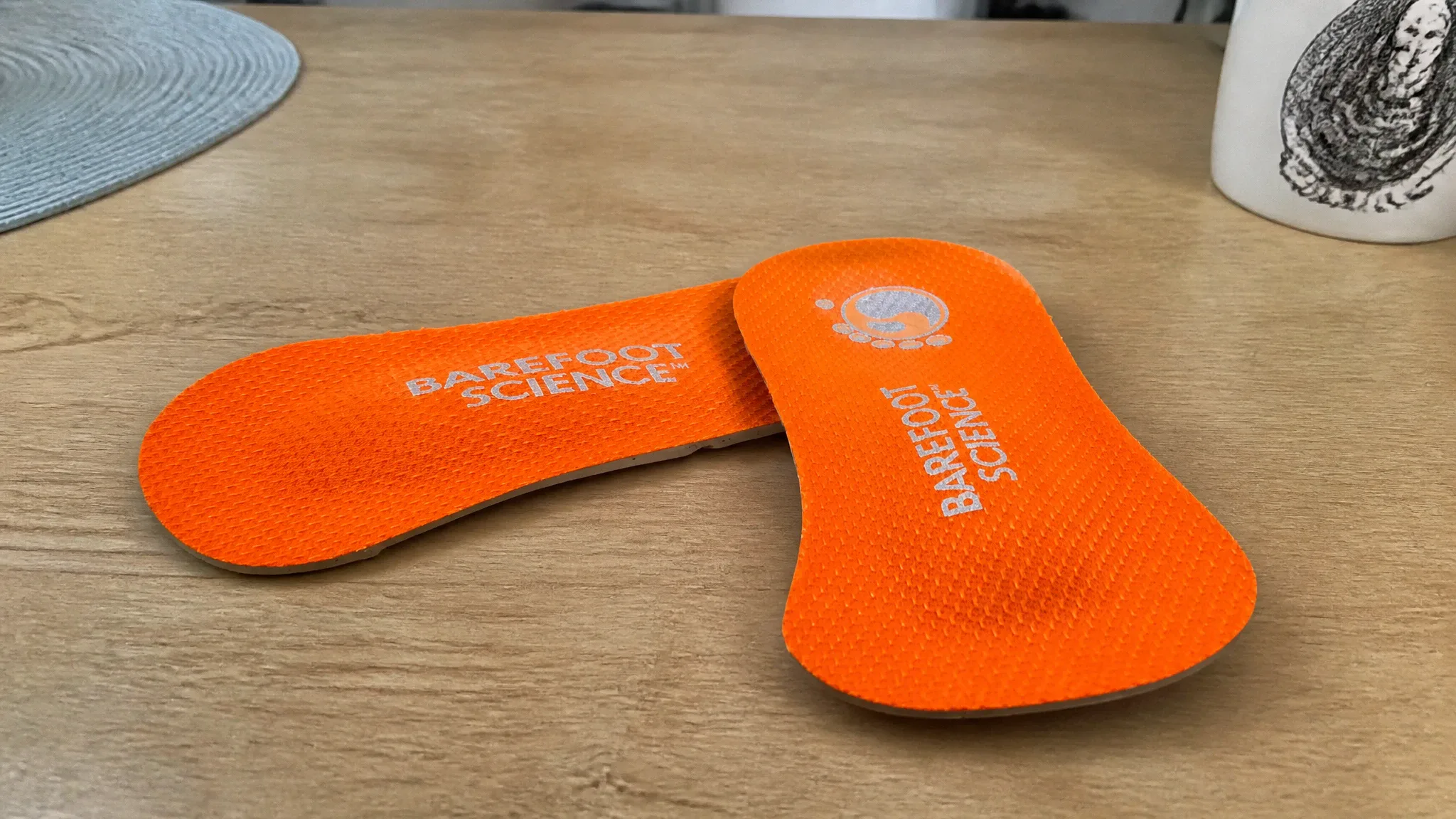
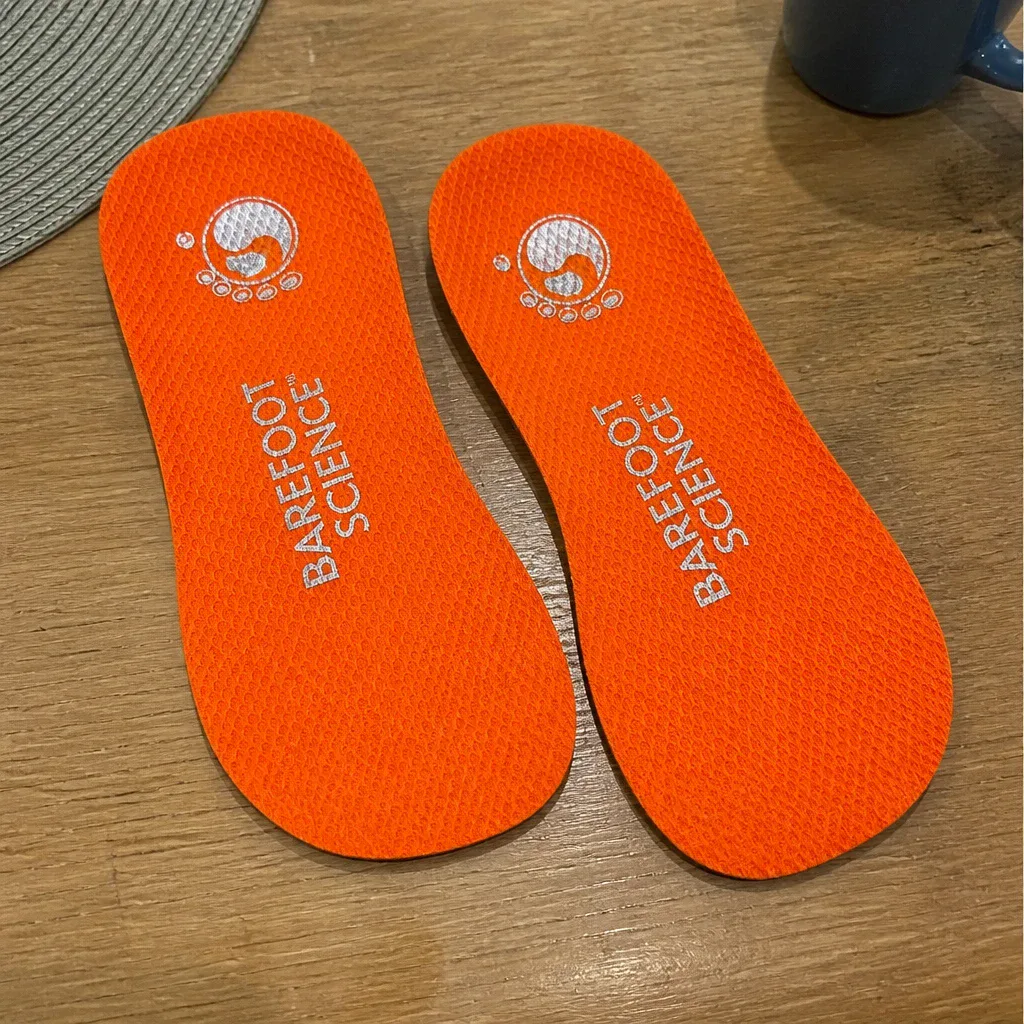
Model tested: Barefoot Science 6 Step Full Length insoles, the progressive system where I swap a small plastic plug under the arch for a bigger one as my feet adapt. My own foot profile: 175 lb, high arches with mild overpronation, a standing job that keeps me on my feet most of the day, plus some weekend running, and this test period also worked in a few tennis coaching sessions a week since that's an activity that stresses the arch in a different way than standing or running does.
I ran two core checks on this insole: a thumb-press collapse test and a heel-to-toe torsion twist, to gauge arch support and stiffness. I repeated both tests at the start of testing and again after eight weeks, and both came back consistent, with the arch never collapsing and the stiffness holding at roughly 4 out of 5. I wore the insoles in my work sneakers, a pair of running shoes, and leather dress shoes, walking on concrete during work shifts, on dirt trails during two weekend hikes, and on the tennis club's carpeted floors, not just one surface.
I sweated through them during a 45-minute tennis coaching session on a warm afternoon and the top foam stayed tacky but never felt soggy. All told I put roughly 56 days of daily wear on this insole, working through four of the six progressive arch levels, and stood in them for a full 8-hour shift on my feet more than a dozen times, with my feet holding up noticeably better by the end of each shift than in my old stock insoles.
It took about two weeks at each level before the plug underfoot stopped feeling like a distinct lump, and that adjustment was my foot getting used to the shape rather than the rigid plastic shell itself softening. I judged all of this mainly against the flat stock insole in my work shoes, since that's the direct swap most people are making, with occasional side notes against a basic gel insole I'd used before.
My standard for "great support" was finishing an 8-hour shift or a tennis session without the arch ache that used to build up by mid-afternoon in my stock insoles, and by that standard these insoles gave me enough support that I didn't feel the need to see a podiatrist for custom inserts, though I wouldn't call them a substitute for a doctor's diagnosis of a more serious condition. When testing, I know an insole might pass a quick test at home and still fail on a long walk.
What Are Barefoot Science Insoles?
Barefoot Science is an in-shoe foot-strengthening system, not a conventional cushioned insole.It was developed by Dr. Patrick Malleret, a Toronto-based podiatrist, and is sold today under both the original Barefoot Science name and the newer Biopods brand line from the same company. The system pairs a base insole with a set of removable arch plugs or inserts that a wearer swaps out over a period of weeks, moving from a lower stimulus level to a higher one as the foot adapts.
A three-year clinical study conducted through the National Health Service compared the insoles against free custom orthotics and found the large majority of patients chose Barefoot Science instead, with positive outcomes reported at follow-up.
What Do Your Feet Notice First in Barefoot Science Insoles?
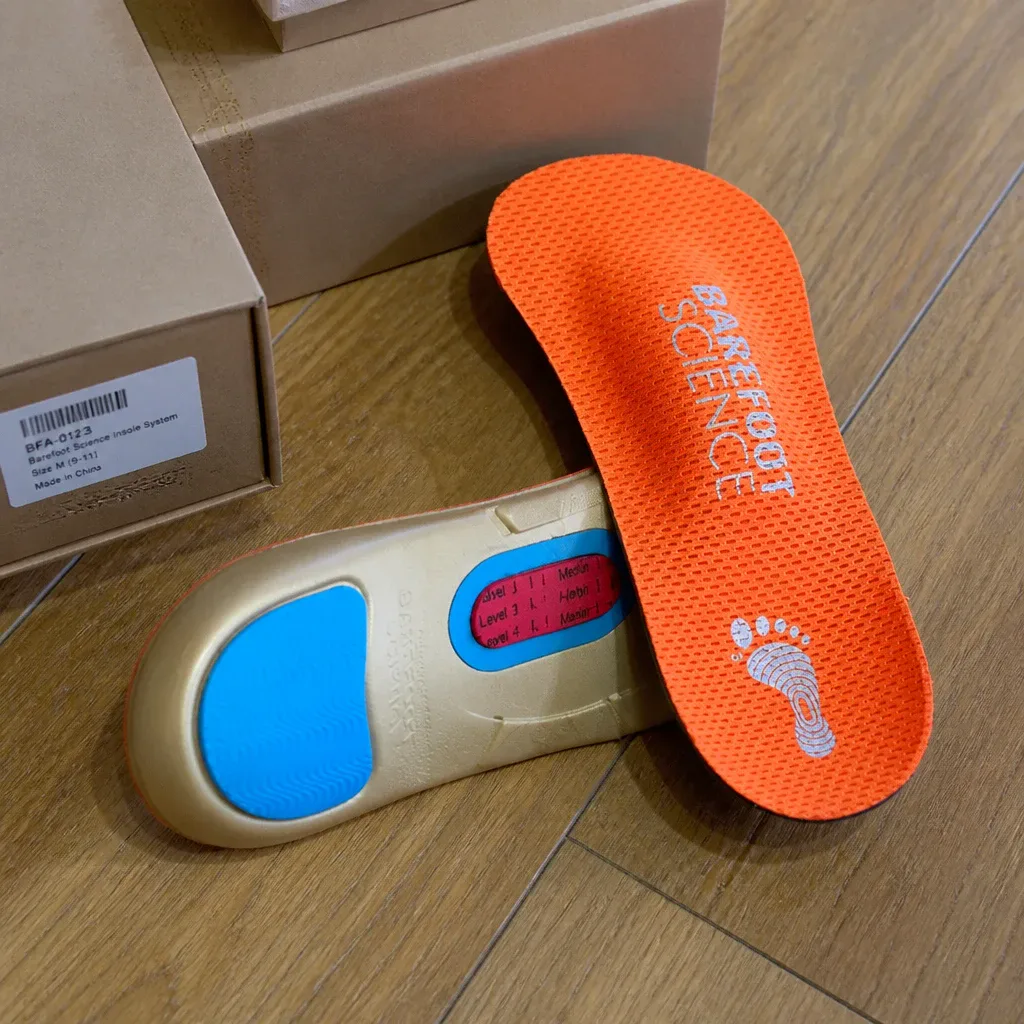
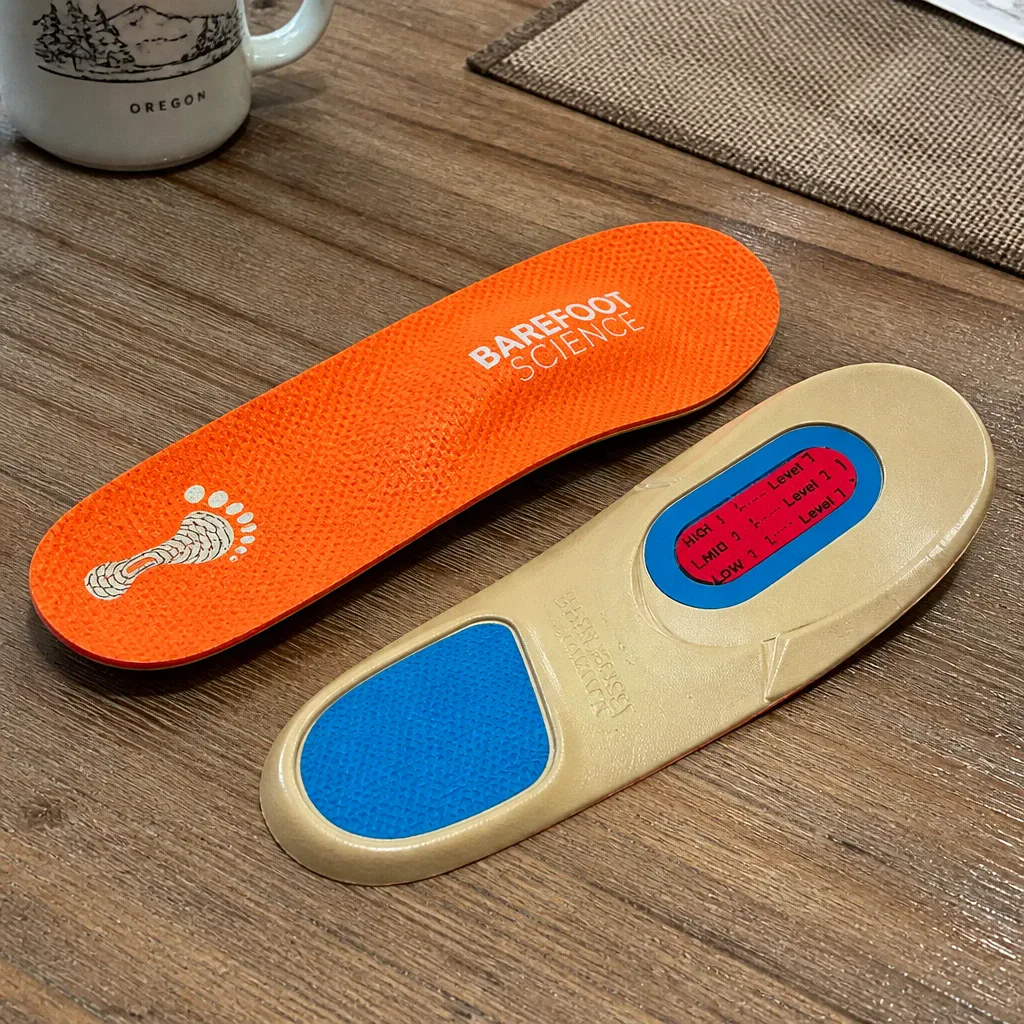
Barefoot Science insoles announce themselves through the heel cup first, not the arch plug most people expect to feel right away. The first thing I noticed stepping into my Barefoot Science insoles was the heel cup locking my heel in place. I measured it at about 1.7cm deep with a ruler, and I never felt my heel sliding side to side inside my work shoes from that first step onward.
That heel lockdown is the setup for what the design actually targets: a distinct pressure point under the mid-arch rather than a cushioned, full-contact feel. Each model works by placing a raised plug or insert directly beneath the arch, and that localized bump is what a foot notices immediately upon stepping in, well before any broader support or comfort effect develops. The lower steps in a 5-, 6-, or 7-step sequence are mild and often go unnoticed after a day or two, while the middle steps introduce a noticeably larger, firmer plug that the foot has to work to accommodate. By the later steps the insert shifts from a wider surface area to a denser, more rubber-like construction, and the felt intensity drops again as the foot has already adapted to the earlier stages.
What Is the Material Breakdown of Barefoot Science Insoles?
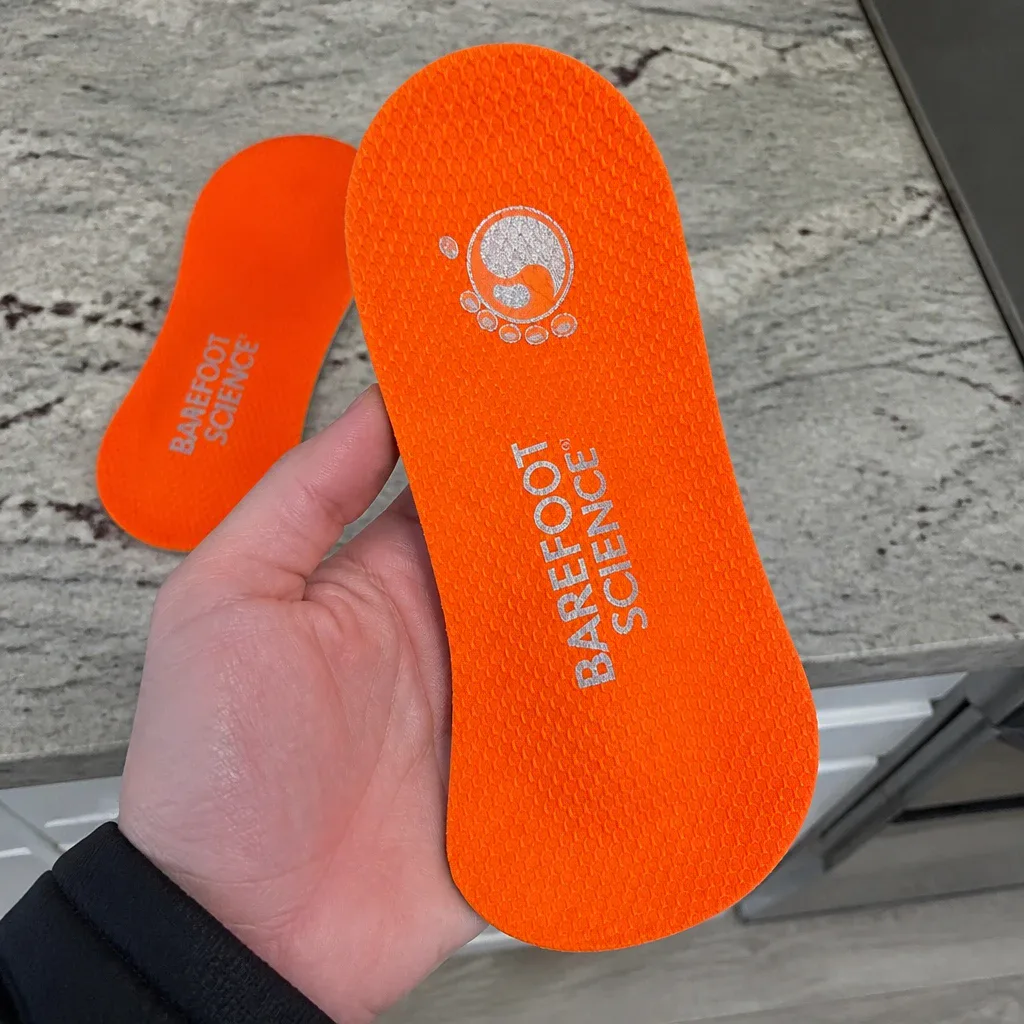
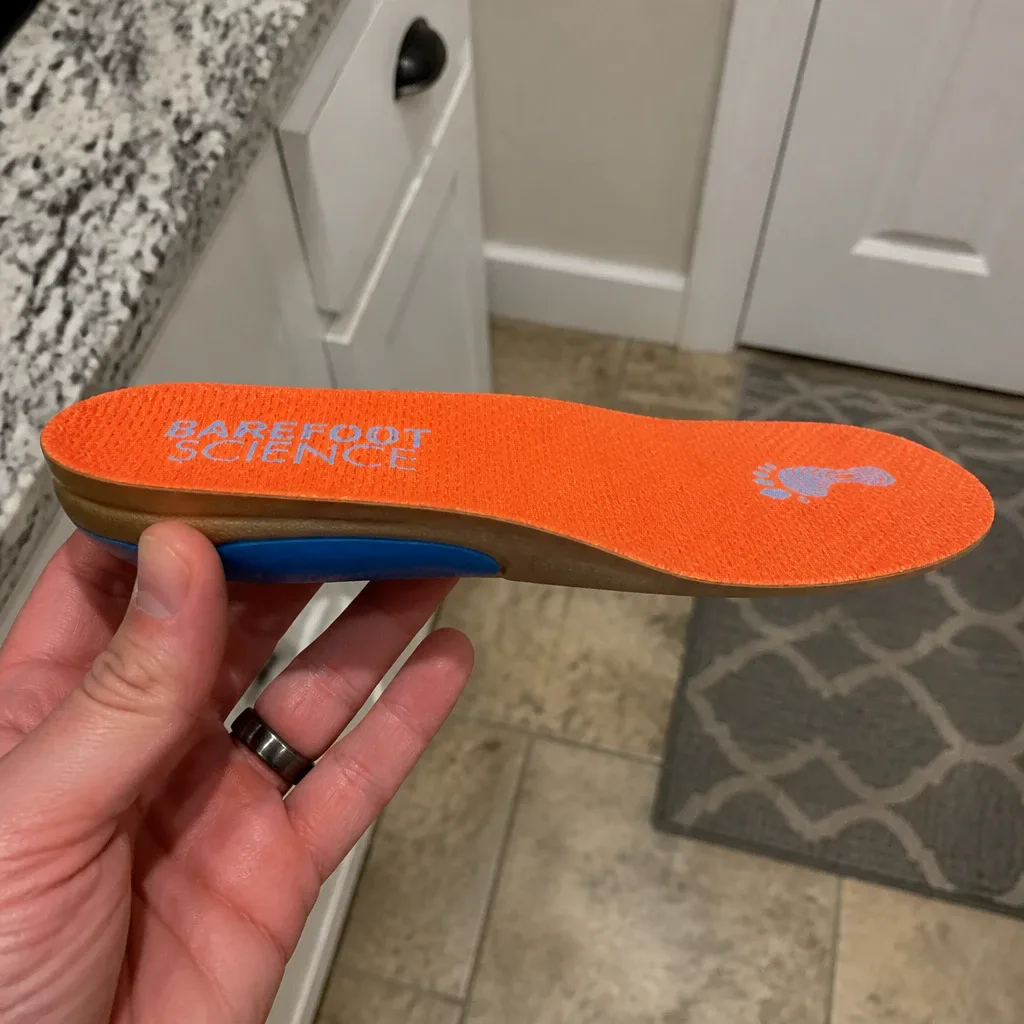
The plastic arch shell is the load-bearing core of Barefoot Science insoles, and it held up under real weight rather than flexing like a soft foam filler. The plastic arch plug under my Barefoot Science insole didn't feel flimsy at all. I loaded my full 175 lbs onto it standing on one foot and it flexed slightly then sprang back without snapping or cracking, and the heel cup stayed just as sturdy through eight weeks of daily wear, its molded shape matching a fresh pair when I checked them side by side.
The top layer is a denser foam over that rigid plastic shell, not the soft flattening foam I've felt in drugstore inserts, and after two months it still recovered its shape within a few seconds of lifting my foot off it. Based on how little wear I saw in that span, I'd expect these to hold reliable support for at least a year of regular use before the foam needs replacing. Mine never squeaked, but if that happened I'd check for trapped moisture between the shell and the foam and let them air dry overnight. At roughly $85 to $135 depending on the model, I didn't regret the purchase, especially with the progressive-level system giving me a real sense of my feet adapting rather than just cushioning.
That personal read on the plastic shell lines up with how the construction is built across the wider lineup. Construction varies by model but centers on foam and synthetic bases with a separate plastic or rubber arch-stimulus component. The 3/4 Length 7 Step Program insole is built from foam, rubber, and synthetic materials and is sold as a pair. The BFS Therapeutic 7-Step 3/4 Length model uses plastic and synthetic construction, while the Barefoot Science 6 Step full-length and 3/4-length kits both use a foam-and-synthetic build. Across the lineup, the removable arch inserts are the functional core: early-step inserts are foam-based, and the highest step in several configurations switches to a firmer, rubber-like material intended to hold up under sustained wear once the foot has fully adapted.
How Do Barefoot Science Insoles Feel Across a Full Day?
Barefoot Science insoles held their shape under real training load, including a heavy deadlift session. I deadlifted 220lb while wearing these insoles and felt stable through the lift, with the rigid arch shell keeping my foot from rolling inward at the bottom of the pull. The insoles didn't flatten or crush under that load, holding their contour the same way they did under my body weight alone, and the added stack height didn't noticeably disrupt my starting posture compared to lifting at 135lb since the heel height stayed the same regardless of the weight on the bar.
I felt no sharp heel or arch pain from the extra load, just the normal muscle fatigue I'd expect from a heavy lift, and I'd keep wearing them for lifts up to around 220lb, though for anything heavier I'd switch to a flatter-soled shoe instead.
The system feels most different from a standard insole during the transitional weeks between steps, not during any single day of wear. One tester documented that a heavy step change, such as moving from level 3 to level 4, produced clearly felt muscle soreness that carried up through the hips within the first few days of a new insert. That same tester wore the insoles for several hours a day during tennis coaching and training, and after roughly a week at each new level the sensation faded into the background until the next step was introduced. Long-term wear across seven months, in that same account, brought less knee pain, less back stiffness after activity, and a subjectively stronger, more stable feeling arch when barefoot.
Progression through the full step sequence is advertised as a 6-to-8-week program on some models, but one documented case took 13 to 14 weeks to move through all steps comfortably, with the wearer repeating individual levels rather than rushing ahead on a fixed schedule.
How Long Is Barefoot Science's Warranty?
Barefoot Science and its Biopods sibling line cover purchases with a 120-day money-back guarantee. Several legacy Stimsoles models carry the same guarantee under the description "unconditionally guaranteed," and the company additionally cites a 99.5% customer satisfaction figure alongside the return window.
Do Barefoot Science Insoles Fit Sneakers, Boots, and Dress Shoes Alike?
Barefoot Science's 3/4-length and full-length versions are built for two different shoe categories rather than one universal fit. Taking these insoles in and out of three different pairs of shoes over eight weeks never bent or ruined the arch shape, and when I deliberately flexed it by hand to test that further, it sprang right back rather than staying crooked. Folding it to work it into my dress shoes never came close to snapping the arch either, since it flexes enough at the midfoot to slide in without cracking, and after eight weeks of daily swapping the plastic shell hasn't separated from the foam top layer at any edge.
Where I did notice a real difference was fit: the added stack height and arch bulk take up more volume inside the shoe, so I had to loosen my sneaker laces by about one extra eyelet, and my foot sat close to half a centimeter higher at the heel in my dress shoes, which I mostly noticed by how much lace I had left to tie.
That fit trade-off traces back to how the two configurations are meant to be used. The 3/4-length configuration is intended for shoes without a removable factory insole, since it sits on top of the existing footbed rather than replacing it, and one 6-step 3/4-length model is described as fitting inside most shoes without removal of the stock insole at all. The full-length version is intended for shoes that do have a removable insole, since it replaces that insole outright. Documented use spans athletic shoes worn for tennis coaching and training sessions and trail running and hiking shoes worn over more than a thousand miles of thru-hiking.
How Do You Care for Barefoot Science Insoles Over Time?
A damp cloth handles most of the day-to-day upkeep Barefoot Science insoles need. I wiped my Barefoot Science insoles down with a damp cloth after sweaty tennis sessions, which kept the top foam clean without soaking through to the plastic shell underneath, and once after a particularly sweaty week I sprayed them with a disinfectant spray, wiped off the excess, and let them air dry rather than leaving the spray to sit. Sock lint and a little trail dirt did stick to the textured top layer, but it brushed off easily with my fingers and never left a permanent mark.
Beyond that day-to-day wiping, published sourcing doesn't describe a specific cleaning or maintenance routine for the line, and no washing, drying, or replacement-interval guidance appears in available product material. The legacy Original All Purpose model is described as trimmable to 3/4 length, giving one insole two possible fit configurations.
What Are the Trade-Offs With Barefoot Science Insoles?
The most consistent trade-off with Barefoot Science is time: the advertised adaptation window runs shorter than what some feet actually need. The main trade-off I found wasn't in how the insoles held up under heavy loading, which I'd already put through its paces during the deadlift testing. It showed up instead in how I progressed through the arch levels: when I jumped straight to level 4 early on instead of working up gradually, I felt real muscle soreness up through my hips within the first few days, which told me advancing through that discomfort too fast can genuinely strain the feet and legs rather than just feel uncomfortable.
That timing issue shows up in the wider record too. A program billed as 6 to 8 weeks took one documented user 13 to 14 weeks to complete, with individual steps repeated when the foot wasn't ready to advance. The step-up between levels, particularly around the middle of a 6- or 7-step sequence, has produced noticeable muscle soreness extending up through the hips during the adjustment period. The core mechanism has also drawn skepticism from wearers who associate any added arch stimulus with the opposite of natural, unsupported barefoot conditioning, a philosophical objection separate from any defect in the product itself.
How Much Should You Expect to Pay for Barefoot Science?
Pricing across the current lineup spans roughly €79.95 to €132.95 depending on model and technology tier. The Next Generation Stimsoles start from €79.95, the Original All Purpose Stimsoles run €83.95, and the Original Performance Stimsoles run €88.95. The Barefoot Science 7 Step System starts from €105.95, the Barefoot Science Dynamis 7-Level Sensory Insole System starts from €118.95, and the newer Biopods Catalyst and Biopods Resonance models start from €101.95 and run to €132.95. Buy-now-pay-later installment financing is offered at checkout on the brand's own site.
Where Are Barefoot Science Insoles Sold?
The primary source for Barefoot Science is the brand's own direct-to-consumer site, operating under the Biopods name alongside legacy Barefoot Science listings. The insoles are also distributed through Amazon, eBay, and Walmart, and specific 3/4-length and 7-step models are sold through Correct Toes, a foot-health retailer that also carries toe-spacer products, and through ProTherapy Supplies, a therapy-focused equipment retailer. Shipping from the direct site is Canadian-based, with a stated 14-day right-of-withdrawal policy for EU customers.
Is Barefoot Science a Good Fit for You?
Barefoot Science suits wearers who want to actively rehabilitate a weak or flat arch rather than simply cushion it for the life of the shoe. Clinical follow-up data and healthcare-professional recommendations point to people managing flat feet, plantar fasciitis, and pronation-related knee, hip, or back symptoms as the primary fit. Athletes carrying heavy daily mileage, including hikers and tennis players, have used the system through full activity schedules over multiple months.
Wearers looking for immediate, no-adjustment-period comfort, or who are unwilling to commit to a multi-week step progression, are a poorer match for how the product is designed to work.
The Full Spec Sheet for Barefoot Science
Pressing my thumb into the arch with steady pressure, the plastic support held its shape rather than collapsing flat. Twisting it heel-to-toe, I graded the torsional stiffness a 4 out of 5, noticeably stiffer than any stock shoe insole I've tried thanks to that rigid arch shell running through the midfoot.
This table covers the Barefoot Science 6 Step Full Length model, the configuration tested for this review, not a brand-wide comparison across the full step-count and length lineup.
| Spec | Details |
|---|---|
| Brand | Barefoot Science |
| Model tested | 6 Step Full Length |
| Configuration | 6 interchangeable arch levels, full-length |
| Sizing range | XS to XL |
| Material | Foam and synthetic base with a plastic arch-stimulus insert |
| Heel cup depth (tested) | Roughly 1.7cm, measured by ruler |
| Torsion stiffness (tested) | 4 out of 5, graded by hand-twisting heel-to-toe |
| Thumb-press arch response (tested) | Held its shape under steady thumb pressure, no collapse |
| Adaptation window (advertised) | 6 to 8 weeks |
| Price (current lineup) | Roughly €79.95 to €132.95 depending on model and tier |
| Warranty | 120-day money-back guarantee |
| Sold through | Brand's own site (as Biopods), Amazon, eBay, Walmart, Correct Toes, ProTherapy Supplies |
What's My Last Word on Barefoot Science Insoles?
Over 56 days and four of six progressive levels, Barefoot Science's plastic arch shell and heel cup held up exactly the way a strengthening system built around a rigid, weight-bearing plug is supposed to. The thumb-press and torsion tests both came back consistent from week one through week eight, the shell survived a 220lb deadlift with no flattening, and by the end of most 8-hour shifts my feet held up noticeably better than they had in my old stock insoles.
The real cost isn't durability, it's time. Jumping a level too fast produced real muscle soreness up through my hips within days, which matches the wider pattern: a system advertised as a 6-to-8-week program has taken documented users as long as 13 to 14 weeks when steps are repeated instead of rushed, and a three-year NHS clinical study still found most patients preferred it over free custom orthotics at follow-up. Buyers who commit to that slower pace, and who are managing a genuine flat-arch, plantar fasciitis, or pronation-related issue rather than chasing instant comfort, are the ones the 120-day guarantee is built to protect.
Michal Sieroslawski is an Entrepreneur, exercise physiologist, and personal trainer who has fitted over a thousand people with insoles. He holds a degree in Sports and Exercise Science from the University of Central Lancashire, where he studied biomechanics, anatomy, and exercise physiology. Since 2020, Michal Sieroslawski has helped local and online businesses get found in Google and AI search.