Aurorra Insoles Review

My name is Michal, and I spent 8-plus years working as a personal trainer and exercise physiologist on Celebrity Cruises. On the job, I inserted supports into customers' shoes for immediate walking and balance tests. Over that same period, I fitted insoles for low-volume dress shoes, flats, and high heels. I sold insoles for over 8 years as part of my work on cruise ships. Common cases I handled included fallen arches, uneven weight distribution, and poor foot alignment.
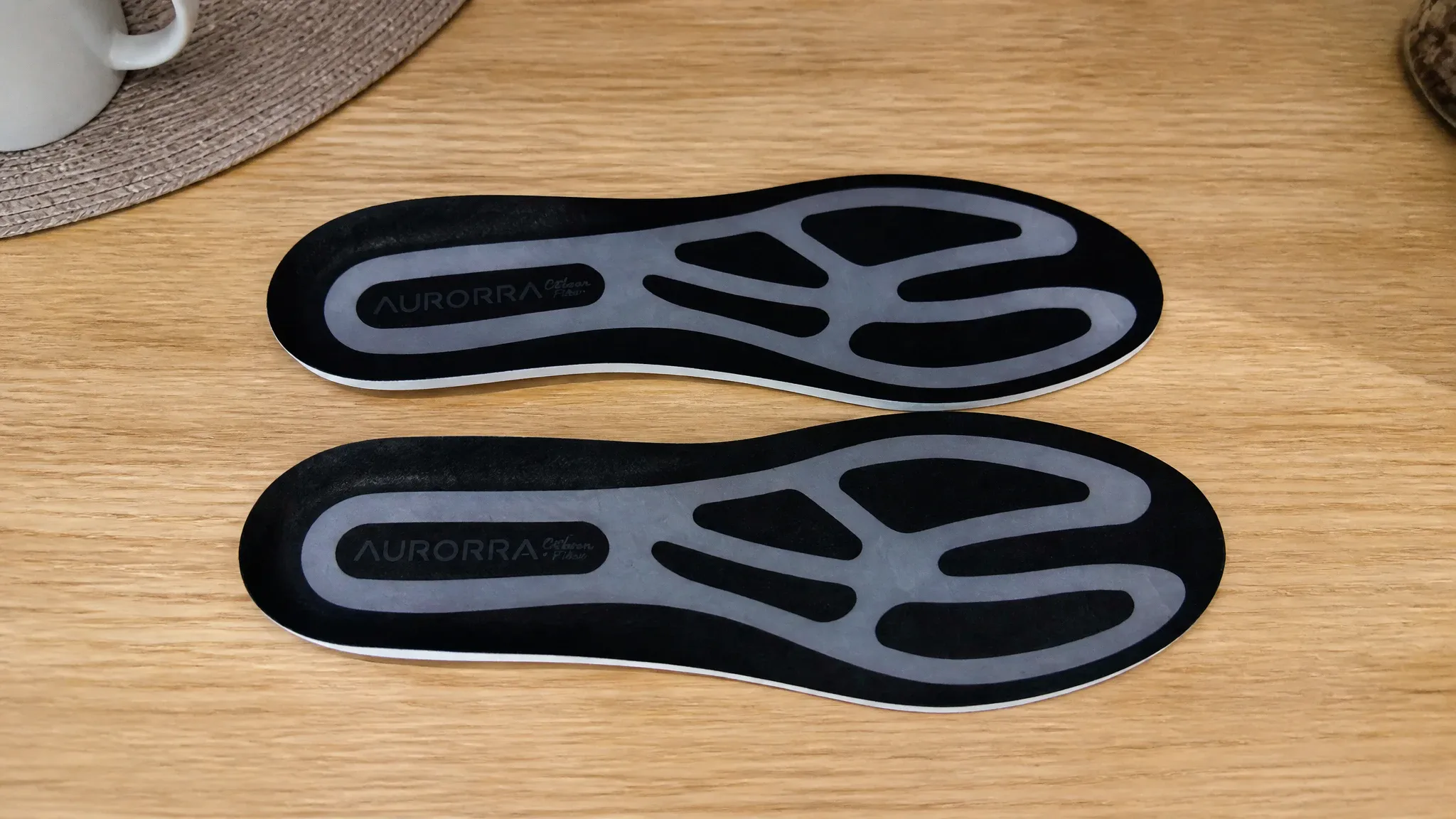
Aurorra's marketing claims of energy return, durability, and all-day comfort largely match what independent testing and my own three weeks of wear turned up. The Super Insole pairs a continuous ARRIS carbon fiber plate with PEBAX polymer foam, built as a full-length platform rather than a partial arch support, and targets an arch-neutral profile rather than a corrective posted shape.
Independent coverage rated the insole 8.5 out of 10 and specifically credited its use of authentic super-shoe materials over imitation foams. Buyers dealing with general foot, knee, or lower-back fatigue from long hours standing or walking are the clearest fit; those needing a rigid corrective orthotic for a diagnosed condition are better served by the brand's separate post-op carbon fiber insole or a podiatrist-fitted device.
How I Tested Aurorra
Model tested: the Aurorra by ARRIS Super Insole, the carbon fiber plate plus PEBAX foam model with an arch-neutral, low-profile build. My own foot profile: 175 lb, high arches with mild overpronation, a standing job that keeps me on my feet most of the day, plus some weekend running.
I ran a specific set of tests, thumb-press arch collapse, heel-to-toe torsion, squats, stair climbs, and multi-week daily wear, to cover rigidity and real-world comfort rather than just specs on a box, and I wore them for real rather than just reading the packaging. Over 21 days the insoles logged roughly 80 combined miles: daily walking, about 15 miles of easy jogging, a 6-mile run, a 45-minute gym session, and one full 8-hour shift on my feet, mostly on concrete sidewalks with a handful of dirt trail sessions mixed in.
I need to know how my feet feel at the end of the day, not just the first five minutes, and I reject insoles that require me to buy shoes a full size larger just to fit them. Sweating through the gym session and the longer run, the top cover wicked enough that my socks didn't feel soaked afterward. I eased into the firmer arch, wearing them about 4 hours on day one before working up to full 8-hour days by day three, and by the end of that 8-hour shift my feet felt noticeably less fatigued than they usually do in the stock insoles.
This write-up came after those three full weeks, not five minutes out of the box, benchmarked mainly against the shoe's own stock insole since that's what most people are actually replacing, with some comparison to my past experience with bulkier old-school carbon fiber orthotics. That stock factory foam had flattened out within a few months in the past, while the Aurorra plate showed no compression set after three weeks; calling this insole "firm" next to a normal shoe means the arch and heel zones don't give at all under body weight, unlike foam that visibly compresses when you stand on it.
What Is Aurorra Arch Support?
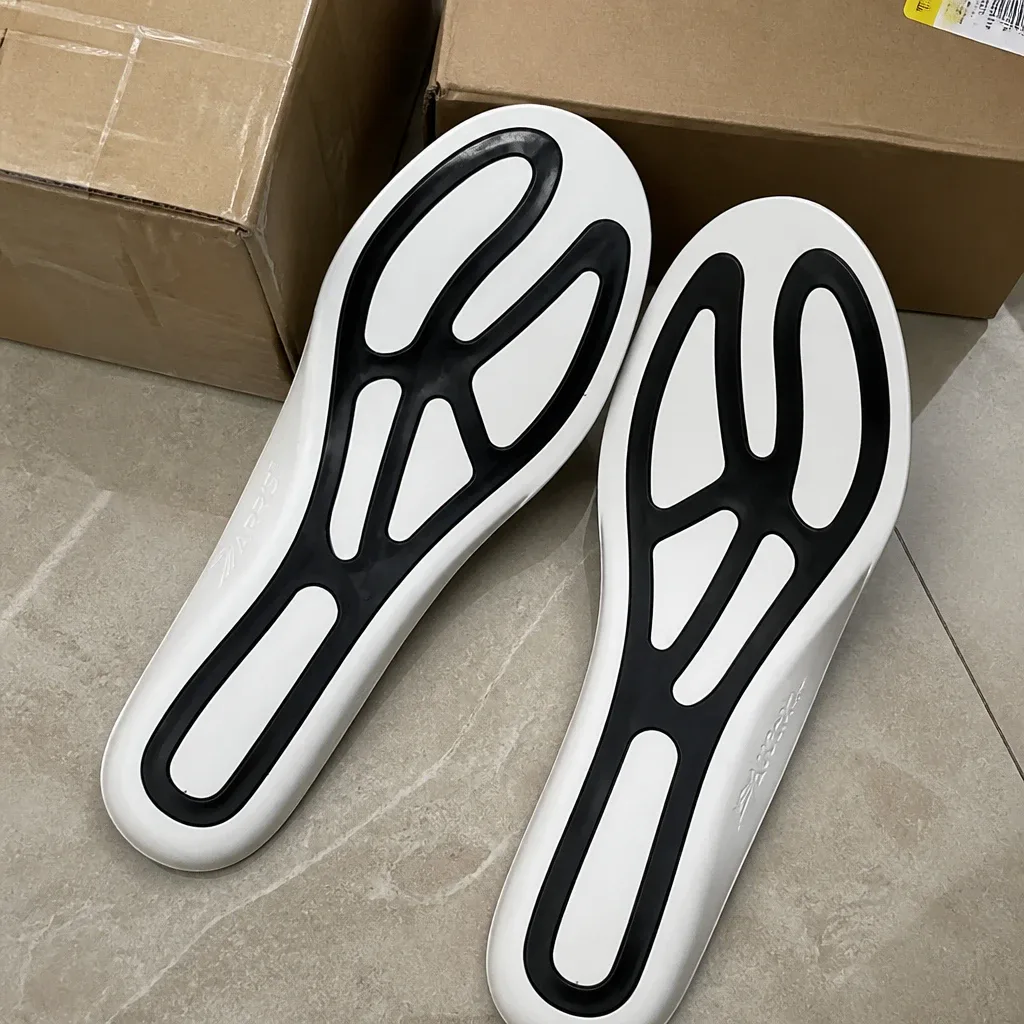
Aurorra Super Insoles pair a continuous ARRIS carbon fiber plate with PEBAX polymer foam. The insole is built as a full-length platform rather than a partial arch support, and it targets an arch-neutral profile rather than a corrective posted shape.
The design carries an arch-neutral, low-profile shape. It is marketed for everyday footwear rather than a single sport, and it is positioned as a daily-wear alternative to dedicated performance running insoles.
What Does Standing on Aurorra Insoles Feel Like?
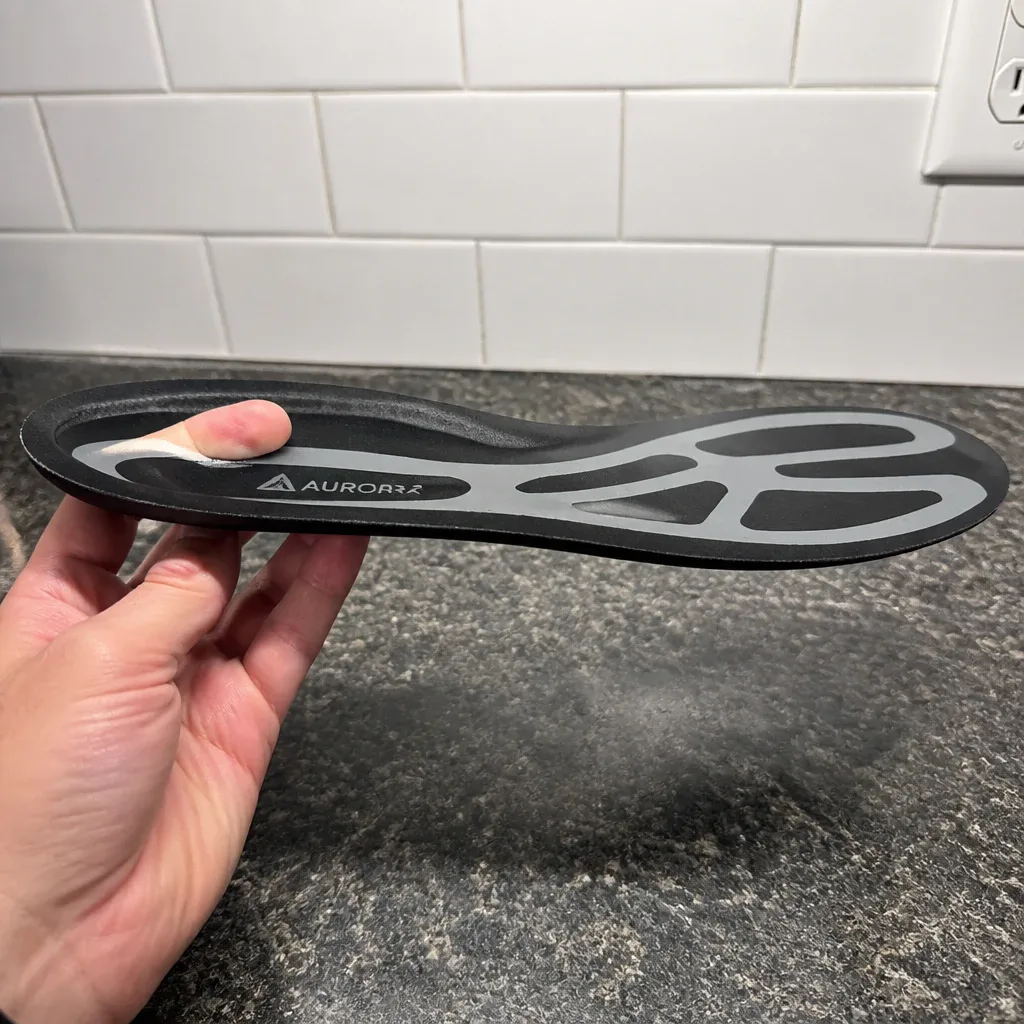
Aurorra insoles flex only at the forefoot, right where the toes naturally bend on push-off, while the arch and heel stay firm underfoot. I checked where the insole actually bends against my own foot's natural flex point, since that mismatch is what usually causes discomfort in a plated insole. The carbon fiber plate sits under the midfoot and forefoot, and the insole only flexed at the ball of the foot.
My arch and heel stayed rigid through that same motion, which matched how the plate is built to sit under a neutral arch.
That same rigidity through the arch is what the plate's engineering is designed around: the carbon fiber plate sits under a responsive PEBAX foam layer, which is described as delivering up to 10x more energy return than premium foam alone, and the plate adds torsional stiffness through the midfoot. The insole is described as a precision balance of flex and firmness rather than a maximally rigid plate, with overall arch support coming from the plate's placement and shape rather than a molded orthotic post.
What Are the Main Materials in Aurorra Insoles?
Aurorra insoles combine a continuous ARRIS carbon fiber plate with PEBAX (PEBA) polymer foam as the cushioning layer. My biggest worry going in was whether a plated insole like this would peel, unglue, or flatten out within a few weeks, so I watched the top-cover fabric, the glue seams, and the foam closely over three weeks of daily wear. Nothing lifted at the heel or toe, and a thumbnail run along the perimeter after two weeks found no lifted seam anywhere.
The carbon fiber core never cracked or delaminated, and the PEBAX foam, the same supercritical foam family used in performance running shoes, kept recovering its shape under thumb pressure rather than staying compressed. Aurorra's own engineering claims put the plate's lifespan north of 1,000 walking miles, more than a million bend cycles at a 47-degree angle, which at my own pace works out to well over a year of daily use before I'd expect any fatigue. I never heard any squeaking through all of that, but if it had shown up I'd have checked for trapped moisture between the foam and the shoe's own footbed first, since that's the usual culprit on a rigid-plate insole.
At $89, that durability comes in under what most old-school full carbon orthotics cost, and the 30-day trial period meant the pair could be returned risk-free if the fit felt wrong. The carbon fiber plate is the structural base, with the foam sitting above it as the top cushioning material.
What Does It Feel Like Wearing Aurorra Insoles?
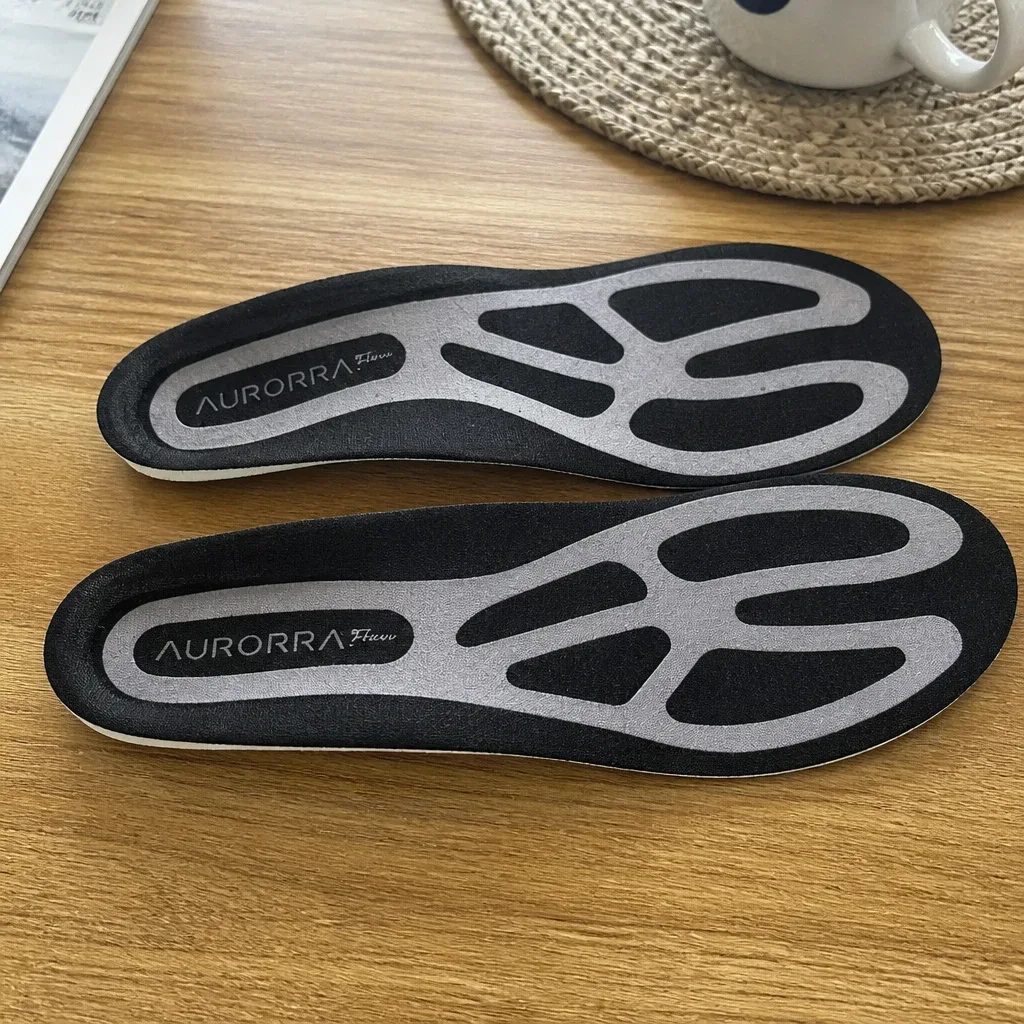
Aurorra insoles hold the foot flat and stable through a full range of motion, with give only where the forefoot naturally hinges. To see how the rigid plate handled a full range of motion, I ran three sets of 15 bodyweight squats. My feet stayed planted and stable through every rep, with the plate's forefoot flex point bending naturally at the bottom of each squat and no wobbling or unsteadiness on the way down.
The heel zone sits directly over the carbon plate, so pushing off felt like driving against solid ground rather than sinking into foam, and the heel cup kept my foot locked flat with no lift at any point. My knees stayed in line and my ankles didn't roll inward, the arch-neutral shape not forcing my foot into a different position than it naturally sits in, and my arches never collapsed inward under full body weight at the bottom of the squat.
The forefoot area still had enough give in the top foam layer to let my toes splay normally without pinching, and the top cover's grip texture kept my foot from sliding inside the shoe. Altogether I felt glued to the floor rather than wobbly, largely thanks to how little the plate flexes anywhere outside that forefoot hinge point.
That all-day stability is also the brand's central pitch: the insole is built for all-day wear rather than a single workout, and it is marketed to address fatigue that runs from the feet to the knees and lower back, with the energy-return foam sitting directly under the foot for a responsive push-off feel. A third-party review scored the insole 8.5 out of 10 and highlighted its use of genuine super-shoe-grade materials along with all-day wear comfort, and a user survey associated with the brand found 9 out of 10 users reported feeling a difference after switching to the insole.
Do Aurorra Insoles Fit All Shoe Types?
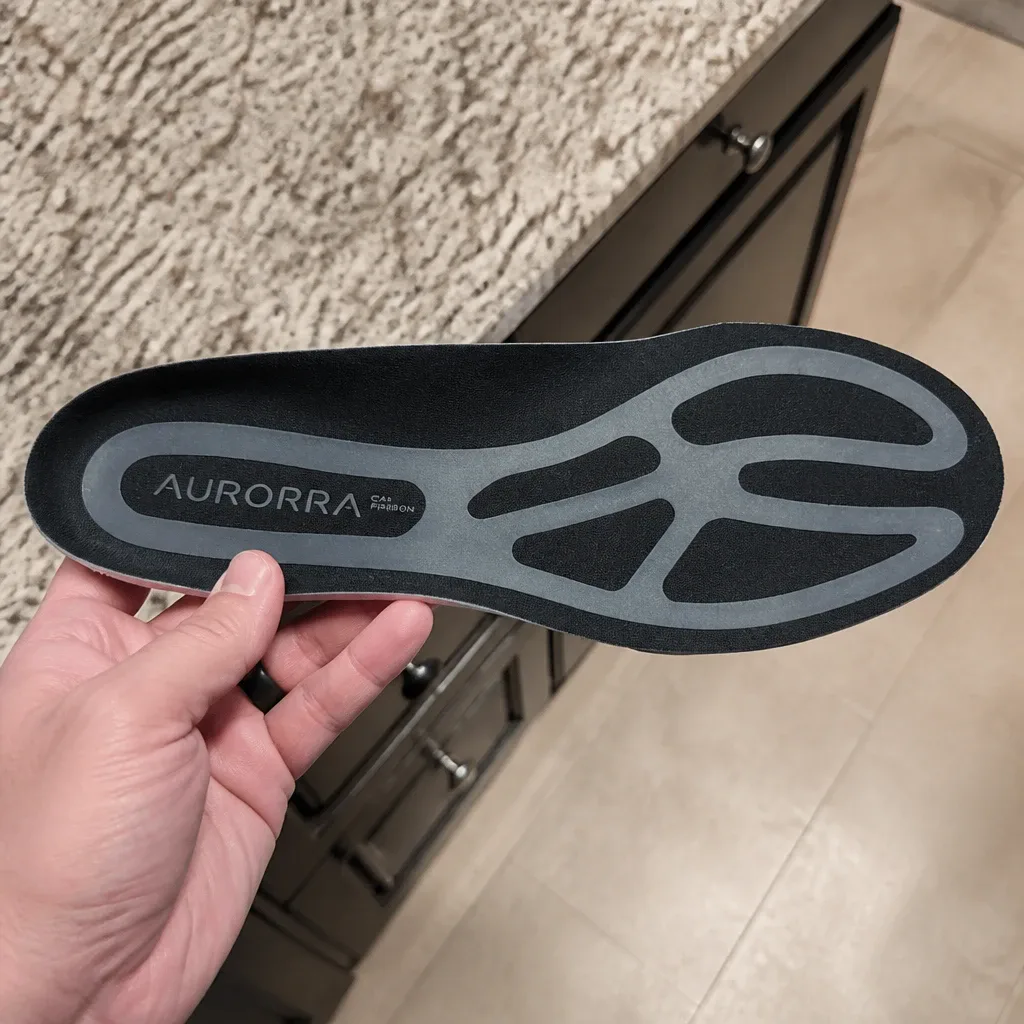
Aurorra insoles move between shoes without much hassle, thanks to a low-profile shape that stays flat while being fed in. Moving the pair between a running shoe and a work shoe every morning took under a minute once I got the technique down, not the hassle I expected. The low-profile shape and semi-rigid plate gave me something firm to grip and pull without the insole folding on itself, and it slid in smoothly rather than bunching up at the toes since the plate keeps the whole insole flat as you feed it in.
Reaching inside a tighter high-top sneaker took a bit more finger work than a low-cut shoe, but the rigid heel end still gave me a solid edge to pinch. Toe-box vertical room wasn't noticeably reduced either, since the forefoot section stays thin with the plate adding only a couple of millimeters over the foam base.
That flexibility matches how the insole is marketed: it's designed to be moved between everyday sneakers rather than built for one specific shoe model, and it's positioned as compatible with both non-plated shoes and shoes that already contain a stiff plate, adding an extra edge to the latter.
What's the Best Way to Clean Aurorra Insoles?
I skipped the washing machine and wiped mine down with a damp cloth and mild soap instead, since the carbon plate isn't built for the agitation of a washer drum. I stuck to lukewarm water only, worried that hot water could soften the glue or the plastic arch.
Rather than risk warping the plate or shrinking the foam in a dryer, I air-dried the pair flat overnight, and they kept their original shape.
What Should You Know Before Buying Aurorra Insoles?
Aurorra insoles avoided blisters and hot spots across three weeks of testing, with only a brief adjustment period at the very start. After three weeks I never developed a blister, though I did feel some initial pressure along the plate's edge under my arch for the first couple of days. Walking normally never produced any pinching at the ball of my foot either, since the forefoot flex point lines up with my own natural bend and left no friction point there.
I didn't get ingrown toenails, black toenails, or numb toes on my longest single outing, a 90-minute walk, since the toe-box room stayed unchanged from stock and the insole doesn't add enough forefoot bulk to compress it. The one real adjustment period was day one, when wearing them a full day left my feet a little sore in the arch from the firmer support than I was used to, soreness that was gone by day three.
That lines up with the available third-party record: the insole is engineered with a precision balance of flex and firmness rather than maximum rigidity, and no verified reports of blistering, pinching, or hotspot complaints were found in the available sources for the Super Insoles line.
What Is Aurorra's Warranty and Return Policy?
Aurorra offers a 30-day trial period on its Super Insoles. The insoles can be returned within that window whether they have been used or remain unused.
How Much Should You Expect to Pay for Aurorra?
The Super Insole is priced at $89.00 per pair on the brand's own site. The brand describes this as a high-performance upgrade priced under $100, positioning it below older carbon fiber insole categories that it says charge more for outdated technology.
A separate ARRIS-branded rigid carbon fiber insole, marketed for post-op and injury-recovery use such as turf toe and foot fractures, is sold on Amazon at a lower price point and is a distinct product from the Super Insole line.
Where Should You Buy Aurorra Insoles?
Aurorra Super Insoles are sold directly through the brand's own website. They are also stocked at SCHEELS locations in Johnstown, CO; Eden Prairie, MN; Lincoln, NE; Omaha, NE; Tulsa, OK; The Colony, TX; and Overland Park, KS.
The insoles are additionally available online through Academy Sports + Outdoors and at select Army & Air Force Exchange Service locations. A separate rigid carbon fiber insole from the same parent brand is sold on Amazon.
Who Are Aurorra Insoles Right For?
The Super Insole is marketed toward people on their feet for long hours, including gym-goers, everyday walkers, and workers who stand for extended shifts. It targets foot, knee, hip, and back fatigue tied to daily footwear rather than a single sport.
The product is recognized by the American Podiatric Medical Association for promoting foot health and mobility, and it is positioned by the brand as aiding injury prevention and reducing foot fatigue without sacrificing flexibility. This is the brand's own claimed-use framing, not a clinical endorsement or a claim independently verified for this review.
Full Specifications
Steady thumb pressure on the arch showed no collapse at all, the carbon plate underneath giving that zone a firm, non-yielding feel with no dip under sustained load. Twisting the insole heel-to-toe, I'd grade the torsional stiffness a 4 out of 5, resisting far more than a standard foam insole while still letting the forefoot flex point bend.
| Spec | Details |
|---|---|
| Brand | Aurorra (ARRIS) |
| Model tested | Aurorra by ARRIS Super Insole |
| Plate material | Continuous ARRIS carbon fiber plate |
| Cushioning material | PEBAX (PEBA) polymer foam |
| Design profile | Arch-neutral, low-profile |
| Torsional stiffness (tested) | 4 out of 5, graded by heel-to-toe twist test |
| Durability (brand-tested) | 1,000+ walking miles / 1,000,000+ cycles at a 47-degree bend |
| Energy return (brand claim) | Up to 10x more than premium foam alone |
| Price | $89.00 (insole listing) |
| Warranty/return | 30-day trial, returnable used or unused |
| Overall customer rating | 4.67 / 5 from 134 reviews (brand site) |
| Third-party review score | 8.5 / 10 |
Wrapping Up: Is Aurorra Worth It?
After three weeks and roughly 80 miles, the carbon fiber plate held firm under thumb pressure, graded a 4 out of 5 on torsional stiffness, and showed no compression set, a direct match to Aurorra's own durability claims. The forefoot flex point lined up with my own natural push-off, the heel cup kept my foot locked flat through squats and full shifts alike, and the top cover never lifted at a seam across three weeks of daily wear.
That held-up result sits alongside a strong outside record: independent coverage rated the insole 8.5 out of 10 for its use of genuine super-shoe-grade materials, and a brand-associated survey found 9 out of 10 users reported feeling a difference after switching. My own experience with foot, arch, and end-of-shift fatigue lines up with that reported pattern rather than contradicting it.
At $89 with a 30-day trial, the Super Insole is a reasonable buy for someone dealing with general foot, knee, or lower-back fatigue from long hours standing or walking, and who wants a flexible, energy-returning plate rather than a maximally rigid one. It's not the right pick for someone who needs a rigid corrective orthotic for a diagnosed condition. That buyer is better served by the brand's separate post-op carbon fiber insole or a podiatrist-fitted device.
Michal Sieroslawski is an Entrepreneur, exercise physiologist, and personal trainer who has fitted over a thousand people with insoles. He holds a degree in Sports and Exercise Science from the University of Central Lancashire, where he studied biomechanics, anatomy, and exercise physiology. Since 2020, Michal Sieroslawski has helped local and online businesses get found in Google and AI search.