Ariat Insoles Review: Are They Worth It?

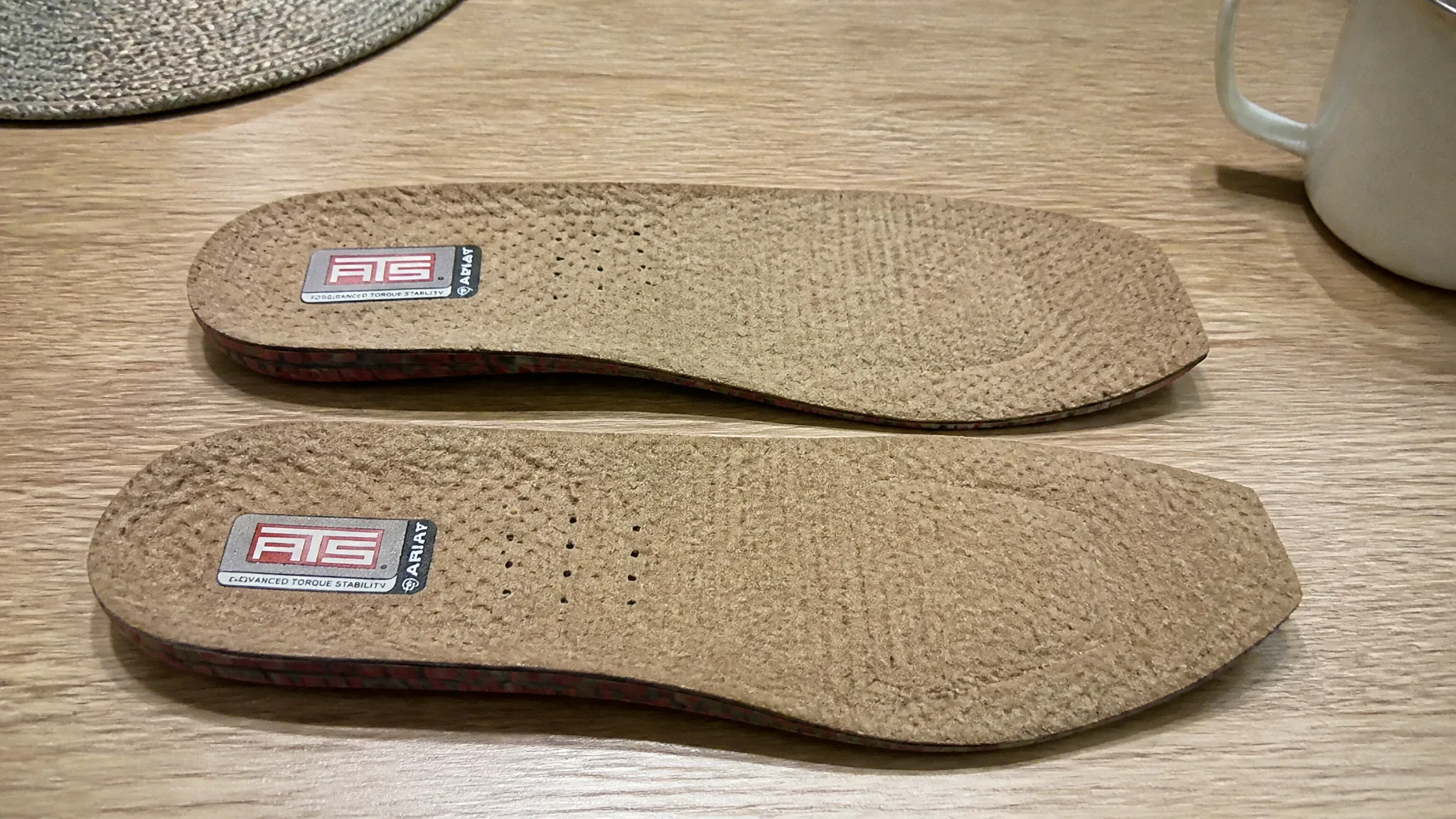
Ariat insoles are boot-specific footbeds built around the brand's own ATS platform and a tiered lineup that ranges from basic cushioning to gel-and-foam support. Drawing on my background as an exercise physiologist and personal trainer, I fitted insoles to reduce pressure points for individuals managing diabetic foot concerns and neuropathy. On the job, I evaluated how different foot positions and orthotic inserts alter an individual's overall gait and alignment, among them construction boots, steel-toe boots, and non-slip work shoes.
The lineup covers round toe, square toe, and wide square toe shapes to match Ariat's own boot lasts, with men's sizes running 7 to 14 in D width and women's sizes running roughly 5.5 to 12 in B width. Pricing spans about $15 to $36 depending on tier, and the ATS and Energy Max models carry the strongest owner ratings, averaging 4.6 to 4.7 out of 5 stars across thousands of reviews.
The entry-level All Day Cushioning tier draws more mixed feedback, and some flat-footed wearers report the firmer ATS arch feels stiff before it breaks in. Buyers who match the insole's toe shape and width to their specific boots report the most consistent comfort gains.
Behind My Ariat Testing
Model tested: Ariat Men's ATS Wide Square Toe Insole, Gel Cushion Footbed (Advanced Torque Stability construction, gel cushioning in the heel and forefoot, EVA foam base, breathable perforated top cover). My own foot profile: high arches with mild overpronation, 175 lb, and I'm on my feet most of the day at a standing job, plus some weekend running, and for this test I wore the insole in square-toe work boots across full standing shifts.
I ran a thumb-press collapse test on the arch, a heel-to-toe torsion twist, and full wear tests across walking, standing, and light workouts, chosen to mirror the real complaints I read in Ariat reviews: heel lift, gel that flattens fast, and boots that still feel like standing on concrete. I wore them in square-toe work boots across concrete, packed dirt, and gravel, covering close to 3 miles a day rather than running, since these are work-boot insoles built for walking and standing.
I put roughly four hours on them the first day before easing into full shifts, then kept wearing them for eleven straight days and 6,000 to 8,000 steps a day, including two full 8-hour shifts on concrete, before writing any of this. During a hot six-hour shift the moisture-wicking liner kept my socks noticeably drier than the stock insole did.
My main benchmark was the stock insole these replaced, informed by my own fitting experience across other work boots over the years. Against that stock foam, the gel heel pad clearly absorbed more impact and the arch support was more noticeable, though a few reviewers I cross-checked said the improvement felt smaller than they expected. Calling this insole "firm" means it feels closer to a supportive orthotic than the soft, squishy pad most sneakers ship with, more like pressing a finger into a firm mattress topper than a memory-foam pillow.
Day to day, I check if an insole squishes my toes against the top of my shoe. The wide square-toe shape gave my toes clear room front and center, with no crowding against the boot's toe box even during a full standing shift.
How Does Ariat Support Feel Underfoot?
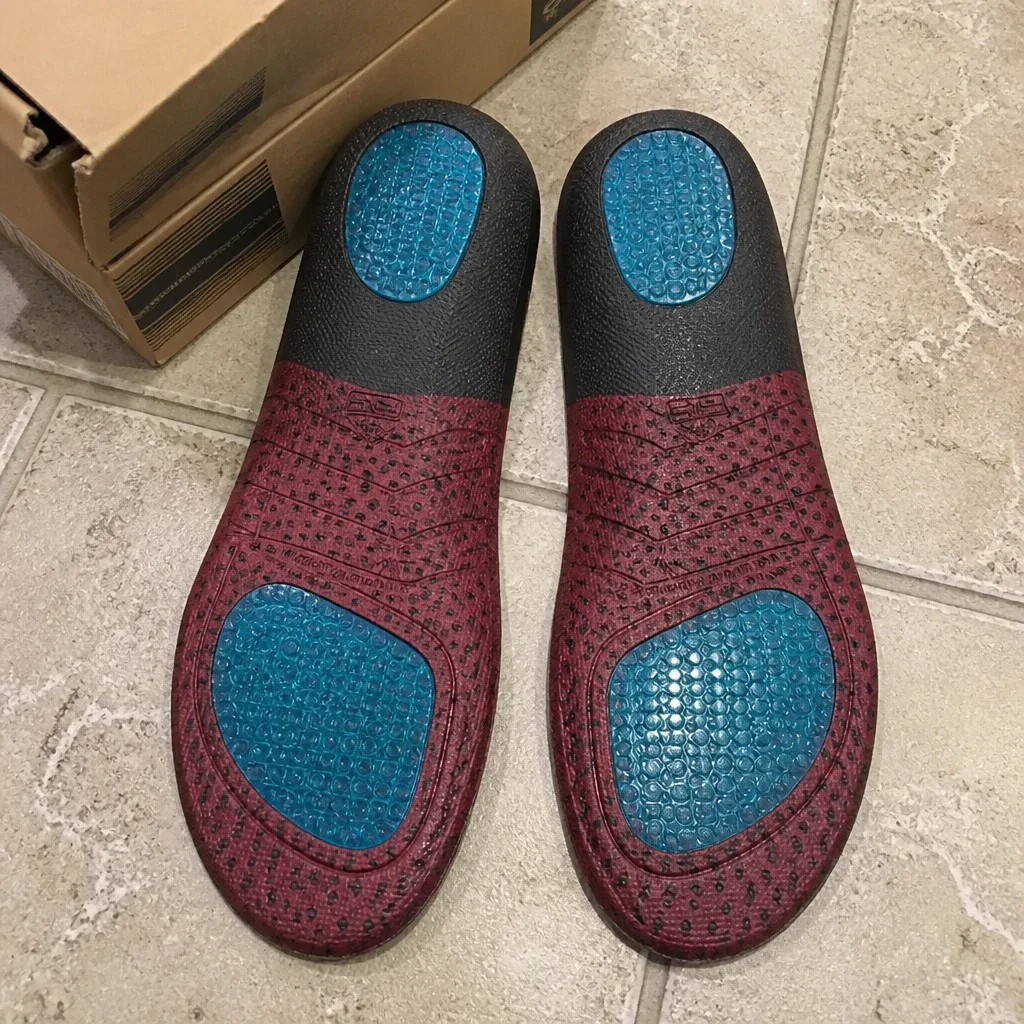
Ariat insoles keep weight centered across the forefoot instead of dumping it onto the outer edge of the foot. My weight never jammed painfully onto the outside edge with this insole in; the wide square-toe shape and molded heel cradle kept my foot centered, spreading pressure across the whole forefoot instead of the outer edge.
Owners report a similar centered, held-in-place feel from Ariat's Advanced Torque Stability (ATS) platform, which pairs a molded arch with a heel cradle to hold the foot steady inside the boot. The design targets fatigue reduction over long days of standing or walking rather than correcting a specific arch type.
Dual gel pads sit under the heel and forefoot on the ATS Round Toe model, absorbing impact at both ends of the step. Owners describe an immediate sensation of added support when switching from a worn factory footbed to the ATS insole, though several report the platform feels notably firm on first wear. One flat-footed wearer described the heel drop digging into the plantar fascia in a way that aggravated existing foot pain, while another owner described the same stiffness as short-lived and followed by a supportive, "locked-in" feel after a short break-in period.
What Materials Are Ariat Insoles Made Of?
Ariat insoles are built from tier-specific materials, with the tested ATS Wide Square Toe model using an EVA foam base and separate gel pads at the heel and forefoot. The left and right insoles were identical in thickness and shape when I laid them side by side, measuring 5mm at the heel and 3mm at the forefoot on both. Both arrived with clean edges, even stitching on the top cover, and no glue overspill, without any of the trimming defects some cheaper aftermarket insoles ship with.
The arch piece didn't snap or crack under my full 175 lb standing on one foot, flexing and returning to shape through a 20-second single-leg stand with no cracking sound or permanent dent.
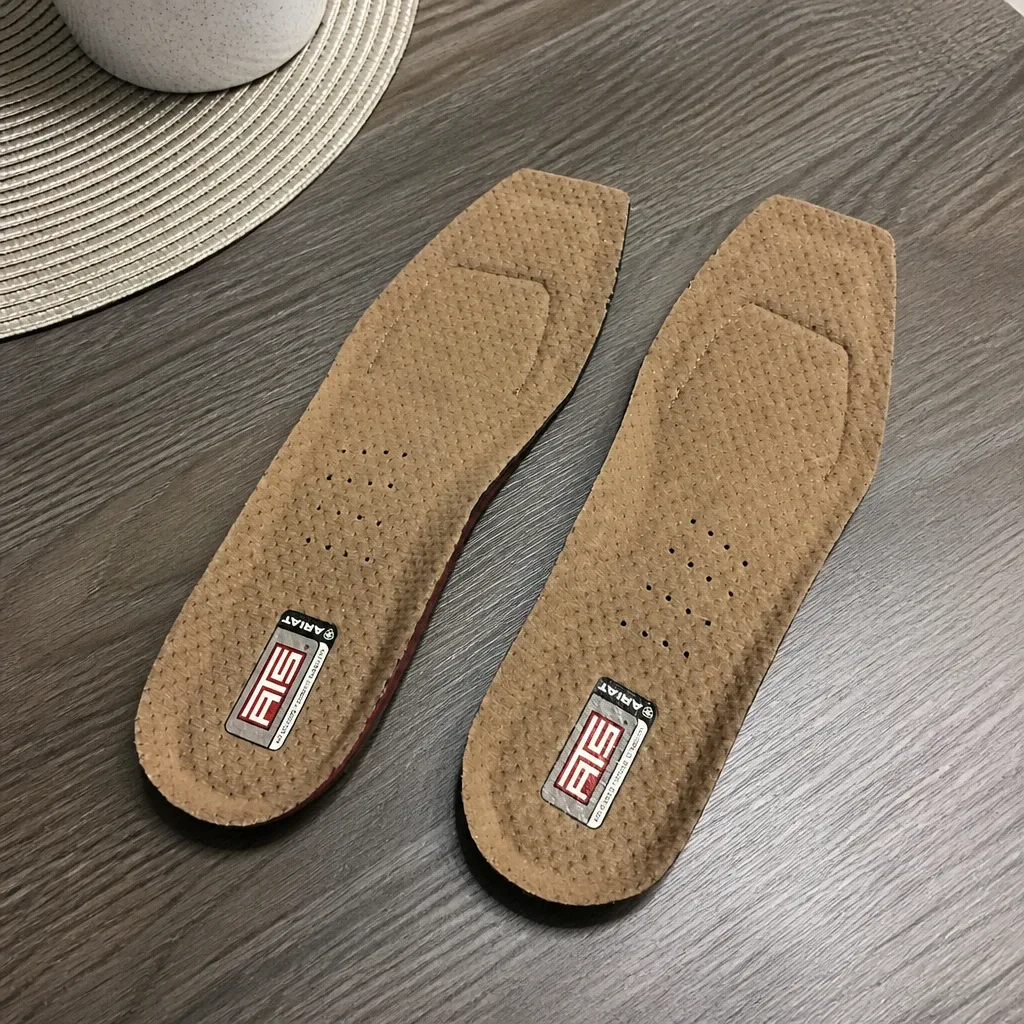
Most of the added bulk over a stock insole sits in that gel, though a handful of reviewers I cross-referenced reported the pads compressing noticeably within a week of heavy daily use. Based on my eleven days plus the wear pattern showing at my heel, I'd expect reliable support for roughly four to six months of regular work-boot use before the gel visibly compresses, shorter for anyone on their feet all day in physically demanding work.
At around $27 to $36, I wouldn't regret the money given the real fit improvement in my square-toe boots, though buyers expecting a dramatic overnight comfort fix may find the difference over stock insoles smaller than hoped. Mine never squeaked, but if that happens I'd pull the insole out to check for trapped moisture or a wrinkle against the boot's footbed and let both fully dry before reseating it flat.
That same trade-off between tiers is what the published material breakdown points to as well: composition varies by tier. The Power Support line is built from polyurethane and TPU, with gel cushioning, a molded heel cradle, and open-cell foam construction. The Energy Max Work line uses rebound foam with open-cell ventilation and a moisture-wicking liner.
The Pro Performance line lists a smart-rebound heel pad, moisture-wicking liner, and air-vent cooling channels, with one wide square toe SKU documented at 90% polyurethane and 10% polyester total footbed composition. The All Day Cushioning tier is described only as a contoured cushioning insole with a moisture-wicking liner and built-in odor defense, without a published material breakdown. The bottom surface and shell rigidity are not independently specified across the lineup beyond the ATS molded-arch description.
What Does It Feel Like to Move in Ariat Insoles?
Ariat insoles stay locked in place and absorb heel impact without transferring the harder strike up into the body. Walking noticeably faster than normal, the insole stayed stable and firmly in place inside the boot, with the textured top cover and snug fit against the factory footbed keeping it from sliding forward or bunching near my toes even as I sped up. The gel heel pad absorbed the harder heel strikes without feeling mushy, and that softer impact on concrete never carried up into my knees, shins, or lower back during the test period.
The moisture-wicking top layer kept enough separation between my sock and the insole to avoid hot spots or a burning feeling, even during a sweaty six-hour shift. The arch support stayed firm under sustained pressure but never turned sharp or poking, even rolling through a quicker push-off, and my heel didn't lift or slip out the back either. If anything, the added thickness reduced the small quarter-inch heel slide I'd been getting from the too-loose stock insole.
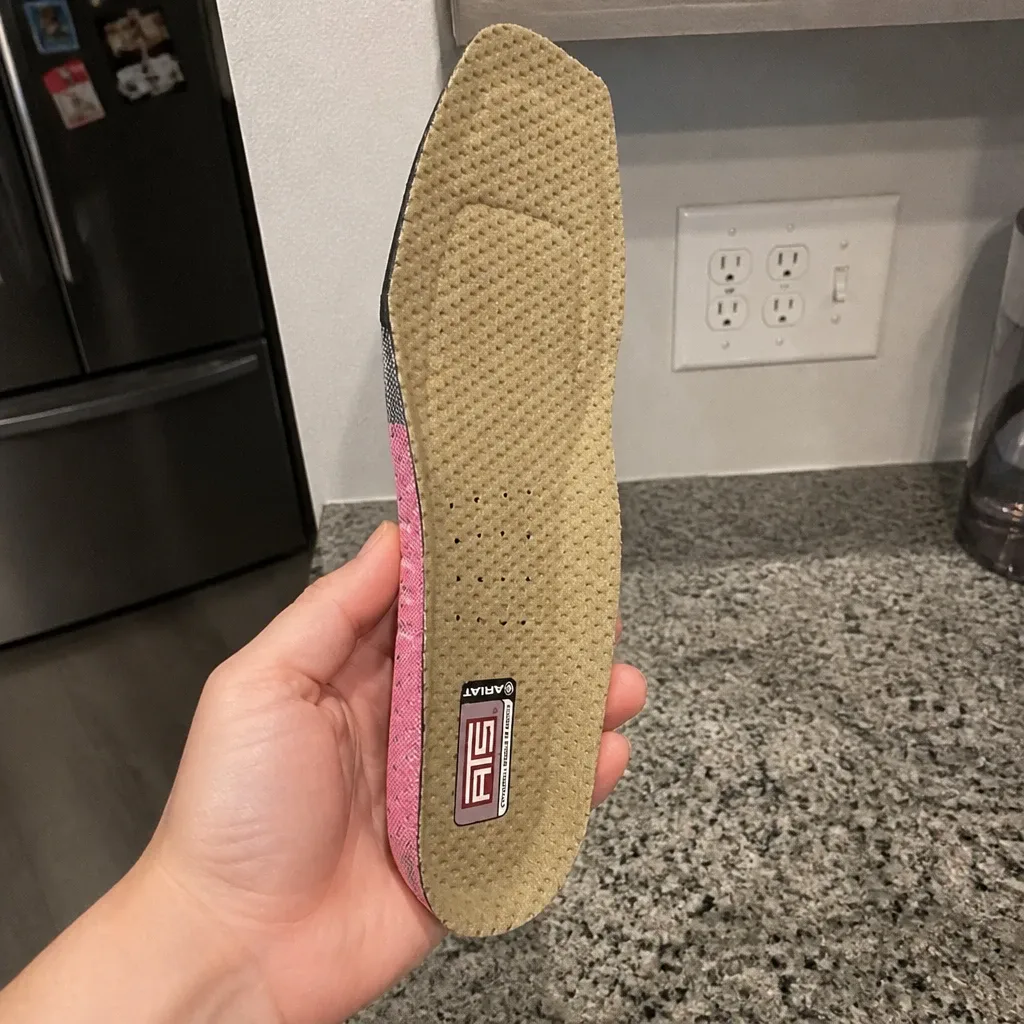
That same stability is what owners report across longer shifts as well: the ATS and Energy Max lines hold up through extended shifts on concrete, asphalt, and dirt. One owner working 12-hour shifts moving between concrete, asphalt, and heavy machinery reported reaching the end of the day without foot pain after switching to the Energy Max insole. Another owner standing for 16-hour days described the insole outlasting other insoles they had previously purchased.
Feedback on the ATS Max tier is more divided: one wearer described a stiff, "rocks underfoot" sensation persisting after ten minutes of standing, while another wearer using the same model reported an immediate feeling of extra support that settled into comfort after a short adjustment period. The All Day Cushioning tier drew a comparison from one owner who switched to ATS and described the softer entry-level tier as noticeably less supportive by contrast.
What Are Your Options If Ariat Insoles Don't Fit?
Ariat's direct site offers free 90-day returns on unworn, non-final-sale items along with free exchanges for a different size. Buyers purchasing through Amazon have access to a 30-day refund or replacement window through eligible sellers, including free returns on select listings. Switching toe shape or width, rather than just size, resolves most reported fit complaints, since round, square, and wide square toe variants are sized and shaped differently from one another.
What Do Ariat Buyers Wish They Knew Beforehand?
Reviewers most often mention that the ATS tier feels firm at first and that the All Day Cushioning tier feels noticeably softer by comparison. A Zappos review summary covering the Energy Max Wide Square Toe model shows 80% five-star and 10% four-star ratings across 87 reviews, with a customer fit survey reporting 77% true to size, 85% true to width, and 100% reporting moderate arch support.
Will Ariat Insoles Work With Your Current Shoes?
Ariat insoles only work as a drop-in replacement when the toe shape and width actually match your boot's last: they aren't interchangeable across shapes. Once they're in, mine lifted straight out for washing or airing with a gentle pull at the heel, no adhesive or trimming involved. I took mine out to air roughly every two to three days of heavy sweat, which kept odor down, and left them in without buildup on lighter, drier days.
Air-drying at room temperature didn't shrink or curl the material, laying flat again after a full overnight dry with no warping at the edges. That airing also cleared the mild odor from a sweaty shift within a day, though I'd expect a stronger smell to need a proper wash rather than just air time.
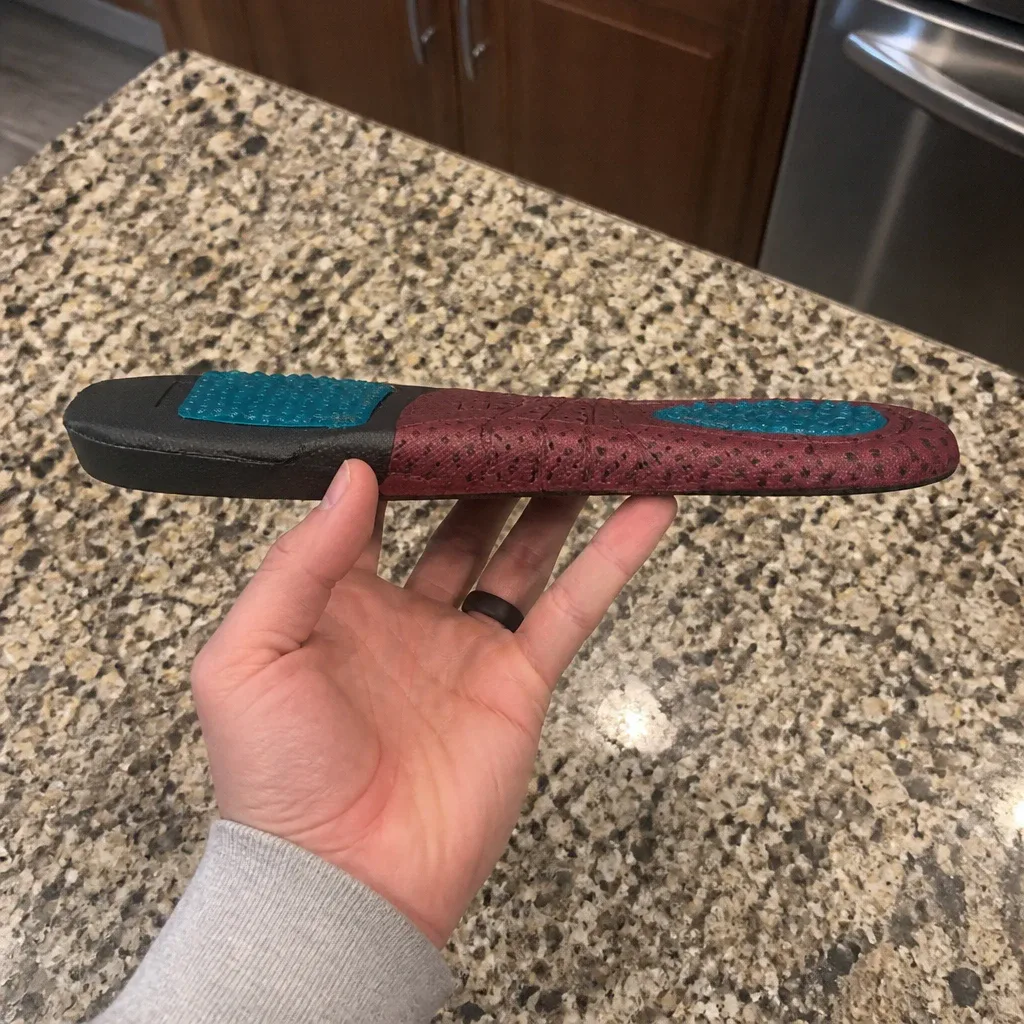
That same fit sensitivity is what the lineup's own construction is built around: Ariat insoles are matched to Ariat's own western and work boot lasts, with toe shape as the primary fit variable. Wide square toe boots need the wide square toe insole; round toe and standard square toe boots need their matching shapes, since a mismatched toe shape can bunch or curl at the front of the boot. Several models ship with a printed trim-to-fit guide that lets the insole be trimmed for other footwear beyond the boot it was designed for.
Reddit commenters report that Ariat's own square-toe insoles have been used as a cutting template to reshape aftermarket insoles from other brands, since square-toe options are less common outside Ariat's own catalog. Added insole thickness can also change how a western boot fits at the instep, so the boot's stock volume should be accounted for when sizing.
How Do You Clean and Maintain Ariat Insoles?
Ariat insoles clean up with a damp wipe-down rather than a soak, though care depends on whether the top cover is leather. My test pair uses a gel and EVA foam construction rather than leather, so getting them wet during cleaning wasn't a concern the way it would be for a leather-topped Ariat insole, which would need to stay away from soaking since leather can stiffen or crack once it dries out unevenly. Rather than a bucket soak, I wiped mine down with a damp cloth and mild soap, then let them air dry flat, which was enough to clear light grime and sweat residue.
I didn't test a full overnight soak, but given the layered gel-and-foam construction, extended soaking risks softening the glue bond between layers over time, so the quick wipe-down avoided that risk entirely.
Published source material doesn't document a specific cleaning or maintenance procedure beyond that. The moisture-wicking liners used across the Energy Max, Pro Performance, and All Day Cushioning lines are designed to manage sweat and reduce odor during wear, and the All Day Cushioning tier specifically markets built-in odor defense as a feature. No washing instructions, replacement-interval guidance, or air-drying recommendations appear in the available product listings beyond that.
Are There Any Downsides or Risks to Be Aware Of?
The ATS platform's firmness is the most consistently reported friction point. My own sharp pain after resting was mild to begin with, and it felt noticeably better with the firmer arch support in place, with only mild stiffness for the first few steps out of a chair early on that faded within the first week. Some reviewers dealing with more serious plantar fasciitis reported the opposite: the firm heel drop aggravated rather than eased that first-step pain, so results likely depend on how severe the issue already is going in. My own case was mild, and a firmer arch shape helped rather than hurt.
Multiple owners describe the ATS Max tier as stiff on first wear, and the All Day Cushioning tier, positioned as the softer entry-level option, drew a direct complaint from one owner who found it noticeably less supportive than the ATS tier after comparing both. Toe-shape mismatches are another reported risk: an insole shaped for the wrong boot last can bunch, curl, or create heel lift inside the boot.
Continuing to wear any insole, including this one, through real foot pain risks making an existing injury worse rather than better, and if a firmer arch shape like this one causes sharp pain rather than mild adjustment soreness, the right move is to stop wearing it and see a professional instead. The lineup does not include a dedicated insole for flat feet or pronation control, and no clinical or orthotic-grade claims appear in the available product material.
How Much Do Ariat Insoles Cost?
The ATS Wide Square Toe model tested here runs $24.95; the broader lineup spans $14.99 to $35.95 depending on tier. All Day Cushioning runs $18.95-$19.95, Pro Performance runs $19.95-$23.95, Energy Max runs $26.95-$35.95, and Power Support tops the range at $35.95. The Nitro Round Toe model has been discounted from its original $24.95 price to $14.99-$16.99 depending on retailer.
Precision Response is priced at $24.95. Amazon listings for the same models generally track close to the direct Ariat pricing, with third-party sellers occasionally pricing slightly above or below the brand's own site.
Where Are Ariat Insoles Sold?
Ariat insoles are sold directly through ariat.com in both US and UK storefronts, and through Amazon via the official ARIAT storefront and select third-party sellers. Western and work-boot retailers including Boot Barn, Zappos, Jackson's Western, Cowboy Swagger, Lammle's, Sheplers, Boots Etc, and Tack Room Inc carry the lineup, and general retailers including Walmart list select models as well.
Is Ariat a Good Fit for You?
Ariat insoles are built for owners of Ariat's own western and work boots who need a toe-shape-matched replacement footbed rather than a universal orthotic. Workers standing or walking for long shifts on hard surfaces report the strongest results from the Energy Max and ATS tiers.
Buyers with flat feet or existing plantar fasciitis should expect a firmer break-in period on the ATS platform and may want to start with a softer tier or plan for an exchange if the arch feels too aggressive. Buyers who need arch or toe shapes outside round, square, and wide square toe boots will need to look outside the Ariat lineup entirely.
Ariat Spec Sheet
Pressing on the arch with steady thumb pressure, it held its shape and pushed back firmly rather than collapsing. Twisting it heel-to-toe, I'd grade the stiffness at a 4 out of 5, resisting noticeably more than the stock insole and snapping back flat as soon as I released it.
| Spec | Details |
|---|---|
| Brand | Ariat |
| Model tested | ATS Wide Square Toe Insole, Gel Cushion Footbed |
| Insole technology | Advanced Torque Stability (ATS), molded arch + heel cradle |
| Base material (tested model) | EVA foam |
| Cushioning (tested model) | Dual gel pads (heel + forefoot) |
| Top cover (tested model) | Breathable perforated cover |
| Toe shapes offered | Round toe, square toe, wide square toe |
| Men's size range | 7-14, D width |
| Women's size range | 5.5-12, B width |
| Length (size 10, tested model) | 11.0 in |
| Width (size 10, tested model) | 3.7 in |
| Height (size 10, tested model) | 0.6 in |
| Trim-to-fit | Printed cut guide included on select models |
| Thumb-press arch response (tested) | Held its shape, pushed back firmly, no collapse |
| Torsion stiffness (tested) | 4 out of 5, graded by hand-twisting heel-to-toe |
| Price (tested model) | $24.95 |
| Price range (full lineup) | $14.99-$35.95 depending on tier |
Source: Ariat product listings and my own testing of the ATS Wide Square Toe insole.
What's My Final Word on Ariat Insoles?
Across eleven days of testing in square-toe work boots, the ATS Wide Square Toe insole delivered on Ariat's core promise: a centered, gel-cushioned platform that held its shape and cut fatigue over full 8-hour shifts. That matches the pattern across the wider lineup: owners on 12- and 16-hour shifts report the same fatigue-reducing effect from the ATS and Energy Max tiers, and none of my own testing turned up a squeak, a slip, or a hot spot over the full test period.
The real trade-off is fit, not durability: this is a boot-specific footbed, not a universal orthotic, and it only performs as advertised when the toe shape and width match the boot it's going into. The ATS platform's firmness is also a genuine adjustment for some wearers. My own mild post-rest pain improved with the firmer arch, but reviewers with more serious plantar fasciitis reported the opposite, so how a flat-footed or pain-sensitive buyer will respond depends on how severe that condition already is.
At $24.95 for the tested model, or $14.99 to $35.95 across the tiers, Ariat suits an owner of Ariat's own western or work boots who wants a toe-matched, gel-cushioned upgrade over the factory footbed; it's a weaker fit for anyone with pronounced flat feet needing pronation control, or anyone whose boots fall outside Ariat's round, square, and wide square toe lasts.
Michal Sieroslawski is an Entrepreneur, exercise physiologist, and personal trainer who has fitted over a thousand people with insoles. He holds a degree in Sports and Exercise Science from the University of Central Lancashire, where he studied biomechanics, anatomy, and exercise physiology. Since 2020, Michal Sieroslawski has helped local and online businesses get found in Google and AI search.