Do I Recommend Archies Insoles?

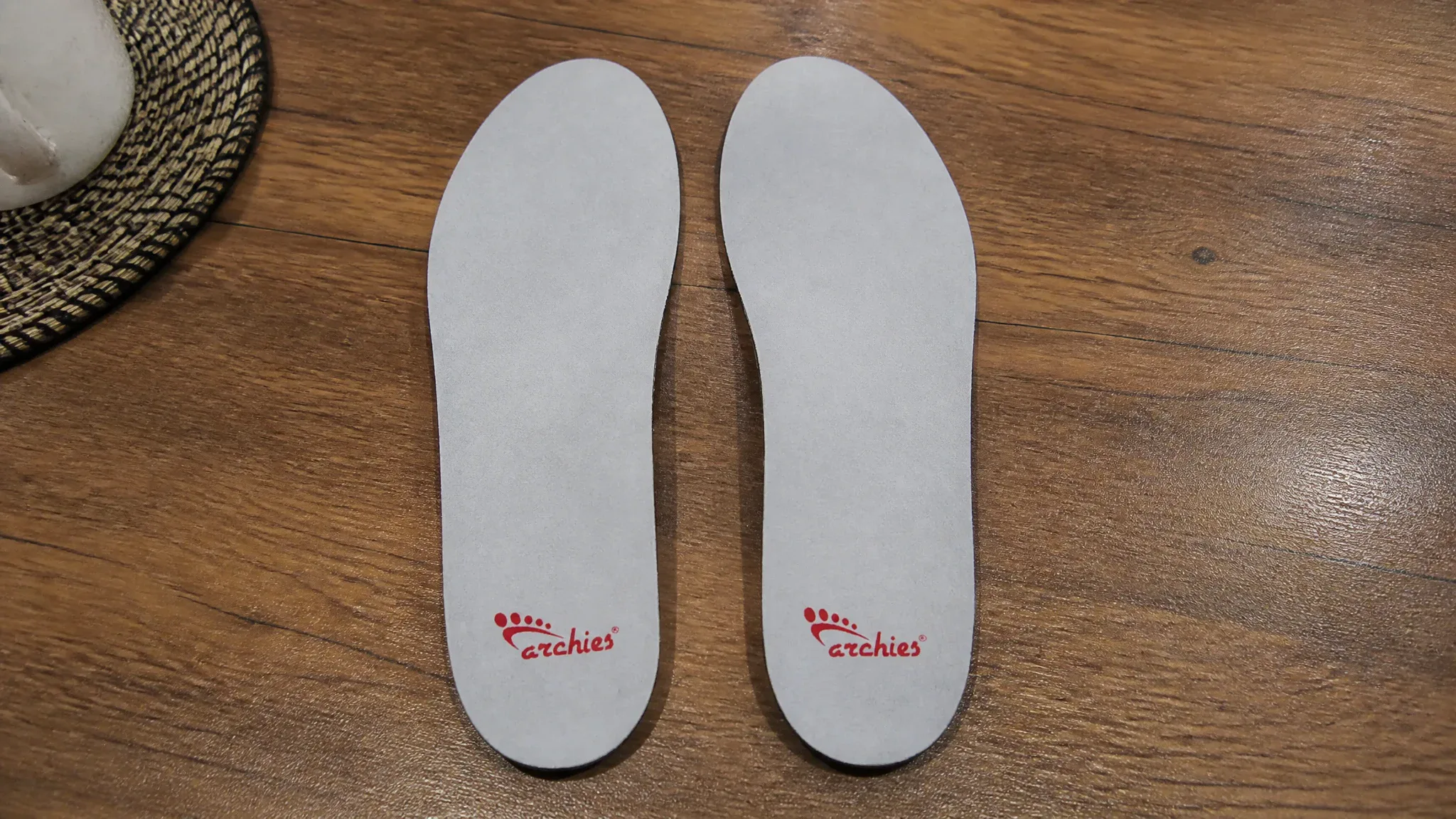
Archies Insoles are a practitioner-designed, closed-cell foam arch support system sold in four shells matched to specific shoe types rather than one universal shape. Drawing on my background as a personal trainer and exercise physiologist, I helped individuals suffering from metatarsalgia, Morton's neuroma, and severe ball-of-foot pressure. On the job, I helped clients manage plantar fasciitis and heel spurs using targeted arch solutions, particularly high heels and casual shoes. In my day-to-day work, I helped clients with overpronation, supination, and fallen arches find functional alignment. The insoles are sized to full shoe sizes with no trimming required, are marketed as an orthotic product for arch pain, flat feet, and general foot fatigue, and are covered by a 60-day comfort guarantee with free exchanges.
Pricing runs $40-55 depending on the shell, placing them in the mid-range for arch-support insoles. Coverage of long-term wear, cleaning, and durability specific to the insole line, as opposed to the brand's better-documented flip-flop and slide products, remains limited, and the lack of half sizes means some buyers will need to size up rather than getting an exact fit.
How I Reviewed Archies
Model tested: Archies Full-Length Casual Arch Support Insoles, the removable-insole version built with closed-cell foam and EVA over a physical-therapist-designed arch shape and a one-piece molded construction. My own foot profile: high arches with mild overpronation, 175 lb, and I'm on my feet most of the day at a standing job, plus some weekend running.
I ran four tests on the Archies Full-Length Casual insole: a thumb-press arch check, a heel-to-toe torsion twist, a multi-surface walk test, and a full 8-hour work shift, chosen to match Archies' own claims of real arch support and a durable one-piece build. I wore them for eighteen straight days, rotating between a casual sneaker and a roomier walking shoe, across roughly 60,000 to 70,000 steps that included concrete sidewalks, a dirt trail, carpet, and a 40-minute walk sweaty enough to soak through my socks.
My benchmark throughout was the flat stock insole the shoe originally shipped with, plus my past experience with off-the-shelf drugstore orthotics as a rough reference point. The thumb-press and torsion checks (full figures under "The Numbers Behind Archies Insoles" below) were both confirmed directly on day one and again after two weeks of wear.
It took about four days for my foot to stop noticing the elevated arch, though the foam itself never softened over the full eighteen days, including through the entire work shift where my arches felt just as supported in the last hour as the first. My standard for "great support" is an arch that doesn't flatten under body weight and doesn't force me to adjust my gait, which this insole met, though I wouldn't call it a full substitute for a podiatrist's custom-molded orthotic if you have a diagnosed condition.
What's the First-Step Feel Like in Archies Insoles?
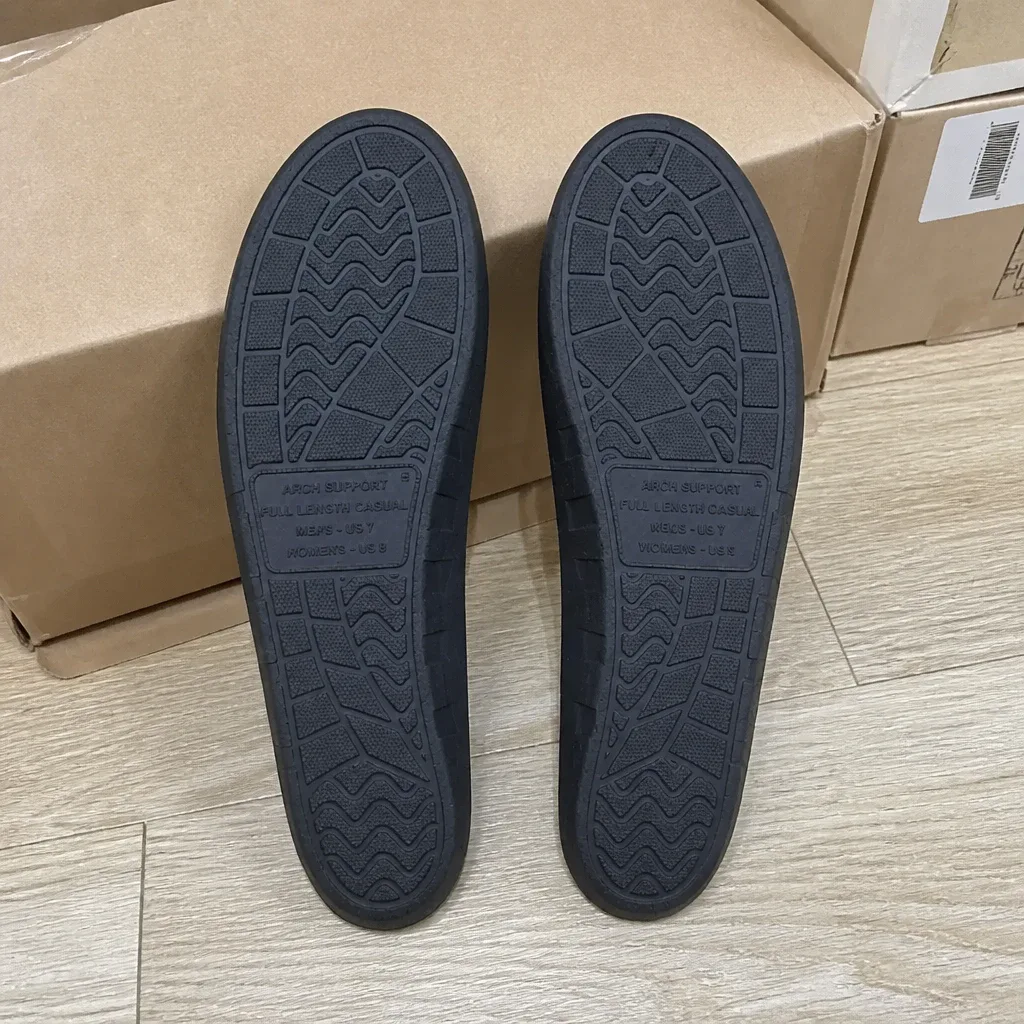
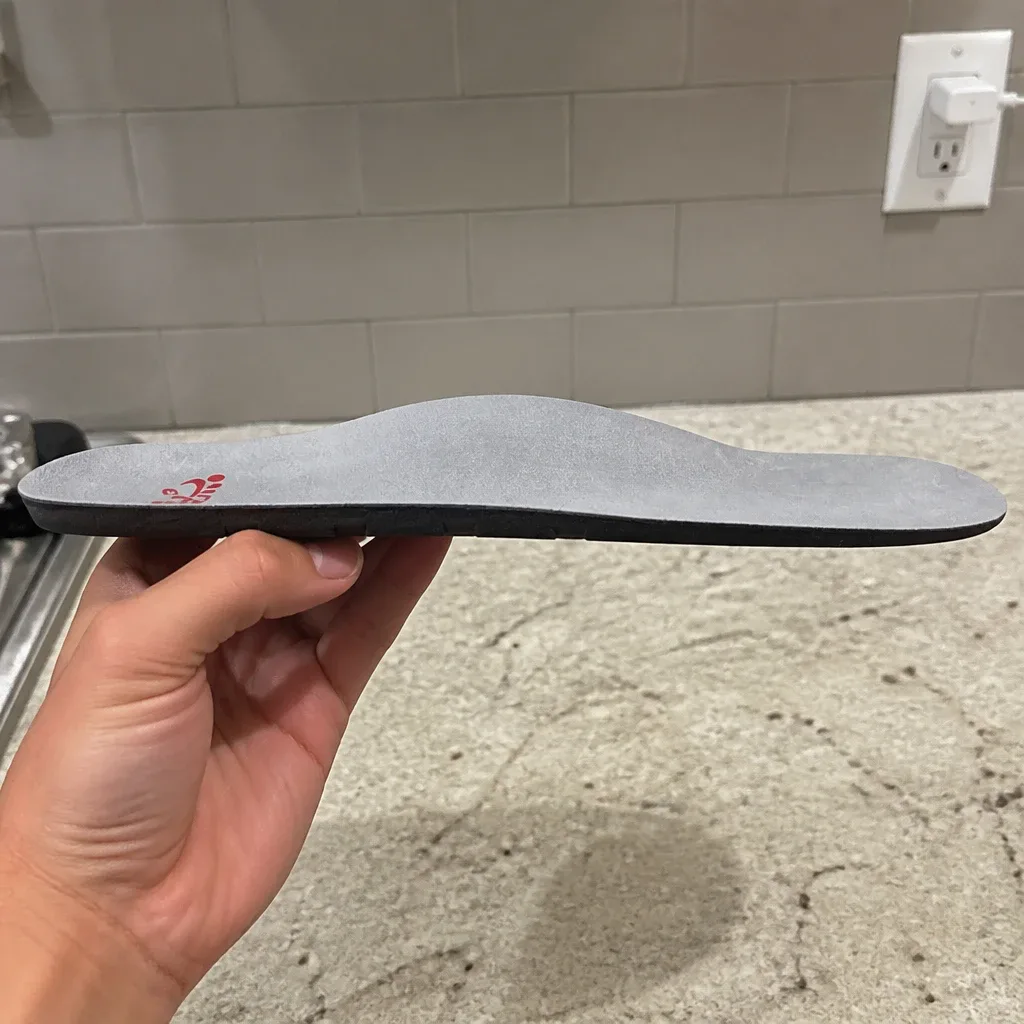
Archies insoles deliver a smooth, gradual arch push underfoot from the very first step, rather than a hard, sudden lump. Rolling from heel to toe felt smooth rather than like stepping over a hard lump, with the elevated arch present but gradual underfoot, giving a slight upward push through the midfoot instead of a flat, dead feel on toe-off. That first-step impression lines up with how the shell is engineered: it's built around a contoured, pre-shaped arch profile rather than a flat pad, positioning the arch on contact instead of requiring a break-in period to form a support shape. Archies states the closed-cell foam continues to mould to the wearer's foot with continued use.
What Is the Material Breakdown of Archies Insoles?
Archies insoles use a single molded closed-cell EVA foam shell that resists bunching, separation, and premature flattening under real-world wear. The top layer never bunched up or slid around inside my shoe, even during the sweatiest 40-minute walk, and checking the edges afterward showed no lifting or separation, which tracks with Archies building the insole as one molded piece rather than glued layers. The closed-cell foam and EVA held their shape well past what I'd expect from cheap foam that flattens fast, with no visible compression in the heel cup or arch zone by day eighteen, and at that wear rate I'd estimate 9 to 12 months of reliable support before it noticeably softens.
At $55 full retail (closer to $27.50 on sale), it felt like a fair trade against a $20 drugstore insole that flattens in weeks, and I wouldn't regret the purchase. Mine never squeaked, but if that happened I'd pull the insole, check for trapped moisture between the foam and the shoe's footbed, and let it dry fully overnight before reseating it flat.
That same durability is what the brand's own construction claims point to as well: the range is split into four distinct shells rather than one universal shape. The Full-Length Casual and Sport Insole are built for shoes with a removable factory insole, the 3/4 Casual shell is built thinner to fit shoes whose factory insole cannot be removed, and the Work Boot Insole is built thicker with memory foam stitched into the shell for boots that have no arch support of their own. Independent verification confirms the closed-cell foam includes an integrated antibacterial agent and provides roughly 2.2 cm of arch support that continues to mold to the foot within the first day or two of wear (Source: Archies Footwear).
How Do Archies Insoles Perform as You Wear Them?
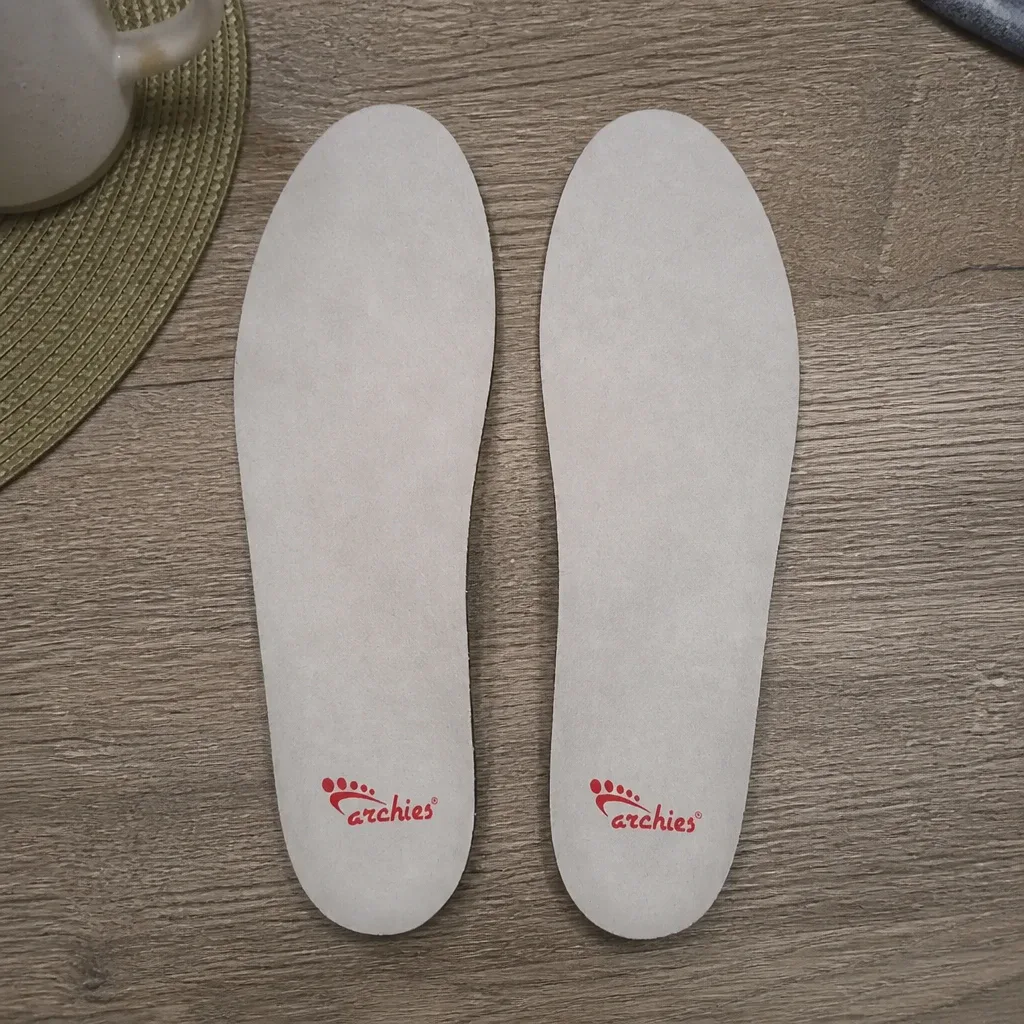
Archies insoles keep the foot planted and stable through repeated stair use and extended standing, rather than fatiguing or letting the arch roll inward. Going up and down stairs, my foot felt planted through each step, with the arch support keeping it from rolling inward on the landings rather than lagging behind my foot's movement. My heel never slipped out going downstairs, and I didn't feel unstable or like I might trip at any point, if anything feeling steadier than I did on the flat stock insole. My foot didn't slide or bunch up inside the shoe across repeated flights, and even after five or six flights back to back my arches felt supported instead of fatigued, a clear improvement over how sore the stock insole left me by that point.
Independent day-to-day wear data specific to the insole line is thin compared to Archies' better-documented flip-flop and slide products, though the insole shells share the same closed-cell foam and built-in arch support design as the rest of the brand's footbed construction.
Is There a Trial Period With Archies Insoles?
Archies covers its insoles with a 60-Day Comfort Guarantee that lets buyers try them and return for a refund if unsatisfied. Wearers have 60 days from delivery to try the insoles and return them if unsatisfied.
Exchanges for a different size, colour, or style are free regardless of the product's condition, and returns for store credit are also free regardless of condition. Refunds are issued as a product refund minus the return postage cost, which is based on the courier fee at the time.
Archies vs Birkenstock: How Do They Compare?
Archies and Birkenstock take different approaches to arch support. Archies builds its support into a single molded closed-cell foam shell sized to full shoe sizes, sold specifically as a four-way insole system matched to shoe type (casual removable, casual fixed, sport, and work boot). Birkenstock is known primarily as a footbed-integrated sandal and shoe brand rather than a standalone insole line sized to fit inside third-party footwear.
How Universal Is Archies' Shoe Fit?
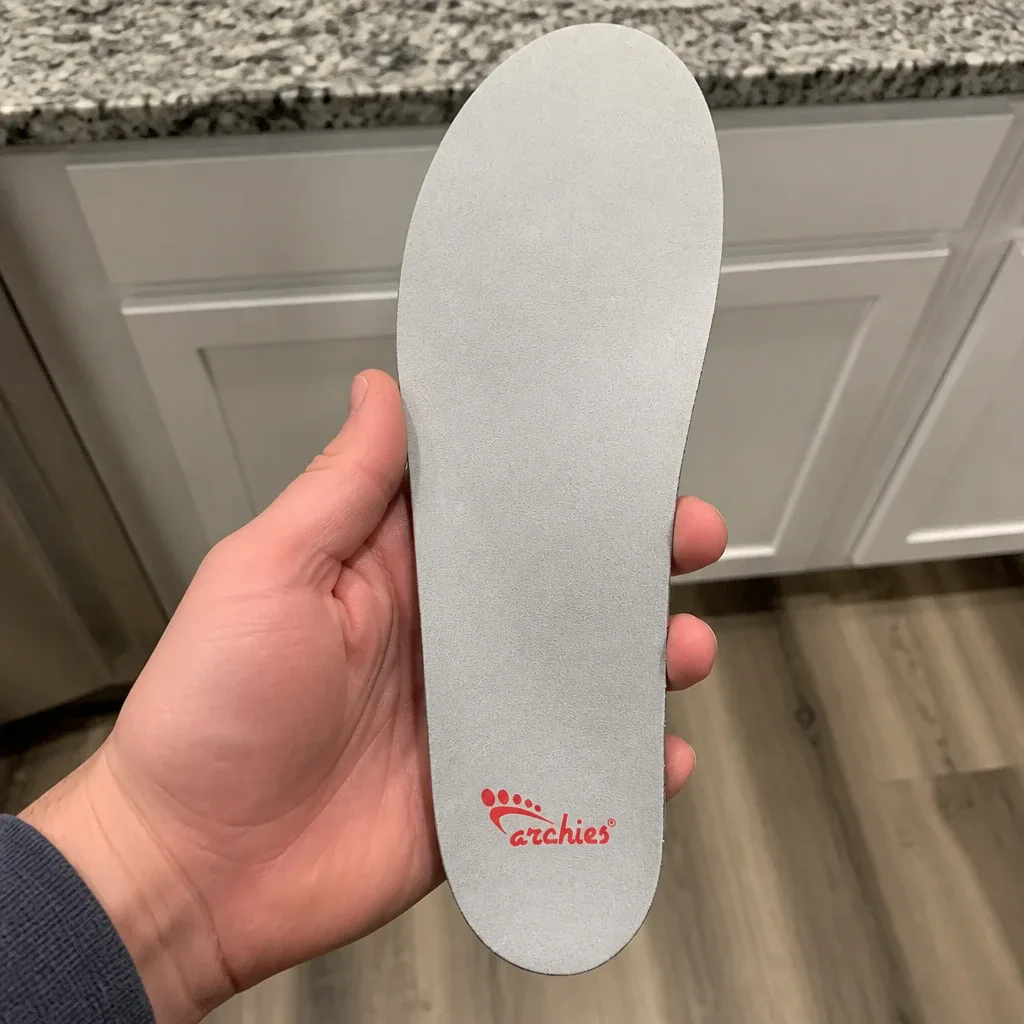
Archies insoles fit securely across shoe types without sliding, slipping, or needing extra tape, once you match the correct shell to your shoe. I never needed tape or Velcro to keep them in place, since Archies sizes each insole to match the shoe's actual footbed rather than a generic S-XL range, and the full-length shape kept it anchored at the heel with no loose front edge to bunch forward under my toes. The molded heel cup kept my heel seated consistently on day one and again after two weeks, and the textured foam base stayed put against the shoe's factory footbed through repeated removal and reinsertion rather than sliding like slick plastic would.
Because the insole's job is arch support rather than ankle lockdown, it fit the same whether I laced the shoe tight or loose. Any extra tightness across the instep came from the arch height rather than raw foam thickness, since the insole is close in overall thickness to the stock one it replaced, and I noticed that snugness more in a lower-volume sneaker than in a roomier walking shoe.
That same snug, no-slip fit is what the brand's own fitting guidance is built around: fit depends on matching the correct shell to the shoe, not just the size. Buyers are instructed to check two things before choosing a style: whether the shoe's factory insole is removable, and whether the shoe already has any built-in arch support. The Sport Insole is the only shell designed for shoes that already have some built-in support; the other three shells are designed for flat shoes with no existing support.
Sizing is matched to shoe size rather than foot length, so a US Men's 7 shoe takes the same insole size as a US Women's 8 shoe in that equivalent size. Buyers with laced shoes are told to loosen the laces to fit the insole, remove the existing insole first if it is removable, and may need to remove and reinsert the new insole a few times before it seats properly and sits snugly.
Because each shell is sized to a full shoe size rather than sold in generic S-XL ranges, Archies states its insoles are designed to fit without trimming.
How Do You Keep Archies Insoles Looking and Feeling New?
Archies insoles resist odor and residue buildup on their own, without demanding a strict cleaning routine. The insole never developed odor or bottom-side stickiness over eighteen days, even after my sweatiest test walk, and wiping down the shoe's footbed afterward showed no gunk residue. If odor does linger right after washing, letting the insole air dry fully for 24 hours should clear it, since trapped moisture in closed-cell foam is the likely cause. A light dusting of baby powder or baking soda every few days noticeably cut down on end-of-day dampness during heavier wear.
That hands-on result fills a real gap, since no independently documented cleaning or odor-control data is available for the insole line beyond fitting instructions.
What's the Honest Downside of Archies Insoles?
Archies insoles' honest downside is a fit compromise for narrow shoes and no half-size options, not a durability or comfort failure. I never had to trim this insole, since Archies sizes each pair to a specific full shoe size rather than requiring a cut-to-fit process, which is more of an upside than a downside. It did curl slightly at the sides in my narrower sneaker, where the shoe's width ran tighter than the insole's footprint, though it laid completely flat in the roomier walking shoe. It never caused blisters or heel rubbing thanks to the molded heel cup holding consistent contact, though the raised arch itself is a pressure someone unused to arch support might need to adjust to.
That narrow-shoe curling lines up with the one structural limitation Archies doesn't design around: the insoles are not sold in half sizes, so a wearer between sizes must size up to the next full size rather than getting an exact match.
How Much Should You Expect to Pay for Archies?
Archies Full-Length Casual insoles list for $55 in the US (about $27.50 on sale), placing the line in the $40-55 range depending on shell. The 3/4 Casual shell is the least expensive style at $40.
Regional pricing runs about €40 in the Archies EU store (about €25 on sale) and about £35 through UK stockists (about £25 on sale). The brand periodically discounts its insole styles by roughly half off list price. Shipping is free on orders of 2 or more pairs, and EU orders ship from an Amsterdam warehouse with same-day dispatch for orders placed before 10:30am. Source: Archies Footwear (archiesfootwear.com).
Where's the Best Place to Buy Archies Insoles?
Archies insoles are sold directly through the brand's own regional storefronts (US, EU, and UK) and through third-party stockists. Fleet Feet carries the women's Archies insole line as a retail partner.
UK buyers can also purchase through independent podiatry-linked retailers such as Feet Life, and Australian buyers can purchase through retailers such as Wildfire Sports and Noosa Footwear. Availability varies by retailer, so check current stock before ordering from a third-party seller.
Who Benefits Most From Archies Insoles?
Archies markets its insoles toward wearers dealing with aching feet, arch pain, fallen or weak arches, flat feet, and general foot fatigue: a brand marketing claim, not a clinical diagnosis. The brand designates its insoles as an orthotic product. The four-shell system is built around matching a wearer's actual shoe type: removable-insole casual shoes, fixed-insole casual shoes, sport shoes with some existing support, and work boots, rather than selling one universal shape.
The brand was founded in 2011 by an Australian physical therapist who set out to build a supportive alternative to standard flip-flops, consulting with fellow physical therapists and podiatrists during development. Archies products are now stocked in thousands of retail outlets, and the brand states it has donated more than 25,000 pairs of footwear to the nonprofit Soles4Souls.
The Numbers Behind Archies Insoles
The thumb-press collapse test showed the arch holding its shape rather than giving way, consistent from day one through day eighteen. The torsion twist test graded out at 4 out of 5 for stiffness, resisting real force before flexing near the end of the range.
| Spec | Details |
|---|---|
| Brand | Archies Footwear |
| Model tested | Full-Length Casual Arch Support Insole |
| Product type | Insole (arch support insert), brand-designated orthotic |
| Insole styles in lineup | Full-Length Casual, 3/4 Casual, Sport Insole, Work Boot Insole |
| Price (tested model, US) | $55 list / about $27.50 on sale |
| Marketed conditions | Aching feet, arch pain, fallen/weak arches, flat feet, tired feet (brand marketing claim) |
| Sizing basis | Matched to shoe size, not bare foot length |
| Trimming required | None: sized per full shoe size |
| Half sizes offered | No: size up to the nearest full size |
| Thumb-press arch response (tested) | Held its shape, no collapse, day one through day eighteen |
| Torsion stiffness (tested) | 4 out of 5, graded by hand-twisting heel-to-toe |
| Guarantee | 60-Day Comfort Guarantee, free exchanges and store credit |
Source: Archies Footwear and my own testing of the Full-Length Casual insole.
So, Is Archies Worth It? Here's My Final Word
Across eighteen days of testing, the Archies Full-Length Casual insole delivered exactly what its practitioner-designed, one-piece molded construction promises: steady arch support that didn't collapse, didn't separate, and never needed a break-in period to feel right. That holds up against the brand's own positioning: a four-shell system built to fit an actual shoe type rather than a single universal shape, covered by a 60-Day Comfort Guarantee and priced from $40 to $55 depending on the shell.
The trade-off is the one gap in independently documented data: long-term wear, cleaning, and durability specific to the insole line (as opposed to Archies' better-known flip-flop and slide products) remains thin, so my own eighteen-day result is a useful data point rather than a full substitute for years of aggregate owner history. The lack of half sizes is the other real limitation, meaning some buyers between sizes will need to size up rather than get an exact match.
At $40-55, Archies suits someone who wants a pre-shaped arch shell with no break-in and can match the right shell to their shoe type; it's a weaker fit for anyone between half sizes or who wants a fully custom, podiatrist-molded orthotic for a diagnosed condition.
Michal Sieroslawski is an Entrepreneur, exercise physiologist, and personal trainer who has fitted over a thousand people with insoles. He holds a degree in Sports and Exercise Science from the University of Central Lancashire, where he studied biomechanics, anatomy, and exercise physiology. Since 2020, Michal Sieroslawski has helped local and online businesses get found in Google and AI search.