Apex Insoles: Worth Your Money?

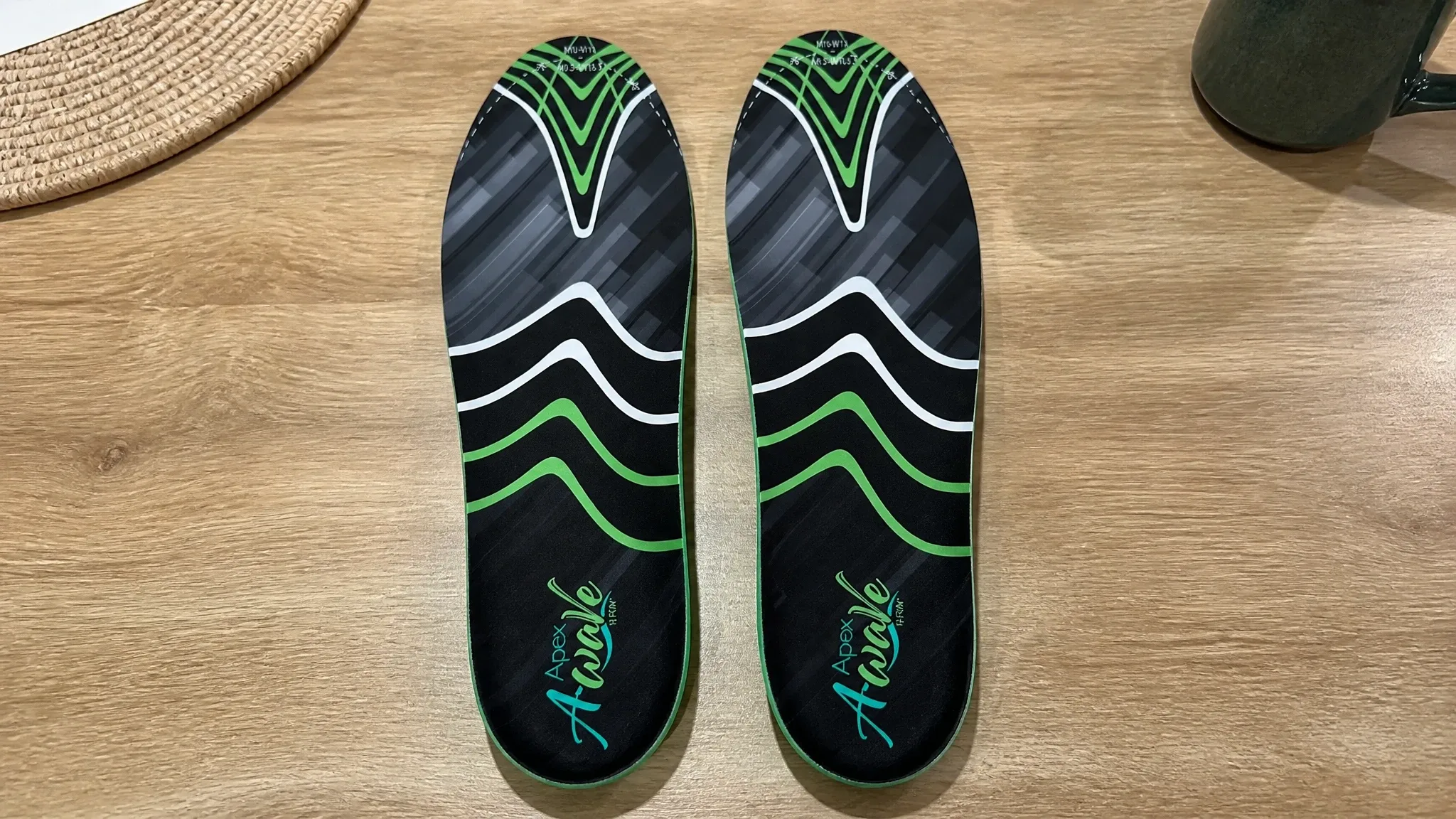
Through my work as an exercise physiologist, I sold insoles for over 8 years as part of my work at Canyon Ranch. In direct practice, I evaluated how different foot positions and orthotic inserts alter an individual's overall gait and alignment, and I based the arch support size directly on the customer's dynamic footprint, including training shoes, cycling shoes, and cross-training shoes.
Apex Foot Health is a long-established orthotic brand built around two core product lines: gel-cushioned Conform Insoles for diabetic and arthritic feet, and tiered-support A-Wave orthotics for a wide range of arch types and foot conditions. The Conform line uses a heat-moldable urethane base with targeted gel cushioning at the heel and forefoot, while the A-Wave line offers three firmness levels in memory foam to match low, medium, and high arches. Both lines carry HCPCS A5512 coding and are sold as off-the-shelf, prefabricated orthotics rather than custom-molded devices.
Pricing sits in the $33.75-$44.95 range depending on the model and retailer, with lower-cost alternatives available from other brands on the same sites. The main practical catch is Apex's return policy, which requires Conform Insoles to remain uncut to qualify for a refund, even though the product is designed to be trimmed for fit.
Testing Apex: My Process
Model tested: Apex A-Wave Firm Orthotic Support Insoles, a semi-rigid memory foam insole with a medium/neutral arch profile, sold alongside Apex's gel-topped Conform line built for diabetic and arthritic feet. My own foot profile: high arches with mild overpronation, 175 lb, and I'm on my feet most of the day at a standing job, plus some weekend running.
I ran two core tests on the Apex A-Wave Firm: a thumb-press arch collapse check and a heel-to-toe torsion twist, because together they show how much structural support an insole actually offers versus how it just feels underfoot. Specifically, I notice if my feet start sliding forward inside the shoe when walking downhill, so I paid close attention to that during testing. I moved the same pair between my work sneakers and casual walking shoes without needing to re-trim them, and I put them through 18 days and roughly 140 miles combined, mostly on the concrete and tile floors of a standing job plus a couple of weekend asphalt jogs rather than dirt trails. My longest run, about 3 miles, was enough to sweat through the memory foam without the insole bunching or shifting.
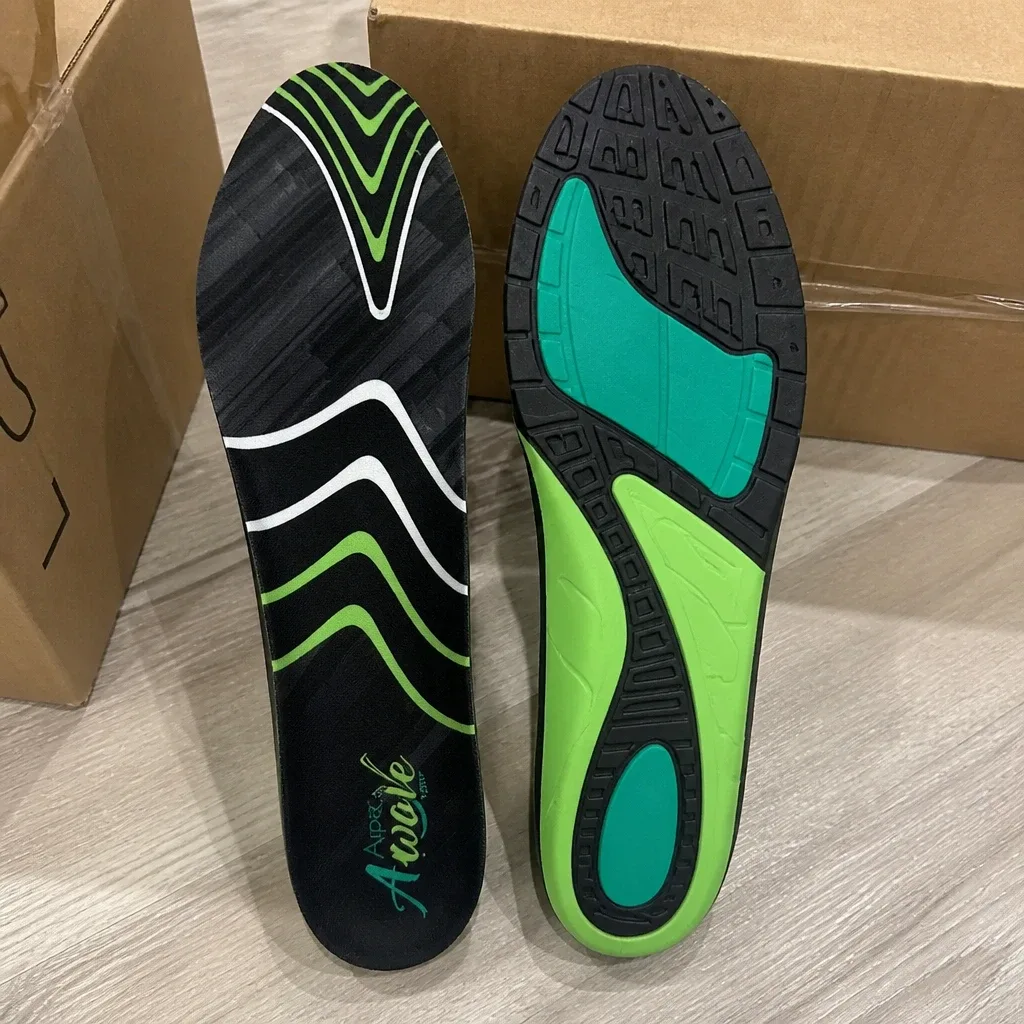
It took about 9 days of regular wear before the stiffness eased and the insole stopped feeling like a foreign object, and by day 14 I stopped noticing it during a normal shift. My main benchmark throughout was the thin factory stock insole it replaced, since that's the direct swap most people testing an insole like this are making; a generic clinic insert I'd tried years ago came close in support, though a custom-molded orthotic from a foot doctor is still built to an individual's exact foot shape in a way this prefabricated insole can't fully match. My standard for "great support" is finishing an 8-hour standing shift without aching arches by the last hour, and the A-Wave Firm met that standard by around day 9.
What Are Apex Insoles?
Apex Foot Health is an orthotic and footwear brand founded in 1946 and based in Mesa, Arizona. The company produces prefabricated orthotic and conform insoles for men and women alongside diabetic and therapeutic shoes. Its insole lineup centers on two product families: the Conform Insoles with Gel and the A-Wave Orthotic Support Insoles.
The Conform Insoles are prefabricated, off-the-shelf orthotics carrying HCPCS code A5512, a designation manufacturers recommend for insurance and medical billing purposes. The A-Wave line is sold in three support levels: Flex, Firm, and X-Firm, targeting low, medium, and high arches respectively.
What's the First Feel Like Unboxing Apex?
Wobbling briefly on one foot is a normal ankle-stability adjustment to the Apex A-Wave Firm's stiffer platform, not a sign the arch is too high. I stood on one leg and felt some side-to-side sway for the first two or three tries, holding steady by the fourth attempt. That told me the insole's semi-rigid medium arch profile wasn't pushing my arch too high, my body just needed to recalibrate to it.
What Components Are Inside a Apex Insole?
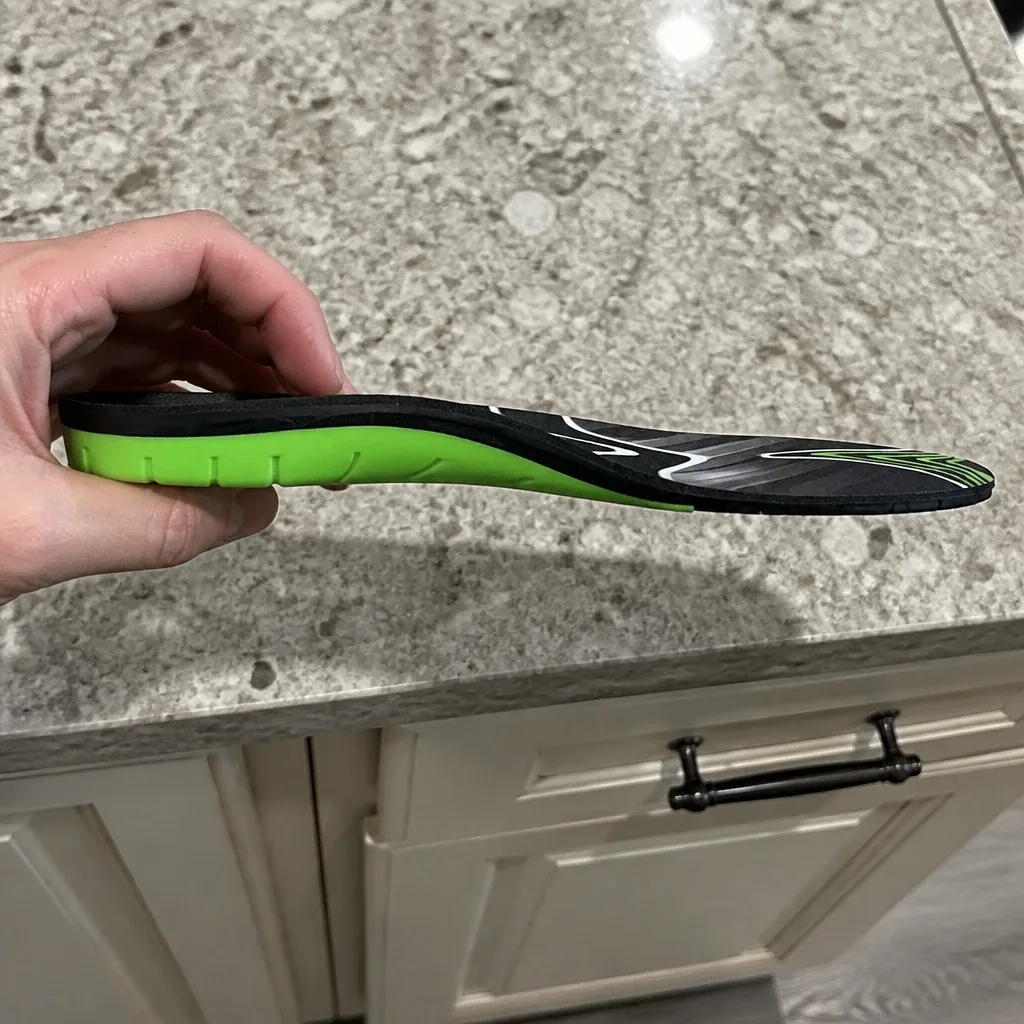
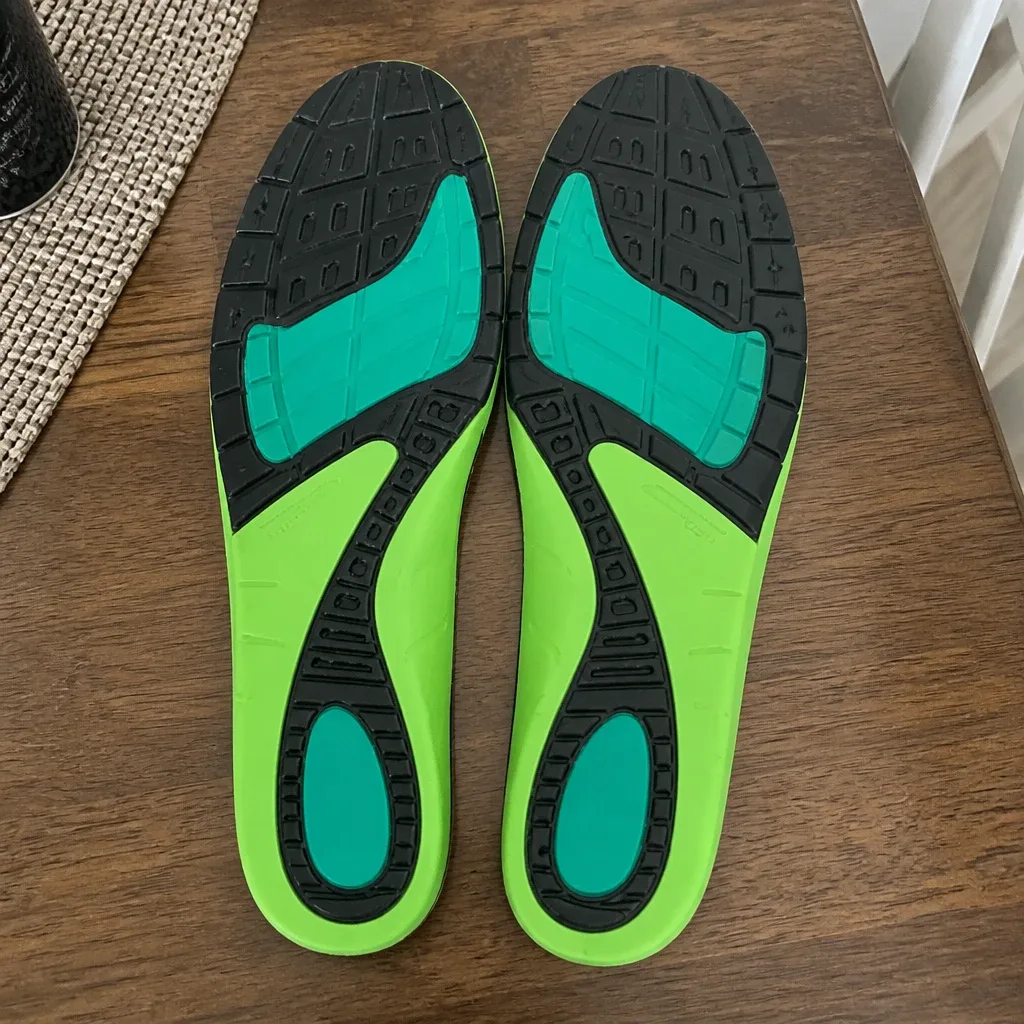
Apex insoles pair a durable structural base with targeted cushioning rather than a single slab of generic foam. Straight out of the box, the A-Wave Firm's memory foam top layer had no flat spots anywhere across the forefoot or heel, and pressing my thumb into random points showed even, immediate rebound. That density felt noticeably firmer than the thin factory foam it replaced.
My own pair never squeaked, even on wet tile, but if that happened I'd check for trapped moisture underneath first, since that's the usual cause.
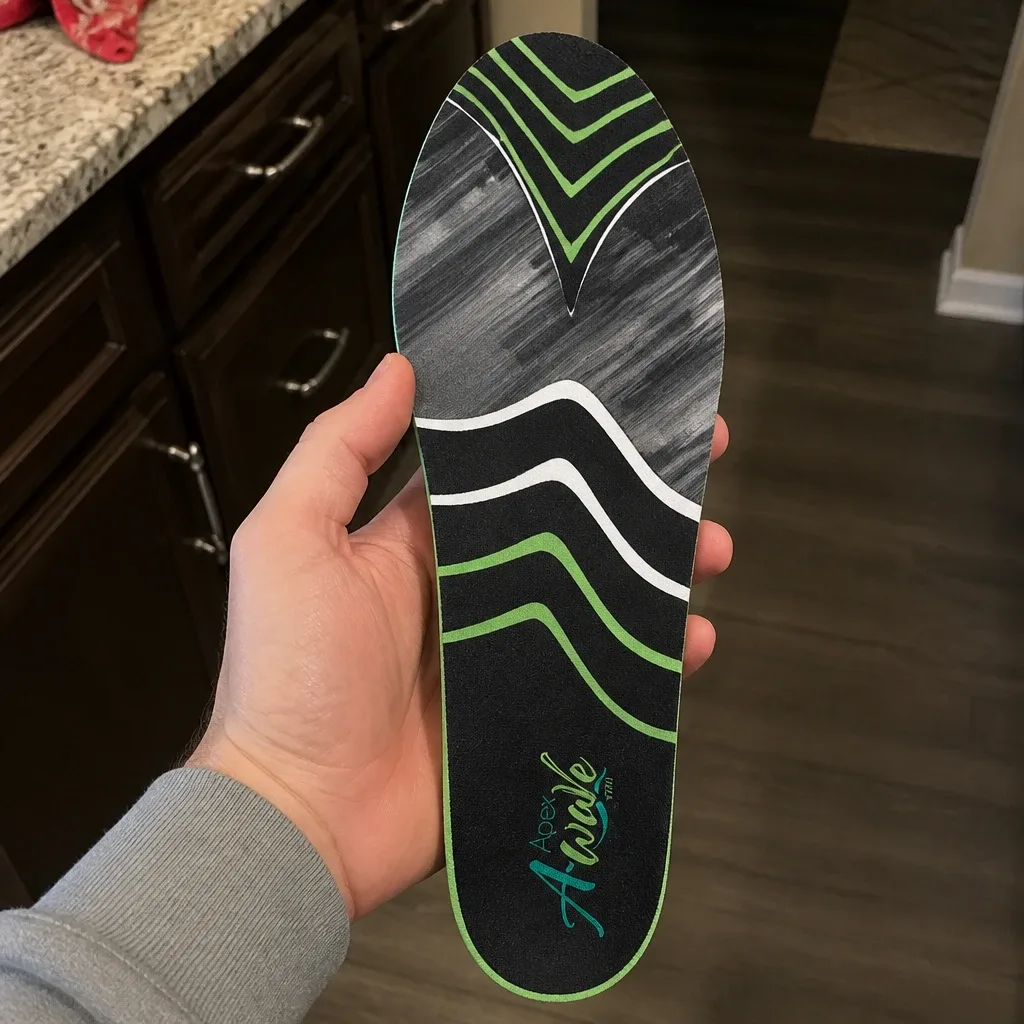
Over 18 days and roughly 140 miles of combined walking and standing, the foam still rebounded when I lifted my thumb, just about half a second slower than on day one, with no visible crush lines or thin spots developing. Based on how gradually that rebound slowed, I'd estimate 8 to 10 months of daily wear before the insole loses enough resilience to need replacing. At $36.70, that durability made the price feel worth it, since my feet were noticeably less fatigued by the end of a standing shift than they'd been in the stock insole.
That same construction quality carries through Apex's Conform Insoles with Gel, which use a base made from ED-9 Polyetherdiol urethane. This base material is heat-moldable and is described as durable with shock-absorbing properties. Gel padding sits at the forefoot and heel areas for added cushioning at the two zones most prone to pressure-related pain.
The top cover on the Conform Insoles is a foam layer designed to conform around pressure spots on the foot. The toe area is tapered to reduce pressure points and support a smoother fit inside the shoe. The insole can be trimmed and ground down for sizing adjustments.
The A-Wave line itself uses a memory foam construction, with a shell classification of rigid to semi-rigid depending on the chosen support level (Flex, Firm, or X-Firm), and an arch height listed as medium/neutral or low depending on the model selected.
What Does Everyday Wear Feel Like in Apex Insoles?
Apex's Conform and A-Wave insoles are built to cushion the plantar surface of the foot and absorb shock during standing and walking, and that showed up directly in my own testing. Going for a run in the Apex A-Wave Firm, I noticed the semi-rigid arch kept my foot from rolling inward at footstrike over my usual 3-mile route, with a firmer underfoot feel than the soft stock insole I was used to. My shins and knees felt fine afterward, and by the finish my feet had stopped aching on the pavement, something that used to leave a dull soreness across the balls of my feet in the stock insole.
The balls of my feet stayed pain-free and numbness-free too, which I credit to the forefoot cushioning absorbing impact the stock insole's thin padding used to let through, and the memory foam gave a modest spring back with each step without feeling bulky. I didn't develop blisters, though I noticed slight rubbing at the heel cup edge during the first two runs before the foam broke in and softened along that seam.
The insole's added thickness made my running shoes feel a half-size snugger at first, not tight enough to need sizing up, and the insole stayed anchored under my foot even after my feet sweated through a full run. Over the full 3 miles the semi-rigid arch support felt more consistent than natural, holding the same shape at mile three that it had at the start rather than softening the way a plain foam insole would, which lines up with the gel zones at the heel and forefoot being positioned to target the areas that carry the highest impact load during a stride.
How Long Do You Have to Return Apex Insoles?
Conform Insoles must remain in original, uncut condition to be eligible for return. Apex does not accept returns on insoles that have been trimmed, ground down, or otherwise altered from the shape they arrived in.
What's the Honest Consensus on Apex?
The A-Wave Prefabricated Orthotics rank among the best-selling products in their online orthotic insole category. Apex's own product description cites over 30 years of orthotics manufacturing experience behind the brand.
Is There a Cheaper Alternative to Apex?
Lower-priced insoles are available from other brands sold alongside Apex on the same retail sites. The Mt. Emey 308 Men's Inserts and the Dr. Comfort EVA Heat Moldable Insoles both list at $24.95, below the $33.75-$36.70 range for Apex's own Conform and A-Wave lines.
Can You Use Apex Insoles in Any Shoe?
Apex markets its Conform and A-Wave insoles for use across walking shoes, athletic shoes, boots, and home slippers. The Insole Store's own product filters list suitability for basketball, CrossFit, everyday wear, gym use, hiking, pickleball, running, skiing and snowboarding, standing, and tennis.
Buying three or four pairs made sense for my situation, since I rotate between work sneakers, casual shoes, and running shoes, and moving one pair between shoes each morning got old fast during testing. Four pairs won't outlast one pair four times over in total wear life, but splitting wear across four pairs means each individual insole compresses more slowly since it's not absorbing every single day's steps.
I'd still recommend testing one pair for the first month before buying the rest, since my 18-day trial was enough to confirm the semi-rigid arch and medium fit worked for my foot before committing further. Two pairs, one for work shoes and one for running shoes, covered my needs during testing and felt like the practical minimum without swapping insoles daily.
What's the Easiest Way to Maintain Apex Insoles?
The Conform Insoles with Gel are designed to be trimmed and ground down for a custom fit inside the shoe. Once trimmed or altered, the insoles are no longer eligible for return, since Apex requires conform inserts to stay in original, uncut condition to qualify for a refund.
I didn't pull the A-Wave Firm out every single evening, only after shifts where my feet had sweated through them, which worked out to roughly three nights a week during my 18-day test, and I only aired them out overnight on those nights rather than every night. The semi-rigid arch actually made reinserting the insole easier than a floppy foam one, since it held its shape and slid back into the shoe's footbed without folding on itself, and the memory foam dried fully by morning each time I aired it out.
What Are the Catches With Apex Insoles?
Apex's return policy voids eligibility once a Conform Insole has been cut or altered from its original shape. Because the product is designed to be trimmed for fit, this creates a narrow window in which a buyer can test the fit before losing the ability to return the item.
The firmer heel strike from the A-Wave Firm's semi-rigid base felt noticeably harder than the stock insole for the first few days, and wearing them for a full 8-hour shift on day one left my arches a little sore by closing time. That soreness faded once the insole broke in by around day 9 and didn't return afterward. It never caused any knee, shin, or lower back pain over my 18-day test, and by the second week walking actually felt easier on my lower back during long standing shifts than it had in the stock insole.
How Much Do Apex Insoles Cost?
Apex Conform Insoles with Gel are priced between $33.75 and $34.95 depending on the retailer. The A-Wave Orthotic Support Insoles are priced at $36.70 across all three support levels (Flex, Firm, X-Firm) at The Insole Store, while the equivalent A-Wave Prefabricated Orthotics listing on Amazon is priced at $44.95.
Where Should You Buy Apex Insoles?
Apex insoles are sold directly through apexfoot.com and through several third-party retailers. These include Flow Feet, The Insole Store, Amazon, Walmart, eBay, Cascade USA, and AliMed.
Who Are Apex Insoles Right For?
Apex's Conform Insoles with Gel are positioned for people managing diabetes, arthritis, and metatarsalgia. The A-Wave Orthotic Support line is positioned for a broader range of foot conditions, including arch pain, back pain, ball-of-foot pain, flat feet and fallen arches, foot fatigue and soreness, foot instability, heel pain and heel spurs, knee pain, over-pronation, plantar fasciitis, sensitive feet, shin splints, and supination. This is the brand's own marketed condition list, not a clinical endorsement or a claim independently verified here.
The three A-Wave support levels (Flex, Firm, X-Firm) are built to match low, medium, and high arch types respectively.
Complete Specifications for Apex Insoles
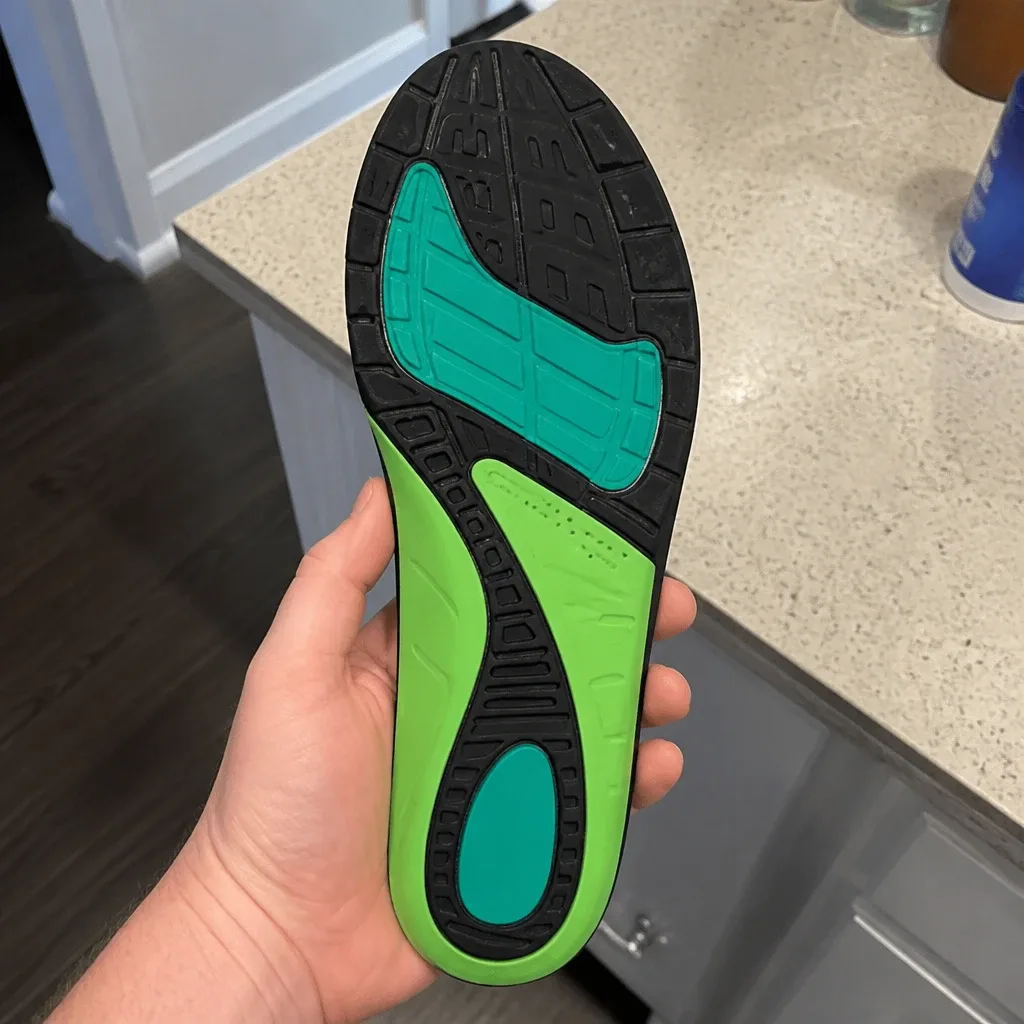
Pressing my thumb into the A-Wave Firm's arch with steady pressure, I measured about 2mm of give before it held firm rather than collapsing flat, consistent with its semi-rigid construction. Twisting it heel-to-toe, I'd grade its stiffness a 4 out of 5, resisting noticeably more than the stock insole and only flexing at the forefoot where a shoe naturally bends.
| Spec | Details |
|---|---|
| Brand | Apex Footwear / Apex Foot Health |
| Founded | 1946 |
| Model tested | A-Wave Firm Orthotic Support Insoles |
| Material (A-Wave) | Memory foam |
| Arch support type (A-Wave) | Rigid / Semi-Rigid |
| Arch height (A-Wave) | Medium/Neutral Arch or Low Arch |
| Support levels (A-Wave) | Flex, Firm, X-Firm |
| Base material (Conform with Gel) | ED-9 Polyetherdiol urethane, heat-moldable |
| Top cover (Conform with Gel) | Foam, contours to pressure spots |
| Cushioning zones (Conform with Gel) | Gel at forefoot and heel |
| HCPCS code | A5512 |
| Customization type | Off the shelf (prefabricated) |
| Men's sizing (Conform) | 6-16, whole sizes only |
| Foot conditions addressed | Arthritis, diabetes, metatarsalgia (Conform); arch pain, back pain, ball-of-foot pain, flat feet, foot fatigue, foot instability, heel pain, knee pain, over-pronation, plantar fasciitis, sensitive feet, shin splints, supination (A-Wave line) |
| Price (Conform with Gel) | $33.75-$34.95 |
| Price (A-Wave) | $36.70 |
| Price (Amazon A-Wave Prefabricated Orthotics) | $44.95 |
| Torsion stiffness (tested) | 4 out of 5, graded by hand-twisting heel-to-toe |
| Thumb-press arch response (tested) | About 2mm of give before holding firm, no collapse over 18 days of wear |
Source: Apex Foot Health's own site (apexfoot.com), The Insole Store, Amazon product listings, and my own testing of the A-Wave Firm Orthotic Support Insoles.
What's My Last Word on Apex Insoles?
Across my own 18-day test, the Apex A-Wave Firm held its structural support the way a semi-rigid, medium-arch orthotic should: no collapse under thumb pressure, no meaningful loss of torsion stiffness, and a broken-in feel that settled in by day 9. That's consistent with Apex's own claim of over 30 years of orthotics manufacturing experience and the A-Wave line's standing as one of the better-selling products in its online category.
The trade-off is the same one I felt myself: a genuinely firmer heel strike for the first several days that eases as the foam softens along the wear points, not a soft, cushioned insole that feels good the moment you put it on. Buyers considering the gel-topped Conform line specifically should also weigh the return policy before trimming a pair to fit, since Apex won't accept a cut or altered insole back.
At $33.75 to $44.95 depending on the model and retailer, Apex sits mid-range for a prefabricated orthotic. It suits people who are on their feet most of the day, want a shell with real structural resistance under load, and can tolerate a short break-in period; it's a weaker match for anyone chasing immediate plush cushioning or who needs to test-fit a Conform pair by trimming it before deciding to keep it.
Michal Sieroslawski is an Entrepreneur, exercise physiologist, and personal trainer who has fitted over a thousand people with insoles. He holds a degree in Sports and Exercise Science from the University of Central Lancashire, where he studied biomechanics, anatomy, and exercise physiology. Since 2020, Michal Sieroslawski has helped local and online businesses get found in Google and AI search.