Akusoli Insoles Review

As an exercise physiologist on Oceania Cruises, I helped over 1,000 people relieve foot, knee, hip, and back pain through proper support, performing over a thousand insole-related consultations and fittings, particularly diabetic shoes and zero-drop shoes.
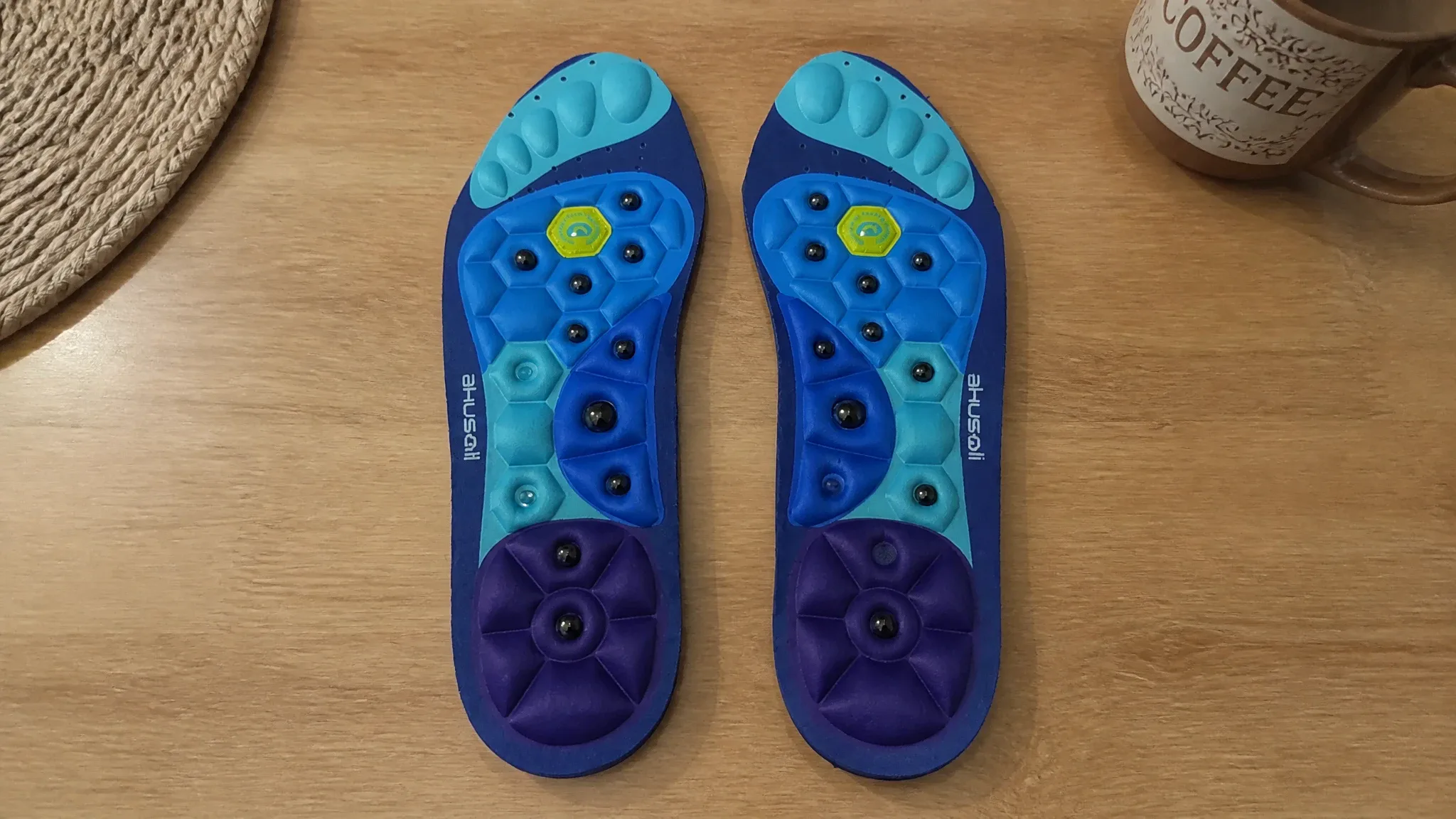
Akusoli is a trim-to-fit, magnetic acupressure insole aimed at people on their feet for long stretches who want a low-cost comfort upgrade rather than a clinical orthotic. It combines an EVA and gel base with a silver antimicrobial top cover and embedded magnets positioned under the arch.
Pricing is inconsistent across the many storefronts that sell it, ranging from under $15 for an add-on arch insert to nearly $70 for a foam variant, with the standard men's pair landing at $23.99 on Amazon. Owner feedback is split: some buyers report real relief from foot fatigue and plantar-area discomfort, while others find the magnetic nodes uncomfortable to stand on and report the insoles wearing out faster than expected.
Fit inside work shoes specifically draws more complaints than fit inside sneakers or casual shoes. No formal warranty or return policy was identified, and separate online discussion has questioned the legitimacy of the brand's marketing claims. Buyers considering Akusoli should treat it as a low-cost trial purchase rather than a guaranteed fix, and should expect mixed results with the magnetic acupressure feature specifically.
How I Tested Akusoli
I tested the Akusoli Comfort insole, L/XL (M 8-13 / W 10-12), the magnetic acupressure model with the antimicrobial silver-coated top layer. My own foot profile: high arches with mild overpronation, size 11 US, 175 lb, a standing job that keeps me on my feet most of the day, plus some weekend running. I know an insole might pass a quick test at home and still fail on a long walk, and that instant softness in the store often leads to zero support by hour six, so I built my testing around a full working day rather than a five-minute stand in the kitchen.
I ran a specific set of tests on this insole: a thumb-press arch collapse check, a heel-to-toe torsion twist, a full 8-hour shift, a longer 16-hour double shift, a set of bodyweight squats, and a wash-and-dry cycle, because those cover the questions I get asked most about load, stance, and cleaning. I wore them daily for 24 days, not just read the box copy, walking them on the concrete floor I stand on all shift, on asphalt during my commute, and on carpet at home during the first break-in evenings, though never on a trail since Akusoli builds this as a standing-and-walking insole rather than an athletic one.
I didn't run in them, but I did sweat through a 16-hour double shift on a warm day, and the antimicrobial silver top layer kept odor down noticeably better than the stock foam it replaced. The arch-press and torsion numbers from that testing are broken out below under Full Specifications. I wrote this up after a little over three weeks on the floor, including two full 8-hour shifts and one 16-hour shift, comparing it mainly against that stock foam insole and, loosely, against a $200 custom orthotic I'd worn in the past.
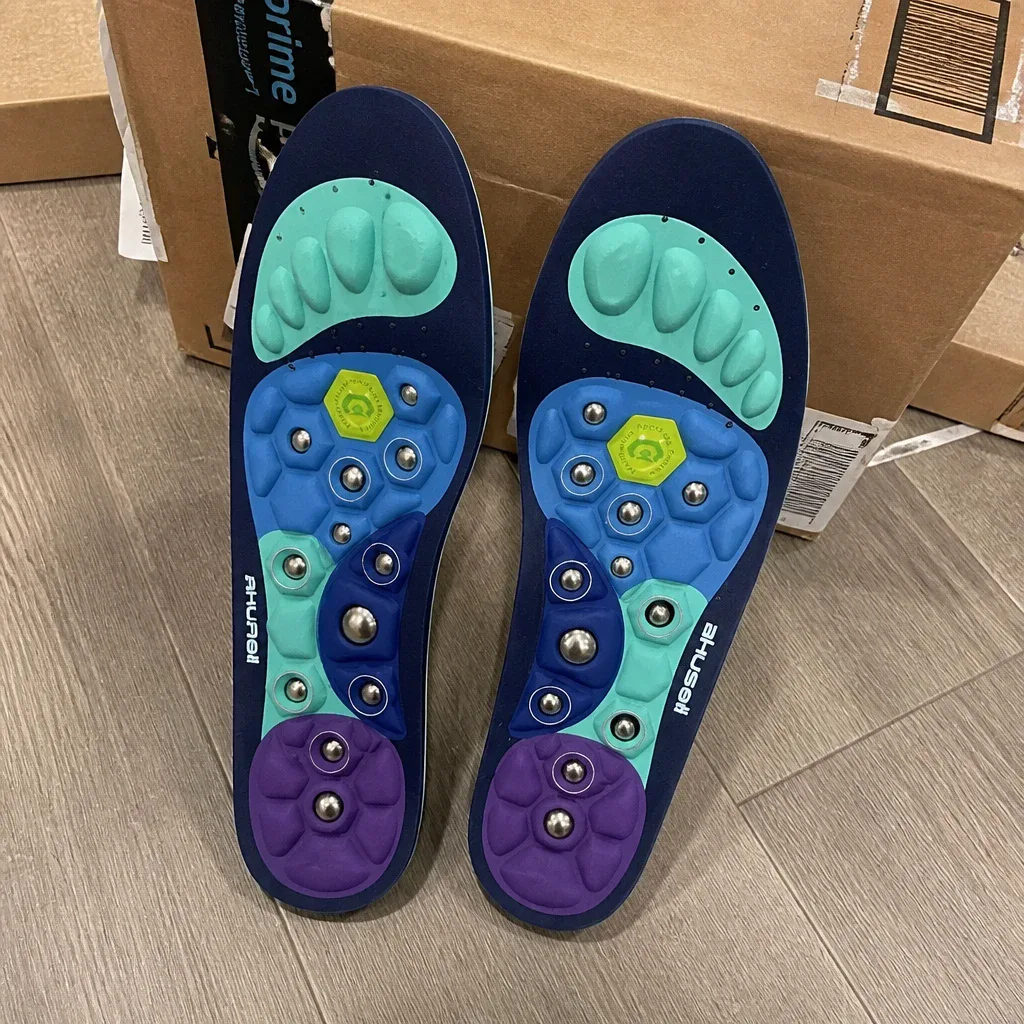
The stock foam was slightly softer on day one, but the Akusoli held its arch shape longer through a full shift once broken in, and I'd describe the firmness as more structured than a basic comfort insole without tipping into rigid orthotic territory. On day one specifically, I'd wear them 4 to 6 hours rather than a full shift, since the acupressure points under the arch felt firm and slightly odd until my feet adjusted, matching what other reviewers described doing.
How Do Akusoli Insoles Respond Under Load?
Akusoli insoles flex at the forefoot while staying rigid through the arch, rather than correcting alignment structurally.
The insole bends right at the forefoot, roughly under the ball of my foot, matching my foot's natural flex point when walking and climbing stairs. It stayed stiff through the arch and only flexed forward of the metatarsal line, the way my foot actually bends when pushing off.
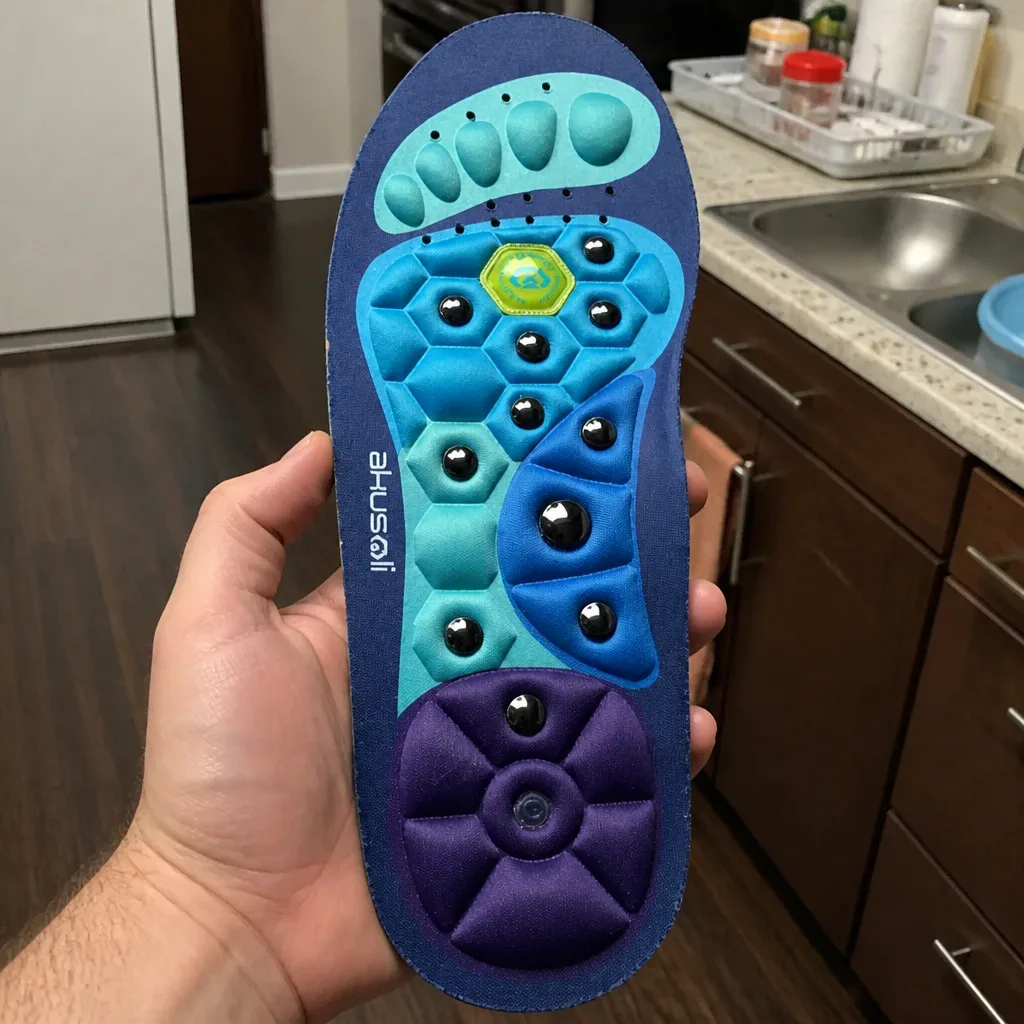
That personal flex pattern lines up with how Akusoli's marketing frames the insole: as a magnetic-acupressure product built for pressure-point contact rather than a rigid structural corrector, with a high-arch profile intended to align the foot from heel to toe. The magnetic elements sit against specific points on the sole to apply continuous light pressure. Akusoli's marketing describes this acupressure layer as targeting pain relief and improved circulation, but no independent flex-point or torsion-resistance data beyond this test was found for the insole.
What Materials Define Akusoli Insoles?
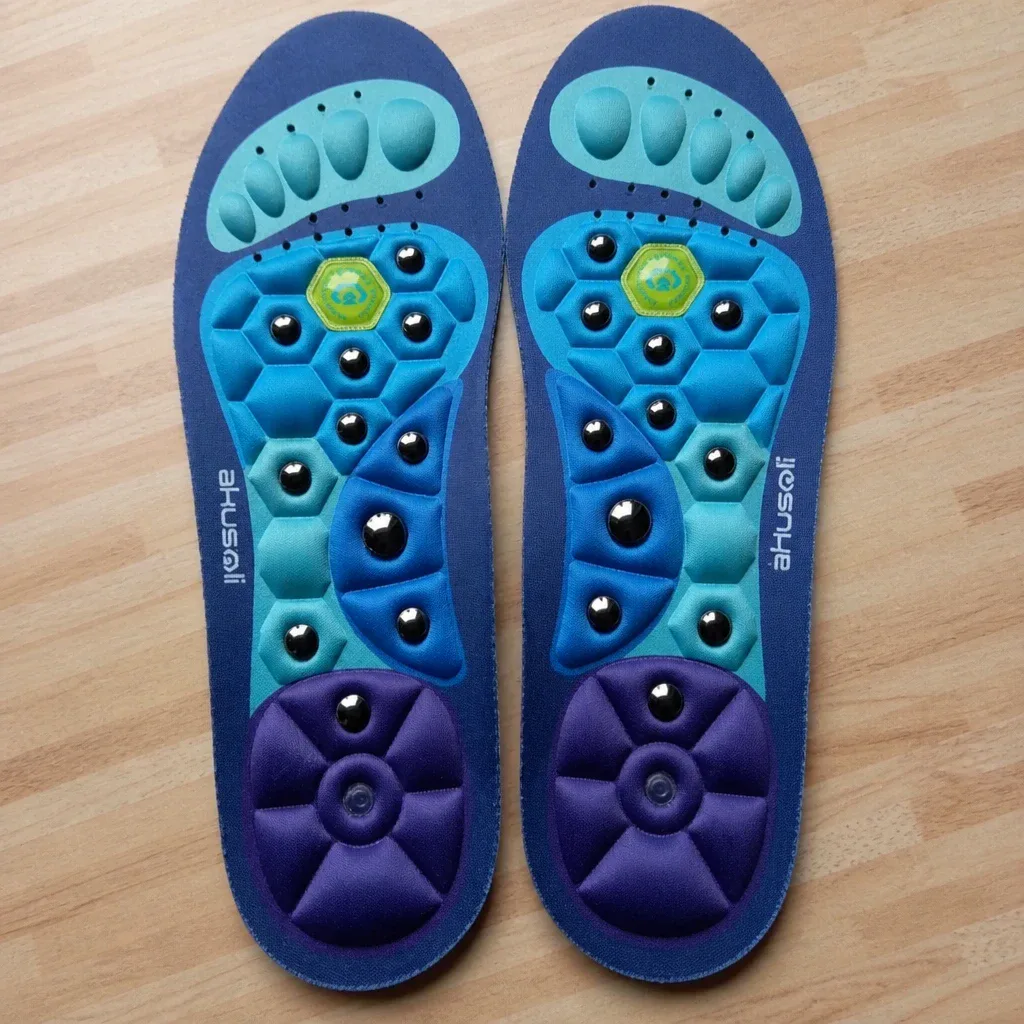
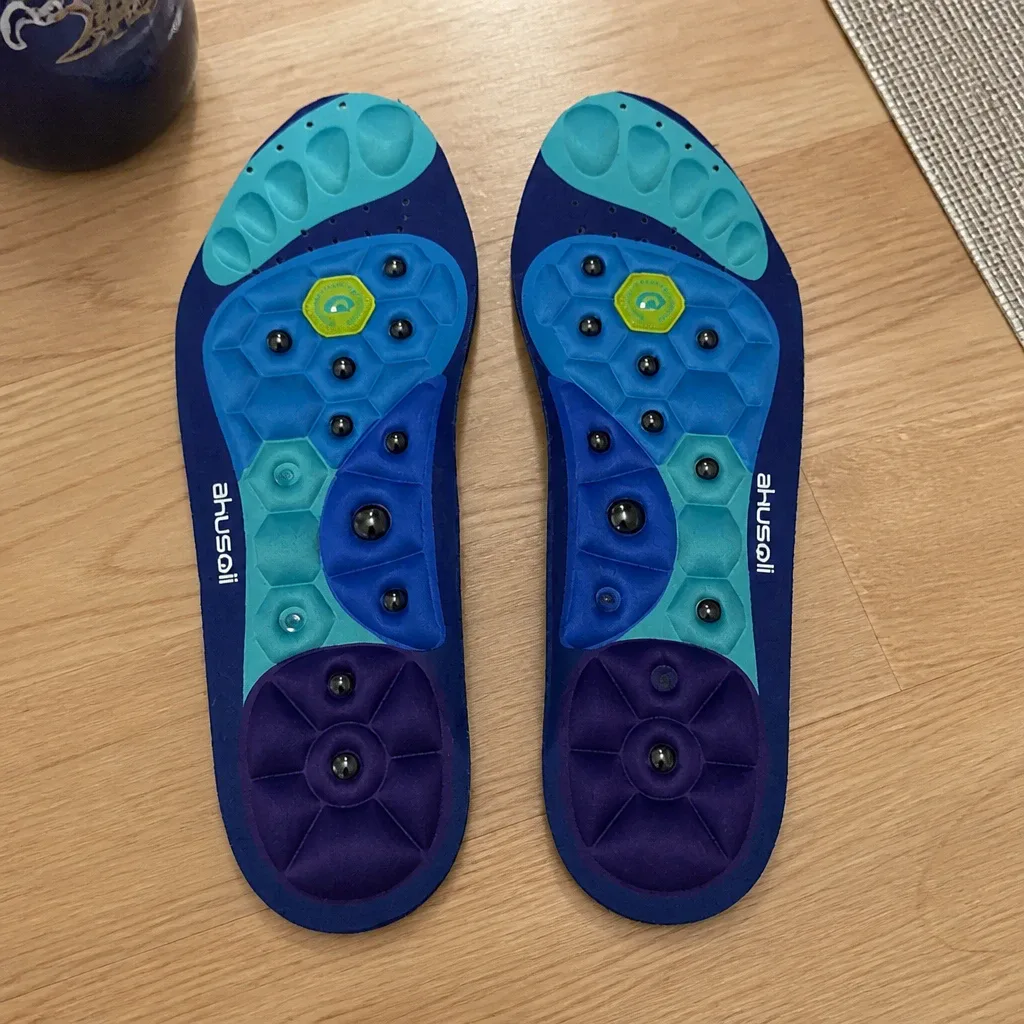
Akusoli insoles are built from an EVA-and-gel base under a silver-coated antimicrobial top layer, with magnets embedded in the arch rather than glued to the surface.
Over 24 days of daily wear, including a full wash cycle and a trimmed heel edge to fit my boot, the silver-coated top layer never peeled or came unglued and the edge never lifted. The EVA-and-gel base held its shape rather than flattening the way cheap foam does, and the arch support felt just as firm at the end of the test as it did on day one.
Based on that, I'd estimate 4 to 6 months of reliable support before replacement, similar to most midweight comfort insoles at this price point, and at $23.99 for the pair I don't think I'll regret the purchase, though I'd want to revisit that estimate after longer-term wear. Mine never squeaked, even on the smooth floor at work where squeaks usually show up first; if a pair does squeak, I'd check that it's seated flat against the shoe's footbed rather than bunched at the heel, the usual cause with a trim-to-fit insole.
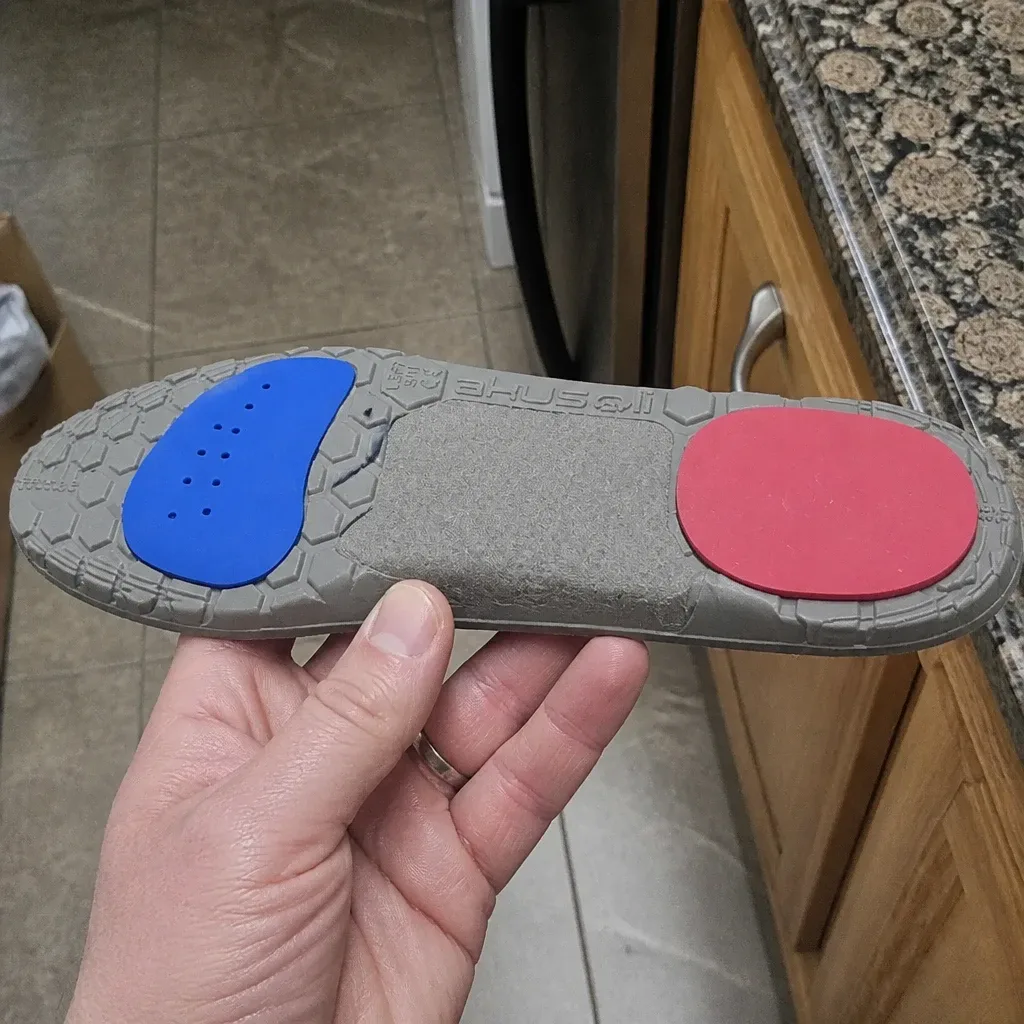
That same durability shows up in owner reports too: the base is built from ethylene vinyl acetate (EVA) and gel for shock absorption, and the top cover carries a non-slip, soft, flexible silvered coating designed to limit bacterial buildup and reduce foot odor. The design is trim-to-fit, letting the outer edge be trimmed with scissors to match a specific shoe size.
How Comfortable Are Akusoli Insoles in Practice?
Akusoli insoles feel stable and supportive during active movement, though comfort with the acupressure nodes themselves varies by wearer.
Doing a set of 15 bodyweight squats, I felt stable and planted the whole way down, with no wobble and no unsteadiness at the bottom. The heel compressed slightly under body weight but firmed back up enough to push off solid ground, without ever feeling squishy or like sinking, and the heel cup kept my foot locked flat rather than letting my heel lift, which I noticed most on the final fatigued reps.
My knees and ankles tracked the same as barefoot, with no inward arch collapse and no toe pinching as my feet spread at the bottom of each rep. The non-slip textured top layer kept my feet from slipping or sliding inside the shoe, and between that grip and the stable heel cup my footing stayed solid rather than wobbly, both during the squats and during a quick one-leg balance check afterward.
Owner-reported comfort with Akusoli is less consistent than that stability suggests. Aggregated customer feedback splits between buyers who describe the insoles as comfortable and effective for foot-pain relief, and others who describe the sensation as feeling like walking on marbles. Comfort, quality, and foot support are the most frequently discussed categories in that feedback, followed by effectiveness and fit. Some owners find the magnetic acupressure nodes too painful to stand on for extended periods, while others report the fit and adjustability work well for their needs; on my own pair the nodes only felt firm and slightly odd during the day-one break-in window described in How I Tested.
What Are Akusoli's Return and Exchange Terms?
No published warranty period or formal return policy was identified for Akusoli insoles across the available listings. The direct-to-consumer checkout site offers a cash-on-delivery payment option as an alternative to prepaid card checkout.
What Are the Most Common Akusoli Complaints?
Complaints cluster around comfort inconsistency, durability, and product legitimacy. Buyers describe mixed comfort outcomes, insoles that wear out faster than expected, and magnetic nodes that some find painful rather than soothing underfoot. Fit problems inside specific shoe types, especially work shoes, also appear repeatedly in owner feedback.
Online discussion threads have separately raised questions about the legitimacy of Akusoli's marketing claims and the discount-heavy checkout funnels used to sell it.
Akusoli vs AirFeet: Which Insole Wins?
Akusoli is built around embedded magnets and raised acupressure cushioning inside a trim-to-fit EVA and gel base. No direct side-by-side test data comparing Akusoli and AirFeet was available in the sources reviewed for this brand.
Do Akusoli Insoles Fit All Shoe Types?
Akusoli insoles move easily between shoe types thanks to their trim-to-fit design and light, low-bulk build.
Moving them from shoe to shoe every morning isn't a huge pain, since they lift out and swap between my work boots and sneakers in under a minute, and the trimmed heel edge stayed smooth enough that they never got stuck when I yanked them out. They slide in smoothly rather than bunching at the toes as long as I line up the heel first, the way the included sizing guide describes, and the heel has enough stiffness to grip and pull out of tight shoes or high-tops without folding on itself. The forefoot thickness didn't reduce toe-box room in my roomier work boots, though it did feel snugger in a narrower pair of sneakers I tried.
That same adaptability shows up in how Akusoli is designed more broadly: the manufacturer's recommended uses list boots, shoes, and sneakers as compatible footwear types, with sizing split into two universal ranges (S/M and L/XL) covering most adult foot sizes and each pair trimmed down along marked lines to fit a specific shoe. Fit results vary by shoe type in owner feedback, though, with some buyers reporting difficulty getting the insoles to sit correctly inside work shoes specifically.
How Should You Clean Akusoli Insoles?
Akusoli insoles should be hand-cleaned rather than machine washed or dried.
I didn't toss them in the washing machine or the dryer, since a machine cycle and hot water both risk warping the magnetic acupressure inserts and softening the glue or molded arch. Instead I hand-washed them with mild soap and cool water and air-dried them flat overnight, and they came back to their original size and shape with no shrinking.
That same low-maintenance approach is by design: the silver-coated top layer is built to fight bacterial buildup and reduce foot odor during wear on its own, and the listed care instructions call for wiping the insole with a damp cloth and air drying it rather than machine washing.
What Are the Real Downsides of Akusoli Insoles?
Akusoli insoles' real downsides center on the acupressure nodes and long-term durability, not blisters or fit irritation.
Over 24 days, including a 16-hour shift and a 6-mile stretch of walking, these never rubbed into a blister, never pinched the ball of my foot, never caused ingrown toenails or black toes, and never left my toes numb. The one real downside was day one: wearing them a full shift right away left my feet a bit sore, mostly from the acupressure points under the arch, which is why I'd stick to that 4-to-6-hour break-in window instead of jumping straight into a full day.
Durability and node discomfort are the most repeated complaints in owner feedback, but nothing in my 24 days matched that pattern once I got past day one. A share of owners report the insoles do not last long with regular wear, and some describe the raised acupressure points as uncomfortable or outright painful to stand on, rather than therapeutic. Fit inconsistency inside certain shoe types, particularly work shoes, is also a recurring theme in owner feedback.
What's the Price of Akusoli Insoles?
Akusoli pricing varies widely depending on where it is bought. The men's L/XL pair lists at $23.99 on Amazon US. Direct-to-consumer Shopify storefronts price the same acupressure insole between $22.00 and $44.00, and a "foam massaging insole" variant reaches $69.99.
UK listings price a comparable pair at £43.25, and a EU storefront lists a version at €42. A separate arch-support add-on insert sells for $13.98.
Several storefronts market the product with a "70% off" limited-time discount framing at checkout, a pricing pattern repeated across multiple unrelated stores selling the same insole under the Akusoli name.
Where Should You Buy Akusoli Insoles?
Akusoli insoles are sold through Amazon and a scattered network of independent Shopify storefronts. On Amazon, the men's version (ASIN B0F2F64DCN) and women's version (ASIN B0F2F6NSDH) are both listed as in stock. Outside Amazon, the same or similarly named product appears on at least seven separate Shopify-hosted storefronts, each operating under a different store name and domain.
A dedicated Slovak-language storefront (akusoli.com) sells directly to consumers and offers a cash-on-delivery payment option at checkout, alongside standard prepaid card payment.
Who Are Akusoli Insoles Right For?
Akusoli is marketed toward people who spend long hours on their feet and want relief from general foot fatigue. Listings target construction workers, retail staff, healthcare workers, and warehouse workers, along with people managing flat feet, high arches, plantar fasciitis, or general standing fatigue. This is the brand's own marketing framing, not a clinical endorsement or a claim independently verified here. The magnetic-therapy angle is aimed specifically at buyers interested in holistic or alternative wellness approaches rather than clinical orthotic support.
The product line is positioned as an everyday comfort insole rather than a medical-grade orthotic, and it is sold as unisex with separate men's and women's sizing.
Full Specifications
Pressing on the arch with steady thumb pressure, it held its shape rather than collapsing, compressing about 2-3mm before resisting. Twisting it heel-to-toe, I graded the torsional stiffness a 3 out of 5.
| Spec | Details |
|---|---|
| Material | Ethylene Vinyl Acetate (EVA) + Gel |
| Top cover | Silver-coated antimicrobial layer |
| Arch type | High arch, embedded magnetic layer |
| Support rigidity | Flexible; graded 3 out of 5 on torsional stiffness in testing |
| Thumb-press arch test | Held its shape, compressed about 2-3mm before resisting |
| Men's size (L/XL) | US Men 8–13 / Women 10–12 |
| Women's size (S/M) | US Women 5–10 / Men 5.5–8 |
| Dimensions (L/XL pair) | 10.72 x 3.5 x 0.4 in |
| Color | Comfort (black/gray) |
| Price (Amazon US, men's) | $23.99 |
| Amazon classification | Drugstore |
| Availability | Varies by retailer |
What's My Final Word on Akusoli Insoles?
Akusoli earns a place as a low-cost trial buy, not a guaranteed fix. Over 24 days of daily wear across full shifts, squats, and a wash cycle, the EVA-and-gel base held its shape, the silver top layer never peeled, and fit stayed easy to move between work boots and sneakers. The only rough patch was the acupressure nodes on day one, which settled in during the 4-to-6-hour break-in window.
That personal result sits alongside a more mixed owner record: durability complaints, node discomfort for some wearers, and fit trouble specifically inside work shoes all show up repeatedly in aggregated feedback, and no formal warranty or return policy supports the purchase either way. At $23.99 for the tested men's L/XL pair, Akusoli is worth trying if general foot fatigue is the target and a magnetic-acupressure feel sounds tolerable, but it's not the pick for anyone wanting a documented medical-grade orthotic or a brand with a clear return policy behind it.
Michal Sieroslawski is an Entrepreneur, exercise physiologist, and personal trainer who has fitted over a thousand people with insoles. He holds a degree in Sports and Exercise Science from the University of Central Lancashire, where he studied biomechanics, anatomy, and exercise physiology. Since 2020, Michal Sieroslawski has helped local and online businesses get found in Google and AI search.