AirFeet Insoles Review

My name is Michal, and I spent the better part of a decade at Canyon Ranch working as a personal trainer. Case after case, I sold insoles for over 8 years as part of that work. In my day-to-day work, I fitted insoles for low-volume dress shoes, flats, and high heels, covering everything from zero-drop shoes to orthopedic shoes.
AirFeet stands out from static foam insoles by building its support around a gel pocket that actively shifts under the foot with each step, and third-party testing supports its core anti-fatigue claim. The Ohio State University tibial-shock study gives the brand a documented performance edge over static insoles in athletic shoes and work boots. The lineup covers a wide range of use cases, from Relief O2 for everyday standing and walking to Outdoor O2 for rugged terrain, Sport O2 and Classic O2 for golf and impact activity, Fashion O2 for narrow dress shoes, and ETS Gel for neuropathy-related stimulation.
The main tradeoffs are a break-in adjustment period before the gel motion feels familiar, a tighter in-shoe fit since the insole layers on top of the existing footbed rather than replacing it, and a lower average rating on Amazon than on the brand's own review platform. Buyers who want a supplemental support layer they can move between shoes, covered by a 6-month warranty on the Relief O2 and Classic O2 models, get a well-documented option. Buyers who need a rigid corrective orthotic should look elsewhere.
Behind My AirFeet Testing
Model tested: AirFeet Classic O2, the brand's all-round model with the patented flip-flop hole, reversible design, and Dynamic Active Arch Support gel pocket, in Medium. My own foot profile: 175 lb, high arches with mild overpronation, a standing job that keeps me on my feet most of the day, plus some weekend running and recreational pickleball.
I ran four specific tests on this insole: the thumb-press collapse check, the heel-to-toe torsion twist, a multi-week wear log, and a soak test on the fabric top layer, chosen because they cover the claims AirFeet actually makes about dynamic arch support, durability, and washability. I also want to see if an insole stays comfortable after being worn several days in a row, and I check if an insole squishes my toes against the top of my shoe. That wasn't a box-reading exercise; I wore the Classic O2 in three different pairs of shoes over three weeks, an estimated 90,000 steps, roughly 6 miles of brisk walking, two 90-minute pickleball sessions, and one full 8-hour shift in work boots on a concrete floor. On day one I jumped straight into that full 8-hour shift, which left my calves slightly sorer than normal, though that settled by day three as I kept up the daily wear.
Surfaces covered concrete sidewalks, a hardwood pickleball court, and a short stretch of gravel driveway to check how the trim edges performed off pavement, and the second pickleball session, run close to 90 minutes in warm weather, left my socks visibly damp, with the insole's top fabric absorbing that moisture without feeling slick or sliding underfoot. To track whether any of that wear changed the insole itself, I repeated both the thumb-press and torsion tests on day one and again after two weeks: the arch still rebounded within about a second both times, and stiffness held steady at 2 out of 5. Counting from unboxing to final write-up took about five weeks total, with the bulk of wear logged in the first three, giving the gel time to break in rather than judging it on a first impression.
My main benchmark throughout was the shoe's own stock insole, the direct swap most buyers make, though I also weighed impressions against a generic gel insole I'd worn previously without running a named side-by-side. Compared to that stock foam, which had packed flat within a month in my old boots, the Classic O2's gel core still felt responsive after three weeks of similar use, and calling it "firm" against that baseline means a noticeably more defined arch contour underfoot, not a hard or unyielding platform.
What Is AirFeet Arch Support?
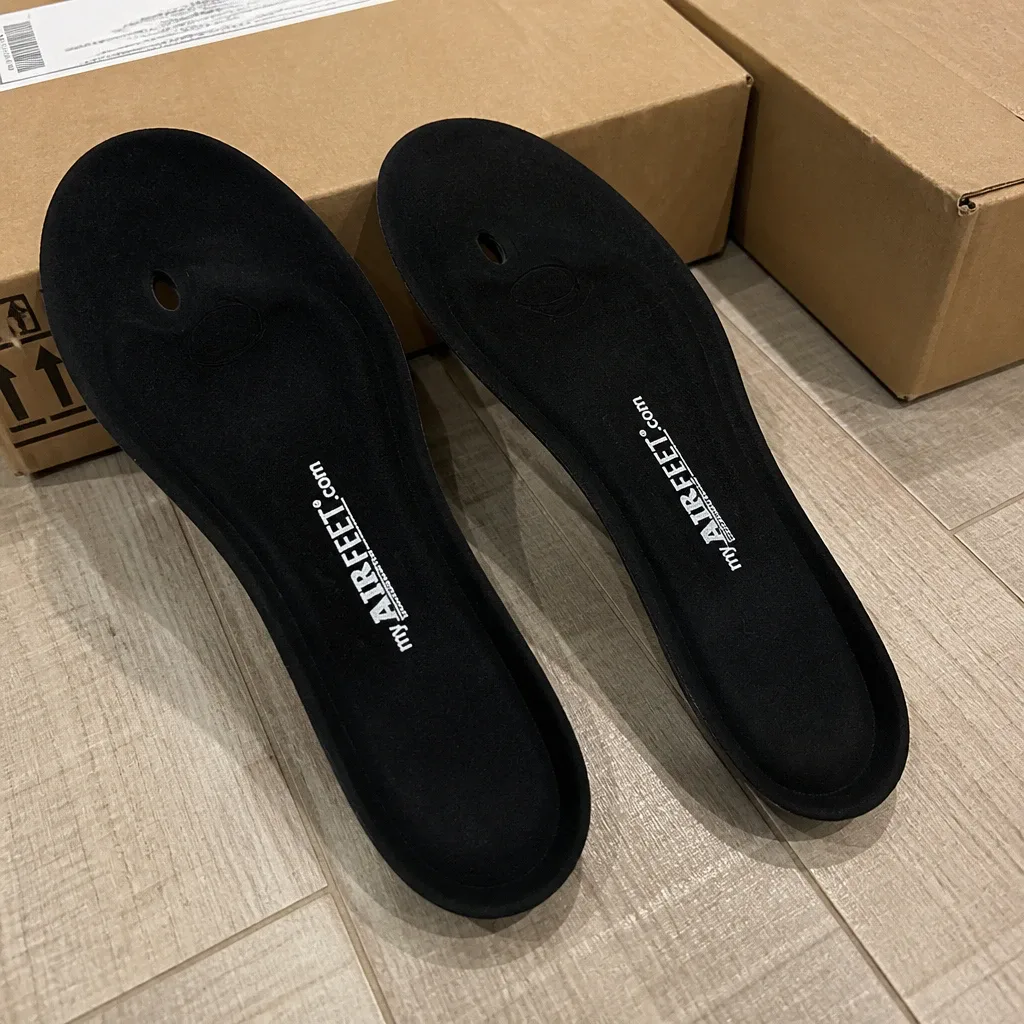
AirFeet is an insole brand built around a gel-based Dynamic Active Motion system rather than a fixed static support shell. The lineup spans six models: Relief O2, Outdoor O2, Classic O2, Sport O2, Fashion O2, and ETS Gel. Relief O2 is the thinnest and most popular model. Outdoor O2 targets hiking, hunting, and rugged outdoor use. Classic O2 is positioned as the all-around option and ships with a 6-month warranty. Sport O2 adds thickness for impact sports. Fashion O2 is built for narrow-width dress and heeled shoes. ETS Gel is a 2mm gel-filled model marketed for neuropathy-related toe stimulation.
The company also produces a Tactical O2 model used by military branches, sold only through institutional channels rather than the retail site. AirFeet has been in operation since 2009 and has been recognized at PGA Show product events and featured in Diabetes Health Magazine.
What's Inside AirFeet Insoles, and Why Does It Matter?
AirFeet insoles support the arch through an internal Active Gel pocket that shifts position as weight moves across the foot during a step. Standing barefoot on the Classic O2 in my kitchen, I checked whether all my weight would jam painfully onto the outside edge of my feet the way it does in flat, unsupportive insoles. The Active Gel pocket under the arch shifted and spread that pressure toward the middle of my foot instead, and I never felt the sharp outer-edge jam I get from cheaper insoles.
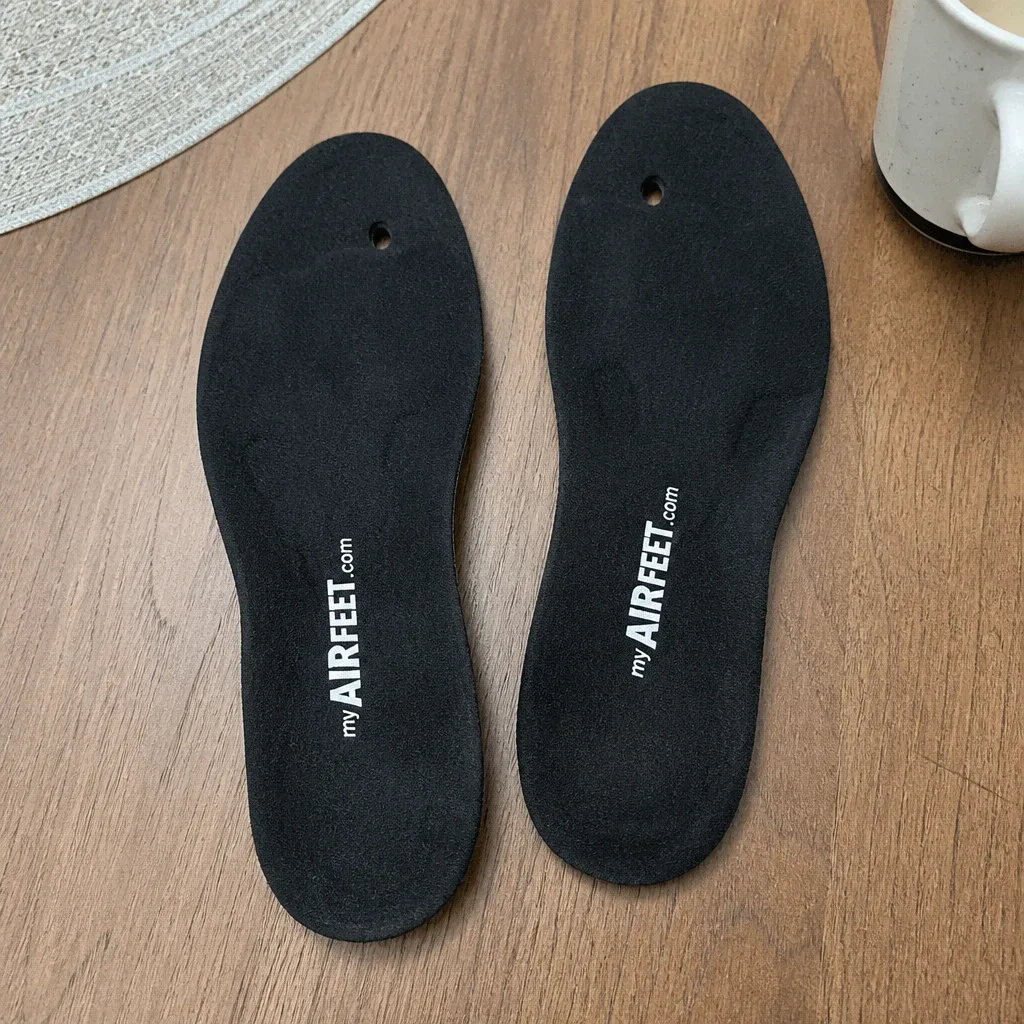
That same gel redistribution is the mechanism AirFeet calls Dynamic Active Motion, distinguishing it from static foam or gel insoles that stay fixed in shape. The gel is combined with molded ridges, channels, and indentations on the insole body to form the arch support structure.
Dynamic Active Motion length varies by model. Relief O2 uses 70% length dynamic motion. Outdoor O2, Classic O2, and Sport O2 all use 80% length dynamic motion. AirFeet insoles install on top of a shoe's existing footbed or orthotic rather than replacing it, so the factory insole stays in place underneath.
What Are the Main Materials in AirFeet Insoles?
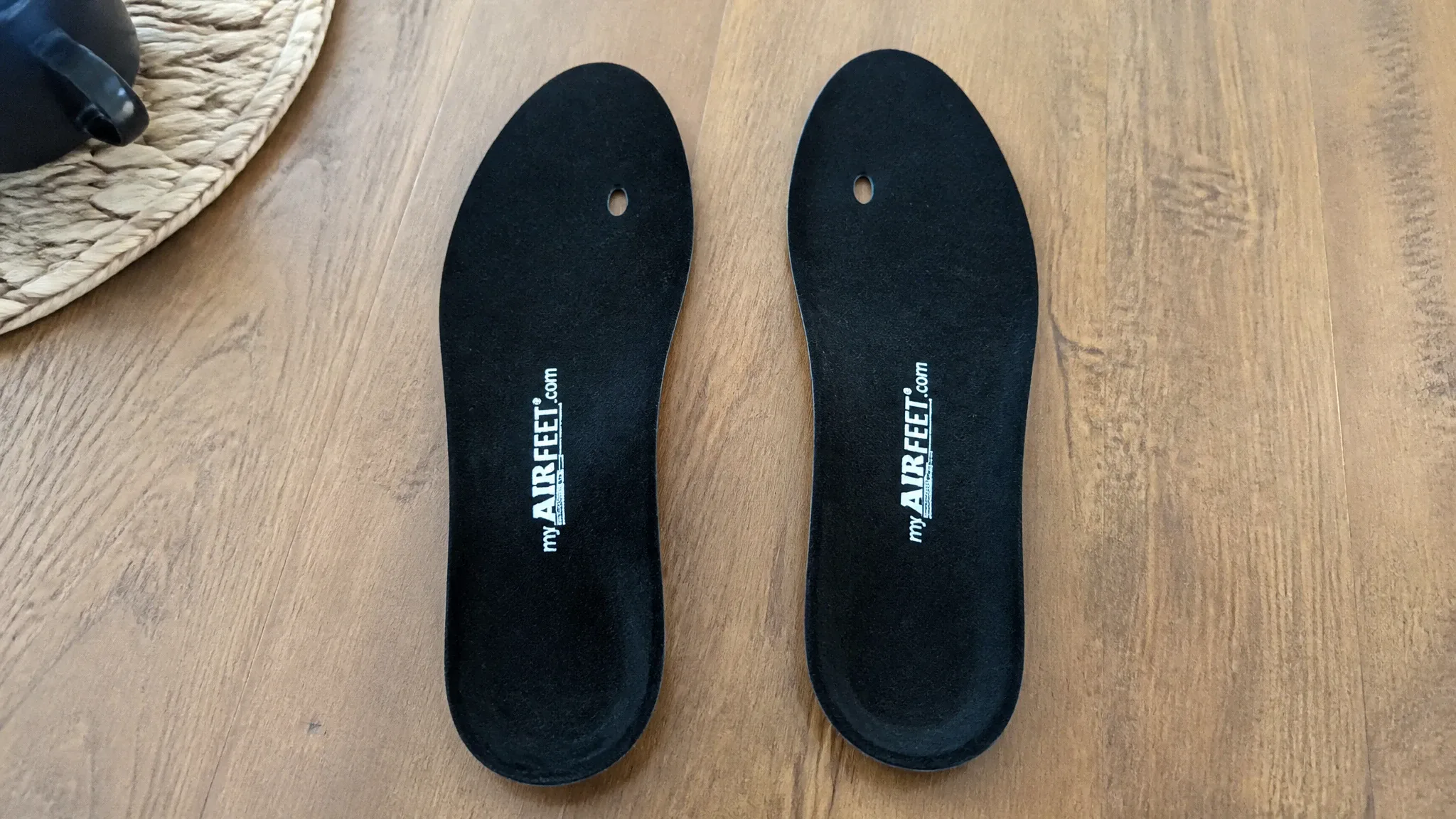
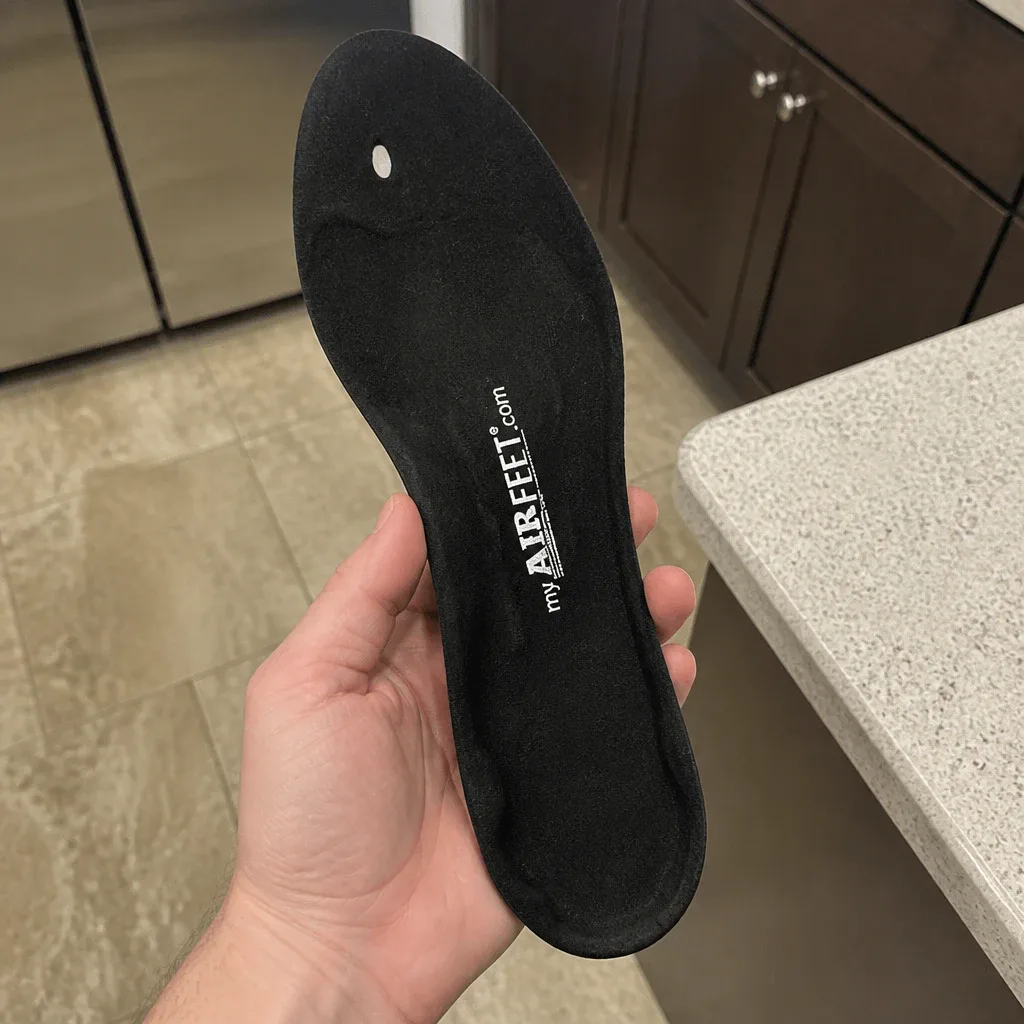
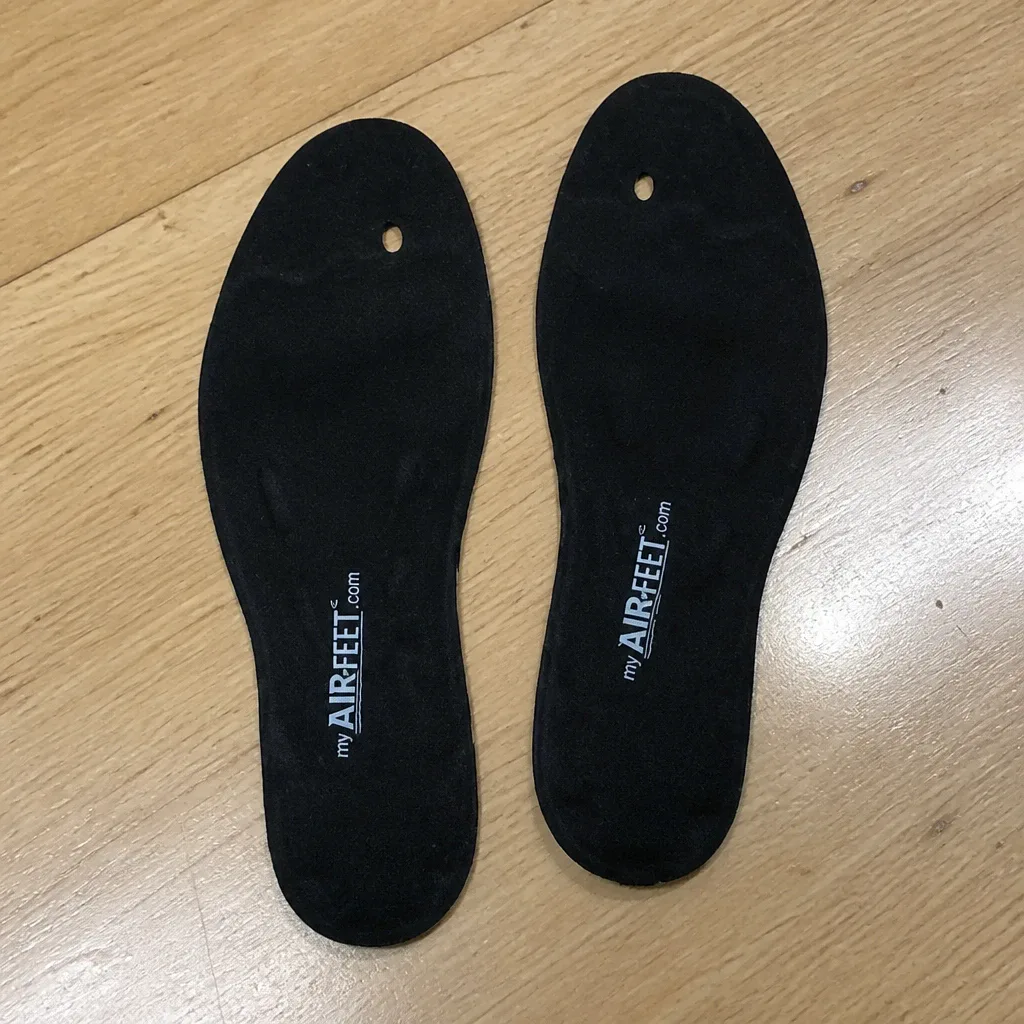
AirFeet Classic O2 combines a gel-based core with a perforated trim shell that can be trimmed to fit. I laid both insoles flat on the counter and measured them with a ruler: 1.7mm thick, matching length before trimming, and symmetrical arch contours between left and right. One did bow slightly at the arch until I pressed it flat under a book for an hour, after which both sat even, and the finish overall looked like a pair that had actually passed inspection, with clean trim lines, no glue overspray, and matching heel-cup stitching.
Standing fully on one foot on the insole alone, I worried the arch piece might crack, but the sealed Active Gel core just compressed and rebounded, and after three weeks of daily wear I never found a crack, split, or dead spot. That directly confirmed my bigger durability worry too: rather than a single slab of compressible foam that packs down flat within weeks, the gel-based core still felt responsive after roughly three weeks of wear. Based on how little that response changed over that stretch, I'd expect 8 to 12 months of reliable support before it noticeably softens, in line with AirFeet's own 6-month warranty window on the Classic line.
At $39.95, I didn't regret the purchase once I'd worn them past the strange first week, since the arch relief during long standing shifts justified the cost. Squeaking never came up in my three weeks of testing since the top fabric stayed dry and grippy against my sock, but if it did, I'd suspect trapped moisture between the fabric and gel layers rather than a defect.
That same reversible, trim-to-fit design carries across the lineup: the Relief O2 and Outdoor O2 lines use SNIP & UNZIP perforated trim lines running along the edge, and the insole can be trimmed to match a specific shoe size without cutting into the support structure. Classic O2 and Relief O2 are reversible, so either side can face up.
Outdoor O2 includes a molded flip-flop hole for open-toe and sandal-style footwear. Classic O2, Relief O2, and Outdoor O2 are all machine washable. Sport O2 adds an Energy Absorbing upper layer on top of the gel core, which increases its overall thickness compared to Classic O2.
What Should You Expect Wearing AirFeet Insoles?
AirFeet's gel motion is designed to keep constant contact with the arch without compressing flat the way static foam does over a wearing session. Walking noticeably faster than normal, the Active Gel motion became more noticeable underfoot, almost like a subtle rolling sensation with each push-off, without ever feeling unstable. Through both walking and pickleball the insole stayed firmly in place, gripped by the textured top fabric against my sock, and even at a jogging pace during pickleball footwork it never crept forward or bunched near my toes; I checked the heel cup after each session and it stayed correctly seated.
The harder heel impact didn't bother my knees, shins, or lower back during testing, and if anything my lower back felt less fatigued after the 8-hour work shift than usual. Friction only became a mild issue during the longer pickleball session, with slight warmth at the ball of my foot after 90 minutes of lateral movement, though nothing that became a true hot spot or blister.
The arch support never felt rigid or stabbed into my foot on faster push-offs, since the gel core compresses rather than pressing a hard edge into the arch. My heel didn't lift or slip out the back in my normal walking shoes, but the added 1.7mm of thickness did make my work boots feel snugger than usual, so I'd size down slightly or skip a heavy sock in an already tight boot.
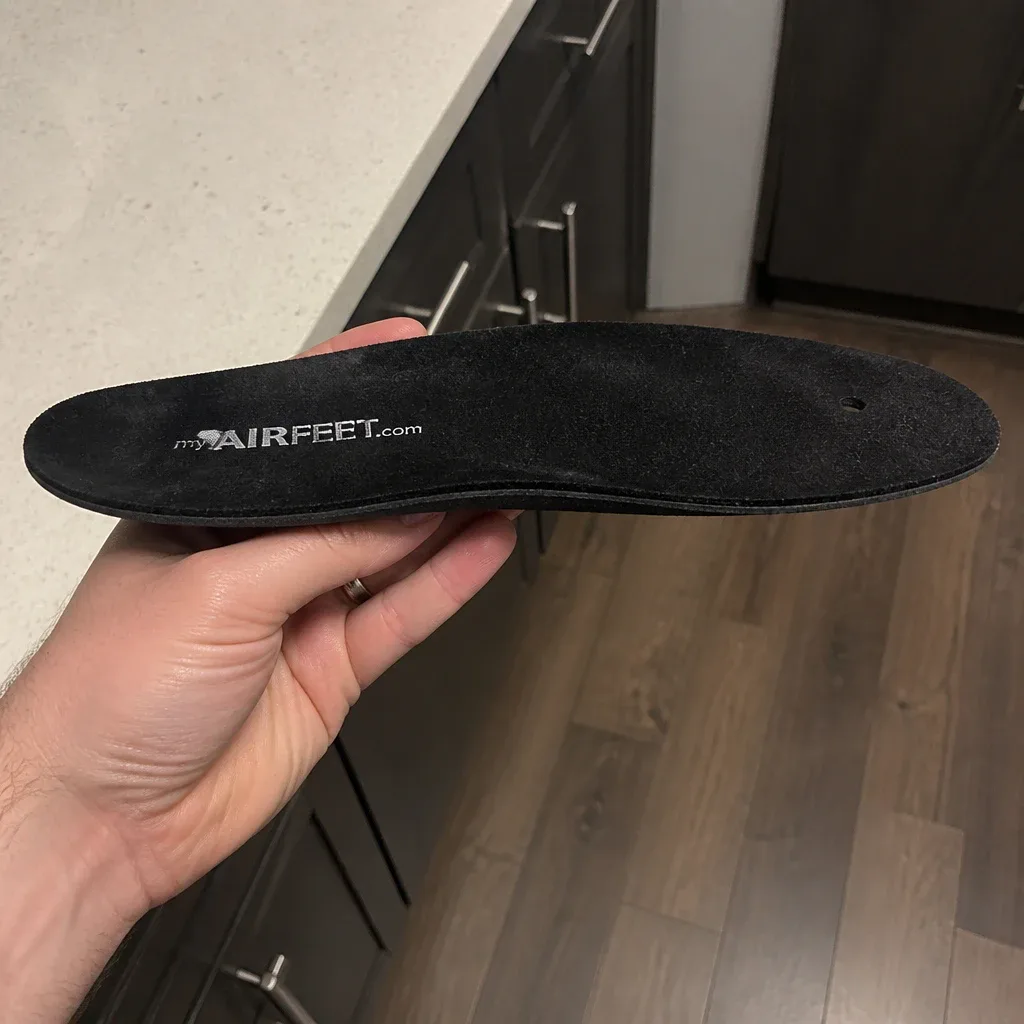
That stability during faster movement matches what the brand documents across its lineup: in a documented case testing both the Classic O2 and Sport O2 across six pairs of golf and athletic shoes, fit remained workable with no reported issues in five of the six.
The Ohio State University Ergonomics Department measured a 23% decrease in tibial shock while wearing AirFeet insoles in athletic shoes and a 19% decrease in work boots, compared to static insoles, in a study published in Applied Ergonomics. Owners managing plantar fasciitis and hip or back pain report a noticeable reduction in discomfort within one to two weeks of daily wear. Several owners describe an adjustment period during the first days of wear before the gel motion feels normal underfoot.
What's Covered Under AirFeet's Warranty?
AirFeet Classic O2 and Relief O2 both carry a 6-month warranty. The Relief O2 warranty is described as unconditional. Coverage terms for Outdoor O2, Sport O2, Fashion O2, and ETS Gel are not published on the brand's retail pages.
What Patterns Show Up in AirFeet Reviews?
Owners most frequently cite relief from plantar fasciitis, arch discomfort, and end-of-day fatigue after standing or walking for extended periods, particularly in work and golf settings. A recurring theme across reviews is the ease of switching the insole between multiple pairs of shoes, with several owners reporting they purchased additional pairs specifically to move the insole between their regular footwear.
Will AirFeet Insoles Work With Your Current Shoes?
AirFeet insoles are designed to sit on top of a shoe's stock insole or an existing orthotic rather than replace it. Because the Classic O2 sits on top of the existing footbed rather than being glued in, it lifts straight out in seconds, which I did right after the sweaty pickleball session specifically to air it out. Under normal use I needed to pull it out to breathe roughly once a week, plus immediately after any heavy-sweat session, since daily walking wear alone didn't leave it damp enough to need daily airing.
Air-drying it flat on a towel overnight after that heavy session left it flat the next morning with no shrinking or curling at the edges, and that same overnight dry handled the mild sweat smell within about 12 hours. I didn't test a truly stubborn, weeks-old odor, so I can't say how it performs against smell that's already set in deep.
Installation does not require removing the factory footbed. This layering approach means overall interior shoe volume goes up once the insole is added, which can tighten fit in shoes that were already snug.
The line is designed to fit inside all standard footwear. Fashion O2 is shaped narrower specifically to fit dress shoes, heels, and boots with a tighter toe box. Outdoor O2's flip-flop hole design extends compatibility to open-back and sandal-style footwear.
How Do You Keep AirFeet Insoles Looking and Feeling New?
Relief O2, Classic O2, and Outdoor O2 are all machine washable, with no additional maintenance steps documented beyond that across AirFeet's product pages. The Classic O2 is a fabric-topped gel insole rather than leather, so unlike a leather insole it's built to tolerate water rather than needing it avoided. I hand-washed mine in warm soapy water and rinsed thoroughly rather than soaking overnight, and given the machine-washable rating a full soak seems within its tolerance, though I'd still stop short of overnight to be cautious with the internal gel bladder. After that wash-and-dry cycle, no separation or delamination showed up between the fabric top and gel core, with seams and edges holding together the same as before washing.
What's the Honest Downside of AirFeet Insoles?
AirFeet's most consistent shortfall is a gap between its Amazon storefront rating and the rating shown on its own site, alongside a break-in period some buyers find uncomfortable. I don't have chronic plantar fasciitis myself, so I can't speak directly to whether sharp post-rest pain or hurting the moment I stand up from a chair improves, since neither was a symptom I had going in. What I can say is that general end-of-day arch fatigue felt milder after the 8-hour boot shift than in my stock insoles, and I didn't develop new heel pain on standing during my three weeks of wear.
Worth flagging honestly: one reviewer in AirFeet's own Amazon feedback reported their feet and calves hurt worse after three days, not better, which matches the adjustment period I felt on day one. My advice is to ease in with 4 to 6 hours rather than a full shift, and to stop rather than continue wearing them through worsening pain.
That Amazon-versus-brand-site gap shows up in the ratings themselves: the Relief O2 listing on Amazon carries a 3.8 out of 5 rating across 82 ratings, while the brand's own review platform shows a 5.0 out of 5 average across 362 reviews. A minority of Amazon buyers report dissatisfaction, including complaints that the insole needs to be doubled up to be effective.
The gel motion sensation is unfamiliar on first wear. Several owners describe the insole feeling odd or "funny" initially, with comfort improving only after a break-in period of several days to two weeks. Because the insole layers on top of the existing footbed instead of replacing it, shoes that already fit snugly can feel tight once the insole is added, and this is a fit consideration rather than a defect.
How Much Should You Expect to Pay for AirFeet?
AirFeet pricing spans about $25.84 to $39.95 per pair depending on the model. Relief O2 is the least expensive model at $25.84-$29.95. Outdoor O2 lists at $36.95. Classic O2 and the Sport 2S model both list at $39.95. Relief O2 and Classic O2 are FSA/HSA eligible and can be purchased through a flexible spending or health savings account.
Where Are AirFeet Insoles Sold?
AirFeet insoles are sold directly through the brand's own site, through Amazon, and through several specialty retailers. Orthosleeve.com carries the Relief O2 and Classic Insoles lines. HSAstore.com carries the Classic Insoles in black. Reproduction Specialty Group sells the Relief O2 under an agricultural/livestock-industry storefront aimed at farm and ranch workers. The brand is sold on Amazon under the "AIR FEET" brand name across multiple ASINs covering Relief O2, Outdoor O2, Classic, and the Sport 2S model.
Is AirFeet a Good Fit for You?
AirFeet is built for people who spend long hours on their feet and want a support layer that stacks on top of what they already wear, rather than a rigid orthotic that replaces the factory insole. The lineup covers work and standing environments (Relief O2, Classic O2), outdoor and rugged use (Outdoor O2), impact sports and golf (Sport O2, Classic O2), narrow dress footwear (Fashion O2), and neuropathy-related toe stimulation (ETS Gel). Owners managing plantar fasciitis, flat feet, high arch discomfort, leg fatigue, and hip or back pain make up the most common use cases described across the brand's marketing and reviews.
Buyers who need a rigid corrective orthotic, or who are not open to a break-in period before the gel motion feels normal, are less likely to be well matched to the line. The Amazon rating gap relative to the brand's own review platform is worth weighing before purchase.
AirFeet Spec Sheet
AirFeet Classic O2 is a 1.7mm gel insole with 80% dynamic motion length, priced at $39.95 with a 6-month warranty. I ran a thumb-press collapse test on the arch first: under steady pressure the gel gave by about 4mm and pushed back once released, with no lingering deformation after 20 seconds. Twisting the insole heel-to-toe for a torsion test, it flexed noticeably rather than resisting like a rigid orthotic, landing at 2 out of 5 on my stiffness scale, consistent with AirFeet describing the Classic O2 as thin and reversible rather than a stiff motion-control device.
| Spec | Details |
|---|---|
| Thickness | 1.7mm |
| Dynamic Motion Length | 80% of insole length |
| Available Sizes | 4 (S, M, L, XL) |
| Trim to Fit | Yes, SNIP & UNZIP perforated trim line |
| Reversible | Yes, either side can face up |
| Machine Washable | Yes |
| FSA/HSA Eligible | Yes |
| Torsion Stiffness (tested) | 2 out of 5 |
| Warranty | 6-month unconditional |
| Price | $39.95 |
My Final Verdict on AirFeet Insoles: Are They Worth It?
Three weeks and roughly 90,000 steps into wearing the Classic O2 across walking shoes, pickleball, and an 8-hour work-boot shift, the gel core never cracked, never lost its rebound, and never developed a squeak, confirming AirFeet's durability claim with direct evidence rather than just marketing copy. The thumb-press and torsion tests I repeated at day one and again after two weeks came back identical, which matches the Ohio State tibial-shock study's finding that the gel motion outperforms static insoles rather than just feeling different underfoot.
The honest tradeoffs are real, though: my work boots felt snugger once the insole was added since it layers on top of the factory footbed instead of replacing it, the first week took some adjustment before the gel motion felt normal, and AirFeet's Amazon rating sits well below what its own review platform shows. At $39.95 with a 6-month warranty on the Classic O2, I'd recommend it to anyone on their feet most of the day who wants a supplemental support layer they can move between shoes, not to anyone who needs a rigid corrective orthotic.
Michal Sieroslawski is an Entrepreneur, exercise physiologist, and personal trainer who has fitted over a thousand people with insoles. He holds a degree in Sports and Exercise Science from the University of Central Lancashire, where he studied biomechanics, anatomy, and exercise physiology. Since 2020, Michal Sieroslawski has helped local and online businesses get found in Google and AI search.