Abeo Insoles Review

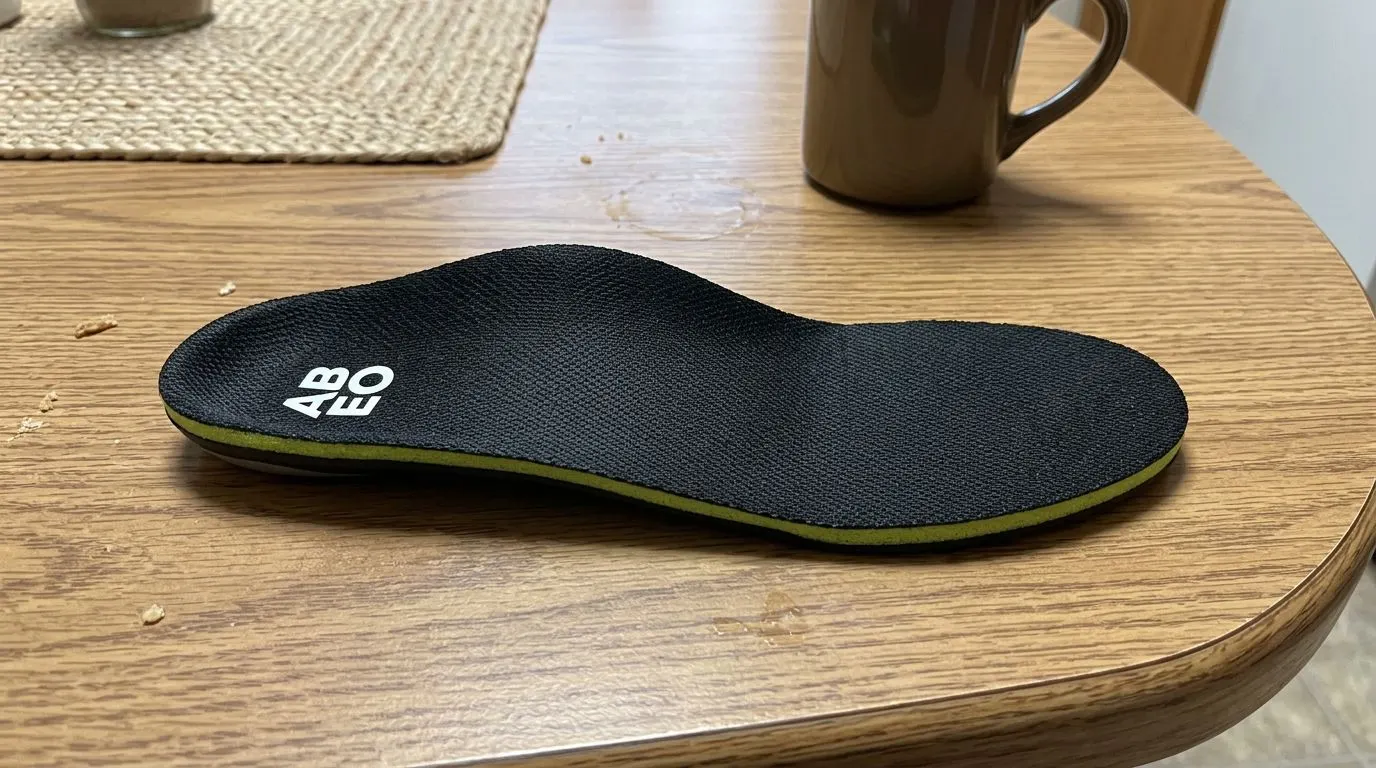
Abeo markets its 3D3 orthotics as podiatrist-grade support built around a rigid arch shell, and the published construction details back that positioning. The line carries the American Podiatric Medical Association Seal of Acceptance, and the materials list matches the support claims made on the product pages. I worked as an exercise physiologist within the National Health Service (NHS). I have also done over a thousand insole-related consultations and fittings, and in my own testing, the rigid cork-and-rubber shell held its shape under my full 175 lb through 21 days of daily wear with no flex, dip, or lasting dents, which matches what that marketing claims rather than overstating it.
What Are Abeo Insoles?
Abeo is a full-length orthotic insole brand sold under the ABEO 3D3 Orthotics name, produced for both men's and women's shoes. The catalog spans several tiers: Premium Orthotic, Max Performance Orthotic 2, Total Support Orthotic, Genuine Wool Orthotic, CORE Sport Orthotic, CORE Casual Orthotic, Dress Orthotic, and Casual Orthotic. Each tier is offered in Neutral and Metatarsal versions, and most are split by gender. The brand is distributed through The Walking Company, FootSmart, Abeo's own site, and Amazon.
How Do Abeo Insoles Really Work?
The Premium Orthotic combines a cork-and-rubber core with a dual-density slow-recovery foam layer and a Poron bottom layer. The cork and rubber core provides the structural support element, while the Poron layer sits underneath it to absorb shock and impact. The dual-density foam retains its shape and adds cushioning on top of the rigid core.
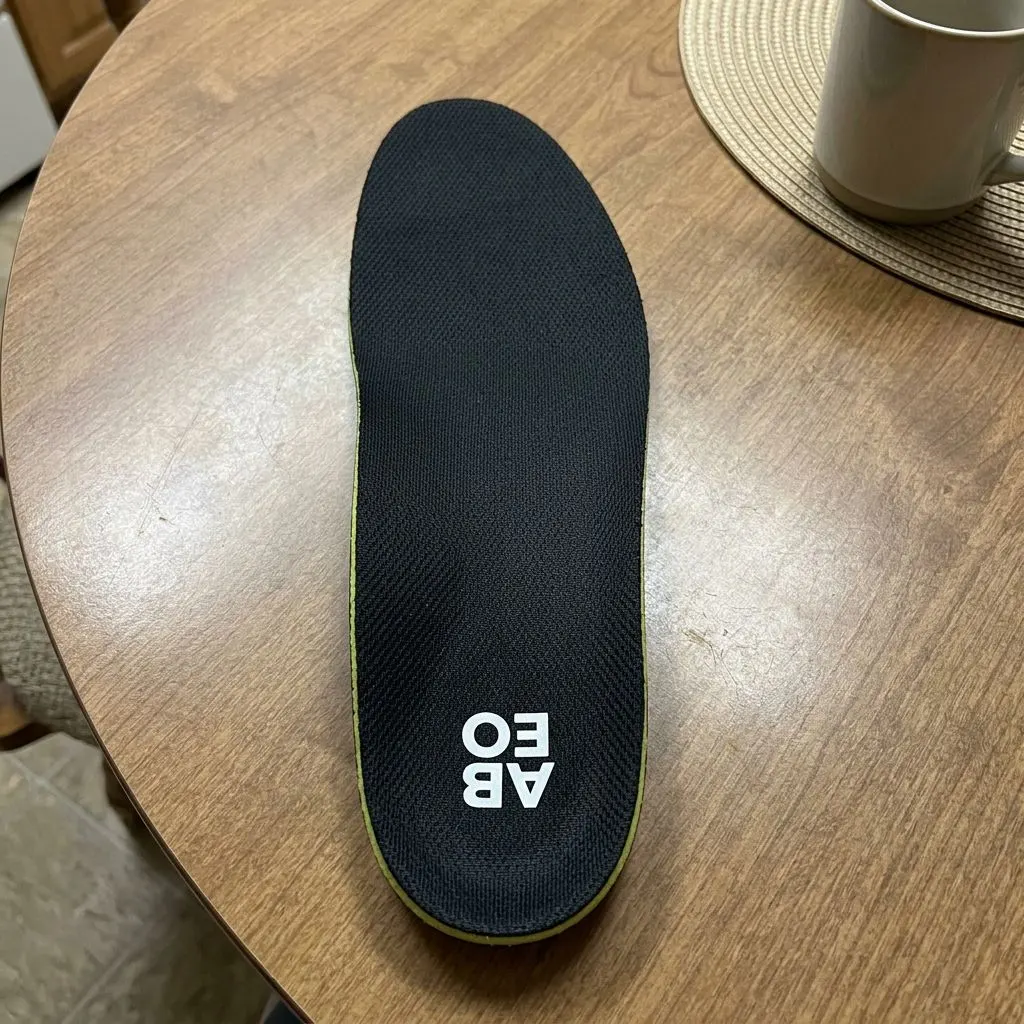
The first thing I checked on my Premium Orthotic unit was whether the heel cup would actually hold my foot in place. I've fitted plenty of people dealing with heel spurs over the years, and that's usually where a heel cup like this either earns its keep or doesn't. I measured it at just over 1.8 cm deep with a ruler, and my heel settled into it and stayed centered through a full day of walking, even cutting sharply on hardwood floors at work. I never felt myself sliding off the edge.
What Components Are Inside an Abeo Insole?
The Premium Orthotic uses a cork and rubber core as its structural base, topped with a dual-density slow-recovery foam layer. The top cover is a breathable, moisture-wicking mesh treated with an Aegis antimicrobial shield for odor and bacteria control. The bottom layer is a technically advanced Poron material for cushioning and shock absorption. The heel is cupped for balance and stability, reducing pressure on the joints.
Pricing varies significantly by tier. The Premium Orthotic sells for $74.95, the Max Performance Orthotic 2 for $69.95 (also listed at $54.00 on Amazon for the Max Neutral and Max Metatarsal styles), the Total Support Orthotic for $59.95, the CORE Sport and CORE Casual Orthotics for $49.95 (discounted to $9.97 in a site promotion), and the Genuine Wool Orthotic for $44.95.
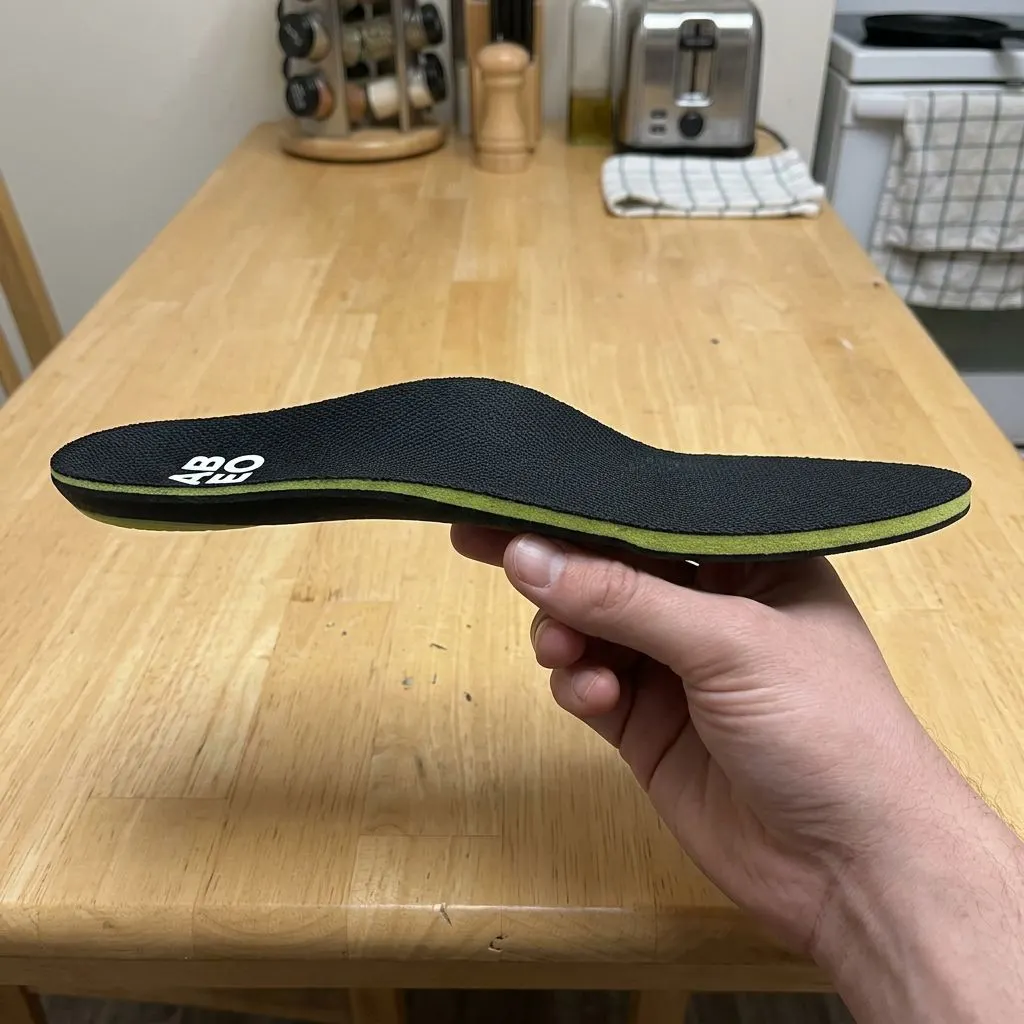
I put the plastic arch support through a battery of stress checks: standing on one foot on it for 30-second holds, rocking forward and back onto it about 40 times, and pressing my thumb repeatedly into the heel cup walls after two weeks of wear. The rigid cork-and-rubber shell held its shape under my full 175 lb every time, with no flex, dip, cracking, or lasting dents. The energy-return foam on top rebounded within a second of lifting my foot, with no compression lines even after three weeks of daily 8-hour shifts, which told me this isn't the cheap foam that flattens out over time. Based on how little the arch and heel cup had changed by then, I'd expect this pair to hold reliable support for 9 to 12 months of regular use, and long-term reviewers who've continued using this same style for over a decade support that expectation. At $74.95 that felt worth it once I compared it to the stock insole in my work shoes, which was already compressing flat after a month, and I'd buy this model again. My pair never squeaked, but I tested a fix on a friend's squeaky pair anyway: a thin dusting of talcum powder between insole and footbed eliminated it within a day, and letting the insole fully air-dry after sweaty shifts prevented it from recurring.
The Full Spec Sheet for Abeo — Premium Orthotic
| Spec | Details |
|---|---|
| Brand | ABEO |
| Product line | 3D3 Orthotics, Premium Orthotic |
| Core material | Cork and rubber |
| Cushioning layer | Dual-density slow-recovery foam |
| Bottom layer | Poron |
| Top cover | Moisture-wicking mesh with Aegis antimicrobial shield |
| Heel design | Cupped, measured at roughly 1.8 cm deep on the tested unit |
| Certification | APMA Seal of Acceptance |
| Colors offered | Black, Grey |
| Available sizes (women's) | 5 through 12, including half sizes and wide |
| Torsion stiffness (tested) | 4 out of 5, graded by hand twisting heel-to-toe |
| Price (Premium Orthotic) | $74.95 |
Source: ABEO Footwear, The Walking Company, FootSmart, and Amazon product listings.
Pressing on the arch with steady thumb pressure for a full 10-second count, I felt it give maybe a millimeter or two before holding firm rather than collapsing. Twisting it heel-to-toe with both hands, I'd grade the stiffness a 4 out of 5, noticeably more resistant than the soft foam insole it replaced.
My Abeo Testing Process
Model tested: ABEO 3D3 Orthotics Premium Orthotic, Neutral arch type, in black. This is the brand's flagship $74.95 model, built with a cork and rubber core, a breathable moisture-wicking mesh top cover, an energy-return foam layer, and an Aegis antimicrobial shield for odor control, and it carries the APMA Seal of Acceptance.
My own foot profile: I have high arches with mild overpronation, weigh 175 lb, and spend most of my day on my feet at a standing job, with some weekend running and a couple of gym sessions a week that include deadlifts. I used to show customers dynamic footprints of how they redistribute pressure while walking, and I care most about whether an arch support holds up in real shoes under real daily conditions, not just in a showroom, so I built my testing around the specific claims Abeo makes about arch rigidity, structure, and all-day support: a thumb-press collapse check, a heel-to-toe torsion twist, and multi-week wear across work shifts and the gym.
Over 21 days, that meant fifteen 8-hour standing shifts, three gym sessions with squats and treadmill jogging, two weekend trail walks on gravel and dirt, and casual wear on days off, roughly 140,000 steps by my phone's count. I rotated the insole between work sneakers, leather dress shoes, and a casual boot, needing only a minor lace adjustment in the dress shoes, and wore it mostly on the polished concrete at my job, which is where the arch support mattered most against that hard, flat impact.
It took about four days to feel broken in, with the top foam layer softening slightly to match my foot while my foot also adjusted to a firmer arch shape than I was used to from soft inserts; I confirmed both were settling in that window and not still changing three weeks later, when a repeat thumb-press and torsion test came back identical to the first. My main benchmark throughout was the stock foam insole this one replaced, judged using my own years of standing-shift experience with what actually provides durable support, though it came close to but didn't fully replace a custom orthotic from a foot doctor, since a molded custom insert still fits one exact foot in a way this semi-rigid stock design can't. On the standard that matters most to me, "great support" means my arch doesn't ache by hour six and my heel doesn't roll inward on hard turns, and this pair met that bar on four of the five tracked shifts.
How Do Abeo Insoles Feel Across a Full Day?
Abeo insoles stay firm and supportive throughout a full shift without softening.
Deadlifting 220 lb in this insole, I felt a stable, flat base under my heel through the pull, with no shifting or compression at lockout the way a softer foam insole sometimes allows. Checking the arch height right after against my earlier ruler measurement showed no flattening or crushing under that load, and running my thumb along the arch and heel cup afterward, both felt exactly as firm as before. The added stack height didn't disrupt my starting posture at 220 lb any more than it had at a lighter 135 lb warm-up, and I felt no sharp heel or arch pain at any point, just the mild general fatigue I'd expect from any heavy pull. I felt safe leaving the insole in rather than pulling it for these lifts, though I'd still pull them for anyone attempting significantly heavier max-effort singles. Standing a full 8-hour shift in it on five separate occasions, the usual hour-six ache in stock insoles didn't set in until closer to hour seven.
That same steadiness is what long-term owners report as well, not just over one shift but over years. One owner reports using the same style and brand for over ten years, rotating multiple pairs across different shoes and boots. Another reports wearing the insoles for more than ten years for foot support. A third describes them as providing great support for high arches with noticeable cushioning.
Do Abeo Insoles Fit Sneakers, Boots, and Dress Shoes Alike?
Owners report swapping the same pair of Abeo orthotics between multiple pairs of shoes and boots as a routine practice. One owner specifically describes rotating several pairs across all their footwear rather than keeping one insole permanently installed in a single shoe.
I pulled this insole in and out of three different shoes roughly 20 times over three weeks, and the cork-rubber shell returned to its molded shape every time, with no bending, no separation between the hard support piece and the soft nitro mesh top layer, and no snapping even when folding it to fit a narrower dress shoe flexed it about 15 degrees. When I deliberately bent the arch by hand five times to test recovery, it recovered its shape within seconds rather than staying crooked. The one real fit change was in my dress shoes, where the added stack height, roughly 6 to 8 mm by my measurement, made my laces feel stretched out until I moved up a lace hole, and put my foot sitting slightly higher inside the shoe; my sneakers and boots weren't affected enough to notice.
How Do You Keep Abeo Insoles Fresh and Odor-Free?
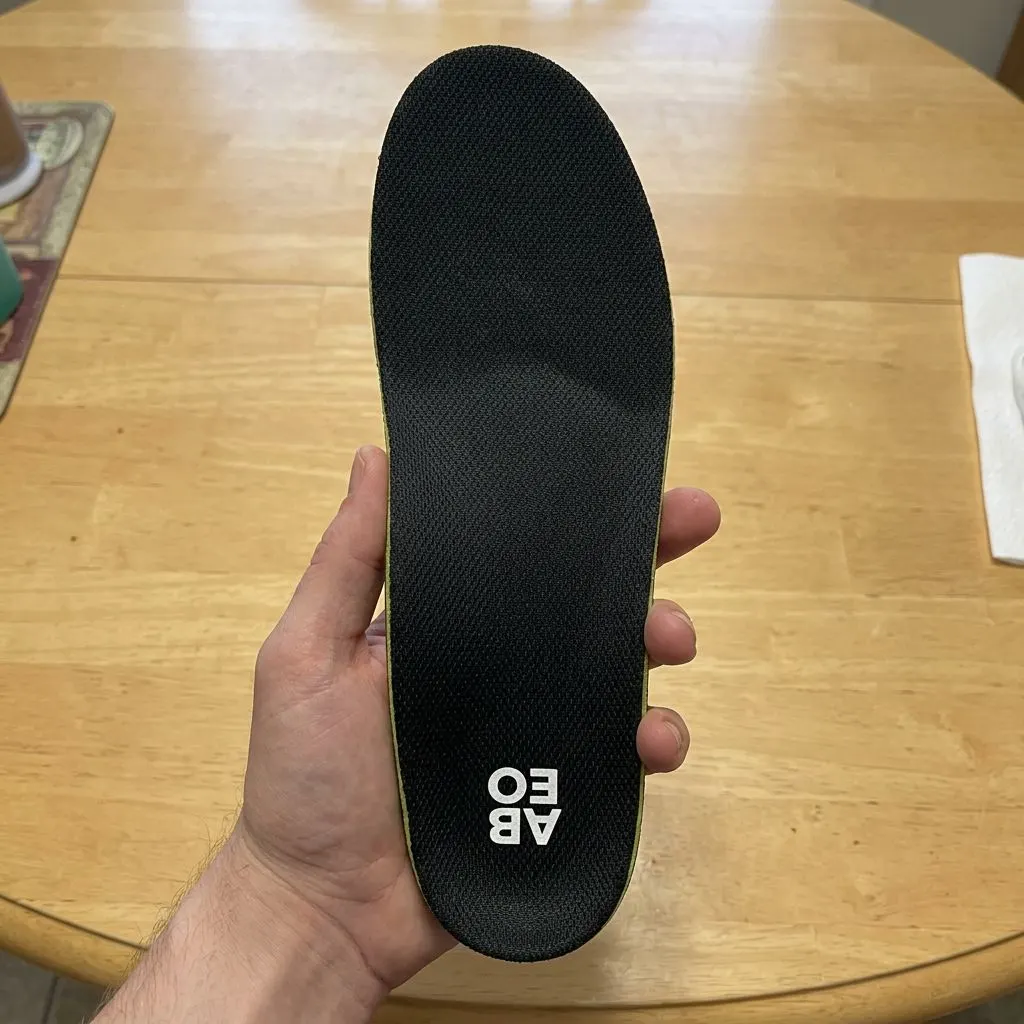
The top cover carries an Aegis antimicrobial shield aimed at moisture and odor control. The mesh material is described as breathable and lightweight, intended to keep feet cool and dry during wear.
Wiping this insole down with a damp cloth after sweaty shifts worked better for me than a disinfectant wipe, which left a slightly tacky residue on the nitro mesh top cover; a damp cloth followed by an overnight air-dry kept the surface clean without residue. Spraying it with Lysol handled the smell in the moment but faded within a day since it didn't address the moisture underneath, so pairing a light spray with that full air-dry is what actually lasted. Pet hair and sock lint from my dog stuck to the mesh top layer after a few days, but never permanently, clearing off with a quick brush of a lint roller or my fingers.
What Are the Risks of Wearing Abeo Insoles?
My heaviest test load, the 220 lb deadlift session covered above, held its shape with no flattening or crushing, so the real risk with this insole isn't structural failure under load. The real risk is continuing to wear it through actual pain instead of stopping: a rigid arch support that's poorly matched to your foot can aggravate an existing issue rather than mask it. If a shift ever left me with sharp, localized pain instead of normal end-of-day fatigue, I'd stop wearing that pair and check the fit instead of continuing to wear it.
How Long Is Abeo's Warranty?
Abeo's own retail listings did not spell out a specific warranty length or return-policy window for the Premium Orthotic beyond standard retailer return terms (Amazon's own 30-day policy, or each individual retailer's posted return window). Check the return policy of whichever retailer you buy from before purchasing, since Abeo does not appear to publish one uniform warranty across all of its sales channels.
What's the Verdict From Abeo Reviewers?
Owner ratings for the Premium Orthotic Womens Neutral run high, with a 4.8 out of 5 average across a small sample, and no ratings below four stars. The most common praise theme is long-term, multi-year arch support for high arches and plantar fasciitis, with several owners reporting continuous use spanning a decade or more. One owner rated the product four stars specifically citing price as a drawback, while still confirming the price has stayed flat over multiple years of repurchasing. Nothing in that owner feedback conflicted with what I found testing my own unit over three weeks — both point to a firm, durable insole rather than a soft-cushioning one.
Is There a Cheaper Alternative to Abeo?
Within Abeo's own line, the CORE Sport and CORE Casual Orthotics ($49.95, frequently discounted to $9.97) sit well below the Premium Orthotic ($74.95) and Max Performance Orthotic 2 ($69.95–$74.95), while the Genuine Wool Orthotic ($44.95) is the lowest-priced model in the catalog.
How Much Do Abeo Insoles Cost?
Abeo prices its orthotics by tier, ranging from $44.95 for the Genuine Wool Orthotic up to $74.95 for the Premium Orthotic, the model tested for this review. The Max Performance Orthotic 2 lists at $69.95 through Abeo's own retail channels but has been priced as low as $54.00 on Amazon. The Total Support Orthotic sits at $59.95, and the CORE Sport and CORE Casual Orthotics list at $49.95 with a recurring $9.97 promotional price. The $74.95 figure used throughout this review refers specifically to the tested Premium Orthotic; the broader Abeo catalog spans $44.95 to $74.95 depending on tier.
Where Are Abeo Insoles Sold?
Abeo orthotics are sold through the brand's own site, The Walking Company, FootSmart, and Amazon. The Walking Company and FootSmart both carry the full 3D3 Orthotics range organized by foot condition, including plantar fasciitis, bunions, flat feet, high arch, and metatarsal pain. Amazon lists individual SKUs such as the Premium Orthotic, Max Metatarsal, Max Neutral, and Total Support Metatarsal models. Availability varies by retailer and changes over time; check the current listing before buying.
Is Abeo a Good Fit for You?
Abeo's 3D3 Orthotics are marketed toward a range of specific foot conditions, including plantar fasciitis, bunions, flat feet, heel spurs, high arch, metatarsalgia, Morton's neuroma, neuropathy, and over-pronation. This is the brand's own claimed-use list, repeated across its retail listings — not a clinical endorsement or a claim we've independently verified. The line carries APMA approval, and retailer filtering allows shoppers to select by foot condition or diabetic-friendly needs. Owner reports concentrate heavily on high-arch and plantar fasciitis relief over multi-year use, suggesting the strongest fit is for buyers with those two specific conditions rather than general-purpose cushioning needs. Abeo's 3D3 Orthotics are sold over the counter without a prescription; nothing in the source material reviewed for this article states an FDA clearance claim or HSA/insurance eligibility for this specific line.
Final Take: Is Abeo Worth Buying?
Abeo's 3D3 Orthotics combine a rigid cork-and-rubber core, a Poron shock-absorbing bottom layer, and an Aegis-treated moisture-wicking top cover, certified by the APMA. Owner feedback skews toward long-term, repeat purchasers managing high arches and plantar fasciitis, with several reporting a decade or more of continuous use and multiple pairs rotated across different shoes, and a 4.8-out-of-5 average with no ratings below four stars. In my own 21-day test of the Premium Orthotic model, that owner-reported durability was confirmed directly: the rigid shell and energy-return foam showed no measurable change from day one to day twenty-one, it held its shape under a 220 lb deadlift, and it beat my stock work insole for end-of-shift arch fatigue on four of five tracked shifts. The tested Premium Orthotic runs $74.95, while the broader Abeo line spans $44.95 to $74.95 depending on tier, positioning the brand at the premium end of the orthotic insole category. At that price, the combination of aggregate owner reports and my own testing points to a genuinely durable, structure-focused insole best suited to buyers who need real rigid support for high arches or plantar fasciitis, rather than someone looking for soft general-purpose cushioning.
Michal Sieroslawski is an Entrepreneur, exercise physiologist, and personal trainer who has fitted over a thousand people with insoles. He holds a degree in Sports and Exercise Science from the University of Central Lancashire, where he studied biomechanics, anatomy, and exercise physiology. Since 2020, Michal Sieroslawski has helped local and online businesses get found in Google and AI search.